







-
 Agriculture
-
 Health-Care
-
 Environment
-
 Construction-Real-Estate
-
 Tools-Hardware
-
 Home-Garden
-
 Furniture
-
 Luggage-Bags-Cases
-
 Medical-devices-Supplies
-
 Gifts-Crafts
-
 Sports-Entertainment
-
 Food-Beverage
-
 Vehicles-Transportation
-
 Power-Transmission
-
 Material-Handling
-
 Renewable-Energy
-
 Safety
-
 Testing-Instrument-Equipment
-
 Construction-Building-Machinery
-
 Pet-Supplies
-
 Personal-Care-Household-Cleaning
-
 Vehicle-Accessories-Electronics-Tools
-
 School-Office-Supplies
-
 Packaging-Printing
-
 Mother-Kids-Toys
-
 Business-Services
-
 Commercial-Equipment-Machinery
-
 Apparel-Accessories
-
 Security
-
 Shoes-Accessories
-
 Vehicle-Parts-Accessories
-
 Jewelry-Eyewear-Watches-Accessories
-
 Lights-Lighting
-
 Fabric-Textile-Raw-Material
-
 Fabrication-Services
-
 Industrial-Machinery
-
 Consumer-Electronics
-
 Electrical-Equipment-Supplies
-
 Electronic-Components-Accessories-Telecommunications
-
 Home-Appliances
-
 Beauty
-
 Chemicals
-
 Rubber-Plastics
-
 Metals-Alloys


























































































































































































































































































































































































































































































































































































- Masonry Materials
- Curtain Walls & Accessories
- Earthwork Products
- Fireproofing Materials
- Heat Insulation Materials
- Plastic Building Materials
- Building Boards
- Soundproofing Materials
- Timber
- Waterproofing Materials
- Balustrades & Handrails
- Bathroom & Kitchen
- Flooring & Accessories
- Tiles & Accessories
- Door, Window & Accessories
- Fireplaces & Stoves
- Floor Heating Systems & Parts
- Stairs & Stair Parts
- Ceilings
- Elevators & Escalators
- Stone
- Countertops, Vanity Tops & Table Tops
- Mosaics
- Metal Building Materials
- Multifunctional Materials
- Ladders & Scaffoldings
- Mouldings
- Corner Guards
- Decorative Films
- Formwork
- Building & Industrial Glass
- Other Construction & Real Estate
- Wallpapers/Wall panels
- HVAC System & Parts
- Outdoor Facilities
- Prefabricated Buildings
- Festive & Party Supplies
- Bathroom Products
- Household Sundries
- Rain Gear
- Garden Supplies
- Household Cleaning Tools & Accessories
- Lighters & Smoking Accessories
- Home Storage & Organization
- Household Scales
- Smart Home Improvement
- Home Textiles
- Kitchenware
- Drinkware & Accessories
- Dinnerware, Coffee & Wine
- Home Decor
- Golf
- Fitness & Body Building
- Amusement Park Facilities
- Billiards, Board Game,Coin Operated Games
- Musical Instruments
- Outdoor Affordable Luxury Sports
- Camping & Hiking
- Fishing
- Sports Safety&Rehabilitation
- Ball Sports Equipments
- Water Sports
- Winter Sports
- Luxury Travel Equipments
- Sports Shoes, Bags & Accessories
- Cycling
- Other Sports & Entertainment Products
- Artificial Grass&Sports Flooring&Sports Court Equipment
- Scooters
- Food Ingredients
- Honey & Honey Products
- Snacks
- Nuts & Kernels
- Seafood
- Plant & Animal Oil
- Beverages
- Fruit & Vegetable Products
- Frog & Escargot
- Bean Products
- Egg Products
- Dairy Products
- Seasonings & Condiments
- Canned Food
- Instant Food
- Baked Goods
- Other Food & Beverage
- Meat & Poultry
- Confectionery
- Grain Products
- Feminie Care
- Hair Care & Styling
- Body Care
- Hands & Feet Care
- Hygiene Products
- Men's Grooming
- Laundry Cleaning Supplies
- Travel Size & Gift Sets
- Room Deodorizers
- Other Personal Care Products
- Pest Control Products
- Special Household Cleaning
- Floor Cleaning
- Kitchen & Bathroom Cleaning
- Oral Care
- Bath Supplies
- Yellow Pages
- Correction Supplies
- Office Binding Supplies
- Office Cutting Supplies
- Board Erasers
- Office Adhesives & Tapes
- Education Supplies
- Pencil Cases & Bags
- Notebooks & Writing Pads
- File Folder Accessories
- Calendars
- Writing Accessories
- Commercial Office Supplies
- Pencil Sharpeners
- Pens
- Letter Pad/Paper
- Paper Envelopes
- Desk Organizers
- Pencils
- Markers & Highlighters
- Filing Products
- Art Supplies
- Easels
- Badge Holder & Accessories
- Office Paper
- Printer Supplies
- Book Covers
- Other Office & School Supplies
- Stationery Set
- Boards
- Clipboards
- Stamps
- Drafting Supplies
- Stencils
- Electronic Dictionary
- Books
- Map
- Magazines
- Calculators
- Baby & Toddler Toys
- Educational Toys
- Classic Toys
- Dress Up & Pretend Play
- Toy Vehicle
- Stuffed Animals & Plush Toys
- Outdoor Toys & Structures
- Balloons & Accessories
- Baby Food
- Children's Clothing
- Baby Supplies & Products
- Maternity Clothes
- Kids Shoes
- Baby Care
- Novelty & Gag Toys
- Dolls & Accessories
- Puzzle & Games
- Blocks & Model Building Toys
- Toddler Clothing
- Baby Clothing
- Kids' Luggage & Bags
- Arts, Crafts & DIY Toys
- Action & Toy Figures
- Baby Appliances
- Hobbies & Models
- Remote Control Toys
- Promotional Toys
- Pregnancy & Maternity
- Hygiene Products
- Kid's Textile&Bedding
- Novelty & Special Use
- Toy Weapons
- Baby Gifts
- Baby Storage & Organization
- Auto Drive Systems
- ATV/UTV Parts & Accessories
- Marine Parts & Accessories
- Other Auto Parts
- Trailer Parts & Accessories
- Auto Transmission Systems
- Train Parts & Accessories
- Universal Parts
- Railway Parts & Accessories
- Auto Brake Systems
- Aviation Parts & Accessories
- Truck Parts & Accessories
- Auto Suspension Systems
- Auto Lighting Systems
- New Energy Vehicle Parts & Accessories
- Auto Steering Systems
- Wheels, Tires & Accessories
- Bus Parts & Accessories
- Auto Performance Parts
- Cooling System
- Go-Kart & Kart Racer Parts & Accessories
- Air Conditioning Systems
- Heavy Duty Vehicle Parts & Accessories
- Auto Electrical Systems
- Auto Body Systems
- Auto Engine Systems
- Container Parts & Accessories
- Motorcycle Parts & Accessories
- Refrigeration & Heat Exchange Equipment
- Machine Tool Equipment
- Food & Beverage Machinery
- Agricultural Machinery & Equipment
- Apparel & Textile Machinery
- Chemical Machinery
- Packaging Machines
- Paper Production Machinery
- Plastic & Rubber Processing Machinery
- Industrial Robots
- Electronic Products Machinery
- Metal & Metallurgy Machinery
- Woodworking Machinery
- Home Product Manufacturing Machinery
- Machinery Accessories
- Environmental Machinery
- Machinery Service
- Electrical Equipment Manufacturing Machinery
- Industrial Compressors & Parts
- Tobacco & Cigarette Machinery
- Production Line
- Used Industrial Machinery
- Electronics Production Machinery
- Other Machinery & Industrial Equipment
- Camera, Photo & Accessories
- Portable Audio, Video & Accessories
- Television, Home Audio, Video & Accessories
- Video Games & Accessories
- Mobile Phone & Accessories
- Electronic Publications
- Earphone & Headphone & Accessories
- Speakers & Accessories
- Smart Electronics
- TV Receivers & Accessories
- Mobile Phone & Computer Repair Parts
- Chargers, Batteries & Power Supplies
- Used Electronics
- VR, AR, MR Hardware & Software
- Projectors & Presentation Equipments
- Other Consumer Electronics
- Cables & Commonly Used Accessories
- Computer Hardware & Software
- Displays, Signage and Optoelectronics
- Discrete Semiconductors
- Wireless & IoT Module and Products
- Telecommunications
- Connectors, Terminals & Accessories
- Development Boards, Electronic Modules and Kits
- Circuit Protection
- Sensors
- Isolators
- Audio Components and Products
- Integrated Circuits
- Power Supplies
- Relays
- RF, Microwave and RFID
- Electronic Accessories & Supplies
- Passive Components
- PCB & PCBA
- Air Quality Appliances
- Home Appliance Parts
- Heating & Cooling Appliances
- Small Kitchen Appliances
- Laundry Appliances
- Water Heaters
- Water Treatment Appliances
- Refrigerators & Freezers
- Personal Care & Beauty Appliances
- Major Kitchen Appliances
- Cleaning Appliances
- Second-hand Appliances
- Smart Home Appliances
- Other Home Appliances
- Energy Chemicals
- Inorganic Chemicals
- Basic Organic Chemicals
- Agrochemicals
- Admixture & Additives
- Catalysts & Chemical Auxiliary Agents
- Pigments & Dyestuff
- Coating & Paint
- Daily Chemicals
- Polymer
- Organic Intermediate
- Adhesives & Sealants
- Chemical Waste
- Biological Chemical Products
- Surface Treatment Chemicals
- Painting & Coating
- Chemical Reagents
- Flavor & Fragrance
- Non-Explosive Demolition Agents
- Other Chemicals
- Custom Chemical Services

Acceptable Defect Rate for Luxury Packaging Flocking Bulk Orders
When purchasing flocking fabric for luxury packaging in large quantities, buyers should set the overall defect-rate limit at no more than 0.5%. This benchmark should be supported by inspections at every major stage, including raw-material approval, production control, finished-goods testing, and pre-shipment sampling. Each batch should be reviewed for shade consistency, pile evenness, adhesion, size accuracy, color fastness, and other requirements linked to the final application.
Recommended Quality Benchmark
A 0.5% maximum overall defect rate provides a practical baseline for bulk luxury packaging flocking. However, this figure should not replace detailed product specifications. Jewelry boxes, eyewear cases, cosmetic packaging, perfume gift boxes, and watch boxes each place different demands on surface feel, appearance, durability, and chemical safety.
- Set the overall bulk-order defect target at no more than 0.5%.
- Inspect every batch for color matching, pile consistency, fiber adhesion, dimensions, and visible surface defects.
- For jewelry packaging, require a silver coupon accelerated corrosion test with no blackening, spotting, or oxidation discoloration.
- Define application-specific criteria for abrasion resistance, peel strength, chemical composition, and decorative compatibility.
How the Quality Control Process Works
Guangdong Shunde Mingqian Flocking Co., Ltd. organizes its quality program around four checkpoints: incoming-material inspection, in-process monitoring, finished-product verification, and final pre-shipment sampling. Fabrics, flocking fibers, adhesives, and dyes are evaluated before production begins. During manufacturing, operators monitor color variation, electrostatic flocking parameters, adhesive application weight, and oven temperature, with production data recorded for traceability.
After production, finished batches are assessed for pile adhesion, peel strength, abrasion resistance, dimensional accuracy, color fastness, formaldehyde, and azo dyes. Standard flocking products are tested from 500 abrasion cycles, while selected functional materials may be tested up to 100,000 cycles without fiber shedding. Self-adhesive materials should reach a peel strength of at least 2 newtons per 25 millimeters. Under the FAMA requirement, the 3M tape peel test is performed for 10 cycles with no visible fiber loss.
Additional Protection for Jewelry Packaging
Jewelry packaging requires stricter anti-tarnish controls because the flocking surface may contact silver, gold-plated components, or other sensitive metal finishes. For each batch, a silver coupon accelerated corrosion test is completed before production. The material must show no blackening, spots, or oxidation-related discoloration. Reactive sulfur is maintained below 5 parts per million, while aqueous extract pH is controlled between 5.5 and 7.5.
For dark shades, sulfur-free dye systems are used where required. Adhesives and processing additives are also selected with sulfur-free and halogen-free formulations to reduce the risk of metal tarnishing. These controls supplement the overall defect-rate target and are especially important for premium jewelry boxes and watch packaging.
Application-Specific Performance Requirements
The correct acceptance standard depends on the packaging product. Jewelry boxes need a soft, stable surface that will not discolor precious metals. Eyewear cases require gentle, scratch-resistant lining materials. Cosmetic, perfume, and gift boxes may additionally require accurate Pantone matching and compatibility with embossing, hot stamping, silk-screen printing, or laser-positioned flocking.
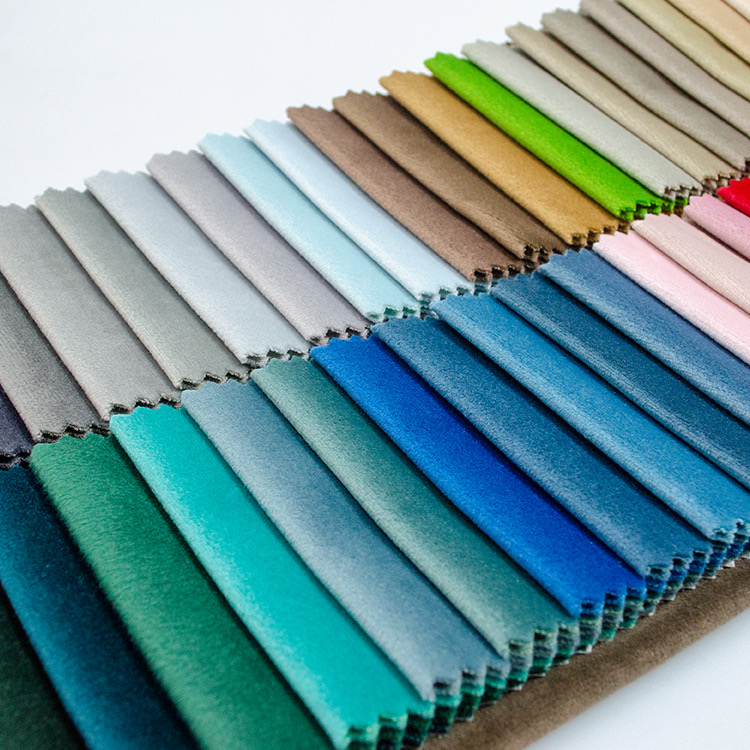
Quality and Supply Reference Data
| Quality or service item | Stated requirement or capability |
|---|---|
| Maximum overall defect rate for bulk orders | No more than 0.5% |
| Standard Pantone color matching | Delta E no more than 2.0 |
| Custom Pantone color matching | Delta E no more than 0.5 |
| Wet and dry color fastness for deep shades | Grade 4 |
| Color fastness to light exposure | Grade 6 or above |
| Self-adhesive peel strength | At least 2 newtons per 25 millimeters |
| Bulk OEM/ODM order | Minimum order quantity of 1,000 yards; delivery in 14 days |
Frequently Asked Questions
What defect rate should be written into a bulk-order specification?
Buyers can use an overall defect-rate limit of no more than 0.5%, then add measurable requirements for shade accuracy, pile uniformity, adhesion, dimensions, surface appearance, and application performance.
Does the 0.5% benchmark cover all quality problems?
No. It is an overall batch target. Separate acceptance requirements still apply to color fastness, abrasion, peel strength, pile adhesion, formaldehyde, azo dyes, and other relevant characteristics.
Which special test is recommended for jewelry box flocking?
Each batch should undergo a silver coupon accelerated corrosion test before production. The material passes only when there is no blackening, spotting, or oxidation discoloration. Reactive sulfur should remain below 5 parts per million.
Conclusion
For luxury packaging flocking purchased in bulk, a maximum overall defect rate of 0.5% is an appropriate starting point. A reliable purchasing specification should then add requirements for color, pile appearance, adhesion, abrasion, dimensional accuracy, chemical safety, and anti-tarnish performance. Mingqian Flocking provides OEM and ODM support with a stated minimum order quantity of 1,000 yards and a 14-day delivery time, supported by ISO 9001 and GRS certification. Technical inquiries can be directed to 005@mingqianflocking.com.
About Mingqian Flocking
Guangdong Shunde Mingqian Flocking Co., Ltd., operating under the Mingqian brand, is a flocking fabric producer based in Foshan, Guangdong, China. Established in 2008, the company runs a self-owned facility of more than 12,000 square meters and reports monthly production capacity above 3,000,000 yards. Its certifications include ISO 9001 and Global Recycled Standard certification for applicable recycled-fiber flocking fabrics. Its documented projects serve luxury packaging, jewelry packaging, liquor packaging, eyewear cases, home appliances, automotive interiors, and furniture markets.

REPORT