







-
 Agriculture
-
 Health-Care
-
 Environment
-
 Construction-Real-Estate
-
 Tools-Hardware
-
 Home-Garden
-
 Furniture
-
 Luggage-Bags-Cases
-
 Medical-devices-Supplies
-
 Gifts-Crafts
-
 Sports-Entertainment
-
 Food-Beverage
-
 Vehicles-Transportation
-
 Power-Transmission
-
 Material-Handling
-
 Renewable-Energy
-
 Safety
-
 Testing-Instrument-Equipment
-
 Construction-Building-Machinery
-
 Pet-Supplies
-
 Personal-Care-Household-Cleaning
-
 Vehicle-Accessories-Electronics-Tools
-
 School-Office-Supplies
-
 Packaging-Printing
-
 Mother-Kids-Toys
-
 Business-Services
-
 Commercial-Equipment-Machinery
-
 Apparel-Accessories
-
 Security
-
 Shoes-Accessories
-
 Vehicle-Parts-Accessories
-
 Jewelry-Eyewear-Watches-Accessories
-
 Lights-Lighting
-
 Fabric-Textile-Raw-Material
-
 Fabrication-Services
-
 Industrial-Machinery
-
 Consumer-Electronics
-
 Electrical-Equipment-Supplies
-
 Electronic-Components-Accessories-Telecommunications
-
 Home-Appliances
-
 Beauty
-
 Chemicals
-
 Rubber-Plastics
-
 Metals-Alloys


























































































































































































































































































































































































































































































































































































- Masonry Materials
- Curtain Walls & Accessories
- Earthwork Products
- Fireproofing Materials
- Heat Insulation Materials
- Plastic Building Materials
- Building Boards
- Soundproofing Materials
- Timber
- Waterproofing Materials
- Balustrades & Handrails
- Bathroom & Kitchen
- Flooring & Accessories
- Tiles & Accessories
- Door, Window & Accessories
- Fireplaces & Stoves
- Floor Heating Systems & Parts
- Stairs & Stair Parts
- Ceilings
- Elevators & Escalators
- Stone
- Countertops, Vanity Tops & Table Tops
- Mosaics
- Metal Building Materials
- Multifunctional Materials
- Ladders & Scaffoldings
- Mouldings
- Corner Guards
- Decorative Films
- Formwork
- Building & Industrial Glass
- Other Construction & Real Estate
- Wallpapers/Wall panels
- HVAC System & Parts
- Outdoor Facilities
- Prefabricated Buildings
- Festive & Party Supplies
- Bathroom Products
- Household Sundries
- Rain Gear
- Garden Supplies
- Household Cleaning Tools & Accessories
- Lighters & Smoking Accessories
- Home Storage & Organization
- Household Scales
- Smart Home Improvement
- Home Textiles
- Kitchenware
- Drinkware & Accessories
- Dinnerware, Coffee & Wine
- Home Decor
- Golf
- Fitness & Body Building
- Amusement Park Facilities
- Billiards, Board Game,Coin Operated Games
- Musical Instruments
- Outdoor Affordable Luxury Sports
- Camping & Hiking
- Fishing
- Sports Safety&Rehabilitation
- Ball Sports Equipments
- Water Sports
- Winter Sports
- Luxury Travel Equipments
- Sports Shoes, Bags & Accessories
- Cycling
- Other Sports & Entertainment Products
- Artificial Grass&Sports Flooring&Sports Court Equipment
- Scooters
- Food Ingredients
- Honey & Honey Products
- Snacks
- Nuts & Kernels
- Seafood
- Plant & Animal Oil
- Beverages
- Fruit & Vegetable Products
- Frog & Escargot
- Bean Products
- Egg Products
- Dairy Products
- Seasonings & Condiments
- Canned Food
- Instant Food
- Baked Goods
- Other Food & Beverage
- Meat & Poultry
- Confectionery
- Grain Products
- Feminie Care
- Hair Care & Styling
- Body Care
- Hands & Feet Care
- Hygiene Products
- Men's Grooming
- Laundry Cleaning Supplies
- Travel Size & Gift Sets
- Room Deodorizers
- Other Personal Care Products
- Pest Control Products
- Special Household Cleaning
- Floor Cleaning
- Kitchen & Bathroom Cleaning
- Oral Care
- Bath Supplies
- Yellow Pages
- Correction Supplies
- Office Binding Supplies
- Office Cutting Supplies
- Board Erasers
- Office Adhesives & Tapes
- Education Supplies
- Pencil Cases & Bags
- Notebooks & Writing Pads
- File Folder Accessories
- Calendars
- Writing Accessories
- Commercial Office Supplies
- Pencil Sharpeners
- Pens
- Letter Pad/Paper
- Paper Envelopes
- Desk Organizers
- Pencils
- Markers & Highlighters
- Filing Products
- Art Supplies
- Easels
- Badge Holder & Accessories
- Office Paper
- Printer Supplies
- Book Covers
- Other Office & School Supplies
- Stationery Set
- Boards
- Clipboards
- Stamps
- Drafting Supplies
- Stencils
- Electronic Dictionary
- Books
- Map
- Magazines
- Calculators
- Baby & Toddler Toys
- Educational Toys
- Classic Toys
- Dress Up & Pretend Play
- Toy Vehicle
- Stuffed Animals & Plush Toys
- Outdoor Toys & Structures
- Balloons & Accessories
- Baby Food
- Children's Clothing
- Baby Supplies & Products
- Maternity Clothes
- Kids Shoes
- Baby Care
- Novelty & Gag Toys
- Dolls & Accessories
- Puzzle & Games
- Blocks & Model Building Toys
- Toddler Clothing
- Baby Clothing
- Kids' Luggage & Bags
- Arts, Crafts & DIY Toys
- Action & Toy Figures
- Baby Appliances
- Hobbies & Models
- Remote Control Toys
- Promotional Toys
- Pregnancy & Maternity
- Hygiene Products
- Kid's Textile&Bedding
- Novelty & Special Use
- Toy Weapons
- Baby Gifts
- Baby Storage & Organization
- Auto Drive Systems
- ATV/UTV Parts & Accessories
- Marine Parts & Accessories
- Other Auto Parts
- Trailer Parts & Accessories
- Auto Transmission Systems
- Train Parts & Accessories
- Universal Parts
- Railway Parts & Accessories
- Auto Brake Systems
- Aviation Parts & Accessories
- Truck Parts & Accessories
- Auto Suspension Systems
- Auto Lighting Systems
- New Energy Vehicle Parts & Accessories
- Auto Steering Systems
- Wheels, Tires & Accessories
- Bus Parts & Accessories
- Auto Performance Parts
- Cooling System
- Go-Kart & Kart Racer Parts & Accessories
- Air Conditioning Systems
- Heavy Duty Vehicle Parts & Accessories
- Auto Electrical Systems
- Auto Body Systems
- Auto Engine Systems
- Container Parts & Accessories
- Motorcycle Parts & Accessories
- Refrigeration & Heat Exchange Equipment
- Machine Tool Equipment
- Food & Beverage Machinery
- Agricultural Machinery & Equipment
- Apparel & Textile Machinery
- Chemical Machinery
- Packaging Machines
- Paper Production Machinery
- Plastic & Rubber Processing Machinery
- Industrial Robots
- Electronic Products Machinery
- Metal & Metallurgy Machinery
- Woodworking Machinery
- Home Product Manufacturing Machinery
- Machinery Accessories
- Environmental Machinery
- Machinery Service
- Electrical Equipment Manufacturing Machinery
- Industrial Compressors & Parts
- Tobacco & Cigarette Machinery
- Production Line
- Used Industrial Machinery
- Electronics Production Machinery
- Other Machinery & Industrial Equipment
- Camera, Photo & Accessories
- Portable Audio, Video & Accessories
- Television, Home Audio, Video & Accessories
- Video Games & Accessories
- Mobile Phone & Accessories
- Electronic Publications
- Earphone & Headphone & Accessories
- Speakers & Accessories
- Smart Electronics
- TV Receivers & Accessories
- Mobile Phone & Computer Repair Parts
- Chargers, Batteries & Power Supplies
- Used Electronics
- VR, AR, MR Hardware & Software
- Projectors & Presentation Equipments
- Other Consumer Electronics
- Cables & Commonly Used Accessories
- Computer Hardware & Software
- Displays, Signage and Optoelectronics
- Discrete Semiconductors
- Wireless & IoT Module and Products
- Telecommunications
- Connectors, Terminals & Accessories
- Development Boards, Electronic Modules and Kits
- Circuit Protection
- Sensors
- Isolators
- Audio Components and Products
- Integrated Circuits
- Power Supplies
- Relays
- RF, Microwave and RFID
- Electronic Accessories & Supplies
- Passive Components
- PCB & PCBA
- Air Quality Appliances
- Home Appliance Parts
- Heating & Cooling Appliances
- Small Kitchen Appliances
- Laundry Appliances
- Water Heaters
- Water Treatment Appliances
- Refrigerators & Freezers
- Personal Care & Beauty Appliances
- Major Kitchen Appliances
- Cleaning Appliances
- Second-hand Appliances
- Smart Home Appliances
- Other Home Appliances
- Energy Chemicals
- Inorganic Chemicals
- Basic Organic Chemicals
- Agrochemicals
- Admixture & Additives
- Catalysts & Chemical Auxiliary Agents
- Pigments & Dyestuff
- Coating & Paint
- Daily Chemicals
- Polymer
- Organic Intermediate
- Adhesives & Sealants
- Chemical Waste
- Biological Chemical Products
- Surface Treatment Chemicals
- Painting & Coating
- Chemical Reagents
- Flavor & Fragrance
- Non-Explosive Demolition Agents
- Other Chemicals
- Custom Chemical Services

Solar Energy Products

How to Protect the Exclusivity of a Private-Label Outdoor Emergency Power Supply
Building an Exclusive Private-Label Power Solution
Protecting a private-label outdoor emergency power supply begins with a clearly defined OEM/ODM development agreement. Sunvoltx can support customized product development, prototype sampling, flexible manufacturing, and performance testing. However, the available information does not indicate that design exclusivity is automatically included, so the buyer must confirm and document exclusive-use requirements before production starts.
Recommended Process for Design Control
Start by preparing a detailed product specification that identifies the enclosure, electrical configuration, branding, functions, materials, performance targets, packaging, and any proprietary features. This specification should be used throughout design review, sampling, production approval, and quality inspection.
- Request OEM/ODM development based on a documented outdoor emergency power supply concept.
- Review rapid samples before authorizing volume production.
- Use one qualified supplier to coordinate product development, sampling, manufacturing, and inspection.
- Include the exclusivity scope, territory, duration, ownership of new designs, confidentiality duties, and restrictions on resale or reuse in the commercial agreement.
- Confirm product-specific certifications and test records before shipment.
Product and Application Reference
Shenzhen Sunvoltx Intelligent Technology Co., Ltd. offers customized development for energy-storage power supplies, inverters, chargers, and related products. The available product reference is a 200W Portable Solar Panel, with a minimum order quantity of 100 pieces and a stated delivery period of 15 days. Its listed keyword is “Solar panel connecting wire,” and the product image can be used as a reference during private-label discussions.
The company describes portable power stations for camping, RV travel, and field equipment as key residential-use scenarios. Its solutions also cover household solar storage for night-time electricity and blackout backup, as well as small off-grid systems for remote locations. These applications can help buyers determine the required capacity, portability, charging method, protection features, and environmental durability of a private-label model.
Testing and Production Verification
Sample approval should be supported by a repeatable quality-control procedure. The described inspection capabilities include appearance review, voltage and internal-resistance measurement, charge-discharge capacity testing, BMS protection verification, hi-pot insulation testing, high- and low-temperature evaluation, vibration testing, drop testing, and ageing burn-in screening.
These checks help confirm that the production unit matches the approved private-label sample. Buyers should request documented acceptance criteria and clarify which tests apply to the final product, especially when the design includes customized batteries, control systems, charging components, or solar connections.
Certification and Supply Considerations
Sunvoltx lists CE certificates CE-INV-260618-0001 and CE-INV-260618-0002 for inverters intended for markets including the European Union, the Middle East, Africa, and South America. Because these certificates relate to inverters rather than the referenced 200W portable solar panel, the buyer should verify certification requirements for the exact product configuration and destination market.
The company reports monthly production capacity of more than 5,000 energy-storage products and serves customers in North America, South America, Europe, the Middle East, Africa, and Southeast Asia. A reported 1GWh energy-storage distribution project in Southeast Asia covered residential and industrial and commercial applications, addressing unstable grids and high electricity costs while including local after-sales service centers. This indicates experience with customized energy-storage supply, but it does not by itself create an exclusive design right.
Comparison of Key Control Points
| Control Point | Available Information and Practical Importance |
|---|---|
| OEM/ODM capability | Support includes independent solution design, hardware commissioning, software development, performance testing, rapid sampling, and flexible manufacturing. |
| Reference product | 200W Portable Solar Panel with a minimum order quantity of 100 pieces and a listed delivery time of 15 days. |
| Quality assurance | Inspection can cover electrical performance, capacity, protection functions, insulation, temperature, vibration, drop resistance, and ageing. |
| Manufacturing scale | Reported capacity exceeds 5,000 energy-storage products per month, with supply to multiple international regions. |
| Design exclusivity | No automatic exclusivity policy is stated. The buyer must obtain written confirmation in the product and commercial agreements. |
Frequently Asked Questions
Can the 200W Portable Solar Panel be customized for private-label sales?
Sunvoltx provides OEM/ODM development and flexible production services. The available information supports customization, although the exact private-label workflow and available modifications for this specific panel should be confirmed with the supplier.
Is my private-label design automatically protected from use by other customers?
No. The supplied information does not provide an automatic exclusivity guarantee. Exclusive use must be negotiated and recorded in writing, including the design scope, ownership, market territory, agreement term, and permitted production arrangements.
What order and payment information is available?
The listed minimum order quantity is 100 pieces, with a stated delivery time of 15 days. The company accepts international corporate wire transfers for bulk orders and supports OEM or ODM cooperation. Shipping terms listed include CIF, CNF, FOB, EXW, DDU, and DDP.
Conclusion
The most reliable way to keep an outdoor emergency power supply private-label design exclusive is to combine a precise product specification with controlled sampling, written intellectual-property and exclusivity terms, supplier-level production control, and product-specific inspection and certification. Before placing an order, approve the sample, define the limits of reuse, confirm the applicable tests, and obtain written confirmation that the agreed design will not be supplied to other customers within the protected scope. For technical solutions or cooperation inquiries, contact marketing@sunvoltx.com.
About Sunvoltx
shenzhen sunvoltx intelligent technology Co., Ltd. is a high-tech company specializing in the research, development, production, customization, and wholesale supply of energy-storage power supplies, inverters, and chargers. It serves international customers through OEM/ODM programs, bulk wholesale, and application-specific power solutions. Its R&D capabilities include energy-storage, inverter, and photovoltaic-control technologies, together with solution design, hardware commissioning, software development, and performance testing. The company reports monthly production of more than 5,000 energy-storage products and sales coverage across North America, South America, Europe, the Middle East, Africa, and Southeast Asia. Its listed credentials include CE certificates CE-INV-260618-0001 and CE-INV-260618-0002, and it has reported cooperation with overseas power enterprises serving residential and industrial and commercial projects.

How to Verify Labor and Environmental Compliance at a Backup Power Factory
Verifying labor and environmental compliance at a backup power factory requires more than reviewing product certificates or production statistics. Buyers should obtain current records for the specific facility, assess the factory’s operations on site, and compare documented controls with actual working and production conditions. The available Sunvoltx information describes factory size, output, product testing, and inverter CE certificates, but it does not include labor audits, environmental permits, emissions results, or waste-management records.
Key Compliance Review Priorities
- Request labor and environmental documentation as separate evidence categories because the supplied company profile does not contain either type of audit record.
- Use the reported 1,000-square-meter factory and monthly output of more than 5,000 energy-storage products as operational information, not as proof of compliance.
- Keep product-quality procedures and inverter CE certificates separate from evidence concerning worker welfare, workplace practices, pollution controls, and waste handling.
- Confirm that the factory’s processes and controls are suitable for the intended application, including household solar storage and backup power for factories, stores, offices, and hotels.
How to Evaluate the Available Information
1. Confirm the facility and scope
Begin by identifying the exact factory, production lines, and activities covered by every document. The company profile describes independent research and development, manufacturing, customization, and wholesale services for energy-storage products, inverters, and chargers. It reports a 1,000-square-meter facility and monthly production capacity exceeding 5,000 energy-storage products. These figures help describe the stated business scale, but they do not demonstrate compliance with labor laws or environmental requirements.
2. Separate product certifications from factory compliance
The supplied profile references CCC, CE, FCC, UL, and RoHS certifications. The individual records provided for review identify three inverter CE certificates: CE-INV-260618-0001, CE-INV-260618-0002, and CE-INV-260618-0003. They indicate export relevance for markets in the EU, the Middle East, Africa, and South America. Before relying on them, verify the certificate issuer, validity, product model, and scope. These documents concern product conformity and cannot substitute for labor or environmental audits.
3. Review inspection procedures in the correct context
The product information lists inspection activities for energy-storage batteries, including visual examination, voltage and internal-resistance checks, charge and discharge capacity testing, BMS protection verification, insulation testing, temperature trials, vibration and drop testing, and ageing checks. Such procedures support product quality assurance, but they do not establish safe employment practices or environmental control. Because the product record also identifies a 100W portable solar panel while describing battery inspections, request the inspection plan that applies specifically to the product under consideration.
4. Treat project experience as background information
The company reports a 1 GWh energy-storage distribution cooperation in Southeast Asia for residential and industrial and commercial applications, together with local after-sales service centers. This information may indicate market experience, but it is not evidence that the manufacturing site has undergone a labor or environmental assessment. The stated application areas include residential solar storage and backup systems for factories, shops, office buildings, and hotels.
Evidence Comparison
| Review category | Information currently available | Additional verification required |
|---|---|---|
| Labor practices | No labor-audit reports, workforce records, or worker-condition assessments are supplied. | Obtain recent, facility-specific labor documents and compare them with observations from an on-site inspection. |
| Environmental controls | No permits, emissions measurements, environmental reports, or waste records are included. | Request records covering the identified factory and confirm that they match its current processes and production volume. |
| Factory capacity | The profile states that the facility covers 1,000 square meters and can produce more than 5,000 energy-storage products per month. | Verify the facility identity and operating activity; scale and capacity alone do not prove compliance. |
| Quality management | Battery-related inspection procedures include electrical, safety, durability, and ageing tests. | Match the documented inspection plan to the exact product being purchased; quality testing is not a labor or environmental audit. |
| Product certification | Three CE certificate records are provided for inverters. | Check the certificate scope, product model, issuing body, and validity without treating them as factory-compliance evidence. |
Frequently Asked Questions
Can inverter CE certificates confirm labor or environmental compliance?
No. The supplied CE records relate to inverter product conformity and export markets. They do not document worker conditions, labor management, environmental permits, emissions, or waste controls.
Does reported production capacity prove that the factory operates responsibly?
No. A stated facility area and monthly output describe the company’s reported scale, but they do not verify workplace conditions, legal employment practices, or environmental performance.
Which documents should a buyer request first?
Ask for current labor-audit reports, workforce and working-hours records, environmental permits, emissions or monitoring data, waste-management records, and any corrective-action reports for the specific facility. Verify the documents through an on-site review.
Conclusion and Recommended Next Steps
A reliable compliance assessment should combine facility-specific documentation with direct observation of the factory and its production processes. Production figures, product inspection procedures, project references, and inverter certificates can help evaluate business capability, but they must remain distinct from evidence of labor and environmental compliance. The company profile also states that the business provides wholesale and OEM/ODM services, with a minimum order quantity of 100 pieces and an indicated delivery time of 15 days. For technical documentation or factory-verification coordination, contact marketing@sunvoltx.com.
About Us
shenzhen sunvoltx intelligent technology Co., Ltd. develops, manufactures, customizes, and wholesales energy-storage power supplies, inverters, chargers, and related products for customers worldwide. Its profile reports a 1,000-square-meter factory, monthly capacity above 5,000 energy-storage products, and an R&D team involved in solution design, hardware commissioning, software development, and performance testing. The supplied records include inverter CE certificates CE-INV-260618-0001 and CE-INV-260618-0002. The company also reports a 1 GWh Southeast Asian distribution cooperation covering residential and industrial and commercial energy storage across several application sectors.

How Solar Storage Solutions Can Reduce the Environmental Impact of Outdoor Power
Outdoor power systems can become more sustainable by combining renewable generation with efficient energy storage. Portable solar panels, LiFePO4 batteries, photovoltaic inverters, and portable power stations offer practical alternatives for camping, RV travel, field operations, emergency backup, and off-grid locations. Where operating conditions allow, these technologies can reduce dependence on conventional temporary power sources by using and storing solar electricity.
Key Sustainable Options for Outdoor Power
A complete low-impact power setup generally includes three coordinated elements: solar generation, energy storage, and power conversion. Solar panels produce electricity, batteries retain it for later use, and chargers or inverters adapt the power for connected equipment. The best configuration depends on load requirements, available sunlight, mobility needs, and whether grid access is available.
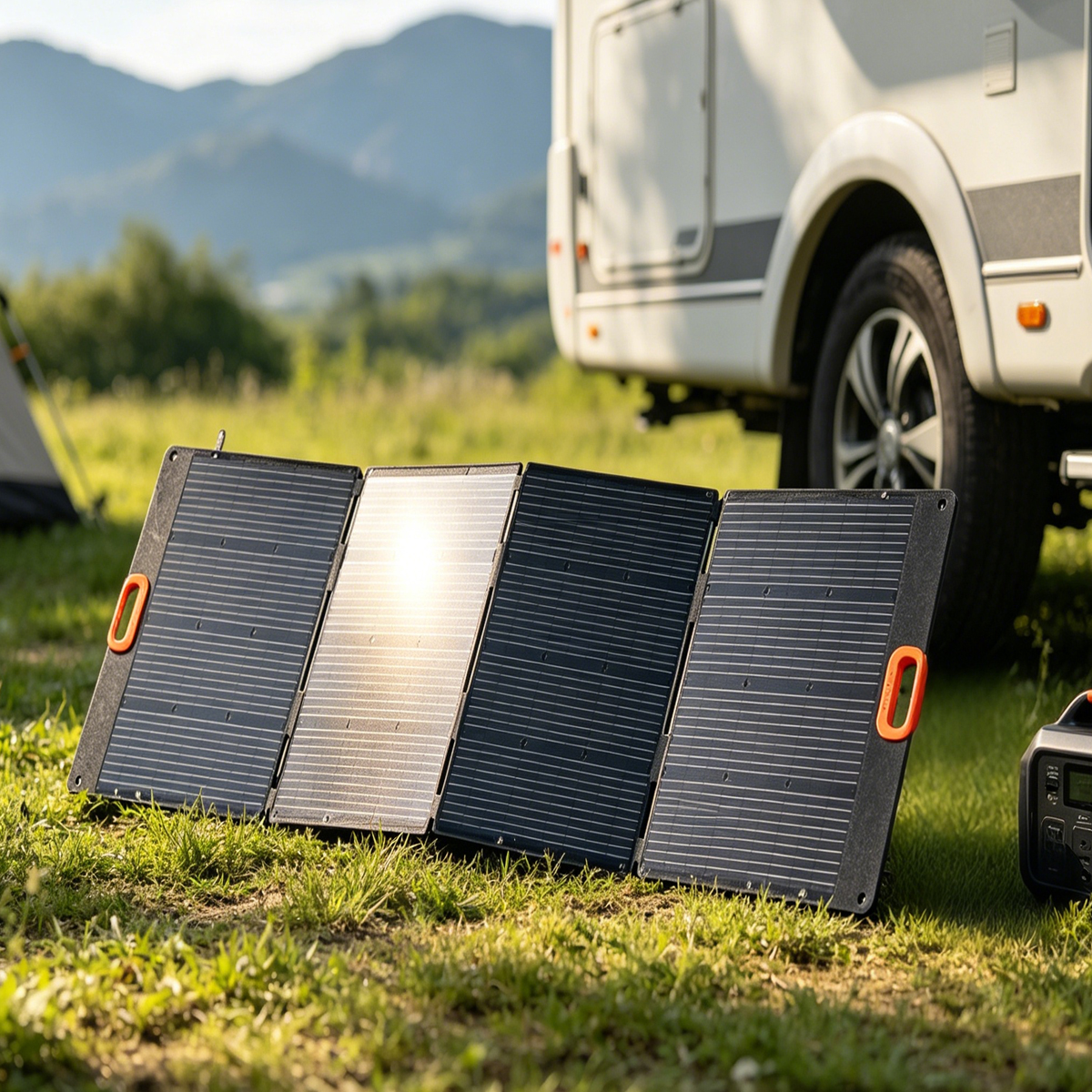
- A 400W Portable Solar Panel can provide renewable charging for compatible portable power stations and storage systems.
- Portable solar generation combined with battery storage can support camping, RVs, field-work tools, and emergency power needs.
- LiFePO4 energy-storage batteries and photovoltaic inverters can be integrated into residential, commercial, industrial, and off-grid installations.
- Standalone systems may serve islands, remote mountain regions, pastoral areas, communications base stations, and monitoring sites with limited grid access.
How the System Works
For mobile outdoor use, a portable solar panel supplies electricity to a power station or dedicated storage unit. The stored energy can then operate equipment when sunlight is unavailable or when temporary grid access is impractical. This arrangement is particularly suitable for camping, recreational vehicles, and field-work equipment that require flexible charging options.
In residential applications, solar-energy storage can retain daytime photovoltaic production for evening consumption or blackout backup. The same operating principle can be expanded to off-grid photovoltaic stations and independent power supplies. For islands, remote mountain areas, pastoral zones, and other isolated sites, system designers must balance solar generation, battery capacity, inverter performance, and the demands of the connected loads.

Battery Quality and Application Support
LiFePO4 batteries are suitable for many energy-storage applications because they can be incorporated into systems designed for repeated charging and discharging. According to Sunvoltx, its quality-control process includes appearance inspection, voltage and internal-resistance measurements, charge-discharge capacity testing, BMS protection checks, hi-pot insulation testing, high- and low-temperature trials, vibration and drop testing, and ageing burn-in screening for qualified storage batteries.
The company also lists CE certifications for its inverters, including certificates CE-INV-260618-0001 and CE-INV-260618-0002. These certifications are stated to support exports to markets in the EU, Middle East, Africa, and South America. In addition, Sunvoltx has established a distribution cooperation for residential and industrial and commercial energy-storage products in Southeast Asia. The project addresses unstable grids and high electricity prices with systems designed for hot climates and supported by local after-sales service centers.
Comparison of Sustainable Power Configurations
| Configuration | Typical use | Environmental contribution |
|---|---|---|
| Portable solar panel and power station | Camping, RVs, and field operations | Provides solar-based charging for mobile equipment |
| Residential solar-storage system | Night-time electricity and outage backup | Stores daytime photovoltaic generation for later consumption |
| Off-grid photovoltaic power system | Islands, mountains, pastoral areas, and isolated sites | Supplies independent electricity where grid service is limited |
| Industrial and commercial energy storage | Peak-valley price management, construction, and events | Stores electricity for later use and temporary power requirements |
Selection Questions to Consider
What is the simplest sustainable replacement for conventional outdoor power?
The most direct option identified here is a portable solar panel connected to a compatible energy-storage system. It can generate electricity for storage or immediate use during camping, RV travel, and field work.
Which applications can use portable solar power?
Relevant applications include camping, recreational vehicles, field equipment, residential solar storage, independent supplies for islands and remote mountain locations, and small off-grid photovoltaic plants.
What should be checked before purchasing a system?
Confirm that the panel, charger, battery, inverter, and connected equipment are electrically compatible. Buyers should also review product specifications, protection functions, inspection standards, delivery conditions, and the scope of after-sales support.
Conclusion
Portable solar panels, LiFePO4 energy-storage batteries, photovoltaic inverters, and integrated storage systems provide practical lower-impact choices for outdoor and off-grid electricity. Their suitability depends on solar availability, expected loads, storage duration, and equipment compatibility. Sunvoltx states that it operates an integrated manufacturing and trading business with a minimum order quantity of 100 pieces, a 15-day delivery period, and monthly production capacity exceeding 5,000 units. Technical solution inquiries can be directed to marketing@sunvoltx.com.
About Us
shenzhen sunvoltx intelligent technology Co., Ltd. is a high-tech enterprise focused on the research, development, production, customization, and wholesale supply of energy-storage power products, inverters, and chargers. Its solutions are used in outdoor activities, household backup, industrial equipment, communication base stations, and new-energy support applications. The company describes its R&D capabilities as covering energy storage, inverter, and photovoltaic control technologies, including solution design, hardware commissioning, software development, and performance testing for OEM and ODM projects. Its listed products include chargers, energy-storage systems, inverters, portable power stations, LiFePO4 batteries, portable solar panels, and solar charge controllers. The company also lists CE-certified inverters and reports customers across multiple industries.

Can LiFePO4 Energy Storage Batteries Match Custom Enclosures and Capacity Needs?
Yes. LiFePO4 energy storage batteries can be adapted to customer-specified enclosure formats and capacity targets through OEM/ODM development. The available product record identifies a 100Ah LiFePO4 energy storage battery, while enclosure dimensions and a complete electrical specification are not provided. A technical review is therefore required to confirm the design, BMS functions, interfaces, and operating conditions.
Customization Scope and Main Benefits
Customized battery development starts by matching the battery system to its installation space, energy demand, application environment, and required interfaces. Depending on the project, the solution may involve enclosure adaptation, battery-pack configuration, BMS parameter setting, hardware commissioning, software development, and performance validation.
- OEM/ODM services are available for application-specific energy-storage battery solutions.
- The listed product is a 100Ah LiFePO4 energy storage battery.
- Typical applications include residential solar storage, portable outdoor power, blackout backup, communication base stations, and off-grid systems.
- The stated minimum order quantity is 100 pieces, with a listed delivery time of 15 days.
- Final compatibility depends on the customer’s enclosure drawings, capacity requirements, electrical targets, and working environment.
How the Custom Design Is Evaluated
Enclosure and Installation Requirements
The customer should provide enclosure length, width, height, mounting points, connector positions, cable routing, ventilation requirements, material preferences, and dimensional tolerances. These details help determine whether the battery cells, BMS, busbars, terminals, and protective components can be arranged safely within the available space.
Capacity and Electrical Configuration
Although the available product information specifies a 100Ah LiFePO4 battery, it does not state the complete voltage, current, weight, energy, or dimensional data. The required nominal voltage, continuous and peak output current, charging method, usable energy, cycle expectations, and inverter compatibility should be confirmed before a final configuration is approved.
BMS and Protection Functions
The battery management system is reviewed for functions such as overcharge protection, over-discharge protection, overcurrent protection, short-circuit protection, temperature monitoring, cell balancing, and communication requirements. Protection thresholds should be aligned with the intended application and the specifications of the connected inverter or power system.
Testing and Application Considerations
The listed quality-control process covers appearance inspection, voltage and internal-resistance measurement, charge-discharge capacity testing, BMS protection verification, hi-pot insulation testing, high- and low-temperature evaluation, vibration testing, drop testing, and ageing burn-in. Together, these procedures assess electrical output, insulation safety, protection response, environmental durability, mechanical resistance, and production consistency.
In a residential solar-storage system, a LiFePO4 battery can store photovoltaic electricity for evening consumption and provide backup power during grid interruptions. For commercial and industrial users, energy storage may support peak-load management, time-of-use electricity shifting, backup power for offices and retail locations, and temporary electricity at construction projects or exhibitions.
Shenzhen Sunvoltx Intelligent Technology Co., Ltd. holds CE certifications for inverter products, including certificate numbers CE-INV-260618-0001 and CE-INV-260618-0002. These credentials support exports to markets in the European Union, the Middle East, Africa, and South America. The company has also participated in a Southeast Asian cooperation project involving a 1GWh distribution partnership, supplying residential and industrial and commercial energy-storage power products for regions affected by unstable grids and high electricity costs, supported by local after-sales service.

Available Information Versus Project Confirmation
| Item | Information Currently Available | Details Needed for Final Approval |
|---|---|---|
| Battery model | 100Ah LiFePO4 energy storage battery | Confirm voltage, energy, current, weight, and the required capacity configuration |
| Enclosure design | OEM/ODM customization and independent scheme design are supported | Submit enclosure drawings, mounting points, interfaces, materials, and tolerance requirements |
| BMS protection | BMS protection verification is part of the listed inspection process | Define protection thresholds, communications, thermal conditions, and system compatibility |
| Validation testing | Capacity, insulation, temperature, vibration, drop, and ageing tests are listed | Match the test plan to the application, destination market, and customer acceptance criteria |
| Order terms | MOQ: 100 pieces; stated lead time: 15 days | Reconfirm timing after design approval, materials review, and order confirmation |
Frequently Asked Questions
Can the battery pack be made to fit a customer-owned enclosure?
Potentially, yes. OEM/ODM development services include solution design, hardware commissioning, software development, and performance testing. The supplier must first assess the enclosure drawings, available internal space, mounting method, thermal conditions, and electrical interfaces.
Is the 100Ah capacity confirmed?
Yes. The listed product is described as a 100Ah LiFePO4 energy storage battery. However, the available record does not provide a full electrical datasheet covering voltage, continuous current, peak current, weight, dimensions, or total energy.
What quality tests are included?
The stated inspection program includes visual checks, voltage and internal-resistance testing, charge-discharge capacity testing, BMS protection verification, hi-pot testing, high- and low-temperature tests, vibration and drop tests, and ageing burn-in screening.
What information should be supplied for a quotation or feasibility review?
Useful project inputs include the enclosure drawing, target capacity, nominal voltage, load profile, charging source, inverter model, operating temperature, installation method, communication protocol, expected quantity, and destination-market compliance requirements.
Conclusion and Next Steps
LiFePO4 energy storage batteries can be assessed and developed around customer-defined enclosure and capacity requirements through OEM/ODM services. The current product information confirms a 100Ah battery, a 100-piece MOQ, a stated 15-day delivery period, and a broad quality-inspection process. It does not, however, confirm enclosure dimensions or a complete electrical datasheet. Final feasibility should be determined after reviewing the customer’s mechanical drawings, electrical targets, BMS requirements, and operating conditions.
Shenzhen Sunvoltx Intelligent Technology Co., Ltd. operates an integrated industrial and trading model with monthly output exceeding 5,000 energy-storage products. For technical consultation, customized solution development, or project support, contact marketing@sunvoltx.com.
About Us
shenzhen sunvoltx intelligent technology Co., Ltd. specializes in the R&D, manufacturing, customization, and wholesale supply of energy-storage power supplies, inverters, and chargers. The company provides OEM/ODM development, bulk orders, and application-oriented power solutions. Its engineering team supports system planning, hardware commissioning, software development, and performance testing for energy-storage, inverter, and photovoltaic-control technologies. With monthly production of more than 5,000 energy-storage products, the company serves customers in North America, South America, Europe, the Middle East, Africa, and Southeast Asia. Its listed credentials include CE certificates CE-INV-260618-0001 and CE-INV-260618-0002, and it has supported customers across several industries through energy-storage cooperation projects.
REPORT