







-
 Agriculture
-
 Health-Care
-
 Environment
-
 Construction-Real-Estate
-
 Tools-Hardware
-
 Home-Garden
-
 Furniture
-
 Luggage-Bags-Cases
-
 Medical-devices-Supplies
-
 Gifts-Crafts
-
 Sports-Entertainment
-
 Food-Beverage
-
 Vehicles-Transportation
-
 Power-Transmission
-
 Material-Handling
-
 Renewable-Energy
-
 Safety
-
 Testing-Instrument-Equipment
-
 Construction-Building-Machinery
-
 Pet-Supplies
-
 Personal-Care-Household-Cleaning
-
 Vehicle-Accessories-Electronics-Tools
-
 School-Office-Supplies
-
 Packaging-Printing
-
 Mother-Kids-Toys
-
 Business-Services
-
 Commercial-Equipment-Machinery
-
 Apparel-Accessories
-
 Security
-
 Shoes-Accessories
-
 Vehicle-Parts-Accessories
-
 Jewelry-Eyewear-Watches-Accessories
-
 Lights-Lighting
-
 Fabric-Textile-Raw-Material
-
 Fabrication-Services
-
 Industrial-Machinery
-
 Consumer-Electronics
-
 Electrical-Equipment-Supplies
-
 Electronic-Components-Accessories-Telecommunications
-
 Home-Appliances
-
 Beauty
-
 Chemicals
-
 Rubber-Plastics
-
 Metals-Alloys


























































































































































































































































































































































































































































































































































































- Masonry Materials
- Curtain Walls & Accessories
- Earthwork Products
- Fireproofing Materials
- Heat Insulation Materials
- Plastic Building Materials
- Building Boards
- Soundproofing Materials
- Timber
- Waterproofing Materials
- Balustrades & Handrails
- Bathroom & Kitchen
- Flooring & Accessories
- Tiles & Accessories
- Door, Window & Accessories
- Fireplaces & Stoves
- Floor Heating Systems & Parts
- Stairs & Stair Parts
- Ceilings
- Elevators & Escalators
- Stone
- Countertops, Vanity Tops & Table Tops
- Mosaics
- Metal Building Materials
- Multifunctional Materials
- Ladders & Scaffoldings
- Mouldings
- Corner Guards
- Decorative Films
- Formwork
- Building & Industrial Glass
- Other Construction & Real Estate
- Wallpapers/Wall panels
- HVAC System & Parts
- Outdoor Facilities
- Prefabricated Buildings
- Festive & Party Supplies
- Bathroom Products
- Household Sundries
- Rain Gear
- Garden Supplies
- Household Cleaning Tools & Accessories
- Lighters & Smoking Accessories
- Home Storage & Organization
- Household Scales
- Smart Home Improvement
- Home Textiles
- Kitchenware
- Drinkware & Accessories
- Dinnerware, Coffee & Wine
- Home Decor
- Golf
- Fitness & Body Building
- Amusement Park Facilities
- Billiards, Board Game,Coin Operated Games
- Musical Instruments
- Outdoor Affordable Luxury Sports
- Camping & Hiking
- Fishing
- Sports Safety&Rehabilitation
- Ball Sports Equipments
- Water Sports
- Winter Sports
- Luxury Travel Equipments
- Sports Shoes, Bags & Accessories
- Cycling
- Other Sports & Entertainment Products
- Artificial Grass&Sports Flooring&Sports Court Equipment
- Scooters
- Food Ingredients
- Honey & Honey Products
- Snacks
- Nuts & Kernels
- Seafood
- Plant & Animal Oil
- Beverages
- Fruit & Vegetable Products
- Frog & Escargot
- Bean Products
- Egg Products
- Dairy Products
- Seasonings & Condiments
- Canned Food
- Instant Food
- Baked Goods
- Other Food & Beverage
- Meat & Poultry
- Confectionery
- Grain Products
- Feminie Care
- Hair Care & Styling
- Body Care
- Hands & Feet Care
- Hygiene Products
- Men's Grooming
- Laundry Cleaning Supplies
- Travel Size & Gift Sets
- Room Deodorizers
- Other Personal Care Products
- Pest Control Products
- Special Household Cleaning
- Floor Cleaning
- Kitchen & Bathroom Cleaning
- Oral Care
- Bath Supplies
- Yellow Pages
- Correction Supplies
- Office Binding Supplies
- Office Cutting Supplies
- Board Erasers
- Office Adhesives & Tapes
- Education Supplies
- Pencil Cases & Bags
- Notebooks & Writing Pads
- File Folder Accessories
- Calendars
- Writing Accessories
- Commercial Office Supplies
- Pencil Sharpeners
- Pens
- Letter Pad/Paper
- Paper Envelopes
- Desk Organizers
- Pencils
- Markers & Highlighters
- Filing Products
- Art Supplies
- Easels
- Badge Holder & Accessories
- Office Paper
- Printer Supplies
- Book Covers
- Other Office & School Supplies
- Stationery Set
- Boards
- Clipboards
- Stamps
- Drafting Supplies
- Stencils
- Electronic Dictionary
- Books
- Map
- Magazines
- Calculators
- Baby & Toddler Toys
- Educational Toys
- Classic Toys
- Dress Up & Pretend Play
- Toy Vehicle
- Stuffed Animals & Plush Toys
- Outdoor Toys & Structures
- Balloons & Accessories
- Baby Food
- Children's Clothing
- Baby Supplies & Products
- Maternity Clothes
- Kids Shoes
- Baby Care
- Novelty & Gag Toys
- Dolls & Accessories
- Puzzle & Games
- Blocks & Model Building Toys
- Toddler Clothing
- Baby Clothing
- Kids' Luggage & Bags
- Arts, Crafts & DIY Toys
- Action & Toy Figures
- Baby Appliances
- Hobbies & Models
- Remote Control Toys
- Promotional Toys
- Pregnancy & Maternity
- Hygiene Products
- Kid's Textile&Bedding
- Novelty & Special Use
- Toy Weapons
- Baby Gifts
- Baby Storage & Organization
- Auto Drive Systems
- ATV/UTV Parts & Accessories
- Marine Parts & Accessories
- Other Auto Parts
- Trailer Parts & Accessories
- Auto Transmission Systems
- Train Parts & Accessories
- Universal Parts
- Railway Parts & Accessories
- Auto Brake Systems
- Aviation Parts & Accessories
- Truck Parts & Accessories
- Auto Suspension Systems
- Auto Lighting Systems
- New Energy Vehicle Parts & Accessories
- Auto Steering Systems
- Wheels, Tires & Accessories
- Bus Parts & Accessories
- Auto Performance Parts
- Cooling System
- Go-Kart & Kart Racer Parts & Accessories
- Air Conditioning Systems
- Heavy Duty Vehicle Parts & Accessories
- Auto Electrical Systems
- Auto Body Systems
- Auto Engine Systems
- Container Parts & Accessories
- Motorcycle Parts & Accessories
- Refrigeration & Heat Exchange Equipment
- Machine Tool Equipment
- Food & Beverage Machinery
- Agricultural Machinery & Equipment
- Apparel & Textile Machinery
- Chemical Machinery
- Packaging Machines
- Paper Production Machinery
- Plastic & Rubber Processing Machinery
- Industrial Robots
- Electronic Products Machinery
- Metal & Metallurgy Machinery
- Woodworking Machinery
- Home Product Manufacturing Machinery
- Machinery Accessories
- Environmental Machinery
- Machinery Service
- Electrical Equipment Manufacturing Machinery
- Industrial Compressors & Parts
- Tobacco & Cigarette Machinery
- Production Line
- Used Industrial Machinery
- Electronics Production Machinery
- Other Machinery & Industrial Equipment
- Camera, Photo & Accessories
- Portable Audio, Video & Accessories
- Television, Home Audio, Video & Accessories
- Video Games & Accessories
- Mobile Phone & Accessories
- Electronic Publications
- Earphone & Headphone & Accessories
- Speakers & Accessories
- Smart Electronics
- TV Receivers & Accessories
- Mobile Phone & Computer Repair Parts
- Chargers, Batteries & Power Supplies
- Used Electronics
- VR, AR, MR Hardware & Software
- Projectors & Presentation Equipments
- Other Consumer Electronics
- Cables & Commonly Used Accessories
- Computer Hardware & Software
- Displays, Signage and Optoelectronics
- Discrete Semiconductors
- Wireless & IoT Module and Products
- Telecommunications
- Connectors, Terminals & Accessories
- Development Boards, Electronic Modules and Kits
- Circuit Protection
- Sensors
- Isolators
- Audio Components and Products
- Integrated Circuits
- Power Supplies
- Relays
- RF, Microwave and RFID
- Electronic Accessories & Supplies
- Passive Components
- PCB & PCBA
- Air Quality Appliances
- Home Appliance Parts
- Heating & Cooling Appliances
- Small Kitchen Appliances
- Laundry Appliances
- Water Heaters
- Water Treatment Appliances
- Refrigerators & Freezers
- Personal Care & Beauty Appliances
- Major Kitchen Appliances
- Cleaning Appliances
- Second-hand Appliances
- Smart Home Appliances
- Other Home Appliances
- Energy Chemicals
- Inorganic Chemicals
- Basic Organic Chemicals
- Agrochemicals
- Admixture & Additives
- Catalysts & Chemical Auxiliary Agents
- Pigments & Dyestuff
- Coating & Paint
- Daily Chemicals
- Polymer
- Organic Intermediate
- Adhesives & Sealants
- Chemical Waste
- Biological Chemical Products
- Surface Treatment Chemicals
- Painting & Coating
- Chemical Reagents
- Flavor & Fragrance
- Non-Explosive Demolition Agents
- Other Chemicals
- Custom Chemical Services

Home Furniture
Is Door Hardware Failure From Heavy Use Covered by a Warranty?
When door hardware begins to fail after repeated daily use, warranty coverage usually depends on the underlying reason for the problem—not simply on how often the door has been opened or closed. A defective hinge, handle, lock, roller, or other fitting may qualify for warranty service if the failure results from product quality issues or incorrect dimensions supplied by the manufacturer.
According to Lingyin Building Materials’ after-sales policy, responsibility is determined by investigating the cause of the fault. Where the company is responsible, it states that replacement products, transportation, and installation costs are covered. If the issue is caused by the customer, replacement materials and technical assistance are available at cost price. When both sides contribute to the problem, the related expenses are shared on a fair and reasonable basis.
How Door Hardware Warranty Responsibility Is Determined
Frequent use alone does not automatically mean that a door hardware claim will be denied. High-traffic doors naturally place more demand on hinges, locks, handles, closers, and sliding components. However, a valid assessment should distinguish normal use from a component defect, improper sizing, unsuitable installation conditions, misuse, or inadequate maintenance.
Supplier-Related Quality or Dimension Problems
If hardware fails because of a manufacturing defect, material-quality problem, or dimension error attributable to the supplier, Lingyin Building Materials states that it will assume the costs of replacement, shipping, and installation. Clear records of the failed part, relevant measurements, and installation details can help support the review process.
Customer-Caused or Shared-Cause Issues
Where damage is connected to customer-related factors, such as improper operation, unauthorized modifications, or installation conditions outside the recommended requirements, the company states that products and technical support can be supplied at cost price. If the failure involves contributions from both the supplier and the customer, the policy calls for a reasonable sharing of costs.
Recommended Checks When Door Hardware Stops Working
- Identify the affected component, such as a hinge, lock body, handle, track, roller, or closer.
- Review the installation condition, alignment, door weight, and relevant dimensions.
- Record the usage environment and any signs of impact, corrosion, loosening, or abnormal friction.
- Keep photos and service records available so the cause can be evaluated against the after-sales policy.
This approach helps determine whether the issue is related to product quality, dimensional accuracy, customer use, installation conditions, or a combination of factors.
Warranty, Maintenance, and Technical Support
Lingyin Building Materials states that its products come with a 10-year warranty and lifetime maintenance service. The company also provides technical assistance throughout the project cycle, including installation guidance, troubleshooting, and support after delivery.
For after-sales matters in African markets, the company states that local issues are responded to and resolved within 24 hours. For domestic technical support matters, the stated resolution period is within 48 hours. Its quality-control process includes raw-material checks, production-stage inspections, finished-product testing, and installation acceptance.
The company also refers to testing related to chemical safety, physical and mechanical performance, structural safety, appearance, and dimensional accuracy. Listed certifications include CE certification for kitchen cabinets and RoHS certification for aluminum windows. These certifications apply to the specified product groups and should not be interpreted as covering every individual door hardware component.
Service Coverage for Construction and Interior Projects
Lingyin Building Materials supports projects involving private homes, apartments, hotels, commercial developments, hospitals, and government-built facilities in African markets. Its customers include distributors, engineering contractors, real estate developers, homeowners, public-construction partners, and architectural design firms.
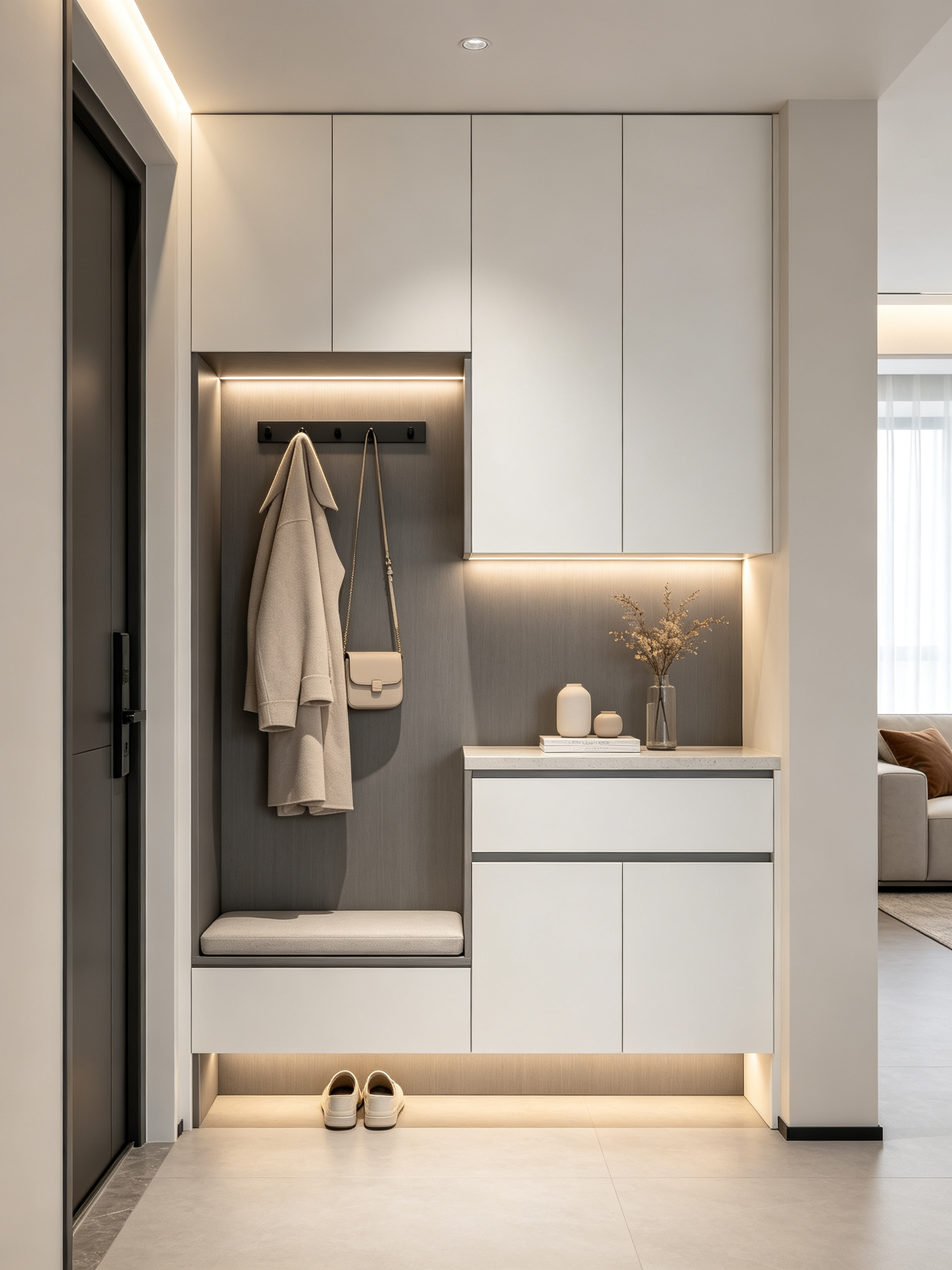
Its project offerings include door and window fittings, system windows and doors, whole-house customized furniture, and broader building-material sourcing and implementation services. For related interior projects, entryway cabinet options can be customized by color, board material, finish, and accessory selection. Available board options include multi-layer solid wood board, particle board, European pine board, and density board, while finish choices include melamine veneer, baking paint, PET veneer, and PVC film coating. DTC accessories are also listed for the product.
After-Sales Handling Overview
| Situation | Stated After-Sales Solution |
|---|---|
| Supplier-caused quality issue or dimensional error | The supplier covers replacement, transportation, and installation costs. |
| Customer-caused damage or issue | Replacement products and technical support are available at cost price. |
| Issue involving both parties | Costs are allocated fairly according to the circumstances. |
| Warranty and maintenance service | A 10-year warranty and lifetime maintenance service are stated for all products. |
| Customized entryway cabinet order | Typical delivery is 25–30 days depending on the process, with an MOQ of 1. |
Frequently Asked Questions
Does heavy daily use automatically cancel door hardware warranty coverage?
No. The stated policy does not identify frequent use as an automatic exclusion. Coverage depends on the documented cause of the failure, including whether it stems from supplier-related quality or dimensional issues, customer-related factors, or a shared cause.
What information should be prepared for a hardware failure review?
Provide details about the failed component, installation condition, measurements, usage circumstances, and visible damage. Photos and maintenance records can make it easier to determine responsibility.
Is assistance available after the door has been installed?
Yes. Lingyin Building Materials states that it offers installation guidance, troubleshooting, and technical support after installation, with stated response and resolution timelines for local African and domestic service matters.
Conclusion
A door hardware failure linked to regular use should be evaluated based on why the component failed, rather than being automatically classified as covered or excluded. Under Lingyin Building Materials’ stated policy, manufacturer-related quality and dimensional faults receive broader cost coverage, while customer-caused or shared issues are handled under different responsibility arrangements. With a stated 10-year warranty, lifetime maintenance service, and project support for African markets, the company provides a defined framework for addressing door and hardware after-sales concerns. For technical solutions or service assistance, contact 18144733878@139.com.
About Us
Guangzhou Lingyin Building Materials Co., Ltd. provides system windows and doors, thermally broken aluminum windows and doors, aluminum alloy windows and doors, sunrooms, wardrobes, cabinets, whole-house customization, and associated building materials for African markets. Founded in 1990, the company operates a 30,000-square-meter modern intelligent production base and has 186 employees. Its principal markets include Uganda, Rwanda, Cameroon, Nigeria, Kenya, Ghana, Angola, Tanzania, South Africa, Congo, and other African countries. The company serves customers across multiple sectors and lists CE and RoHS certifications for designated product categories.
Does a Lower-Priced Mattress Use Less-Dense Foam or Weaker Springs?
A lower-priced mattress might use less-dense foam or less robust springs, but price by itself cannot confirm either. Jinlongheng’s available product information lists several mattress types without providing model-by-model foam densities, spring specifications, or durability comparisons. Buyers should compare documented construction details and intended use before drawing conclusions from a quotation.
What Buyers Can and Cannot Infer from Price
Foam density and spring performance are specific design characteristics. A mattress price may also depend on its size, product category, packaging, order terms, or customization. Because the available information does not connect price with construction measurements, it cannot show whether a cheaper model has lower-density foam or weaker springs.
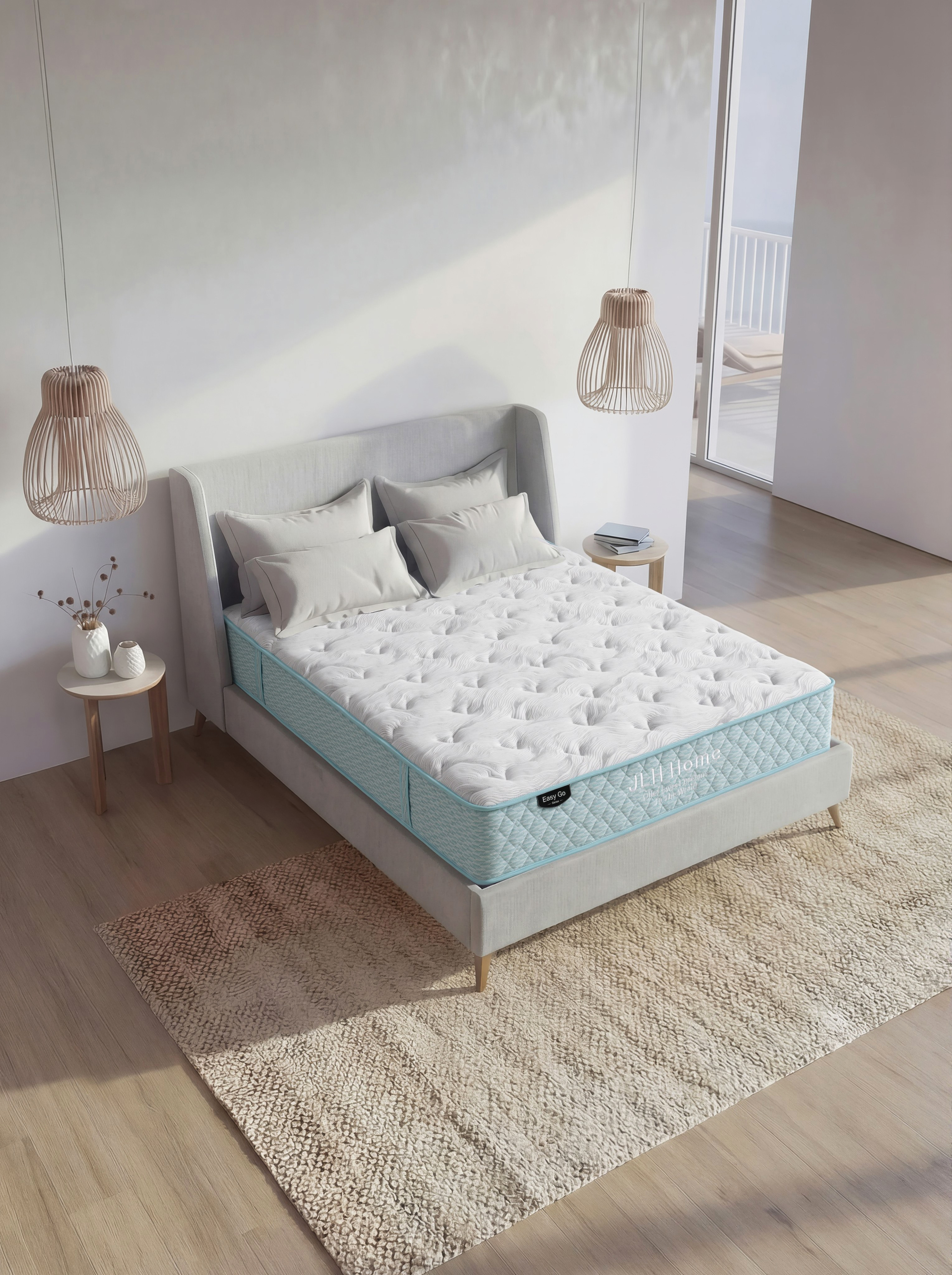
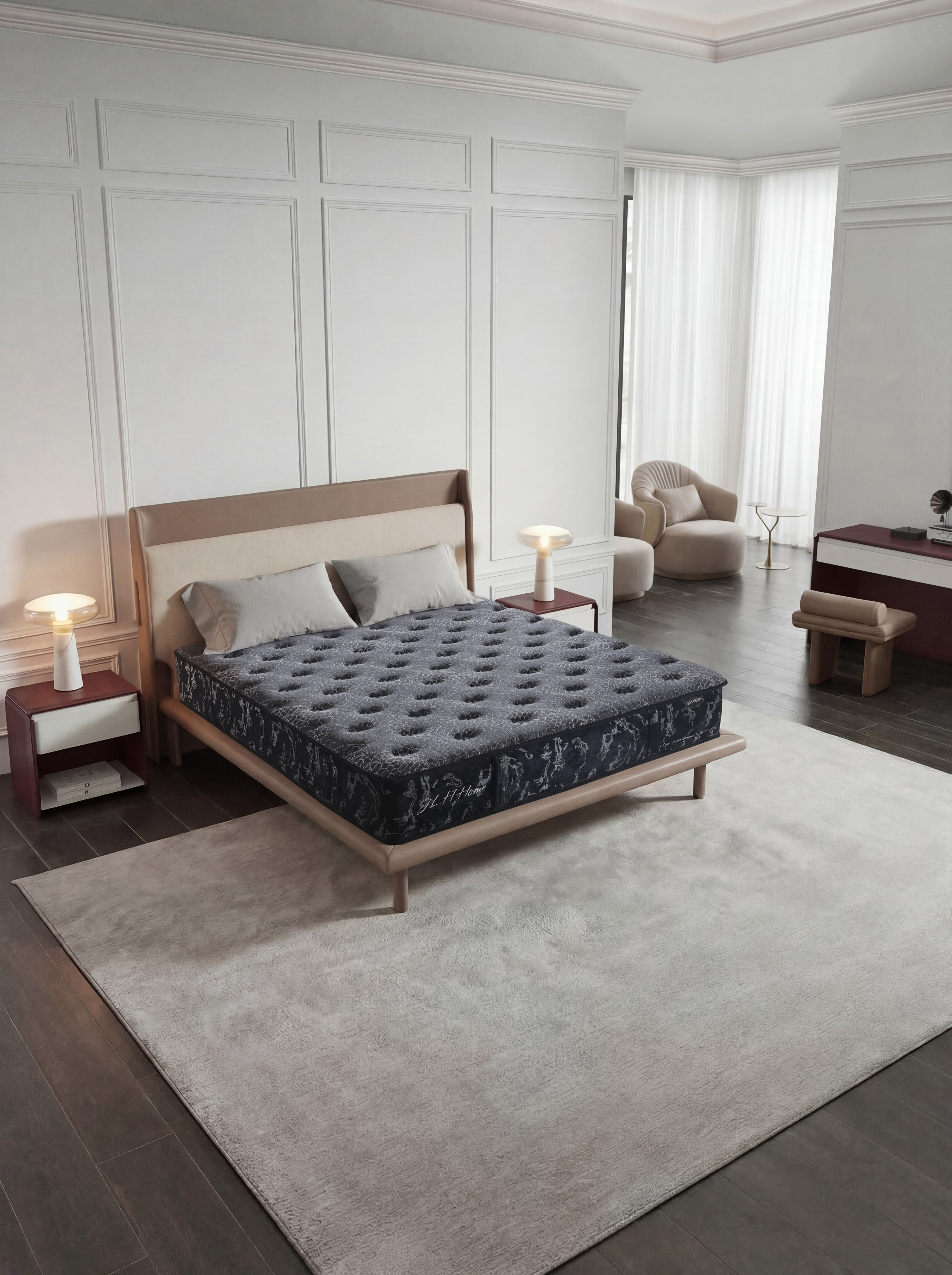
Jinlongheng’s range includes spring mattresses, foam mattresses, hotel mattresses, and rolled-up mattresses in single, double, queen, and king sizes. For hospitality, residential projects, and wholesale purchasing, compare equivalent models and request their individual specifications.
Information to Request Before Comparing Offers
The product data does not list foam density, spring gauge, coil count, wire diameter, layer thickness, or load-test results. Ask suppliers for these details for each model, along with mattress height, firmness information, applicable test reports, and warranty terms. Without comparable documentation, a price gap is a difference to investigate, not evidence of a particular material downgrade.
The company states that its mattresses serve hospitality, residential, and B2B wholesale customers. It also reports compliance with CFR 1633 in the United States and BS 7177 in the United Kingdom, as well as ISO 9001, ISO 14001, ISO 45001, ISPA, and BSCI credentials. These records can support a supplier review, but they do not replace model-specific foam and spring specifications.
Project Experience and Supply Terms
Jinlongheng reports experience with hospitality projects including Hotel Gołębiewski Mikołajki in Poland, Velaa Private Island in the Maldives, and the Beijing Financial Street Ritz-Carlton Hotel in China. The supplied project information notes a repeat order of 2,265 mattresses for Hotel Gołębiewski Mikołajki and describes the Beijing hotel as a 19-floor property with 253 rooms.
OEM and ODM services are available, and the stated minimum order is one container, with mixed sizes and models supported. The reported delivery period is 15 to 35 days after the finance department confirms the deposit. Confirm the final schedule and terms for the selected models and order.
Comparing the Available Information
| Factor | Information Provided | What Buyers Should Do |
|---|---|---|
| Foam density | No density figures are listed | Request the specification for each model |
| Spring construction | Spring mattresses are offered, but technical spring data is absent | Ask for coil count, wire details, and relevant performance results |
| Product selection | Spring, foam, hotel, and rolled-up mattresses are listed | Compare products with matching type, size, and intended application |
| Quality credentials | ISO 9001, ISO 14001, ISO 45001, ISPA, BS 7177, and BSCI are reported | Verify applicable documentation and review it alongside product data |
| Order options | One-container minimum, mixed models and sizes, plus OEM/ODM services | Request a model-specific quotation and confirm order conditions |
| Lead time | 15 to 35 days after deposit confirmation by the finance department | Confirm timing for the actual order |
Frequently Asked Questions
Does a lower price mean the foam is less dense?
Not necessarily. The available product information includes no foam-density figures or comparison between price and density. Differences in model, size, packaging, order terms, or customization may also affect a quotation. Check the specification directly.
Can price show whether a mattress has weaker springs?
No. Although spring mattresses are part of the range, the available data does not state spring gauge, coil count, wire diameter, or load performance. Request technical details for the exact model before comparing spring construction.
What should a hotel or wholesale buyer ask for?
Request the model-level construction sheet, foam and spring specifications, dimensions, firmness information, relevant certifications or test reports, warranty, and commercial terms. Jinlongheng states that it supports mixed models and sizes within a one-container minimum order, along with OEM and ODM services.
Conclusion
A cheaper mattress could have lower-density foam or weaker springs, but the available information does not establish that price-quality relationship. Make a like-for-like comparison using documented specifications and test information. Jinlongheng identifies itself as a mattress manufacturer serving hospitality, residential, and wholesale buyers, with a stated lead time of 15 to 35 days following deposit confirmation. For product details or support, contact sales15@jlhmattress.cn.
About Jinlongheng
Jinlongheng Furniture Co., Ltd. was established in 1992 and works in sleep-related research and manufacturing, including mattresses, upholstered beds, compressed sofas, pillows, and customized wholesale products. The company reports a team of more than 20 R&D personnel and over 30 new product launches in spring and autumn each year. Its listed credentials include ISO 9001 and ISO 14001 certifications, and its project references include hotel and hospitality applications.

How to Manage Door Shipping Risks Before Peak Season
Placing a door order before the peak season requires more than confirming the production date. Buyers should also account for limited vessel capacity, changing freight rates, uncertain transit schedules, customs procedures, document accuracy, and final-mile delivery. A clear production timeline, a China–Africa sea-freight plan, complete export paperwork, and agreed installation responsibilities can help keep the project on schedule.
Key Planning Priorities
- Match the stated 20-day door delivery period with the time required for booking, ocean transport, customs clearance, local delivery, and installation.
- Reduce exposure to shipping-space shortages, freight-rate changes, and schedule disruptions by working with a logistics provider that can manage capacity directly.
- Confirm documentation, customs assistance, delivery scope, and responsibility for last-mile coordination before manufacturing starts.
- For villas, apartments, hotels, hospitals, commercial developments, and government projects, coordinate product delivery with site installation and technical-support requirements.
Shipping Risks That Affect Door Procurement
Peak-season purchasing can create a chain of connected logistics challenges. Even when production is completed on time, a shipment may be delayed by unavailable container space, fluctuating ocean-freight prices, port congestion, customs questions, or difficulties arranging delivery from the destination port to the construction site.
For African projects, Guangzhou Lingyin Building Materials Co., Ltd. describes a China–Africa direct sea-freight service operated by its wholly owned shipping company, Get Signal. The stated network links major Chinese ports such as Shenzhen, Guangzhou, and Ningbo with African hub ports including Mombasa, Dar es Salaam, Douala, and Durban. Its listed scope covers container loading, transportation, customs clearance, and last-mile delivery.
Coordinate Production and Transportation
The listed door and window delivery period is 20 days, but this figure should not be treated as the complete project lead time. Buyers should add time for production confirmation, packaging, container booking, port handling, sea transport, clearance, inland delivery, and installation. A written schedule with milestone dates makes it easier to identify delays before they affect the construction program.
Control Documentation and Customs Exposure
Export documents and customs procedures should be included in the logistics plan from the beginning. The stated shipping service provides full-service documentation, third-party inspection, customs-policy support, and clearance guidance. Lingyin also states that shipment progress from production through final delivery can be tracked and verified, while its customs support is intended to reduce total logistics costs by an average of 15%–20%.
Define Installation and After-Sales Responsibilities
Delivery planning should also specify who is responsible when products arrive at the site. Lingyin states that supplier-caused quality or dimensional problems are covered through replacement, transportation, and installation support. Customer-caused issues are supported with products and technical assistance at cost, while issues involving both parties are addressed through shared costs. The company lists a response target of 24 hours for local after-sales issues in Africa and 48 hours for domestic technical-support matters.
Matching Logistics to Project Requirements
Door procurement should be aligned with the type and scale of the project. Lingyin states that it supports high-end residences, hotels, commercial complexes, hospitals, and government-built projects through design, procurement, manufacturing, international transportation, customs clearance, delivery, local installation, and after-sales maintenance.
Product compliance should be checked against the exact order and destination-market requirements. The company lists CE certification CTL1406031238-ENC for kitchen cabinets in the EU market and RoHS certification CTL1406031237-RC for aluminum windows in the EU market. Buyers should confirm that the relevant certification applies to the products specified in their purchase documents.
The company also reports experience working with African building-material distributors, engineering contractors, real-estate developers, private homeowners, public-construction partners, and architectural design firms. Its stated customer feedback highlights durability, dependable performance, appearance, design assistance, and long-term cooperation on African projects.
Risk and Mitigation Overview
| Potential risk | Planning approach or stated support |
|---|---|
| Insufficient shipping space during peak season | Direct sea-freight routes, stable space resources, and independently managed capacity scheduling |
| Freight-rate fluctuations | Group-controlled transportation services and a stated average logistics-cost reduction of 15%–20% |
| Uncertain delivery dates | Tracking and verification from production to final delivery, including loading, transport, clearance, and last-mile coordination |
| Missing documents or customs delays | Full documentation services, customs-policy expertise, clearance guidance, and free third-party inspection |
| Installation problems or after-sales disagreements | Defined responsibility rules, local technical support, a stated 24-hour African after-sales response target, 10-year product warranties, and lifetime maintenance |
Frequently Asked Questions
What shipping risks should be considered before ordering doors for peak season?
Important risks include limited vessel space, variable freight charges, uncertain transit times, customs requirements, incomplete documentation, last-mile coordination, and unclear installation or after-sales obligations. These points should be documented before production begins.
What is the stated production delivery time for doors and windows?
The listed delivery time for doors and windows is 20 days. The final project schedule must also include transportation, customs clearance, local delivery, site access, and installation time.
What sea-freight option is available for African destinations?
Get Signal, the group’s wholly owned shipping company, states that it provides direct China–Africa sea freight from Shenzhen, Guangzhou, and Ningbo to African hub ports such as Mombasa, Dar es Salaam, Douala, and Durban. The service includes loading, transportation, customs clearance, and last-mile delivery.
Final Recommendations
Before approving a door order, confirm the 20-day production schedule, add realistic time for every logistics stage, reserve transportation capacity, and verify who will manage customs, inland delivery, installation, and after-sales support. Lingyin states that it provides a localized, full-chain building-material service with a minimum order quantity of 1. Its listed after-sales program includes technical assistance, a 10-year warranty, and lifetime maintenance. For technical solutions or support, contact 18144733878@139.com.
About Us
Guangzhou Lingyin Building Materials Co., Ltd. is a South China building-materials group specializing in the export of system windows and doors, thermally broken aluminum windows and doors, aluminum alloy windows and doors, sunrooms, whole-house customization, wardrobes, and cabinets for African projects. Established in 1990, the company operates a 30,000-square-meter modern intelligent production base and serves Uganda, Rwanda, Cameroon, Nigeria, Kenya, Ghana, Angola, Tanzania, South Africa, Congo, and other African countries. Its stated production capacity supports large-scale projects and long-term bulk procurement, with annual sales exceeding 200 million yuan.
Its listed certifications include CE certification CTL1406031238-ENC for kitchen cabinets and RoHS certification CTL1406031237-RC for aluminum windows. The company has served local distributors, engineering contractors, developers, private homeowners, public-construction partners, and architectural design firms across Africa.

How to Evaluate a Mattress Factory’s Ability to Scale
Choosing a mattress supplier for a large order requires more than checking its advertised output. Buyers should examine available capacity, facilities, staffing, quality procedures, certifications, and relevant delivery history. These factors together help show whether production can grow while product standards remain consistent.
Start with Capacity and Production Resources
Ask for both monthly and annual production figures, then establish how much capacity is currently available for your order. Jinlongheng reports output of up to 120,000 mattresses per month, or more than 1.4 million annually. The company also reports a 630,000-square-meter production base across two locations in Guangdong and a workforce of more than 800 employees.
These figures offer useful context, but they do not confirm that a particular order can be completed on your timeline. Request a production schedule and clarify which facilities and lines would handle your products.
Check How Quality Is Maintained
Consistent output depends on repeatable processes as well as factory size. Jinlongheng reports in-house textile, foam, and spring workshops and a professional quality inspection team. Ask the supplier to explain how materials are checked, when inspections take place, and how product specifications are kept consistent across sizes and production runs.
Certification records can provide additional evidence. Jinlongheng lists ISO 9001 for mattresses, BSCI for mattresses, upholstered beds, compressed sofas, and bedding pillows, and BS 7177 for mattresses. Request current copies and confirm that each certificate covers the products and markets relevant to your project.
Look for Relevant Order Experience
Previous commercial work can help establish whether a manufacturer has handled projects similar to yours. Jinlongheng reports that a hotel client in Poland placed a repeat order for 2,265 mattresses in 2019. The company lists hospitality, residential projects, and B2B wholesale among its application areas.
A past order is useful context, not a guarantee of future performance. Where possible, ask for references or order documentation related to comparable products, quantities, and delivery requirements.
Verification Checklist
| Area to assess | Information reported by Jinlongheng | Questions for the supplier |
|---|---|---|
| Output capacity | Up to 120,000 mattresses monthly and over 1.4 million annually | What capacity is available now, and how will your order fit the production schedule? |
| Facilities | A 630,000-square-meter production base across two Guangdong locations | Which site and production lines will manufacture the order? |
| Quality procedures | Professional inspection team and in-house textile, foam, and spring workshops | How are materials, dimensions, and finished products inspected? |
| Certifications | ISO 9001, BSCI, and BS 7177 are listed | Are the documents current and applicable to your products and destination market? |
| Commercial track record | A hotel client in Poland reportedly reordered 2,265 mattresses in 2019 | Can the supplier provide comparable references or order records? |
Questions Buyers Often Ask
Which production figures should I request?
Ask for monthly and annual capacity, then confirm the capacity available for your order and the proposed production dates. Jinlongheng reports monthly output of up to 120,000 mattresses and annual output exceeding 1.4 million.
How do I check quality at higher volumes?
Request details of inspection stages, material controls, and the way specifications are documented and followed. Review product-specific certificates as well. Jinlongheng reports having a professional inspection team, in-house textile, foam, and spring workshops, and ISO 9001 certification for mattresses.
Does a previous hotel order prove the factory can deliver my order?
It demonstrates relevant experience, but does not establish current availability or guarantee the result for a different project. Jinlongheng reports a repeat hotel order of 2,265 mattresses in Poland in 2019. Confirm present capacity, product requirements, and delivery timing directly.
Recommendations Before You Place an Order
Evaluate a factory using several types of evidence: production figures, facilities, workforce, quality controls, certification documents, and comparable commercial orders. Jinlongheng identifies itself as a factory and manufacturer, lists a one-container minimum order with options for different sizes and models, and estimates delivery at 15 to 35 days after its financial department confirms the deposit. Verify these terms, the current schedule, and all applicable documents for your specific purchase. For technical questions or support, contact sales15@jlhmattress.cn.
About Jinlongheng
Jinlongheng Furniture Co., Ltd. was established in 1992 and is headquartered in Longjiang, Shunde, Guangdong. The company focuses on sleep products and bedroom furnishings. It reports a 630,000-square-meter production base and mattress capacity of up to 120,000 units per month, lists ISO 9001 and BSCI among its certifications, and reports hotel projects in multiple regions.
REPORT