







-
 Agriculture
-
 Health-Care
-
 Environment
-
 Construction-Real-Estate
-
 Tools-Hardware
-
 Home-Garden
-
 Furniture
-
 Luggage-Bags-Cases
-
 Medical-devices-Supplies
-
 Gifts-Crafts
-
 Sports-Entertainment
-
 Food-Beverage
-
 Vehicles-Transportation
-
 Power-Transmission
-
 Material-Handling
-
 Renewable-Energy
-
 Safety
-
 Testing-Instrument-Equipment
-
 Construction-Building-Machinery
-
 Pet-Supplies
-
 Personal-Care-Household-Cleaning
-
 Vehicle-Accessories-Electronics-Tools
-
 School-Office-Supplies
-
 Packaging-Printing
-
 Mother-Kids-Toys
-
 Business-Services
-
 Commercial-Equipment-Machinery
-
 Apparel-Accessories
-
 Security
-
 Shoes-Accessories
-
 Vehicle-Parts-Accessories
-
 Jewelry-Eyewear-Watches-Accessories
-
 Lights-Lighting
-
 Fabric-Textile-Raw-Material
-
 Fabrication-Services
-
 Industrial-Machinery
-
 Consumer-Electronics
-
 Electrical-Equipment-Supplies
-
 Electronic-Components-Accessories-Telecommunications
-
 Home-Appliances
-
 Beauty
-
 Chemicals
-
 Rubber-Plastics
-
 Metals-Alloys


























































































































































































































































































































































































































































































































































































- Masonry Materials
- Curtain Walls & Accessories
- Earthwork Products
- Fireproofing Materials
- Heat Insulation Materials
- Plastic Building Materials
- Building Boards
- Soundproofing Materials
- Timber
- Waterproofing Materials
- Balustrades & Handrails
- Bathroom & Kitchen
- Flooring & Accessories
- Tiles & Accessories
- Door, Window & Accessories
- Fireplaces & Stoves
- Floor Heating Systems & Parts
- Stairs & Stair Parts
- Ceilings
- Elevators & Escalators
- Stone
- Countertops, Vanity Tops & Table Tops
- Mosaics
- Metal Building Materials
- Multifunctional Materials
- Ladders & Scaffoldings
- Mouldings
- Corner Guards
- Decorative Films
- Formwork
- Building & Industrial Glass
- Other Construction & Real Estate
- Wallpapers/Wall panels
- HVAC System & Parts
- Outdoor Facilities
- Prefabricated Buildings
- Festive & Party Supplies
- Bathroom Products
- Household Sundries
- Rain Gear
- Garden Supplies
- Household Cleaning Tools & Accessories
- Lighters & Smoking Accessories
- Home Storage & Organization
- Household Scales
- Smart Home Improvement
- Home Textiles
- Kitchenware
- Drinkware & Accessories
- Dinnerware, Coffee & Wine
- Home Decor
- Golf
- Fitness & Body Building
- Amusement Park Facilities
- Billiards, Board Game,Coin Operated Games
- Musical Instruments
- Outdoor Affordable Luxury Sports
- Camping & Hiking
- Fishing
- Sports Safety&Rehabilitation
- Ball Sports Equipments
- Water Sports
- Winter Sports
- Luxury Travel Equipments
- Sports Shoes, Bags & Accessories
- Cycling
- Other Sports & Entertainment Products
- Artificial Grass&Sports Flooring&Sports Court Equipment
- Scooters
- Food Ingredients
- Honey & Honey Products
- Snacks
- Nuts & Kernels
- Seafood
- Plant & Animal Oil
- Beverages
- Fruit & Vegetable Products
- Frog & Escargot
- Bean Products
- Egg Products
- Dairy Products
- Seasonings & Condiments
- Canned Food
- Instant Food
- Baked Goods
- Other Food & Beverage
- Meat & Poultry
- Confectionery
- Grain Products
- Feminie Care
- Hair Care & Styling
- Body Care
- Hands & Feet Care
- Hygiene Products
- Men's Grooming
- Laundry Cleaning Supplies
- Travel Size & Gift Sets
- Room Deodorizers
- Other Personal Care Products
- Pest Control Products
- Special Household Cleaning
- Floor Cleaning
- Kitchen & Bathroom Cleaning
- Oral Care
- Bath Supplies
- Yellow Pages
- Correction Supplies
- Office Binding Supplies
- Office Cutting Supplies
- Board Erasers
- Office Adhesives & Tapes
- Education Supplies
- Pencil Cases & Bags
- Notebooks & Writing Pads
- File Folder Accessories
- Calendars
- Writing Accessories
- Commercial Office Supplies
- Pencil Sharpeners
- Pens
- Letter Pad/Paper
- Paper Envelopes
- Desk Organizers
- Pencils
- Markers & Highlighters
- Filing Products
- Art Supplies
- Easels
- Badge Holder & Accessories
- Office Paper
- Printer Supplies
- Book Covers
- Other Office & School Supplies
- Stationery Set
- Boards
- Clipboards
- Stamps
- Drafting Supplies
- Stencils
- Electronic Dictionary
- Books
- Map
- Magazines
- Calculators
- Baby & Toddler Toys
- Educational Toys
- Classic Toys
- Dress Up & Pretend Play
- Toy Vehicle
- Stuffed Animals & Plush Toys
- Outdoor Toys & Structures
- Balloons & Accessories
- Baby Food
- Children's Clothing
- Baby Supplies & Products
- Maternity Clothes
- Kids Shoes
- Baby Care
- Novelty & Gag Toys
- Dolls & Accessories
- Puzzle & Games
- Blocks & Model Building Toys
- Toddler Clothing
- Baby Clothing
- Kids' Luggage & Bags
- Arts, Crafts & DIY Toys
- Action & Toy Figures
- Baby Appliances
- Hobbies & Models
- Remote Control Toys
- Promotional Toys
- Pregnancy & Maternity
- Hygiene Products
- Kid's Textile&Bedding
- Novelty & Special Use
- Toy Weapons
- Baby Gifts
- Baby Storage & Organization
- Auto Drive Systems
- ATV/UTV Parts & Accessories
- Marine Parts & Accessories
- Other Auto Parts
- Trailer Parts & Accessories
- Auto Transmission Systems
- Train Parts & Accessories
- Universal Parts
- Railway Parts & Accessories
- Auto Brake Systems
- Aviation Parts & Accessories
- Truck Parts & Accessories
- Auto Suspension Systems
- Auto Lighting Systems
- New Energy Vehicle Parts & Accessories
- Auto Steering Systems
- Wheels, Tires & Accessories
- Bus Parts & Accessories
- Auto Performance Parts
- Cooling System
- Go-Kart & Kart Racer Parts & Accessories
- Air Conditioning Systems
- Heavy Duty Vehicle Parts & Accessories
- Auto Electrical Systems
- Auto Body Systems
- Auto Engine Systems
- Container Parts & Accessories
- Motorcycle Parts & Accessories
- Refrigeration & Heat Exchange Equipment
- Machine Tool Equipment
- Food & Beverage Machinery
- Agricultural Machinery & Equipment
- Apparel & Textile Machinery
- Chemical Machinery
- Packaging Machines
- Paper Production Machinery
- Plastic & Rubber Processing Machinery
- Industrial Robots
- Electronic Products Machinery
- Metal & Metallurgy Machinery
- Woodworking Machinery
- Home Product Manufacturing Machinery
- Machinery Accessories
- Environmental Machinery
- Machinery Service
- Electrical Equipment Manufacturing Machinery
- Industrial Compressors & Parts
- Tobacco & Cigarette Machinery
- Production Line
- Used Industrial Machinery
- Electronics Production Machinery
- Other Machinery & Industrial Equipment
- Camera, Photo & Accessories
- Portable Audio, Video & Accessories
- Television, Home Audio, Video & Accessories
- Video Games & Accessories
- Mobile Phone & Accessories
- Electronic Publications
- Earphone & Headphone & Accessories
- Speakers & Accessories
- Smart Electronics
- TV Receivers & Accessories
- Mobile Phone & Computer Repair Parts
- Chargers, Batteries & Power Supplies
- Used Electronics
- VR, AR, MR Hardware & Software
- Projectors & Presentation Equipments
- Other Consumer Electronics
- Cables & Commonly Used Accessories
- Computer Hardware & Software
- Displays, Signage and Optoelectronics
- Discrete Semiconductors
- Wireless & IoT Module and Products
- Telecommunications
- Connectors, Terminals & Accessories
- Development Boards, Electronic Modules and Kits
- Circuit Protection
- Sensors
- Isolators
- Audio Components and Products
- Integrated Circuits
- Power Supplies
- Relays
- RF, Microwave and RFID
- Electronic Accessories & Supplies
- Passive Components
- PCB & PCBA
- Air Quality Appliances
- Home Appliance Parts
- Heating & Cooling Appliances
- Small Kitchen Appliances
- Laundry Appliances
- Water Heaters
- Water Treatment Appliances
- Refrigerators & Freezers
- Personal Care & Beauty Appliances
- Major Kitchen Appliances
- Cleaning Appliances
- Second-hand Appliances
- Smart Home Appliances
- Other Home Appliances
- Energy Chemicals
- Inorganic Chemicals
- Basic Organic Chemicals
- Agrochemicals
- Admixture & Additives
- Catalysts & Chemical Auxiliary Agents
- Pigments & Dyestuff
- Coating & Paint
- Daily Chemicals
- Polymer
- Organic Intermediate
- Adhesives & Sealants
- Chemical Waste
- Biological Chemical Products
- Surface Treatment Chemicals
- Painting & Coating
- Chemical Reagents
- Flavor & Fragrance
- Non-Explosive Demolition Agents
- Other Chemicals
- Custom Chemical Services

Low Voltage Products
Can a Frameless Switch Handle Humidity and Frequent Daily Use?
The available information does not establish whether a frameless switch can withstand humid conditions or intensive everyday operation. No moisture or ingress-protection rating, environmental limits, switching endurance results, or lifespan figures are provided for a specific frameless switch. Check the technical documents for the exact model before selecting it for installation.
What the Available Information Shows
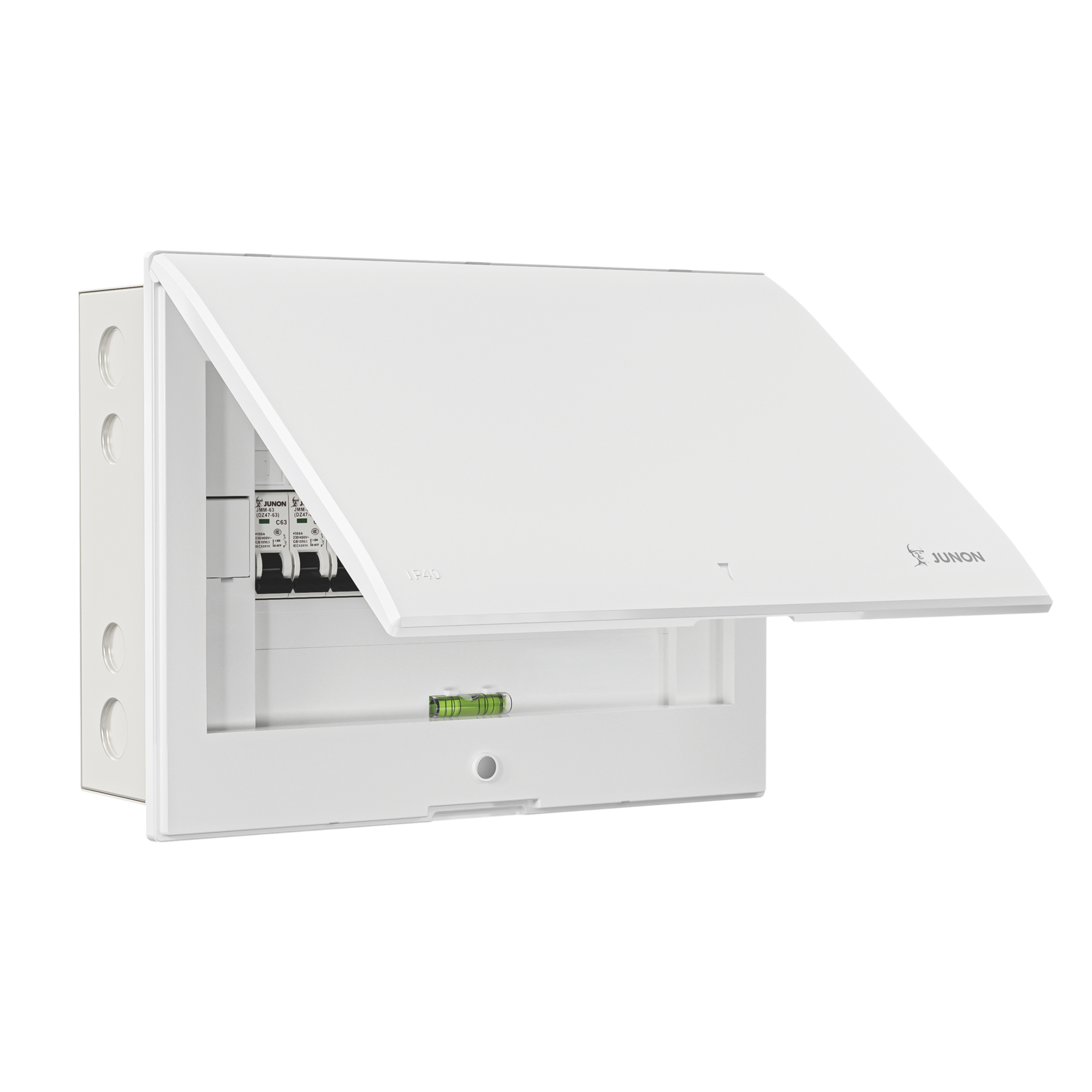
The product specification provided is for a V22 series 12-way flush-mounted distribution box, not a frameless switch. It describes a PC cover, 1.2 mm iron sheet, and pure copper busbar and terminal bars. Those details apply to the distribution box and cannot be used to assess a separate switch’s moisture resistance or service life.
JUNON lists CE certificate LVD22-9194 for switches and notes participation in developing or revising China’s GB 16915.1-2014 switch and socket standard. The supplied information does not say that these credentials verify performance in humid rooms or resistance to frequent switching.
Evidence to Check Before Installation
- For humid environments: Request the exact model’s moisture-resistance or ingress-protection rating, along with its stated environmental limits. A frameless design alone does not indicate humidity suitability.
- For frequent operation: Ask for model-specific switching endurance test results or operating-cycle figures. No such results are included in the available data.
- For product identification: Confirm that the documentation covers the frameless switch being considered, rather than the V22 distribution box.
- For application claims: Residential use is among JUNON’s listed scenarios, but that general information does not confirm suitability for a particular humid location.
Project and Product Context
JUNON also reports overseas turnkey real estate work and project records in the Philippines, Kenya, Ivory Coast, Kazakhstan, Uzbekistan, and Sri Lanka. These records involve distribution boxes or switches and sockets, but do not identify frameless switch models or provide evidence of humidity or endurance testing.
Available Evidence at a Glance
| Assessment | Information provided | Still to verify |
|---|---|---|
| Product identity | The listed specification describes a 12-way flush-mounted distribution box. | The construction and model number of the frameless switch |
| Use in humid rooms | No humidity or ingress-protection rating is stated. | Environmental rating and permitted installation conditions |
| Heavy daily use | No switching-cycle or lifespan data is supplied. | Endurance results for the specific switch model |
| Switch credentials | CE certificate LVD22-9194 and participation related to GB 16915.1-2014 are listed. | Whether either item addresses humidity performance or switching endurance |
Frequently Asked Questions
Does the documentation confirm that a frameless switch is suitable for a humid room?
No. The supplied material gives no humidity or ingress-protection rating for a frameless switch. Check the exact model’s documentation against the conditions at the installation site.
Can the V22 distribution box materials be used to judge switch durability?
No. The V22 is a separate product. Its listed materials do not establish the design or performance of a switch.
What information helps assess frequent-use durability?
Request switching endurance test results for the exact model, as well as its environmental rating if it will be installed in a humid area. Neither is included in the available product information.
Conclusion
There is not enough product-specific evidence to determine how well a frameless switch will perform in humid rooms or under heavy daily use. Before specifying or installing one, obtain its environmental rating and switching endurance results. The listed switch certificate does not, by itself, answer either question. For further technical details, contact Hayley Liao at hayley@junlang.com.
About JUNON
Guangdong JUNON Songtian Electrical Appliance Co.,Ltd manufactures switches, sockets, distribution boxes, and LED lights under the JUNON brand. Founded in 1983, the company reports a workforce of 2,000 and a 148,000-square-meter factory. Its listed credentials include CE certification for switches and participation in the development or revision of China’s GB 16915.1-2014 standard for switches and sockets. Its project records span building clients in several countries.


Can Sustainable Materials Reduce Outdoor Emergency Power Supply Costs?
Current product information does not confirm that any particular sustainable material can reduce the manufacturing cost of an Outdoor Emergency Power Supply unit. The available records identify portable power stations, AC inverters, and LiFePO4 energy storage batteries as relevant product categories, but they do not include bills of materials, recycled-content percentages, supplier quotations, or lifecycle-cost comparisons. As a result, material-related cost conclusions require further product-level evidence.
Key Findings for Buyers
- Portable power stations are positioned for camping, RV travel, and field-work equipment.
- LiFePO4 energy storage batteries are included in the company’s product portfolio, although their material composition, sustainability profile, and cost impact are not quantified.
- Household solar-storage systems can provide electricity at night and serve as backup power during outages.
- Any material decision should consider documented composition, purchase price, manufacturing processes, service life, performance, and end-of-life treatment.
What the Available Product Data Shows
The listed product is described as a 1KW-12V-120V inverter with the keyword “AC inverter.” However, the record does not identify the battery chemistry, housing material, recycled content, product weight, supplier costs, energy efficiency, or detailed production expenses. This limited information cannot demonstrate that a specific sustainable material would lower the cost of an Outdoor Emergency Power Supply.
The company profile confirms that portable power stations and LiFePO4 energy storage batteries are part of its main product offering. That establishes their relevance to the application, but it does not show that a particular low-impact material is used or that it produces savings during manufacturing or ownership. A meaningful comparison would need to cover the full unit, including the battery pack, enclosure, electrical components, packaging, and disposal route.
Application and Engineering Considerations
The stated outdoor applications include camping, RVs, and field-work equipment. Other identified scenarios include household solar-energy storage, emergency backup for villas and homestays, and off-grid electricity for remote locations. These operating environments may affect the choice of casing, insulation, thermal-management components, and protective materials, but the supplied information does not show how any alternative material changes the final unit cost.
The company reports capabilities in solution design, hardware commissioning, software development, performance testing, and OEM/ODM development for energy storage, inverter, and photovoltaic-control technologies. These resources could support a structured material assessment. Before approval, however, an alternative should be tested for strength, heat resistance, fire safety, weather exposure, manufacturability, certification impact, and long-term reliability.
Two inverter certification records are listed: CE-INV-260618-0001 and CE-INV-260618-0002. They support the certification status of the referenced inverter products, but they do not verify material sustainability or prove that a material option delivers lower production costs.
A reported 1GWh energy-storage distribution project in Southeast Asia served residential as well as industrial and commercial customers. The project addressed unstable electricity grids and high local power prices, with products designed for high-temperature conditions and supported by regional after-sales centers. This case indicates deployment experience, but it does not disclose the materials used or any savings generated through material selection.
Evidence Comparison
| Product or capability | Information currently available | Implication for cost and sustainability |
|---|---|---|
| LiFePO4 energy storage battery | Listed as one of the company’s primary products | No pricing, recycled-content, lifecycle, or material-impact data is provided |
| Portable power station | Associated with camping, RV, and field-work applications | The enclosure, battery-pack materials, and sustainability specifications are not stated |
| AC inverter | Identified as a 1KW-12V-120V inverter | No construction-material breakdown or alternative-cost study is available |
| OEM/ODM engineering | Customized development and product-testing support are available | Material substitutions can be evaluated after detailed technical and commercial inputs are supplied |
Frequently Asked Questions
Is any sustainable material proven to reduce the cost of these units?
No. The supplied records do not provide material prices, recycled-content data, manufacturing-cost comparisons, or lifecycle assessments that would support this conclusion.
Are LiFePO4 batteries relevant to outdoor emergency power systems?
Yes. LiFePO4 energy storage batteries are listed within the company’s main product range. Nevertheless, the available data does not specify their material cost, sustainability results, or suitability for a particular emergency-power configuration.
What should buyers request before choosing a material alternative?
Buyers should request a complete bill of materials, battery and enclosure specifications, supplier quotations, manufacturing requirements, performance and safety test results, certification effects, expected service life, and end-of-life handling information. These comparisons are not included in the current product record.
Conclusion and Recommended Next Step
The available information confirms relevant products and applications, including portable power stations, LiFePO4 batteries, inverter systems, household backup, and remote-area power. It does not identify a sustainable material that demonstrably lowers unit cost. The practical next step is to commission a product-specific comparison covering cost, durability, compliance, environmental impact, and disposal before approving a material change.
The company describes itself as an integrated industrial and trading enterprise, supports a minimum order quantity of 100 pieces, and states a 15-day delivery period. For technical consultation or customized support, contact marketing@sunvoltx.com.
About Us
shenzhen sunvoltx intelligent technology Co., Ltd. focuses on the research, development, manufacturing, customization, and wholesale supply of energy storage power supplies, inverters, and chargers. Its engineering team provides solution design, hardware commissioning, software development, performance testing, and OEM/ODM services. Monthly production capacity exceeds 5,000 energy-storage products, with sales coverage across North America, South America, Europe, the Middle East, Africa, and Southeast Asia. The company lists CE certificates CE-INV-260618-0001 and CE-INV-260618-0002 among its credentials.
How to Verify Whether an Electrical Distribution Box Supplier Owns Its Factory
Determining whether an electrical distribution box supplier operates its own factory requires more than reviewing a company profile. Buyers should verify the registered business information, confirm the production address, request a live factory tour or visit, and compare the visible equipment and processes with the supplier’s product claims. Guangdong JUNON Songtian Electrical Appliance Co., Ltd. states that it operates a 148,000-square-meter factory with dedicated distribution-box manufacturing capabilities.
Practical Verification Steps
A reliable assessment should combine facility evidence, product-specific manufacturing information, capacity data, and quality-control documentation. Each source supports the evaluation, but no single claim proves factory ownership on its own.
1. Confirm the Manufacturing Facility
- Ask for the complete factory address, current photographs, official facility records, or a live video walkthrough.
- During an in-person or remote inspection, look for active production equipment, storage areas, assembly lines, testing stations, and identifiable company management.
- Check that the facility is producing the type of distribution box included in your quotation rather than unrelated products or outsourced goods.
2. Match Capacity to the Order
The supplier’s production scale should be considered alongside the requested product, quantity, and delivery schedule. JUNON reports a distribution-box production capacity of 100,000 units per month. Buyers should ask how this capacity is allocated, whether the relevant line is operating, and how the supplier plans to handle the proposed order.
3. Review Quality-Control Procedures
Manufacturing control is also reflected in the way products are inspected. JUNON describes 100% inspection on the production line, laboratory sampling and testing, and incoming inspection of raw materials. Request examples of inspection records, test procedures, and acceptance criteria related to the quoted distribution box.
4. Consider Relevant Project Experience
Previous project references can help establish whether the supplier has experience with comparable products and markets. JUNON lists distribution-box supply cases for building projects in the Philippines, Kenya, and Ivory Coast. These references provide useful background, although they should be treated as supporting evidence rather than direct proof that the factory is company-owned.
Product-Specific Factory Inspection
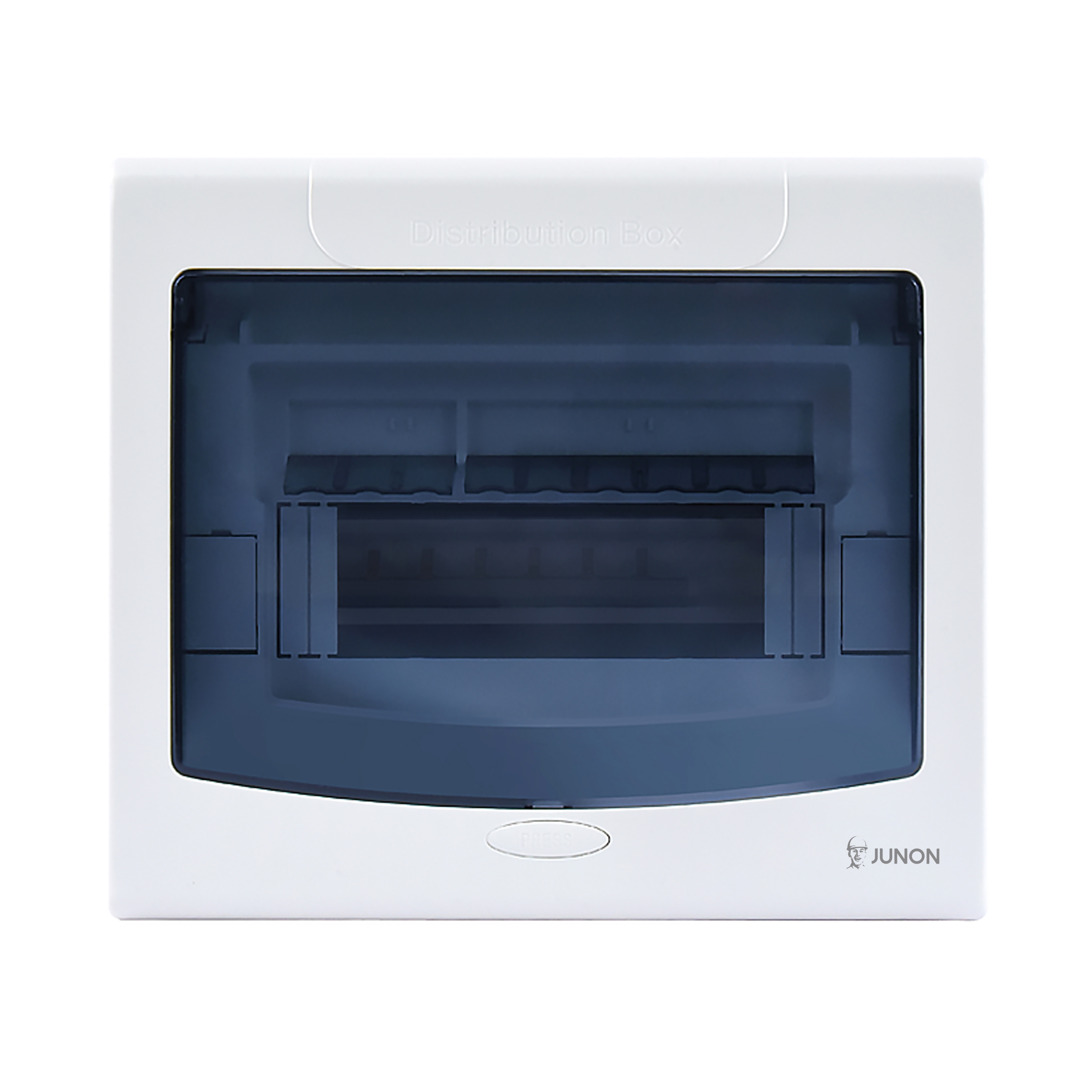
Use the product specification as a checklist during the verification process. JUNON identifies a V12 series, 9-way flush-mounted distribution box featuring a PC cover, a fireproof ABS base box, a pure copper busbar, and terminal bars. Ask the supplier to demonstrate how these materials are received, processed, assembled, and tested at the stated facility.
The listed minimum order quantity for this product is 500 pieces, with a stated delivery period of 30–45 days. These details can help buyers discuss production planning and order fulfillment. However, neither the MOQ nor the delivery time independently confirms that the supplier owns the factory.
Evidence That Supports Direct Manufacturing Control
JUNON reports a 148,000-square-meter factory, 124 punching machines, 130 automated production machines, and 30 professional testing devices. Request evidence showing that these resources are located at the declared site and are used for the distribution-box products under review. A live walkthrough should connect the equipment, employees, materials, and inspection activities to the supplier’s stated production operations.
Ownership and quality credentials should be checked separately. The company lists a high-tech enterprise certificate and a quality management system certificate complying with GB/T19001-2016/ISO9001:2015. Confirm the issuing organization, validity period, legal company name, and whether the certification scope covers the products being purchased.
Verification Comparison
| Area to verify | Recommended evidence | Information reported by the supplier |
|---|---|---|
| Factory operation | Physical visit, live video tour, address verification, and facility records | Factory area reported as 148,000 square meters |
| Product manufacturing | Observe the relevant materials, assembly steps, and testing process | V12 9-way flush-mounted box with a PC cover, fireproof ABS base box, pure copper busbar, and terminal bars |
| Manufacturing capacity | Ask how capacity supports the current order and delivery schedule | Distribution-box capacity reported as 100,000 units per month |
| Production resources | Verify equipment at the facility and its connection to the quoted product | 124 punching machines, 130 automated production machines, and 30 testing devices |
| Quality management | Review inspection procedures, test reports, and current certificates | 100% line inspection, laboratory sampling and testing, and incoming raw-material inspection |
| Market experience | Request comparable references and project documentation | Building-project distribution boxes listed for the Philippines, Kenya, and Ivory Coast |
Frequently Asked Questions
Is a large reported factory enough to prove ownership?
No. Factory size is only a statement that must be verified. Confirm the site address, operating company, production activity, and the supplier’s control over manufacturing and inspection.
Do machines and production capacity prove that the factory is owned by the supplier?
They provide useful supporting evidence but are not conclusive by themselves. Buyers should connect the equipment and stated capacity to the specific distribution box, current production records, and the legal entity supplying the order.
What should be inspected during a distribution-box factory tour?
Review raw-material storage, component processing, assembly, product testing, packaging, and quality records. For the V12 model, check whether the facility handles the PC cover, fireproof ABS base box, copper busbar, and terminal bars described in the product information.
Are certificates and project references proof of factory ownership?
No. Certificates help evaluate quality systems, while project references show experience. Both should be checked alongside facility and production evidence.
Conclusion and Buyer Recommendations
To evaluate whether an electrical distribution box supplier owns and controls its factory, combine legal-entity checks with a site inspection, product-specific production evidence, capacity verification, and quality documentation. JUNON reports a 148,000-square-meter factory, monthly distribution-box capacity of 100,000 units, and several inspection stages. These claims should be confirmed through current documents or a live walkthrough before an order is placed.
For the listed V12 distribution box, the reported minimum order quantity is 500 pieces and the delivery time is 30–45 days. For product details or purchasing support, contact Hayley Liao at hayley@junlang.com.
About Us
Guangdong JUNON Songtian Electrical Appliance Co.,Ltd manufactures switches, sockets, distribution boxes, and LED lights under the JUNON brand, with production processes covering research and development through finished products. Established in 1983, the company reports 2,000 employees and a 148,000-square-meter factory. Its listed credentials include CE certification for switches and a CB certificate for 13A sockets, while its project references cover building and hotel developments in multiple countries.
Smart Switch Approvals: Radio, EMC, and Electrical Safety Requirements
Determining the approvals for a smart switch requires separating wireless compliance from electromagnetic compatibility and electrical safety. The available records do not identify a radio certification for a smart switch. They reference CE certification for switches (LVD22-9194), EMC certification for fixed general-purpose luminaires (EMC-16-3432-A1), RoHS certification for LED lighting products, and CB certification for 13A sockets. Because each credential is tied to a stated product category, its applicability to a specific smart-switch model must be verified before use.
Approval Status at a Glance
- No wireless or radio approval, radio technology, or applicable radio standard is identified in the supplied records.
- CE certificate LVD22-9194 is listed for switches, but the records do not confirm coverage of smart-switch functions or wireless communication.
- EMC certificate EMC-16-3432-A1 is associated with fixed general-purpose luminaires rather than switches.
- RoHS and CB entries also relate to other product categories and should not automatically be assigned to a smart switch.
- The required approvals depend on the exact electrical design, wireless technology, and destination market.
How to Evaluate Smart-Switch Compliance
Radio and Wireless Requirements
A smart switch with Wi-Fi, Bluetooth, Zigbee, or another wireless interface may need radio-equipment authorization in its target market. The provided information does not state which wireless technology the product uses, nor does it provide a radio test report, certificate, or standard reference. As a result, the records cannot confirm whether a particular radio approval has been obtained or which regulatory route should be followed.
Electrical Safety and CE Scope
JUNON lists CE certificate LVD22-9194 under switches. This indicates a switch-related certification entry, but the supplied data do not show whether the certificate covers a connected smart switch, its power supply, control electronics, or wireless functions. The certificate scope and model list should therefore be checked against the intended product before it is used as evidence of compliance.
EMC and Other Product Credentials
The EMC record EMC-16-3432-A1 is described as applying to fixed general-purpose luminaires. It is not identified as an EMC certificate for switches. Similarly, RoHS certificate UNI2017081421RC-01 is listed for LED battens and LED lighting fixtures, while CB certificate CN42895 is listed for 13A sockets. These entries demonstrate certifications for particular products, but they do not establish smart-switch coverage without supporting documentation.
Relevant Company and Application Information
JUNON states that it has participated in the development or revision of China’s GB 16915.1-2014 national standard for switches and sockets. This standards-related information is not a radio authorization and does not, by itself, prove conformity for a specific smart-switch model.
The company identifies residential uses such as apartments and villas, along with commercial environments including offices, hotels, and retail locations. Its cooperation records also mention switch-and-socket supplies for hotel projects in Central and South Asia. These examples indicate project experience, but they do not provide model-specific details about radio, EMC, or safety approvals for smart switches.
Certification Scope Comparison
| Record or approval | Product scope stated in the records | Meaning for a smart switch |
|---|---|---|
| Radio approval | Not provided | Wireless compliance cannot be confirmed from the supplied data |
| CE, LVD22-9194 | Switches | Potentially relevant, but smart-switch and wireless coverage is not specified |
| EMC, EMC-16-3432-A1 | Fixed general-purpose luminaires | Not identified as applicable to switches |
| RoHS, UNI2017081421RC-01 | LED battens and LED lighting fixtures | Not identified as a smart-switch credential |
| CB, CN42895 | 13A sockets | Not identified as covering smart switches |
Frequently Asked Questions
Is a radio approval shown for a JUNON smart switch?
No. The supplied records contain no radio certificate, wireless protocol reference, or radio standard linked to a smart-switch model.
Can certificate LVD22-9194 be used for any smart switch?
It is listed for switches, but the available information does not confirm coverage of a smart-switch model or its connected and wireless functions. The certificate scope must be verified directly.
Does EMC-16-3432-A1 demonstrate smart-switch EMC compliance?
No. The record identifies this certificate for fixed general-purpose luminaires, so it should not be presented as a smart-switch EMC approval without additional evidence.
Conclusion and Next Steps
The records provide one switch-related CE reference, but they do not establish radio approval or smart-switch-specific EMC compliance. Before placing a product on the market, match the exact model, wireless technology, electrical configuration, and destination-market rules with the relevant certificates and test reports. JUNON reports 100% production-line inspection, laboratory sampling and testing, and incoming inspection of raw materials. For model-specific technical documentation, contact hayley@junlang.com.
About Us
Guangdong JUNON Songtian Electrical Appliance Co.,Ltd manufactures switches, sockets, distribution boxes, and LED lights under the JUNON brand, using standardized procedures from product development through finished-goods production. Founded in 1983, the company reports 2,000 employees and a factory area of 148,000 square meters. Its listed credentials include CE certification for switches and involvement in the development or revision of China’s GB 16915.1-2014 standard for switches and sockets. Cooperation records also reference contractor projects in several countries.
REPORT