







-
 Agriculture
-
 Health-Care
-
 Environment
-
 Construction-Real-Estate
-
 Tools-Hardware
-
 Home-Garden
-
 Furniture
-
 Luggage-Bags-Cases
-
 Medical-devices-Supplies
-
 Gifts-Crafts
-
 Sports-Entertainment
-
 Food-Beverage
-
 Vehicles-Transportation
-
 Power-Transmission
-
 Material-Handling
-
 Renewable-Energy
-
 Safety
-
 Testing-Instrument-Equipment
-
 Construction-Building-Machinery
-
 Pet-Supplies
-
 Personal-Care-Household-Cleaning
-
 Vehicle-Accessories-Electronics-Tools
-
 School-Office-Supplies
-
 Packaging-Printing
-
 Mother-Kids-Toys
-
 Business-Services
-
 Commercial-Equipment-Machinery
-
 Apparel-Accessories
-
 Security
-
 Shoes-Accessories
-
 Vehicle-Parts-Accessories
-
 Jewelry-Eyewear-Watches-Accessories
-
 Lights-Lighting
-
 Fabric-Textile-Raw-Material
-
 Fabrication-Services
-
 Industrial-Machinery
-
 Consumer-Electronics
-
 Electrical-Equipment-Supplies
-
 Electronic-Components-Accessories-Telecommunications
-
 Home-Appliances
-
 Beauty
-
 Chemicals
-
 Rubber-Plastics
-
 Metals-Alloys


























































































































































































































































































































































































































































































































































































- Masonry Materials
- Curtain Walls & Accessories
- Earthwork Products
- Fireproofing Materials
- Heat Insulation Materials
- Plastic Building Materials
- Building Boards
- Soundproofing Materials
- Timber
- Waterproofing Materials
- Balustrades & Handrails
- Bathroom & Kitchen
- Flooring & Accessories
- Tiles & Accessories
- Door, Window & Accessories
- Fireplaces & Stoves
- Floor Heating Systems & Parts
- Stairs & Stair Parts
- Ceilings
- Elevators & Escalators
- Stone
- Countertops, Vanity Tops & Table Tops
- Mosaics
- Metal Building Materials
- Multifunctional Materials
- Ladders & Scaffoldings
- Mouldings
- Corner Guards
- Decorative Films
- Formwork
- Building & Industrial Glass
- Other Construction & Real Estate
- Wallpapers/Wall panels
- HVAC System & Parts
- Outdoor Facilities
- Prefabricated Buildings
- Festive & Party Supplies
- Bathroom Products
- Household Sundries
- Rain Gear
- Garden Supplies
- Household Cleaning Tools & Accessories
- Lighters & Smoking Accessories
- Home Storage & Organization
- Household Scales
- Smart Home Improvement
- Home Textiles
- Kitchenware
- Drinkware & Accessories
- Dinnerware, Coffee & Wine
- Home Decor
- Golf
- Fitness & Body Building
- Amusement Park Facilities
- Billiards, Board Game,Coin Operated Games
- Musical Instruments
- Outdoor Affordable Luxury Sports
- Camping & Hiking
- Fishing
- Sports Safety&Rehabilitation
- Ball Sports Equipments
- Water Sports
- Winter Sports
- Luxury Travel Equipments
- Sports Shoes, Bags & Accessories
- Cycling
- Other Sports & Entertainment Products
- Artificial Grass&Sports Flooring&Sports Court Equipment
- Scooters
- Food Ingredients
- Honey & Honey Products
- Snacks
- Nuts & Kernels
- Seafood
- Plant & Animal Oil
- Beverages
- Fruit & Vegetable Products
- Frog & Escargot
- Bean Products
- Egg Products
- Dairy Products
- Seasonings & Condiments
- Canned Food
- Instant Food
- Baked Goods
- Other Food & Beverage
- Meat & Poultry
- Confectionery
- Grain Products
- Feminie Care
- Hair Care & Styling
- Body Care
- Hands & Feet Care
- Hygiene Products
- Men's Grooming
- Laundry Cleaning Supplies
- Travel Size & Gift Sets
- Room Deodorizers
- Other Personal Care Products
- Pest Control Products
- Special Household Cleaning
- Floor Cleaning
- Kitchen & Bathroom Cleaning
- Oral Care
- Bath Supplies
- Yellow Pages
- Correction Supplies
- Office Binding Supplies
- Office Cutting Supplies
- Board Erasers
- Office Adhesives & Tapes
- Education Supplies
- Pencil Cases & Bags
- Notebooks & Writing Pads
- File Folder Accessories
- Calendars
- Writing Accessories
- Commercial Office Supplies
- Pencil Sharpeners
- Pens
- Letter Pad/Paper
- Paper Envelopes
- Desk Organizers
- Pencils
- Markers & Highlighters
- Filing Products
- Art Supplies
- Easels
- Badge Holder & Accessories
- Office Paper
- Printer Supplies
- Book Covers
- Other Office & School Supplies
- Stationery Set
- Boards
- Clipboards
- Stamps
- Drafting Supplies
- Stencils
- Electronic Dictionary
- Books
- Map
- Magazines
- Calculators
- Baby & Toddler Toys
- Educational Toys
- Classic Toys
- Dress Up & Pretend Play
- Toy Vehicle
- Stuffed Animals & Plush Toys
- Outdoor Toys & Structures
- Balloons & Accessories
- Baby Food
- Children's Clothing
- Baby Supplies & Products
- Maternity Clothes
- Kids Shoes
- Baby Care
- Novelty & Gag Toys
- Dolls & Accessories
- Puzzle & Games
- Blocks & Model Building Toys
- Toddler Clothing
- Baby Clothing
- Kids' Luggage & Bags
- Arts, Crafts & DIY Toys
- Action & Toy Figures
- Baby Appliances
- Hobbies & Models
- Remote Control Toys
- Promotional Toys
- Pregnancy & Maternity
- Hygiene Products
- Kid's Textile&Bedding
- Novelty & Special Use
- Toy Weapons
- Baby Gifts
- Baby Storage & Organization
- Auto Drive Systems
- ATV/UTV Parts & Accessories
- Marine Parts & Accessories
- Other Auto Parts
- Trailer Parts & Accessories
- Auto Transmission Systems
- Train Parts & Accessories
- Universal Parts
- Railway Parts & Accessories
- Auto Brake Systems
- Aviation Parts & Accessories
- Truck Parts & Accessories
- Auto Suspension Systems
- Auto Lighting Systems
- New Energy Vehicle Parts & Accessories
- Auto Steering Systems
- Wheels, Tires & Accessories
- Bus Parts & Accessories
- Auto Performance Parts
- Cooling System
- Go-Kart & Kart Racer Parts & Accessories
- Air Conditioning Systems
- Heavy Duty Vehicle Parts & Accessories
- Auto Electrical Systems
- Auto Body Systems
- Auto Engine Systems
- Container Parts & Accessories
- Motorcycle Parts & Accessories
- Refrigeration & Heat Exchange Equipment
- Machine Tool Equipment
- Food & Beverage Machinery
- Agricultural Machinery & Equipment
- Apparel & Textile Machinery
- Chemical Machinery
- Packaging Machines
- Paper Production Machinery
- Plastic & Rubber Processing Machinery
- Industrial Robots
- Electronic Products Machinery
- Metal & Metallurgy Machinery
- Woodworking Machinery
- Home Product Manufacturing Machinery
- Machinery Accessories
- Environmental Machinery
- Machinery Service
- Electrical Equipment Manufacturing Machinery
- Industrial Compressors & Parts
- Tobacco & Cigarette Machinery
- Production Line
- Used Industrial Machinery
- Electronics Production Machinery
- Other Machinery & Industrial Equipment
- Camera, Photo & Accessories
- Portable Audio, Video & Accessories
- Television, Home Audio, Video & Accessories
- Video Games & Accessories
- Mobile Phone & Accessories
- Electronic Publications
- Earphone & Headphone & Accessories
- Speakers & Accessories
- Smart Electronics
- TV Receivers & Accessories
- Mobile Phone & Computer Repair Parts
- Chargers, Batteries & Power Supplies
- Used Electronics
- VR, AR, MR Hardware & Software
- Projectors & Presentation Equipments
- Other Consumer Electronics
- Cables & Commonly Used Accessories
- Computer Hardware & Software
- Displays, Signage and Optoelectronics
- Discrete Semiconductors
- Wireless & IoT Module and Products
- Telecommunications
- Connectors, Terminals & Accessories
- Development Boards, Electronic Modules and Kits
- Circuit Protection
- Sensors
- Isolators
- Audio Components and Products
- Integrated Circuits
- Power Supplies
- Relays
- RF, Microwave and RFID
- Electronic Accessories & Supplies
- Passive Components
- PCB & PCBA
- Air Quality Appliances
- Home Appliance Parts
- Heating & Cooling Appliances
- Small Kitchen Appliances
- Laundry Appliances
- Water Heaters
- Water Treatment Appliances
- Refrigerators & Freezers
- Personal Care & Beauty Appliances
- Major Kitchen Appliances
- Cleaning Appliances
- Second-hand Appliances
- Smart Home Appliances
- Other Home Appliances
- Energy Chemicals
- Inorganic Chemicals
- Basic Organic Chemicals
- Agrochemicals
- Admixture & Additives
- Catalysts & Chemical Auxiliary Agents
- Pigments & Dyestuff
- Coating & Paint
- Daily Chemicals
- Polymer
- Organic Intermediate
- Adhesives & Sealants
- Chemical Waste
- Biological Chemical Products
- Surface Treatment Chemicals
- Painting & Coating
- Chemical Reagents
- Flavor & Fragrance
- Non-Explosive Demolition Agents
- Other Chemicals
- Custom Chemical Services

Small Kitchen Appliances
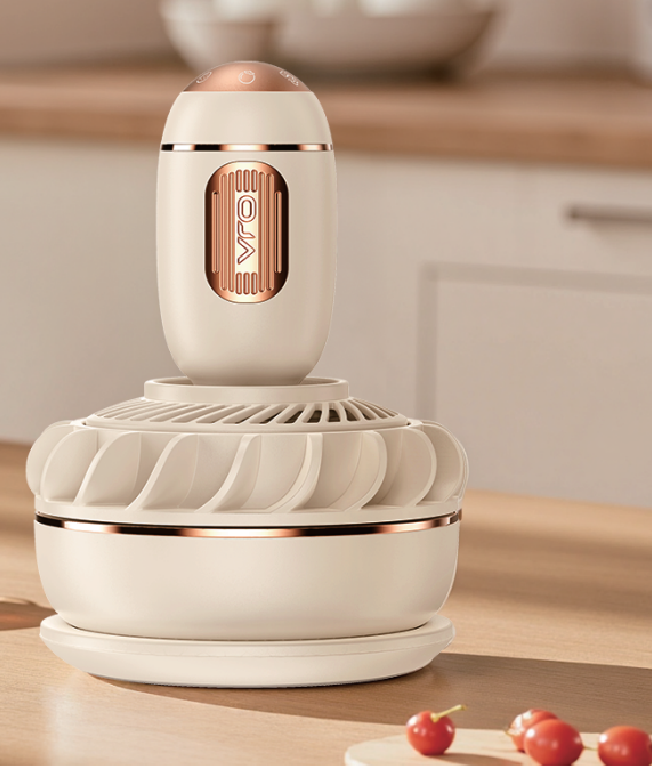
Single-Boiler vs. Dual-Boiler Coffee Machines: What We Can Confirm
Single-boiler and dual-boiler coffee machines are generally distinguished by the way their heating systems are arranged. However, the supplied product records do not include coffee-machine specifications, engineering details, temperature-control methods, or operating data. As a result, the available information cannot support a verified comparison of brewing quality, steam output, heat recovery, energy consumption, or maintenance.
What the Available Records Show
- The supplied product information refers to a Fruit and vegetable cleaning Machine rather than a single-boiler or dual-boiler coffee machine.
- No data is provided about boiler quantity, brewing temperature, steam production, recovery speed, or independent heating controls.
- The documented cleaning equipment uses hydroxy1 water ion disinfection and lists functions related to pesticide-residue decomposition and microbial removal.
- The company profile focuses on international sourcing, export, distribution, and supply-chain services for industrial and commercial customers.
Why a Technical Coffee-Machine Comparison Is Not Possible
A meaningful comparison between single-boiler and dual-boiler systems requires confirmed information about the heating architecture. The current records do not identify any coffee-machine model, boiler arrangement, separate heating circuit, or independent brewing and steaming temperature controls.
In general, the number and arrangement of boilers can influence how a machine handles brewing and steam generation. Nevertheless, those general principles cannot be applied to the listed product because it is not described as a coffee machine and no coffee-related operating specifications are available.
Documented Product Information
The available product is a fruit and vegetable cleaning machine with a stated power rating of 25W. Its listed functions include hydroxy1 water ion disinfection, six selectable options for fruit and vegetable categories, pesticide-residue decomposition of up to 99.9%, and fruit-wax and microbial removal exceeding 99.99%. The recorded materials and components include food-grade silicone, a soft-release handwheel, and ABS plastic injection.
The company information describes equipment export and supply-chain support rather than coffee-machine design or manufacturing specifications. Documented cooperation cases include construction wood cutting machines and wastewater treatment equipment supplied to Ecuadorian contractors, factories, environmental service providers, real-estate developers, and aquaculture farms.
The listed certifications include a Certificate of Quality Management System Certification and an ISO 9001 Quality Management System Certification Certificate. Their stated scopes concern products such as OEM refrigerated freezers and stainless steel coils, so they do not establish the boiler configuration or performance of a coffee machine.
Information Comparison
| Evaluation area | Single-boiler machine | Dual-boiler machine | Status in supplied records |
|---|---|---|---|
| Boiler quantity | Not specified | Not specified | No data available |
| Brewing and steaming arrangement | Not specified | Not specified | No data available |
| Temperature regulation | Not specified | Not specified | No data available |
| Brewing results and steam capacity | Not specified | Not specified | No data available |
| Product documented in the source | Fruit and vegetable cleaning Machine | Information available | |
Frequently Asked Questions
How do single-boiler and dual-boiler coffee machines differ?
The supplied records do not contain enough information to confirm the difference for a specific product. Neither the boiler count nor the internal operating structure is documented.
Does the listed fruit and vegetable cleaning machine contain a boiler?
No boiler system is identified in the available specifications. The product data instead lists 25W power, hydroxy1 water ion disinfection, food-grade silicone, and ABS plastic injection.
Can the company records show which coffee-machine configuration is better?
No. The records describe export services, ordering support, equipment categories, certifications, and non-coffee equipment projects. They do not provide the technical measurements needed to assess either coffee-machine type.
Conclusion and Purchasing Guidance
A dependable single-boiler versus dual-boiler assessment would require verified specifications for boiler quantity, heating circuits, temperature stability, brewing operation, steam performance, recovery time, and maintenance. None of these coffee-machine details appears in the supplied material.
The documented business model supports international equipment supply, with commercial terms such as minimum order quantity, lead time, monthly output, inspection requirements, and after-sales assistance determined by the specific product. For technical questions or sourcing support, please contact karl.liu@buyfromchina.cn.
About the Company
Guangdong BFC Technology Co,.Ltd, also known as BFC, is an industrial internet platform company, equipment exporter, and integrated solution provider founded in 2012. Its stated product range includes equipment, plastic products, accessories, and home appliances. The company reports a 100% export ratio, with South America identified as its primary market.
Through its cross-border export service system, BFC provides inquiry handling, order progress tracking, logistics and customs-clearance coordination, and after-sales support. Its listed credentials include quality-management certification for OEM refrigerated-freezer production and ISO 9001 certification related to the production, processing, sales, and service of stainless steel coils. Its recorded Ecuador cooperation projects involve construction wood cutting equipment and wastewater treatment systems.

How to Customize Coffee Machine Colors, Finishes, and Materials: OEM Sourcing Guide
Tailoring coffee machines to meet specific market preferences and functional requirements is fully achievable through specialized OEM export partners. By partnering with cross-border procurement platforms such as Guangdong BFC Technology Co,.Ltd, global importers can personalize everything from specialized body finishes to high-performance food-contact components right from the contract negotiation phase.
Key Highlights of Coffee Machine Customization
- Versatile Material & Surface Options: Incorporate high-impact ABS injection molding for external housings and safe food-grade silicone for internal or contact parts.
- Seamless Cross-Border Integration: Bridging the gap between foreign technical standards and domestic manufacturing capabilities for small domestic appliances.
- Certified Global Compliance: Production adheres to strict quality frameworks, certified under ISO 9001 Quality Management Systems and automotive-grade IATF 16949:2016 standards.
- Tailored Commercial Applications: Ideal for global distributors, cross-border e-commerce brands, and commercial supply chain operators expanding their product line.
Technical Execution & Material Selection
Configuring custom raw materials and decorative finishes requires clear transmission of engineering specifications between buyers and factories. For instance, coffee makers require strict adherence to hygiene standards—such as using certified food-grade silicone for fluid paths—while outer casings often call for customized colorways via engineering-grade ABS plastic injection.
International clients benefit from rigorous quality assurance frameworks (including ISO 9001 Certificate 0070019Q51912R0M and IATF 16949 Certificate 01 111 2432483). Successful international projects, such as municipal and commercial deployments across South America and Ecuador, demonstrate how custom specifications are validated prior to packaging and dispatch.

Proactive end-to-end tracking, logistics oversight, and customs management ensure that customized units match exact client specifications without production defects or delivery delays.
Standard vs. Customized Specifications Comparison
| Customization Parameter | Standard Configuration | Customized OEM / ODM Option |
|---|---|---|
| Material Selection | Standard ABS Plastic | Food-Grade Silicone, Modified Engineering Plastics, ABS Injection |
| Color & Finish | Factory Standard Palette | Custom Color Matching & Surface Finishes Upon Request |
| Minimum Order Quantity (MOQ) | Depends on product (e.g., 1000 pcs) | Negotiable based on product complexity |
| Delivery Lead Time | 60 days (standard batch) | Adjusted based on customization scope |
| Quality Inspection | Standard Factory QC | As required by buyer standards |
| Payment Terms | 30% T/T prepayment, 70% balance against B/L copy | 30% T/T prepayment, 70% balance against B/L copy |
| Shipping Methods | Sea Freight (FCL/LCL) | Sea Freight (FCL/LCL) |
Frequently Asked Questions
Q1: Which material options can be chosen during coffee machine OEM development?
A1: Importers can specify specialized materials including food-grade silicone seals, soft-touch ergonomic controls, and custom-tinted ABS plastic housing designed for specific compliance guidelines.
Q2: How do suppliers guarantee color and material accuracy prior to mass manufacturing?
A2: Technical parameters are aligned directly with factory engineering teams, followed by mandatory pre-production sampling and quality audits per buyer requests.
Q3: What are the typical payment and freight terms for custom orders?
A3: Standard international trade terms apply: a 30% T/T deposit followed by the remaining 70% upon bill of lading (B/L) copy presentation, shipped globally via sea freight (FCL/LCL).
Summary & Next Steps
Choosing distinct colors, finishes, and technical materials for coffee machines requires early alignment with an experienced manufacturing partner. Establishing structured trade protocols ensures that custom home appliances perform reliably while satisfying regional regulations. To discuss custom OEM projects or technical requirements, contact our specialists at karl.liu@buyfromchina.cn.
About the Supplier
Guangdong BFC Technology Co,.Ltd is an industrial internet platform and appliance manufacturing exporter established in 2012. Operating with a 100% export focus from a 1,500 square meter facility, the company serves key international regions including South America under the "BUY FACTORY FROM CHINA" brand. BFC offers end-to-end supply chain integration, cross-border trading, and tailored OEM solutions for commercial partners globally.
Understanding the Impact of Certification Discrepancies in Commercial Coffee Machine Shipments
How Technical Certification Discrepancies Risk Cargo Clearance
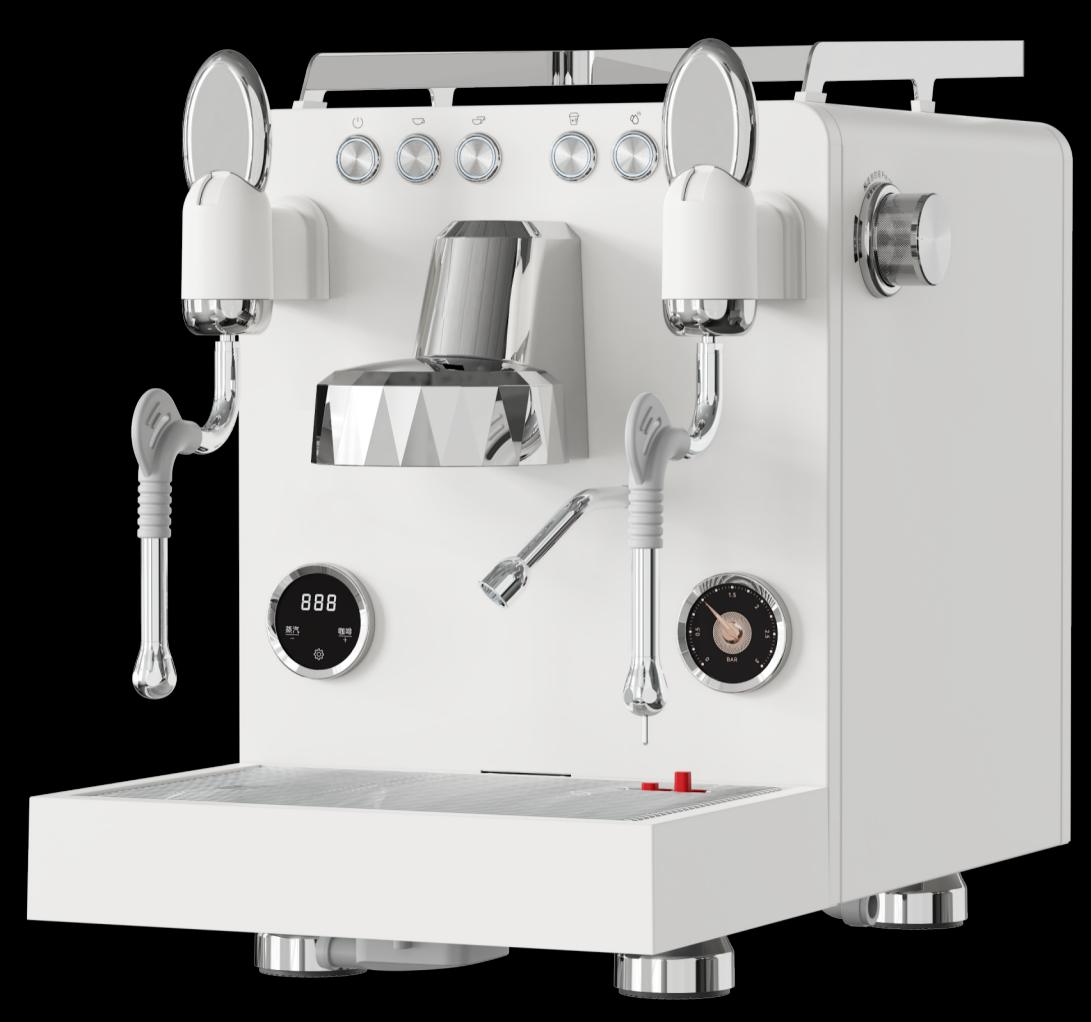
In international trade, importing semi-automatic espresso machines requires absolute alignment between physical hardware specs and official regulatory filings. When port authorities identify mismatches—such as discrepancies in overall power ratings, heating elements, or modified uncertified parts—the shipment faces immediate quarantine, severe financial penalties, or rejection. Attestations like the EU Test Attestation of Conformity (TD15532801) become completely void if internal specifications fail to match certified test reports.
Key Steps to Maintain International Import Compliance
- BOM & Component Traceability: Verify that key internal mechanisms, including the Italian OLAB 15Bar pump and matching electromagnetic valve, match the official Bill of Materials recorded in certificate files.
- Rigorous Electrical & Parameter Matching: Confirm that factory declarations strictly reflect approved specifications, such as AC220V/50Hz voltage, 2100W total power, 1300W extraction block, and 1.3L steam pot capacity.
- Structured Pre-Shipment Quality Inspections: Execute comprehensive pre-shipment testing protocols to validate physical hardware consistency before goods leave the factory.
- Standardized Supply Chain Frameworks: Operate under recognized quality management systems such as ISO 9001 (Certificate 0070019Q51912R0M) to guarantee smooth cross-border logistics.
Technical Analysis: Why Component Mismatches Cause Cargo Seizures
Customs officials inspect incoming espresso equipment against official documentation. For instance, a commercial unit featuring a 2100W total power rating, a 1300W PID temperature-controlled extraction block, a 1.3L steam pot, and a 2.8L water tank must match registered technical filings down to the individual components. Replacing certified elements—such as altering the PID control module or substituting the specified Italian-imported OLAB 15Bar pump—invalidates the safety attestation and environmental compliance of the machine housing.
To prevent costly logistics disruptions, manufacturers must enforce an 8-stage quality assurance process prior to dispatch. Skipping essential steps like electrical safety, leakage, aging, performance, or drop testing drastically increases the risk of delivering non-compliant hardware.

Compliance Matrix: Certified Parameters vs. Mismatch Consequences
| Inspection Category | Compliant Parameter Alignment | Impact of Discrepancy |
|---|---|---|
| Electrical Power System | AC220V / 50Hz with 2100W total rated power | Port seizure, electrical safety failure, rejected import clearance |
| Pumps & Hydraulic Valves | Italian OLAB 15Bar pump & OLAB electromagnetic valve | Invalidation of EU Conformity Attestation (TD15532801) |
| Heating & Steam Architecture | 1.3L steam pot (1300W) + PID extraction block | Mandatory re-certification costs, port quarantine |
| Quality Assurance Protocol | Full 8-stage testing (Visual, Leakage, Aging, Noise, Drop) | Increased product failure rate and legal liability |
| Trade & Shipping Terms | Sea Freight (FCL/LCL), 30% T/T prepayment + 70% against B/L | Logistics bottlenecks exceeding 60-day standard lead times |
Frequently Asked Questions
Q1: What factory testing protocols help avoid shipment rejections at customs?
A1: Manufacturers should implement an 8-stage inspection regime covering visual appearance, functional performance, electrical safety, water leakage, noise levels, aging endurance, operational performance, and drop resistance to ensure total alignment with certified filings.
Q2: Why does swapping parts like the pump void regulatory certificates?
A2: Certificates such as the EU Test Attestation of Conformity are tied directly to specific component models like the Italian OLAB 15Bar pump and electromagnetic valve. Installing unlisted alternatives invalidates the verified safety rating of the equipment.
Q3: What are the typical commercial payment terms and delivery timelines for bulk orders?
A3: Bulk production orders generally carry a Minimum Order Quantity (MOQ) of 1000 units and a 60-day manufacturing lead time. Standard commercial terms involve 30% T/T deposit with 70% balance payable upon presentation of the Bill of Lading copy via Sea Freight (FCL/LCL).
Conclusion & Business Recommendations
Harmonizing physical espresso machine specifications with technical compliance documentation is vital to maintaining an uninterrupted global supply chain. Procurement teams should mandate full factory test documentation, valid ISO 9001 certification, and verified EU attestations prior to shipping authorization. For tailored technical guidance or export solutions, please contact our team at karl.liu@buyfromchina.cn.
About Our Company
Founded in 2012, Guangdong BFC Technology Co,.Ltd operates as an industrial internet platform, specialized equipment exporter, and end-to-end trade solutions partner. Operating with a 100% export focus and an experienced team of 10 professionals, we deliver comprehensive cross-border trade services and machinery enhancement programs. Certified under ISO 9001 (Certificate 0070019Q51912R0M), we support international clients across global import and export operations.
How to Define Coffee Machine Quality Requirements Before Payment
Before making payment for coffee machines, convert every quality expectation into a signed purchase specification. The document should identify the approved model, construction materials, functions, performance standards, appearance requirements, accessories, packaging, inspection procedures, defect resolution, and acceptance records. Attach approved samples, product images, test results, and a pre-shipment inspection checklist so the final payment is connected to objective delivery conditions.
Key Requirements for a Reliable Purchase Specification
- Describe the exact coffee machine model, configuration, functions, materials, surface finish, accessories, labels, and package contents.
- Define measurable acceptance standards for operation, appearance, quantity, completeness, and packaging before the goods leave the factory.
- Require inspection evidence, including approved reference samples, dated photographs, test records, and pre-shipment verification results.
- For international purchasing, coordinate quality records with shipping, customs clearance, overseas distribution, and after-sales support requirements.
How to Build the Quality Documentation
A practical quality document should distinguish product specifications from transaction controls. Product specifications explain what the supplier must deliver, such as the precise model, technical setup, components, finish, user instructions, accessories, and packaging contents. Transaction controls explain how conformity will be checked, who is responsible for inspection, which documents must be supplied, and how nonconforming products will be handled.
Use an Approved Visual Reference
Use a signed sample or a clearly dated image set as the visual standard. Document the expected color, surface finish, logo position when relevant, control arrangement, display condition, and carton presentation. The specification should state that production units must correspond with the approved reference. Any permitted variation should be listed in advance, while other deviations should require written approval before shipment.
Define Functional and Physical Checks
Functional acceptance should identify the specific actions inspectors must perform. These can include switching on the machine, testing the controls, confirming the intended brewing or dispensing cycle, checking accessories, verifying quantities, and inspecting the unit for damage. Packaging should also be reviewed for secure protection, correct labeling, and suitable preparation for transport. Avoid vague language such as “excellent quality”; every requirement should be visible, testable, and linked to a pass or fail result.
Keep Complete Inspection Evidence
Each inspection record should include the purchase order number, product identification, inspection date, inspected quantity, findings, photographs, and the final disposition of defective or nonconforming units. Guangdong BFC Technology Co,.Ltd provides an export service process that covers inquiry handling, order follow-up, logistics, customs clearance, and after-sales coordination. This makes consistent documentation important throughout the complete purchasing cycle.
Company records include a CERTIFICATE OF QUALITY MANAGEMENT SYSTEM CERTIFICATION for OEM production of refrigerated freezers and an EU TEST ATTESTATION OF CONFORMITY for wasted water treatment equipment. These credentials relate to the products identified in their records. They should not be presented as coffee machine certification unless separate documentation confirms that the coffee machines are covered.
Recorded cooperation projects in Ecuador include wood cutting machines supplied for construction and lumber-processing users, as well as wasted water treatment equipment for environmental and industrial applications. These cases indicate experience with equipment documentation, technical coordination, installation support, and after-sales service in different industries.
Documents to Review Before Releasing Payment
| Document or Control | Information to Confirm | Supporting Evidence |
|---|---|---|
| Purchase specification | Model, functions, materials, finish, accessories, package contents, and approved photos or sample references | Signed specification and approved sample or image record |
| Pre-shipment inspection | Functional testing, appearance review, quantity count, packaging assessment, and treatment of defects | Inspection report, dated photographs, and inspection result confirmation |
| Payment terms | 30% T/T deposit and 70% balance against a copy of the B/L | Payment record and shipping document copy |
| Freight arrangement | Sea Freight by FCL or LCL according to the agreed shipment plan | Shipping records and approved packing information |
Frequently Asked Questions
What information belongs in a coffee machine quality specification?
Include the purchase order, exact model information, approved photos or sample references, required functions, accessories, packaging standards, inspection checklist, acceptance criteria, and procedures for handling defects.
Is it appropriate to make the balance payment conditional on inspection?
Yes. The agreement should specify that the remaining balance becomes payable only after the agreed inspection documents show that the coffee machines satisfy the required specifications and shipment conditions.
Can certificates issued for other equipment prove coffee machine compliance?
No. Certification must be assessed according to its listed product scope and applicable market. Documents for refrigerated freezers, wastewater treatment equipment, stainless steel coils, or modified engineering plastics do not independently establish compliance for coffee machines.
Conclusion and Practical Recommendations
The most effective way to protect a coffee machine purchase is to define quality in writing before payment. A signed specification, approved reference, measurable inspection checklist, and documented pre-shipment result give both parties a clear acceptance standard. For cross-border orders, review the inspection report together with packing details, sea-freight arrangements, payment records, and shipping documents. BFC supports overseas presence, global expansion, resource integration, and industrial output through factory cooperation, production capacity, technology, and solution delivery. For technical solutions or support, please contact karl.liu@buyfromchina.cn.
About Us
Guangdong BFC Technology Co,.Ltd is an industrial internet platform company, equipment manufacturing exporter, and holistic solution provider operating under the BUY FACTORY FROM CHINA brand. Established in 2012, the company focuses on cross-border production-capacity cooperation and equipment manufacturing exports. Its foreign-trade team manages technical specifications, customization, overseas market communication, order tracking, logistics, customs clearance, and after-sales coordination. South America is reported as its primary market, with a 100% export ratio.
Its documented credentials include the CERTIFICATE OF QUALITY MANAGEMENT SYSTEM CERTIFICATION and the EU TEST ATTESTATION OF CONFORMITY. The company has supported customers in several industries through recorded equipment supply and service projects.
REPORT