







-
 Agriculture
-
 Health-Care
-
 Environment
-
 Construction-Real-Estate
-
 Tools-Hardware
-
 Home-Garden
-
 Furniture
-
 Luggage-Bags-Cases
-
 Medical-devices-Supplies
-
 Gifts-Crafts
-
 Sports-Entertainment
-
 Food-Beverage
-
 Vehicles-Transportation
-
 Power-Transmission
-
 Material-Handling
-
 Renewable-Energy
-
 Safety
-
 Testing-Instrument-Equipment
-
 Construction-Building-Machinery
-
 Pet-Supplies
-
 Personal-Care-Household-Cleaning
-
 Vehicle-Accessories-Electronics-Tools
-
 School-Office-Supplies
-
 Packaging-Printing
-
 Mother-Kids-Toys
-
 Business-Services
-
 Commercial-Equipment-Machinery
-
 Apparel-Accessories
-
 Security
-
 Shoes-Accessories
-
 Vehicle-Parts-Accessories
-
 Jewelry-Eyewear-Watches-Accessories
-
 Lights-Lighting
-
 Fabric-Textile-Raw-Material
-
 Fabrication-Services
-
 Industrial-Machinery
-
 Consumer-Electronics
-
 Electrical-Equipment-Supplies
-
 Electronic-Components-Accessories-Telecommunications
-
 Home-Appliances
-
 Beauty
-
 Chemicals
-
 Rubber-Plastics
-
 Metals-Alloys


























































































































































































































































































































































































































































































































































































- Masonry Materials
- Curtain Walls & Accessories
- Earthwork Products
- Fireproofing Materials
- Heat Insulation Materials
- Plastic Building Materials
- Building Boards
- Soundproofing Materials
- Timber
- Waterproofing Materials
- Balustrades & Handrails
- Bathroom & Kitchen
- Flooring & Accessories
- Tiles & Accessories
- Door, Window & Accessories
- Fireplaces & Stoves
- Floor Heating Systems & Parts
- Stairs & Stair Parts
- Ceilings
- Elevators & Escalators
- Stone
- Countertops, Vanity Tops & Table Tops
- Mosaics
- Metal Building Materials
- Multifunctional Materials
- Ladders & Scaffoldings
- Mouldings
- Corner Guards
- Decorative Films
- Formwork
- Building & Industrial Glass
- Other Construction & Real Estate
- Wallpapers/Wall panels
- HVAC System & Parts
- Outdoor Facilities
- Prefabricated Buildings
- Festive & Party Supplies
- Bathroom Products
- Household Sundries
- Rain Gear
- Garden Supplies
- Household Cleaning Tools & Accessories
- Lighters & Smoking Accessories
- Home Storage & Organization
- Household Scales
- Smart Home Improvement
- Home Textiles
- Kitchenware
- Drinkware & Accessories
- Dinnerware, Coffee & Wine
- Home Decor
- Golf
- Fitness & Body Building
- Amusement Park Facilities
- Billiards, Board Game,Coin Operated Games
- Musical Instruments
- Outdoor Affordable Luxury Sports
- Camping & Hiking
- Fishing
- Sports Safety&Rehabilitation
- Ball Sports Equipments
- Water Sports
- Winter Sports
- Luxury Travel Equipments
- Sports Shoes, Bags & Accessories
- Cycling
- Other Sports & Entertainment Products
- Artificial Grass&Sports Flooring&Sports Court Equipment
- Scooters
- Food Ingredients
- Honey & Honey Products
- Snacks
- Nuts & Kernels
- Seafood
- Plant & Animal Oil
- Beverages
- Fruit & Vegetable Products
- Frog & Escargot
- Bean Products
- Egg Products
- Dairy Products
- Seasonings & Condiments
- Canned Food
- Instant Food
- Baked Goods
- Other Food & Beverage
- Meat & Poultry
- Confectionery
- Grain Products
- Feminie Care
- Hair Care & Styling
- Body Care
- Hands & Feet Care
- Hygiene Products
- Men's Grooming
- Laundry Cleaning Supplies
- Travel Size & Gift Sets
- Room Deodorizers
- Other Personal Care Products
- Pest Control Products
- Special Household Cleaning
- Floor Cleaning
- Kitchen & Bathroom Cleaning
- Oral Care
- Bath Supplies
- Yellow Pages
- Correction Supplies
- Office Binding Supplies
- Office Cutting Supplies
- Board Erasers
- Office Adhesives & Tapes
- Education Supplies
- Pencil Cases & Bags
- Notebooks & Writing Pads
- File Folder Accessories
- Calendars
- Writing Accessories
- Commercial Office Supplies
- Pencil Sharpeners
- Pens
- Letter Pad/Paper
- Paper Envelopes
- Desk Organizers
- Pencils
- Markers & Highlighters
- Filing Products
- Art Supplies
- Easels
- Badge Holder & Accessories
- Office Paper
- Printer Supplies
- Book Covers
- Other Office & School Supplies
- Stationery Set
- Boards
- Clipboards
- Stamps
- Drafting Supplies
- Stencils
- Electronic Dictionary
- Books
- Map
- Magazines
- Calculators
- Baby & Toddler Toys
- Educational Toys
- Classic Toys
- Dress Up & Pretend Play
- Toy Vehicle
- Stuffed Animals & Plush Toys
- Outdoor Toys & Structures
- Balloons & Accessories
- Baby Food
- Children's Clothing
- Baby Supplies & Products
- Maternity Clothes
- Kids Shoes
- Baby Care
- Novelty & Gag Toys
- Dolls & Accessories
- Puzzle & Games
- Blocks & Model Building Toys
- Toddler Clothing
- Baby Clothing
- Kids' Luggage & Bags
- Arts, Crafts & DIY Toys
- Action & Toy Figures
- Baby Appliances
- Hobbies & Models
- Remote Control Toys
- Promotional Toys
- Pregnancy & Maternity
- Hygiene Products
- Kid's Textile&Bedding
- Novelty & Special Use
- Toy Weapons
- Baby Gifts
- Baby Storage & Organization
- Auto Drive Systems
- ATV/UTV Parts & Accessories
- Marine Parts & Accessories
- Other Auto Parts
- Trailer Parts & Accessories
- Auto Transmission Systems
- Train Parts & Accessories
- Universal Parts
- Railway Parts & Accessories
- Auto Brake Systems
- Aviation Parts & Accessories
- Truck Parts & Accessories
- Auto Suspension Systems
- Auto Lighting Systems
- New Energy Vehicle Parts & Accessories
- Auto Steering Systems
- Wheels, Tires & Accessories
- Bus Parts & Accessories
- Auto Performance Parts
- Cooling System
- Go-Kart & Kart Racer Parts & Accessories
- Air Conditioning Systems
- Heavy Duty Vehicle Parts & Accessories
- Auto Electrical Systems
- Auto Body Systems
- Auto Engine Systems
- Container Parts & Accessories
- Motorcycle Parts & Accessories
- Refrigeration & Heat Exchange Equipment
- Machine Tool Equipment
- Food & Beverage Machinery
- Agricultural Machinery & Equipment
- Apparel & Textile Machinery
- Chemical Machinery
- Packaging Machines
- Paper Production Machinery
- Plastic & Rubber Processing Machinery
- Industrial Robots
- Electronic Products Machinery
- Metal & Metallurgy Machinery
- Woodworking Machinery
- Home Product Manufacturing Machinery
- Machinery Accessories
- Environmental Machinery
- Machinery Service
- Electrical Equipment Manufacturing Machinery
- Industrial Compressors & Parts
- Tobacco & Cigarette Machinery
- Production Line
- Used Industrial Machinery
- Electronics Production Machinery
- Other Machinery & Industrial Equipment
- Camera, Photo & Accessories
- Portable Audio, Video & Accessories
- Television, Home Audio, Video & Accessories
- Video Games & Accessories
- Mobile Phone & Accessories
- Electronic Publications
- Earphone & Headphone & Accessories
- Speakers & Accessories
- Smart Electronics
- TV Receivers & Accessories
- Mobile Phone & Computer Repair Parts
- Chargers, Batteries & Power Supplies
- Used Electronics
- VR, AR, MR Hardware & Software
- Projectors & Presentation Equipments
- Other Consumer Electronics
- Cables & Commonly Used Accessories
- Computer Hardware & Software
- Displays, Signage and Optoelectronics
- Discrete Semiconductors
- Wireless & IoT Module and Products
- Telecommunications
- Connectors, Terminals & Accessories
- Development Boards, Electronic Modules and Kits
- Circuit Protection
- Sensors
- Isolators
- Audio Components and Products
- Integrated Circuits
- Power Supplies
- Relays
- RF, Microwave and RFID
- Electronic Accessories & Supplies
- Passive Components
- PCB & PCBA
- Air Quality Appliances
- Home Appliance Parts
- Heating & Cooling Appliances
- Small Kitchen Appliances
- Laundry Appliances
- Water Heaters
- Water Treatment Appliances
- Refrigerators & Freezers
- Personal Care & Beauty Appliances
- Major Kitchen Appliances
- Cleaning Appliances
- Second-hand Appliances
- Smart Home Appliances
- Other Home Appliances
- Energy Chemicals
- Inorganic Chemicals
- Basic Organic Chemicals
- Agrochemicals
- Admixture & Additives
- Catalysts & Chemical Auxiliary Agents
- Pigments & Dyestuff
- Coating & Paint
- Daily Chemicals
- Polymer
- Organic Intermediate
- Adhesives & Sealants
- Chemical Waste
- Biological Chemical Products
- Surface Treatment Chemicals
- Painting & Coating
- Chemical Reagents
- Flavor & Fragrance
- Non-Explosive Demolition Agents
- Other Chemicals
- Custom Chemical Services

Are Custom Fly-Killing Products Becoming Safer and Less Toxic?
Custom fly-killing products are increasingly marketed around safety and reduced-toxicity requirements in certain use environments. However, the available information does not establish a universal transition to new non-toxic materials or formulations. The product scope includes custom cockroach poison and fly poison, with family-room applications highlighting safer pest-control use. Before purchasing, buyers should confirm ingredients, storage conditions, labeling requirements, and compliance with local regulations.
Product Scope and Main Advantages
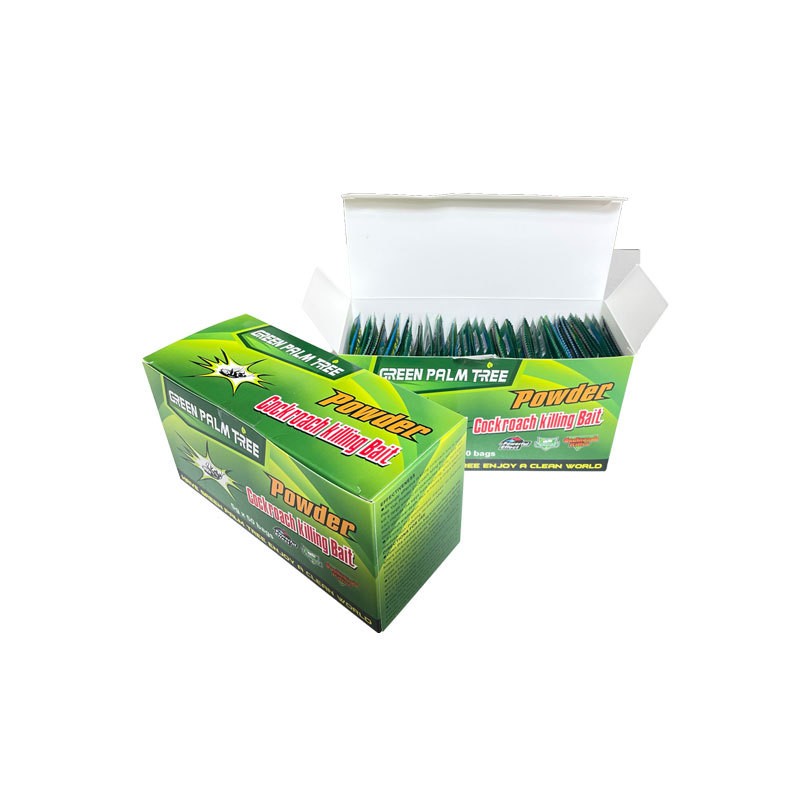
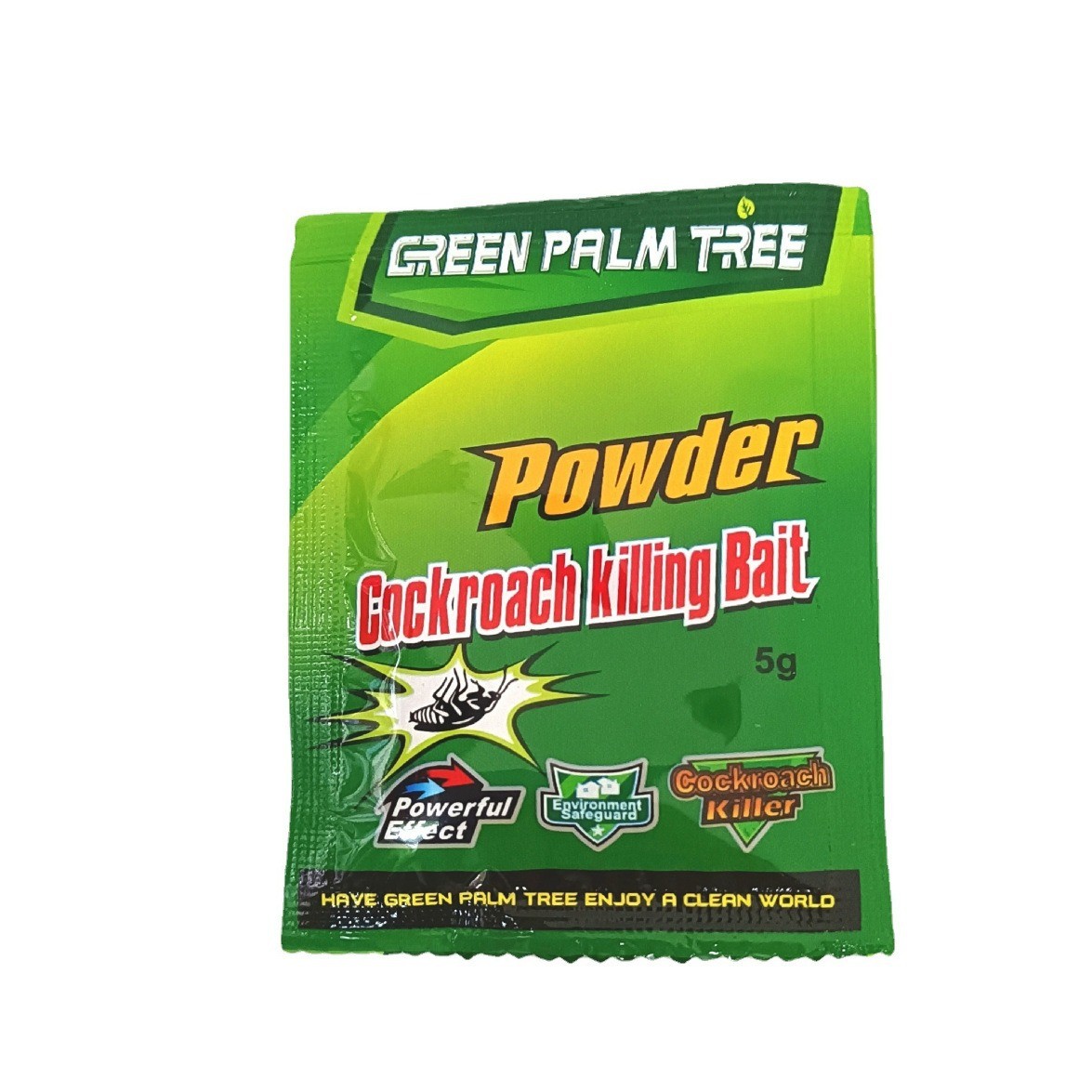
- The custom product range covers cockroach poison and fly poison, supported by printed bags, direct medication filling, middle-box packing, and container loading.
- Family-room use places particular emphasis on safety and non-toxic positioning near kitchens, sinks, storage areas, children, and pets.
- Other target environments include catering businesses, food-processing facilities, industrial warehouses, agricultural operations, and professional pest-control services.
- Available cooperation options include OEM and ODM manufacturing, factory-direct purchasing, bulk production, flexible smaller-batch arrangements, and long-term supply programs.
How the Custom Production Process Works
The documented information describes a customized pest-control product and its packaging workflow rather than a confirmed reformulation of the active chemical ingredients. Loose medication is placed into a packaging machine, the product bags are printed, and the material is filled directly into those bags. The finished bags can then be packed into middle boxes and larger containers. This process supports private-label and customized packaging orders, but it does not by itself verify that the contents are non-toxic.
Different application sites require different safety assessments. Family rooms generally prioritize low-risk and non-toxic-oriented pest control. Catering and food-processing locations may require stricter controls because chemical products are subject to specific operational and hygiene limitations. In warehouses and industrial facilities, pest-control products may be used for monitoring and early intervention around walls, beneath shelving, electrical distribution rooms, and workshop production lines.
Quality Control, Delivery, and Compliance Considerations
Quality management is described as a multi-stage process. It includes inspection of incoming raw materials, production procedures, semi-finished goods, surface treatment, assembly, completed products, and final packaging. If a production-quality problem occurs after delivery, the buyer must provide clear photographs or video together with the outer-carton batch number within 15 days. Issues linked to unsuitable storage, extremely low temperatures, or local legal restrictions are outside the stated after-sales coverage.
The listed minimum order quantity is 300,000 pieces, with an estimated delivery period of one month for customized orders. This volume makes the solution more suitable for distributors, branded buyers, and organizations with established demand. Buyers should confirm artwork, bag dimensions, product claims, inspection standards, shipment plans, and regulatory documents before production begins.
Export Experience and Business Credentials
The supplier has documented experience exporting sticky mouse boards to India, Brazil, and Peru. These examples indicate previous pest-control product supply activity across several international markets. The company also lists trade mark certificates numbered 15322289 and 13567076, along with copyright certificates numbered 2020-F-00118638 and 2024-F-01286419.
Key Data for Custom Buyers
| Evaluation Category | Documented Information | Meaning for Buyers |
|---|---|---|
| Safety positioning | Family-room applications highlight safety and non-toxic use | Potentially suitable for safety-led projects, pending ingredient and compliance verification |
| Product range | Custom cockroach poison and fly poison | Supports customized pest-control product and packaging programs |
| Packaging capability | Printed bags, direct filling, middle boxes, and containers | Provides an integrated packaging route for customized orders |
| Minimum order | 300,000 pieces | Best suited to high-volume commercial purchasing |
| Estimated lead time | Approximately one month | Requires advance production and inventory planning |
| Inspection system | Checks extend from raw materials through final packaging | Offers staged quality supervision during production |
Frequently Asked Questions
Does the available information prove that these custom fly-killing products are non-toxic?
No. The information presents family-room use as safety- and non-toxic-focused, but it does not provide a complete ingredient list, toxicological assessment, or official non-toxic certification. Buyers should request supporting documentation before making product claims.
What are the order quantity and delivery requirements?
The stated minimum order quantity is 300,000 pieces. The indicated delivery period for customized production is one month, although the final schedule should be confirmed according to packaging design, production capacity, and shipping arrangements.
What information should be checked before approval?
Buyers should review the formulation, intended use, storage requirements, product labeling, local sales rules, packaging specifications, inspection procedures, and the process for reporting quality concerns after delivery.
Conclusion: A Safer Positioning, Not Yet a Proven Material Shift
The available data indicates that selected applications, especially family rooms, are being presented with stronger safety and non-toxic positioning. It does not confirm that all custom fly-killing products have moved to non-toxic materials or that their chemical compositions have been broadly changed. Buyers should obtain formulation and regulatory evidence, align on packaging and inspection details, and determine whether the 300,000-piece minimum order matches their sales forecast. OEM, ODM, factory-direct, bulk, flexible small-batch, and long-term supply options are available. For technical solutions or cooperation inquiries, contact bob@jinwen-goods.com.
About Yiwu Jinli Commodity Co., Ltd.
Yiwu Jinli Commodity Co., Ltd., also operating under the MUSTRAP brand, was founded in 2010 and combines research and development, manufacturing, and sales. The company operates independent workshops and production lines, uses domestic production equipment and processes, and manufactures sticky rat traps, flypaper, cockroach traps, and other pest-control products. Its product team provides pest-control product development, OEM, and ODM services. Products are sold domestically in China and exported to more than 30 countries.
The company reports holding trade mark and copyright certificates and has supplied pest-control products to customers in multiple industries and international markets.

REPORT