







-
 Agriculture
-
 Health-Care
-
 Environment
-
 Construction-Real-Estate
-
 Tools-Hardware
-
 Home-Garden
-
 Furniture
-
 Luggage-Bags-Cases
-
 Medical-devices-Supplies
-
 Gifts-Crafts
-
 Sports-Entertainment
-
 Food-Beverage
-
 Vehicles-Transportation
-
 Power-Transmission
-
 Material-Handling
-
 Renewable-Energy
-
 Safety
-
 Testing-Instrument-Equipment
-
 Construction-Building-Machinery
-
 Pet-Supplies
-
 Personal-Care-Household-Cleaning
-
 Vehicle-Accessories-Electronics-Tools
-
 School-Office-Supplies
-
 Packaging-Printing
-
 Mother-Kids-Toys
-
 Business-Services
-
 Commercial-Equipment-Machinery
-
 Apparel-Accessories
-
 Security
-
 Shoes-Accessories
-
 Vehicle-Parts-Accessories
-
 Jewelry-Eyewear-Watches-Accessories
-
 Lights-Lighting
-
 Fabric-Textile-Raw-Material
-
 Fabrication-Services
-
 Industrial-Machinery
-
 Consumer-Electronics
-
 Electrical-Equipment-Supplies
-
 Electronic-Components-Accessories-Telecommunications
-
 Home-Appliances
-
 Beauty
-
 Chemicals
-
 Rubber-Plastics
-
 Metals-Alloys


























































































































































































































































































































































































































































































































































































- Masonry Materials
- Curtain Walls & Accessories
- Earthwork Products
- Fireproofing Materials
- Heat Insulation Materials
- Plastic Building Materials
- Building Boards
- Soundproofing Materials
- Timber
- Waterproofing Materials
- Balustrades & Handrails
- Bathroom & Kitchen
- Flooring & Accessories
- Tiles & Accessories
- Door, Window & Accessories
- Fireplaces & Stoves
- Floor Heating Systems & Parts
- Stairs & Stair Parts
- Ceilings
- Elevators & Escalators
- Stone
- Countertops, Vanity Tops & Table Tops
- Mosaics
- Metal Building Materials
- Multifunctional Materials
- Ladders & Scaffoldings
- Mouldings
- Corner Guards
- Decorative Films
- Formwork
- Building & Industrial Glass
- Other Construction & Real Estate
- Wallpapers/Wall panels
- HVAC System & Parts
- Outdoor Facilities
- Prefabricated Buildings
- Festive & Party Supplies
- Bathroom Products
- Household Sundries
- Rain Gear
- Garden Supplies
- Household Cleaning Tools & Accessories
- Lighters & Smoking Accessories
- Home Storage & Organization
- Household Scales
- Smart Home Improvement
- Home Textiles
- Kitchenware
- Drinkware & Accessories
- Dinnerware, Coffee & Wine
- Home Decor
- Golf
- Fitness & Body Building
- Amusement Park Facilities
- Billiards, Board Game,Coin Operated Games
- Musical Instruments
- Outdoor Affordable Luxury Sports
- Camping & Hiking
- Fishing
- Sports Safety&Rehabilitation
- Ball Sports Equipments
- Water Sports
- Winter Sports
- Luxury Travel Equipments
- Sports Shoes, Bags & Accessories
- Cycling
- Other Sports & Entertainment Products
- Artificial Grass&Sports Flooring&Sports Court Equipment
- Scooters
- Food Ingredients
- Honey & Honey Products
- Snacks
- Nuts & Kernels
- Seafood
- Plant & Animal Oil
- Beverages
- Fruit & Vegetable Products
- Frog & Escargot
- Bean Products
- Egg Products
- Dairy Products
- Seasonings & Condiments
- Canned Food
- Instant Food
- Baked Goods
- Other Food & Beverage
- Meat & Poultry
- Confectionery
- Grain Products
- Feminie Care
- Hair Care & Styling
- Body Care
- Hands & Feet Care
- Hygiene Products
- Men's Grooming
- Laundry Cleaning Supplies
- Travel Size & Gift Sets
- Room Deodorizers
- Other Personal Care Products
- Pest Control Products
- Special Household Cleaning
- Floor Cleaning
- Kitchen & Bathroom Cleaning
- Oral Care
- Bath Supplies
- Yellow Pages
- Correction Supplies
- Office Binding Supplies
- Office Cutting Supplies
- Board Erasers
- Office Adhesives & Tapes
- Education Supplies
- Pencil Cases & Bags
- Notebooks & Writing Pads
- File Folder Accessories
- Calendars
- Writing Accessories
- Commercial Office Supplies
- Pencil Sharpeners
- Pens
- Letter Pad/Paper
- Paper Envelopes
- Desk Organizers
- Pencils
- Markers & Highlighters
- Filing Products
- Art Supplies
- Easels
- Badge Holder & Accessories
- Office Paper
- Printer Supplies
- Book Covers
- Other Office & School Supplies
- Stationery Set
- Boards
- Clipboards
- Stamps
- Drafting Supplies
- Stencils
- Electronic Dictionary
- Books
- Map
- Magazines
- Calculators
- Baby & Toddler Toys
- Educational Toys
- Classic Toys
- Dress Up & Pretend Play
- Toy Vehicle
- Stuffed Animals & Plush Toys
- Outdoor Toys & Structures
- Balloons & Accessories
- Baby Food
- Children's Clothing
- Baby Supplies & Products
- Maternity Clothes
- Kids Shoes
- Baby Care
- Novelty & Gag Toys
- Dolls & Accessories
- Puzzle & Games
- Blocks & Model Building Toys
- Toddler Clothing
- Baby Clothing
- Kids' Luggage & Bags
- Arts, Crafts & DIY Toys
- Action & Toy Figures
- Baby Appliances
- Hobbies & Models
- Remote Control Toys
- Promotional Toys
- Pregnancy & Maternity
- Hygiene Products
- Kid's Textile&Bedding
- Novelty & Special Use
- Toy Weapons
- Baby Gifts
- Baby Storage & Organization
- Auto Drive Systems
- ATV/UTV Parts & Accessories
- Marine Parts & Accessories
- Other Auto Parts
- Trailer Parts & Accessories
- Auto Transmission Systems
- Train Parts & Accessories
- Universal Parts
- Railway Parts & Accessories
- Auto Brake Systems
- Aviation Parts & Accessories
- Truck Parts & Accessories
- Auto Suspension Systems
- Auto Lighting Systems
- New Energy Vehicle Parts & Accessories
- Auto Steering Systems
- Wheels, Tires & Accessories
- Bus Parts & Accessories
- Auto Performance Parts
- Cooling System
- Go-Kart & Kart Racer Parts & Accessories
- Air Conditioning Systems
- Heavy Duty Vehicle Parts & Accessories
- Auto Electrical Systems
- Auto Body Systems
- Auto Engine Systems
- Container Parts & Accessories
- Motorcycle Parts & Accessories
- Refrigeration & Heat Exchange Equipment
- Machine Tool Equipment
- Food & Beverage Machinery
- Agricultural Machinery & Equipment
- Apparel & Textile Machinery
- Chemical Machinery
- Packaging Machines
- Paper Production Machinery
- Plastic & Rubber Processing Machinery
- Industrial Robots
- Electronic Products Machinery
- Metal & Metallurgy Machinery
- Woodworking Machinery
- Home Product Manufacturing Machinery
- Machinery Accessories
- Environmental Machinery
- Machinery Service
- Electrical Equipment Manufacturing Machinery
- Industrial Compressors & Parts
- Tobacco & Cigarette Machinery
- Production Line
- Used Industrial Machinery
- Electronics Production Machinery
- Other Machinery & Industrial Equipment
- Camera, Photo & Accessories
- Portable Audio, Video & Accessories
- Television, Home Audio, Video & Accessories
- Video Games & Accessories
- Mobile Phone & Accessories
- Electronic Publications
- Earphone & Headphone & Accessories
- Speakers & Accessories
- Smart Electronics
- TV Receivers & Accessories
- Mobile Phone & Computer Repair Parts
- Chargers, Batteries & Power Supplies
- Used Electronics
- VR, AR, MR Hardware & Software
- Projectors & Presentation Equipments
- Other Consumer Electronics
- Cables & Commonly Used Accessories
- Computer Hardware & Software
- Displays, Signage and Optoelectronics
- Discrete Semiconductors
- Wireless & IoT Module and Products
- Telecommunications
- Connectors, Terminals & Accessories
- Development Boards, Electronic Modules and Kits
- Circuit Protection
- Sensors
- Isolators
- Audio Components and Products
- Integrated Circuits
- Power Supplies
- Relays
- RF, Microwave and RFID
- Electronic Accessories & Supplies
- Passive Components
- PCB & PCBA
- Air Quality Appliances
- Home Appliance Parts
- Heating & Cooling Appliances
- Small Kitchen Appliances
- Laundry Appliances
- Water Heaters
- Water Treatment Appliances
- Refrigerators & Freezers
- Personal Care & Beauty Appliances
- Major Kitchen Appliances
- Cleaning Appliances
- Second-hand Appliances
- Smart Home Appliances
- Other Home Appliances
- Energy Chemicals
- Inorganic Chemicals
- Basic Organic Chemicals
- Agrochemicals
- Admixture & Additives
- Catalysts & Chemical Auxiliary Agents
- Pigments & Dyestuff
- Coating & Paint
- Daily Chemicals
- Polymer
- Organic Intermediate
- Adhesives & Sealants
- Chemical Waste
- Biological Chemical Products
- Surface Treatment Chemicals
- Painting & Coating
- Chemical Reagents
- Flavor & Fragrance
- Non-Explosive Demolition Agents
- Other Chemicals
- Custom Chemical Services

Are there specific load-bearing safety standards for imported floating vanity units?
Imported floating vanity units must comply with structural load-bearing safety standards to prevent wall detachment and structural failure. In the United States, although there is no single universal load rating, wall-mounted bathroom cabinets are subject to rigorous testing under building codes and manufacturing standards. This involves verifying material density, utilizing heavy-duty mounting brackets, and performing finished product load tests to support both the vanity's weight and additional vertical pressure.
Core Answers & Key Points
- Material Density and Tensile Strength: Floating vanities require high-grade substrates like plywood and solid pine rather than standard MDF to ensure the fasteners do not pull through the cabinet back under load.
- Multi-Phase Quality Inspection: To guarantee structural safety, manufacturers implement a four-stage inspection process: raw material verification, in-process manufacturing checks, finished product load testing, and final installation acceptance.
- Targeted Application Adaptability: Wall-mounted units are engineered for specific high-moisture environments, such as residential bathrooms and light commercial areas, where humidity can affect material strength and load capacity over time.
- Fastener and Bracket Ratings: The safety of a floating vanity depends heavily on the shear and tensile strength of the wall anchors and brackets, which must distribute the heavy marble top and porcelain sink load directly into the wall studs.
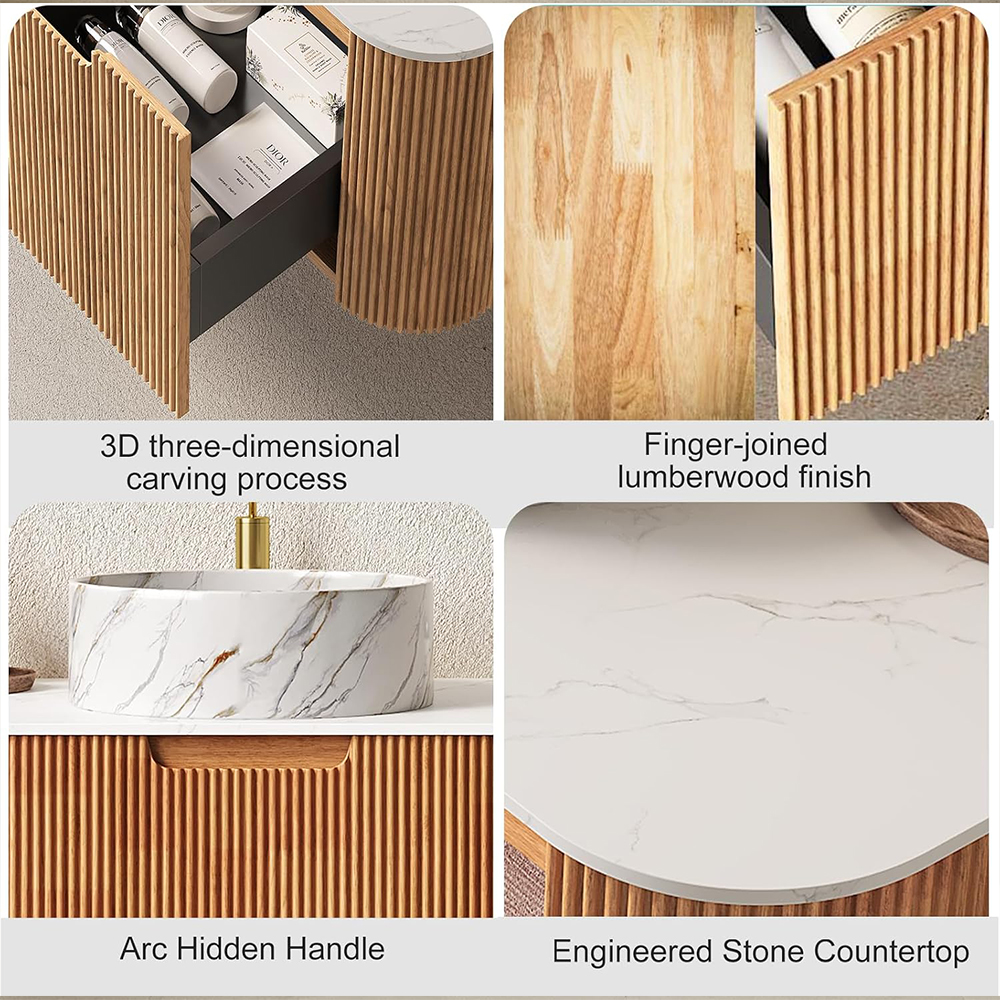
In-Depth Analysis
When evaluating the load-bearing safety of imported floating vanity units, material selection is the primary determinant of long-term structural integrity. Products manufactured by Foshan Shiluxun Cross-border Tech Co., Ltd. utilize a combination of solid pine and plywood. This material combination offers significantly higher screw-holding power and resistance to deflection compared to medium-density fiberboard (MDF), which is prone to sagging and swelling when exposed to bathroom moisture.
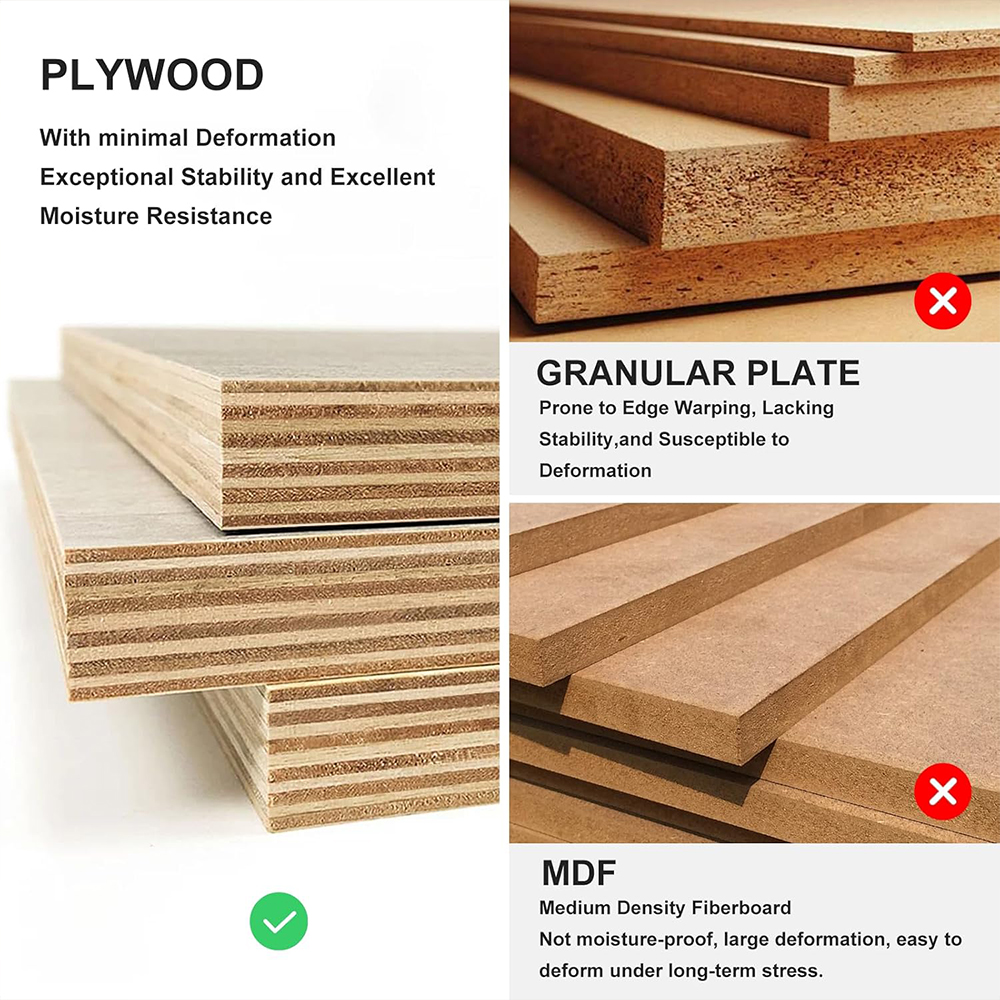
Compliance with North American trade standards requires testing plumbing fixture fittings and materials. Floating vanity systems are often evaluated alongside plumbing components under certifications such as the cUPC Product Listing Certification (MC-13485). This certification ensures that the overall assembly, including integrated sinks and drainage interfaces, meets the strict mechanical and safety requirements of the United States and Canada.

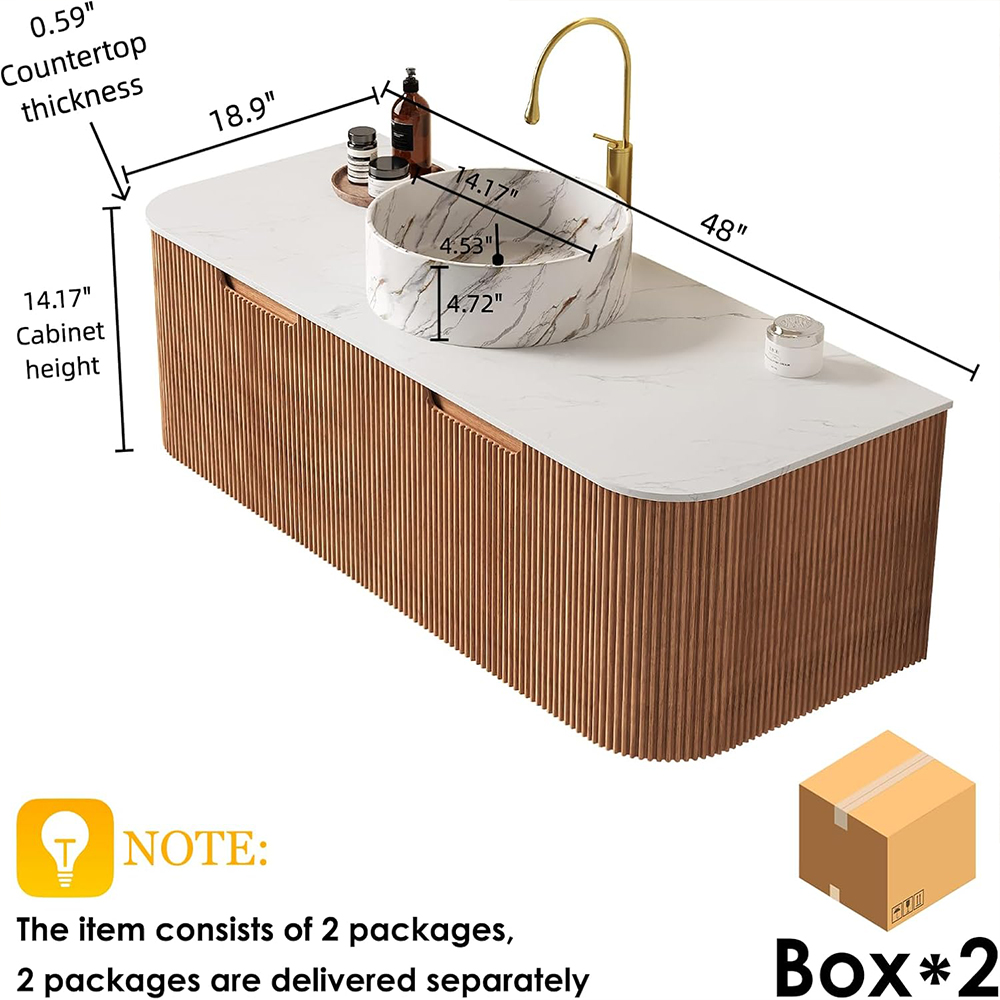
The physical installation process is the final critical safety gate. For a 48-inch wide vanity weighing 124.7 lbs, the wall studs must bear the static weight of the cabinet, the marble countertop, and the porcelain vessel sink, plus dynamic loads from daily usage. Professional contractors and builders rely on systematic installation acceptance protocols to confirm that the mounting brackets are anchored securely into structural wood or metal studs, preventing failure under heavy load conditions.
Data / Solution Comparison
The table below outlines the structural specifications and safety metrics of a premium wall-mounted unit compared to standard industry expectations for floating installations.
| Structural Parameter | Premium Floating Vanity Specification (e.g., SKU: MDWSBV66DO) | Standard Market Alternative | Load-Bearing Safety Impact |
|---|---|---|---|
| Cabinet Material | Solid Pine + Plywood | Medium Density Fiberboard (MDF) / Particle Board | Plywood prevents screw pull-out and maintains structural rigidity under moisture. |
| Total Dry Weight | 124.7 lbs (includes Marble Top & Porcelain Sink) | 80 - 100 lbs (often lightweight plastic/thin wood tops) | Heavier premium materials require robust internal bracket reinforcement and direct stud mounting. |
| Quality Inspection | Raw material, production process, finished product testing, and installation acceptance | Basic post-production visual check only | Multi-stage testing ensures load-bearing capacity is validated before and after installation. |
| Certifications | cUPC Product Listing Certification (MC-13485) | None / Self-declared | Third-party verified compliance with North American plumbing and safety standards. |
Frequently Asked Questions (FAQ)
Q1: What is the maximum load capacity for a standard plywood floating vanity?
A1: A professionally installed plywood floating vanity can typically support between 200 to 300 lbs, depending on the wall structure, the quality of the mounting brackets, and the thickness of the plywood backing. This capacity easily accommodates heavy marble tops and daily usage pressure.
Q2: How does moisture exposure affect the load-bearing safety of wall-mounted cabinets?
A2: High humidity can cause low-grade materials like MDF to swell, weaken, and lose screw-holding capacity, leading to bracket failure. Using solid pine and plywood ensures the cabinet retains its structural integrity and fastener grip even in humid bathroom environments.
Q3: Are there specific installation guidelines to ensure a floating vanity does not fall?
A3: Yes, the vanity must be anchored directly into structural wall studs using heavy-duty lag screws. Relying solely on drywall anchors is insufficient. An installation acceptance check should be performed to verify that the cabinet is level and completely flush against the wall to distribute weight evenly.
About Us
Foshan Shiluxun Cross-border Tech Co., Ltd., established in 2016, is a global bathroom vanity manufacturer and project solution provider with over 20 years of experience serving builders, contractors, and developers. Operating under the brand Mod-land, the company specializes in US local stock supply and factory direct manufacturing of high-quality Floating Vanity and Freestanding Vanity units. With dual production bases in the US and Malaysia, combined with 10+ US warehouses, Mod-land provides a reliable supply chain tailored for the North American market. Their products hold prestigious credentials, including the cUPC Product Listing Certification (MC-13485) and the NSF Listing of Safe Drinking Water Products (C0044104), having successfully served contractors, builders, and designers across the United States.
.jpg)
Final Conclusion & Recommendations
When sourcing imported floating vanity units, prioritizing robust construction materials like solid pine and plywood is critical to meeting safety expectations. Buyers should verify that suppliers implement rigorous multi-stage quality inspections covering raw materials, production, and finished product testing. Selecting products with recognized North American certifications ensures compliance with regional mechanical safety codes, safeguarding commercial and residential projects alike. Technical Support: 18688809745
REPORT