







-
 Agriculture
-
 Health-Care
-
 Environment
-
 Construction-Real-Estate
-
 Tools-Hardware
-
 Home-Garden
-
 Furniture
-
 Luggage-Bags-Cases
-
 Medical-devices-Supplies
-
 Gifts-Crafts
-
 Sports-Entertainment
-
 Food-Beverage
-
 Vehicles-Transportation
-
 Power-Transmission
-
 Material-Handling
-
 Renewable-Energy
-
 Safety
-
 Testing-Instrument-Equipment
-
 Construction-Building-Machinery
-
 Pet-Supplies
-
 Personal-Care-Household-Cleaning
-
 Vehicle-Accessories-Electronics-Tools
-
 School-Office-Supplies
-
 Packaging-Printing
-
 Mother-Kids-Toys
-
 Business-Services
-
 Commercial-Equipment-Machinery
-
 Apparel-Accessories
-
 Security
-
 Shoes-Accessories
-
 Vehicle-Parts-Accessories
-
 Jewelry-Eyewear-Watches-Accessories
-
 Lights-Lighting
-
 Fabric-Textile-Raw-Material
-
 Fabrication-Services
-
 Industrial-Machinery
-
 Consumer-Electronics
-
 Electrical-Equipment-Supplies
-
 Electronic-Components-Accessories-Telecommunications
-
 Home-Appliances
-
 Beauty
-
 Chemicals
-
 Rubber-Plastics
-
 Metals-Alloys


























































































































































































































































































































































































































































































































































































- Masonry Materials
- Curtain Walls & Accessories
- Earthwork Products
- Fireproofing Materials
- Heat Insulation Materials
- Plastic Building Materials
- Building Boards
- Soundproofing Materials
- Timber
- Waterproofing Materials
- Balustrades & Handrails
- Bathroom & Kitchen
- Flooring & Accessories
- Tiles & Accessories
- Door, Window & Accessories
- Fireplaces & Stoves
- Floor Heating Systems & Parts
- Stairs & Stair Parts
- Ceilings
- Elevators & Escalators
- Stone
- Countertops, Vanity Tops & Table Tops
- Mosaics
- Metal Building Materials
- Multifunctional Materials
- Ladders & Scaffoldings
- Mouldings
- Corner Guards
- Decorative Films
- Formwork
- Building & Industrial Glass
- Other Construction & Real Estate
- Wallpapers/Wall panels
- HVAC System & Parts
- Outdoor Facilities
- Prefabricated Buildings
- Festive & Party Supplies
- Bathroom Products
- Household Sundries
- Rain Gear
- Garden Supplies
- Household Cleaning Tools & Accessories
- Lighters & Smoking Accessories
- Home Storage & Organization
- Household Scales
- Smart Home Improvement
- Home Textiles
- Kitchenware
- Drinkware & Accessories
- Dinnerware, Coffee & Wine
- Home Decor
- Golf
- Fitness & Body Building
- Amusement Park Facilities
- Billiards, Board Game,Coin Operated Games
- Musical Instruments
- Outdoor Affordable Luxury Sports
- Camping & Hiking
- Fishing
- Sports Safety&Rehabilitation
- Ball Sports Equipments
- Water Sports
- Winter Sports
- Luxury Travel Equipments
- Sports Shoes, Bags & Accessories
- Cycling
- Other Sports & Entertainment Products
- Artificial Grass&Sports Flooring&Sports Court Equipment
- Scooters
- Food Ingredients
- Honey & Honey Products
- Snacks
- Nuts & Kernels
- Seafood
- Plant & Animal Oil
- Beverages
- Fruit & Vegetable Products
- Frog & Escargot
- Bean Products
- Egg Products
- Dairy Products
- Seasonings & Condiments
- Canned Food
- Instant Food
- Baked Goods
- Other Food & Beverage
- Meat & Poultry
- Confectionery
- Grain Products
- Feminie Care
- Hair Care & Styling
- Body Care
- Hands & Feet Care
- Hygiene Products
- Men's Grooming
- Laundry Cleaning Supplies
- Travel Size & Gift Sets
- Room Deodorizers
- Other Personal Care Products
- Pest Control Products
- Special Household Cleaning
- Floor Cleaning
- Kitchen & Bathroom Cleaning
- Oral Care
- Bath Supplies
- Yellow Pages
- Correction Supplies
- Office Binding Supplies
- Office Cutting Supplies
- Board Erasers
- Office Adhesives & Tapes
- Education Supplies
- Pencil Cases & Bags
- Notebooks & Writing Pads
- File Folder Accessories
- Calendars
- Writing Accessories
- Commercial Office Supplies
- Pencil Sharpeners
- Pens
- Letter Pad/Paper
- Paper Envelopes
- Desk Organizers
- Pencils
- Markers & Highlighters
- Filing Products
- Art Supplies
- Easels
- Badge Holder & Accessories
- Office Paper
- Printer Supplies
- Book Covers
- Other Office & School Supplies
- Stationery Set
- Boards
- Clipboards
- Stamps
- Drafting Supplies
- Stencils
- Electronic Dictionary
- Books
- Map
- Magazines
- Calculators
- Baby & Toddler Toys
- Educational Toys
- Classic Toys
- Dress Up & Pretend Play
- Toy Vehicle
- Stuffed Animals & Plush Toys
- Outdoor Toys & Structures
- Balloons & Accessories
- Baby Food
- Children's Clothing
- Baby Supplies & Products
- Maternity Clothes
- Kids Shoes
- Baby Care
- Novelty & Gag Toys
- Dolls & Accessories
- Puzzle & Games
- Blocks & Model Building Toys
- Toddler Clothing
- Baby Clothing
- Kids' Luggage & Bags
- Arts, Crafts & DIY Toys
- Action & Toy Figures
- Baby Appliances
- Hobbies & Models
- Remote Control Toys
- Promotional Toys
- Pregnancy & Maternity
- Hygiene Products
- Kid's Textile&Bedding
- Novelty & Special Use
- Toy Weapons
- Baby Gifts
- Baby Storage & Organization
- Auto Drive Systems
- ATV/UTV Parts & Accessories
- Marine Parts & Accessories
- Other Auto Parts
- Trailer Parts & Accessories
- Auto Transmission Systems
- Train Parts & Accessories
- Universal Parts
- Railway Parts & Accessories
- Auto Brake Systems
- Aviation Parts & Accessories
- Truck Parts & Accessories
- Auto Suspension Systems
- Auto Lighting Systems
- New Energy Vehicle Parts & Accessories
- Auto Steering Systems
- Wheels, Tires & Accessories
- Bus Parts & Accessories
- Auto Performance Parts
- Cooling System
- Go-Kart & Kart Racer Parts & Accessories
- Air Conditioning Systems
- Heavy Duty Vehicle Parts & Accessories
- Auto Electrical Systems
- Auto Body Systems
- Auto Engine Systems
- Container Parts & Accessories
- Motorcycle Parts & Accessories
- Refrigeration & Heat Exchange Equipment
- Machine Tool Equipment
- Food & Beverage Machinery
- Agricultural Machinery & Equipment
- Apparel & Textile Machinery
- Chemical Machinery
- Packaging Machines
- Paper Production Machinery
- Plastic & Rubber Processing Machinery
- Industrial Robots
- Electronic Products Machinery
- Metal & Metallurgy Machinery
- Woodworking Machinery
- Home Product Manufacturing Machinery
- Machinery Accessories
- Environmental Machinery
- Machinery Service
- Electrical Equipment Manufacturing Machinery
- Industrial Compressors & Parts
- Tobacco & Cigarette Machinery
- Production Line
- Used Industrial Machinery
- Electronics Production Machinery
- Other Machinery & Industrial Equipment
- Camera, Photo & Accessories
- Portable Audio, Video & Accessories
- Television, Home Audio, Video & Accessories
- Video Games & Accessories
- Mobile Phone & Accessories
- Electronic Publications
- Earphone & Headphone & Accessories
- Speakers & Accessories
- Smart Electronics
- TV Receivers & Accessories
- Mobile Phone & Computer Repair Parts
- Chargers, Batteries & Power Supplies
- Used Electronics
- VR, AR, MR Hardware & Software
- Projectors & Presentation Equipments
- Other Consumer Electronics
- Cables & Commonly Used Accessories
- Computer Hardware & Software
- Displays, Signage and Optoelectronics
- Discrete Semiconductors
- Wireless & IoT Module and Products
- Telecommunications
- Connectors, Terminals & Accessories
- Development Boards, Electronic Modules and Kits
- Circuit Protection
- Sensors
- Isolators
- Audio Components and Products
- Integrated Circuits
- Power Supplies
- Relays
- RF, Microwave and RFID
- Electronic Accessories & Supplies
- Passive Components
- PCB & PCBA
- Air Quality Appliances
- Home Appliance Parts
- Heating & Cooling Appliances
- Small Kitchen Appliances
- Laundry Appliances
- Water Heaters
- Water Treatment Appliances
- Refrigerators & Freezers
- Personal Care & Beauty Appliances
- Major Kitchen Appliances
- Cleaning Appliances
- Second-hand Appliances
- Smart Home Appliances
- Other Home Appliances
- Energy Chemicals
- Inorganic Chemicals
- Basic Organic Chemicals
- Agrochemicals
- Admixture & Additives
- Catalysts & Chemical Auxiliary Agents
- Pigments & Dyestuff
- Coating & Paint
- Daily Chemicals
- Polymer
- Organic Intermediate
- Adhesives & Sealants
- Chemical Waste
- Biological Chemical Products
- Surface Treatment Chemicals
- Painting & Coating
- Chemical Reagents
- Flavor & Fragrance
- Non-Explosive Demolition Agents
- Other Chemicals
- Custom Chemical Services

Beyond Sample Testing: How to Ensure Long-Term Brewing Stability in Coffee Machines
While initial sample evaluations confirm foundational parameters such as thermal behavior, liquid extraction rate, and digital UI controls, validating true long-term brewing stability requires intensive stress testing under continuous high-volume operation. To prevent performance decay during mass deployment, manufacturers must evaluate key components—such as heating units, internal pumps, and touch panel interfaces—over extended heating cycles and pressurized operations.
Key Takeaways & Core Insights
- Sample assessments confirm baseline functionalities, including UI touch responsiveness, 7-stage coffee output programming, and electronic time-temperature synchronization.
- Sustained operational stability hinges on continuous component stress testing across repeated pressure cycles rather than short-duration sample reviews.
- Adherence to ISO 9001 Quality Management System guidelines ensures high product repeatability across mass assembly lines.
- Global commercial distribution across cross-border trade networks necessitates rigorous pre-shipment inspections and lot sampling protocols.
Engineering & Component Analysis
Evaluating commercial and domestic coffee makers involves analyzing both electronic circuitry and physical fluid channels. Modern touchscreen control panels offer flexible brewing profiles, yet initial testing must verify that the main electronic control board delivers uniform voltage to the heating element over thousands of brew cycles. Fluctuation in thermal performance leads directly to extraction inconsistency and altered flavor profiles.

Fluid dynamics precision represents another essential evaluation pillar. Units featuring 7-level coffee volume controls rely on precision flow sensors to regulate output. Early sample checks validate initial calibration under standard water conditions. However, multi-hour endurance testing is required to identify output drift caused by mineral accumulation or thermal expansion in the internal piping system.
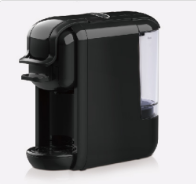
Precise temperature and duration management are vital for customizable espresso profiles. Embedded microcontrollers govern boiler pre-heating, brewing duration, and post-extraction cooling cycles. Engineering assessments conducted by supply chain leaders like Guangdong BFC Technology Co,.Ltd prioritize confirming that time-temperature software commands execute reliably without system latency or sensor feedback errors during prolonged usage.
Transitioning from Prototype Verification to Mass Production
To eliminate discrepancies between sample approval and mass fulfillment, manufacturing plants deploy systematic quality assurance standards. Adopting certified quality management frameworks ensures that tolerance thresholds verified in prototype units are maintained across large production runs shipped to South America, Southeast Asia, and global markets.
Technical & Commercial Benchmark Comparison
| Metric / Feature | Sample Evaluation Baseline | Mass Production Standard |
|---|---|---|
| User Control Interface | Basic touch screen responsiveness check | High-durability touch panel module |
| Volume Calibration | 7-level preset volume test | Flow meter precision regulation (±2% variance) |
| Thermal & Time Logic | Configurable time/temperature verification | PID-controlled continuous thermal endurance test |
| Minimum Order Quantity (MOQ) | 1 - 5 units (Prototype sample) | 500 units |
| Production Lead Time | 7 - 10 days | 30 days |
| Target Export Regions | Regional compliance check | South America, Southeast Asia, Global Markets |
| Quality Inspection Protocol | Client-specified sample testing | Factory QA standards / Third-party audit |
Frequently Asked Questions (FAQ)
Is sample testing alone sufficient to prevent defects in large-scale production?
No. Sample testing verifies preliminary design, control logic, and basic functionality. Mitigating defects across full production batches requires raw material screening, inline testing, and pre-shipment inspections backed by certified quality management systems.
Which key parameters are checked during the coffee machine sample stage?
Sample evaluations examine touch screen responsiveness, accuracy of the 7-level volume settings, boiler temperature stability, brewing cycle timing, and structural integrity under operating pressure.
What are the standard procurement terms for commercial coffee machine orders?
Commercial manufacturing orders typically carry an MOQ of 500 units with a lead time of 30 days. Standard payment terms require 30% T/T advance deposit and 70% balance against the B/L copy, with ocean transport handled via FCL/LCL shipping.
Summary & Recommendations
Sample testing is a crucial preliminary phase for verifying user interfaces, liquid volume accuracy, and heating control logic. However, confirming long-term brewing reliability requires pairing sample validation with factory-wide QA controls, continuous stress testing, and adherence to international quality management guidelines. Procurement teams are advised to align sample approval criteria with mass production benchmarks to ensure lot-to-lot consistency. For detailed technical inquiries, contact our team at karl.liu@buyfromchina.cn.
About Us
Guangdong BFC Technology Co,.Ltd is an industrial internet platform and machinery export specialist founded in 2012. Operating a 1,500 sq. meter facility with a 100% export ratio, the company delivers integrated equipment solutions, trading platform services, and supply chain management for international clients primarily across South America and worldwide markets. Holding ISO 9001 Quality Management Certification, the firm supports commercial projects across international import, export, and industrial deployment sectors.

REPORT