







-
 Agriculture
-
 Health-Care
-
 Environment
-
 Construction-Real-Estate
-
 Tools-Hardware
-
 Home-Garden
-
 Furniture
-
 Luggage-Bags-Cases
-
 Medical-devices-Supplies
-
 Gifts-Crafts
-
 Sports-Entertainment
-
 Food-Beverage
-
 Vehicles-Transportation
-
 Power-Transmission
-
 Material-Handling
-
 Renewable-Energy
-
 Safety
-
 Testing-Instrument-Equipment
-
 Construction-Building-Machinery
-
 Pet-Supplies
-
 Personal-Care-Household-Cleaning
-
 Vehicle-Accessories-Electronics-Tools
-
 School-Office-Supplies
-
 Packaging-Printing
-
 Mother-Kids-Toys
-
 Business-Services
-
 Commercial-Equipment-Machinery
-
 Apparel-Accessories
-
 Security
-
 Shoes-Accessories
-
 Vehicle-Parts-Accessories
-
 Jewelry-Eyewear-Watches-Accessories
-
 Lights-Lighting
-
 Fabric-Textile-Raw-Material
-
 Fabrication-Services
-
 Industrial-Machinery
-
 Consumer-Electronics
-
 Electrical-Equipment-Supplies
-
 Electronic-Components-Accessories-Telecommunications
-
 Home-Appliances
-
 Beauty
-
 Chemicals
-
 Rubber-Plastics
-
 Metals-Alloys


























































































































































































































































































































































































































































































































































































- Masonry Materials
- Curtain Walls & Accessories
- Earthwork Products
- Fireproofing Materials
- Heat Insulation Materials
- Plastic Building Materials
- Building Boards
- Soundproofing Materials
- Timber
- Waterproofing Materials
- Balustrades & Handrails
- Bathroom & Kitchen
- Flooring & Accessories
- Tiles & Accessories
- Door, Window & Accessories
- Fireplaces & Stoves
- Floor Heating Systems & Parts
- Stairs & Stair Parts
- Ceilings
- Elevators & Escalators
- Stone
- Countertops, Vanity Tops & Table Tops
- Mosaics
- Metal Building Materials
- Multifunctional Materials
- Ladders & Scaffoldings
- Mouldings
- Corner Guards
- Decorative Films
- Formwork
- Building & Industrial Glass
- Other Construction & Real Estate
- Wallpapers/Wall panels
- HVAC System & Parts
- Outdoor Facilities
- Prefabricated Buildings
- Festive & Party Supplies
- Bathroom Products
- Household Sundries
- Rain Gear
- Garden Supplies
- Household Cleaning Tools & Accessories
- Lighters & Smoking Accessories
- Home Storage & Organization
- Household Scales
- Smart Home Improvement
- Home Textiles
- Kitchenware
- Drinkware & Accessories
- Dinnerware, Coffee & Wine
- Home Decor
- Golf
- Fitness & Body Building
- Amusement Park Facilities
- Billiards, Board Game,Coin Operated Games
- Musical Instruments
- Outdoor Affordable Luxury Sports
- Camping & Hiking
- Fishing
- Sports Safety&Rehabilitation
- Ball Sports Equipments
- Water Sports
- Winter Sports
- Luxury Travel Equipments
- Sports Shoes, Bags & Accessories
- Cycling
- Other Sports & Entertainment Products
- Artificial Grass&Sports Flooring&Sports Court Equipment
- Scooters
- Food Ingredients
- Honey & Honey Products
- Snacks
- Nuts & Kernels
- Seafood
- Plant & Animal Oil
- Beverages
- Fruit & Vegetable Products
- Frog & Escargot
- Bean Products
- Egg Products
- Dairy Products
- Seasonings & Condiments
- Canned Food
- Instant Food
- Baked Goods
- Other Food & Beverage
- Meat & Poultry
- Confectionery
- Grain Products
- Feminie Care
- Hair Care & Styling
- Body Care
- Hands & Feet Care
- Hygiene Products
- Men's Grooming
- Laundry Cleaning Supplies
- Travel Size & Gift Sets
- Room Deodorizers
- Other Personal Care Products
- Pest Control Products
- Special Household Cleaning
- Floor Cleaning
- Kitchen & Bathroom Cleaning
- Oral Care
- Bath Supplies
- Yellow Pages
- Correction Supplies
- Office Binding Supplies
- Office Cutting Supplies
- Board Erasers
- Office Adhesives & Tapes
- Education Supplies
- Pencil Cases & Bags
- Notebooks & Writing Pads
- File Folder Accessories
- Calendars
- Writing Accessories
- Commercial Office Supplies
- Pencil Sharpeners
- Pens
- Letter Pad/Paper
- Paper Envelopes
- Desk Organizers
- Pencils
- Markers & Highlighters
- Filing Products
- Art Supplies
- Easels
- Badge Holder & Accessories
- Office Paper
- Printer Supplies
- Book Covers
- Other Office & School Supplies
- Stationery Set
- Boards
- Clipboards
- Stamps
- Drafting Supplies
- Stencils
- Electronic Dictionary
- Books
- Map
- Magazines
- Calculators
- Baby & Toddler Toys
- Educational Toys
- Classic Toys
- Dress Up & Pretend Play
- Toy Vehicle
- Stuffed Animals & Plush Toys
- Outdoor Toys & Structures
- Balloons & Accessories
- Baby Food
- Children's Clothing
- Baby Supplies & Products
- Maternity Clothes
- Kids Shoes
- Baby Care
- Novelty & Gag Toys
- Dolls & Accessories
- Puzzle & Games
- Blocks & Model Building Toys
- Toddler Clothing
- Baby Clothing
- Kids' Luggage & Bags
- Arts, Crafts & DIY Toys
- Action & Toy Figures
- Baby Appliances
- Hobbies & Models
- Remote Control Toys
- Promotional Toys
- Pregnancy & Maternity
- Hygiene Products
- Kid's Textile&Bedding
- Novelty & Special Use
- Toy Weapons
- Baby Gifts
- Baby Storage & Organization
- Auto Drive Systems
- ATV/UTV Parts & Accessories
- Marine Parts & Accessories
- Other Auto Parts
- Trailer Parts & Accessories
- Auto Transmission Systems
- Train Parts & Accessories
- Universal Parts
- Railway Parts & Accessories
- Auto Brake Systems
- Aviation Parts & Accessories
- Truck Parts & Accessories
- Auto Suspension Systems
- Auto Lighting Systems
- New Energy Vehicle Parts & Accessories
- Auto Steering Systems
- Wheels, Tires & Accessories
- Bus Parts & Accessories
- Auto Performance Parts
- Cooling System
- Go-Kart & Kart Racer Parts & Accessories
- Air Conditioning Systems
- Heavy Duty Vehicle Parts & Accessories
- Auto Electrical Systems
- Auto Body Systems
- Auto Engine Systems
- Container Parts & Accessories
- Motorcycle Parts & Accessories
- Refrigeration & Heat Exchange Equipment
- Machine Tool Equipment
- Food & Beverage Machinery
- Agricultural Machinery & Equipment
- Apparel & Textile Machinery
- Chemical Machinery
- Packaging Machines
- Paper Production Machinery
- Plastic & Rubber Processing Machinery
- Industrial Robots
- Electronic Products Machinery
- Metal & Metallurgy Machinery
- Woodworking Machinery
- Home Product Manufacturing Machinery
- Machinery Accessories
- Environmental Machinery
- Machinery Service
- Electrical Equipment Manufacturing Machinery
- Industrial Compressors & Parts
- Tobacco & Cigarette Machinery
- Production Line
- Used Industrial Machinery
- Electronics Production Machinery
- Other Machinery & Industrial Equipment
- Camera, Photo & Accessories
- Portable Audio, Video & Accessories
- Television, Home Audio, Video & Accessories
- Video Games & Accessories
- Mobile Phone & Accessories
- Electronic Publications
- Earphone & Headphone & Accessories
- Speakers & Accessories
- Smart Electronics
- TV Receivers & Accessories
- Mobile Phone & Computer Repair Parts
- Chargers, Batteries & Power Supplies
- Used Electronics
- VR, AR, MR Hardware & Software
- Projectors & Presentation Equipments
- Other Consumer Electronics
- Cables & Commonly Used Accessories
- Computer Hardware & Software
- Displays, Signage and Optoelectronics
- Discrete Semiconductors
- Wireless & IoT Module and Products
- Telecommunications
- Connectors, Terminals & Accessories
- Development Boards, Electronic Modules and Kits
- Circuit Protection
- Sensors
- Isolators
- Audio Components and Products
- Integrated Circuits
- Power Supplies
- Relays
- RF, Microwave and RFID
- Electronic Accessories & Supplies
- Passive Components
- PCB & PCBA
- Air Quality Appliances
- Home Appliance Parts
- Heating & Cooling Appliances
- Small Kitchen Appliances
- Laundry Appliances
- Water Heaters
- Water Treatment Appliances
- Refrigerators & Freezers
- Personal Care & Beauty Appliances
- Major Kitchen Appliances
- Cleaning Appliances
- Second-hand Appliances
- Smart Home Appliances
- Other Home Appliances
- Energy Chemicals
- Inorganic Chemicals
- Basic Organic Chemicals
- Agrochemicals
- Admixture & Additives
- Catalysts & Chemical Auxiliary Agents
- Pigments & Dyestuff
- Coating & Paint
- Daily Chemicals
- Polymer
- Organic Intermediate
- Adhesives & Sealants
- Chemical Waste
- Biological Chemical Products
- Surface Treatment Chemicals
- Painting & Coating
- Chemical Reagents
- Flavor & Fragrance
- Non-Explosive Demolition Agents
- Other Chemicals
- Custom Chemical Services

Can a Wafer Packaging System Integrate with Existing Cartoning Equipment?
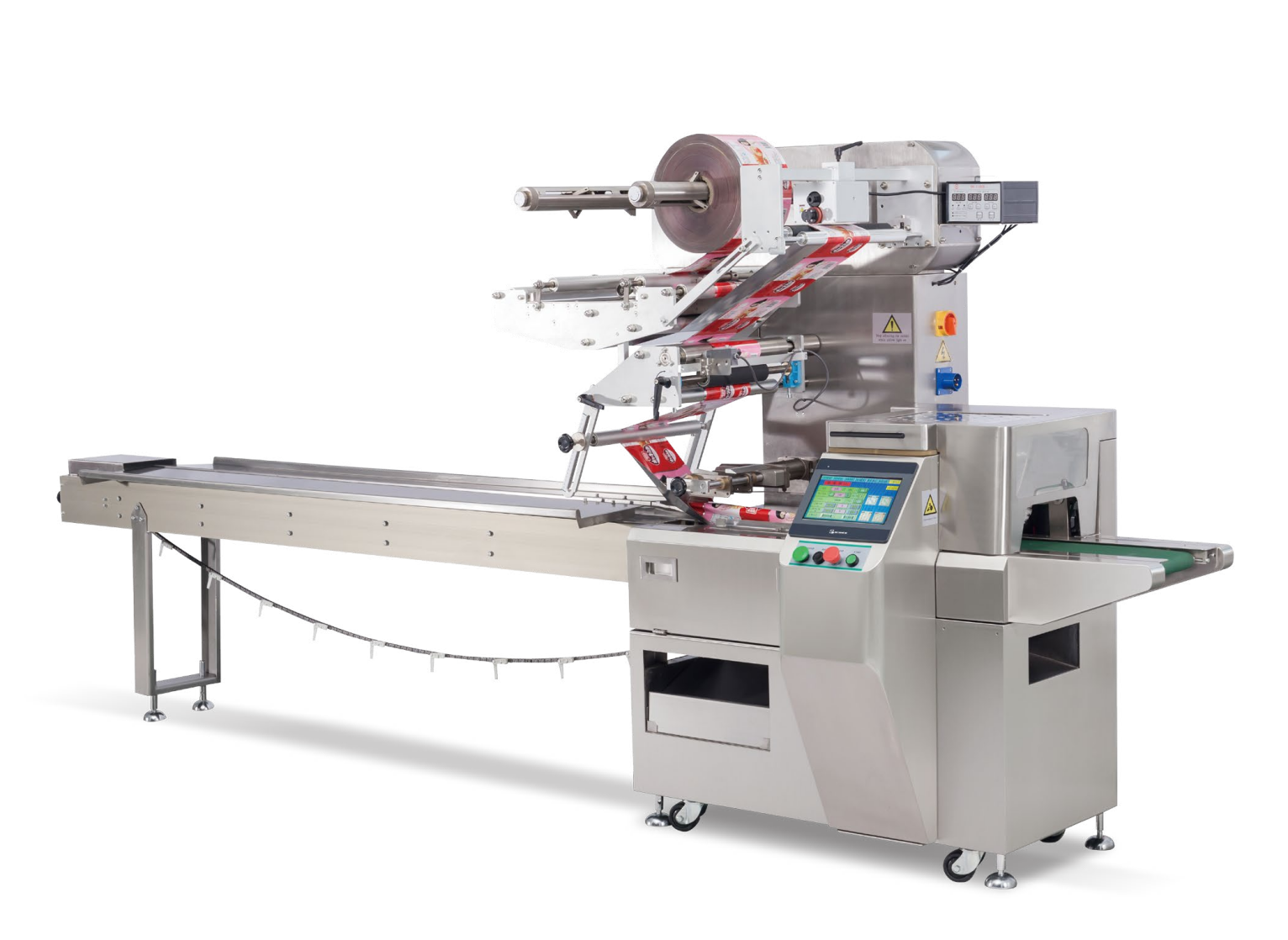
Yes. A wafer packaging system can be connected to existing cartoning equipment when the wrapped product format, transfer layout, production rate, and control interfaces are properly matched. The horizontal flow wrapper can discharge finished wafer packs to a downstream cartoner through a synchronized conveyor or transfer section. Before the final design is approved, the actual wafer, packaging film, carton format, and existing machine specifications should be evaluated through engineering review and sample trials.
Integration Overview
The wafer packaging line is designed for continuous primary packaging and can be configured for secondary cartoning. During operation, wafers are fed and aligned, wrapped in film, sealed longitudinally and transversely, cut into individual packs, and discharged toward the next machine. A high-speed cartoner is available as an optional downstream module, making it possible to create a connected wrapping and cartoning line.
- The primary machine uses horizontal flow wrapping for wafer products and related snacks.
- Finished pillow packs can be transferred continuously to a cartoner when the discharge pattern is suitable.
- Mechanical and electrical compatibility must be confirmed before connecting to an existing cartoning machine.
- Important factors include pack size, pack orientation, spacing, infeed direction, line speed, and carton loading requirements.
- Optional stacking and collating functions can prepare multiple wafers or packs for a specific carton configuration.
How the Connection Works
The main integration point is the finished-pack outlet of the horizontal flow wrapper. Once the wafers have been positioned and wrapped, the machine forms a fin seal, applies heated end seals, cuts the film, and releases each sealed pack. A conveyor, metering belt, or synchronized transfer device can then deliver the packs to the cartoner.
For reliable operation, the wrapper's discharge arrangement must correspond to the cartoner's infeed requirements. This includes pack direction, product spacing, accumulation capacity, and the number of packs presented for each carton. If the existing cartoner requires a particular pitch or loading pattern, an intermediate conveyor, collator, or turning device may be included in the line design.
Pack Size and Cartoner Compatibility
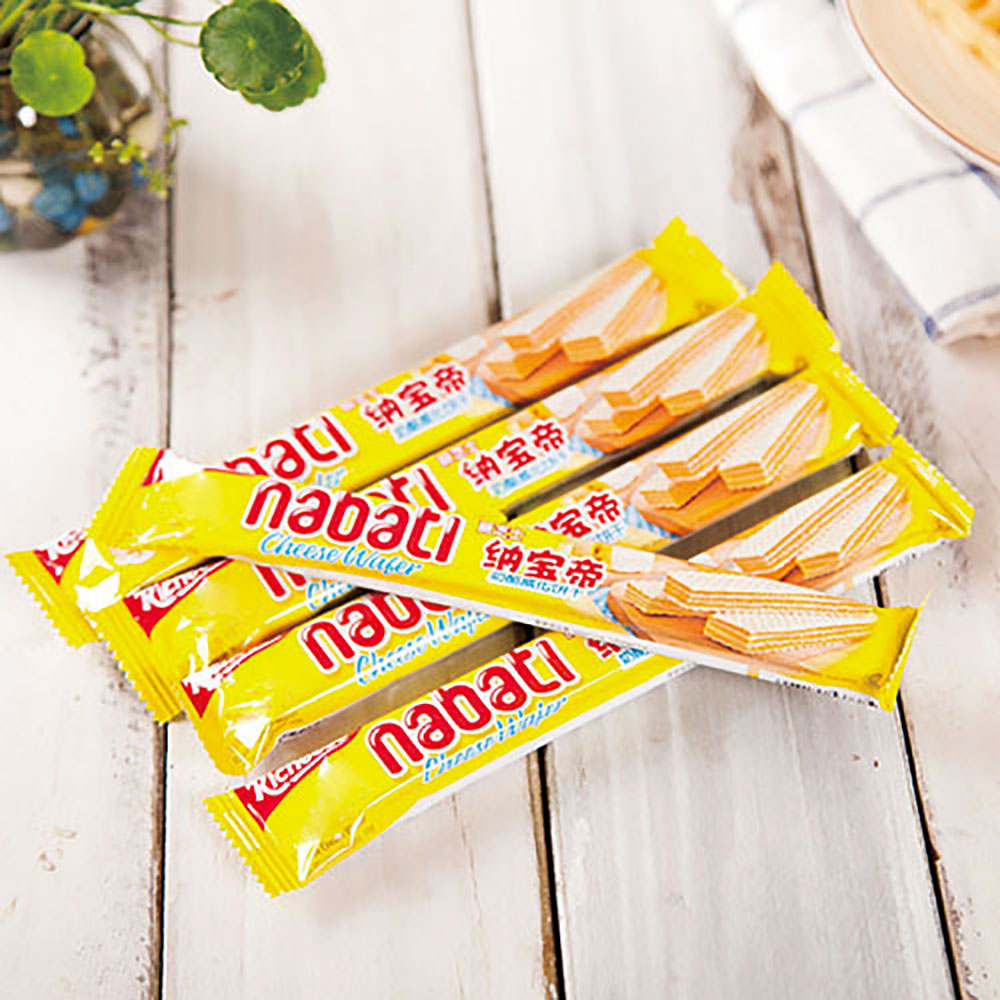
The listed finished-pack dimensions are generally dependent on the product and selected machine model. Typical values are approximately 60–300 mm in length, 35–200 mm in width, and 5–120 mm in height. Adjustable bag lengths and product ranges are available within the limits of the specific flow wrapper.
These dimensions should be compared with the cartoner's accepted product envelope. The engineering review should also confirm carton dimensions, packs per carton, loading orientation, maximum throughput, and the available space between the two machines. A cartoner may require packs to arrive flat, edge-on, grouped, or in a precise sequence, so the transfer design cannot be based on dimensions alone.
Feeding, Alignment, and Grouping Options
Consistent product presentation is essential when a flow wrapper feeds a cartoner. Depending on the product, the wafer system may use belt conveyors with side guides or vibratory alignment tracks. Photoelectric sensors can monitor product position and help remove misaligned items before they enter the wrapping or transfer section.
For applications requiring several wafers in one primary pack or multiple packs in one carton, optional stacking and collating functions can be added. Automatic stacking of two to six wafers per pack is available as an optional feature. The selected arrangement must match the loading method of the current cartoner, including its grouping, timing, and carton insertion pattern.
Controls and Communication
The packaging system uses PLC-based control with distributed servo drives. A color touchscreen, recipe management, alarm and fault records, remote access, and optional EtherCAT or CANopen communication are among the available control features. These functions support coordinated movement between the wrapper, transfer conveyors, and cartoner.
However, the system should not be assumed to connect automatically to every cartoner. If the existing machine uses a different PLC platform, communication protocol, safety circuit, or handshake structure, the interface must be defined during the engineering stage. Signals for machine-ready status, product request, transfer enable, carton loading, fault conditions, and emergency stop coordination may all need to be reviewed.
Recommended Pre-Integration Tests
Testing with real production samples is the most dependable way to confirm compatibility. A suitable trial should use the actual wafer product, wrapping film, pack dimensions, carton, and target operating speed. The evaluation can cover:
- Stable product transfer from the flow wrapper to the cartoner
- Correct pack orientation, spacing, and grouping
- Carton loading performance and product protection
- Sealing quality and pack appearance after transfer
- Reject handling and recovery from machine stoppages
- Recipe changeover and adjustment for different products or carton sizes
- Signal exchange, safety coordination, and line synchronization
Foshan Ruipuhua Machinery Equipment Co. Ltd. supplies packaging solutions for wafers, biscuits, bakery products, snacks, noodles, and other food categories. Its engineering capability covers integrated lines that may combine feeding, form-fill-seal wrapping, secondary collating, cartoning, case packing, and robotic palletizing. The company also lists CE certification for flow packaging machines, automatic packaging systems, cartoners, and palletizing robots.
A documented project for Orion plants in China involved a chocolate pie cake packaging system with wrapping and robotic palletizing in the wider automated line. This indicates experience with connected packaging equipment, although compatibility with a particular customer-owned cartoner still requires a separate technical assessment.
Compatibility Checklist
| Integration item | Points to verify |
|---|---|
| Wrapped product output | Horizontal pillow packs with fin seals and sealed cut ends |
| Cartoner connection | High-speed cartoner available as an optional downstream module |
| Pack dimensions | Typical range of 60–300 mm length, 35–200 mm width, and 5–120 mm height, depending on model and product |
| Transfer arrangement | Continuous discharge with possible alignment, stacking, metering, and collating |
| Production capacity | Wrapper and cartoner speeds must be balanced to avoid gaps, accumulation, or product back-up |
| Control system | PLC control, servo drives, recipe storage, diagnostics, and optional EtherCAT or CANopen communication |
| Validation | Run product and packaging samples before final configuration or shipment |
Frequently Asked Questions
Will the wafer system connect to any existing cartoner?
No. The listed system supports cartoning integration, but each existing cartoner must be checked individually. Pack dimensions, infeed design, product speed, orientation, safety circuits, and control communication all affect compatibility.
What details are required for an engineering review?
Useful information includes the cartoner brand and model, pack length, width and height, required packs per carton, carton dimensions, infeed direction, operating speed, loading pattern, conveyor space, electrical standards, and communication protocol. Samples of the wafer, film, and carton are also recommended.
Can several wafers or packs be grouped before cartoning?
Yes. Optional stacking and collating functions can arrange two to six wafers per pack or prepare groups of finished packs for carton loading. The final grouping must correspond to the cartoner's product loading format.
Conclusion
A wafer packaging system can be engineered to work with current cartoning equipment when the mechanical layout, product format, throughput, and control architecture are aligned. The optional high-speed cartoner, adjustable feeding functions, PLC-based controls, and sample testing process support this type of integrated line. Because every existing cartoner has different infeed and control requirements, a technical review should be completed before the equipment is finalized.
Ruipuhua operates as a packaging machinery manufacturer and OEM supplier, offers engineer support after sale, and lists a minimum order quantity of one. For a customized integration proposal, contact lotuspack@ruipuhua.com.
About Ruipuhua
Foshan Ruipuhua Machinery Equipment Co. Ltd, also known as RPH or RAPIDPACK, is a Chinese manufacturer providing automatic packaging machinery, system design, installation, and technical after-sales service. Founded in 2005, the company operates a 50,000-square-meter facility and supplies equipment to customers in more than 100 countries. Its product portfolio includes wafer packaging lines, automatic feeding and collating systems, cartoning machines, case packers, and palletizing robots. The company lists CE certification covering flow packaging machines, automatic packaging systems, cartoners, and palletizing robots.

REPORT