







-
 Agriculture
-
 Health-Care
-
 Environment
-
 Construction-Real-Estate
-
 Tools-Hardware
-
 Home-Garden
-
 Furniture
-
 Luggage-Bags-Cases
-
 Medical-devices-Supplies
-
 Gifts-Crafts
-
 Sports-Entertainment
-
 Food-Beverage
-
 Vehicles-Transportation
-
 Power-Transmission
-
 Material-Handling
-
 Renewable-Energy
-
 Safety
-
 Testing-Instrument-Equipment
-
 Construction-Building-Machinery
-
 Pet-Supplies
-
 Personal-Care-Household-Cleaning
-
 Vehicle-Accessories-Electronics-Tools
-
 School-Office-Supplies
-
 Packaging-Printing
-
 Mother-Kids-Toys
-
 Business-Services
-
 Commercial-Equipment-Machinery
-
 Apparel-Accessories
-
 Security
-
 Shoes-Accessories
-
 Vehicle-Parts-Accessories
-
 Jewelry-Eyewear-Watches-Accessories
-
 Lights-Lighting
-
 Fabric-Textile-Raw-Material
-
 Fabrication-Services
-
 Industrial-Machinery
-
 Consumer-Electronics
-
 Electrical-Equipment-Supplies
-
 Electronic-Components-Accessories-Telecommunications
-
 Home-Appliances
-
 Beauty
-
 Chemicals
-
 Rubber-Plastics
-
 Metals-Alloys


























































































































































































































































































































































































































































































































































































- Masonry Materials
- Curtain Walls & Accessories
- Earthwork Products
- Fireproofing Materials
- Heat Insulation Materials
- Plastic Building Materials
- Building Boards
- Soundproofing Materials
- Timber
- Waterproofing Materials
- Balustrades & Handrails
- Bathroom & Kitchen
- Flooring & Accessories
- Tiles & Accessories
- Door, Window & Accessories
- Fireplaces & Stoves
- Floor Heating Systems & Parts
- Stairs & Stair Parts
- Ceilings
- Elevators & Escalators
- Stone
- Countertops, Vanity Tops & Table Tops
- Mosaics
- Metal Building Materials
- Multifunctional Materials
- Ladders & Scaffoldings
- Mouldings
- Corner Guards
- Decorative Films
- Formwork
- Building & Industrial Glass
- Other Construction & Real Estate
- Wallpapers/Wall panels
- HVAC System & Parts
- Outdoor Facilities
- Prefabricated Buildings
- Festive & Party Supplies
- Bathroom Products
- Household Sundries
- Rain Gear
- Garden Supplies
- Household Cleaning Tools & Accessories
- Lighters & Smoking Accessories
- Home Storage & Organization
- Household Scales
- Smart Home Improvement
- Home Textiles
- Kitchenware
- Drinkware & Accessories
- Dinnerware, Coffee & Wine
- Home Decor
- Golf
- Fitness & Body Building
- Amusement Park Facilities
- Billiards, Board Game,Coin Operated Games
- Musical Instruments
- Outdoor Affordable Luxury Sports
- Camping & Hiking
- Fishing
- Sports Safety&Rehabilitation
- Ball Sports Equipments
- Water Sports
- Winter Sports
- Luxury Travel Equipments
- Sports Shoes, Bags & Accessories
- Cycling
- Other Sports & Entertainment Products
- Artificial Grass&Sports Flooring&Sports Court Equipment
- Scooters
- Food Ingredients
- Honey & Honey Products
- Snacks
- Nuts & Kernels
- Seafood
- Plant & Animal Oil
- Beverages
- Fruit & Vegetable Products
- Frog & Escargot
- Bean Products
- Egg Products
- Dairy Products
- Seasonings & Condiments
- Canned Food
- Instant Food
- Baked Goods
- Other Food & Beverage
- Meat & Poultry
- Confectionery
- Grain Products
- Feminie Care
- Hair Care & Styling
- Body Care
- Hands & Feet Care
- Hygiene Products
- Men's Grooming
- Laundry Cleaning Supplies
- Travel Size & Gift Sets
- Room Deodorizers
- Other Personal Care Products
- Pest Control Products
- Special Household Cleaning
- Floor Cleaning
- Kitchen & Bathroom Cleaning
- Oral Care
- Bath Supplies
- Yellow Pages
- Correction Supplies
- Office Binding Supplies
- Office Cutting Supplies
- Board Erasers
- Office Adhesives & Tapes
- Education Supplies
- Pencil Cases & Bags
- Notebooks & Writing Pads
- File Folder Accessories
- Calendars
- Writing Accessories
- Commercial Office Supplies
- Pencil Sharpeners
- Pens
- Letter Pad/Paper
- Paper Envelopes
- Desk Organizers
- Pencils
- Markers & Highlighters
- Filing Products
- Art Supplies
- Easels
- Badge Holder & Accessories
- Office Paper
- Printer Supplies
- Book Covers
- Other Office & School Supplies
- Stationery Set
- Boards
- Clipboards
- Stamps
- Drafting Supplies
- Stencils
- Electronic Dictionary
- Books
- Map
- Magazines
- Calculators
- Baby & Toddler Toys
- Educational Toys
- Classic Toys
- Dress Up & Pretend Play
- Toy Vehicle
- Stuffed Animals & Plush Toys
- Outdoor Toys & Structures
- Balloons & Accessories
- Baby Food
- Children's Clothing
- Baby Supplies & Products
- Maternity Clothes
- Kids Shoes
- Baby Care
- Novelty & Gag Toys
- Dolls & Accessories
- Puzzle & Games
- Blocks & Model Building Toys
- Toddler Clothing
- Baby Clothing
- Kids' Luggage & Bags
- Arts, Crafts & DIY Toys
- Action & Toy Figures
- Baby Appliances
- Hobbies & Models
- Remote Control Toys
- Promotional Toys
- Pregnancy & Maternity
- Hygiene Products
- Kid's Textile&Bedding
- Novelty & Special Use
- Toy Weapons
- Baby Gifts
- Baby Storage & Organization
- Auto Drive Systems
- ATV/UTV Parts & Accessories
- Marine Parts & Accessories
- Other Auto Parts
- Trailer Parts & Accessories
- Auto Transmission Systems
- Train Parts & Accessories
- Universal Parts
- Railway Parts & Accessories
- Auto Brake Systems
- Aviation Parts & Accessories
- Truck Parts & Accessories
- Auto Suspension Systems
- Auto Lighting Systems
- New Energy Vehicle Parts & Accessories
- Auto Steering Systems
- Wheels, Tires & Accessories
- Bus Parts & Accessories
- Auto Performance Parts
- Cooling System
- Go-Kart & Kart Racer Parts & Accessories
- Air Conditioning Systems
- Heavy Duty Vehicle Parts & Accessories
- Auto Electrical Systems
- Auto Body Systems
- Auto Engine Systems
- Container Parts & Accessories
- Motorcycle Parts & Accessories
- Refrigeration & Heat Exchange Equipment
- Machine Tool Equipment
- Food & Beverage Machinery
- Agricultural Machinery & Equipment
- Apparel & Textile Machinery
- Chemical Machinery
- Packaging Machines
- Paper Production Machinery
- Plastic & Rubber Processing Machinery
- Industrial Robots
- Electronic Products Machinery
- Metal & Metallurgy Machinery
- Woodworking Machinery
- Home Product Manufacturing Machinery
- Machinery Accessories
- Environmental Machinery
- Machinery Service
- Electrical Equipment Manufacturing Machinery
- Industrial Compressors & Parts
- Tobacco & Cigarette Machinery
- Production Line
- Used Industrial Machinery
- Electronics Production Machinery
- Other Machinery & Industrial Equipment
- Camera, Photo & Accessories
- Portable Audio, Video & Accessories
- Television, Home Audio, Video & Accessories
- Video Games & Accessories
- Mobile Phone & Accessories
- Electronic Publications
- Earphone & Headphone & Accessories
- Speakers & Accessories
- Smart Electronics
- TV Receivers & Accessories
- Mobile Phone & Computer Repair Parts
- Chargers, Batteries & Power Supplies
- Used Electronics
- VR, AR, MR Hardware & Software
- Projectors & Presentation Equipments
- Other Consumer Electronics
- Cables & Commonly Used Accessories
- Computer Hardware & Software
- Displays, Signage and Optoelectronics
- Discrete Semiconductors
- Wireless & IoT Module and Products
- Telecommunications
- Connectors, Terminals & Accessories
- Development Boards, Electronic Modules and Kits
- Circuit Protection
- Sensors
- Isolators
- Audio Components and Products
- Integrated Circuits
- Power Supplies
- Relays
- RF, Microwave and RFID
- Electronic Accessories & Supplies
- Passive Components
- PCB & PCBA
- Air Quality Appliances
- Home Appliance Parts
- Heating & Cooling Appliances
- Small Kitchen Appliances
- Laundry Appliances
- Water Heaters
- Water Treatment Appliances
- Refrigerators & Freezers
- Personal Care & Beauty Appliances
- Major Kitchen Appliances
- Cleaning Appliances
- Second-hand Appliances
- Smart Home Appliances
- Other Home Appliances
- Energy Chemicals
- Inorganic Chemicals
- Basic Organic Chemicals
- Agrochemicals
- Admixture & Additives
- Catalysts & Chemical Auxiliary Agents
- Pigments & Dyestuff
- Coating & Paint
- Daily Chemicals
- Polymer
- Organic Intermediate
- Adhesives & Sealants
- Chemical Waste
- Biological Chemical Products
- Surface Treatment Chemicals
- Painting & Coating
- Chemical Reagents
- Flavor & Fragrance
- Non-Explosive Demolition Agents
- Other Chemicals
- Custom Chemical Services

Can Recycled Fibers Reduce Mattress Costs While Preserving Comfort?
Recycled fibers may offer sustainability and cost advantages in mattress manufacturing, but the supplied records do not confirm their use or quantify their impact on comfort, durability, or pricing. The documented cost-control strengths of Jinlongheng are its integrated textile, foam, and spring production, standardized manufacturing processes, and vacuum-rolled packaging system.
Key Findings and Manufacturing Advantages
- The available product information does not identify recycled fibers, recycled-content percentages, or material-related cost savings.
- Jinlongheng operates its textile, foam, and spring workshops in-house, helping control component quality and production consistency.
- The company supplies spring, foam, hotel, and rolled-up mattresses in single, double, queen, and king sizes, with OEM and ODM services available.
- Its products serve hospitality groups, residential developments, serviced apartments, furniture distributors, and B2B wholesale customers that require stable quality and supply.
How Material Choices Affect Cost and Comfort
Replacing conventional fibers with recycled alternatives involves two separate evaluations: production economics and sleep performance. The supplied data does not state whether recycled fibers are used, which blend or processing method applies, or how the material affects resilience, airflow, firmness, pressure relief, and long-term service life. As a result, the benefits of recycled fibers cannot be confirmed without product-specific testing.
Jinlongheng’s integrated manufacturing model provides established ways to manage cost. Its textile, foam, and spring workshops operate under the same production system, allowing the company to supervise materials at source, coordinate component manufacturing, and maintain repeatable specifications. The company also reports more than 200,000 square meters of automated manufacturing workshops and monthly mattress capacity of up to 120,000 units.
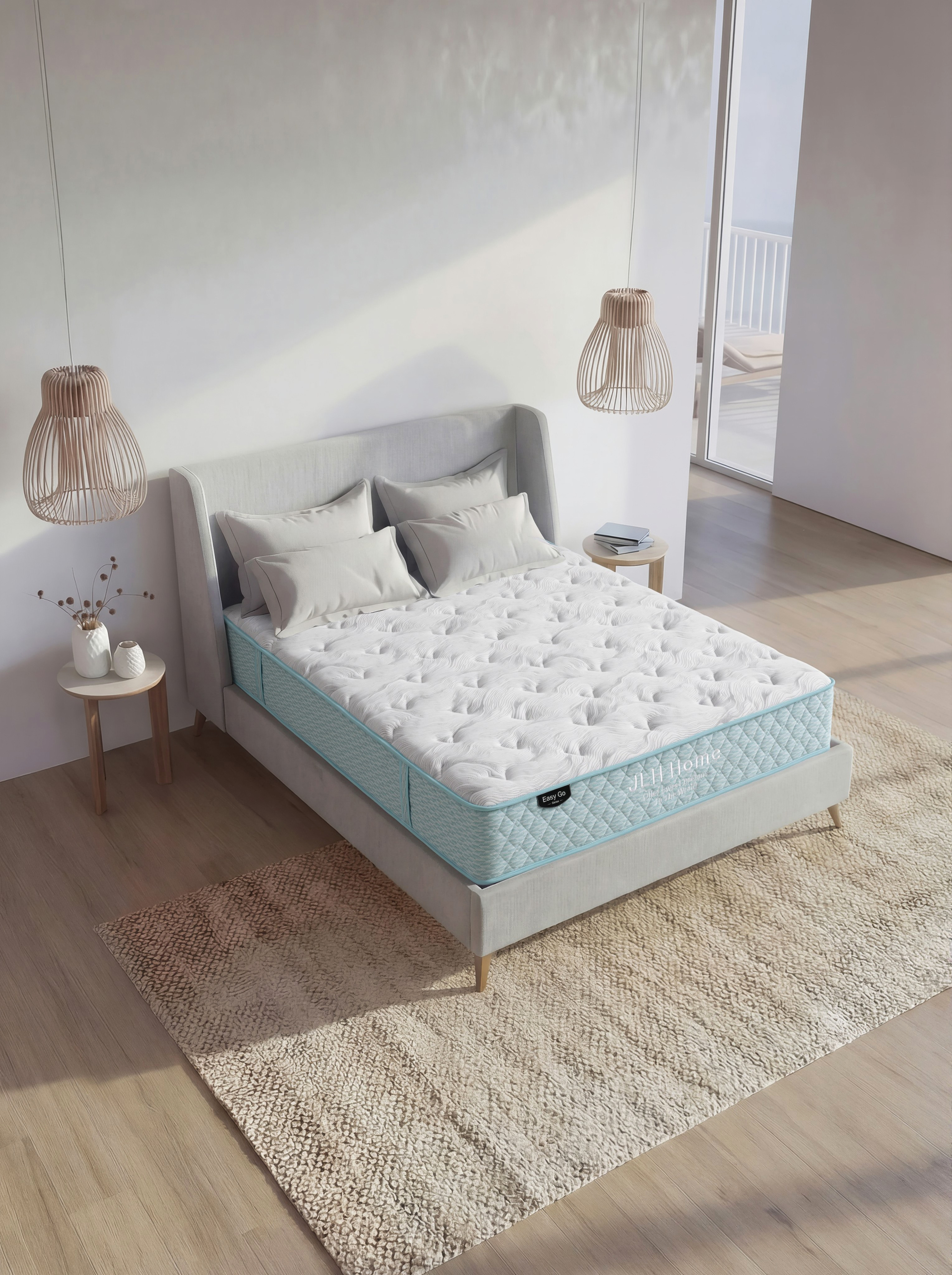
Comfort is created by the full mattress structure, not by a single fiber layer. Jinlongheng’s range includes spring mattresses, foam mattresses, hotel mattresses, and rolled-up mattresses. However, the available records do not provide firmness scores, layer thicknesses, foam densities, recycled-fiber ratios, or laboratory data linking a specific fiber material to user comfort.
Packaging Efficiency and Logistics Savings
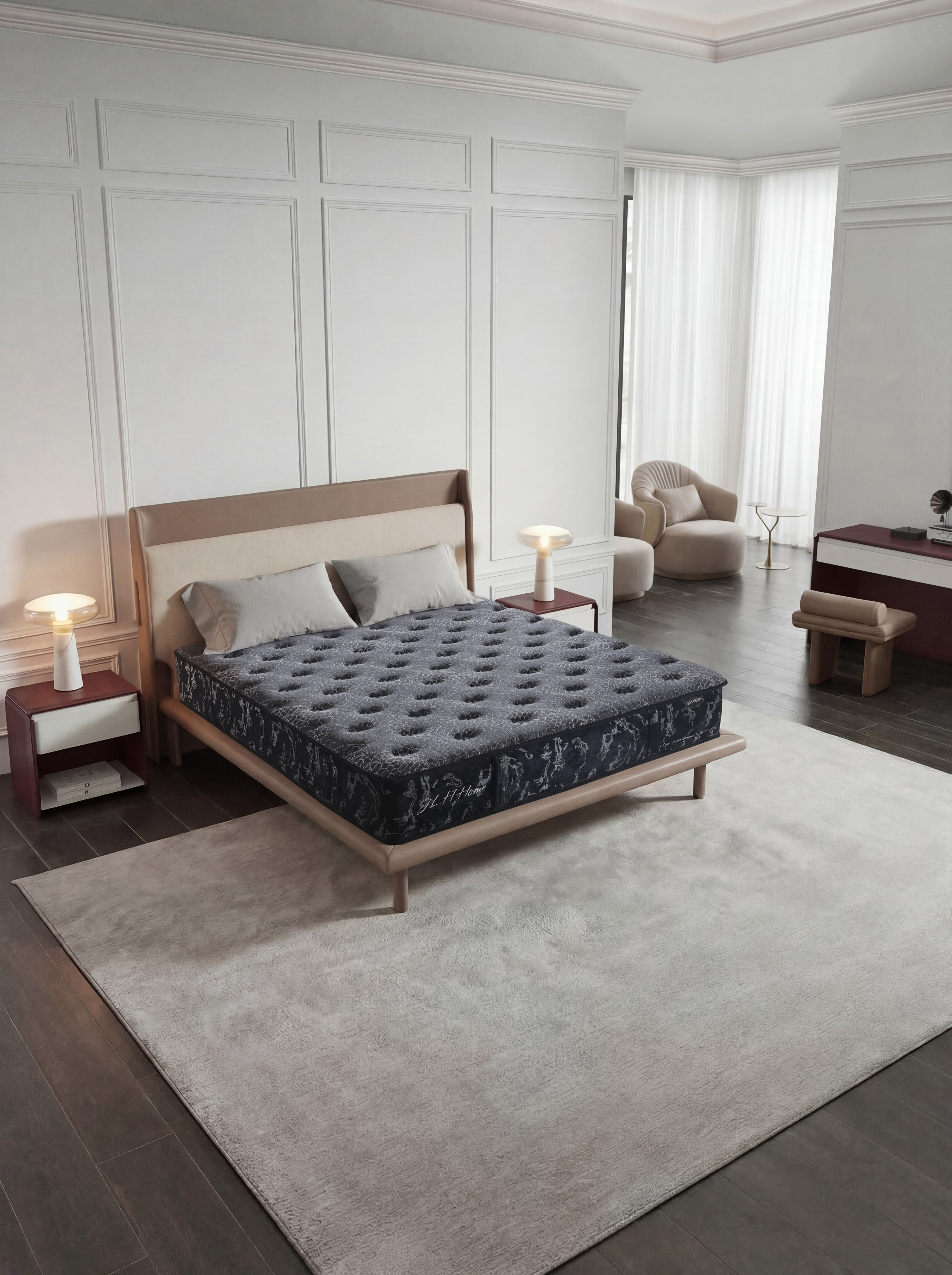
Vacuum compression can reduce shipping requirements independently of the fiber composition. According to Jinlongheng’s company data, its vacuum-compressed rolled mattress technology cuts mattress volume by 75 percent and logistics costs by 60 percent. These figures demonstrate a packaging and transportation advantage, but they do not prove that recycled fibers create additional savings or maintain a particular comfort level.
Testing, Certification, and Quality Control
Material changes should be validated through construction reviews, comfort trials, durability testing, and compliance checks. Jinlongheng’s Sleep Research Institute reportedly invests approximately RMB 5 million each year in research and development, while its laboratory holds CNAS accreditation. The company’s documented certifications include ISO 9001, ISO 14001, ISO 45001, BS7177, ISPA, and BSCI. None of the supplied records specifically verifies recycled-fiber content or a comfort result associated with recycled materials.

Reported project experience includes Hotel Gołębiewski Mikołajki in Poland, Velaa Private Island in the Maldives, and the Beijing Financial Street Ritz-Carlton Hotel in China. These references demonstrate experience with hotel and commercial mattress projects, although the supplied information does not confirm recycled-fiber use in those installations.
Comparison of Cost and Comfort Factors
| Factor | Information supported by the records | Information still requiring verification |
|---|---|---|
| Recycled fibers | They are not identified in the supplied product or company specifications. | Recycled-content percentage, cost impact, durability, and comfort performance. |
| Integrated production | Textile, foam, and spring workshops are managed internally. | Whether any in-house component contains recycled fibers. |
| Mattress design | Spring, foam, hotel, and rolled-up models are available. | Firmness, pressure distribution, layer configuration, and fiber-specific testing. |
| Packaging and delivery | Vacuum-rolled technology is reported to reduce volume by 75 percent and logistics costs by 60 percent. | Any cost reduction directly attributable to recycled fibers. |
| Quality assurance | CNAS laboratory accreditation and ISO 9001 certification are documented. | A report confirming recycled content and related comfort performance. |
Frequently Asked Questions
Are recycled fibers confirmed in these mattresses?
No. The listed products include spring, foam, hotel, and rolled-up mattresses, but the available specifications do not confirm recycled fibers or provide a recycled-content declaration.
What documented methods help control mattress costs?
Jinlongheng controls textile, foam, and spring production internally and uses standardized large-scale manufacturing. Its vacuum-rolled packaging technology is reported to lower mattress volume by 75 percent and logistics costs by 60 percent.
How should comfort be protected when introducing a new fiber?
A new material should be evaluated as part of the complete mattress design. The company’s Sleep Research Institute and CNAS-accredited laboratory provide a foundation for testing, but a recycled-fiber model would still need product-level assessments for comfort, durability, construction, and compliance.
Conclusion and Purchasing Recommendations
Based on the supplied records, recycled fibers cannot be presented as a verified way to lower mattress costs while preserving comfort because their use and performance have not been documented. The confirmed cost-management measures are integrated textile, foam, and spring manufacturing, standardized production, and vacuum-rolled packaging.
Jinlongheng operates as a mattress factory and manufacturer, supports OEM and ODM projects, accepts one-container orders with mixed sizes and models, and states a delivery period of 15 to 35 days after deposit confirmation. Buyers considering recycled-fiber specifications should request material declarations, prototype samples, comfort testing, durability data, and applicable compliance documents. For technical consultation or project support, contact sales15@jlhmattress.cn.
About Jinlongheng
Jinlongheng Furniture Co., Ltd. was founded in 1992 and focuses on mattress and home-furnishing research related to human physiology, sleeping habits, and bedroom culture. The company operates a 630,000-square-meter production base with reported mattress capacity of up to 120,000 units per month. Its research and development team includes more than 20 dedicated personnel, and it launches more than 30 new products during the spring and autumn seasons each year. Documented credentials include ISO 9001 and BS7177, with experience serving customers across several industries.

REPORT