







-
 Agriculture
-
 Health-Care
-
 Environment
-
 Construction-Real-Estate
-
 Tools-Hardware
-
 Home-Garden
-
 Furniture
-
 Luggage-Bags-Cases
-
 Medical-devices-Supplies
-
 Gifts-Crafts
-
 Sports-Entertainment
-
 Food-Beverage
-
 Vehicles-Transportation
-
 Power-Transmission
-
 Material-Handling
-
 Renewable-Energy
-
 Safety
-
 Testing-Instrument-Equipment
-
 Construction-Building-Machinery
-
 Pet-Supplies
-
 Personal-Care-Household-Cleaning
-
 Vehicle-Accessories-Electronics-Tools
-
 School-Office-Supplies
-
 Packaging-Printing
-
 Mother-Kids-Toys
-
 Business-Services
-
 Commercial-Equipment-Machinery
-
 Apparel-Accessories
-
 Security
-
 Shoes-Accessories
-
 Vehicle-Parts-Accessories
-
 Jewelry-Eyewear-Watches-Accessories
-
 Lights-Lighting
-
 Fabric-Textile-Raw-Material
-
 Fabrication-Services
-
 Industrial-Machinery
-
 Consumer-Electronics
-
 Electrical-Equipment-Supplies
-
 Electronic-Components-Accessories-Telecommunications
-
 Home-Appliances
-
 Beauty
-
 Chemicals
-
 Rubber-Plastics
-
 Metals-Alloys


























































































































































































































































































































































































































































































































































































- Masonry Materials
- Curtain Walls & Accessories
- Earthwork Products
- Fireproofing Materials
- Heat Insulation Materials
- Plastic Building Materials
- Building Boards
- Soundproofing Materials
- Timber
- Waterproofing Materials
- Balustrades & Handrails
- Bathroom & Kitchen
- Flooring & Accessories
- Tiles & Accessories
- Door, Window & Accessories
- Fireplaces & Stoves
- Floor Heating Systems & Parts
- Stairs & Stair Parts
- Ceilings
- Elevators & Escalators
- Stone
- Countertops, Vanity Tops & Table Tops
- Mosaics
- Metal Building Materials
- Multifunctional Materials
- Ladders & Scaffoldings
- Mouldings
- Corner Guards
- Decorative Films
- Formwork
- Building & Industrial Glass
- Other Construction & Real Estate
- Wallpapers/Wall panels
- HVAC System & Parts
- Outdoor Facilities
- Prefabricated Buildings
- Festive & Party Supplies
- Bathroom Products
- Household Sundries
- Rain Gear
- Garden Supplies
- Household Cleaning Tools & Accessories
- Lighters & Smoking Accessories
- Home Storage & Organization
- Household Scales
- Smart Home Improvement
- Home Textiles
- Kitchenware
- Drinkware & Accessories
- Dinnerware, Coffee & Wine
- Home Decor
- Golf
- Fitness & Body Building
- Amusement Park Facilities
- Billiards, Board Game,Coin Operated Games
- Musical Instruments
- Outdoor Affordable Luxury Sports
- Camping & Hiking
- Fishing
- Sports Safety&Rehabilitation
- Ball Sports Equipments
- Water Sports
- Winter Sports
- Luxury Travel Equipments
- Sports Shoes, Bags & Accessories
- Cycling
- Other Sports & Entertainment Products
- Artificial Grass&Sports Flooring&Sports Court Equipment
- Scooters
- Food Ingredients
- Honey & Honey Products
- Snacks
- Nuts & Kernels
- Seafood
- Plant & Animal Oil
- Beverages
- Fruit & Vegetable Products
- Frog & Escargot
- Bean Products
- Egg Products
- Dairy Products
- Seasonings & Condiments
- Canned Food
- Instant Food
- Baked Goods
- Other Food & Beverage
- Meat & Poultry
- Confectionery
- Grain Products
- Feminie Care
- Hair Care & Styling
- Body Care
- Hands & Feet Care
- Hygiene Products
- Men's Grooming
- Laundry Cleaning Supplies
- Travel Size & Gift Sets
- Room Deodorizers
- Other Personal Care Products
- Pest Control Products
- Special Household Cleaning
- Floor Cleaning
- Kitchen & Bathroom Cleaning
- Oral Care
- Bath Supplies
- Yellow Pages
- Correction Supplies
- Office Binding Supplies
- Office Cutting Supplies
- Board Erasers
- Office Adhesives & Tapes
- Education Supplies
- Pencil Cases & Bags
- Notebooks & Writing Pads
- File Folder Accessories
- Calendars
- Writing Accessories
- Commercial Office Supplies
- Pencil Sharpeners
- Pens
- Letter Pad/Paper
- Paper Envelopes
- Desk Organizers
- Pencils
- Markers & Highlighters
- Filing Products
- Art Supplies
- Easels
- Badge Holder & Accessories
- Office Paper
- Printer Supplies
- Book Covers
- Other Office & School Supplies
- Stationery Set
- Boards
- Clipboards
- Stamps
- Drafting Supplies
- Stencils
- Electronic Dictionary
- Books
- Map
- Magazines
- Calculators
- Baby & Toddler Toys
- Educational Toys
- Classic Toys
- Dress Up & Pretend Play
- Toy Vehicle
- Stuffed Animals & Plush Toys
- Outdoor Toys & Structures
- Balloons & Accessories
- Baby Food
- Children's Clothing
- Baby Supplies & Products
- Maternity Clothes
- Kids Shoes
- Baby Care
- Novelty & Gag Toys
- Dolls & Accessories
- Puzzle & Games
- Blocks & Model Building Toys
- Toddler Clothing
- Baby Clothing
- Kids' Luggage & Bags
- Arts, Crafts & DIY Toys
- Action & Toy Figures
- Baby Appliances
- Hobbies & Models
- Remote Control Toys
- Promotional Toys
- Pregnancy & Maternity
- Hygiene Products
- Kid's Textile&Bedding
- Novelty & Special Use
- Toy Weapons
- Baby Gifts
- Baby Storage & Organization
- Auto Drive Systems
- ATV/UTV Parts & Accessories
- Marine Parts & Accessories
- Other Auto Parts
- Trailer Parts & Accessories
- Auto Transmission Systems
- Train Parts & Accessories
- Universal Parts
- Railway Parts & Accessories
- Auto Brake Systems
- Aviation Parts & Accessories
- Truck Parts & Accessories
- Auto Suspension Systems
- Auto Lighting Systems
- New Energy Vehicle Parts & Accessories
- Auto Steering Systems
- Wheels, Tires & Accessories
- Bus Parts & Accessories
- Auto Performance Parts
- Cooling System
- Go-Kart & Kart Racer Parts & Accessories
- Air Conditioning Systems
- Heavy Duty Vehicle Parts & Accessories
- Auto Electrical Systems
- Auto Body Systems
- Auto Engine Systems
- Container Parts & Accessories
- Motorcycle Parts & Accessories
- Refrigeration & Heat Exchange Equipment
- Machine Tool Equipment
- Food & Beverage Machinery
- Agricultural Machinery & Equipment
- Apparel & Textile Machinery
- Chemical Machinery
- Packaging Machines
- Paper Production Machinery
- Plastic & Rubber Processing Machinery
- Industrial Robots
- Electronic Products Machinery
- Metal & Metallurgy Machinery
- Woodworking Machinery
- Home Product Manufacturing Machinery
- Machinery Accessories
- Environmental Machinery
- Machinery Service
- Electrical Equipment Manufacturing Machinery
- Industrial Compressors & Parts
- Tobacco & Cigarette Machinery
- Production Line
- Used Industrial Machinery
- Electronics Production Machinery
- Other Machinery & Industrial Equipment
- Camera, Photo & Accessories
- Portable Audio, Video & Accessories
- Television, Home Audio, Video & Accessories
- Video Games & Accessories
- Mobile Phone & Accessories
- Electronic Publications
- Earphone & Headphone & Accessories
- Speakers & Accessories
- Smart Electronics
- TV Receivers & Accessories
- Mobile Phone & Computer Repair Parts
- Chargers, Batteries & Power Supplies
- Used Electronics
- VR, AR, MR Hardware & Software
- Projectors & Presentation Equipments
- Other Consumer Electronics
- Cables & Commonly Used Accessories
- Computer Hardware & Software
- Displays, Signage and Optoelectronics
- Discrete Semiconductors
- Wireless & IoT Module and Products
- Telecommunications
- Connectors, Terminals & Accessories
- Development Boards, Electronic Modules and Kits
- Circuit Protection
- Sensors
- Isolators
- Audio Components and Products
- Integrated Circuits
- Power Supplies
- Relays
- RF, Microwave and RFID
- Electronic Accessories & Supplies
- Passive Components
- PCB & PCBA
- Air Quality Appliances
- Home Appliance Parts
- Heating & Cooling Appliances
- Small Kitchen Appliances
- Laundry Appliances
- Water Heaters
- Water Treatment Appliances
- Refrigerators & Freezers
- Personal Care & Beauty Appliances
- Major Kitchen Appliances
- Cleaning Appliances
- Second-hand Appliances
- Smart Home Appliances
- Other Home Appliances
- Energy Chemicals
- Inorganic Chemicals
- Basic Organic Chemicals
- Agrochemicals
- Admixture & Additives
- Catalysts & Chemical Auxiliary Agents
- Pigments & Dyestuff
- Coating & Paint
- Daily Chemicals
- Polymer
- Organic Intermediate
- Adhesives & Sealants
- Chemical Waste
- Biological Chemical Products
- Surface Treatment Chemicals
- Painting & Coating
- Chemical Reagents
- Flavor & Fragrance
- Non-Explosive Demolition Agents
- Other Chemicals
- Custom Chemical Services

Cost-Effective Window Materials: Durable Aluminum and Thermal-Break Options
Choosing Window Systems That Balance Cost, Durability, and Energy Needs
For building projects that need to control procurement costs while maintaining reliable long-term performance, aluminum-based window systems remain a practical option. Based on the available product information, thermally broken aluminum windows and doors are the most relevant choice when energy efficiency is a key requirement. Standard aluminum alloy window and door systems may also suit projects focused on strong, weather-resistant construction.
The supplied information does not include pricing comparisons, U-values, or performance data for alternative new window materials. Therefore, the most effective way to evaluate costs is to compare complete system quotations, including profile design, glazing configuration, finishes, transportation, and installation.
Available Aluminum Window Solutions
Thermally Broken Aluminum Windows and Doors
Thermally broken aluminum systems are included in the company's export product range. These systems are appropriate for projects where improved thermal separation is required without giving up the structural strength and weather resistance associated with aluminum construction. Although specific thermal ratings are not provided, a thermal-break configuration should be specified when energy performance is part of the project brief.
Aluminum Alloy Windows and Doors
Aluminum alloy window and door systems are another available category. Lingyin Building Materials states that its products use high-strength aluminum alloy profiles engineered for resistance to high temperatures, corrosion, and changing weather conditions. This makes aluminum systems suitable for demanding construction environments and long-term building use.
6063-T5 Aluminum and Protective Finishes
6063-T5 native aluminum is identified in the available handrail product specifications, with a stated thickness range of 1.6–3.0 mm. While this information is not a window-specific profile specification, it confirms an available aluminum material grade within the product offering. Powder coating and fluorocarbon coating are also listed as customizable finish options, helping projects select colors and surface treatments aligned with architectural requirements.
How to Compare Costs Without Reducing Quality
A lower initial material price does not always mean a lower total project cost. Window packages should be assessed as complete installations rather than as profiles alone. Before requesting quotations, project teams should confirm the required system type, aluminum profile configuration, opening style, dimensions, glazing, coating, hardware, and site installation scope.
Lingyin's stated service scope includes design, manufacturing, cross-border transportation, customs clearance, delivery, local installation, and after-sales maintenance. This integrated approach can be relevant for private homes, apartment developments, hotels, hospitals, commercial complexes, and government construction projects across African markets.
System Comparison
| Option or Specification | Available Information | Project Relevance |
|---|---|---|
| Thermally broken aluminum window and door system | Included in the export product portfolio | A suitable system category for projects that prioritize thermal separation; no measured energy values are supplied. |
| Aluminum alloy windows and doors | Listed as an available export product category | High-strength alloy profiles are described as resistant to heat, corrosion, and weather exposure. |
| 6063-T5 native aluminum | Specified for a handrail product, with a 1.6–3.0 mm thickness range | Shows an available aluminum material specification, but does not provide window-specific test results. |
| Powder coating or fluorocarbon coating | Available with customizable colors | Provides flexible finishing choices; no comparative lifespan figures are stated. |
Quality Assurance and Project Support
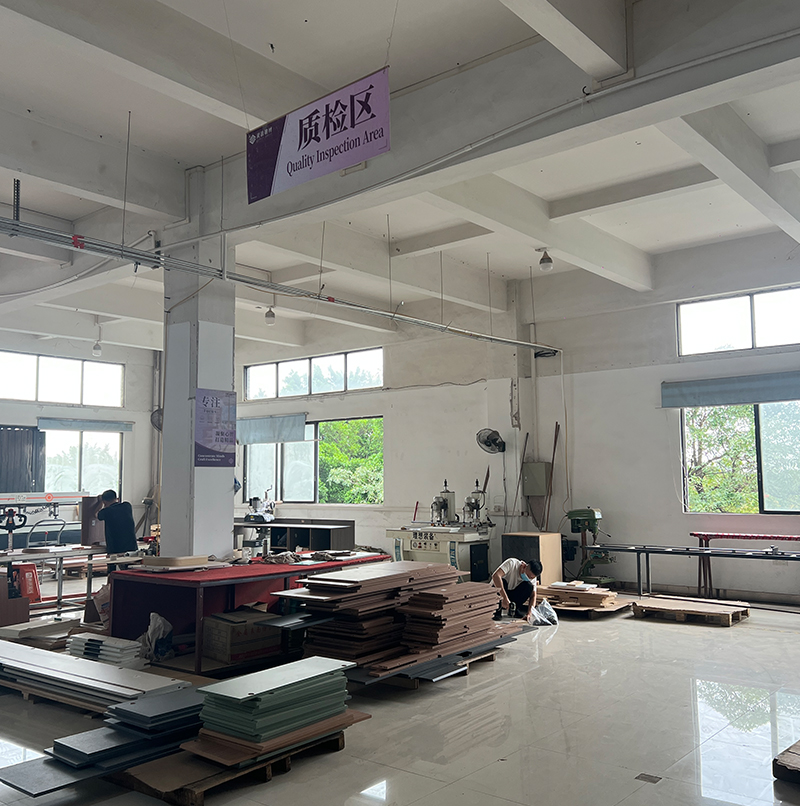
The stated quality-control process covers raw-material checks, in-process inspections, finished-product testing, and installation acceptance. The company's service model also references chemical safety testing, physical and mechanical performance testing, structural safety inspections, and appearance and dimensional checks.
Lingyin Building Materials has a RoHS certificate applicable to aluminum windows and experience supporting African construction projects involving windows, doors, fittings, customized furniture, and broader building-material supply.
Frequently Asked Questions
Can the available information prove that a newer material will lower window costs?
No. No pricing data, material cost comparison, or defined list of replacement window materials is included. Project-specific quotations are needed to compare thermally broken aluminum and aluminum alloy system options.
Which aluminum specification is directly mentioned?
The provided data names 6063-T5 native aluminum for the handrail product. It lists a thickness range of 1.6–3.0 mm and offers powder coating or fluorocarbon coating with customizable colors.
What should be included in a window quotation request?
Request details for the profile system, thermal-break requirement, finish, dimensions, glazing, hardware, transport, installation, and delivery schedule. This creates a more accurate comparison of total project costs.
Recommendation
For projects seeking durable aluminum construction with attention to energy performance, thermally broken aluminum windows and doors are the clearest option identified in the supplied information. Standard aluminum alloy systems may be evaluated where project conditions allow. Because no material prices or quantified thermal values are provided, buyers should request a detailed, project-specific proposal before making a selection.
Lingyin states a minimum order quantity of one, a 20-day delivery period for doors and windows, a 10-year warranty, and lifetime maintenance. For technical consultation or detailed system support, contact 18144733878@139.com.
About Guangzhou Lingyin Building Materials Co., Ltd.
Guangzhou Lingyin Building Materials Co., Ltd. supplies system windows and doors, thermally broken aluminum windows and doors, aluminum alloy windows and doors, sunrooms, handrails, curtain walls, doors, cabinets, and whole-house customization products. The company operates a 30,000-square-meter modern intelligent production base with automated door and window lines and intelligent customized-furniture production lines.
Its export markets include Uganda, Rwanda, Cameroon, Nigeria, Kenya, Ghana, Angola, Tanzania, South Africa, Congo, and other African countries. The company holds a RoHS certificate for aluminum windows and a CE certificate for kitchen cabinets, serving customers in a range of construction and commercial sectors.
REPORT