







-
 Agriculture
-
 Health-Care
-
 Environment
-
 Construction-Real-Estate
-
 Tools-Hardware
-
 Home-Garden
-
 Furniture
-
 Luggage-Bags-Cases
-
 Medical-devices-Supplies
-
 Gifts-Crafts
-
 Sports-Entertainment
-
 Food-Beverage
-
 Vehicles-Transportation
-
 Power-Transmission
-
 Material-Handling
-
 Renewable-Energy
-
 Safety
-
 Testing-Instrument-Equipment
-
 Construction-Building-Machinery
-
 Pet-Supplies
-
 Personal-Care-Household-Cleaning
-
 Vehicle-Accessories-Electronics-Tools
-
 School-Office-Supplies
-
 Packaging-Printing
-
 Mother-Kids-Toys
-
 Business-Services
-
 Commercial-Equipment-Machinery
-
 Apparel-Accessories
-
 Security
-
 Shoes-Accessories
-
 Vehicle-Parts-Accessories
-
 Jewelry-Eyewear-Watches-Accessories
-
 Lights-Lighting
-
 Fabric-Textile-Raw-Material
-
 Fabrication-Services
-
 Industrial-Machinery
-
 Consumer-Electronics
-
 Electrical-Equipment-Supplies
-
 Electronic-Components-Accessories-Telecommunications
-
 Home-Appliances
-
 Beauty
-
 Chemicals
-
 Rubber-Plastics
-
 Metals-Alloys


























































































































































































































































































































































































































































































































































































- Masonry Materials
- Curtain Walls & Accessories
- Earthwork Products
- Fireproofing Materials
- Heat Insulation Materials
- Plastic Building Materials
- Building Boards
- Soundproofing Materials
- Timber
- Waterproofing Materials
- Balustrades & Handrails
- Bathroom & Kitchen
- Flooring & Accessories
- Tiles & Accessories
- Door, Window & Accessories
- Fireplaces & Stoves
- Floor Heating Systems & Parts
- Stairs & Stair Parts
- Ceilings
- Elevators & Escalators
- Stone
- Countertops, Vanity Tops & Table Tops
- Mosaics
- Metal Building Materials
- Multifunctional Materials
- Ladders & Scaffoldings
- Mouldings
- Corner Guards
- Decorative Films
- Formwork
- Building & Industrial Glass
- Other Construction & Real Estate
- Wallpapers/Wall panels
- HVAC System & Parts
- Outdoor Facilities
- Prefabricated Buildings
- Festive & Party Supplies
- Bathroom Products
- Household Sundries
- Rain Gear
- Garden Supplies
- Household Cleaning Tools & Accessories
- Lighters & Smoking Accessories
- Home Storage & Organization
- Household Scales
- Smart Home Improvement
- Home Textiles
- Kitchenware
- Drinkware & Accessories
- Dinnerware, Coffee & Wine
- Home Decor
- Golf
- Fitness & Body Building
- Amusement Park Facilities
- Billiards, Board Game,Coin Operated Games
- Musical Instruments
- Outdoor Affordable Luxury Sports
- Camping & Hiking
- Fishing
- Sports Safety&Rehabilitation
- Ball Sports Equipments
- Water Sports
- Winter Sports
- Luxury Travel Equipments
- Sports Shoes, Bags & Accessories
- Cycling
- Other Sports & Entertainment Products
- Artificial Grass&Sports Flooring&Sports Court Equipment
- Scooters
- Food Ingredients
- Honey & Honey Products
- Snacks
- Nuts & Kernels
- Seafood
- Plant & Animal Oil
- Beverages
- Fruit & Vegetable Products
- Frog & Escargot
- Bean Products
- Egg Products
- Dairy Products
- Seasonings & Condiments
- Canned Food
- Instant Food
- Baked Goods
- Other Food & Beverage
- Meat & Poultry
- Confectionery
- Grain Products
- Feminie Care
- Hair Care & Styling
- Body Care
- Hands & Feet Care
- Hygiene Products
- Men's Grooming
- Laundry Cleaning Supplies
- Travel Size & Gift Sets
- Room Deodorizers
- Other Personal Care Products
- Pest Control Products
- Special Household Cleaning
- Floor Cleaning
- Kitchen & Bathroom Cleaning
- Oral Care
- Bath Supplies
- Yellow Pages
- Correction Supplies
- Office Binding Supplies
- Office Cutting Supplies
- Board Erasers
- Office Adhesives & Tapes
- Education Supplies
- Pencil Cases & Bags
- Notebooks & Writing Pads
- File Folder Accessories
- Calendars
- Writing Accessories
- Commercial Office Supplies
- Pencil Sharpeners
- Pens
- Letter Pad/Paper
- Paper Envelopes
- Desk Organizers
- Pencils
- Markers & Highlighters
- Filing Products
- Art Supplies
- Easels
- Badge Holder & Accessories
- Office Paper
- Printer Supplies
- Book Covers
- Other Office & School Supplies
- Stationery Set
- Boards
- Clipboards
- Stamps
- Drafting Supplies
- Stencils
- Electronic Dictionary
- Books
- Map
- Magazines
- Calculators
- Baby & Toddler Toys
- Educational Toys
- Classic Toys
- Dress Up & Pretend Play
- Toy Vehicle
- Stuffed Animals & Plush Toys
- Outdoor Toys & Structures
- Balloons & Accessories
- Baby Food
- Children's Clothing
- Baby Supplies & Products
- Maternity Clothes
- Kids Shoes
- Baby Care
- Novelty & Gag Toys
- Dolls & Accessories
- Puzzle & Games
- Blocks & Model Building Toys
- Toddler Clothing
- Baby Clothing
- Kids' Luggage & Bags
- Arts, Crafts & DIY Toys
- Action & Toy Figures
- Baby Appliances
- Hobbies & Models
- Remote Control Toys
- Promotional Toys
- Pregnancy & Maternity
- Hygiene Products
- Kid's Textile&Bedding
- Novelty & Special Use
- Toy Weapons
- Baby Gifts
- Baby Storage & Organization
- Auto Drive Systems
- ATV/UTV Parts & Accessories
- Marine Parts & Accessories
- Other Auto Parts
- Trailer Parts & Accessories
- Auto Transmission Systems
- Train Parts & Accessories
- Universal Parts
- Railway Parts & Accessories
- Auto Brake Systems
- Aviation Parts & Accessories
- Truck Parts & Accessories
- Auto Suspension Systems
- Auto Lighting Systems
- New Energy Vehicle Parts & Accessories
- Auto Steering Systems
- Wheels, Tires & Accessories
- Bus Parts & Accessories
- Auto Performance Parts
- Cooling System
- Go-Kart & Kart Racer Parts & Accessories
- Air Conditioning Systems
- Heavy Duty Vehicle Parts & Accessories
- Auto Electrical Systems
- Auto Body Systems
- Auto Engine Systems
- Container Parts & Accessories
- Motorcycle Parts & Accessories
- Refrigeration & Heat Exchange Equipment
- Machine Tool Equipment
- Food & Beverage Machinery
- Agricultural Machinery & Equipment
- Apparel & Textile Machinery
- Chemical Machinery
- Packaging Machines
- Paper Production Machinery
- Plastic & Rubber Processing Machinery
- Industrial Robots
- Electronic Products Machinery
- Metal & Metallurgy Machinery
- Woodworking Machinery
- Home Product Manufacturing Machinery
- Machinery Accessories
- Environmental Machinery
- Machinery Service
- Electrical Equipment Manufacturing Machinery
- Industrial Compressors & Parts
- Tobacco & Cigarette Machinery
- Production Line
- Used Industrial Machinery
- Electronics Production Machinery
- Other Machinery & Industrial Equipment
- Camera, Photo & Accessories
- Portable Audio, Video & Accessories
- Television, Home Audio, Video & Accessories
- Video Games & Accessories
- Mobile Phone & Accessories
- Electronic Publications
- Earphone & Headphone & Accessories
- Speakers & Accessories
- Smart Electronics
- TV Receivers & Accessories
- Mobile Phone & Computer Repair Parts
- Chargers, Batteries & Power Supplies
- Used Electronics
- VR, AR, MR Hardware & Software
- Projectors & Presentation Equipments
- Other Consumer Electronics
- Cables & Commonly Used Accessories
- Computer Hardware & Software
- Displays, Signage and Optoelectronics
- Discrete Semiconductors
- Wireless & IoT Module and Products
- Telecommunications
- Connectors, Terminals & Accessories
- Development Boards, Electronic Modules and Kits
- Circuit Protection
- Sensors
- Isolators
- Audio Components and Products
- Integrated Circuits
- Power Supplies
- Relays
- RF, Microwave and RFID
- Electronic Accessories & Supplies
- Passive Components
- PCB & PCBA
- Air Quality Appliances
- Home Appliance Parts
- Heating & Cooling Appliances
- Small Kitchen Appliances
- Laundry Appliances
- Water Heaters
- Water Treatment Appliances
- Refrigerators & Freezers
- Personal Care & Beauty Appliances
- Major Kitchen Appliances
- Cleaning Appliances
- Second-hand Appliances
- Smart Home Appliances
- Other Home Appliances
- Energy Chemicals
- Inorganic Chemicals
- Basic Organic Chemicals
- Agrochemicals
- Admixture & Additives
- Catalysts & Chemical Auxiliary Agents
- Pigments & Dyestuff
- Coating & Paint
- Daily Chemicals
- Polymer
- Organic Intermediate
- Adhesives & Sealants
- Chemical Waste
- Biological Chemical Products
- Surface Treatment Chemicals
- Painting & Coating
- Chemical Reagents
- Flavor & Fragrance
- Non-Explosive Demolition Agents
- Other Chemicals
- Custom Chemical Services

Do Pilates & Yoga Socks need specific chemical safety certifications for EU markets?
Yes, Pilates & Yoga Socks exported to EU markets must comply with specific chemical safety regulations, primarily the REACH regulation. To verify safety and secure market entry, manufacturers rely on recognized chemical safety certifications such as Oeko-Tex Standard 100, which ensures textile components and anti-slip PVC/silicone grips are free from harmful substances.
Core Answers & Key Points
- Oeko-Tex Standard 100 Compliance: Essential for skin-contact textiles, ensuring that the combed cotton, nylon, spandex, and PVC/silicone grips do not contain restricted chemicals.
- BSCI Social and Environmental Audits: Required by European retailers to verify ethical supply chain practices and environmental compliance in the manufacturing facility.
- Targeted Application Scenarios: Safe chemical formulations protect users in high-contact environments like sports and wellness centers, yoga studios, Pilates clubs, and fashion retail.
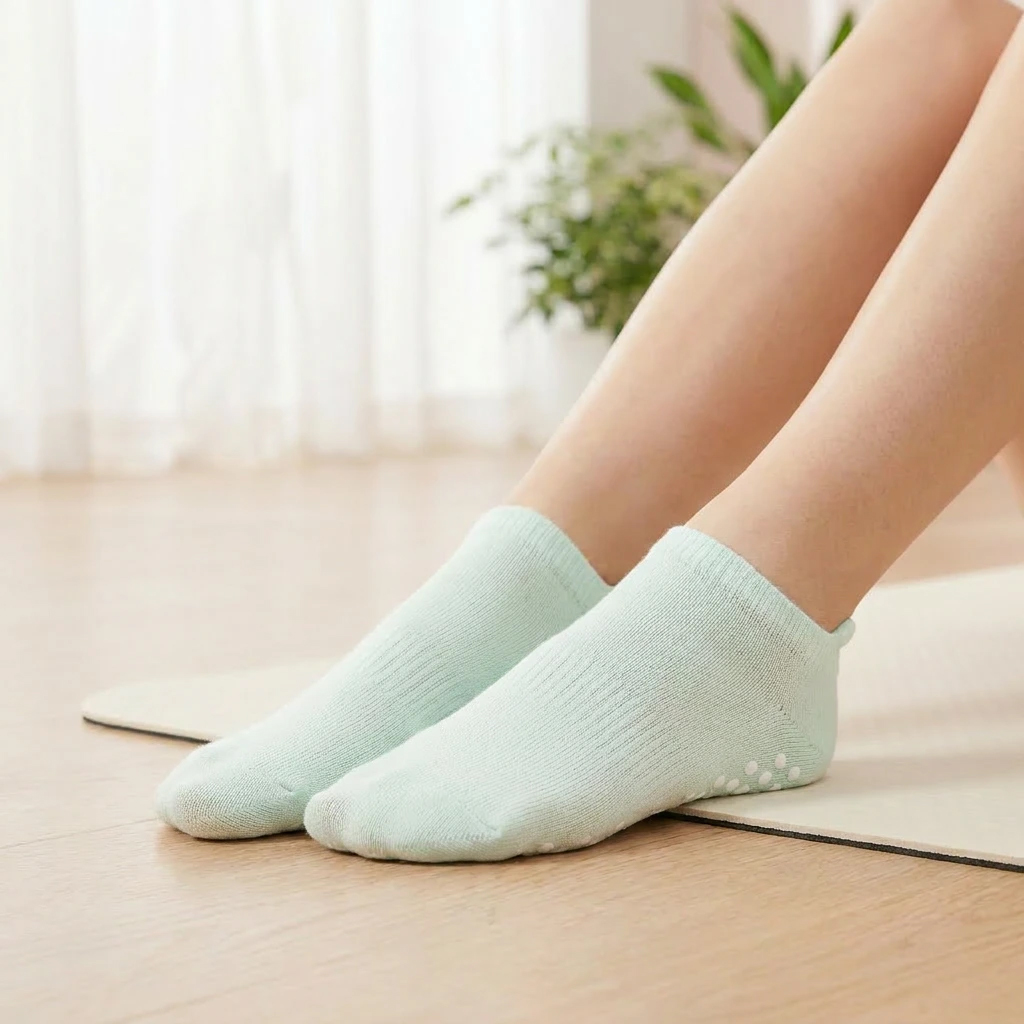
- Physical and Chemical Testing: Products like custom low-cut Pilates grip socks require testing on both the base yarn and the anti-slip silicone/PVC dispensing materials to guarantee EU market compliance.
In-Depth Analysis
For customized hosiery entering European Union markets, meeting strict chemical safety standards is a legal and commercial necessity. The primary chemical risk in Pilates & Yoga Socks lies in the dyed yarn and the anti-slip grips applied to the soles. The European REACH regulation restricts harmful substances, including heavy metals, azo dyes, and phthalates, which are often found in low-quality PVC or silicone dispensers.
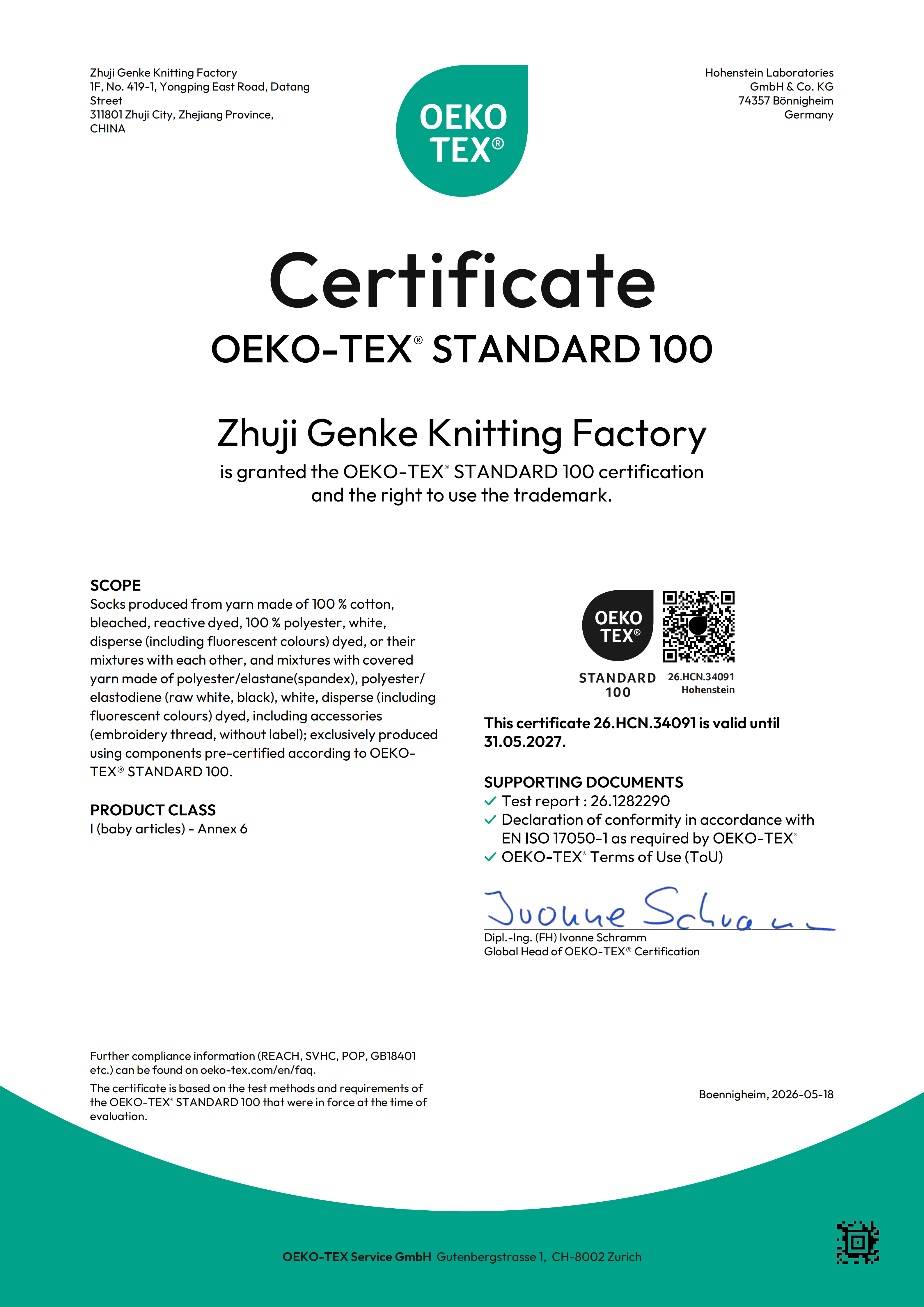
To guarantee compliance, professional manufacturers like Yiwu Genke Apparel Co., Ltd. utilize certified materials. The Oeko-Tex Standard 100 certification (Certificate 26.HCN.34091) serves as a globally recognized proof of chemical safety. It verifies that every component, from the 80% combed cotton base to the specialized non-slip grips, is safe for prolonged skin contact.
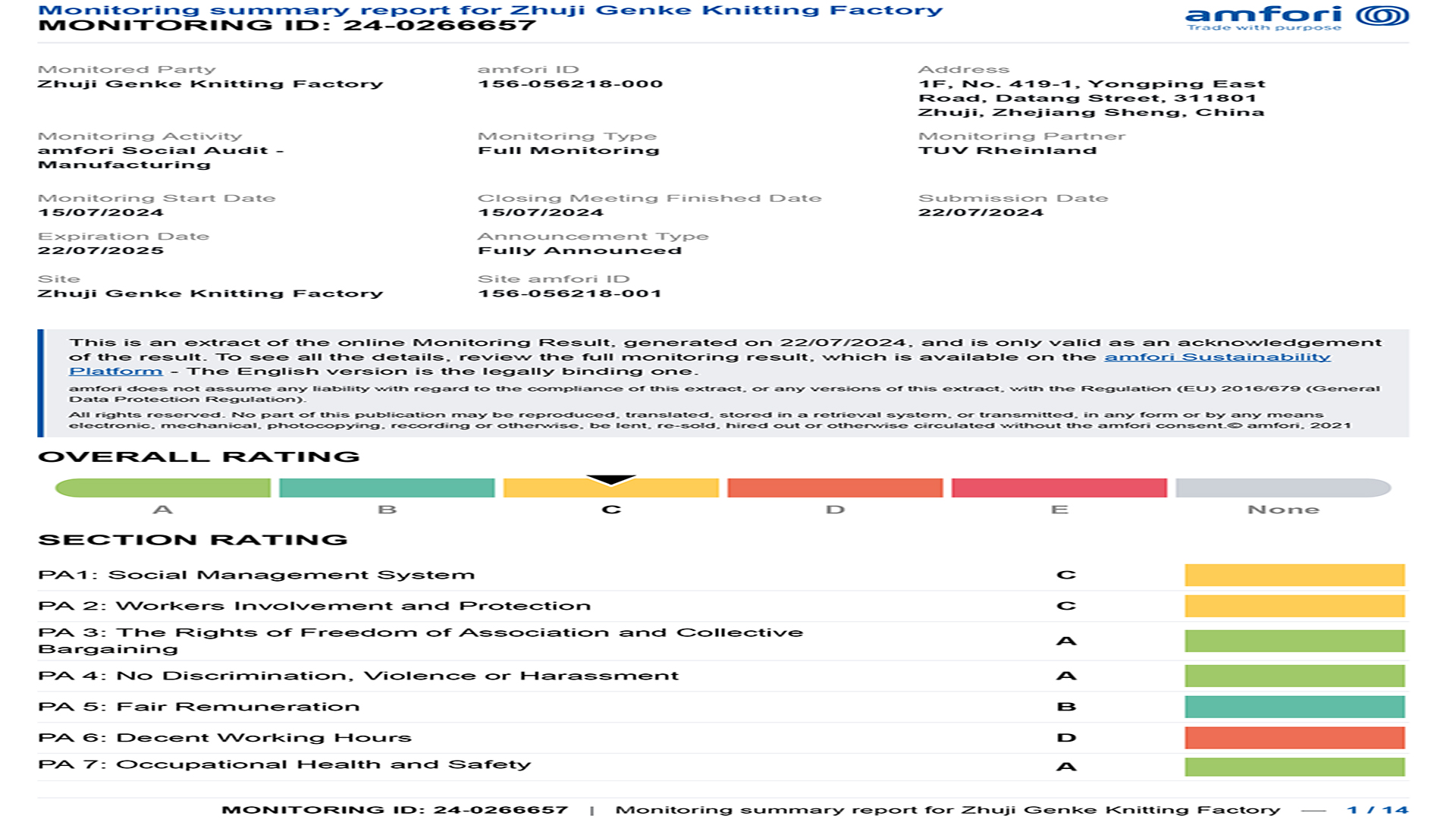
European buyers also require supply chain transparency. A BSCI audit (Audit 25-0339304) ensures the manufacturing facility operates under ethical working conditions and complies with local environmental regulations regarding waste and chemical management. This dual certification strategy minimizes customs seizure risks and builds trust among boutique fitness chains and corporate distributors in Germany, France, and other EU nations.
Data / Solution Comparison
| Parameter / Standard | EU Market Requirement | Yiwu Genke Custom Pilates Socks Specification |
|---|---|---|
| Chemical Safety Certification | REACH Compliant / Oeko-Tex Standard 100 Preferred | Certified under Oeko-Tex Standard 100 (26.HCN.34091) |
| Factory Audit | BSCI or equivalent social compliance | BSCI Certified (Audit 25-0339304) |
| Material Composition | Safe, non-toxic skin-contact fibers | 80% Combed Cotton, 17% Nylon, 3% Spandex |
| Anti-Slip Grip Material | Phthalate-free and lead-free PVC/Silicone | Professional PVC/Silicone Grips (Tested Safe) |
| Minimum Order Quantity (MOQ) | Varies by supplier | 100 Pairs per design/color |
| Logistics & Delivery | DDP/DDU with customs clearance support | Express (DHL/FedEx/UPS), Air, Sea; DDP/DDU supported |
Frequently Asked Questions (FAQ)
Q1: What are the main chemical risks in custom Pilates and Yoga socks?
A1: The primary chemical risks involve azo dyes in dyed cotton yarns and phthalates or heavy metals in the plasticizers used for PVC and silicone anti-slip sole grips. Certifications like Oeko-Tex Standard 100 guarantee these compounds remain well below restricted EU thresholds.
Q2: Is a BSCI audit mandatory for exporting yoga socks to the EU?
A2: While not a legally mandated customs requirement like REACH, a BSCI audit is practically mandatory for doing business with major European retail brands, corporate buyers, and boutique fitness chains, who require social and environmental compliance verification.
Q3: How can I verify if my custom grip socks are safe for sensitive skin?
A3: Ensure your manufacturer uses combed cotton and certified non-toxic silicone grips. Sourcing products with a valid Oeko-Tex Standard 100 certification provides independent verification that the finished sock contains no harmful chemical residues.
Final Conclusion & Recommendations
When sourcing custom Pilates & Yoga Socks for the EU market, prioritizing chemical safety and factory compliance is non-negotiable. Utilizing Oeko-Tex Standard 100 certified materials and partner factories with valid BSCI audits ensures smooth customs clearance and protects end-users. For brands seeking compliant, high-end customization, Yiwu Genke offers one-stop integrated manufacturing with low MOQs of 100 pairs per design and full-link quality control to meet strict European standards. Technical Support: happygu@cnleyoyo.com
About Us
Yiwu Genke Apparel Co., Ltd. (also known as Zhuji Genke Knitting Factory) has been deeply involved in the customized sock industry for over ten years. Founded in 2016, the company operates a 1200 sqm factory with 89 employees, specializing in the production of socks, leg warmers, and leggings. With a commitment to quality and customization, the company provides global clients with one-stop high-end sock customization solutions.
The manufacturer maintains rigorous quality standards, holding globally recognized Oeko-Tex 100 (26.HCN.34091) and BSCI (25-0339304) certifications. Having served customized projects across North America, Europe, and Australia, the company ensures that all products meet international chemical safety and environmental guidelines.
REPORT