







-
 Agriculture
-
 Health-Care
-
 Environment
-
 Construction-Real-Estate
-
 Tools-Hardware
-
 Home-Garden
-
 Furniture
-
 Luggage-Bags-Cases
-
 Medical-devices-Supplies
-
 Gifts-Crafts
-
 Sports-Entertainment
-
 Food-Beverage
-
 Vehicles-Transportation
-
 Power-Transmission
-
 Material-Handling
-
 Renewable-Energy
-
 Safety
-
 Testing-Instrument-Equipment
-
 Construction-Building-Machinery
-
 Pet-Supplies
-
 Personal-Care-Household-Cleaning
-
 Vehicle-Accessories-Electronics-Tools
-
 School-Office-Supplies
-
 Packaging-Printing
-
 Mother-Kids-Toys
-
 Business-Services
-
 Commercial-Equipment-Machinery
-
 Apparel-Accessories
-
 Security
-
 Shoes-Accessories
-
 Vehicle-Parts-Accessories
-
 Jewelry-Eyewear-Watches-Accessories
-
 Lights-Lighting
-
 Fabric-Textile-Raw-Material
-
 Fabrication-Services
-
 Industrial-Machinery
-
 Consumer-Electronics
-
 Electrical-Equipment-Supplies
-
 Electronic-Components-Accessories-Telecommunications
-
 Home-Appliances
-
 Beauty
-
 Chemicals
-
 Rubber-Plastics
-
 Metals-Alloys


























































































































































































































































































































































































































































































































































































- Masonry Materials
- Curtain Walls & Accessories
- Earthwork Products
- Fireproofing Materials
- Heat Insulation Materials
- Plastic Building Materials
- Building Boards
- Soundproofing Materials
- Timber
- Waterproofing Materials
- Balustrades & Handrails
- Bathroom & Kitchen
- Flooring & Accessories
- Tiles & Accessories
- Door, Window & Accessories
- Fireplaces & Stoves
- Floor Heating Systems & Parts
- Stairs & Stair Parts
- Ceilings
- Elevators & Escalators
- Stone
- Countertops, Vanity Tops & Table Tops
- Mosaics
- Metal Building Materials
- Multifunctional Materials
- Ladders & Scaffoldings
- Mouldings
- Corner Guards
- Decorative Films
- Formwork
- Building & Industrial Glass
- Other Construction & Real Estate
- Wallpapers/Wall panels
- HVAC System & Parts
- Outdoor Facilities
- Prefabricated Buildings
- Festive & Party Supplies
- Bathroom Products
- Household Sundries
- Rain Gear
- Garden Supplies
- Household Cleaning Tools & Accessories
- Lighters & Smoking Accessories
- Home Storage & Organization
- Household Scales
- Smart Home Improvement
- Home Textiles
- Kitchenware
- Drinkware & Accessories
- Dinnerware, Coffee & Wine
- Home Decor
- Golf
- Fitness & Body Building
- Amusement Park Facilities
- Billiards, Board Game,Coin Operated Games
- Musical Instruments
- Outdoor Affordable Luxury Sports
- Camping & Hiking
- Fishing
- Sports Safety&Rehabilitation
- Ball Sports Equipments
- Water Sports
- Winter Sports
- Luxury Travel Equipments
- Sports Shoes, Bags & Accessories
- Cycling
- Other Sports & Entertainment Products
- Artificial Grass&Sports Flooring&Sports Court Equipment
- Scooters
- Food Ingredients
- Honey & Honey Products
- Snacks
- Nuts & Kernels
- Seafood
- Plant & Animal Oil
- Beverages
- Fruit & Vegetable Products
- Frog & Escargot
- Bean Products
- Egg Products
- Dairy Products
- Seasonings & Condiments
- Canned Food
- Instant Food
- Baked Goods
- Other Food & Beverage
- Meat & Poultry
- Confectionery
- Grain Products
- Feminie Care
- Hair Care & Styling
- Body Care
- Hands & Feet Care
- Hygiene Products
- Men's Grooming
- Laundry Cleaning Supplies
- Travel Size & Gift Sets
- Room Deodorizers
- Other Personal Care Products
- Pest Control Products
- Special Household Cleaning
- Floor Cleaning
- Kitchen & Bathroom Cleaning
- Oral Care
- Bath Supplies
- Yellow Pages
- Correction Supplies
- Office Binding Supplies
- Office Cutting Supplies
- Board Erasers
- Office Adhesives & Tapes
- Education Supplies
- Pencil Cases & Bags
- Notebooks & Writing Pads
- File Folder Accessories
- Calendars
- Writing Accessories
- Commercial Office Supplies
- Pencil Sharpeners
- Pens
- Letter Pad/Paper
- Paper Envelopes
- Desk Organizers
- Pencils
- Markers & Highlighters
- Filing Products
- Art Supplies
- Easels
- Badge Holder & Accessories
- Office Paper
- Printer Supplies
- Book Covers
- Other Office & School Supplies
- Stationery Set
- Boards
- Clipboards
- Stamps
- Drafting Supplies
- Stencils
- Electronic Dictionary
- Books
- Map
- Magazines
- Calculators
- Baby & Toddler Toys
- Educational Toys
- Classic Toys
- Dress Up & Pretend Play
- Toy Vehicle
- Stuffed Animals & Plush Toys
- Outdoor Toys & Structures
- Balloons & Accessories
- Baby Food
- Children's Clothing
- Baby Supplies & Products
- Maternity Clothes
- Kids Shoes
- Baby Care
- Novelty & Gag Toys
- Dolls & Accessories
- Puzzle & Games
- Blocks & Model Building Toys
- Toddler Clothing
- Baby Clothing
- Kids' Luggage & Bags
- Arts, Crafts & DIY Toys
- Action & Toy Figures
- Baby Appliances
- Hobbies & Models
- Remote Control Toys
- Promotional Toys
- Pregnancy & Maternity
- Hygiene Products
- Kid's Textile&Bedding
- Novelty & Special Use
- Toy Weapons
- Baby Gifts
- Baby Storage & Organization
- Auto Drive Systems
- ATV/UTV Parts & Accessories
- Marine Parts & Accessories
- Other Auto Parts
- Trailer Parts & Accessories
- Auto Transmission Systems
- Train Parts & Accessories
- Universal Parts
- Railway Parts & Accessories
- Auto Brake Systems
- Aviation Parts & Accessories
- Truck Parts & Accessories
- Auto Suspension Systems
- Auto Lighting Systems
- New Energy Vehicle Parts & Accessories
- Auto Steering Systems
- Wheels, Tires & Accessories
- Bus Parts & Accessories
- Auto Performance Parts
- Cooling System
- Go-Kart & Kart Racer Parts & Accessories
- Air Conditioning Systems
- Heavy Duty Vehicle Parts & Accessories
- Auto Electrical Systems
- Auto Body Systems
- Auto Engine Systems
- Container Parts & Accessories
- Motorcycle Parts & Accessories
- Refrigeration & Heat Exchange Equipment
- Machine Tool Equipment
- Food & Beverage Machinery
- Agricultural Machinery & Equipment
- Apparel & Textile Machinery
- Chemical Machinery
- Packaging Machines
- Paper Production Machinery
- Plastic & Rubber Processing Machinery
- Industrial Robots
- Electronic Products Machinery
- Metal & Metallurgy Machinery
- Woodworking Machinery
- Home Product Manufacturing Machinery
- Machinery Accessories
- Environmental Machinery
- Machinery Service
- Electrical Equipment Manufacturing Machinery
- Industrial Compressors & Parts
- Tobacco & Cigarette Machinery
- Production Line
- Used Industrial Machinery
- Electronics Production Machinery
- Other Machinery & Industrial Equipment
- Camera, Photo & Accessories
- Portable Audio, Video & Accessories
- Television, Home Audio, Video & Accessories
- Video Games & Accessories
- Mobile Phone & Accessories
- Electronic Publications
- Earphone & Headphone & Accessories
- Speakers & Accessories
- Smart Electronics
- TV Receivers & Accessories
- Mobile Phone & Computer Repair Parts
- Chargers, Batteries & Power Supplies
- Used Electronics
- VR, AR, MR Hardware & Software
- Projectors & Presentation Equipments
- Other Consumer Electronics
- Cables & Commonly Used Accessories
- Computer Hardware & Software
- Displays, Signage and Optoelectronics
- Discrete Semiconductors
- Wireless & IoT Module and Products
- Telecommunications
- Connectors, Terminals & Accessories
- Development Boards, Electronic Modules and Kits
- Circuit Protection
- Sensors
- Isolators
- Audio Components and Products
- Integrated Circuits
- Power Supplies
- Relays
- RF, Microwave and RFID
- Electronic Accessories & Supplies
- Passive Components
- PCB & PCBA
- Air Quality Appliances
- Home Appliance Parts
- Heating & Cooling Appliances
- Small Kitchen Appliances
- Laundry Appliances
- Water Heaters
- Water Treatment Appliances
- Refrigerators & Freezers
- Personal Care & Beauty Appliances
- Major Kitchen Appliances
- Cleaning Appliances
- Second-hand Appliances
- Smart Home Appliances
- Other Home Appliances
- Energy Chemicals
- Inorganic Chemicals
- Basic Organic Chemicals
- Agrochemicals
- Admixture & Additives
- Catalysts & Chemical Auxiliary Agents
- Pigments & Dyestuff
- Coating & Paint
- Daily Chemicals
- Polymer
- Organic Intermediate
- Adhesives & Sealants
- Chemical Waste
- Biological Chemical Products
- Surface Treatment Chemicals
- Painting & Coating
- Chemical Reagents
- Flavor & Fragrance
- Non-Explosive Demolition Agents
- Other Chemicals
- Custom Chemical Services

Eco-Friendly Bathroom Innovations: How Modular Arms Elevate Swivel Heated Towel Rail Sustainability
Rethinking Bathroom Sustainability Through Modular Towel Warmer Design
Modern commercial and residential bathrooms are increasingly focusing on eco-conscious engineering. Traditional swivel heated towel racks often suffer from single-point mechanical failure, forcing entire units into landfills. Incorporating modular replacement arms fundamentally changes this dynamic by enabling component-level maintenance instead of full fixture replacement. By isolating physical wear to individual swivel points, modular design maximizes material retention, minimizes electronic waste, and substantially extends equipment service lifespans.
Key Advantages of Modular Replaceability
- Targeted Component Maintenance: Damaged swivel bars can be detached and replaced independently without disrupting the vertical mounting frame, electrical wiring, or temperature control units.
- Substantial Life-Cycle Extension: Swapping out high-friction joints prevents premature disposal of the entire appliance, drastically improving operational longevity.
- Raw Material Conservation: Utilizing durable 304 stainless steel alongside dry carbon fiber heating technology reduces metal consumption over long-term product lifespans.
- Reduced Operational & Maintenance Overhead: Facilities management teams, hoteliers, and residential developers decrease total ownership costs by stocking affordable spare components rather than buying full replacement systems.
Technical Architecture and Environmental Impact Analysis
Integrated monolithic electric towel racks typically fail as a complete system when a single joint wears out or an internal element breaks down. Modular architectures—such as the ODO-R3B-1KH Electric Towel Rack—separate physical hardware from electrical systems. Constructed from premium 304 stainless steel and featuring a 100W dry carbon fiber heating module, individual swivel bars connect to a main power manifold. Should a single rotating arm experience physical strain, maintenance personnel can seamlessly disconnect that specific piece while keeping the main wall bracket intact.
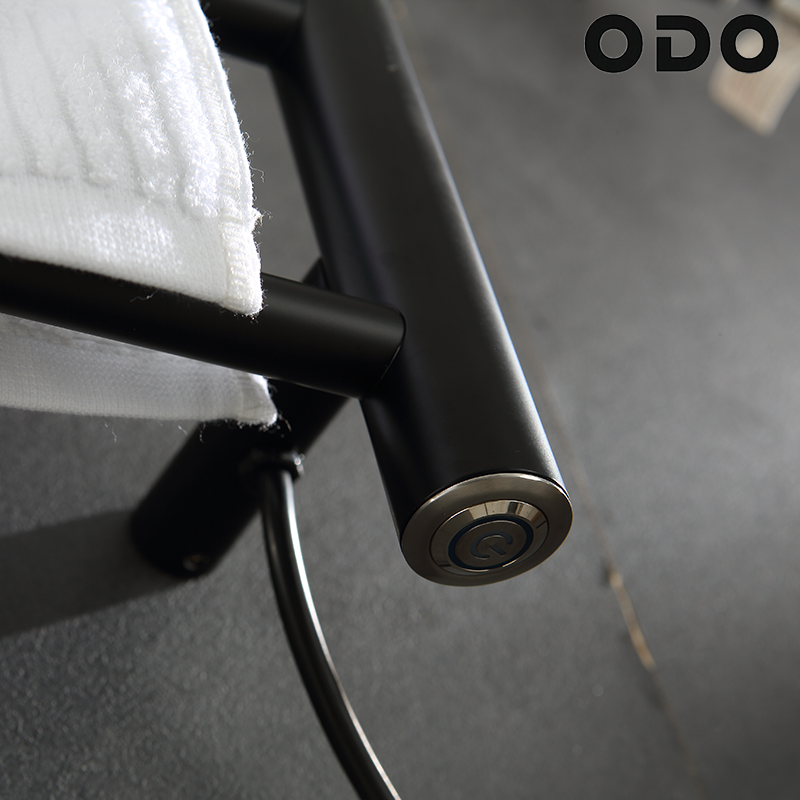
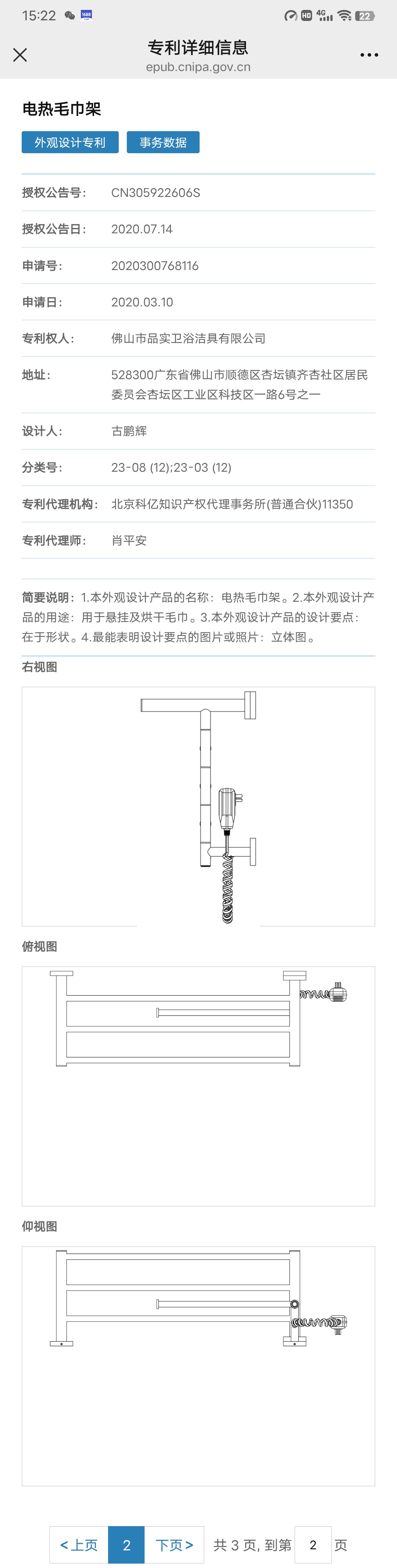
Efficiency and durability are closely aligned. The dry carbon fiber system operates at a steady 45–60°C while drawing only around 0.1 kWh per hour with IP44 moisture protection. Replacing modular parts preserves these intact electronic components. Structural reliability is proven through recognized certifications, including the ODO-R2B Swivel Rotating Electric Heated Towel Rack Utility Model Patent Certificate (Cert No. 16423119) and CE-LVD safety compliance (Cert No. FTS22LC-8881S).
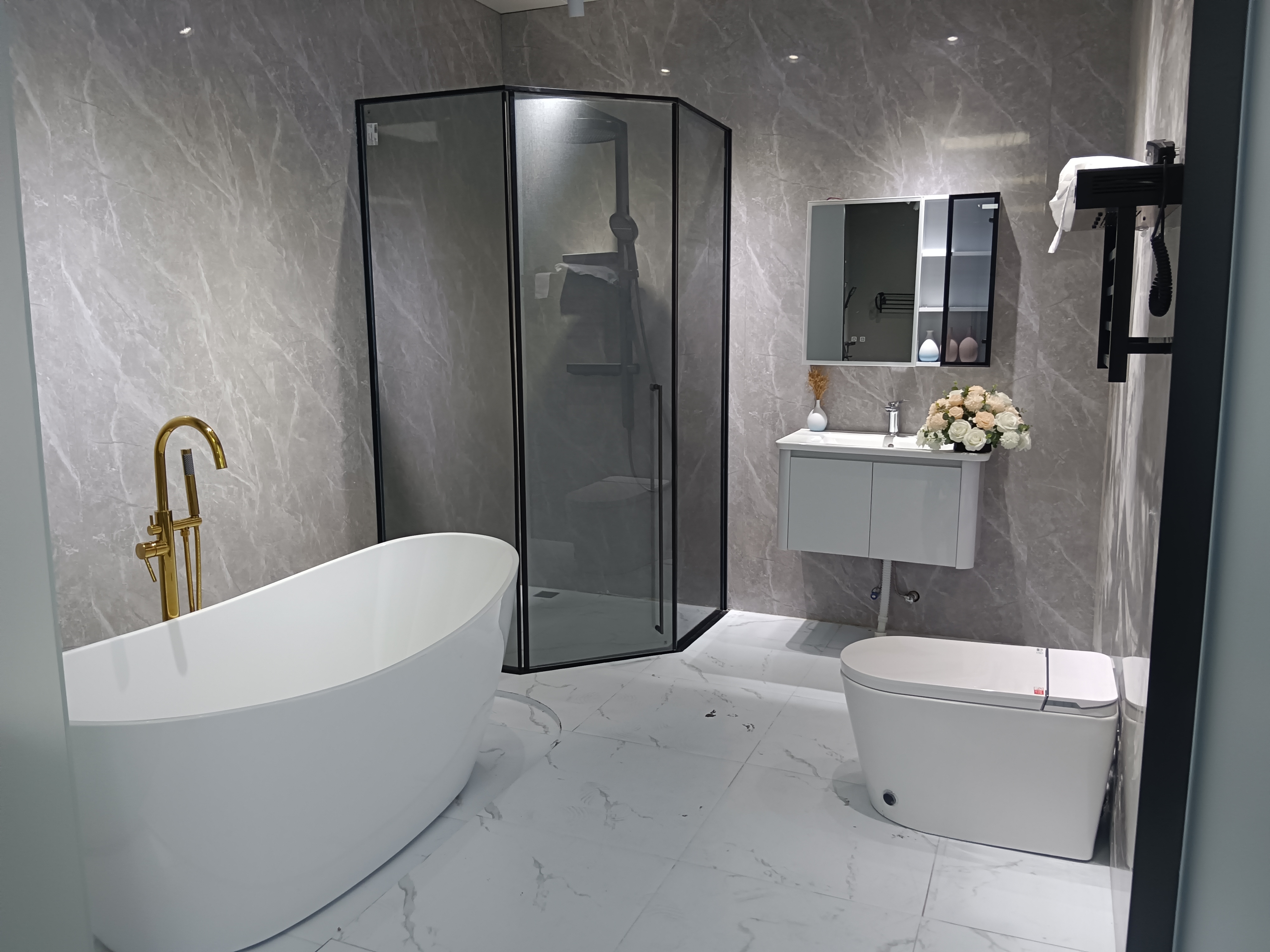
Real-world projects showcase how modular designs optimize operational efficiency in settings like Hotel & Hospitality Projects, SPA & Wellness Centers, and Senior Care Facilities. In the Sydney Senior Care Center Project, safety standards and accessible constant-temperature heating were mandatory. Similarly, the Warsaw Chain Hotel Renovation Project installed 260 wall-mounted towel rails, choosing modularity to simplify parts logistics, slash electronic waste, and comply with strict green building standards.
Performance Comparison: Modular vs. Integrated Towel Rails
The comparative data below demonstrates how modular replacement arms outperform fixed-assembly swivel racks across ecological and operational criteria.
| Metric | Conventional Integrated Racks | Modular Arm Racks (ODO-R3B Series) |
|---|---|---|
| Service & Repair Strategy | Requires total unit scrap upon joint wear | Quick swap of individual arms via quick-connect joint |
| Electronic Waste Impact | High (discards usable electronics and frame) | Minimal (only worn mechanical components replaced) |
| Resource Retention | Zero reuse of 304 stainless steel frame | High retention of vertical rail, wiring, and controller |
| Heating Mechanism | Fluid-filled or basic resistive wire | Efficient Dry Carbon Fiber (100W, 45–60°C rapid heating) |
| Long-term Maintenance Support | Rarely available | Guaranteed component supply from OEM/ODM manufacturer |
Frequently Asked Questions
Q: Does modular replacement compromise the water resistance rating?
A: No. Precision press-fit seals and high-grade silicone gaskets are integrated into the connection interfaces, preserving full IP44 ingress protection against moisture and water splashes.
Q: Must the complete towel rack be dismounted from the wall to swap a single arm?
A: Not at all. The modular arms utilize localized mechanical fasteners on the central pillar, allowing technicians to detach any arm without dismantling wall mounts or hardwiring.
Q: What surface finish options are available for modular arms?
A: Replacement arms come in Brushed Steel, Baked Lacquer Matte Black, PVD Plated Brushed Grey/Gold, and Polished Steel, guaranteeing exact visual matching with existing hardware.
Conclusion & Contact Details
By adopting modular replacement arms, swivel heated towel racks evolve from short-lived fixtures into sustainable, high-value assets. Commercial developments and private homeowners benefit from reduced material consumption, decreased lifetime costs, and simplified maintenance. For custom technical inquiries or project consulting, contact our team at charlene@seosodo.com.
About the Manufacturer
Established in 2014, Foshan Pinshi Sanitary Ware Co., Ltd. (ODO) operates 20 production lines across three manufacturing bases in Foshan, Zhongshan, and Jiangmen, spanning over 20,000 square meters with 245 skilled employees. Backed by a 20-person R&D division with over 50 patents, ODO implements 14 quality control steps under ISO9001 and 6S systems, achieving a monthly output of 100,000 units. Certified with CE safety approvals, ODO delivers premium sanitary solutions to clients across Europe, North America, the Middle East, and Southeast Asia.

REPORT