







-
 Agriculture
-
 Health-Care
-
 Environment
-
 Construction-Real-Estate
-
 Tools-Hardware
-
 Home-Garden
-
 Furniture
-
 Luggage-Bags-Cases
-
 Medical-devices-Supplies
-
 Gifts-Crafts
-
 Sports-Entertainment
-
 Food-Beverage
-
 Vehicles-Transportation
-
 Power-Transmission
-
 Material-Handling
-
 Renewable-Energy
-
 Safety
-
 Testing-Instrument-Equipment
-
 Construction-Building-Machinery
-
 Pet-Supplies
-
 Personal-Care-Household-Cleaning
-
 Vehicle-Accessories-Electronics-Tools
-
 School-Office-Supplies
-
 Packaging-Printing
-
 Mother-Kids-Toys
-
 Business-Services
-
 Commercial-Equipment-Machinery
-
 Apparel-Accessories
-
 Security
-
 Shoes-Accessories
-
 Vehicle-Parts-Accessories
-
 Jewelry-Eyewear-Watches-Accessories
-
 Lights-Lighting
-
 Fabric-Textile-Raw-Material
-
 Fabrication-Services
-
 Industrial-Machinery
-
 Consumer-Electronics
-
 Electrical-Equipment-Supplies
-
 Electronic-Components-Accessories-Telecommunications
-
 Home-Appliances
-
 Beauty
-
 Chemicals
-
 Rubber-Plastics
-
 Metals-Alloys


























































































































































































































































































































































































































































































































































































- Masonry Materials
- Curtain Walls & Accessories
- Earthwork Products
- Fireproofing Materials
- Heat Insulation Materials
- Plastic Building Materials
- Building Boards
- Soundproofing Materials
- Timber
- Waterproofing Materials
- Balustrades & Handrails
- Bathroom & Kitchen
- Flooring & Accessories
- Tiles & Accessories
- Door, Window & Accessories
- Fireplaces & Stoves
- Floor Heating Systems & Parts
- Stairs & Stair Parts
- Ceilings
- Elevators & Escalators
- Stone
- Countertops, Vanity Tops & Table Tops
- Mosaics
- Metal Building Materials
- Multifunctional Materials
- Ladders & Scaffoldings
- Mouldings
- Corner Guards
- Decorative Films
- Formwork
- Building & Industrial Glass
- Other Construction & Real Estate
- Wallpapers/Wall panels
- HVAC System & Parts
- Outdoor Facilities
- Prefabricated Buildings
- Festive & Party Supplies
- Bathroom Products
- Household Sundries
- Rain Gear
- Garden Supplies
- Household Cleaning Tools & Accessories
- Lighters & Smoking Accessories
- Home Storage & Organization
- Household Scales
- Smart Home Improvement
- Home Textiles
- Kitchenware
- Drinkware & Accessories
- Dinnerware, Coffee & Wine
- Home Decor
- Golf
- Fitness & Body Building
- Amusement Park Facilities
- Billiards, Board Game,Coin Operated Games
- Musical Instruments
- Outdoor Affordable Luxury Sports
- Camping & Hiking
- Fishing
- Sports Safety&Rehabilitation
- Ball Sports Equipments
- Water Sports
- Winter Sports
- Luxury Travel Equipments
- Sports Shoes, Bags & Accessories
- Cycling
- Other Sports & Entertainment Products
- Artificial Grass&Sports Flooring&Sports Court Equipment
- Scooters
- Food Ingredients
- Honey & Honey Products
- Snacks
- Nuts & Kernels
- Seafood
- Plant & Animal Oil
- Beverages
- Fruit & Vegetable Products
- Frog & Escargot
- Bean Products
- Egg Products
- Dairy Products
- Seasonings & Condiments
- Canned Food
- Instant Food
- Baked Goods
- Other Food & Beverage
- Meat & Poultry
- Confectionery
- Grain Products
- Feminie Care
- Hair Care & Styling
- Body Care
- Hands & Feet Care
- Hygiene Products
- Men's Grooming
- Laundry Cleaning Supplies
- Travel Size & Gift Sets
- Room Deodorizers
- Other Personal Care Products
- Pest Control Products
- Special Household Cleaning
- Floor Cleaning
- Kitchen & Bathroom Cleaning
- Oral Care
- Bath Supplies
- Yellow Pages
- Correction Supplies
- Office Binding Supplies
- Office Cutting Supplies
- Board Erasers
- Office Adhesives & Tapes
- Education Supplies
- Pencil Cases & Bags
- Notebooks & Writing Pads
- File Folder Accessories
- Calendars
- Writing Accessories
- Commercial Office Supplies
- Pencil Sharpeners
- Pens
- Letter Pad/Paper
- Paper Envelopes
- Desk Organizers
- Pencils
- Markers & Highlighters
- Filing Products
- Art Supplies
- Easels
- Badge Holder & Accessories
- Office Paper
- Printer Supplies
- Book Covers
- Other Office & School Supplies
- Stationery Set
- Boards
- Clipboards
- Stamps
- Drafting Supplies
- Stencils
- Electronic Dictionary
- Books
- Map
- Magazines
- Calculators
- Baby & Toddler Toys
- Educational Toys
- Classic Toys
- Dress Up & Pretend Play
- Toy Vehicle
- Stuffed Animals & Plush Toys
- Outdoor Toys & Structures
- Balloons & Accessories
- Baby Food
- Children's Clothing
- Baby Supplies & Products
- Maternity Clothes
- Kids Shoes
- Baby Care
- Novelty & Gag Toys
- Dolls & Accessories
- Puzzle & Games
- Blocks & Model Building Toys
- Toddler Clothing
- Baby Clothing
- Kids' Luggage & Bags
- Arts, Crafts & DIY Toys
- Action & Toy Figures
- Baby Appliances
- Hobbies & Models
- Remote Control Toys
- Promotional Toys
- Pregnancy & Maternity
- Hygiene Products
- Kid's Textile&Bedding
- Novelty & Special Use
- Toy Weapons
- Baby Gifts
- Baby Storage & Organization
- Auto Drive Systems
- ATV/UTV Parts & Accessories
- Marine Parts & Accessories
- Other Auto Parts
- Trailer Parts & Accessories
- Auto Transmission Systems
- Train Parts & Accessories
- Universal Parts
- Railway Parts & Accessories
- Auto Brake Systems
- Aviation Parts & Accessories
- Truck Parts & Accessories
- Auto Suspension Systems
- Auto Lighting Systems
- New Energy Vehicle Parts & Accessories
- Auto Steering Systems
- Wheels, Tires & Accessories
- Bus Parts & Accessories
- Auto Performance Parts
- Cooling System
- Go-Kart & Kart Racer Parts & Accessories
- Air Conditioning Systems
- Heavy Duty Vehicle Parts & Accessories
- Auto Electrical Systems
- Auto Body Systems
- Auto Engine Systems
- Container Parts & Accessories
- Motorcycle Parts & Accessories
- Refrigeration & Heat Exchange Equipment
- Machine Tool Equipment
- Food & Beverage Machinery
- Agricultural Machinery & Equipment
- Apparel & Textile Machinery
- Chemical Machinery
- Packaging Machines
- Paper Production Machinery
- Plastic & Rubber Processing Machinery
- Industrial Robots
- Electronic Products Machinery
- Metal & Metallurgy Machinery
- Woodworking Machinery
- Home Product Manufacturing Machinery
- Machinery Accessories
- Environmental Machinery
- Machinery Service
- Electrical Equipment Manufacturing Machinery
- Industrial Compressors & Parts
- Tobacco & Cigarette Machinery
- Production Line
- Used Industrial Machinery
- Electronics Production Machinery
- Other Machinery & Industrial Equipment
- Camera, Photo & Accessories
- Portable Audio, Video & Accessories
- Television, Home Audio, Video & Accessories
- Video Games & Accessories
- Mobile Phone & Accessories
- Electronic Publications
- Earphone & Headphone & Accessories
- Speakers & Accessories
- Smart Electronics
- TV Receivers & Accessories
- Mobile Phone & Computer Repair Parts
- Chargers, Batteries & Power Supplies
- Used Electronics
- VR, AR, MR Hardware & Software
- Projectors & Presentation Equipments
- Other Consumer Electronics
- Cables & Commonly Used Accessories
- Computer Hardware & Software
- Displays, Signage and Optoelectronics
- Discrete Semiconductors
- Wireless & IoT Module and Products
- Telecommunications
- Connectors, Terminals & Accessories
- Development Boards, Electronic Modules and Kits
- Circuit Protection
- Sensors
- Isolators
- Audio Components and Products
- Integrated Circuits
- Power Supplies
- Relays
- RF, Microwave and RFID
- Electronic Accessories & Supplies
- Passive Components
- PCB & PCBA
- Air Quality Appliances
- Home Appliance Parts
- Heating & Cooling Appliances
- Small Kitchen Appliances
- Laundry Appliances
- Water Heaters
- Water Treatment Appliances
- Refrigerators & Freezers
- Personal Care & Beauty Appliances
- Major Kitchen Appliances
- Cleaning Appliances
- Second-hand Appliances
- Smart Home Appliances
- Other Home Appliances
- Energy Chemicals
- Inorganic Chemicals
- Basic Organic Chemicals
- Agrochemicals
- Admixture & Additives
- Catalysts & Chemical Auxiliary Agents
- Pigments & Dyestuff
- Coating & Paint
- Daily Chemicals
- Polymer
- Organic Intermediate
- Adhesives & Sealants
- Chemical Waste
- Biological Chemical Products
- Surface Treatment Chemicals
- Painting & Coating
- Chemical Reagents
- Flavor & Fragrance
- Non-Explosive Demolition Agents
- Other Chemicals
- Custom Chemical Services

Essential Contract Clauses to Protect B2B Buyers Against Defective Packaging Flocking Fabric
Executive Summary & Essential Contractual Safeguards
Securing high-grade packaging flocking fabric requires procurement agreements that explicitly convert quality expectations into measurable, legally binding criteria. Establishing quantified technical tolerances—such as a 0.5% maximum defect threshold, Grade 4 color fastness, and 3M tape adhesion compliance—ensures your business is protected against material failures. Standard supplier guarantees should legally enforce a 24-hour claim resolution turnaround, free replacement or re-production of non-conforming batches, and full vendor coverage for secondary freight expenses.
Key Insights & Procurement Strategies
- Quantitative Physical Standards: Contractually enforce strict limits including Pantone Delta E ≤ 2.0 for standard rolls (ΔE ≤ 0.5 for custom color matching), zero fiber shedding during a 10-cycle 3M tape test under FAMA parameters, and an overall defect rate capped at 0.5%.
- Chemical and Anti-Tarnish Risk Controls: Require verified lab reports confirming compliance with EU REACH (253 SVHC), RoHS 2.0, heavy metals under PPWR (≤100 ppm), and free reactive sulfur below 5 ppm to prevent tarnishing in high-end jewelry packaging.
- Enforceable Remediation & Logistics Protocols: Incorporate mandatory 24-hour response windows for claims, immediate replacement or credit options for stock items, and zero-cost re-production with vendor-paid freight for custom material defects.
- End-to-End Batch Traceability: Stipulate multi-stage quality checks, including accelerated silver coupon testing and 4-hour formaldehyde screening (controlled to ≤75 ppm), linked to digital lot archiving.
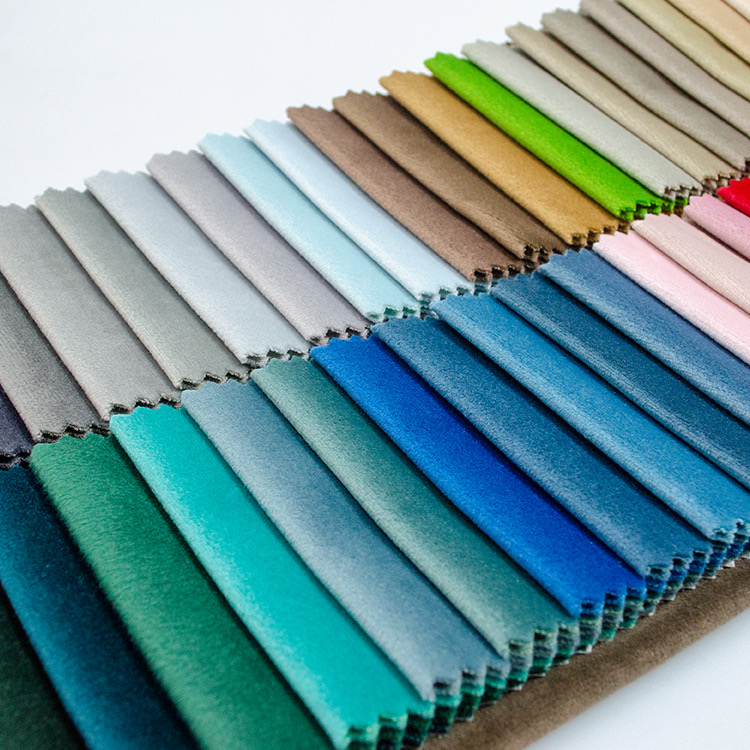
Technical Analysis & Specifications Management
Eliminating operational ambiguity in bulk textile orders requires embedding concrete performance values directly into purchase agreements. Contracts should dictate pile adhesion strength, specifying zero fiber loss when subjected to a 3M tape 10-cycle peel test per standard FAMA evaluation. Abrasion durability should be mapped to the target product tier, ranging from 500 cycles for basic liner applications up to 100,000 cycles for heavy-use packaging. Where self-adhesive backing is utilized, require a minimum peel strength of 2 N / 25 mm. For custom die-cut inserts used in cosmetic or watch boxes, lock dimensional tolerances to a strict ±0.1 mm precision.
Chemical safety is critical when flocking fabric is deployed in enclosed luxury packaging such as silver jewelry containers or delicate micro-electronics. Uncontrolled volatile compounds can ruin finished goods downstream. Agreements must cap free reactive sulfur at under 5 ppm to prevent silver tarnishing, mandate an aqueous extract pH balance between 5.5 and 7.5 to avoid acidic pitting, and restrict residual volatile organic acids from backing adhesives. Vendors must conduct pre-shipment silver coupon accelerated corrosion testing for every batch. Global regulatory compliance should be reinforced by attaching verified certificates for EU REACH 253 SVHC, RoHS 2.0 Directive 2015/863, and Global Recycled Standard (GRS) Version 4.0 tracking.
Dispute Resolution & Supply Chain Remediation
A well-structured agreement establishes clear remediation channels whenever delivered goods fall short of agreed standards. Vertically integrated manufacturers track production via digital archiving, enabling direct backward traceability from finished flock rolls to base textiles, adhesive lots, and dye batches. Should a quality defect arise, contractual terms should oblige the supplier to formulate a resolution within 24 hours. For non-conforming custom developments, the supplier must absorb all re-manufacturing costs and secondary shipping fees. For standard stock items, buyers should retain the right to elect between fast-track product replacement or proportional financial credits.
Contractual Tolerances & Remedy Reference Matrix
| Evaluation Parameter | Target Contract Specification | Contractual Protective Remedy |
|---|---|---|
| Pile Adhesion & Durability | Passes 3M tape 10-cycle peel test (FAMA); 0 fiber shedding | Immediate batch re-production or full replacement at vendor's cost |
| Color Accuracy & Consistency | Pantone ΔE ≤ 2.0 (Standard) / ΔE ≤ 0.5 (Custom); Lot variance ≤ 3% | Proportional price discount or free expedited re-dyeing |
| Jewelry Anti-Tarnish Safety | Free reactive sulfur < 5 ppm; pH 5.5–7.5; Silver coupon pass | Full batch replacement, return shipping, and secondary logistics coverage |
| Chemical & Regulatory Safety | REACH 253 SVHC, RoHS 2.0, Azo ≤ 30 ppm, Formaldehyde ≤ 75 ppm | Full product return, immediate re-manufacture, and regulatory indemnity |
| Defect Threshold & On-Time Delivery | Defect rate ≤ 0.5%; On-time delivery rate ≥ 98% | 24-hour resolution protocol, priority dispatch, or account billing credit |
Frequently Asked Questions
Which color fastness terms should be specified in procurement contracts for packaging flocking fabric?
Contracts ought to mandate wet and dry color fastness of Grade 4 or higher for dark shades, light fastness reaching Grade 6+, and color matching precision within Pantone Delta E ≤ 2.0 for standard production or Delta E ≤ 0.5 for custom shades.
How do contractual anti-tarnish clauses protect silver jewelry boxes from damage?
Anti-tarnish clauses require free reactive sulfur levels under 5 ppm, aqueous pH between 5.5 and 7.5, and mandatory pre-shipment silver coupon corrosion testing. This ensures no reactive sulfur or acidic vapors build up inside sealed boxes to discolor silver items.
What contractual remedies apply when receiving defective flocking fabric shipments?
Protective terms mandate a binding 24-hour initial claim response, free order re-production with vendor-covered secondary shipping for defective custom items, same-day dispatch or billing deductions for stock goods, and full batch traceability via digital manufacturing archives.
Summary & Final Takeaways
Protecting your packaging fabric supply chain relies on robust contracts that combine clear physical tolerances, stringent chemical safety thresholds, pre-shipment testing protocols, and immediate corrective remedies. Partnering directly with integrated source manufacturers that manage raw textile pretreatment, dyeing, electrostatic flocking, adhesive backing, and precision slitting eliminates intermediary risks and guarantees product reliability. For specialized technical guidance or sourcing assistance, contact our engineering team directly at 005@mingqianflocking.com.
About the Supplier
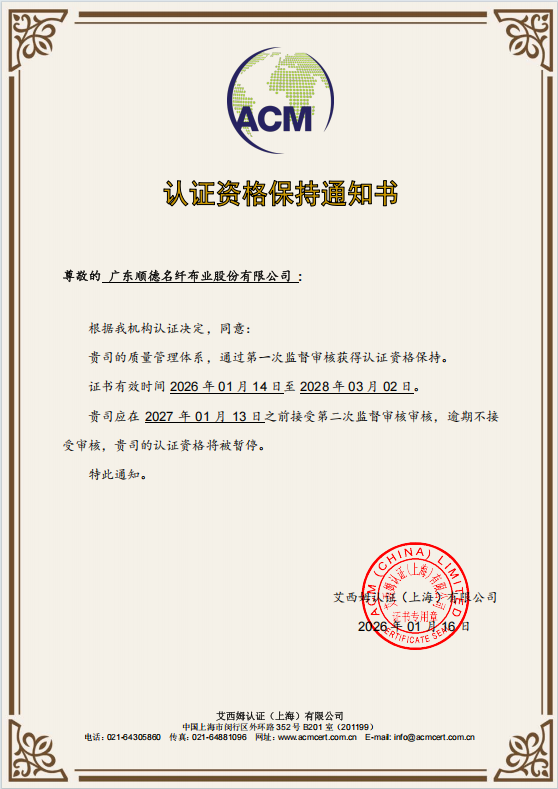
Guangdong Shunde Mingqian Flocking Co., Ltd. (brand name Mingqian) is an established flocking fabric manufacturer founded in 2008 in Foshan City, Guangdong Province. Operating a self-owned 12,000-square-meter facility with over 100 skilled personnel and five automated electrostatic flocking lines, Mingqian achieves a monthly capacity exceeding 3,000,000 yards. The company maintains an in-stock inventory of over 1,000,000 yards across hundreds of SKUs for rapid dispatch, exporting over 15% of output to clients in 30+ countries across North America, Europe, Southeast Asia, and South Asia. Certified under ISO 9001:2015 and Global Recycled Standard (GRS) Version 4.0, Mingqian fabrics pass third-party SGS testing for EU REACH 253 SVHC and RoHS 2.0 compliance, serving premier global brands including Dior, Chow Tai Fook, Moutai, Dyson, Fendi, and Volkswagen.

REPORT