







-
 Agriculture
-
 Health-Care
-
 Environment
-
 Construction-Real-Estate
-
 Tools-Hardware
-
 Home-Garden
-
 Furniture
-
 Luggage-Bags-Cases
-
 Medical-devices-Supplies
-
 Gifts-Crafts
-
 Sports-Entertainment
-
 Food-Beverage
-
 Vehicles-Transportation
-
 Power-Transmission
-
 Material-Handling
-
 Renewable-Energy
-
 Safety
-
 Testing-Instrument-Equipment
-
 Construction-Building-Machinery
-
 Pet-Supplies
-
 Personal-Care-Household-Cleaning
-
 Vehicle-Accessories-Electronics-Tools
-
 School-Office-Supplies
-
 Packaging-Printing
-
 Mother-Kids-Toys
-
 Business-Services
-
 Commercial-Equipment-Machinery
-
 Apparel-Accessories
-
 Security
-
 Shoes-Accessories
-
 Vehicle-Parts-Accessories
-
 Jewelry-Eyewear-Watches-Accessories
-
 Lights-Lighting
-
 Fabric-Textile-Raw-Material
-
 Fabrication-Services
-
 Industrial-Machinery
-
 Consumer-Electronics
-
 Electrical-Equipment-Supplies
-
 Electronic-Components-Accessories-Telecommunications
-
 Home-Appliances
-
 Beauty
-
 Chemicals
-
 Rubber-Plastics
-
 Metals-Alloys


























































































































































































































































































































































































































































































































































































- Masonry Materials
- Curtain Walls & Accessories
- Earthwork Products
- Fireproofing Materials
- Heat Insulation Materials
- Plastic Building Materials
- Building Boards
- Soundproofing Materials
- Timber
- Waterproofing Materials
- Balustrades & Handrails
- Bathroom & Kitchen
- Flooring & Accessories
- Tiles & Accessories
- Door, Window & Accessories
- Fireplaces & Stoves
- Floor Heating Systems & Parts
- Stairs & Stair Parts
- Ceilings
- Elevators & Escalators
- Stone
- Countertops, Vanity Tops & Table Tops
- Mosaics
- Metal Building Materials
- Multifunctional Materials
- Ladders & Scaffoldings
- Mouldings
- Corner Guards
- Decorative Films
- Formwork
- Building & Industrial Glass
- Other Construction & Real Estate
- Wallpapers/Wall panels
- HVAC System & Parts
- Outdoor Facilities
- Prefabricated Buildings
- Festive & Party Supplies
- Bathroom Products
- Household Sundries
- Rain Gear
- Garden Supplies
- Household Cleaning Tools & Accessories
- Lighters & Smoking Accessories
- Home Storage & Organization
- Household Scales
- Smart Home Improvement
- Home Textiles
- Kitchenware
- Drinkware & Accessories
- Dinnerware, Coffee & Wine
- Home Decor
- Golf
- Fitness & Body Building
- Amusement Park Facilities
- Billiards, Board Game,Coin Operated Games
- Musical Instruments
- Outdoor Affordable Luxury Sports
- Camping & Hiking
- Fishing
- Sports Safety&Rehabilitation
- Ball Sports Equipments
- Water Sports
- Winter Sports
- Luxury Travel Equipments
- Sports Shoes, Bags & Accessories
- Cycling
- Other Sports & Entertainment Products
- Artificial Grass&Sports Flooring&Sports Court Equipment
- Scooters
- Food Ingredients
- Honey & Honey Products
- Snacks
- Nuts & Kernels
- Seafood
- Plant & Animal Oil
- Beverages
- Fruit & Vegetable Products
- Frog & Escargot
- Bean Products
- Egg Products
- Dairy Products
- Seasonings & Condiments
- Canned Food
- Instant Food
- Baked Goods
- Other Food & Beverage
- Meat & Poultry
- Confectionery
- Grain Products
- Feminie Care
- Hair Care & Styling
- Body Care
- Hands & Feet Care
- Hygiene Products
- Men's Grooming
- Laundry Cleaning Supplies
- Travel Size & Gift Sets
- Room Deodorizers
- Other Personal Care Products
- Pest Control Products
- Special Household Cleaning
- Floor Cleaning
- Kitchen & Bathroom Cleaning
- Oral Care
- Bath Supplies
- Yellow Pages
- Correction Supplies
- Office Binding Supplies
- Office Cutting Supplies
- Board Erasers
- Office Adhesives & Tapes
- Education Supplies
- Pencil Cases & Bags
- Notebooks & Writing Pads
- File Folder Accessories
- Calendars
- Writing Accessories
- Commercial Office Supplies
- Pencil Sharpeners
- Pens
- Letter Pad/Paper
- Paper Envelopes
- Desk Organizers
- Pencils
- Markers & Highlighters
- Filing Products
- Art Supplies
- Easels
- Badge Holder & Accessories
- Office Paper
- Printer Supplies
- Book Covers
- Other Office & School Supplies
- Stationery Set
- Boards
- Clipboards
- Stamps
- Drafting Supplies
- Stencils
- Electronic Dictionary
- Books
- Map
- Magazines
- Calculators
- Baby & Toddler Toys
- Educational Toys
- Classic Toys
- Dress Up & Pretend Play
- Toy Vehicle
- Stuffed Animals & Plush Toys
- Outdoor Toys & Structures
- Balloons & Accessories
- Baby Food
- Children's Clothing
- Baby Supplies & Products
- Maternity Clothes
- Kids Shoes
- Baby Care
- Novelty & Gag Toys
- Dolls & Accessories
- Puzzle & Games
- Blocks & Model Building Toys
- Toddler Clothing
- Baby Clothing
- Kids' Luggage & Bags
- Arts, Crafts & DIY Toys
- Action & Toy Figures
- Baby Appliances
- Hobbies & Models
- Remote Control Toys
- Promotional Toys
- Pregnancy & Maternity
- Hygiene Products
- Kid's Textile&Bedding
- Novelty & Special Use
- Toy Weapons
- Baby Gifts
- Baby Storage & Organization
- Auto Drive Systems
- ATV/UTV Parts & Accessories
- Marine Parts & Accessories
- Other Auto Parts
- Trailer Parts & Accessories
- Auto Transmission Systems
- Train Parts & Accessories
- Universal Parts
- Railway Parts & Accessories
- Auto Brake Systems
- Aviation Parts & Accessories
- Truck Parts & Accessories
- Auto Suspension Systems
- Auto Lighting Systems
- New Energy Vehicle Parts & Accessories
- Auto Steering Systems
- Wheels, Tires & Accessories
- Bus Parts & Accessories
- Auto Performance Parts
- Cooling System
- Go-Kart & Kart Racer Parts & Accessories
- Air Conditioning Systems
- Heavy Duty Vehicle Parts & Accessories
- Auto Electrical Systems
- Auto Body Systems
- Auto Engine Systems
- Container Parts & Accessories
- Motorcycle Parts & Accessories
- Refrigeration & Heat Exchange Equipment
- Machine Tool Equipment
- Food & Beverage Machinery
- Agricultural Machinery & Equipment
- Apparel & Textile Machinery
- Chemical Machinery
- Packaging Machines
- Paper Production Machinery
- Plastic & Rubber Processing Machinery
- Industrial Robots
- Electronic Products Machinery
- Metal & Metallurgy Machinery
- Woodworking Machinery
- Home Product Manufacturing Machinery
- Machinery Accessories
- Environmental Machinery
- Machinery Service
- Electrical Equipment Manufacturing Machinery
- Industrial Compressors & Parts
- Tobacco & Cigarette Machinery
- Production Line
- Used Industrial Machinery
- Electronics Production Machinery
- Other Machinery & Industrial Equipment
- Camera, Photo & Accessories
- Portable Audio, Video & Accessories
- Television, Home Audio, Video & Accessories
- Video Games & Accessories
- Mobile Phone & Accessories
- Electronic Publications
- Earphone & Headphone & Accessories
- Speakers & Accessories
- Smart Electronics
- TV Receivers & Accessories
- Mobile Phone & Computer Repair Parts
- Chargers, Batteries & Power Supplies
- Used Electronics
- VR, AR, MR Hardware & Software
- Projectors & Presentation Equipments
- Other Consumer Electronics
- Cables & Commonly Used Accessories
- Computer Hardware & Software
- Displays, Signage and Optoelectronics
- Discrete Semiconductors
- Wireless & IoT Module and Products
- Telecommunications
- Connectors, Terminals & Accessories
- Development Boards, Electronic Modules and Kits
- Circuit Protection
- Sensors
- Isolators
- Audio Components and Products
- Integrated Circuits
- Power Supplies
- Relays
- RF, Microwave and RFID
- Electronic Accessories & Supplies
- Passive Components
- PCB & PCBA
- Air Quality Appliances
- Home Appliance Parts
- Heating & Cooling Appliances
- Small Kitchen Appliances
- Laundry Appliances
- Water Heaters
- Water Treatment Appliances
- Refrigerators & Freezers
- Personal Care & Beauty Appliances
- Major Kitchen Appliances
- Cleaning Appliances
- Second-hand Appliances
- Smart Home Appliances
- Other Home Appliances
- Energy Chemicals
- Inorganic Chemicals
- Basic Organic Chemicals
- Agrochemicals
- Admixture & Additives
- Catalysts & Chemical Auxiliary Agents
- Pigments & Dyestuff
- Coating & Paint
- Daily Chemicals
- Polymer
- Organic Intermediate
- Adhesives & Sealants
- Chemical Waste
- Biological Chemical Products
- Surface Treatment Chemicals
- Painting & Coating
- Chemical Reagents
- Flavor & Fragrance
- Non-Explosive Demolition Agents
- Other Chemicals
- Custom Chemical Services

Evaluating Raw Material Batches Prior to Heat Press Application in Garment Manufacturing
Apparel buyers frequently ask whether they can examine raw material batches prior to heat press application. The short answer is yes. Experienced garment manufacturers implement comprehensive pre-production validation procedures, empowering fashion brands to assess fabric weight, fiber composition, thermal stability, and heat press rubber transfer patch quality before committing to full-scale manufacturing and thermal bonding.
Why Pre-Application Inspection is Essential for Quality Apparel
Assessing raw textiles and embellishments prior to heat pressing prevents widespread bonding failures across entire production runs. When raw materials arrive, technical teams test fabric weight, weave density, surface texture, and thermal endurance. At the same time, heat press rubber transfer patches undergo rigorous adhesive testing to verify performance across varying temperatures, pressures, and dwell times. Operating across dual manufacturing facilities spanning 15,000 square meters, Dongguan City Dule Garment Co.,Ltd implements strict raw material testing protocols to catch fabric anomalies early.

Executing pre-production audits protects brand integrity and product endurance. For high-velocity release models—such as private-label collections like UK retailer Vanguard Shop Co., which handles 1,000 units per SKU across 24 drops annually—thorough batch verification prevents defects like graphic peeling, cracking, or color bleed during thermal application. Pre-production sample approvals ensure that both raw knits and graphic transfers comply with exact technical standards.

Key Highlights of Pre-Production Verification Protocols
- Raw Material Audits: Thorough testing of raw textiles (including 480–630 GSM heavyweight fleece and cotton jersey) alongside transfer film batches prior to cutting.
- Physical Sample Sign-Offs: Fast delivery of physical fabric swatches and sample rubber transfer patches within 3–15 days for client testing.
- Independent On-Site Inspection: Quality protocols structured around ISO 2859-1 standards and Final AQL 2.5 criteria, welcoming third-party auditors.
- Scalable Production Lines: Low minimum order quantities starting at 50 pieces per custom style to suit emerging DTC labels, independent designers, and established collections.
Comprehensive In-House Control & Process Comparison
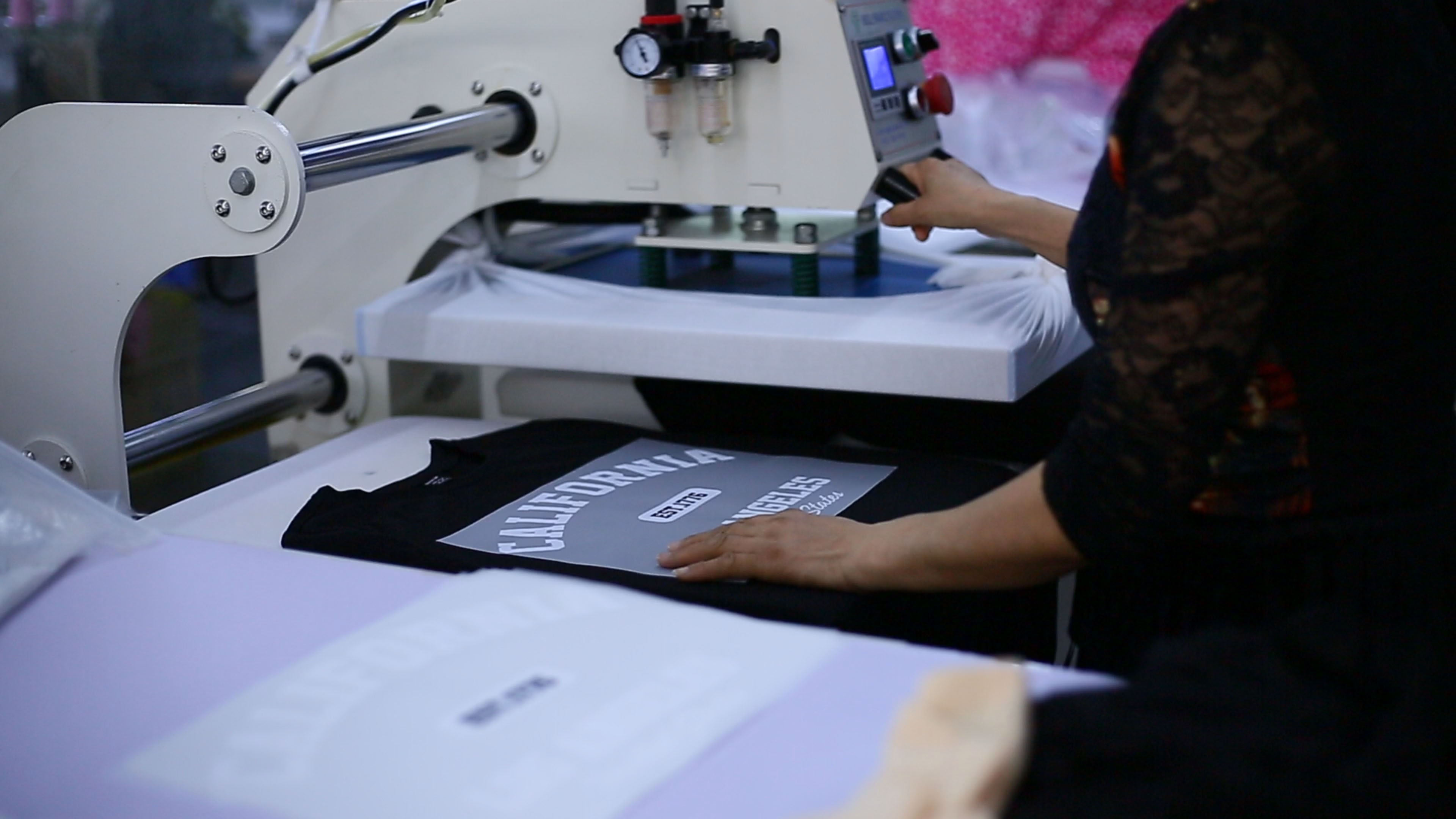
Having complete control over factory equipment directly determines application consistency. With over 50 specialized machines under one roof, full-cycle garment development is executed in-house. From initial fabric cutting to vintage washing, puff printing, 3D embroidery, and patch positioning, raw material stability is maintained throughout thermal processing.
| Stage | Key Parameters Checked | Method of Verification | Primary Objective |
|---|---|---|---|
| Pre-Production Audit | Fabric GSM (480–630), fiber blend, adhesive film stability | Physical swatch evaluations, shrinkage testing, trial heat press runs | Catch textile flaws and adhesive mismatch before cutting fabric. |
| In-Line Pressing Control | Platen temperature, pneumatic pressure, dwell time, patch alignment | Real-time press sampling, cross-hatch adhesion testing | Ensure uniform bond strength and prevent patch misplacement. |
| Final Quality Audit | Graphic strength, seam durability, measurements, overall finish | ISO 2859-1 AQL 2.5 sampling plan & 3rd-party audits | Guarantee fault-free shipments for FOB Shenzhen or DDP delivery. |
Frequently Asked Questions
What parameters are evaluated during raw material inspection?
Inspectors assess fabric weight (GSM), surface texture, color fastness, thermal tolerance, and the melting point of rubber transfer patch backings to guarantee strong adhesion.
How long does it take to receive pre-production heat press samples?
Sample creation and physical strike-off approvals typically take between 3 and 15 days, allowing complete physical inspection before mass production starts.
Can buyers send third-party auditors to check raw material batches on site?
Yes. Independent third-party inspection teams are welcomed to inspect raw material intake, mid-production assembly, and final pre-shipment goods based on AQL 2.5 standards.
Conclusion & Recommendations
Inspecting raw material batches prior to heat press application ensures technical accuracy and prevents expensive rework in custom streetwear production. By combining swatch sample approvals, ISO 2859-1 AQL 2.5 standards, and flexible logistics—including FOB Shenzhen, DDP door-to-door, and express delivery via DHL, FedEx, or UPS—brands achieve reliable supply chain control. Flexible payment options like Bank Transfer and Alipay further streamline procurement. For custom inquiries or technical assistance, reach out via yutianfang88@gmail.com.
About Our Manufacturing
Dongguan City Dule Garment Co.,Ltd is an OEM/ODM apparel manufacturer specializing in streetwear and heavyweight garments since 2007. Spanning two factory sites totaling 15,000 square meters with 130+ skilled workers, the company produces 1.2 million pieces annually. DOLUXE specializes in 480–630 GSM heavyweight hoodies, t-shirts, sweatshirts, cargo pants, and denim for over 200 brands across North America, Europe, Australia, and Asia.

REPORT