







-
 Agriculture
-
 Health-Care
-
 Environment
-
 Construction-Real-Estate
-
 Tools-Hardware
-
 Home-Garden
-
 Furniture
-
 Luggage-Bags-Cases
-
 Medical-devices-Supplies
-
 Gifts-Crafts
-
 Sports-Entertainment
-
 Food-Beverage
-
 Vehicles-Transportation
-
 Power-Transmission
-
 Material-Handling
-
 Renewable-Energy
-
 Safety
-
 Testing-Instrument-Equipment
-
 Construction-Building-Machinery
-
 Pet-Supplies
-
 Personal-Care-Household-Cleaning
-
 Vehicle-Accessories-Electronics-Tools
-
 School-Office-Supplies
-
 Packaging-Printing
-
 Mother-Kids-Toys
-
 Business-Services
-
 Commercial-Equipment-Machinery
-
 Apparel-Accessories
-
 Security
-
 Shoes-Accessories
-
 Vehicle-Parts-Accessories
-
 Jewelry-Eyewear-Watches-Accessories
-
 Lights-Lighting
-
 Fabric-Textile-Raw-Material
-
 Fabrication-Services
-
 Industrial-Machinery
-
 Consumer-Electronics
-
 Electrical-Equipment-Supplies
-
 Electronic-Components-Accessories-Telecommunications
-
 Home-Appliances
-
 Beauty
-
 Chemicals
-
 Rubber-Plastics
-
 Metals-Alloys


























































































































































































































































































































































































































































































































































































- Masonry Materials
- Curtain Walls & Accessories
- Earthwork Products
- Fireproofing Materials
- Heat Insulation Materials
- Plastic Building Materials
- Building Boards
- Soundproofing Materials
- Timber
- Waterproofing Materials
- Balustrades & Handrails
- Bathroom & Kitchen
- Flooring & Accessories
- Tiles & Accessories
- Door, Window & Accessories
- Fireplaces & Stoves
- Floor Heating Systems & Parts
- Stairs & Stair Parts
- Ceilings
- Elevators & Escalators
- Stone
- Countertops, Vanity Tops & Table Tops
- Mosaics
- Metal Building Materials
- Multifunctional Materials
- Ladders & Scaffoldings
- Mouldings
- Corner Guards
- Decorative Films
- Formwork
- Building & Industrial Glass
- Other Construction & Real Estate
- Wallpapers/Wall panels
- HVAC System & Parts
- Outdoor Facilities
- Prefabricated Buildings
- Festive & Party Supplies
- Bathroom Products
- Household Sundries
- Rain Gear
- Garden Supplies
- Household Cleaning Tools & Accessories
- Lighters & Smoking Accessories
- Home Storage & Organization
- Household Scales
- Smart Home Improvement
- Home Textiles
- Kitchenware
- Drinkware & Accessories
- Dinnerware, Coffee & Wine
- Home Decor
- Golf
- Fitness & Body Building
- Amusement Park Facilities
- Billiards, Board Game,Coin Operated Games
- Musical Instruments
- Outdoor Affordable Luxury Sports
- Camping & Hiking
- Fishing
- Sports Safety&Rehabilitation
- Ball Sports Equipments
- Water Sports
- Winter Sports
- Luxury Travel Equipments
- Sports Shoes, Bags & Accessories
- Cycling
- Other Sports & Entertainment Products
- Artificial Grass&Sports Flooring&Sports Court Equipment
- Scooters
- Food Ingredients
- Honey & Honey Products
- Snacks
- Nuts & Kernels
- Seafood
- Plant & Animal Oil
- Beverages
- Fruit & Vegetable Products
- Frog & Escargot
- Bean Products
- Egg Products
- Dairy Products
- Seasonings & Condiments
- Canned Food
- Instant Food
- Baked Goods
- Other Food & Beverage
- Meat & Poultry
- Confectionery
- Grain Products
- Feminie Care
- Hair Care & Styling
- Body Care
- Hands & Feet Care
- Hygiene Products
- Men's Grooming
- Laundry Cleaning Supplies
- Travel Size & Gift Sets
- Room Deodorizers
- Other Personal Care Products
- Pest Control Products
- Special Household Cleaning
- Floor Cleaning
- Kitchen & Bathroom Cleaning
- Oral Care
- Bath Supplies
- Yellow Pages
- Correction Supplies
- Office Binding Supplies
- Office Cutting Supplies
- Board Erasers
- Office Adhesives & Tapes
- Education Supplies
- Pencil Cases & Bags
- Notebooks & Writing Pads
- File Folder Accessories
- Calendars
- Writing Accessories
- Commercial Office Supplies
- Pencil Sharpeners
- Pens
- Letter Pad/Paper
- Paper Envelopes
- Desk Organizers
- Pencils
- Markers & Highlighters
- Filing Products
- Art Supplies
- Easels
- Badge Holder & Accessories
- Office Paper
- Printer Supplies
- Book Covers
- Other Office & School Supplies
- Stationery Set
- Boards
- Clipboards
- Stamps
- Drafting Supplies
- Stencils
- Electronic Dictionary
- Books
- Map
- Magazines
- Calculators
- Baby & Toddler Toys
- Educational Toys
- Classic Toys
- Dress Up & Pretend Play
- Toy Vehicle
- Stuffed Animals & Plush Toys
- Outdoor Toys & Structures
- Balloons & Accessories
- Baby Food
- Children's Clothing
- Baby Supplies & Products
- Maternity Clothes
- Kids Shoes
- Baby Care
- Novelty & Gag Toys
- Dolls & Accessories
- Puzzle & Games
- Blocks & Model Building Toys
- Toddler Clothing
- Baby Clothing
- Kids' Luggage & Bags
- Arts, Crafts & DIY Toys
- Action & Toy Figures
- Baby Appliances
- Hobbies & Models
- Remote Control Toys
- Promotional Toys
- Pregnancy & Maternity
- Hygiene Products
- Kid's Textile&Bedding
- Novelty & Special Use
- Toy Weapons
- Baby Gifts
- Baby Storage & Organization
- Auto Drive Systems
- ATV/UTV Parts & Accessories
- Marine Parts & Accessories
- Other Auto Parts
- Trailer Parts & Accessories
- Auto Transmission Systems
- Train Parts & Accessories
- Universal Parts
- Railway Parts & Accessories
- Auto Brake Systems
- Aviation Parts & Accessories
- Truck Parts & Accessories
- Auto Suspension Systems
- Auto Lighting Systems
- New Energy Vehicle Parts & Accessories
- Auto Steering Systems
- Wheels, Tires & Accessories
- Bus Parts & Accessories
- Auto Performance Parts
- Cooling System
- Go-Kart & Kart Racer Parts & Accessories
- Air Conditioning Systems
- Heavy Duty Vehicle Parts & Accessories
- Auto Electrical Systems
- Auto Body Systems
- Auto Engine Systems
- Container Parts & Accessories
- Motorcycle Parts & Accessories
- Refrigeration & Heat Exchange Equipment
- Machine Tool Equipment
- Food & Beverage Machinery
- Agricultural Machinery & Equipment
- Apparel & Textile Machinery
- Chemical Machinery
- Packaging Machines
- Paper Production Machinery
- Plastic & Rubber Processing Machinery
- Industrial Robots
- Electronic Products Machinery
- Metal & Metallurgy Machinery
- Woodworking Machinery
- Home Product Manufacturing Machinery
- Machinery Accessories
- Environmental Machinery
- Machinery Service
- Electrical Equipment Manufacturing Machinery
- Industrial Compressors & Parts
- Tobacco & Cigarette Machinery
- Production Line
- Used Industrial Machinery
- Electronics Production Machinery
- Other Machinery & Industrial Equipment
- Camera, Photo & Accessories
- Portable Audio, Video & Accessories
- Television, Home Audio, Video & Accessories
- Video Games & Accessories
- Mobile Phone & Accessories
- Electronic Publications
- Earphone & Headphone & Accessories
- Speakers & Accessories
- Smart Electronics
- TV Receivers & Accessories
- Mobile Phone & Computer Repair Parts
- Chargers, Batteries & Power Supplies
- Used Electronics
- VR, AR, MR Hardware & Software
- Projectors & Presentation Equipments
- Other Consumer Electronics
- Cables & Commonly Used Accessories
- Computer Hardware & Software
- Displays, Signage and Optoelectronics
- Discrete Semiconductors
- Wireless & IoT Module and Products
- Telecommunications
- Connectors, Terminals & Accessories
- Development Boards, Electronic Modules and Kits
- Circuit Protection
- Sensors
- Isolators
- Audio Components and Products
- Integrated Circuits
- Power Supplies
- Relays
- RF, Microwave and RFID
- Electronic Accessories & Supplies
- Passive Components
- PCB & PCBA
- Air Quality Appliances
- Home Appliance Parts
- Heating & Cooling Appliances
- Small Kitchen Appliances
- Laundry Appliances
- Water Heaters
- Water Treatment Appliances
- Refrigerators & Freezers
- Personal Care & Beauty Appliances
- Major Kitchen Appliances
- Cleaning Appliances
- Second-hand Appliances
- Smart Home Appliances
- Other Home Appliances
- Energy Chemicals
- Inorganic Chemicals
- Basic Organic Chemicals
- Agrochemicals
- Admixture & Additives
- Catalysts & Chemical Auxiliary Agents
- Pigments & Dyestuff
- Coating & Paint
- Daily Chemicals
- Polymer
- Organic Intermediate
- Adhesives & Sealants
- Chemical Waste
- Biological Chemical Products
- Surface Treatment Chemicals
- Painting & Coating
- Chemical Reagents
- Flavor & Fragrance
- Non-Explosive Demolition Agents
- Other Chemicals
- Custom Chemical Services

Hidden Costs to Review Before Buying a Tortilla Packaging Line
The quoted price of a tortilla packaging line rarely represents the full project cost. Before placing an order, review the machine configuration, optional modules, compatible packaging film, installation, operator training, spare parts, factory inspection, payment terms, transportation, and site preparation. Ask the supplier to identify every included and excluded item, since feeding, interleaving, stacking, wrapping, coding, inspection, rejection, and case-packing functions may be priced separately.
Key Cost Checks Before Ordering
- Request a line-by-line quotation for the automatic infeed conveyor, interleaving system, stacking and collating section, wrapper or bagger, date coder, metal detector, checkweigher, reject device, PLC, and HMI.
- Provide complete product specifications before receiving the final price. Typical supported ranges include tortilla diameters of 150–400 mm or customized sizes, thicknesses of 1–8 mm, stack quantities of 2–30 pieces, and film widths of 300–700 mm.
- Clarify the price of upgrades such as robotic case packing, remote diagnostics, automatic tray-sealing lid placement, and connection to an upstream tortilla press or cooling conveyor.
- Confirm delivery, testing, warranty, technical support, payment, and freight conditions in the contract. The available product records mention a minimum order quantity of one unit, worldwide export capability, inspection support, engineer assistance, and a one-year warranty.
Where Additional Costs Can Appear
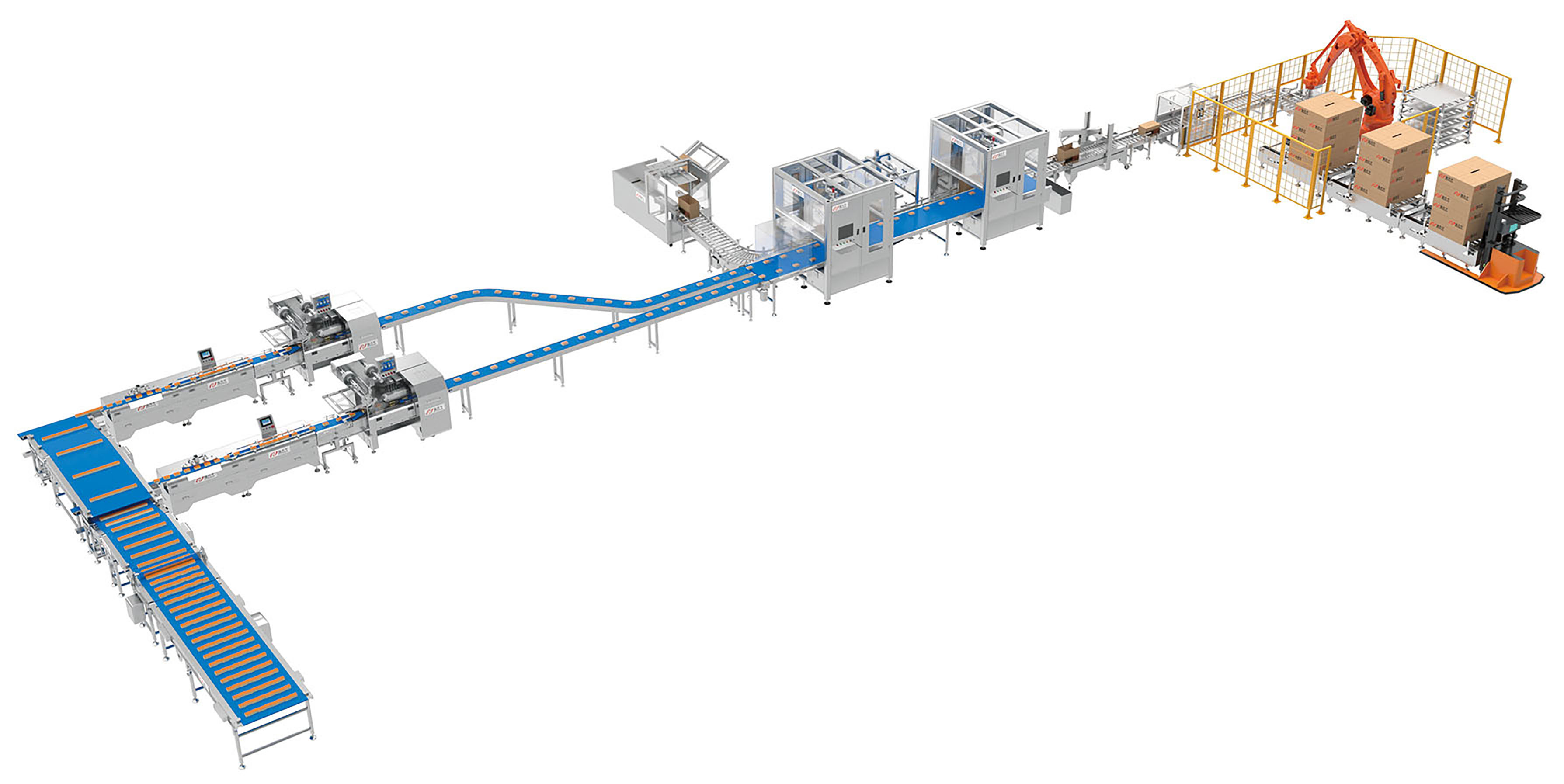
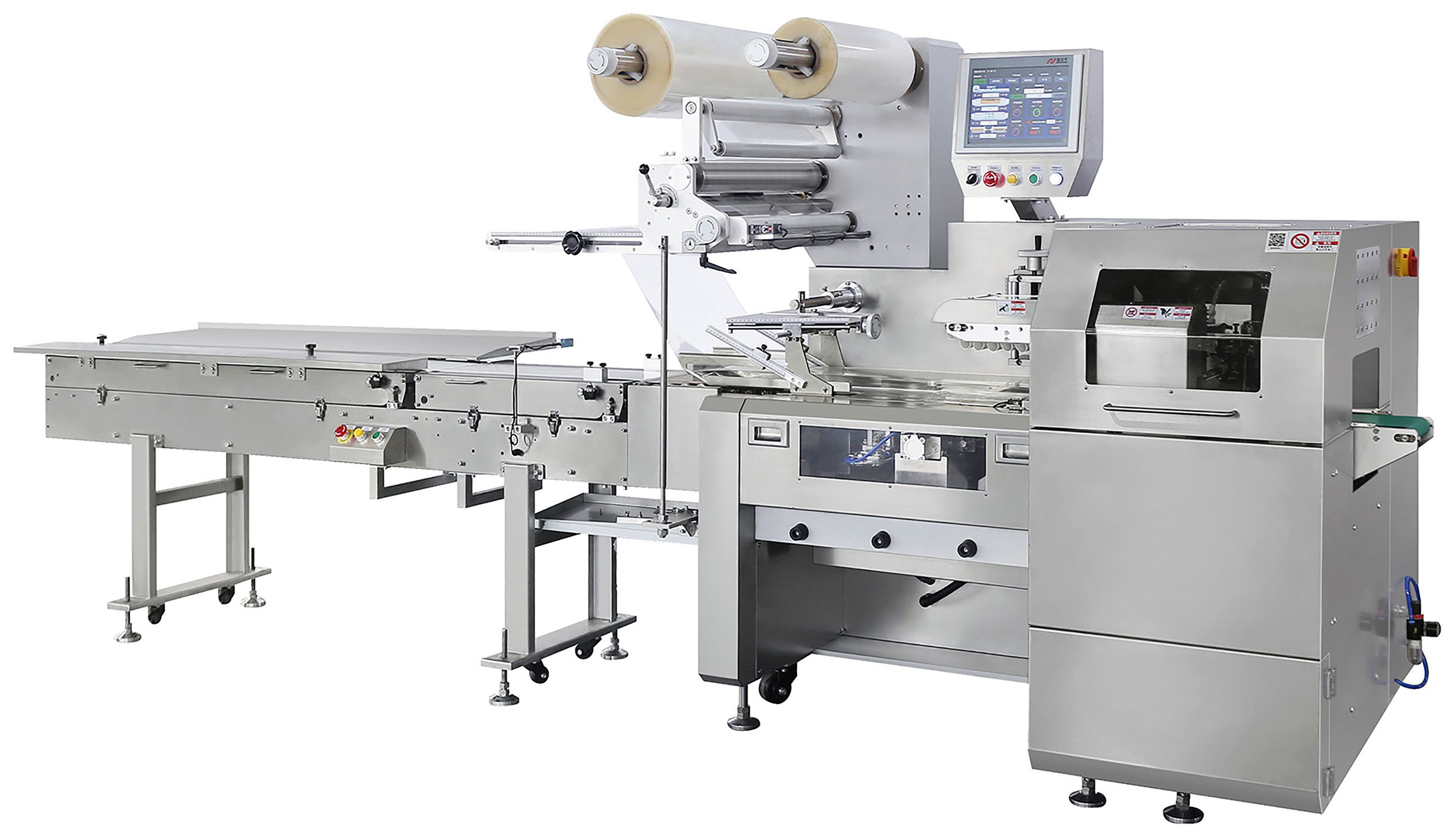
A tortilla line normally combines several functional sections, and each one can influence the total investment. The infeed conveyor positions the product, the interleaving unit adds wax paper, PE film, or release paper, and the stacking station counts and groups tortillas according to the selected recipe. The packaging machine may use horizontal flow wrapping or vertical bagging. Coding, metal detection, checkweighing, and automatic rejection improve traceability and quality control, but they should be clearly identified as standard equipment or paid options.
The product format must also be matched to the machine design. The equipment is intended for large, soft flatbreads such as Mexican flour tortillas, corn tortillas, Arabic pita, roti, and pancakes. Listed production rates range from 40 to 120 packs per minute, although the actual output depends on tortilla diameter, thickness, stack height, product condition, and packaging style. Individual flow packs, stacked bags, family-size bulk bags, and modified-atmosphere packs can require different film paths, sealing assemblies, feeding arrangements, or gas equipment. The quotation should therefore state the tested format rather than only giving a maximum speed.
Film, Tooling, and Changeover
Packaging material is another cost that should be checked early. The listed materials include OPP, PE, and biodegradable heat-sealable films, with film widths from 300 to 700 mm. Confirm the exact film structure, thickness, sealing temperature, roll dimensions, print registration requirements, and expected consumption. A material that is technically heat-sealable may still require different sealing jaws, forming shoulders, guides, or control settings.
The supplier states that size changes can take approximately 10–15 minutes without special tools, and that servo-controlled film feeding may reduce film waste by up to 10%. These figures should be tied to the proposed configuration and product conditions. Ask whether change parts, forming tools, recipes, and operator training are included, and request clarification about how waste savings are measured.
Installation and Integration Scope
Many unexpected expenses occur outside the main packaging machine. A complete project may require product-transfer conveyors, an upstream press, a cooling conveyor, downstream cartoning, robotic case packing, finished-pack removal, electrical installation, compressed air, guarding, drainage, cleaning space, and operator access. The listed options include a tray-sealing lid placer, a case-packing robot, a remote diagnostic system, and integration with upstream tortilla production equipment. Confirm the interface responsibilities, installation boundaries, commissioning requirements, and travel costs before signing the order.
The required automation level also affects the budget. In a basic arrangement, an operator may load tortillas while the machine performs film forming, counting, sealing, coding, and pack transfer. A more automated system can add conveyors, sensors, monitoring, rejection, cartoning, and palletizing. Define the target labor model, production volume, and downstream handling method so that the supplier prices the correct scope.
Commercial Terms, Logistics, and Support
Delivery and service records should be reconciled because different product information may show different schedules. One record lists a delivery value of 40, while the business model information refers to 20 working days. Ask which lead time applies, when it starts, and whether it covers manufacturing only or also testing, export preparation, installation, and commissioning.
Payment terms should include more than the deposit percentage. The listed arrangement is 30% in advance and 70% on or before shipment under a 100TT/LC method. Clarify bank fees, inspection conditions, shipment-release rules, currency charges, and costs related to changes after order confirmation. For freight, the supplier lists sea, air, rail, truck, multimodal, break-bulk, project-cargo, and express options. The buyer should confirm whether the price includes export packing, insurance, customs clearance, inland transport, unloading, and movement into the production area.
Warranty and after-sales support also have a financial scope. The product record mentions a one-year warranty and engineer support, but the contract should define covered parts, labor, response times, remote assistance, on-site visits, travel expenses, consumables, and recommended spare-parts packages. Certification should be checked in the same way. The company lists CE certification for flow packaging machines, automatic packaging systems, cartoning machines, and palletizing robots, including certificate number M.2024.206.C107511. Confirm that the certificate applies to every machine and optional module included in the purchased line.
Pre-Order Cost Review Table
| Cost area | Information currently listed | What the buyer should verify |
|---|---|---|
| Base line | Infeed, interleaving, stacking, wrapping or bagging, coding, metal detection, checkweighing, rejection, PLC, and HMI | Which modules are included in the base quotation and which are optional |
| Product range | Diameter 150–400 mm or customized, thickness 1–8 mm, and stack quantities of 2–30 pieces | Whether the tooling, recipes, and guides support the actual tortilla and pack count |
| Production capacity | Approximately 40–120 packs per minute | The guaranteed speed for the specified tortilla, film, stack count, and package format |
| Film system | OPP, PE, or biodegradable heat-sealable film; width 300–700 mm | Material compatibility, sealing parts, film consumption, roll limits, and material price |
| Integration options | Robotic case packing, remote diagnostics, tray-sealing lid placement, and upstream equipment integration | Module pricing, interface work, installation, testing, and commissioning responsibility |
| Delivery and service | Delivery values of 40 and 20 working days appear in different records; one-year warranty and engineer support are listed | Applicable lead time, warranty exclusions, response time, travel fees, and service coverage |
| Payment | 30% deposit and 70% on or before shipment under the stated 100TT/LC method | Bank charges, inspection requirements, shipment release, and payment-related fees |
| Freight and site handling | Sea, air, rail, truck, multimodal, break-bulk, project cargo, and express services are available | Crating, insurance, customs, inland delivery, unloading, and factory-floor placement |
Frequently Asked Questions
What hidden cost is most commonly overlooked?
Integration is often the largest overlooked area. A line may need upstream product transfer, cooling, downstream case packing, electrical work, compressed air, site modifications, or operator-access changes. These requirements should be included in a written responsibility matrix.
Does the quoted production speed apply to every tortilla product?
No. The stated 40–120 packs per minute range depends on tortilla size, thickness, stack count, product condition, film, and packaging format. Request a speed test using representative tortillas and the intended packaging material.
What should be included in the acceptance test?
The acceptance document should define output rate, seal quality, weight accuracy, coding legibility, metal-detection performance, rejection accuracy, changeover time, film waste, safety functions, and the number of successful production runs required.
Is supplier experience enough to approve the purchase?
A documented chocolate pie cake packaging project in Vietnam, Korea, and China suggests experience with multi-stage bakery automation, including high-speed wrapping and robotic palletizing. However, the buyer should still request tortilla-specific references, test results, scope documents, and a service plan.
REPORT