







-
 Agriculture
-
 Health-Care
-
 Environment
-
 Construction-Real-Estate
-
 Tools-Hardware
-
 Home-Garden
-
 Furniture
-
 Luggage-Bags-Cases
-
 Medical-devices-Supplies
-
 Gifts-Crafts
-
 Sports-Entertainment
-
 Food-Beverage
-
 Vehicles-Transportation
-
 Power-Transmission
-
 Material-Handling
-
 Renewable-Energy
-
 Safety
-
 Testing-Instrument-Equipment
-
 Construction-Building-Machinery
-
 Pet-Supplies
-
 Personal-Care-Household-Cleaning
-
 Vehicle-Accessories-Electronics-Tools
-
 School-Office-Supplies
-
 Packaging-Printing
-
 Mother-Kids-Toys
-
 Business-Services
-
 Commercial-Equipment-Machinery
-
 Apparel-Accessories
-
 Security
-
 Shoes-Accessories
-
 Vehicle-Parts-Accessories
-
 Jewelry-Eyewear-Watches-Accessories
-
 Lights-Lighting
-
 Fabric-Textile-Raw-Material
-
 Fabrication-Services
-
 Industrial-Machinery
-
 Consumer-Electronics
-
 Electrical-Equipment-Supplies
-
 Electronic-Components-Accessories-Telecommunications
-
 Home-Appliances
-
 Beauty
-
 Chemicals
-
 Rubber-Plastics
-
 Metals-Alloys


























































































































































































































































































































































































































































































































































































- Masonry Materials
- Curtain Walls & Accessories
- Earthwork Products
- Fireproofing Materials
- Heat Insulation Materials
- Plastic Building Materials
- Building Boards
- Soundproofing Materials
- Timber
- Waterproofing Materials
- Balustrades & Handrails
- Bathroom & Kitchen
- Flooring & Accessories
- Tiles & Accessories
- Door, Window & Accessories
- Fireplaces & Stoves
- Floor Heating Systems & Parts
- Stairs & Stair Parts
- Ceilings
- Elevators & Escalators
- Stone
- Countertops, Vanity Tops & Table Tops
- Mosaics
- Metal Building Materials
- Multifunctional Materials
- Ladders & Scaffoldings
- Mouldings
- Corner Guards
- Decorative Films
- Formwork
- Building & Industrial Glass
- Other Construction & Real Estate
- Wallpapers/Wall panels
- HVAC System & Parts
- Outdoor Facilities
- Prefabricated Buildings
- Festive & Party Supplies
- Bathroom Products
- Household Sundries
- Rain Gear
- Garden Supplies
- Household Cleaning Tools & Accessories
- Lighters & Smoking Accessories
- Home Storage & Organization
- Household Scales
- Smart Home Improvement
- Home Textiles
- Kitchenware
- Drinkware & Accessories
- Dinnerware, Coffee & Wine
- Home Decor
- Golf
- Fitness & Body Building
- Amusement Park Facilities
- Billiards, Board Game,Coin Operated Games
- Musical Instruments
- Outdoor Affordable Luxury Sports
- Camping & Hiking
- Fishing
- Sports Safety&Rehabilitation
- Ball Sports Equipments
- Water Sports
- Winter Sports
- Luxury Travel Equipments
- Sports Shoes, Bags & Accessories
- Cycling
- Other Sports & Entertainment Products
- Artificial Grass&Sports Flooring&Sports Court Equipment
- Scooters
- Food Ingredients
- Honey & Honey Products
- Snacks
- Nuts & Kernels
- Seafood
- Plant & Animal Oil
- Beverages
- Fruit & Vegetable Products
- Frog & Escargot
- Bean Products
- Egg Products
- Dairy Products
- Seasonings & Condiments
- Canned Food
- Instant Food
- Baked Goods
- Other Food & Beverage
- Meat & Poultry
- Confectionery
- Grain Products
- Feminie Care
- Hair Care & Styling
- Body Care
- Hands & Feet Care
- Hygiene Products
- Men's Grooming
- Laundry Cleaning Supplies
- Travel Size & Gift Sets
- Room Deodorizers
- Other Personal Care Products
- Pest Control Products
- Special Household Cleaning
- Floor Cleaning
- Kitchen & Bathroom Cleaning
- Oral Care
- Bath Supplies
- Yellow Pages
- Correction Supplies
- Office Binding Supplies
- Office Cutting Supplies
- Board Erasers
- Office Adhesives & Tapes
- Education Supplies
- Pencil Cases & Bags
- Notebooks & Writing Pads
- File Folder Accessories
- Calendars
- Writing Accessories
- Commercial Office Supplies
- Pencil Sharpeners
- Pens
- Letter Pad/Paper
- Paper Envelopes
- Desk Organizers
- Pencils
- Markers & Highlighters
- Filing Products
- Art Supplies
- Easels
- Badge Holder & Accessories
- Office Paper
- Printer Supplies
- Book Covers
- Other Office & School Supplies
- Stationery Set
- Boards
- Clipboards
- Stamps
- Drafting Supplies
- Stencils
- Electronic Dictionary
- Books
- Map
- Magazines
- Calculators
- Baby & Toddler Toys
- Educational Toys
- Classic Toys
- Dress Up & Pretend Play
- Toy Vehicle
- Stuffed Animals & Plush Toys
- Outdoor Toys & Structures
- Balloons & Accessories
- Baby Food
- Children's Clothing
- Baby Supplies & Products
- Maternity Clothes
- Kids Shoes
- Baby Care
- Novelty & Gag Toys
- Dolls & Accessories
- Puzzle & Games
- Blocks & Model Building Toys
- Toddler Clothing
- Baby Clothing
- Kids' Luggage & Bags
- Arts, Crafts & DIY Toys
- Action & Toy Figures
- Baby Appliances
- Hobbies & Models
- Remote Control Toys
- Promotional Toys
- Pregnancy & Maternity
- Hygiene Products
- Kid's Textile&Bedding
- Novelty & Special Use
- Toy Weapons
- Baby Gifts
- Baby Storage & Organization
- Auto Drive Systems
- ATV/UTV Parts & Accessories
- Marine Parts & Accessories
- Other Auto Parts
- Trailer Parts & Accessories
- Auto Transmission Systems
- Train Parts & Accessories
- Universal Parts
- Railway Parts & Accessories
- Auto Brake Systems
- Aviation Parts & Accessories
- Truck Parts & Accessories
- Auto Suspension Systems
- Auto Lighting Systems
- New Energy Vehicle Parts & Accessories
- Auto Steering Systems
- Wheels, Tires & Accessories
- Bus Parts & Accessories
- Auto Performance Parts
- Cooling System
- Go-Kart & Kart Racer Parts & Accessories
- Air Conditioning Systems
- Heavy Duty Vehicle Parts & Accessories
- Auto Electrical Systems
- Auto Body Systems
- Auto Engine Systems
- Container Parts & Accessories
- Motorcycle Parts & Accessories
- Refrigeration & Heat Exchange Equipment
- Machine Tool Equipment
- Food & Beverage Machinery
- Agricultural Machinery & Equipment
- Apparel & Textile Machinery
- Chemical Machinery
- Packaging Machines
- Paper Production Machinery
- Plastic & Rubber Processing Machinery
- Industrial Robots
- Electronic Products Machinery
- Metal & Metallurgy Machinery
- Woodworking Machinery
- Home Product Manufacturing Machinery
- Machinery Accessories
- Environmental Machinery
- Machinery Service
- Electrical Equipment Manufacturing Machinery
- Industrial Compressors & Parts
- Tobacco & Cigarette Machinery
- Production Line
- Used Industrial Machinery
- Electronics Production Machinery
- Other Machinery & Industrial Equipment
- Camera, Photo & Accessories
- Portable Audio, Video & Accessories
- Television, Home Audio, Video & Accessories
- Video Games & Accessories
- Mobile Phone & Accessories
- Electronic Publications
- Earphone & Headphone & Accessories
- Speakers & Accessories
- Smart Electronics
- TV Receivers & Accessories
- Mobile Phone & Computer Repair Parts
- Chargers, Batteries & Power Supplies
- Used Electronics
- VR, AR, MR Hardware & Software
- Projectors & Presentation Equipments
- Other Consumer Electronics
- Cables & Commonly Used Accessories
- Computer Hardware & Software
- Displays, Signage and Optoelectronics
- Discrete Semiconductors
- Wireless & IoT Module and Products
- Telecommunications
- Connectors, Terminals & Accessories
- Development Boards, Electronic Modules and Kits
- Circuit Protection
- Sensors
- Isolators
- Audio Components and Products
- Integrated Circuits
- Power Supplies
- Relays
- RF, Microwave and RFID
- Electronic Accessories & Supplies
- Passive Components
- PCB & PCBA
- Air Quality Appliances
- Home Appliance Parts
- Heating & Cooling Appliances
- Small Kitchen Appliances
- Laundry Appliances
- Water Heaters
- Water Treatment Appliances
- Refrigerators & Freezers
- Personal Care & Beauty Appliances
- Major Kitchen Appliances
- Cleaning Appliances
- Second-hand Appliances
- Smart Home Appliances
- Other Home Appliances
- Energy Chemicals
- Inorganic Chemicals
- Basic Organic Chemicals
- Agrochemicals
- Admixture & Additives
- Catalysts & Chemical Auxiliary Agents
- Pigments & Dyestuff
- Coating & Paint
- Daily Chemicals
- Polymer
- Organic Intermediate
- Adhesives & Sealants
- Chemical Waste
- Biological Chemical Products
- Surface Treatment Chemicals
- Painting & Coating
- Chemical Reagents
- Flavor & Fragrance
- Non-Explosive Demolition Agents
- Other Chemicals
- Custom Chemical Services

How 3D Printing Is Transforming Designer Sunglasses Manufacturing
3D printing technology is reshaping designer sunglasses manufacturing by improving the way brands develop, test, and customize new eyewear. Through digital 3D modeling, rapid prototyping, structural refinement, and customized mold development, designers can assess frame concepts and functional details before moving into larger-scale production.
How 3D Technology Supports Eyewear Development
The documented manufacturing process uses advanced 3D modeling design systems and rapid prototyping equipment to connect early creative concepts with physical product samples. Instead of relying only on sketches or assumptions, designers can review frame proportions, lens placement, clip-on mechanisms, and overall wearing comfort during the development stage.
- 3D modeling converts initial ideas into more refined and production-ready eyewear structures.
- Rapid prototyping enables physical samples to be evaluated before final production planning.
- Prototype testing helps assess comfort, UV protection, impact resistance, and durability.
- OEM and ODM projects can include exclusive molds, material improvements, color matching, and custom branding.
From Digital Concept to Functional Prototype
For designer sunglasses, one of the most important benefits of 3D-supported development is earlier design verification. A digital model can be adjusted to improve the frame geometry, balance lens positioning, and coordinate connected components before a sample is produced. Once a prototype is available, product teams can examine the physical fit and identify changes that may not be obvious in a digital drawing.
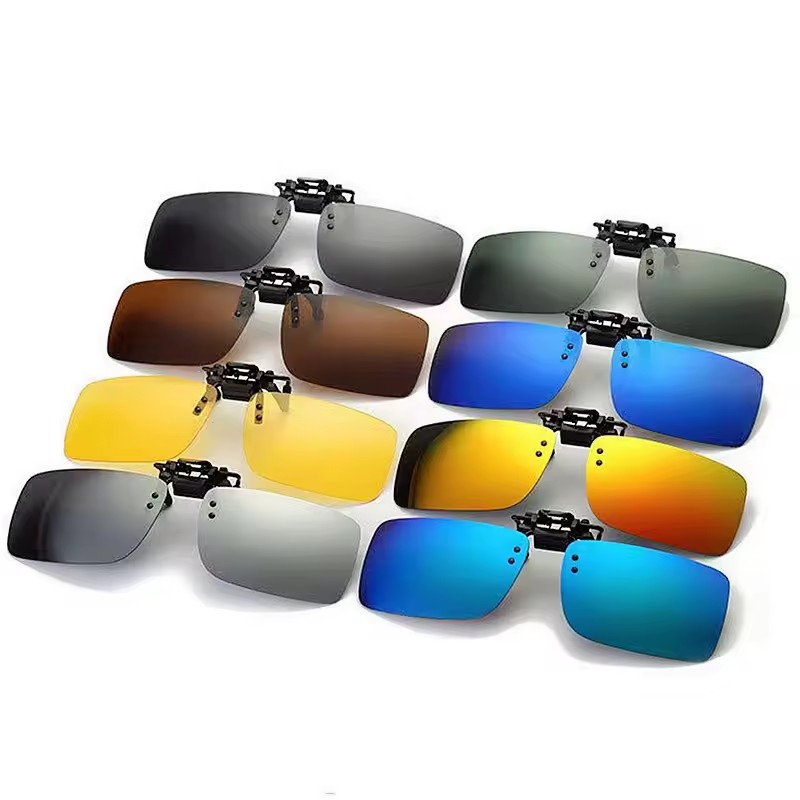
This approach is especially relevant to custom logo wholesale unisex driving glasses with polarized clip-on lenses and UV400 positioning. The frame and detachable lens structure must work together smoothly, making accurate modeling and prototype review useful for checking alignment, usability, and visual consistency.
Testing, Customization, and Production Readiness
Digital design and sample development form part of a broader product evaluation process. The company reports testing related to lens UV protection, impact resistance, frame comfort, and wear durability. It also follows optical standards that include CE, FDA, and AS/NZS. These checks help determine whether a proposed frame and lens configuration is ready for further development.
3D technology also gives OEM and ODM buyers more flexibility during customization. Brands can request exclusive mold development, upgraded materials, specific color matching, and personalized logo or design details. These options allow visual and structural decisions to be refined before the manufacturing plan is finalized. However, the available information does not specify exact time savings, cost reductions, or the materials used in the rapid prototyping process.
After the design has been validated, standardized workshops and established assembly lines support volume manufacturing. Yiwu Green Shine Arts & Crafts Co., Ltd. reports annual production of more than 3 million pairs of sunglasses and uses production monitoring to promote consistent quality. The documented workflow therefore links 3D-assisted development with bulk OEM and ODM production, although it does not claim that every sunglasses component is produced through 3D printing.
Development Process Comparison
| Process Area | Contribution to Designer Sunglasses Manufacturing |
|---|---|
| 3D modeling | Refines concepts and improves frame structure before sampling |
| Rapid prototyping | Creates physical samples for fit, appearance, and function reviews |
| Customized mold development | Supports exclusive frames for OEM and ODM programs |
| Optical and durability testing | Reviews UV protection, impact resistance, comfort, and wear performance |
| Standardized assembly | Enables large-volume orders and reported output above 3 million pairs annually |
Frequently Asked Questions
Which stage of designer sunglasses production benefits most from 3D technology?
The strongest impact appears during early development, including concept modeling, structural improvement, sample production, and mold customization. These steps take place before standardized assembly and high-volume manufacturing.
Can 3D development be used for custom logo and clip-on sunglasses?
Yes. It can assist with frame design, clip-on integration, lens positioning, color coordination, and personalized brand elements. The listed product is a custom logo unisex driving glasses design with polarized clip-on lenses and UV400 positioning.
Are the complete sunglasses made entirely with 3D printing?
No. The available information confirms the use of 3D modeling systems and rapid prototyping equipment, together with mold customization and conventional standardized production. It does not confirm that finished sunglasses are manufactured exclusively by 3D printing.
Conclusion and Purchasing Considerations
3D printing-related technology is changing designer sunglasses production by bringing design validation and structural problem-solving closer to the beginning of the product cycle. At Yiwu Green Shine Arts & Crafts Co., Ltd., the documented process combines 3D modeling, rapid prototyping, customized molds, product testing, and standardized assembly.
When preparing an OEM or ODM sunglasses project, buyers should clarify the frame configuration, clip-on requirements, preferred materials, color specifications, testing expectations, logo placement, and other branding details before sample development begins. The company presents its business approach as “Ecosystem, Global Reach, Supply Chain” and provides OEM and ODM cooperation. For technical consultation or project support, contact leoxiao@cngreenshine.com.
About Us
Yiwu Green Shine Arts & Crafts Co., Ltd. was founded in 2016 in Yiwu, Zhejiang Province. The company focuses on fashion eyewear, including sunglasses, optical frames, acetate sunglasses, children’s sunglasses, and reading glasses. Its R&D and manufacturing services are supported by 3D modeling systems, rapid prototyping equipment, structural optimization, sample development, and customized mold solutions. The company reports an annual production capacity of more than 3 million pairs of sunglasses.

REPORT