







-
 Agriculture
-
 Health-Care
-
 Environment
-
 Construction-Real-Estate
-
 Tools-Hardware
-
 Home-Garden
-
 Furniture
-
 Luggage-Bags-Cases
-
 Medical-devices-Supplies
-
 Gifts-Crafts
-
 Sports-Entertainment
-
 Food-Beverage
-
 Vehicles-Transportation
-
 Power-Transmission
-
 Material-Handling
-
 Renewable-Energy
-
 Safety
-
 Testing-Instrument-Equipment
-
 Construction-Building-Machinery
-
 Pet-Supplies
-
 Personal-Care-Household-Cleaning
-
 Vehicle-Accessories-Electronics-Tools
-
 School-Office-Supplies
-
 Packaging-Printing
-
 Mother-Kids-Toys
-
 Business-Services
-
 Commercial-Equipment-Machinery
-
 Apparel-Accessories
-
 Security
-
 Shoes-Accessories
-
 Vehicle-Parts-Accessories
-
 Jewelry-Eyewear-Watches-Accessories
-
 Lights-Lighting
-
 Fabric-Textile-Raw-Material
-
 Fabrication-Services
-
 Industrial-Machinery
-
 Consumer-Electronics
-
 Electrical-Equipment-Supplies
-
 Electronic-Components-Accessories-Telecommunications
-
 Home-Appliances
-
 Beauty
-
 Chemicals
-
 Rubber-Plastics
-
 Metals-Alloys


























































































































































































































































































































































































































































































































































































- Masonry Materials
- Curtain Walls & Accessories
- Earthwork Products
- Fireproofing Materials
- Heat Insulation Materials
- Plastic Building Materials
- Building Boards
- Soundproofing Materials
- Timber
- Waterproofing Materials
- Balustrades & Handrails
- Bathroom & Kitchen
- Flooring & Accessories
- Tiles & Accessories
- Door, Window & Accessories
- Fireplaces & Stoves
- Floor Heating Systems & Parts
- Stairs & Stair Parts
- Ceilings
- Elevators & Escalators
- Stone
- Countertops, Vanity Tops & Table Tops
- Mosaics
- Metal Building Materials
- Multifunctional Materials
- Ladders & Scaffoldings
- Mouldings
- Corner Guards
- Decorative Films
- Formwork
- Building & Industrial Glass
- Other Construction & Real Estate
- Wallpapers/Wall panels
- HVAC System & Parts
- Outdoor Facilities
- Prefabricated Buildings
- Festive & Party Supplies
- Bathroom Products
- Household Sundries
- Rain Gear
- Garden Supplies
- Household Cleaning Tools & Accessories
- Lighters & Smoking Accessories
- Home Storage & Organization
- Household Scales
- Smart Home Improvement
- Home Textiles
- Kitchenware
- Drinkware & Accessories
- Dinnerware, Coffee & Wine
- Home Decor
- Golf
- Fitness & Body Building
- Amusement Park Facilities
- Billiards, Board Game,Coin Operated Games
- Musical Instruments
- Outdoor Affordable Luxury Sports
- Camping & Hiking
- Fishing
- Sports Safety&Rehabilitation
- Ball Sports Equipments
- Water Sports
- Winter Sports
- Luxury Travel Equipments
- Sports Shoes, Bags & Accessories
- Cycling
- Other Sports & Entertainment Products
- Artificial Grass&Sports Flooring&Sports Court Equipment
- Scooters
- Food Ingredients
- Honey & Honey Products
- Snacks
- Nuts & Kernels
- Seafood
- Plant & Animal Oil
- Beverages
- Fruit & Vegetable Products
- Frog & Escargot
- Bean Products
- Egg Products
- Dairy Products
- Seasonings & Condiments
- Canned Food
- Instant Food
- Baked Goods
- Other Food & Beverage
- Meat & Poultry
- Confectionery
- Grain Products
- Feminie Care
- Hair Care & Styling
- Body Care
- Hands & Feet Care
- Hygiene Products
- Men's Grooming
- Laundry Cleaning Supplies
- Travel Size & Gift Sets
- Room Deodorizers
- Other Personal Care Products
- Pest Control Products
- Special Household Cleaning
- Floor Cleaning
- Kitchen & Bathroom Cleaning
- Oral Care
- Bath Supplies
- Yellow Pages
- Correction Supplies
- Office Binding Supplies
- Office Cutting Supplies
- Board Erasers
- Office Adhesives & Tapes
- Education Supplies
- Pencil Cases & Bags
- Notebooks & Writing Pads
- File Folder Accessories
- Calendars
- Writing Accessories
- Commercial Office Supplies
- Pencil Sharpeners
- Pens
- Letter Pad/Paper
- Paper Envelopes
- Desk Organizers
- Pencils
- Markers & Highlighters
- Filing Products
- Art Supplies
- Easels
- Badge Holder & Accessories
- Office Paper
- Printer Supplies
- Book Covers
- Other Office & School Supplies
- Stationery Set
- Boards
- Clipboards
- Stamps
- Drafting Supplies
- Stencils
- Electronic Dictionary
- Books
- Map
- Magazines
- Calculators
- Baby & Toddler Toys
- Educational Toys
- Classic Toys
- Dress Up & Pretend Play
- Toy Vehicle
- Stuffed Animals & Plush Toys
- Outdoor Toys & Structures
- Balloons & Accessories
- Baby Food
- Children's Clothing
- Baby Supplies & Products
- Maternity Clothes
- Kids Shoes
- Baby Care
- Novelty & Gag Toys
- Dolls & Accessories
- Puzzle & Games
- Blocks & Model Building Toys
- Toddler Clothing
- Baby Clothing
- Kids' Luggage & Bags
- Arts, Crafts & DIY Toys
- Action & Toy Figures
- Baby Appliances
- Hobbies & Models
- Remote Control Toys
- Promotional Toys
- Pregnancy & Maternity
- Hygiene Products
- Kid's Textile&Bedding
- Novelty & Special Use
- Toy Weapons
- Baby Gifts
- Baby Storage & Organization
- Auto Drive Systems
- ATV/UTV Parts & Accessories
- Marine Parts & Accessories
- Other Auto Parts
- Trailer Parts & Accessories
- Auto Transmission Systems
- Train Parts & Accessories
- Universal Parts
- Railway Parts & Accessories
- Auto Brake Systems
- Aviation Parts & Accessories
- Truck Parts & Accessories
- Auto Suspension Systems
- Auto Lighting Systems
- New Energy Vehicle Parts & Accessories
- Auto Steering Systems
- Wheels, Tires & Accessories
- Bus Parts & Accessories
- Auto Performance Parts
- Cooling System
- Go-Kart & Kart Racer Parts & Accessories
- Air Conditioning Systems
- Heavy Duty Vehicle Parts & Accessories
- Auto Electrical Systems
- Auto Body Systems
- Auto Engine Systems
- Container Parts & Accessories
- Motorcycle Parts & Accessories
- Refrigeration & Heat Exchange Equipment
- Machine Tool Equipment
- Food & Beverage Machinery
- Agricultural Machinery & Equipment
- Apparel & Textile Machinery
- Chemical Machinery
- Packaging Machines
- Paper Production Machinery
- Plastic & Rubber Processing Machinery
- Industrial Robots
- Electronic Products Machinery
- Metal & Metallurgy Machinery
- Woodworking Machinery
- Home Product Manufacturing Machinery
- Machinery Accessories
- Environmental Machinery
- Machinery Service
- Electrical Equipment Manufacturing Machinery
- Industrial Compressors & Parts
- Tobacco & Cigarette Machinery
- Production Line
- Used Industrial Machinery
- Electronics Production Machinery
- Other Machinery & Industrial Equipment
- Camera, Photo & Accessories
- Portable Audio, Video & Accessories
- Television, Home Audio, Video & Accessories
- Video Games & Accessories
- Mobile Phone & Accessories
- Electronic Publications
- Earphone & Headphone & Accessories
- Speakers & Accessories
- Smart Electronics
- TV Receivers & Accessories
- Mobile Phone & Computer Repair Parts
- Chargers, Batteries & Power Supplies
- Used Electronics
- VR, AR, MR Hardware & Software
- Projectors & Presentation Equipments
- Other Consumer Electronics
- Cables & Commonly Used Accessories
- Computer Hardware & Software
- Displays, Signage and Optoelectronics
- Discrete Semiconductors
- Wireless & IoT Module and Products
- Telecommunications
- Connectors, Terminals & Accessories
- Development Boards, Electronic Modules and Kits
- Circuit Protection
- Sensors
- Isolators
- Audio Components and Products
- Integrated Circuits
- Power Supplies
- Relays
- RF, Microwave and RFID
- Electronic Accessories & Supplies
- Passive Components
- PCB & PCBA
- Air Quality Appliances
- Home Appliance Parts
- Heating & Cooling Appliances
- Small Kitchen Appliances
- Laundry Appliances
- Water Heaters
- Water Treatment Appliances
- Refrigerators & Freezers
- Personal Care & Beauty Appliances
- Major Kitchen Appliances
- Cleaning Appliances
- Second-hand Appliances
- Smart Home Appliances
- Other Home Appliances
- Energy Chemicals
- Inorganic Chemicals
- Basic Organic Chemicals
- Agrochemicals
- Admixture & Additives
- Catalysts & Chemical Auxiliary Agents
- Pigments & Dyestuff
- Coating & Paint
- Daily Chemicals
- Polymer
- Organic Intermediate
- Adhesives & Sealants
- Chemical Waste
- Biological Chemical Products
- Surface Treatment Chemicals
- Painting & Coating
- Chemical Reagents
- Flavor & Fragrance
- Non-Explosive Demolition Agents
- Other Chemicals
- Custom Chemical Services

How a 33kV Dry-Type Transformer Supports Lower Lifecycle Costs and Emissions
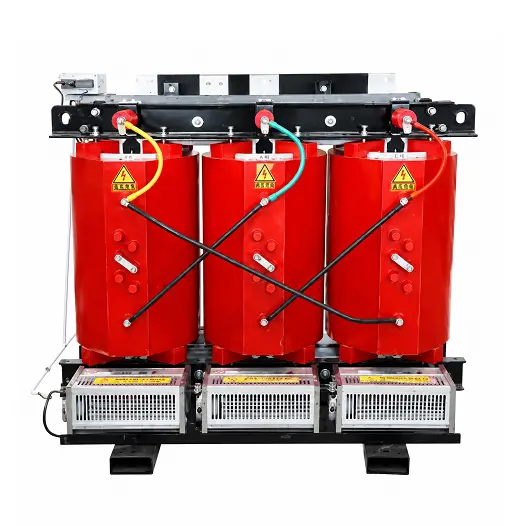
Managing the lifecycle impact of a transformer requires more than comparing the initial purchase price. A 33kV dry-type transformer can contribute to controlled emissions and operating costs when its installation method, environmental conditions, testing program, and long-term service plan are properly matched to the project. Dry-type construction supports indoor applications, while a weatherproof enclosure can extend use to suitable outdoor sites.
Lifecycle Planning for a 33kV Dry-Type Transformer
The most reliable results begin with confirming the application before technical approval. Project teams should review the installation location, ambient temperature, altitude, humidity, cooling requirements, and enclosure arrangement. These factors influence transformer selection, performance evaluation, derating requirements, and the potential for additional site work.
- Use the standard indoor configuration where the building and electrical room meet the project requirements.
- Select a weatherproof enclosure when the transformer must be installed outdoors.
- Confirm operating conditions before drawings are finalized and approved.
- Use documented testing and technical support to reduce commissioning delays, rework, and avoidable maintenance costs.
Configuration and Operating Conditions
The listed product range includes 33kV, 35kV, and 38.5kV dry-type distribution transformers. Indoor installation is identified as the standard arrangement. Outdoor deployment is possible when the transformer is supplied with an appropriate weatherproof enclosure, allowing the equipment configuration to be adapted to the site rather than forcing one installation method across all projects.
The stated ambient temperature range is -5 degrees C to +40 degrees C. The standard altitude limit is 1000 m, and derating is required at higher elevations. Relative humidity can reach 95 percent under non-condensing conditions. These values should be checked against the actual site data because environmental exposure can affect the approved design, ratings, enclosure selection, and operating assessment.
Testing, Commissioning, and Service Support
Lifecycle cost management also depends on preventing problems before the transformer reaches the project site. The stated quality process includes factory acceptance testing, routine testing, type testing, and a complete pre-shipment inspection. Product quality inspection information references IEEE and IEC compliance. These checks can help identify documentation, manufacturing, and performance issues earlier, reducing the risk of site-based corrections and commissioning delays.
After delivery, the listed support model includes a global technical response within 72 hours, on-site commissioning, operator training, spare-parts supply, and remote diagnostic services. When used as part of a planned maintenance strategy, these services can support faster fault assessment and reduce unnecessary travel or extended equipment downtime. Actual cost and emissions outcomes still depend on project conditions, operating profile, logistics, and maintenance practices.
Potential Application Areas
A 33kV dry-type transformer may be considered for new energy power plants, urban grid construction, industrial distribution systems, and data or computing centers when the electrical and environmental specifications are suitable. New energy facilities may require equipment for collection, voltage boosting, and grid connection. Data and computing centers typically place emphasis on dependable main power, redundancy, monitoring, and continuity of service.
These applications indicate where the equipment may fit technically, but they do not establish a guaranteed emissions reduction or a fixed financial saving. A project-specific evaluation should compare load patterns, transformer losses, installation requirements, maintenance plans, expected service life, and local electricity and labor costs.
Credentials and Project Experience
Listed certification records include UDEM certificate M.2052.206.C132155 covering substations, transformers, and switchgear for the EU market. The company also lists CNAS certificate No. CNAS L16271 for an oil-immersed power transformer model. This CNAS record provides technical support information and should not be treated as a replacement for mandatory certification or approval in the destination market.
Reference projects include a 110kV indoor GIS installation in Suriname, where a customized GIS solution was developed to meet local grid standards and commissioning assistance was provided. A 25MVA grid renovation project in Madagascar involved substation renewal and capacity expansion. In the Dominican Republic, a voltage regulator project was used to address distribution-grid voltage stabilization requirements.
Lifecycle Support Summary
| Lifecycle consideration | Product or service provision |
|---|---|
| Installation options | Indoor installation is standard; outdoor use is available with a weatherproof enclosure. |
| Site conditions | Ambient temperature: -5 degrees C to +40 degrees C; altitude up to 1000 m before derating; relative humidity up to 95 percent under non-condensing conditions. |
| Factory verification | FAT, routine testing, type testing, and full inspection before shipment are specified. |
| Standards and certificates | Product inspection information references IEEE and IEC compliance, with UDEM and CNAS records listed by the company. |
| Post-delivery support | 72-hour global technical response, remote diagnostics, commissioning, training, and spare-parts supply are available. |
Frequently Asked Questions
Is outdoor installation possible for this transformer?
Yes. Indoor installation is the standard arrangement, while outdoor installation requires a suitable weatherproof enclosure.
What information should be confirmed before ordering?
Confirm the ambient temperature, installation altitude, relative humidity, indoor or outdoor location, and other site conditions. Derating is specified for elevations above 1000 m.
How can project teams reduce commissioning and maintenance risks?
They can confirm technical drawings early, complete the specified FAT, routine tests, type tests, and pre-shipment inspection, then use commissioning, training, remote diagnostics, spare-parts, and technical response services after delivery.
Does the available information guarantee a specific emissions reduction?
No. The product information does not provide a quantified emissions reduction or total cost saving. The result must be calculated using the project's load profile, losses, installation conditions, service requirements, and operating costs.
Conclusion and Selection Guidance
A 33kV dry-type transformer can support responsible lifecycle planning through flexible installation, defined environmental limits, structured factory verification, and continuing technical assistance. The listed supply model includes manufacturer supply, OEM and ODM services, and turnkey project support. The stated delivery period is 45-60 working days after the deposit is received and technical drawings are confirmed.
Before making a final selection, project owners should validate the site conditions, required rating, enclosure arrangement, applicable local approvals, testing scope, delivery schedule, and service plan. For detailed technical solutions or support, please contact support@vziman.com.
About the Manufacturer
Zhejiang Vziman Electric Power Technology Co., Ltd. is a high-tech enterprise engaged in the research, development, manufacturing, and servicing of electrical equipment for grid construction, new energy projects, and industrial distribution. Founded on February 11, 2009, the company reports an R&D team of more than 30 senior electrical engineers and industrial designers. Its listed product range includes power transformers, earthing transformers, distribution transformers, prefabricated substations, feeder switchboards, and medium- and high-voltage switchgear. The company reports serving customers in several industries and lists UDEM and CNAS certification records in its knowledge base.
REPORT