







-
 Agriculture
-
 Health-Care
-
 Environment
-
 Construction-Real-Estate
-
 Tools-Hardware
-
 Home-Garden
-
 Furniture
-
 Luggage-Bags-Cases
-
 Medical-devices-Supplies
-
 Gifts-Crafts
-
 Sports-Entertainment
-
 Food-Beverage
-
 Vehicles-Transportation
-
 Power-Transmission
-
 Material-Handling
-
 Renewable-Energy
-
 Safety
-
 Testing-Instrument-Equipment
-
 Construction-Building-Machinery
-
 Pet-Supplies
-
 Personal-Care-Household-Cleaning
-
 Vehicle-Accessories-Electronics-Tools
-
 School-Office-Supplies
-
 Packaging-Printing
-
 Mother-Kids-Toys
-
 Business-Services
-
 Commercial-Equipment-Machinery
-
 Apparel-Accessories
-
 Security
-
 Shoes-Accessories
-
 Vehicle-Parts-Accessories
-
 Jewelry-Eyewear-Watches-Accessories
-
 Lights-Lighting
-
 Fabric-Textile-Raw-Material
-
 Fabrication-Services
-
 Industrial-Machinery
-
 Consumer-Electronics
-
 Electrical-Equipment-Supplies
-
 Electronic-Components-Accessories-Telecommunications
-
 Home-Appliances
-
 Beauty
-
 Chemicals
-
 Rubber-Plastics
-
 Metals-Alloys


























































































































































































































































































































































































































































































































































































- Masonry Materials
- Curtain Walls & Accessories
- Earthwork Products
- Fireproofing Materials
- Heat Insulation Materials
- Plastic Building Materials
- Building Boards
- Soundproofing Materials
- Timber
- Waterproofing Materials
- Balustrades & Handrails
- Bathroom & Kitchen
- Flooring & Accessories
- Tiles & Accessories
- Door, Window & Accessories
- Fireplaces & Stoves
- Floor Heating Systems & Parts
- Stairs & Stair Parts
- Ceilings
- Elevators & Escalators
- Stone
- Countertops, Vanity Tops & Table Tops
- Mosaics
- Metal Building Materials
- Multifunctional Materials
- Ladders & Scaffoldings
- Mouldings
- Corner Guards
- Decorative Films
- Formwork
- Building & Industrial Glass
- Other Construction & Real Estate
- Wallpapers/Wall panels
- HVAC System & Parts
- Outdoor Facilities
- Prefabricated Buildings
- Festive & Party Supplies
- Bathroom Products
- Household Sundries
- Rain Gear
- Garden Supplies
- Household Cleaning Tools & Accessories
- Lighters & Smoking Accessories
- Home Storage & Organization
- Household Scales
- Smart Home Improvement
- Home Textiles
- Kitchenware
- Drinkware & Accessories
- Dinnerware, Coffee & Wine
- Home Decor
- Golf
- Fitness & Body Building
- Amusement Park Facilities
- Billiards, Board Game,Coin Operated Games
- Musical Instruments
- Outdoor Affordable Luxury Sports
- Camping & Hiking
- Fishing
- Sports Safety&Rehabilitation
- Ball Sports Equipments
- Water Sports
- Winter Sports
- Luxury Travel Equipments
- Sports Shoes, Bags & Accessories
- Cycling
- Other Sports & Entertainment Products
- Artificial Grass&Sports Flooring&Sports Court Equipment
- Scooters
- Food Ingredients
- Honey & Honey Products
- Snacks
- Nuts & Kernels
- Seafood
- Plant & Animal Oil
- Beverages
- Fruit & Vegetable Products
- Frog & Escargot
- Bean Products
- Egg Products
- Dairy Products
- Seasonings & Condiments
- Canned Food
- Instant Food
- Baked Goods
- Other Food & Beverage
- Meat & Poultry
- Confectionery
- Grain Products
- Feminie Care
- Hair Care & Styling
- Body Care
- Hands & Feet Care
- Hygiene Products
- Men's Grooming
- Laundry Cleaning Supplies
- Travel Size & Gift Sets
- Room Deodorizers
- Other Personal Care Products
- Pest Control Products
- Special Household Cleaning
- Floor Cleaning
- Kitchen & Bathroom Cleaning
- Oral Care
- Bath Supplies
- Yellow Pages
- Correction Supplies
- Office Binding Supplies
- Office Cutting Supplies
- Board Erasers
- Office Adhesives & Tapes
- Education Supplies
- Pencil Cases & Bags
- Notebooks & Writing Pads
- File Folder Accessories
- Calendars
- Writing Accessories
- Commercial Office Supplies
- Pencil Sharpeners
- Pens
- Letter Pad/Paper
- Paper Envelopes
- Desk Organizers
- Pencils
- Markers & Highlighters
- Filing Products
- Art Supplies
- Easels
- Badge Holder & Accessories
- Office Paper
- Printer Supplies
- Book Covers
- Other Office & School Supplies
- Stationery Set
- Boards
- Clipboards
- Stamps
- Drafting Supplies
- Stencils
- Electronic Dictionary
- Books
- Map
- Magazines
- Calculators
- Baby & Toddler Toys
- Educational Toys
- Classic Toys
- Dress Up & Pretend Play
- Toy Vehicle
- Stuffed Animals & Plush Toys
- Outdoor Toys & Structures
- Balloons & Accessories
- Baby Food
- Children's Clothing
- Baby Supplies & Products
- Maternity Clothes
- Kids Shoes
- Baby Care
- Novelty & Gag Toys
- Dolls & Accessories
- Puzzle & Games
- Blocks & Model Building Toys
- Toddler Clothing
- Baby Clothing
- Kids' Luggage & Bags
- Arts, Crafts & DIY Toys
- Action & Toy Figures
- Baby Appliances
- Hobbies & Models
- Remote Control Toys
- Promotional Toys
- Pregnancy & Maternity
- Hygiene Products
- Kid's Textile&Bedding
- Novelty & Special Use
- Toy Weapons
- Baby Gifts
- Baby Storage & Organization
- Auto Drive Systems
- ATV/UTV Parts & Accessories
- Marine Parts & Accessories
- Other Auto Parts
- Trailer Parts & Accessories
- Auto Transmission Systems
- Train Parts & Accessories
- Universal Parts
- Railway Parts & Accessories
- Auto Brake Systems
- Aviation Parts & Accessories
- Truck Parts & Accessories
- Auto Suspension Systems
- Auto Lighting Systems
- New Energy Vehicle Parts & Accessories
- Auto Steering Systems
- Wheels, Tires & Accessories
- Bus Parts & Accessories
- Auto Performance Parts
- Cooling System
- Go-Kart & Kart Racer Parts & Accessories
- Air Conditioning Systems
- Heavy Duty Vehicle Parts & Accessories
- Auto Electrical Systems
- Auto Body Systems
- Auto Engine Systems
- Container Parts & Accessories
- Motorcycle Parts & Accessories
- Refrigeration & Heat Exchange Equipment
- Machine Tool Equipment
- Food & Beverage Machinery
- Agricultural Machinery & Equipment
- Apparel & Textile Machinery
- Chemical Machinery
- Packaging Machines
- Paper Production Machinery
- Plastic & Rubber Processing Machinery
- Industrial Robots
- Electronic Products Machinery
- Metal & Metallurgy Machinery
- Woodworking Machinery
- Home Product Manufacturing Machinery
- Machinery Accessories
- Environmental Machinery
- Machinery Service
- Electrical Equipment Manufacturing Machinery
- Industrial Compressors & Parts
- Tobacco & Cigarette Machinery
- Production Line
- Used Industrial Machinery
- Electronics Production Machinery
- Other Machinery & Industrial Equipment
- Camera, Photo & Accessories
- Portable Audio, Video & Accessories
- Television, Home Audio, Video & Accessories
- Video Games & Accessories
- Mobile Phone & Accessories
- Electronic Publications
- Earphone & Headphone & Accessories
- Speakers & Accessories
- Smart Electronics
- TV Receivers & Accessories
- Mobile Phone & Computer Repair Parts
- Chargers, Batteries & Power Supplies
- Used Electronics
- VR, AR, MR Hardware & Software
- Projectors & Presentation Equipments
- Other Consumer Electronics
- Cables & Commonly Used Accessories
- Computer Hardware & Software
- Displays, Signage and Optoelectronics
- Discrete Semiconductors
- Wireless & IoT Module and Products
- Telecommunications
- Connectors, Terminals & Accessories
- Development Boards, Electronic Modules and Kits
- Circuit Protection
- Sensors
- Isolators
- Audio Components and Products
- Integrated Circuits
- Power Supplies
- Relays
- RF, Microwave and RFID
- Electronic Accessories & Supplies
- Passive Components
- PCB & PCBA
- Air Quality Appliances
- Home Appliance Parts
- Heating & Cooling Appliances
- Small Kitchen Appliances
- Laundry Appliances
- Water Heaters
- Water Treatment Appliances
- Refrigerators & Freezers
- Personal Care & Beauty Appliances
- Major Kitchen Appliances
- Cleaning Appliances
- Second-hand Appliances
- Smart Home Appliances
- Other Home Appliances
- Energy Chemicals
- Inorganic Chemicals
- Basic Organic Chemicals
- Agrochemicals
- Admixture & Additives
- Catalysts & Chemical Auxiliary Agents
- Pigments & Dyestuff
- Coating & Paint
- Daily Chemicals
- Polymer
- Organic Intermediate
- Adhesives & Sealants
- Chemical Waste
- Biological Chemical Products
- Surface Treatment Chemicals
- Painting & Coating
- Chemical Reagents
- Flavor & Fragrance
- Non-Explosive Demolition Agents
- Other Chemicals
- Custom Chemical Services

How Architectural Aluminium Profiles Help Manage Carbon and Material Risk
Architectural aluminium profiles can help project teams manage carbon reporting and material uncertainty when alloy selection is supported by inspection records, environmental certifications, and traceable production controls. Xinhe Aluminium offers 6063, 6060, 6061, 6463, 6005, 6082, and 6106 alloys in T5 and T6 tempers, giving buyers several documented options for different building requirements.
Choosing a Lower-Risk Profile Strategy
The most suitable profile should be selected according to the building application, required mechanical performance, profile geometry, finish, and environmental documentation. Alloy and temper should be specified together rather than chosen solely by visual appearance or purchase price.
- Compare 6063, 6060, 6061, 6463, 6005, 6082, and 6106 aluminium alloys against project requirements.
- Choose T5 or T6 temper according to the required strength and application conditions.
- Request evidence covering substrate quality, wall-thickness control, production inspection, and laboratory testing.
- Review environmental and carbon credentials when building a supplier evaluation or procurement file.
Material Options for Architectural Applications
The available alloy range allows buyers to assess alternative aluminium substrates without changing from an extruded architectural profile system. T5 and T6 temper choices can be matched to the performance needs of curtain walls, doors, windows, decorative systems, and other building components.
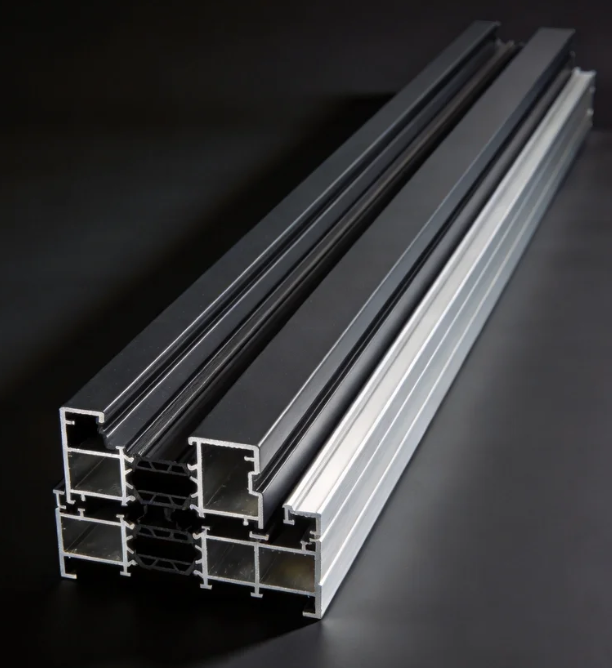
Potential applications include curtain walls for shopping malls, office buildings, industrial parks, hotels, hospitals, schools, government facilities, exhibition centers, and transportation hubs. Coastal and riverside projects may require additional attention to alloy choice, coating performance, sealing, and corrosion-related specifications.
Controls That Reduce Material Uncertainty
Material risk depends on more than the nominal alloy designation. Xinhe Aluminium describes a quality-control sequence covering incoming raw material inspection, complete production-line inspection, and laboratory sampling and testing. The company also reports a CNAS national accredited laboratory under certificate CNAS L 10434 and an SGS substrate material quality inspection certificate.
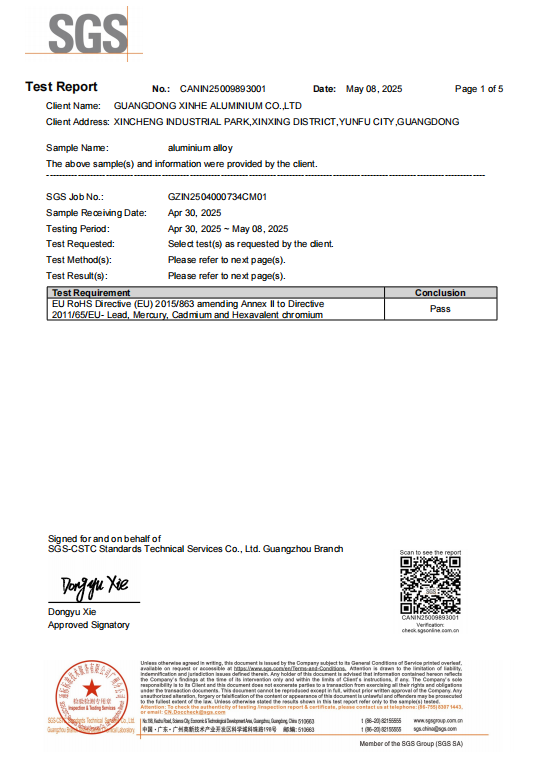
These records can help purchasers verify substrate consistency and support technical documentation during supplier qualification. Buyers should also confirm dimensional tolerances, specified wall thickness, surface treatment requirements, packaging protection, and testing frequency before placing an order.
Carbon Documentation and Tax Considerations
Carbon-related purchasing decisions should be based on verifiable emissions data rather than an assumed tax benefit. Xinhe Aluminium provides a Greenhouse Gas Verification Statement aligned with ISO 14064-1:2018 and a Carbon Footprint of Products certificate under ISO 14067:2018. These documents can support carbon-data collection, product comparisons, and project reporting.
The available information does not promise a carbon-tax reduction, exemption, or fixed financial outcome. The actual tax treatment depends on the applicable jurisdiction, project rules, product classification, and the evidence accepted by the relevant authority. ISO 14001:2015 environmental management certification can further support assessment of the supplier's environmental management practices.
Evidence and Procurement Comparison
| Review category | Available option or control | Procurement value |
|---|---|---|
| Alloy and temper | 6063, 6060, 6061, 6463, 6005, 6082, or 6106 in T5 or T6 | Allows material performance to be compared with project requirements |
| Substrate quality | Incoming inspection, 100% production-line inspection, laboratory sampling, and testing | Improves visibility into material consistency and manufacturing control |
| Environmental management | GB/T 24001-2016/ISO 14001:2015 certification | Supports review of the supplier's environmental management system |
| Carbon information | ISO 14064-1:2018 greenhouse gas verification and ISO 14067:2018 product carbon footprint certification | Provides supporting evidence for emissions comparison; it does not guarantee a tax result |
| Finishing and market compliance | Qualicoat certification for powder coating and SIRIM certification for Malaysia | Helps address finish and regional compliance requirements where relevant |
| Commercial planning | Full industrial chain, distribution, and direct sales; 3-ton minimum order and 15-20-day stated delivery | Clarifies supply conditions, scheduling, and order planning |
Project Experience and Supply Considerations
Reported projects in Malaysia, Singapore, the Philippines, and other markets include building, hotel, residential, and office developments. Customer feedback refers to controlled wall thickness, consistent quality, sealed door and window systems, protective packaging, and custom mould development for special cross-sections.
These examples show that risk management continues after alloy selection. A complete purchase specification should address design compatibility, dimensional stability, surface finish, sealing performance, packaging, delivery conditions, and any custom extrusion requirements.
Frequently Asked Questions
Which aluminium alloys can be used for these architecture profiles?
The documented choices are 6063, 6060, 6061, 6463, 6005, 6082, and 6106 aluminium alloys. T5 and T6 tempers are available for project-specific selection.
Will the profiles automatically reduce carbon taxes?
No. The available data does not guarantee a tax reduction or exemption. ISO 14064-1:2018 and ISO 14067:2018 documentation can support carbon assessment and comparison, but tax treatment is determined by the relevant jurisdiction and project evidence requirements.
What measures help control material risk?
Reported measures include incoming raw-material inspection, 100% production-line inspection, laboratory sampling and testing, a CNAS-accredited laboratory, and SGS substrate material quality inspection certification.
Conclusion and Purchasing Recommendations
For architectural projects seeking better control over carbon reporting and material uncertainty, compare the available alloys and T5/T6 tempers with the required application and performance criteria. Include inspection records, wall-thickness requirements, testing evidence, environmental certifications, and carbon documentation in the purchase specification.
ISO 14001:2015, ISO 14064-1:2018, and ISO 14067:2018 credentials can strengthen supplier assessment, but they should be treated as documentation for evaluation rather than a promise of lower carbon taxes. Xinhe Aluminium supports industrial-chain supply, distribution, and direct-sales cooperation, with a reported minimum order quantity of 3 tons and delivery of 15-20 days. Technical enquiries can be directed to xh@xinhealuminium.com.
About Guangdong Xinhe Aluminium Co., Ltd
Guangdong Xinhe Aluminium Co., Ltd researches and manufactures building, decorative, and industrial aluminium profiles. Founded in 1998, the company reports a 666,670 sqm factory area and annual production capacity of 200,000 tons. Its product range covers architectural profiles, window and door profiles, curtain wall systems, decorative profiles, furniture profiles, industrial profiles, special alloy profiles, custom aluminium extrusions, and surface-treated aluminium products.
The company reports a CNAS Laboratory Accreditation Certificate, certificate number CNAS L 10434, along with a Carbon Footprint of Products certificate under ISO 14067:2018. Its stated capabilities also include cooperation with research institutions and universities and service to customers across multiple industries.

REPORT