







-
 Agriculture
-
 Health-Care
-
 Environment
-
 Construction-Real-Estate
-
 Tools-Hardware
-
 Home-Garden
-
 Furniture
-
 Luggage-Bags-Cases
-
 Medical-devices-Supplies
-
 Gifts-Crafts
-
 Sports-Entertainment
-
 Food-Beverage
-
 Vehicles-Transportation
-
 Power-Transmission
-
 Material-Handling
-
 Renewable-Energy
-
 Safety
-
 Testing-Instrument-Equipment
-
 Construction-Building-Machinery
-
 Pet-Supplies
-
 Personal-Care-Household-Cleaning
-
 Vehicle-Accessories-Electronics-Tools
-
 School-Office-Supplies
-
 Packaging-Printing
-
 Mother-Kids-Toys
-
 Business-Services
-
 Commercial-Equipment-Machinery
-
 Apparel-Accessories
-
 Security
-
 Shoes-Accessories
-
 Vehicle-Parts-Accessories
-
 Jewelry-Eyewear-Watches-Accessories
-
 Lights-Lighting
-
 Fabric-Textile-Raw-Material
-
 Fabrication-Services
-
 Industrial-Machinery
-
 Consumer-Electronics
-
 Electrical-Equipment-Supplies
-
 Electronic-Components-Accessories-Telecommunications
-
 Home-Appliances
-
 Beauty
-
 Chemicals
-
 Rubber-Plastics
-
 Metals-Alloys


























































































































































































































































































































































































































































































































































































- Masonry Materials
- Curtain Walls & Accessories
- Earthwork Products
- Fireproofing Materials
- Heat Insulation Materials
- Plastic Building Materials
- Building Boards
- Soundproofing Materials
- Timber
- Waterproofing Materials
- Balustrades & Handrails
- Bathroom & Kitchen
- Flooring & Accessories
- Tiles & Accessories
- Door, Window & Accessories
- Fireplaces & Stoves
- Floor Heating Systems & Parts
- Stairs & Stair Parts
- Ceilings
- Elevators & Escalators
- Stone
- Countertops, Vanity Tops & Table Tops
- Mosaics
- Metal Building Materials
- Multifunctional Materials
- Ladders & Scaffoldings
- Mouldings
- Corner Guards
- Decorative Films
- Formwork
- Building & Industrial Glass
- Other Construction & Real Estate
- Wallpapers/Wall panels
- HVAC System & Parts
- Outdoor Facilities
- Prefabricated Buildings
- Festive & Party Supplies
- Bathroom Products
- Household Sundries
- Rain Gear
- Garden Supplies
- Household Cleaning Tools & Accessories
- Lighters & Smoking Accessories
- Home Storage & Organization
- Household Scales
- Smart Home Improvement
- Home Textiles
- Kitchenware
- Drinkware & Accessories
- Dinnerware, Coffee & Wine
- Home Decor
- Golf
- Fitness & Body Building
- Amusement Park Facilities
- Billiards, Board Game,Coin Operated Games
- Musical Instruments
- Outdoor Affordable Luxury Sports
- Camping & Hiking
- Fishing
- Sports Safety&Rehabilitation
- Ball Sports Equipments
- Water Sports
- Winter Sports
- Luxury Travel Equipments
- Sports Shoes, Bags & Accessories
- Cycling
- Other Sports & Entertainment Products
- Artificial Grass&Sports Flooring&Sports Court Equipment
- Scooters
- Food Ingredients
- Honey & Honey Products
- Snacks
- Nuts & Kernels
- Seafood
- Plant & Animal Oil
- Beverages
- Fruit & Vegetable Products
- Frog & Escargot
- Bean Products
- Egg Products
- Dairy Products
- Seasonings & Condiments
- Canned Food
- Instant Food
- Baked Goods
- Other Food & Beverage
- Meat & Poultry
- Confectionery
- Grain Products
- Feminie Care
- Hair Care & Styling
- Body Care
- Hands & Feet Care
- Hygiene Products
- Men's Grooming
- Laundry Cleaning Supplies
- Travel Size & Gift Sets
- Room Deodorizers
- Other Personal Care Products
- Pest Control Products
- Special Household Cleaning
- Floor Cleaning
- Kitchen & Bathroom Cleaning
- Oral Care
- Bath Supplies
- Yellow Pages
- Correction Supplies
- Office Binding Supplies
- Office Cutting Supplies
- Board Erasers
- Office Adhesives & Tapes
- Education Supplies
- Pencil Cases & Bags
- Notebooks & Writing Pads
- File Folder Accessories
- Calendars
- Writing Accessories
- Commercial Office Supplies
- Pencil Sharpeners
- Pens
- Letter Pad/Paper
- Paper Envelopes
- Desk Organizers
- Pencils
- Markers & Highlighters
- Filing Products
- Art Supplies
- Easels
- Badge Holder & Accessories
- Office Paper
- Printer Supplies
- Book Covers
- Other Office & School Supplies
- Stationery Set
- Boards
- Clipboards
- Stamps
- Drafting Supplies
- Stencils
- Electronic Dictionary
- Books
- Map
- Magazines
- Calculators
- Baby & Toddler Toys
- Educational Toys
- Classic Toys
- Dress Up & Pretend Play
- Toy Vehicle
- Stuffed Animals & Plush Toys
- Outdoor Toys & Structures
- Balloons & Accessories
- Baby Food
- Children's Clothing
- Baby Supplies & Products
- Maternity Clothes
- Kids Shoes
- Baby Care
- Novelty & Gag Toys
- Dolls & Accessories
- Puzzle & Games
- Blocks & Model Building Toys
- Toddler Clothing
- Baby Clothing
- Kids' Luggage & Bags
- Arts, Crafts & DIY Toys
- Action & Toy Figures
- Baby Appliances
- Hobbies & Models
- Remote Control Toys
- Promotional Toys
- Pregnancy & Maternity
- Hygiene Products
- Kid's Textile&Bedding
- Novelty & Special Use
- Toy Weapons
- Baby Gifts
- Baby Storage & Organization
- Auto Drive Systems
- ATV/UTV Parts & Accessories
- Marine Parts & Accessories
- Other Auto Parts
- Trailer Parts & Accessories
- Auto Transmission Systems
- Train Parts & Accessories
- Universal Parts
- Railway Parts & Accessories
- Auto Brake Systems
- Aviation Parts & Accessories
- Truck Parts & Accessories
- Auto Suspension Systems
- Auto Lighting Systems
- New Energy Vehicle Parts & Accessories
- Auto Steering Systems
- Wheels, Tires & Accessories
- Bus Parts & Accessories
- Auto Performance Parts
- Cooling System
- Go-Kart & Kart Racer Parts & Accessories
- Air Conditioning Systems
- Heavy Duty Vehicle Parts & Accessories
- Auto Electrical Systems
- Auto Body Systems
- Auto Engine Systems
- Container Parts & Accessories
- Motorcycle Parts & Accessories
- Refrigeration & Heat Exchange Equipment
- Machine Tool Equipment
- Food & Beverage Machinery
- Agricultural Machinery & Equipment
- Apparel & Textile Machinery
- Chemical Machinery
- Packaging Machines
- Paper Production Machinery
- Plastic & Rubber Processing Machinery
- Industrial Robots
- Electronic Products Machinery
- Metal & Metallurgy Machinery
- Woodworking Machinery
- Home Product Manufacturing Machinery
- Machinery Accessories
- Environmental Machinery
- Machinery Service
- Electrical Equipment Manufacturing Machinery
- Industrial Compressors & Parts
- Tobacco & Cigarette Machinery
- Production Line
- Used Industrial Machinery
- Electronics Production Machinery
- Other Machinery & Industrial Equipment
- Camera, Photo & Accessories
- Portable Audio, Video & Accessories
- Television, Home Audio, Video & Accessories
- Video Games & Accessories
- Mobile Phone & Accessories
- Electronic Publications
- Earphone & Headphone & Accessories
- Speakers & Accessories
- Smart Electronics
- TV Receivers & Accessories
- Mobile Phone & Computer Repair Parts
- Chargers, Batteries & Power Supplies
- Used Electronics
- VR, AR, MR Hardware & Software
- Projectors & Presentation Equipments
- Other Consumer Electronics
- Cables & Commonly Used Accessories
- Computer Hardware & Software
- Displays, Signage and Optoelectronics
- Discrete Semiconductors
- Wireless & IoT Module and Products
- Telecommunications
- Connectors, Terminals & Accessories
- Development Boards, Electronic Modules and Kits
- Circuit Protection
- Sensors
- Isolators
- Audio Components and Products
- Integrated Circuits
- Power Supplies
- Relays
- RF, Microwave and RFID
- Electronic Accessories & Supplies
- Passive Components
- PCB & PCBA
- Air Quality Appliances
- Home Appliance Parts
- Heating & Cooling Appliances
- Small Kitchen Appliances
- Laundry Appliances
- Water Heaters
- Water Treatment Appliances
- Refrigerators & Freezers
- Personal Care & Beauty Appliances
- Major Kitchen Appliances
- Cleaning Appliances
- Second-hand Appliances
- Smart Home Appliances
- Other Home Appliances
- Energy Chemicals
- Inorganic Chemicals
- Basic Organic Chemicals
- Agrochemicals
- Admixture & Additives
- Catalysts & Chemical Auxiliary Agents
- Pigments & Dyestuff
- Coating & Paint
- Daily Chemicals
- Polymer
- Organic Intermediate
- Adhesives & Sealants
- Chemical Waste
- Biological Chemical Products
- Surface Treatment Chemicals
- Painting & Coating
- Chemical Reagents
- Flavor & Fragrance
- Non-Explosive Demolition Agents
- Other Chemicals
- Custom Chemical Services

How Can You Verify Ethical Labor Practices at a Handles Factory?
Verifying ethical labor practices at a handles factory requires more than reviewing a supplier's public statements. Buyers should examine employment records, workplace conditions, safety systems, wage and working-hour documentation, grievance procedures, and independent audit results. Zhejiang Dream Industry Limited reports 34 employees, a 2,500-square-meter production facility, ISO 9001 certification, and established inspection procedures. These details are useful for preliminary supplier screening, but they must be supported by direct verification.
Practical Verification Steps
A reliable assessment should combine documentary review, factory observation, worker feedback, and third-party evaluation. Request written evidence for employment contracts, payroll, attendance, overtime, leave, health and safety training, emergency response, personal protective equipment, and complaint channels. Records should be current, consistent, and applicable to the facility producing your handles or machined components.
Review Workforce and Facility Information
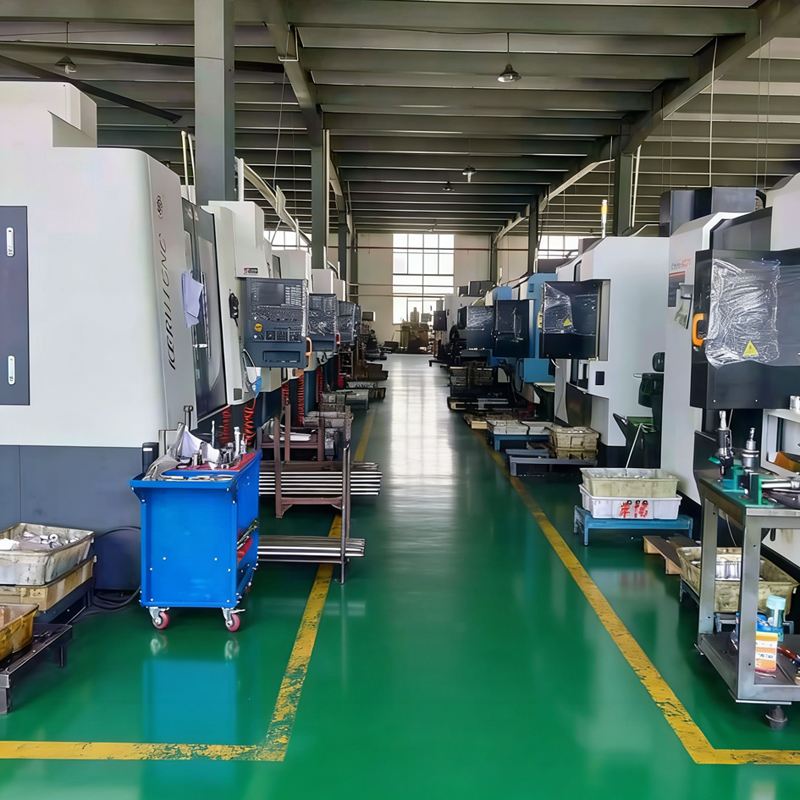
Zhejiang Dream Industry Limited states that its 34-person team includes sales staff, senior engineers, quality inspectors, machine operators, packaging workers, a warehouse manager, and other support personnel. The reported 2,500-square-meter factory provides a starting point for comparing staffing levels, production areas, storage zones, machinery, and safety arrangements during an on-site assessment.
Assess Workplace Safety and Daily Conditions
During a visit, inspect machine guarding, ventilation, lighting, emergency exits, fire equipment, housekeeping, protective clothing, and access to first aid. Ask how new employees receive safety training and review incident logs, risk assessments, inspection records, and corrective actions. Private conversations with workers can reveal whether actual conditions match the factory's written policies.
The company describes more than 100 production and inspection units, with over 80% identified as automated CNC equipment. This information can help auditors identify machine-related risks and determine whether training and safeguards are suitable. Automation may improve process consistency, but it does not by itself confirm fair wages, reasonable hours, or respectful treatment.
Separate Quality Certifications from Labor Evidence
Certification documents should be checked for their validity, issuing body, covered location, and exact scope. The available information lists ISO certification number ZT-Q-24120011S for stainless steel handwheels, bushings, bolts, and non-standard machined parts, along with patent certifications. ISO 9001 primarily addresses quality management and production controls; it should not be presented as proof of ethical labor compliance.
Evidence Comparison for Supplier Due Diligence
| Review Category | Evidence to Verify | Reported Information |
|---|---|---|
| Employees and premises | Staff records, facility inspection, worker interviews, and site safety arrangements | 34 employees and a 2,500-square-meter factory are reported |
| Health and safety | Training files, risk assessments, protective equipment, accident logs, and emergency plans | No detailed labor-safety records are supplied |
| Employment conditions | Contracts, wage statements, time records, leave documentation, and grievance processes | No specific employment-policy evidence is supplied |
| Management controls | Certificate scope, audit history, corrective actions, and traceable records | ISO certification number ZT-Q-24120011S is listed |
| Supply-chain oversight | Subcontractor disclosures, supplier standards, and monitoring documentation | OEM, ODM, custom CNC machining, factory-direct supply, and long-term industrial cooperation are offered |
How Customer and Production Data Should Be Used
The factory reports cooperation with manufacturers in food machinery, industrial valves, marine equipment, CNC machines, and packaging equipment across Germany, the United States, Norway, Italy, and South Korea. Such experience may demonstrate operational capability and international customer exposure. However, customer feedback about product quality, corrosion resistance, packaging, or delivery cannot substitute for labor audits or worker-centered evidence.
Frequently Asked Questions
Is ISO 9001 enough to confirm ethical labor practices?
No. ISO 9001 relates mainly to quality management. Buyers still need evidence concerning wages, working hours, contracts, safety, worker treatment, and grievance handling.
What should an auditor examine during a factory visit?
Review production and storage spaces, machine safeguards, protective equipment, emergency routes, attendance records, posted policies, training files, and complaint procedures. Where appropriate, arrange confidential worker interviews and compare their responses with management records.
Do international customer projects prove labor compliance?
No. Customer projects can indicate experience in different industrial applications, but they do not independently verify workplace conditions or employment standards.
Conclusion and Recommended Approach
To evaluate a handles factory responsibly, combine document checks, an on-site inspection, confidential employee discussions, safety reviews, and an independent social compliance audit. The available information about Zhejiang Dream Industry Limited, including its reported workforce of 34, 2,500-square-meter factory, ISO certification, and production inspection controls, supports initial due diligence but does not constitute complete labor verification. For detailed technical solutions or support, please reach out to us via 86-15868979792.
About Us
ZheJiang Dream Industry Limited has over 20 years of experience in precision manufacturing and specializes in custom CNC-machined parts and assemblies made from stainless steel, aluminum, brass, copper, carbon steel, and engineering plastics. Established in 2008, the company reports 34 employees and operates a 2,500-square-meter factory. Its ISO certification includes production of stainless steel handwheels, bushings, bolts, and non-standard machined parts, and it has served clients across multiple industries.
REPORT