







-
 Agriculture
-
 Health-Care
-
 Environment
-
 Construction-Real-Estate
-
 Tools-Hardware
-
 Home-Garden
-
 Furniture
-
 Luggage-Bags-Cases
-
 Medical-devices-Supplies
-
 Gifts-Crafts
-
 Sports-Entertainment
-
 Food-Beverage
-
 Vehicles-Transportation
-
 Power-Transmission
-
 Material-Handling
-
 Renewable-Energy
-
 Safety
-
 Testing-Instrument-Equipment
-
 Construction-Building-Machinery
-
 Pet-Supplies
-
 Personal-Care-Household-Cleaning
-
 Vehicle-Accessories-Electronics-Tools
-
 School-Office-Supplies
-
 Packaging-Printing
-
 Mother-Kids-Toys
-
 Business-Services
-
 Commercial-Equipment-Machinery
-
 Apparel-Accessories
-
 Security
-
 Shoes-Accessories
-
 Vehicle-Parts-Accessories
-
 Jewelry-Eyewear-Watches-Accessories
-
 Lights-Lighting
-
 Fabric-Textile-Raw-Material
-
 Fabrication-Services
-
 Industrial-Machinery
-
 Consumer-Electronics
-
 Electrical-Equipment-Supplies
-
 Electronic-Components-Accessories-Telecommunications
-
 Home-Appliances
-
 Beauty
-
 Chemicals
-
 Rubber-Plastics
-
 Metals-Alloys


























































































































































































































































































































































































































































































































































































- Masonry Materials
- Curtain Walls & Accessories
- Earthwork Products
- Fireproofing Materials
- Heat Insulation Materials
- Plastic Building Materials
- Building Boards
- Soundproofing Materials
- Timber
- Waterproofing Materials
- Balustrades & Handrails
- Bathroom & Kitchen
- Flooring & Accessories
- Tiles & Accessories
- Door, Window & Accessories
- Fireplaces & Stoves
- Floor Heating Systems & Parts
- Stairs & Stair Parts
- Ceilings
- Elevators & Escalators
- Stone
- Countertops, Vanity Tops & Table Tops
- Mosaics
- Metal Building Materials
- Multifunctional Materials
- Ladders & Scaffoldings
- Mouldings
- Corner Guards
- Decorative Films
- Formwork
- Building & Industrial Glass
- Other Construction & Real Estate
- Wallpapers/Wall panels
- HVAC System & Parts
- Outdoor Facilities
- Prefabricated Buildings
- Festive & Party Supplies
- Bathroom Products
- Household Sundries
- Rain Gear
- Garden Supplies
- Household Cleaning Tools & Accessories
- Lighters & Smoking Accessories
- Home Storage & Organization
- Household Scales
- Smart Home Improvement
- Home Textiles
- Kitchenware
- Drinkware & Accessories
- Dinnerware, Coffee & Wine
- Home Decor
- Golf
- Fitness & Body Building
- Amusement Park Facilities
- Billiards, Board Game,Coin Operated Games
- Musical Instruments
- Outdoor Affordable Luxury Sports
- Camping & Hiking
- Fishing
- Sports Safety&Rehabilitation
- Ball Sports Equipments
- Water Sports
- Winter Sports
- Luxury Travel Equipments
- Sports Shoes, Bags & Accessories
- Cycling
- Other Sports & Entertainment Products
- Artificial Grass&Sports Flooring&Sports Court Equipment
- Scooters
- Food Ingredients
- Honey & Honey Products
- Snacks
- Nuts & Kernels
- Seafood
- Plant & Animal Oil
- Beverages
- Fruit & Vegetable Products
- Frog & Escargot
- Bean Products
- Egg Products
- Dairy Products
- Seasonings & Condiments
- Canned Food
- Instant Food
- Baked Goods
- Other Food & Beverage
- Meat & Poultry
- Confectionery
- Grain Products
- Feminie Care
- Hair Care & Styling
- Body Care
- Hands & Feet Care
- Hygiene Products
- Men's Grooming
- Laundry Cleaning Supplies
- Travel Size & Gift Sets
- Room Deodorizers
- Other Personal Care Products
- Pest Control Products
- Special Household Cleaning
- Floor Cleaning
- Kitchen & Bathroom Cleaning
- Oral Care
- Bath Supplies
- Yellow Pages
- Correction Supplies
- Office Binding Supplies
- Office Cutting Supplies
- Board Erasers
- Office Adhesives & Tapes
- Education Supplies
- Pencil Cases & Bags
- Notebooks & Writing Pads
- File Folder Accessories
- Calendars
- Writing Accessories
- Commercial Office Supplies
- Pencil Sharpeners
- Pens
- Letter Pad/Paper
- Paper Envelopes
- Desk Organizers
- Pencils
- Markers & Highlighters
- Filing Products
- Art Supplies
- Easels
- Badge Holder & Accessories
- Office Paper
- Printer Supplies
- Book Covers
- Other Office & School Supplies
- Stationery Set
- Boards
- Clipboards
- Stamps
- Drafting Supplies
- Stencils
- Electronic Dictionary
- Books
- Map
- Magazines
- Calculators
- Baby & Toddler Toys
- Educational Toys
- Classic Toys
- Dress Up & Pretend Play
- Toy Vehicle
- Stuffed Animals & Plush Toys
- Outdoor Toys & Structures
- Balloons & Accessories
- Baby Food
- Children's Clothing
- Baby Supplies & Products
- Maternity Clothes
- Kids Shoes
- Baby Care
- Novelty & Gag Toys
- Dolls & Accessories
- Puzzle & Games
- Blocks & Model Building Toys
- Toddler Clothing
- Baby Clothing
- Kids' Luggage & Bags
- Arts, Crafts & DIY Toys
- Action & Toy Figures
- Baby Appliances
- Hobbies & Models
- Remote Control Toys
- Promotional Toys
- Pregnancy & Maternity
- Hygiene Products
- Kid's Textile&Bedding
- Novelty & Special Use
- Toy Weapons
- Baby Gifts
- Baby Storage & Organization
- Auto Drive Systems
- ATV/UTV Parts & Accessories
- Marine Parts & Accessories
- Other Auto Parts
- Trailer Parts & Accessories
- Auto Transmission Systems
- Train Parts & Accessories
- Universal Parts
- Railway Parts & Accessories
- Auto Brake Systems
- Aviation Parts & Accessories
- Truck Parts & Accessories
- Auto Suspension Systems
- Auto Lighting Systems
- New Energy Vehicle Parts & Accessories
- Auto Steering Systems
- Wheels, Tires & Accessories
- Bus Parts & Accessories
- Auto Performance Parts
- Cooling System
- Go-Kart & Kart Racer Parts & Accessories
- Air Conditioning Systems
- Heavy Duty Vehicle Parts & Accessories
- Auto Electrical Systems
- Auto Body Systems
- Auto Engine Systems
- Container Parts & Accessories
- Motorcycle Parts & Accessories
- Refrigeration & Heat Exchange Equipment
- Machine Tool Equipment
- Food & Beverage Machinery
- Agricultural Machinery & Equipment
- Apparel & Textile Machinery
- Chemical Machinery
- Packaging Machines
- Paper Production Machinery
- Plastic & Rubber Processing Machinery
- Industrial Robots
- Electronic Products Machinery
- Metal & Metallurgy Machinery
- Woodworking Machinery
- Home Product Manufacturing Machinery
- Machinery Accessories
- Environmental Machinery
- Machinery Service
- Electrical Equipment Manufacturing Machinery
- Industrial Compressors & Parts
- Tobacco & Cigarette Machinery
- Production Line
- Used Industrial Machinery
- Electronics Production Machinery
- Other Machinery & Industrial Equipment
- Camera, Photo & Accessories
- Portable Audio, Video & Accessories
- Television, Home Audio, Video & Accessories
- Video Games & Accessories
- Mobile Phone & Accessories
- Electronic Publications
- Earphone & Headphone & Accessories
- Speakers & Accessories
- Smart Electronics
- TV Receivers & Accessories
- Mobile Phone & Computer Repair Parts
- Chargers, Batteries & Power Supplies
- Used Electronics
- VR, AR, MR Hardware & Software
- Projectors & Presentation Equipments
- Other Consumer Electronics
- Cables & Commonly Used Accessories
- Computer Hardware & Software
- Displays, Signage and Optoelectronics
- Discrete Semiconductors
- Wireless & IoT Module and Products
- Telecommunications
- Connectors, Terminals & Accessories
- Development Boards, Electronic Modules and Kits
- Circuit Protection
- Sensors
- Isolators
- Audio Components and Products
- Integrated Circuits
- Power Supplies
- Relays
- RF, Microwave and RFID
- Electronic Accessories & Supplies
- Passive Components
- PCB & PCBA
- Air Quality Appliances
- Home Appliance Parts
- Heating & Cooling Appliances
- Small Kitchen Appliances
- Laundry Appliances
- Water Heaters
- Water Treatment Appliances
- Refrigerators & Freezers
- Personal Care & Beauty Appliances
- Major Kitchen Appliances
- Cleaning Appliances
- Second-hand Appliances
- Smart Home Appliances
- Other Home Appliances
- Energy Chemicals
- Inorganic Chemicals
- Basic Organic Chemicals
- Agrochemicals
- Admixture & Additives
- Catalysts & Chemical Auxiliary Agents
- Pigments & Dyestuff
- Coating & Paint
- Daily Chemicals
- Polymer
- Organic Intermediate
- Adhesives & Sealants
- Chemical Waste
- Biological Chemical Products
- Surface Treatment Chemicals
- Painting & Coating
- Chemical Reagents
- Flavor & Fragrance
- Non-Explosive Demolition Agents
- Other Chemicals
- Custom Chemical Services

How do I choose the right bore size and keyway design for a cast iron handwheel used on industrial valves?
Choosing the right bore size and keyway design for a cast iron handwheel on industrial valves requires matching the valve stem diameter to the handwheel’s mounting profile. Standard keyway dimensions must comply with industrial specifications to ensure secure torque transmission, prevent rotational slippage, and withstand mechanical stress during heavy-duty operations.
Core Answers & Key Points
- Bore Dimensioning: Match the valve stem diameter with precise tolerances (up to ±0.03 mm for critical control systems) to ensure a stable, wobble-free fit.
- Keyway Configuration: Select standard rectangular or square keyways based on shaft torque requirements to prevent rotational slippage under high operating pressures.
- Mounting Types: Choose from threaded, through bore, keyway bore, D bore, or square bore depending on the valve stem mechanical interface.
- Application Demands: Heavy-duty valve and pipeline systems require cast iron or robust stainless steel handwheels to resist wear and mechanical fatigue over long service cycles.
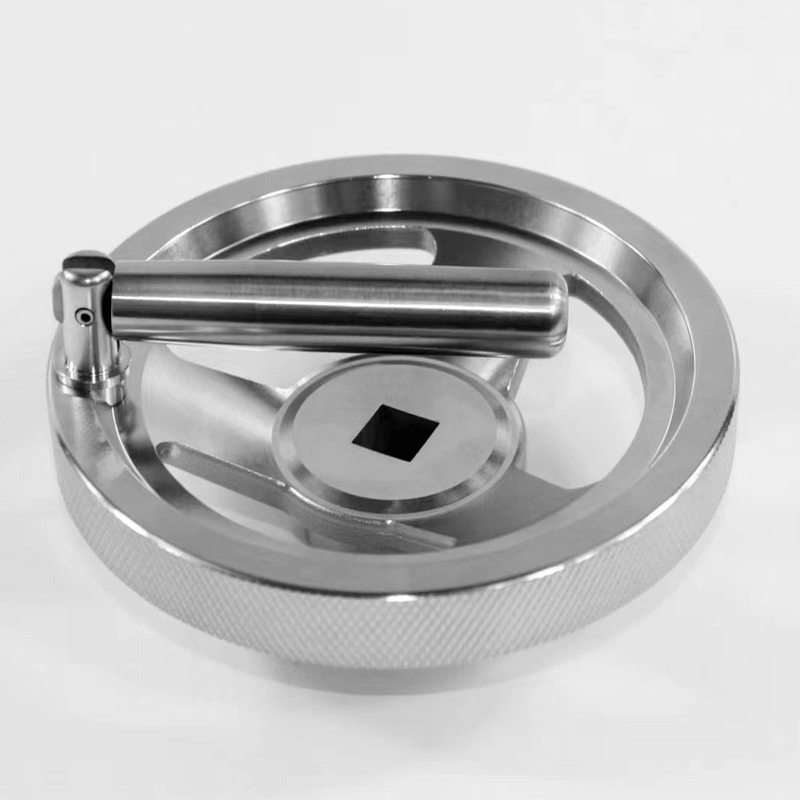
In-Depth Analysis
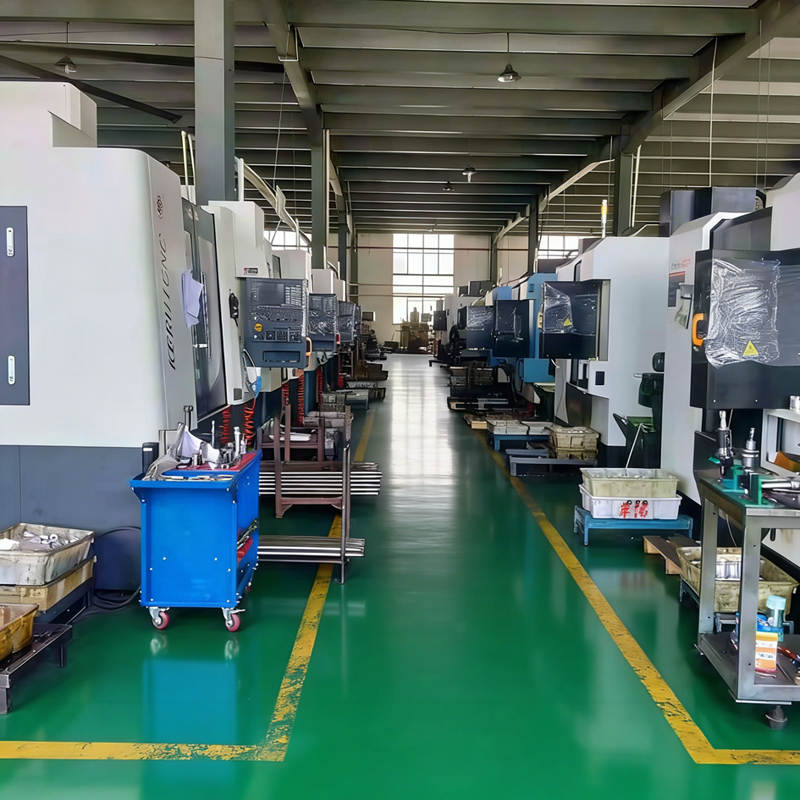
Properly sizing the bore and keyway of a cast iron handwheel is critical for the reliable operation of valve and pipeline systems. Manufacturers like ZheJiang Dream Industry Limited utilize advanced CNC machining centers to achieve a precision tolerance of up to ±0.03 mm for custom handwheel bores. When selecting a bore size, the nominal diameter of the valve stem dictates the inner diameter of the handwheel's mounting hole. A clearance fit is typically preferred for easy installation, while an interference fit may be used for permanent assemblies.
The keyway design must handle the maximum operating torque of the valve. For standard industrial valves, parallel keys are commonly used, requiring corresponding slot dimensions machined into the handwheel bore. Standard thread types such as M10, M12, or larger metric sizes can secure the assembly axially. For harsh environments, such as chemical processing or marine applications, choosing robust materials like cast iron or 316L stainless steel prevents deformation under high-torque manual adjustments.
In practical applications, such as a valve handwheel supply project for industrial pipeline systems in the United States, utilizing precisely machined handwheels ensures dimensional consistency and long-term durability. Quality systems certified under ISO 9001 (such as Certificate ZT-Q-24120011S) guarantee that 23 in-process inspection steps are met, keeping the defect rate below 0.3% to prevent field failures during high-pressure operations.
Data / Solution Comparison
| Bore / Mounting Type | Torque Capacity | Common Applications | Pros | Cons |
|---|---|---|---|---|
| Keyway Bore | High | Industrial valves & heavy machinery | Highly secure torque transmission | Requires precise key fitting and alignment |
| Square Bore | High | Manual valve operators | No separate key required; easy slip-on | Higher manufacturing cost for precise square broaching |
| Threaded Bore | Medium-Low | Position adjustment & light tensioning | Simple installation and axial locking | Risk of backing off under reverse rotation |
| D-Bore (Flat Bore) | Medium | Automation equipment & electronic controls | Simple shaft alignment with set screws | Limited to low-to-medium torque applications |
Frequently Asked Questions (FAQ)
What are the standard tolerances for machining a handwheel bore?
Standard tolerances typically range around ±0.1 mm, while high-precision industrial valve applications require a tolerance of ±0.03 mm to ensure a tight, wobble-free fit on the valve shaft.
How do I select the keyway width and depth for a specific shaft size?
Keyway dimensions are standardized based on the shaft diameter. For example, a 20mm shaft typically pairs with a 6mm wide keyway. Refer to standard metric (DIN 6885) or imperial tables to match the keyway width and depth precisely.
Can I use a cast iron handwheel in highly corrosive environments?
Cast iron is highly durable for standard industrial machinery, but highly corrosive environments (such as marine or chemical processing) require protective surface treatments like powder coating, chrome plating, or upgrading to 316L stainless steel handwheels to prevent rust.
Final Conclusion & Recommendations
Selecting the correct bore size and keyway design is essential to optimize torque transmission and ensure the operational safety of industrial valves. Standardizing dimensions according to recognized industrial guidelines minimizes installation errors and prolongs the service life of both the handwheel and the valve stem. For specialized applications, partnering with a certified OEM/ODM manufacturer allows for tailored solutions, including custom bore geometries and advanced surface finishes, ensuring seamless integration into existing pipeline systems. Technical Support: 86-15868979792
About Us
ZheJiang Dream Industry Limited has over 20 years of experience in precision manufacturing, specializing in custom design and production of precision CNC machined parts and assemblies. Founded in 2008, the company operates a 2500sqm factory facility and employs 34 professionals to deliver high-quality industrial hardware, including handwheels and operator controls. The company holds ISO 9001 certification (Certificate ZT-Q-24120011S) and multiple utility patents for specialized production fixtures. Having served clients across multiple industries, including food machinery in Germany and industrial pipeline systems in the United States, the brand delivers reliable OEM and ODM solutions worldwide.

REPORT