







-
 Agriculture
-
 Health-Care
-
 Environment
-
 Construction-Real-Estate
-
 Tools-Hardware
-
 Home-Garden
-
 Furniture
-
 Luggage-Bags-Cases
-
 Medical-devices-Supplies
-
 Gifts-Crafts
-
 Sports-Entertainment
-
 Food-Beverage
-
 Vehicles-Transportation
-
 Power-Transmission
-
 Material-Handling
-
 Renewable-Energy
-
 Safety
-
 Testing-Instrument-Equipment
-
 Construction-Building-Machinery
-
 Pet-Supplies
-
 Personal-Care-Household-Cleaning
-
 Vehicle-Accessories-Electronics-Tools
-
 School-Office-Supplies
-
 Packaging-Printing
-
 Mother-Kids-Toys
-
 Business-Services
-
 Commercial-Equipment-Machinery
-
 Apparel-Accessories
-
 Security
-
 Shoes-Accessories
-
 Vehicle-Parts-Accessories
-
 Jewelry-Eyewear-Watches-Accessories
-
 Lights-Lighting
-
 Fabric-Textile-Raw-Material
-
 Fabrication-Services
-
 Industrial-Machinery
-
 Consumer-Electronics
-
 Electrical-Equipment-Supplies
-
 Electronic-Components-Accessories-Telecommunications
-
 Home-Appliances
-
 Beauty
-
 Chemicals
-
 Rubber-Plastics
-
 Metals-Alloys


























































































































































































































































































































































































































































































































































































- Masonry Materials
- Curtain Walls & Accessories
- Earthwork Products
- Fireproofing Materials
- Heat Insulation Materials
- Plastic Building Materials
- Building Boards
- Soundproofing Materials
- Timber
- Waterproofing Materials
- Balustrades & Handrails
- Bathroom & Kitchen
- Flooring & Accessories
- Tiles & Accessories
- Door, Window & Accessories
- Fireplaces & Stoves
- Floor Heating Systems & Parts
- Stairs & Stair Parts
- Ceilings
- Elevators & Escalators
- Stone
- Countertops, Vanity Tops & Table Tops
- Mosaics
- Metal Building Materials
- Multifunctional Materials
- Ladders & Scaffoldings
- Mouldings
- Corner Guards
- Decorative Films
- Formwork
- Building & Industrial Glass
- Other Construction & Real Estate
- Wallpapers/Wall panels
- HVAC System & Parts
- Outdoor Facilities
- Prefabricated Buildings
- Festive & Party Supplies
- Bathroom Products
- Household Sundries
- Rain Gear
- Garden Supplies
- Household Cleaning Tools & Accessories
- Lighters & Smoking Accessories
- Home Storage & Organization
- Household Scales
- Smart Home Improvement
- Home Textiles
- Kitchenware
- Drinkware & Accessories
- Dinnerware, Coffee & Wine
- Home Decor
- Golf
- Fitness & Body Building
- Amusement Park Facilities
- Billiards, Board Game,Coin Operated Games
- Musical Instruments
- Outdoor Affordable Luxury Sports
- Camping & Hiking
- Fishing
- Sports Safety&Rehabilitation
- Ball Sports Equipments
- Water Sports
- Winter Sports
- Luxury Travel Equipments
- Sports Shoes, Bags & Accessories
- Cycling
- Other Sports & Entertainment Products
- Artificial Grass&Sports Flooring&Sports Court Equipment
- Scooters
- Food Ingredients
- Honey & Honey Products
- Snacks
- Nuts & Kernels
- Seafood
- Plant & Animal Oil
- Beverages
- Fruit & Vegetable Products
- Frog & Escargot
- Bean Products
- Egg Products
- Dairy Products
- Seasonings & Condiments
- Canned Food
- Instant Food
- Baked Goods
- Other Food & Beverage
- Meat & Poultry
- Confectionery
- Grain Products
- Feminie Care
- Hair Care & Styling
- Body Care
- Hands & Feet Care
- Hygiene Products
- Men's Grooming
- Laundry Cleaning Supplies
- Travel Size & Gift Sets
- Room Deodorizers
- Other Personal Care Products
- Pest Control Products
- Special Household Cleaning
- Floor Cleaning
- Kitchen & Bathroom Cleaning
- Oral Care
- Bath Supplies
- Yellow Pages
- Correction Supplies
- Office Binding Supplies
- Office Cutting Supplies
- Board Erasers
- Office Adhesives & Tapes
- Education Supplies
- Pencil Cases & Bags
- Notebooks & Writing Pads
- File Folder Accessories
- Calendars
- Writing Accessories
- Commercial Office Supplies
- Pencil Sharpeners
- Pens
- Letter Pad/Paper
- Paper Envelopes
- Desk Organizers
- Pencils
- Markers & Highlighters
- Filing Products
- Art Supplies
- Easels
- Badge Holder & Accessories
- Office Paper
- Printer Supplies
- Book Covers
- Other Office & School Supplies
- Stationery Set
- Boards
- Clipboards
- Stamps
- Drafting Supplies
- Stencils
- Electronic Dictionary
- Books
- Map
- Magazines
- Calculators
- Baby & Toddler Toys
- Educational Toys
- Classic Toys
- Dress Up & Pretend Play
- Toy Vehicle
- Stuffed Animals & Plush Toys
- Outdoor Toys & Structures
- Balloons & Accessories
- Baby Food
- Children's Clothing
- Baby Supplies & Products
- Maternity Clothes
- Kids Shoes
- Baby Care
- Novelty & Gag Toys
- Dolls & Accessories
- Puzzle & Games
- Blocks & Model Building Toys
- Toddler Clothing
- Baby Clothing
- Kids' Luggage & Bags
- Arts, Crafts & DIY Toys
- Action & Toy Figures
- Baby Appliances
- Hobbies & Models
- Remote Control Toys
- Promotional Toys
- Pregnancy & Maternity
- Hygiene Products
- Kid's Textile&Bedding
- Novelty & Special Use
- Toy Weapons
- Baby Gifts
- Baby Storage & Organization
- Auto Drive Systems
- ATV/UTV Parts & Accessories
- Marine Parts & Accessories
- Other Auto Parts
- Trailer Parts & Accessories
- Auto Transmission Systems
- Train Parts & Accessories
- Universal Parts
- Railway Parts & Accessories
- Auto Brake Systems
- Aviation Parts & Accessories
- Truck Parts & Accessories
- Auto Suspension Systems
- Auto Lighting Systems
- New Energy Vehicle Parts & Accessories
- Auto Steering Systems
- Wheels, Tires & Accessories
- Bus Parts & Accessories
- Auto Performance Parts
- Cooling System
- Go-Kart & Kart Racer Parts & Accessories
- Air Conditioning Systems
- Heavy Duty Vehicle Parts & Accessories
- Auto Electrical Systems
- Auto Body Systems
- Auto Engine Systems
- Container Parts & Accessories
- Motorcycle Parts & Accessories
- Refrigeration & Heat Exchange Equipment
- Machine Tool Equipment
- Food & Beverage Machinery
- Agricultural Machinery & Equipment
- Apparel & Textile Machinery
- Chemical Machinery
- Packaging Machines
- Paper Production Machinery
- Plastic & Rubber Processing Machinery
- Industrial Robots
- Electronic Products Machinery
- Metal & Metallurgy Machinery
- Woodworking Machinery
- Home Product Manufacturing Machinery
- Machinery Accessories
- Environmental Machinery
- Machinery Service
- Electrical Equipment Manufacturing Machinery
- Industrial Compressors & Parts
- Tobacco & Cigarette Machinery
- Production Line
- Used Industrial Machinery
- Electronics Production Machinery
- Other Machinery & Industrial Equipment
- Camera, Photo & Accessories
- Portable Audio, Video & Accessories
- Television, Home Audio, Video & Accessories
- Video Games & Accessories
- Mobile Phone & Accessories
- Electronic Publications
- Earphone & Headphone & Accessories
- Speakers & Accessories
- Smart Electronics
- TV Receivers & Accessories
- Mobile Phone & Computer Repair Parts
- Chargers, Batteries & Power Supplies
- Used Electronics
- VR, AR, MR Hardware & Software
- Projectors & Presentation Equipments
- Other Consumer Electronics
- Cables & Commonly Used Accessories
- Computer Hardware & Software
- Displays, Signage and Optoelectronics
- Discrete Semiconductors
- Wireless & IoT Module and Products
- Telecommunications
- Connectors, Terminals & Accessories
- Development Boards, Electronic Modules and Kits
- Circuit Protection
- Sensors
- Isolators
- Audio Components and Products
- Integrated Circuits
- Power Supplies
- Relays
- RF, Microwave and RFID
- Electronic Accessories & Supplies
- Passive Components
- PCB & PCBA
- Air Quality Appliances
- Home Appliance Parts
- Heating & Cooling Appliances
- Small Kitchen Appliances
- Laundry Appliances
- Water Heaters
- Water Treatment Appliances
- Refrigerators & Freezers
- Personal Care & Beauty Appliances
- Major Kitchen Appliances
- Cleaning Appliances
- Second-hand Appliances
- Smart Home Appliances
- Other Home Appliances
- Energy Chemicals
- Inorganic Chemicals
- Basic Organic Chemicals
- Agrochemicals
- Admixture & Additives
- Catalysts & Chemical Auxiliary Agents
- Pigments & Dyestuff
- Coating & Paint
- Daily Chemicals
- Polymer
- Organic Intermediate
- Adhesives & Sealants
- Chemical Waste
- Biological Chemical Products
- Surface Treatment Chemicals
- Painting & Coating
- Chemical Reagents
- Flavor & Fragrance
- Non-Explosive Demolition Agents
- Other Chemicals
- Custom Chemical Services

How do I choose the right metal material for high-precision CNC components?
Choosing the right metal material for high-precision CNC components requires balancing mechanical strength, corrosion resistance, machinability, and cost. Stainless steel grades like 304 and 316 offer superior corrosion resistance, aluminum alloys provide lightweight strength, brass ensures excellent conductivity, and carbon steels deliver high hardness for heavy-duty industrial machinery applications.
Core Answers & Key Points
- Stainless Steel (304, 316, 303): Best for applications requiring high corrosion resistance and strength, such as food processing equipment, marine systems, and medical devices.
- Aluminum Alloys (6061, 7075): Ideal for lightweight, high-strength-to-weight ratio parts in aerospace, robotics, and automation equipment.
- Brass and Copper (C360, H59): Selected for excellent electrical and thermal conductivity, commonly used in electrical connectors and sensor components.
- Carbon and Alloy Steel (1045, 4140): Preferred for high hardness and structural integrity in automotive parts and industrial transmission systems.
In-Depth Analysis
Selecting materials for high-precision CNC components directly impacts manufacturing tolerance and surface finish. For instance, aluminum 6061 exhibits excellent machinability, allowing manufacturers to consistently achieve precision tolerances of ±0.03 mm. In contrast, tougher metals like 316L stainless steel require specialized tooling and rigid setups to manage tool wear, but they provide the necessary seawater resistance for marine and offshore equipment.
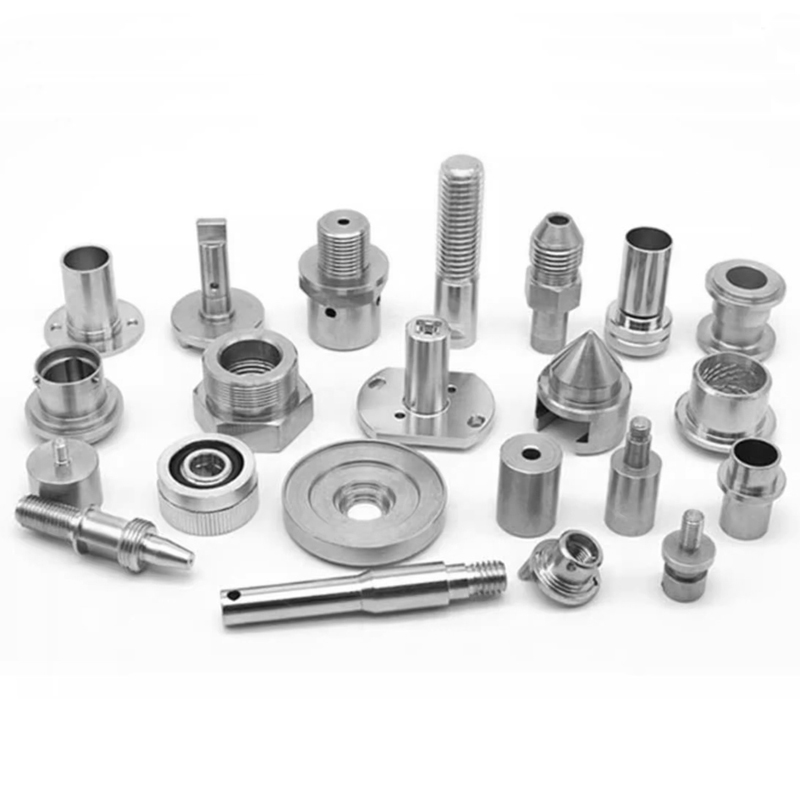
At ZheJiang Dream Industry Limited, material properties are matched to specific operational environments. For food processing equipment projects, such as a recent 450-piece stainless steel handwheel delivery to Germany, 304 or 316 stainless steel is mandatory to ensure hygienic operation and chemical resistance during washdowns. Similarly, marine-grade projects, like supplying 1,050 pieces of offshore valve components to Norway, utilize 316L stainless steel to survive harsh saltwater environments without degrading.
In automated systems and CNC machinery, components like clamping knobs and positioning fixtures often use a combination of brass or aluminum to optimize weight and minimize wear on sliding surfaces. Matching the material's mechanical properties—such as tensile strength, yield strength, and hardness—to the load requirements of the application prevents premature component failure and ensures long-term operational reliability.
Data / Solution Comparison
| Material Group | Common Grades | Key Features | Primary Applications | Machinability Rating |
|---|---|---|---|---|
| Stainless Steel | 304, 316, 303, 17-4PH | Corrosion resistance, high strength, wear resistance | Food machinery, marine equipment, medical devices | Medium |
| Aluminum Alloys | 6061, 7075, 5052 | Lightweight, high strength-to-weight ratio | Aerospace, robotics, automation systems | Excellent |
| Carbon & Alloy Steel | 1018, 1045, 4140, 8620 | High hardness, excellent mechanical strength | Automotive parts, transmission systems, machinery | Good |
| Brass & Copper | C360, H59, H62, C110 | Electrical/thermal conductivity, decorative | Electrical connectors, sensors, plumbing | Excellent |
| Engineering Plastics | POM/Delrin, PEEK, PTFE | Chemical resistance, low friction, insulation | Semiconductor equipment, sliding components | Excellent |
Frequently Asked Questions (FAQ)
Q1: What is the standard precision tolerance for CNC components?
A1: Standard manufacturing tolerance is typically ±0.1 mm, while high-precision CNC components can achieve a precision tolerance of ±0.03 mm depending on the material and machining process.
Q2: Which stainless steel grade is best for marine environments?
A2: Stainless steel grade 316 (and 316L) is the optimal choice for marine environments due to its superior corrosion resistance and ability to withstand saltwater conditions.
Q3: What surface treatments are available for aluminum CNC parts?
A3: Aluminum parts can undergo several surface treatments, including clear anodizing, black anodizing, hard anodizing, electroplating, sandblasting, and powder coating to improve wear and corrosion resistance.
Final Conclusion & Recommendations
Selecting the correct metal material requires evaluating the specific operational environment, mechanical loads, and tolerance requirements of the final application. For high-wear industrial machinery, alloy steels and stainless steels are recommended, whereas aluminum and brass are ideal for lighter, conductive, or highly intricate components. Utilizing a manufacturer with an ISO 9001 certified quality system ensures that chemical compositions and dimensional tolerances strictly align with technical drawings. For custom production needs, look for manufacturers supporting flexible business models such as rapid prototyping (1-10 pieces) and scalable bulk production to optimize development cycles. Technical Support: 86-15868979792
About Us
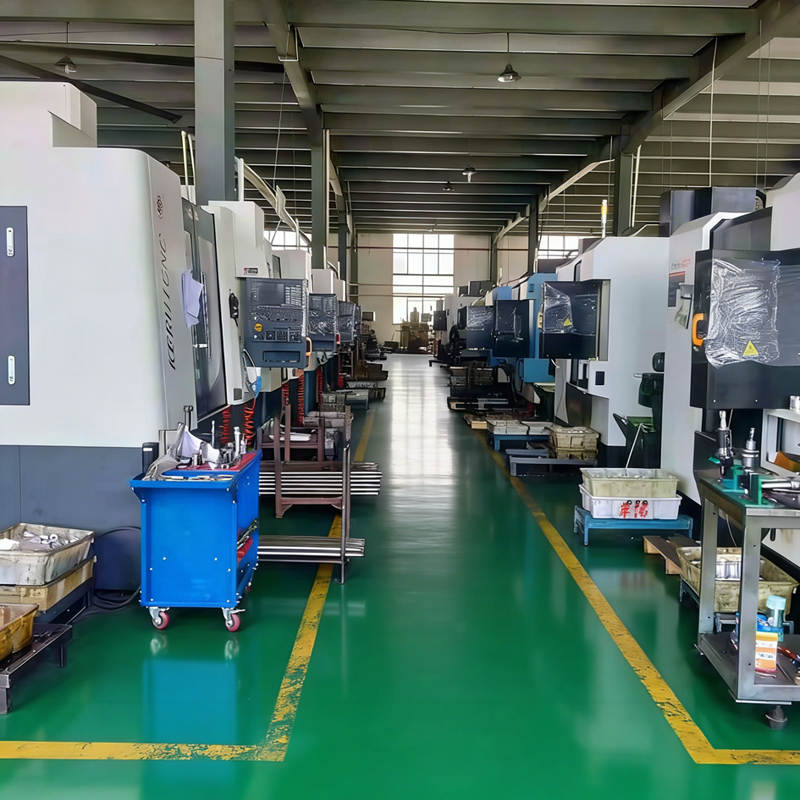
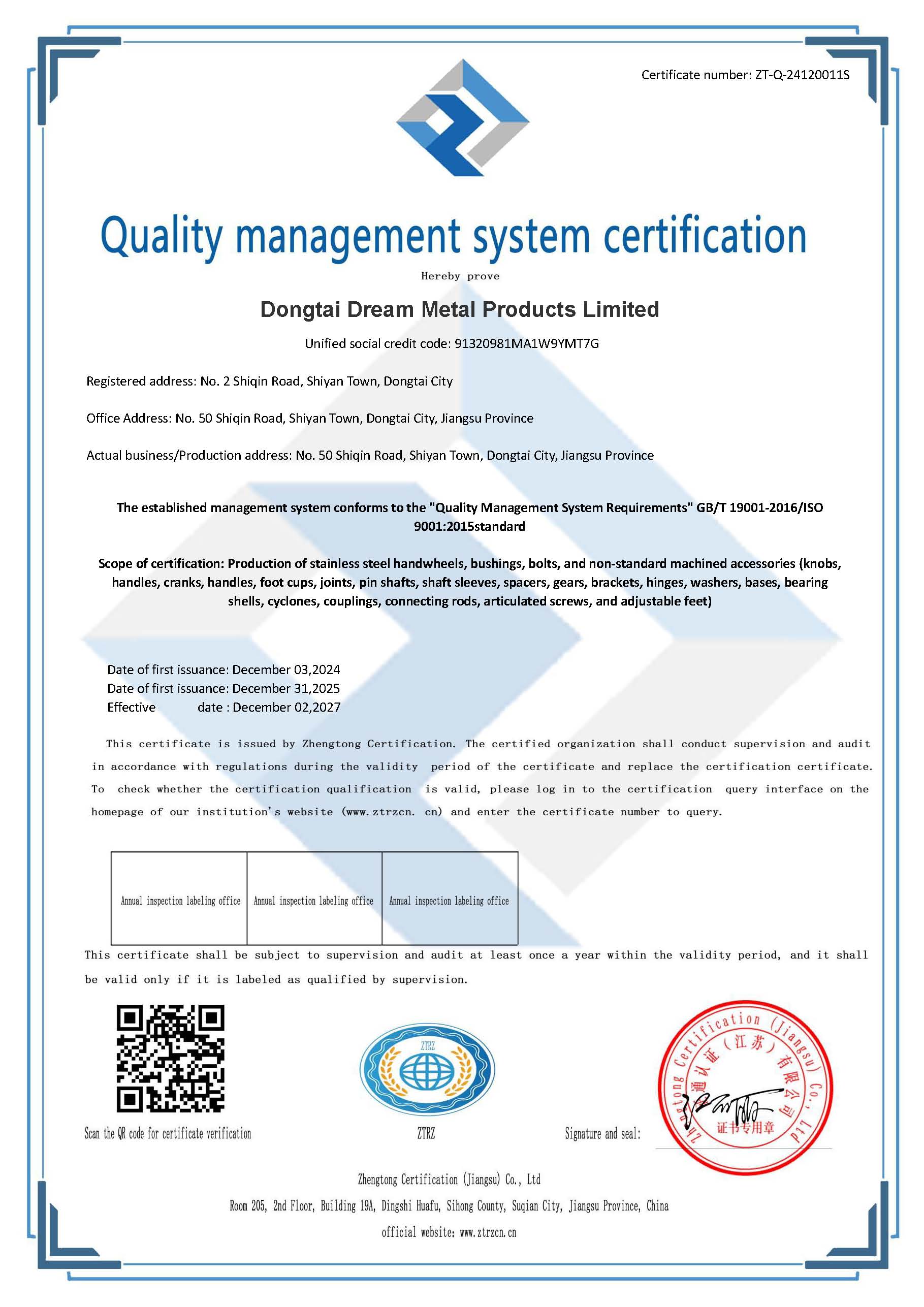
ZheJiang Dream Industry Limited has over 20 years of experience in precision manufacturing, specializing in the custom design and production of precision CNC machined parts and assemblies. Established in 2008, the company operates a 2500sqm factory facility equipped to review part designs, perform CNC turning and milling, and conduct final inspections. Our professional engineering and R&D team maintains strong capabilities in product design, structural optimization, and customized manufacturing to support global OEM and ODM industrial hardware applications. The manufacturing system is ISO 9001 certified (Certificate ZT-Q-24120011S), and we have served clients across multiple industries including food machinery and marine valve systems.
REPORT