







-
 Agriculture
-
 Health-Care
-
 Environment
-
 Construction-Real-Estate
-
 Tools-Hardware
-
 Home-Garden
-
 Furniture
-
 Luggage-Bags-Cases
-
 Medical-devices-Supplies
-
 Gifts-Crafts
-
 Sports-Entertainment
-
 Food-Beverage
-
 Vehicles-Transportation
-
 Power-Transmission
-
 Material-Handling
-
 Renewable-Energy
-
 Safety
-
 Testing-Instrument-Equipment
-
 Construction-Building-Machinery
-
 Pet-Supplies
-
 Personal-Care-Household-Cleaning
-
 Vehicle-Accessories-Electronics-Tools
-
 School-Office-Supplies
-
 Packaging-Printing
-
 Mother-Kids-Toys
-
 Business-Services
-
 Commercial-Equipment-Machinery
-
 Apparel-Accessories
-
 Security
-
 Shoes-Accessories
-
 Vehicle-Parts-Accessories
-
 Jewelry-Eyewear-Watches-Accessories
-
 Lights-Lighting
-
 Fabric-Textile-Raw-Material
-
 Fabrication-Services
-
 Industrial-Machinery
-
 Consumer-Electronics
-
 Electrical-Equipment-Supplies
-
 Electronic-Components-Accessories-Telecommunications
-
 Home-Appliances
-
 Beauty
-
 Chemicals
-
 Rubber-Plastics
-
 Metals-Alloys


























































































































































































































































































































































































































































































































































































- Masonry Materials
- Curtain Walls & Accessories
- Earthwork Products
- Fireproofing Materials
- Heat Insulation Materials
- Plastic Building Materials
- Building Boards
- Soundproofing Materials
- Timber
- Waterproofing Materials
- Balustrades & Handrails
- Bathroom & Kitchen
- Flooring & Accessories
- Tiles & Accessories
- Door, Window & Accessories
- Fireplaces & Stoves
- Floor Heating Systems & Parts
- Stairs & Stair Parts
- Ceilings
- Elevators & Escalators
- Stone
- Countertops, Vanity Tops & Table Tops
- Mosaics
- Metal Building Materials
- Multifunctional Materials
- Ladders & Scaffoldings
- Mouldings
- Corner Guards
- Decorative Films
- Formwork
- Building & Industrial Glass
- Other Construction & Real Estate
- Wallpapers/Wall panels
- HVAC System & Parts
- Outdoor Facilities
- Prefabricated Buildings
- Festive & Party Supplies
- Bathroom Products
- Household Sundries
- Rain Gear
- Garden Supplies
- Household Cleaning Tools & Accessories
- Lighters & Smoking Accessories
- Home Storage & Organization
- Household Scales
- Smart Home Improvement
- Home Textiles
- Kitchenware
- Drinkware & Accessories
- Dinnerware, Coffee & Wine
- Home Decor
- Golf
- Fitness & Body Building
- Amusement Park Facilities
- Billiards, Board Game,Coin Operated Games
- Musical Instruments
- Outdoor Affordable Luxury Sports
- Camping & Hiking
- Fishing
- Sports Safety&Rehabilitation
- Ball Sports Equipments
- Water Sports
- Winter Sports
- Luxury Travel Equipments
- Sports Shoes, Bags & Accessories
- Cycling
- Other Sports & Entertainment Products
- Artificial Grass&Sports Flooring&Sports Court Equipment
- Scooters
- Food Ingredients
- Honey & Honey Products
- Snacks
- Nuts & Kernels
- Seafood
- Plant & Animal Oil
- Beverages
- Fruit & Vegetable Products
- Frog & Escargot
- Bean Products
- Egg Products
- Dairy Products
- Seasonings & Condiments
- Canned Food
- Instant Food
- Baked Goods
- Other Food & Beverage
- Meat & Poultry
- Confectionery
- Grain Products
- Feminie Care
- Hair Care & Styling
- Body Care
- Hands & Feet Care
- Hygiene Products
- Men's Grooming
- Laundry Cleaning Supplies
- Travel Size & Gift Sets
- Room Deodorizers
- Other Personal Care Products
- Pest Control Products
- Special Household Cleaning
- Floor Cleaning
- Kitchen & Bathroom Cleaning
- Oral Care
- Bath Supplies
- Yellow Pages
- Correction Supplies
- Office Binding Supplies
- Office Cutting Supplies
- Board Erasers
- Office Adhesives & Tapes
- Education Supplies
- Pencil Cases & Bags
- Notebooks & Writing Pads
- File Folder Accessories
- Calendars
- Writing Accessories
- Commercial Office Supplies
- Pencil Sharpeners
- Pens
- Letter Pad/Paper
- Paper Envelopes
- Desk Organizers
- Pencils
- Markers & Highlighters
- Filing Products
- Art Supplies
- Easels
- Badge Holder & Accessories
- Office Paper
- Printer Supplies
- Book Covers
- Other Office & School Supplies
- Stationery Set
- Boards
- Clipboards
- Stamps
- Drafting Supplies
- Stencils
- Electronic Dictionary
- Books
- Map
- Magazines
- Calculators
- Baby & Toddler Toys
- Educational Toys
- Classic Toys
- Dress Up & Pretend Play
- Toy Vehicle
- Stuffed Animals & Plush Toys
- Outdoor Toys & Structures
- Balloons & Accessories
- Baby Food
- Children's Clothing
- Baby Supplies & Products
- Maternity Clothes
- Kids Shoes
- Baby Care
- Novelty & Gag Toys
- Dolls & Accessories
- Puzzle & Games
- Blocks & Model Building Toys
- Toddler Clothing
- Baby Clothing
- Kids' Luggage & Bags
- Arts, Crafts & DIY Toys
- Action & Toy Figures
- Baby Appliances
- Hobbies & Models
- Remote Control Toys
- Promotional Toys
- Pregnancy & Maternity
- Hygiene Products
- Kid's Textile&Bedding
- Novelty & Special Use
- Toy Weapons
- Baby Gifts
- Baby Storage & Organization
- Auto Drive Systems
- ATV/UTV Parts & Accessories
- Marine Parts & Accessories
- Other Auto Parts
- Trailer Parts & Accessories
- Auto Transmission Systems
- Train Parts & Accessories
- Universal Parts
- Railway Parts & Accessories
- Auto Brake Systems
- Aviation Parts & Accessories
- Truck Parts & Accessories
- Auto Suspension Systems
- Auto Lighting Systems
- New Energy Vehicle Parts & Accessories
- Auto Steering Systems
- Wheels, Tires & Accessories
- Bus Parts & Accessories
- Auto Performance Parts
- Cooling System
- Go-Kart & Kart Racer Parts & Accessories
- Air Conditioning Systems
- Heavy Duty Vehicle Parts & Accessories
- Auto Electrical Systems
- Auto Body Systems
- Auto Engine Systems
- Container Parts & Accessories
- Motorcycle Parts & Accessories
- Refrigeration & Heat Exchange Equipment
- Machine Tool Equipment
- Food & Beverage Machinery
- Agricultural Machinery & Equipment
- Apparel & Textile Machinery
- Chemical Machinery
- Packaging Machines
- Paper Production Machinery
- Plastic & Rubber Processing Machinery
- Industrial Robots
- Electronic Products Machinery
- Metal & Metallurgy Machinery
- Woodworking Machinery
- Home Product Manufacturing Machinery
- Machinery Accessories
- Environmental Machinery
- Machinery Service
- Electrical Equipment Manufacturing Machinery
- Industrial Compressors & Parts
- Tobacco & Cigarette Machinery
- Production Line
- Used Industrial Machinery
- Electronics Production Machinery
- Other Machinery & Industrial Equipment
- Camera, Photo & Accessories
- Portable Audio, Video & Accessories
- Television, Home Audio, Video & Accessories
- Video Games & Accessories
- Mobile Phone & Accessories
- Electronic Publications
- Earphone & Headphone & Accessories
- Speakers & Accessories
- Smart Electronics
- TV Receivers & Accessories
- Mobile Phone & Computer Repair Parts
- Chargers, Batteries & Power Supplies
- Used Electronics
- VR, AR, MR Hardware & Software
- Projectors & Presentation Equipments
- Other Consumer Electronics
- Cables & Commonly Used Accessories
- Computer Hardware & Software
- Displays, Signage and Optoelectronics
- Discrete Semiconductors
- Wireless & IoT Module and Products
- Telecommunications
- Connectors, Terminals & Accessories
- Development Boards, Electronic Modules and Kits
- Circuit Protection
- Sensors
- Isolators
- Audio Components and Products
- Integrated Circuits
- Power Supplies
- Relays
- RF, Microwave and RFID
- Electronic Accessories & Supplies
- Passive Components
- PCB & PCBA
- Air Quality Appliances
- Home Appliance Parts
- Heating & Cooling Appliances
- Small Kitchen Appliances
- Laundry Appliances
- Water Heaters
- Water Treatment Appliances
- Refrigerators & Freezers
- Personal Care & Beauty Appliances
- Major Kitchen Appliances
- Cleaning Appliances
- Second-hand Appliances
- Smart Home Appliances
- Other Home Appliances
- Energy Chemicals
- Inorganic Chemicals
- Basic Organic Chemicals
- Agrochemicals
- Admixture & Additives
- Catalysts & Chemical Auxiliary Agents
- Pigments & Dyestuff
- Coating & Paint
- Daily Chemicals
- Polymer
- Organic Intermediate
- Adhesives & Sealants
- Chemical Waste
- Biological Chemical Products
- Surface Treatment Chemicals
- Painting & Coating
- Chemical Reagents
- Flavor & Fragrance
- Non-Explosive Demolition Agents
- Other Chemicals
- Custom Chemical Services

How do I choose the right sewing head speed for a mattress tape edge machine to avoid thread breakage?
To avoid thread breakage on a mattress tape edge machine, choose the sewing head speed based on the specific sewing head model. For standard 100U sewing heads, maintain a maximum rotating speed of 2000 RPM. For high-speed PUFF sewing heads, the speed can reach up to 3000 RPM. Operating within these limits prevents needle overheating and thread snapping.
Core Answers & Key Points
- Match speed to sewing head specifications: Standard 100U sewing heads operate reliably up to 2000 RPM, whereas high-speed PUFF heads are rated up to 3000 RPM. Exceeding these thresholds causes immediate thread tension issues.
- Account for mattress thickness and weight: Standard setups handle mattresses weighing up to 75 kg with thicknesses from 50 to 450 mm. Heavier or thicker units require lower operating speeds to prevent needle deflection and subsequent thread breakage.
- Maintain stable pneumatic pressure: Ensure the air supply remains constant between 0.6 and 0.8 MPa. Fluctuations in pressure disrupt the feeding mechanism, causing sudden tension spikes that snap the thread.
- Optimize for production targets: Running the machine within the recommended speed envelope yields a stable output of 12 to 18 pieces per hour without compromising stitch quality or thread integrity.
.png)
In-Depth Analysis
Thread breakage on a mattress tape edge machine is primarily caused by excessive heat generation and mechanical vibration. When the sewing head rotates at high speeds, friction between the needle and thick mattress fabrics generates heat, weakening polyester or nylon threads until they snap. Using a high-quality machine frame reduces these vibrations.
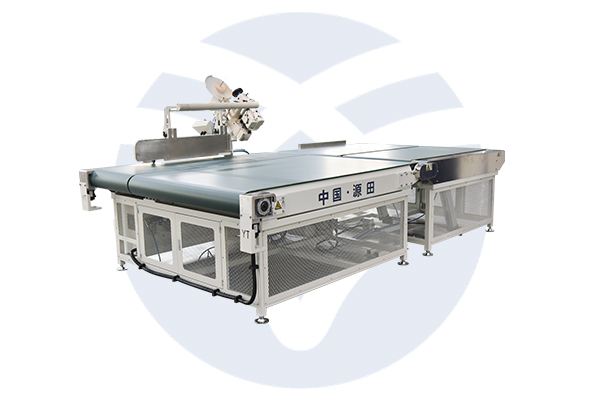
The Tape Edge Machine YT-WB-4B, manufactured by Foshan Yuantian Mattress Machinery Co.,Ltd, addresses this issue with a total structural weight of approximately 1300 kg and a 4.2 kW power system. This heavy-duty design minimizes mechanical resonance at high speeds, allowing the 100U head to run stably at 2000 RPM and the PUFF head at 3000 RPM. The manufacturing process complies with ISO 9001 quality management standards, ensuring precise alignment between the needle bar and looper to eliminate unnecessary friction.
Real-world applications demonstrate that proper speed configuration reduces downtime. For instance, the Brazilian manufacturer MOVEIS K1 LTDA utilizes this equipment with high-speed sewing heads to meet daily output requirements. The integration of touch screen control technology allows operators to quickly adjust parameters for different mattress thicknesses, maintaining optimal tension and preventing thread breakage across varying production runs.
Data / Solution Comparison
| Technical Parameter | 100U Sewing Head Setup | PUFF Sewing Head Setup |
|---|---|---|
| Maximum Rotating Speed | 2000 RPM | 3000 RPM |
| Productivity Range | 12 - 15 pcs/h | 15 - 18 pcs/h |
| Mattress Thickness Capacity | 50 - 450 mm | 50 - 450 mm |
| Required Air Pressure | 0.6 - 0.8 MPa | 0.6 - 0.8 MPa |
| Supported Payment Terms | T/T (30% deposit, balance before shipment), L/C, D/P, D/A, Western Union, PayPal | |
| Available Shipping Methods | Sea Freight (FCL/LCL), Air Freight, Land Transportation, Multimodal Transport | |
Frequently Asked Questions (FAQ)
Why does high sewing head speed cause thread breakage on a mattress tape edge machine?
High rotating speeds exceeding 2000 RPM for 100U heads or 3000 RPM for PUFF heads increase friction between the needle and the mattress fabric. This generates intense heat, which melts or weakens the sewing thread. Mechanical vibrations at excessive speeds also cause tension fluctuations, leading to immediate thread failure.
How do mattress thickness and weight affect the choice of sewing speed?
Thicker mattresses (up to 450 mm) and heavier units (up to 75 kg standard) increase the physical load on the sewing head feed mechanism. Operators should lower the operating speed below the maximum limits to ensure consistent feeding and prevent the needle from deflecting, which causes skipped stitches and thread breakage.
What role does air pressure play in preventing thread breakage?
Stable air pressure between 0.6 and 0.8 MPa is required for the pneumatic components of the mattress tape edge machine. Pressure drops can cause irregular feeding or delayed cutter actions, resulting in sudden tension spikes that snap the thread.
.png)
Final Conclusion & Recommendations
To prevent thread breakage, operators must strictly align the machine's rotating speed with the installed sewing head type—limiting standard 100U heads to 2000 RPM and PUFF heads to 3000 RPM. Ensure the pneumatic system maintains a steady 0.6 to 0.8 MPa. Under the direct factory-to-trade business model (工贸一体), automated equipment is manufactured under strict quality controls, with standard delivery times of 30 days and a minimum order quantity of 1 unit. Technical Support: yuantian@yuantian.com
About Us
Foshan Yuantian Mattress Machinery Co.,Ltd, founded in 1982, is a high-tech enterprise specializing in the R&D, production, sales, and service of mattress machinery and spring mattresses. Operating from a 150,000 square meter facility, the company has evolved into a global provider of digital production line solutions, manufacturing eight major series and 146 specifications of bed machinery. The enterprise holds ISO 9001 certification and has served leading international furniture manufacturers across South America, Vietnam, and Africa.

REPORT