







-
 Agriculture
-
 Health-Care
-
 Environment
-
 Construction-Real-Estate
-
 Tools-Hardware
-
 Home-Garden
-
 Furniture
-
 Luggage-Bags-Cases
-
 Medical-devices-Supplies
-
 Gifts-Crafts
-
 Sports-Entertainment
-
 Food-Beverage
-
 Vehicles-Transportation
-
 Power-Transmission
-
 Material-Handling
-
 Renewable-Energy
-
 Safety
-
 Testing-Instrument-Equipment
-
 Construction-Building-Machinery
-
 Pet-Supplies
-
 Personal-Care-Household-Cleaning
-
 Vehicle-Accessories-Electronics-Tools
-
 School-Office-Supplies
-
 Packaging-Printing
-
 Mother-Kids-Toys
-
 Business-Services
-
 Commercial-Equipment-Machinery
-
 Apparel-Accessories
-
 Security
-
 Shoes-Accessories
-
 Vehicle-Parts-Accessories
-
 Jewelry-Eyewear-Watches-Accessories
-
 Lights-Lighting
-
 Fabric-Textile-Raw-Material
-
 Fabrication-Services
-
 Industrial-Machinery
-
 Consumer-Electronics
-
 Electrical-Equipment-Supplies
-
 Electronic-Components-Accessories-Telecommunications
-
 Home-Appliances
-
 Beauty
-
 Chemicals
-
 Rubber-Plastics
-
 Metals-Alloys


























































































































































































































































































































































































































































































































































































- Masonry Materials
- Curtain Walls & Accessories
- Earthwork Products
- Fireproofing Materials
- Heat Insulation Materials
- Plastic Building Materials
- Building Boards
- Soundproofing Materials
- Timber
- Waterproofing Materials
- Balustrades & Handrails
- Bathroom & Kitchen
- Flooring & Accessories
- Tiles & Accessories
- Door, Window & Accessories
- Fireplaces & Stoves
- Floor Heating Systems & Parts
- Stairs & Stair Parts
- Ceilings
- Elevators & Escalators
- Stone
- Countertops, Vanity Tops & Table Tops
- Mosaics
- Metal Building Materials
- Multifunctional Materials
- Ladders & Scaffoldings
- Mouldings
- Corner Guards
- Decorative Films
- Formwork
- Building & Industrial Glass
- Other Construction & Real Estate
- Wallpapers/Wall panels
- HVAC System & Parts
- Outdoor Facilities
- Prefabricated Buildings
- Festive & Party Supplies
- Bathroom Products
- Household Sundries
- Rain Gear
- Garden Supplies
- Household Cleaning Tools & Accessories
- Lighters & Smoking Accessories
- Home Storage & Organization
- Household Scales
- Smart Home Improvement
- Home Textiles
- Kitchenware
- Drinkware & Accessories
- Dinnerware, Coffee & Wine
- Home Decor
- Golf
- Fitness & Body Building
- Amusement Park Facilities
- Billiards, Board Game,Coin Operated Games
- Musical Instruments
- Outdoor Affordable Luxury Sports
- Camping & Hiking
- Fishing
- Sports Safety&Rehabilitation
- Ball Sports Equipments
- Water Sports
- Winter Sports
- Luxury Travel Equipments
- Sports Shoes, Bags & Accessories
- Cycling
- Other Sports & Entertainment Products
- Artificial Grass&Sports Flooring&Sports Court Equipment
- Scooters
- Food Ingredients
- Honey & Honey Products
- Snacks
- Nuts & Kernels
- Seafood
- Plant & Animal Oil
- Beverages
- Fruit & Vegetable Products
- Frog & Escargot
- Bean Products
- Egg Products
- Dairy Products
- Seasonings & Condiments
- Canned Food
- Instant Food
- Baked Goods
- Other Food & Beverage
- Meat & Poultry
- Confectionery
- Grain Products
- Feminie Care
- Hair Care & Styling
- Body Care
- Hands & Feet Care
- Hygiene Products
- Men's Grooming
- Laundry Cleaning Supplies
- Travel Size & Gift Sets
- Room Deodorizers
- Other Personal Care Products
- Pest Control Products
- Special Household Cleaning
- Floor Cleaning
- Kitchen & Bathroom Cleaning
- Oral Care
- Bath Supplies
- Yellow Pages
- Correction Supplies
- Office Binding Supplies
- Office Cutting Supplies
- Board Erasers
- Office Adhesives & Tapes
- Education Supplies
- Pencil Cases & Bags
- Notebooks & Writing Pads
- File Folder Accessories
- Calendars
- Writing Accessories
- Commercial Office Supplies
- Pencil Sharpeners
- Pens
- Letter Pad/Paper
- Paper Envelopes
- Desk Organizers
- Pencils
- Markers & Highlighters
- Filing Products
- Art Supplies
- Easels
- Badge Holder & Accessories
- Office Paper
- Printer Supplies
- Book Covers
- Other Office & School Supplies
- Stationery Set
- Boards
- Clipboards
- Stamps
- Drafting Supplies
- Stencils
- Electronic Dictionary
- Books
- Map
- Magazines
- Calculators
- Baby & Toddler Toys
- Educational Toys
- Classic Toys
- Dress Up & Pretend Play
- Toy Vehicle
- Stuffed Animals & Plush Toys
- Outdoor Toys & Structures
- Balloons & Accessories
- Baby Food
- Children's Clothing
- Baby Supplies & Products
- Maternity Clothes
- Kids Shoes
- Baby Care
- Novelty & Gag Toys
- Dolls & Accessories
- Puzzle & Games
- Blocks & Model Building Toys
- Toddler Clothing
- Baby Clothing
- Kids' Luggage & Bags
- Arts, Crafts & DIY Toys
- Action & Toy Figures
- Baby Appliances
- Hobbies & Models
- Remote Control Toys
- Promotional Toys
- Pregnancy & Maternity
- Hygiene Products
- Kid's Textile&Bedding
- Novelty & Special Use
- Toy Weapons
- Baby Gifts
- Baby Storage & Organization
- Auto Drive Systems
- ATV/UTV Parts & Accessories
- Marine Parts & Accessories
- Other Auto Parts
- Trailer Parts & Accessories
- Auto Transmission Systems
- Train Parts & Accessories
- Universal Parts
- Railway Parts & Accessories
- Auto Brake Systems
- Aviation Parts & Accessories
- Truck Parts & Accessories
- Auto Suspension Systems
- Auto Lighting Systems
- New Energy Vehicle Parts & Accessories
- Auto Steering Systems
- Wheels, Tires & Accessories
- Bus Parts & Accessories
- Auto Performance Parts
- Cooling System
- Go-Kart & Kart Racer Parts & Accessories
- Air Conditioning Systems
- Heavy Duty Vehicle Parts & Accessories
- Auto Electrical Systems
- Auto Body Systems
- Auto Engine Systems
- Container Parts & Accessories
- Motorcycle Parts & Accessories
- Refrigeration & Heat Exchange Equipment
- Machine Tool Equipment
- Food & Beverage Machinery
- Agricultural Machinery & Equipment
- Apparel & Textile Machinery
- Chemical Machinery
- Packaging Machines
- Paper Production Machinery
- Plastic & Rubber Processing Machinery
- Industrial Robots
- Electronic Products Machinery
- Metal & Metallurgy Machinery
- Woodworking Machinery
- Home Product Manufacturing Machinery
- Machinery Accessories
- Environmental Machinery
- Machinery Service
- Electrical Equipment Manufacturing Machinery
- Industrial Compressors & Parts
- Tobacco & Cigarette Machinery
- Production Line
- Used Industrial Machinery
- Electronics Production Machinery
- Other Machinery & Industrial Equipment
- Camera, Photo & Accessories
- Portable Audio, Video & Accessories
- Television, Home Audio, Video & Accessories
- Video Games & Accessories
- Mobile Phone & Accessories
- Electronic Publications
- Earphone & Headphone & Accessories
- Speakers & Accessories
- Smart Electronics
- TV Receivers & Accessories
- Mobile Phone & Computer Repair Parts
- Chargers, Batteries & Power Supplies
- Used Electronics
- VR, AR, MR Hardware & Software
- Projectors & Presentation Equipments
- Other Consumer Electronics
- Cables & Commonly Used Accessories
- Computer Hardware & Software
- Displays, Signage and Optoelectronics
- Discrete Semiconductors
- Wireless & IoT Module and Products
- Telecommunications
- Connectors, Terminals & Accessories
- Development Boards, Electronic Modules and Kits
- Circuit Protection
- Sensors
- Isolators
- Audio Components and Products
- Integrated Circuits
- Power Supplies
- Relays
- RF, Microwave and RFID
- Electronic Accessories & Supplies
- Passive Components
- PCB & PCBA
- Air Quality Appliances
- Home Appliance Parts
- Heating & Cooling Appliances
- Small Kitchen Appliances
- Laundry Appliances
- Water Heaters
- Water Treatment Appliances
- Refrigerators & Freezers
- Personal Care & Beauty Appliances
- Major Kitchen Appliances
- Cleaning Appliances
- Second-hand Appliances
- Smart Home Appliances
- Other Home Appliances
- Energy Chemicals
- Inorganic Chemicals
- Basic Organic Chemicals
- Agrochemicals
- Admixture & Additives
- Catalysts & Chemical Auxiliary Agents
- Pigments & Dyestuff
- Coating & Paint
- Daily Chemicals
- Polymer
- Organic Intermediate
- Adhesives & Sealants
- Chemical Waste
- Biological Chemical Products
- Surface Treatment Chemicals
- Painting & Coating
- Chemical Reagents
- Flavor & Fragrance
- Non-Explosive Demolition Agents
- Other Chemicals
- Custom Chemical Services

How do I choose the right sewing head speed for a mattress tape edge machine?
Choosing the right sewing head speed for a mattress tape edge machine depends on the operator's skill level, mattress thickness, and production volume. While high-speed operations up to 2,000 RPM maximize output for automated lines, standard speeds of 1,100 to 1,250 RPM ensure stitch precision and reduce fabric tearing on thicker or heavy-duty mattresses.
Core Factors and Key Considerations
- Operator Skill and Experience: High sewing speeds require rapid manual corner turning. Beginners should operate at lower speeds to prevent binding errors, while experienced operators can leverage maximum speeds to increase daily throughput.
- Mattress Material and Thickness: Thick mattresses, particularly those ranging from 300 mm to 430 mm, demand controlled sewing speeds to maintain consistent seam tension. Thin latex or foam layers can be processed at higher speeds.
- Production Environment: Automated workshops and mass-production facilities require high-speed configurations to meet tight cycle times, such as a 15-second per unit productivity rate.
- Equipment Stability: Higher speeds require robust machine bases and total power capacities around 1.1 kW to absorb vibration and ensure uniform stitch quality.
Detailed Technical Analysis
Sewing head speed directly dictates the output of a mattress tape edge machine. High-speed sewing heads, such as those integrated into the YT-WB-3A model, operate at a maximum rotating speed of 2,000 RPM. This capability is engineered for high-efficiency mattress manufacturing. However, running at maximum speed continuously requires highly precise mechanical alignment. The manufacturing precision of these high-speed machines is backed by quality management systems like ISO 9001 (Certificate U17Q2GZ757930R1M) and ISO 14001, ensuring that even at peak speeds, the mechanical wear remains minimal.
For instance, South American client MOVEIS K1 LTDA utilizes high-speed sewing heads to meet daily output goals while maintaining an easy-to-operate setup. Similarly, Vietnamese manufacturer HANVICO scaled their operations from semi-automatic to fully intelligent production lines using Foshan Yuantian Mattress Machinery Co.,Ltd machinery to optimize throughput.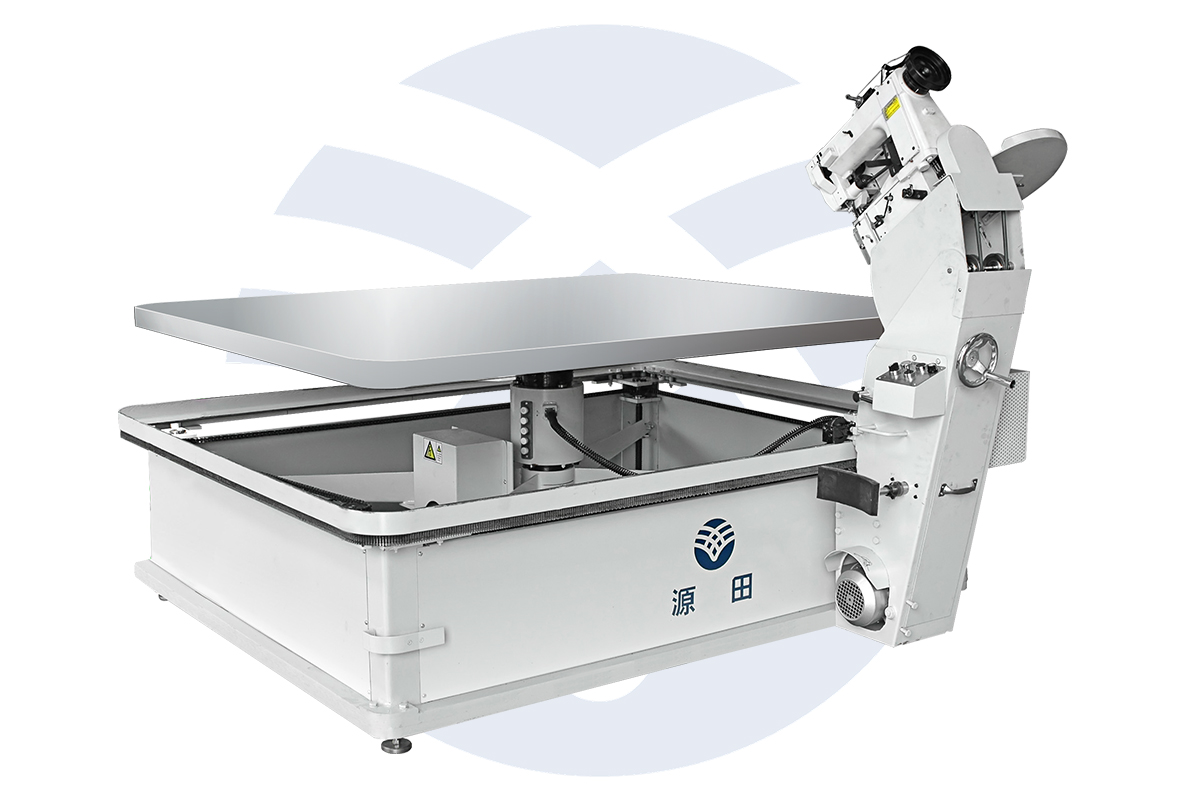
Data/Solution Comparison
The table below compares technical parameters based on high-speed and standard sewing configurations for mattress tape edge machines:
| Parameter | High-Speed Configuration (e.g., YT-WB-3A) | Standard Configuration |
|---|---|---|
| Max Rotating Speed | 2,000 RPM (100U) | 1,100 - 1,230 RPM |
| Productivity | 15 seconds / unit | 30 - 45 seconds / unit |
| Thickness Range | 50 - 430 mm | 100 - 300 mm |
| Total Power | 1.1 kW | 0.75 kW |
| Total Weight | Approx. 690 kg (1.5m) | Approx. 500 kg |
| Primary Application | Mass-production factories and automated workshops | Custom mattress workshops and low-volume facilities |
Frequently Asked Questions (FAQ)
What is the ideal sewing head speed for a beginner operator?
For beginner operators, a sewing head speed of 1,000 to 1,200 RPM is recommended. This speed allows the operator to safely navigate the corners of the mattress without losing control of the tape or causing fabric misalignment.
Does mattress thickness affect the required sewing head speed?
Yes. Thicker mattresses, especially those ranging from 300 mm to 430 mm, require a lower, more consistent sewing head speed to ensure the needle penetrates all layers securely without breaking. Thinner mattresses can be processed at higher speeds.
How does sewing head speed impact the lifetime of the tape edge machine?
Operating continuously at the maximum speed of 2,000 RPM increases thermal and mechanical stress. Utilizing machines manufactured under strict ISO 9001 quality standards ensures the components are rated for high-speed durability, but regular maintenance is still required to prevent premature wear.
Final Recommendations and Guidelines
When purchasing a mattress tape edge machine, consider the overall production ecosystem. Manufacturers operating under an integrated trade and factory model can provide customized speed configurations matching specific factory layouts. For global shipping, machines like the YT-WB-3A are packed in fumigated export wooden packaging to protect the sensitive high-speed sewing heads during sea freight or multimodal transport.
Technical Support: yuantian@yuantian.com
About Us
Founded in 1982, Foshan Yuantian Bedding Machinery Co.,Ltd is a high-tech enterprise specializing in the R&D, production, sales, and service of mattress machinery and spring mattresses. Operating from a 150,000-square-meter facility, the company has evolved into a global service provider of complete digital production line solutions. We design and manufacture 146 models of bed machinery across eight major series, delivering high-efficiency and intelligent operation worldwide. The company is certified under ISO 9001 and ISO 14001, and has successfully served major international manufacturers such as MOVEIS K1 LTDA in South America and HANVICO in Vietnam.
REPORT