







-
 Agriculture
-
 Health-Care
-
 Environment
-
 Construction-Real-Estate
-
 Tools-Hardware
-
 Home-Garden
-
 Furniture
-
 Luggage-Bags-Cases
-
 Medical-devices-Supplies
-
 Gifts-Crafts
-
 Sports-Entertainment
-
 Food-Beverage
-
 Vehicles-Transportation
-
 Power-Transmission
-
 Material-Handling
-
 Renewable-Energy
-
 Safety
-
 Testing-Instrument-Equipment
-
 Construction-Building-Machinery
-
 Pet-Supplies
-
 Personal-Care-Household-Cleaning
-
 Vehicle-Accessories-Electronics-Tools
-
 School-Office-Supplies
-
 Packaging-Printing
-
 Mother-Kids-Toys
-
 Business-Services
-
 Commercial-Equipment-Machinery
-
 Apparel-Accessories
-
 Security
-
 Shoes-Accessories
-
 Vehicle-Parts-Accessories
-
 Jewelry-Eyewear-Watches-Accessories
-
 Lights-Lighting
-
 Fabric-Textile-Raw-Material
-
 Fabrication-Services
-
 Industrial-Machinery
-
 Consumer-Electronics
-
 Electrical-Equipment-Supplies
-
 Electronic-Components-Accessories-Telecommunications
-
 Home-Appliances
-
 Beauty
-
 Chemicals
-
 Rubber-Plastics
-
 Metals-Alloys


























































































































































































































































































































































































































































































































































































- Masonry Materials
- Curtain Walls & Accessories
- Earthwork Products
- Fireproofing Materials
- Heat Insulation Materials
- Plastic Building Materials
- Building Boards
- Soundproofing Materials
- Timber
- Waterproofing Materials
- Balustrades & Handrails
- Bathroom & Kitchen
- Flooring & Accessories
- Tiles & Accessories
- Door, Window & Accessories
- Fireplaces & Stoves
- Floor Heating Systems & Parts
- Stairs & Stair Parts
- Ceilings
- Elevators & Escalators
- Stone
- Countertops, Vanity Tops & Table Tops
- Mosaics
- Metal Building Materials
- Multifunctional Materials
- Ladders & Scaffoldings
- Mouldings
- Corner Guards
- Decorative Films
- Formwork
- Building & Industrial Glass
- Other Construction & Real Estate
- Wallpapers/Wall panels
- HVAC System & Parts
- Outdoor Facilities
- Prefabricated Buildings
- Festive & Party Supplies
- Bathroom Products
- Household Sundries
- Rain Gear
- Garden Supplies
- Household Cleaning Tools & Accessories
- Lighters & Smoking Accessories
- Home Storage & Organization
- Household Scales
- Smart Home Improvement
- Home Textiles
- Kitchenware
- Drinkware & Accessories
- Dinnerware, Coffee & Wine
- Home Decor
- Golf
- Fitness & Body Building
- Amusement Park Facilities
- Billiards, Board Game,Coin Operated Games
- Musical Instruments
- Outdoor Affordable Luxury Sports
- Camping & Hiking
- Fishing
- Sports Safety&Rehabilitation
- Ball Sports Equipments
- Water Sports
- Winter Sports
- Luxury Travel Equipments
- Sports Shoes, Bags & Accessories
- Cycling
- Other Sports & Entertainment Products
- Artificial Grass&Sports Flooring&Sports Court Equipment
- Scooters
- Food Ingredients
- Honey & Honey Products
- Snacks
- Nuts & Kernels
- Seafood
- Plant & Animal Oil
- Beverages
- Fruit & Vegetable Products
- Frog & Escargot
- Bean Products
- Egg Products
- Dairy Products
- Seasonings & Condiments
- Canned Food
- Instant Food
- Baked Goods
- Other Food & Beverage
- Meat & Poultry
- Confectionery
- Grain Products
- Feminie Care
- Hair Care & Styling
- Body Care
- Hands & Feet Care
- Hygiene Products
- Men's Grooming
- Laundry Cleaning Supplies
- Travel Size & Gift Sets
- Room Deodorizers
- Other Personal Care Products
- Pest Control Products
- Special Household Cleaning
- Floor Cleaning
- Kitchen & Bathroom Cleaning
- Oral Care
- Bath Supplies
- Yellow Pages
- Correction Supplies
- Office Binding Supplies
- Office Cutting Supplies
- Board Erasers
- Office Adhesives & Tapes
- Education Supplies
- Pencil Cases & Bags
- Notebooks & Writing Pads
- File Folder Accessories
- Calendars
- Writing Accessories
- Commercial Office Supplies
- Pencil Sharpeners
- Pens
- Letter Pad/Paper
- Paper Envelopes
- Desk Organizers
- Pencils
- Markers & Highlighters
- Filing Products
- Art Supplies
- Easels
- Badge Holder & Accessories
- Office Paper
- Printer Supplies
- Book Covers
- Other Office & School Supplies
- Stationery Set
- Boards
- Clipboards
- Stamps
- Drafting Supplies
- Stencils
- Electronic Dictionary
- Books
- Map
- Magazines
- Calculators
- Baby & Toddler Toys
- Educational Toys
- Classic Toys
- Dress Up & Pretend Play
- Toy Vehicle
- Stuffed Animals & Plush Toys
- Outdoor Toys & Structures
- Balloons & Accessories
- Baby Food
- Children's Clothing
- Baby Supplies & Products
- Maternity Clothes
- Kids Shoes
- Baby Care
- Novelty & Gag Toys
- Dolls & Accessories
- Puzzle & Games
- Blocks & Model Building Toys
- Toddler Clothing
- Baby Clothing
- Kids' Luggage & Bags
- Arts, Crafts & DIY Toys
- Action & Toy Figures
- Baby Appliances
- Hobbies & Models
- Remote Control Toys
- Promotional Toys
- Pregnancy & Maternity
- Hygiene Products
- Kid's Textile&Bedding
- Novelty & Special Use
- Toy Weapons
- Baby Gifts
- Baby Storage & Organization
- Auto Drive Systems
- ATV/UTV Parts & Accessories
- Marine Parts & Accessories
- Other Auto Parts
- Trailer Parts & Accessories
- Auto Transmission Systems
- Train Parts & Accessories
- Universal Parts
- Railway Parts & Accessories
- Auto Brake Systems
- Aviation Parts & Accessories
- Truck Parts & Accessories
- Auto Suspension Systems
- Auto Lighting Systems
- New Energy Vehicle Parts & Accessories
- Auto Steering Systems
- Wheels, Tires & Accessories
- Bus Parts & Accessories
- Auto Performance Parts
- Cooling System
- Go-Kart & Kart Racer Parts & Accessories
- Air Conditioning Systems
- Heavy Duty Vehicle Parts & Accessories
- Auto Electrical Systems
- Auto Body Systems
- Auto Engine Systems
- Container Parts & Accessories
- Motorcycle Parts & Accessories
- Refrigeration & Heat Exchange Equipment
- Machine Tool Equipment
- Food & Beverage Machinery
- Agricultural Machinery & Equipment
- Apparel & Textile Machinery
- Chemical Machinery
- Packaging Machines
- Paper Production Machinery
- Plastic & Rubber Processing Machinery
- Industrial Robots
- Electronic Products Machinery
- Metal & Metallurgy Machinery
- Woodworking Machinery
- Home Product Manufacturing Machinery
- Machinery Accessories
- Environmental Machinery
- Machinery Service
- Electrical Equipment Manufacturing Machinery
- Industrial Compressors & Parts
- Tobacco & Cigarette Machinery
- Production Line
- Used Industrial Machinery
- Electronics Production Machinery
- Other Machinery & Industrial Equipment
- Camera, Photo & Accessories
- Portable Audio, Video & Accessories
- Television, Home Audio, Video & Accessories
- Video Games & Accessories
- Mobile Phone & Accessories
- Electronic Publications
- Earphone & Headphone & Accessories
- Speakers & Accessories
- Smart Electronics
- TV Receivers & Accessories
- Mobile Phone & Computer Repair Parts
- Chargers, Batteries & Power Supplies
- Used Electronics
- VR, AR, MR Hardware & Software
- Projectors & Presentation Equipments
- Other Consumer Electronics
- Cables & Commonly Used Accessories
- Computer Hardware & Software
- Displays, Signage and Optoelectronics
- Discrete Semiconductors
- Wireless & IoT Module and Products
- Telecommunications
- Connectors, Terminals & Accessories
- Development Boards, Electronic Modules and Kits
- Circuit Protection
- Sensors
- Isolators
- Audio Components and Products
- Integrated Circuits
- Power Supplies
- Relays
- RF, Microwave and RFID
- Electronic Accessories & Supplies
- Passive Components
- PCB & PCBA
- Air Quality Appliances
- Home Appliance Parts
- Heating & Cooling Appliances
- Small Kitchen Appliances
- Laundry Appliances
- Water Heaters
- Water Treatment Appliances
- Refrigerators & Freezers
- Personal Care & Beauty Appliances
- Major Kitchen Appliances
- Cleaning Appliances
- Second-hand Appliances
- Smart Home Appliances
- Other Home Appliances
- Energy Chemicals
- Inorganic Chemicals
- Basic Organic Chemicals
- Agrochemicals
- Admixture & Additives
- Catalysts & Chemical Auxiliary Agents
- Pigments & Dyestuff
- Coating & Paint
- Daily Chemicals
- Polymer
- Organic Intermediate
- Adhesives & Sealants
- Chemical Waste
- Biological Chemical Products
- Surface Treatment Chemicals
- Painting & Coating
- Chemical Reagents
- Flavor & Fragrance
- Non-Explosive Demolition Agents
- Other Chemicals
- Custom Chemical Services

How Mattress-in-a-Box Packaging Can Lower Storage and Delivery Expenses
Mattress-in-a-box packaging offers a practical way for mattress brands, wholesalers, hotels, and residential project buyers to improve logistics efficiency. By vacuum-compressing and rolling a mattress before shipment, suppliers can reduce the amount of space each unit occupies in warehouses, freight containers, and delivery vehicles.
According to Jinlongheng Furniture Co., Ltd., its vacuum-compression process can reduce mattress volume by 75% and lower logistics costs by up to 60%. While actual savings vary by shipment size, route, order structure, and local handling requirements, compressed packaging can create meaningful operational advantages over conventional full-size mattress transportation.
Why Compressed Mattresses Improve Logistics
More Efficient Warehouse Utilization
Traditional mattresses require substantial storage space because they are kept at their full dimensions. A vacuum-packed, rolled mattress takes up considerably less room, allowing distributors and project buyers to hold more inventory within the same warehouse footprint. This can help reduce storage pressure and improve inventory planning for large-volume orders.
Lower Freight Volume and Easier Handling
Reduced package volume can improve truck loading, container utilization, and freight planning. Rolled mattress formats can be transported through sea freight, air freight, or rail freight, making them suitable for both domestic distribution and international supply programs. Portable cartons may also be easier to load, stage, carry, and deliver than uncompressed full-size mattresses.
For last-mile operations, compressed packaging can improve delivery efficiency because the product is more manageable during final handling. However, the available information does not state a separate percentage specifically for last-mile cost savings. Final delivery results will depend on local labor costs, building access, order density, and service requirements.
How the Mattress-in-a-Box Model Works
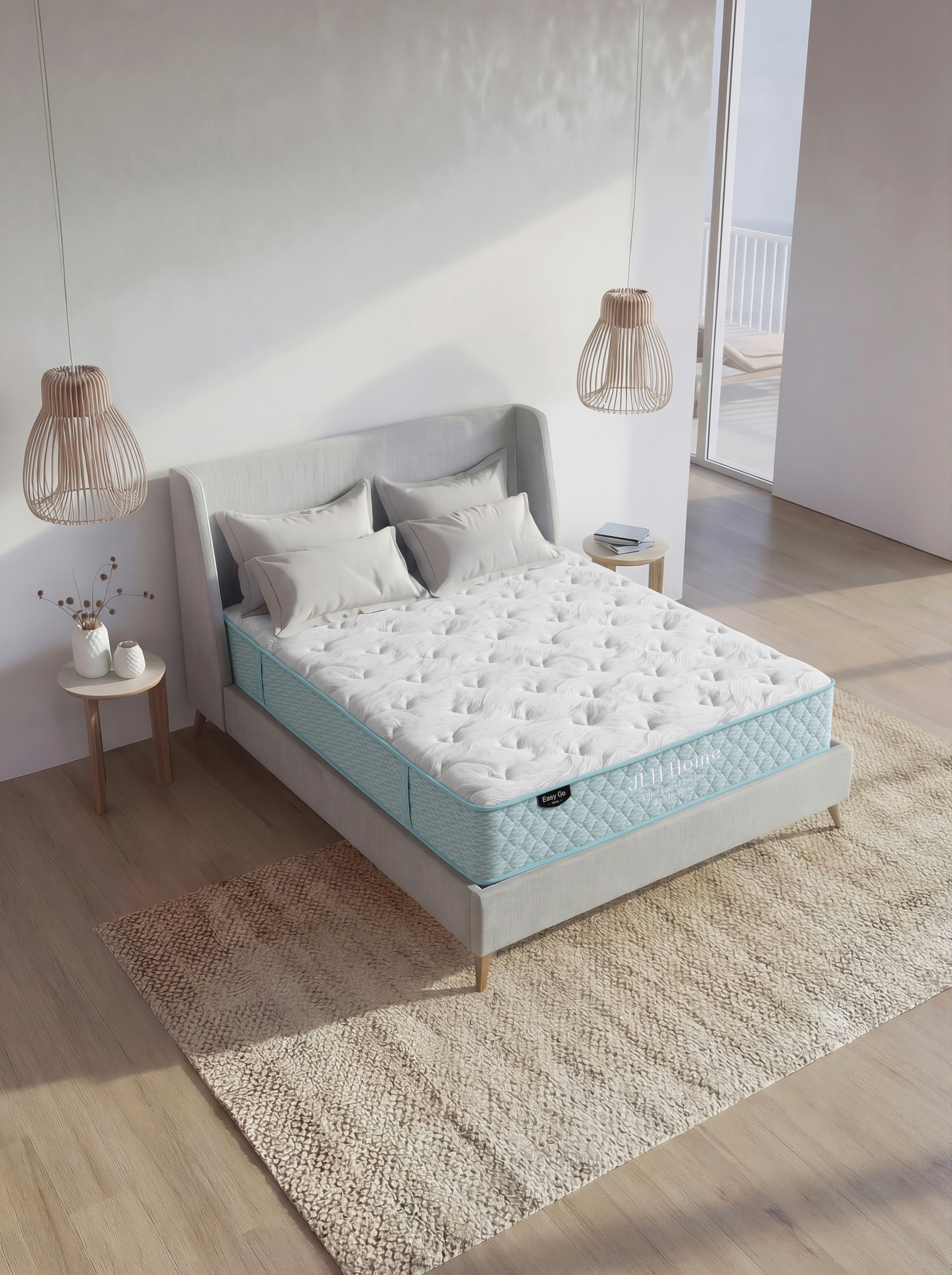
The mattress-in-a-box concept is built around vacuum compression and roll packing. After production, the mattress is compressed, sealed, and rolled into a compact package for storage and transportation. Once unpacked, the mattress is designed to return to its intended shape.
This approach can be applied to several product categories, including spring mattresses, foam mattresses, hotel mattresses, and rolled-up mattresses. It is particularly relevant for businesses that need scalable distribution, including bedding brands, furniture distributors, wholesale importers, hospitality operators, serviced residences, apartment developments, and compact-living projects.
Jinlongheng Furniture Co., Ltd. states that it was the first company in China to achieve mass production of vacuum-compressed rolled mattresses. Its packaging technology is positioned to help customers reduce storage requirements, improve loading efficiency, and simplify mattress movement throughout the supply chain.
Quality, Compliance, and Project Suitability
Compression efficiency should be evaluated alongside product quality and compliance standards. Jinlongheng lists a professional quality inspection team and certifications including ISO 9001, BS 7177, BSCI, ISO 14001, and ISO 45001. The company also states that its mattresses comply with CFR 1633 and BS 7177 requirements and undergo fire-safety testing.
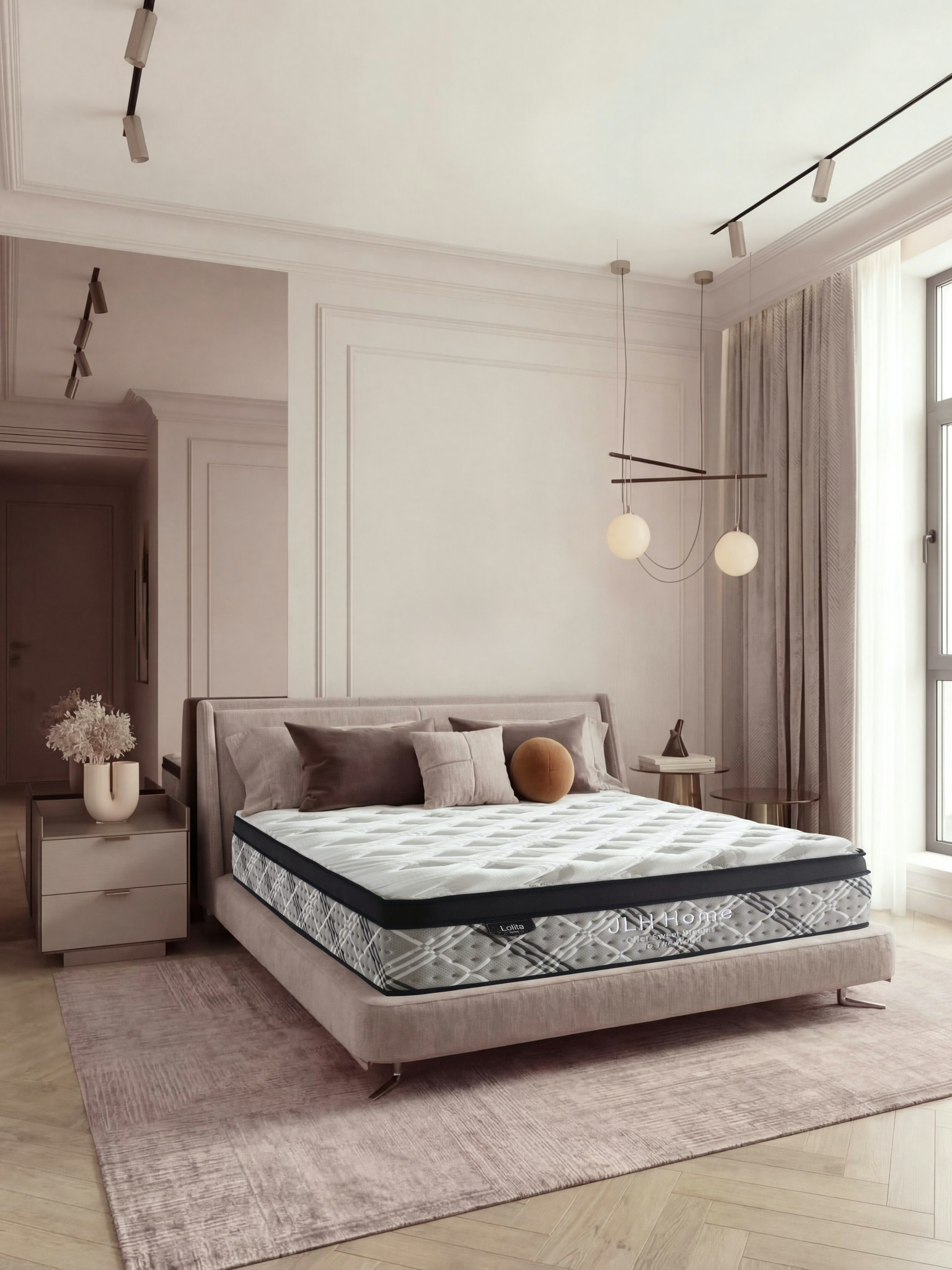
Rolled mattress solutions can support commercial accommodation projects where procurement consistency, scheduled delivery, and repeat orders are important. Jinlongheng lists hospitality projects in China, the Maldives, Poland, and the United States. One Poland hotel project included a repeat order for 2,265 mattresses in 2019, while another referenced hotel project involved approximately 689 rooms.

Compressed vs. Conventional Mattress Distribution
| Logistics Factor | Vacuum-Compressed Mattress-in-a-Box | Conventional Full-Size Mattress |
|---|---|---|
| Storage footprint | Reduced because the mattress is compressed and rolled | Higher because the mattress remains at full volume |
| Product volume | Jinlongheng states a 75% volume reduction | No volume-reduction process stated |
| Logistics cost impact | Jinlongheng states logistics costs can be reduced by 60% | No equivalent reduction stated |
| Delivery handling | Compact format can simplify loading and final delivery movement | Requires handling of a full-size mattress |
| Freight options | Suitable for sea, air, and rail freight | Suitable for sea, air, and rail freight |
| Commercial terms | MOQ of one container; T/T, L/C, PayPal, and cash are listed | Terms vary by supplier |
Frequently Asked Questions
Can vacuum-packed mattresses reduce warehouse costs?
They can reduce warehouse space requirements because compressed and rolled mattresses occupy less volume. Jinlongheng states that its vacuum-compression technology reduces mattress volume by 75%.
Do mattress-in-a-box products cut last-mile delivery costs?
Compressed packaging can improve final-delivery efficiency by making each mattress easier to stage and handle. The stated 60% savings refers to overall logistics costs, not a separately measured last-mile cost reduction.
Which buyers benefit from rolled mattresses?
Common applications include hotels, serviced apartments, residential developments, co-living spaces, bedding brands, furniture distributors, wholesale importers, and other bulk mattress supply programs.
Conclusion
Mattress-in-a-box products can be a strong logistics option for buyers seeking better warehouse utilization, improved freight loading, and more portable delivery handling. Vacuum-compressed spring and foam mattresses should be evaluated based on mattress size, project requirements, expected shipment volume, and destination logistics.
Jinlongheng supports factory manufacturing, OEM and ODM services, container-based minimum order arrangements, and sea, air, and rail shipping. Its listed quality and compliance credentials, including ISO 9001, BS 7177, and BSCI, provide additional reference points for procurement teams. For technical details or project support, contact sales15@jlhmattress.cn.
About Jinlongheng Furniture Co., Ltd.
Jinlongheng Furniture Co., Ltd. is a Guangdong-based home furnishing manufacturer founded in 1992. The company focuses on mattresses, upholstered beds, compressed sofas, pillows, and customized wholesale solutions for domestic and international customers.
The company states that it operates a 630,000-square-meter production base with maximum mattress production capacity of 120,000 units per month, or more than 1.4 million units annually. In-house textile, foam, and spring workshops are intended to support material control, product customization, and flexible delivery planning for hospitality and other commercial projects.
Listed credentials include ISO 9001 and BS 7177.

REPORT