







-
 Agriculture
-
 Health-Care
-
 Environment
-
 Construction-Real-Estate
-
 Tools-Hardware
-
 Home-Garden
-
 Furniture
-
 Luggage-Bags-Cases
-
 Medical-devices-Supplies
-
 Gifts-Crafts
-
 Sports-Entertainment
-
 Food-Beverage
-
 Vehicles-Transportation
-
 Power-Transmission
-
 Material-Handling
-
 Renewable-Energy
-
 Safety
-
 Testing-Instrument-Equipment
-
 Construction-Building-Machinery
-
 Pet-Supplies
-
 Personal-Care-Household-Cleaning
-
 Vehicle-Accessories-Electronics-Tools
-
 School-Office-Supplies
-
 Packaging-Printing
-
 Mother-Kids-Toys
-
 Business-Services
-
 Commercial-Equipment-Machinery
-
 Apparel-Accessories
-
 Security
-
 Shoes-Accessories
-
 Vehicle-Parts-Accessories
-
 Jewelry-Eyewear-Watches-Accessories
-
 Lights-Lighting
-
 Fabric-Textile-Raw-Material
-
 Fabrication-Services
-
 Industrial-Machinery
-
 Consumer-Electronics
-
 Electrical-Equipment-Supplies
-
 Electronic-Components-Accessories-Telecommunications
-
 Home-Appliances
-
 Beauty
-
 Chemicals
-
 Rubber-Plastics
-
 Metals-Alloys


























































































































































































































































































































































































































































































































































































- Masonry Materials
- Curtain Walls & Accessories
- Earthwork Products
- Fireproofing Materials
- Heat Insulation Materials
- Plastic Building Materials
- Building Boards
- Soundproofing Materials
- Timber
- Waterproofing Materials
- Balustrades & Handrails
- Bathroom & Kitchen
- Flooring & Accessories
- Tiles & Accessories
- Door, Window & Accessories
- Fireplaces & Stoves
- Floor Heating Systems & Parts
- Stairs & Stair Parts
- Ceilings
- Elevators & Escalators
- Stone
- Countertops, Vanity Tops & Table Tops
- Mosaics
- Metal Building Materials
- Multifunctional Materials
- Ladders & Scaffoldings
- Mouldings
- Corner Guards
- Decorative Films
- Formwork
- Building & Industrial Glass
- Other Construction & Real Estate
- Wallpapers/Wall panels
- HVAC System & Parts
- Outdoor Facilities
- Prefabricated Buildings
- Festive & Party Supplies
- Bathroom Products
- Household Sundries
- Rain Gear
- Garden Supplies
- Household Cleaning Tools & Accessories
- Lighters & Smoking Accessories
- Home Storage & Organization
- Household Scales
- Smart Home Improvement
- Home Textiles
- Kitchenware
- Drinkware & Accessories
- Dinnerware, Coffee & Wine
- Home Decor
- Golf
- Fitness & Body Building
- Amusement Park Facilities
- Billiards, Board Game,Coin Operated Games
- Musical Instruments
- Outdoor Affordable Luxury Sports
- Camping & Hiking
- Fishing
- Sports Safety&Rehabilitation
- Ball Sports Equipments
- Water Sports
- Winter Sports
- Luxury Travel Equipments
- Sports Shoes, Bags & Accessories
- Cycling
- Other Sports & Entertainment Products
- Artificial Grass&Sports Flooring&Sports Court Equipment
- Scooters
- Food Ingredients
- Honey & Honey Products
- Snacks
- Nuts & Kernels
- Seafood
- Plant & Animal Oil
- Beverages
- Fruit & Vegetable Products
- Frog & Escargot
- Bean Products
- Egg Products
- Dairy Products
- Seasonings & Condiments
- Canned Food
- Instant Food
- Baked Goods
- Other Food & Beverage
- Meat & Poultry
- Confectionery
- Grain Products
- Feminie Care
- Hair Care & Styling
- Body Care
- Hands & Feet Care
- Hygiene Products
- Men's Grooming
- Laundry Cleaning Supplies
- Travel Size & Gift Sets
- Room Deodorizers
- Other Personal Care Products
- Pest Control Products
- Special Household Cleaning
- Floor Cleaning
- Kitchen & Bathroom Cleaning
- Oral Care
- Bath Supplies
- Yellow Pages
- Correction Supplies
- Office Binding Supplies
- Office Cutting Supplies
- Board Erasers
- Office Adhesives & Tapes
- Education Supplies
- Pencil Cases & Bags
- Notebooks & Writing Pads
- File Folder Accessories
- Calendars
- Writing Accessories
- Commercial Office Supplies
- Pencil Sharpeners
- Pens
- Letter Pad/Paper
- Paper Envelopes
- Desk Organizers
- Pencils
- Markers & Highlighters
- Filing Products
- Art Supplies
- Easels
- Badge Holder & Accessories
- Office Paper
- Printer Supplies
- Book Covers
- Other Office & School Supplies
- Stationery Set
- Boards
- Clipboards
- Stamps
- Drafting Supplies
- Stencils
- Electronic Dictionary
- Books
- Map
- Magazines
- Calculators
- Baby & Toddler Toys
- Educational Toys
- Classic Toys
- Dress Up & Pretend Play
- Toy Vehicle
- Stuffed Animals & Plush Toys
- Outdoor Toys & Structures
- Balloons & Accessories
- Baby Food
- Children's Clothing
- Baby Supplies & Products
- Maternity Clothes
- Kids Shoes
- Baby Care
- Novelty & Gag Toys
- Dolls & Accessories
- Puzzle & Games
- Blocks & Model Building Toys
- Toddler Clothing
- Baby Clothing
- Kids' Luggage & Bags
- Arts, Crafts & DIY Toys
- Action & Toy Figures
- Baby Appliances
- Hobbies & Models
- Remote Control Toys
- Promotional Toys
- Pregnancy & Maternity
- Hygiene Products
- Kid's Textile&Bedding
- Novelty & Special Use
- Toy Weapons
- Baby Gifts
- Baby Storage & Organization
- Auto Drive Systems
- ATV/UTV Parts & Accessories
- Marine Parts & Accessories
- Other Auto Parts
- Trailer Parts & Accessories
- Auto Transmission Systems
- Train Parts & Accessories
- Universal Parts
- Railway Parts & Accessories
- Auto Brake Systems
- Aviation Parts & Accessories
- Truck Parts & Accessories
- Auto Suspension Systems
- Auto Lighting Systems
- New Energy Vehicle Parts & Accessories
- Auto Steering Systems
- Wheels, Tires & Accessories
- Bus Parts & Accessories
- Auto Performance Parts
- Cooling System
- Go-Kart & Kart Racer Parts & Accessories
- Air Conditioning Systems
- Heavy Duty Vehicle Parts & Accessories
- Auto Electrical Systems
- Auto Body Systems
- Auto Engine Systems
- Container Parts & Accessories
- Motorcycle Parts & Accessories
- Refrigeration & Heat Exchange Equipment
- Machine Tool Equipment
- Food & Beverage Machinery
- Agricultural Machinery & Equipment
- Apparel & Textile Machinery
- Chemical Machinery
- Packaging Machines
- Paper Production Machinery
- Plastic & Rubber Processing Machinery
- Industrial Robots
- Electronic Products Machinery
- Metal & Metallurgy Machinery
- Woodworking Machinery
- Home Product Manufacturing Machinery
- Machinery Accessories
- Environmental Machinery
- Machinery Service
- Electrical Equipment Manufacturing Machinery
- Industrial Compressors & Parts
- Tobacco & Cigarette Machinery
- Production Line
- Used Industrial Machinery
- Electronics Production Machinery
- Other Machinery & Industrial Equipment
- Camera, Photo & Accessories
- Portable Audio, Video & Accessories
- Television, Home Audio, Video & Accessories
- Video Games & Accessories
- Mobile Phone & Accessories
- Electronic Publications
- Earphone & Headphone & Accessories
- Speakers & Accessories
- Smart Electronics
- TV Receivers & Accessories
- Mobile Phone & Computer Repair Parts
- Chargers, Batteries & Power Supplies
- Used Electronics
- VR, AR, MR Hardware & Software
- Projectors & Presentation Equipments
- Other Consumer Electronics
- Cables & Commonly Used Accessories
- Computer Hardware & Software
- Displays, Signage and Optoelectronics
- Discrete Semiconductors
- Wireless & IoT Module and Products
- Telecommunications
- Connectors, Terminals & Accessories
- Development Boards, Electronic Modules and Kits
- Circuit Protection
- Sensors
- Isolators
- Audio Components and Products
- Integrated Circuits
- Power Supplies
- Relays
- RF, Microwave and RFID
- Electronic Accessories & Supplies
- Passive Components
- PCB & PCBA
- Air Quality Appliances
- Home Appliance Parts
- Heating & Cooling Appliances
- Small Kitchen Appliances
- Laundry Appliances
- Water Heaters
- Water Treatment Appliances
- Refrigerators & Freezers
- Personal Care & Beauty Appliances
- Major Kitchen Appliances
- Cleaning Appliances
- Second-hand Appliances
- Smart Home Appliances
- Other Home Appliances
- Energy Chemicals
- Inorganic Chemicals
- Basic Organic Chemicals
- Agrochemicals
- Admixture & Additives
- Catalysts & Chemical Auxiliary Agents
- Pigments & Dyestuff
- Coating & Paint
- Daily Chemicals
- Polymer
- Organic Intermediate
- Adhesives & Sealants
- Chemical Waste
- Biological Chemical Products
- Surface Treatment Chemicals
- Painting & Coating
- Chemical Reagents
- Flavor & Fragrance
- Non-Explosive Demolition Agents
- Other Chemicals
- Custom Chemical Services

How much does the unit cost of CNC components drop if I order 5000 pieces instead of 500?
Ordering 5,000 CNC components instead of 500 typically reduces the unit cost by 30% to 50%. This price drop is driven by amortizing fixed CNC machine setup, programming, and tooling fees over a larger volume, while securing bulk raw material discounts and maximizing automated production efficiency.
Core Solutions and Key Points
- Setup Cost Amortization: CNC turning and milling require initial programming, tool selection, and fixture calibration. For a 500-piece order, these fixed costs represent a high percentage of the unit price, whereas a 5,000-piece order dilutes them to near-negligible levels.
- Raw Material Economy: Procuring raw metals like stainless steel (304/316L), aluminum (6061/7075), or brass in bulk quantities required for 5,000-piece runs triggers wholesale discounts from material suppliers.
- Machining Cycle Efficiency: Continuous automated runs reduce labor overhead per part. With over 80% of production equipment being automated CNC machining centers, the average manufacturing cycle time drops to as low as 15 minutes per piece.
- Application Scenarios: High-volume production benefits sectors like Industrial Machinery, Automation Equipment, and Valve and Pipeline Systems, where consistent dimensional accuracy of up to ±0.03 mm is mandatory across thousands of units.
Detailed Principle Analysis
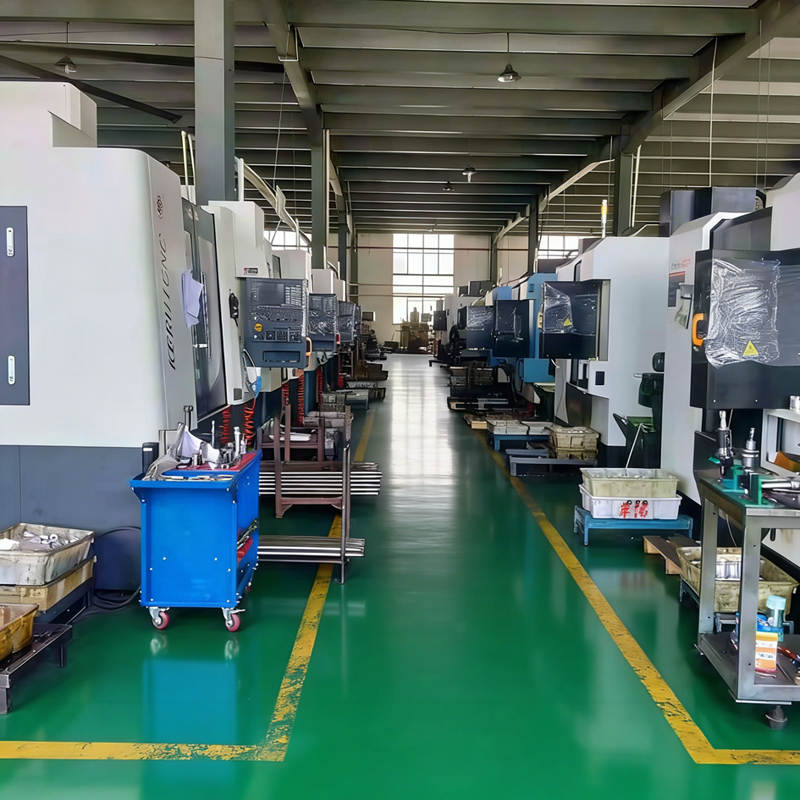
To understand the exact mechanics of the cost curve, we must look at the manufacturing flow. A precision hardware manufacturer like ZheJiang Dream Industry Limited utilizes highly automated CNC machining centers and lathes where setup time is a major cost driver. When preparing a production run for precision turned parts, a senior engineer must program the toolpaths, select appropriate tooling, and configure the workholding fixtures. This setup process can take several hours regardless of whether the order is for 500 or 5,000 pieces. If setup costs are distributed over 500 pieces, the per-unit setup cost is significant; for 5,000 pieces, that cost is split tenfold, immediately dropping the unit price.
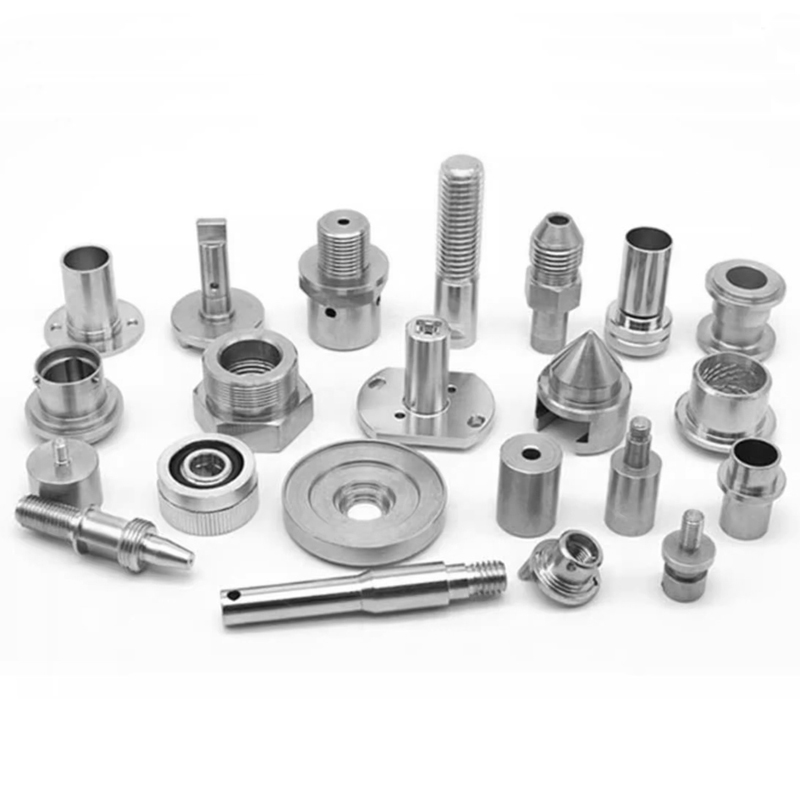
Furthermore, raw material suppliers offer tiered pricing. Purchasing bulk raw metals or engineering plastics for 5,000 parts triggers wholesale discounts. Processing efficiency also rises during long-run manufacturing. Machines run continuously with fewer interruptions for tool changes or measurements, reducing the average cycle time per part. This continuous operation also minimizes material waste during the initial calibration phase of the CNC machine, further lowering the overall production cost.
Data and Solution Comparison
The table below outlines the operational and cost differences between ordering a small batch of 500 pieces versus a mass production batch of 5,000 pieces for standard CNC components.
| Cost & Operational Factors | 500-Piece Order (Small Batch) | 5,000-Piece Order (Mass Production) | Impact on Unit Cost |
|---|---|---|---|
| Setup & Programming Amortization | High (spread over 500 units) | Extremely Low (spread over 5,000 units) | Significant reduction (often 20% to 30% of total savings) |
| Raw Material Unit Cost | Standard tier pricing | Bulk wholesale discount | 10% to 15% lower material costs per unit |
| Machining Efficiency | Moderate (frequent stops/re-calibration) | High (continuous automated cycle) | Reduced labor overhead per part |
| Quality Inspection (ISO 9001) | First Article Inspection + Batch sampling | 23 in-process inspection steps | High consistency, lower per-unit QA cost |
| Logistics & Shipping | Express (DHL/UPS/FedEx) | Sea Freight or Air Freight | Substantial freight savings per kilogram |
| Standard Lead Time | 7–15 days | 15–30 days | Optimized machine scheduling reduces idle costs |
Frequently Asked Questions (FAQ)
Does the dimensional tolerance change when scaling up to 5,000 pieces?
No. Precision CNC machining manufacturers maintain identical tolerances, typically standard tolerance of ±0.1 mm or precision tolerance of ±0.03 mm, regardless of batch size. Automated tool wear compensation and rigorous quality control processes ensure consistent accuracy across all 5,000 components.
What materials offer the biggest price drop when ordering in bulk?
Tougher materials like 304 or 316L stainless steel, titanium, and specialized engineering plastics (like PEEK, Teflon, or Nylon) show the steepest price drops. This is because raw stock prices for these materials are highly sensitive to order volume, and tool wear costs are amortized better over longer production runs.
How does the choice of shipping method affect the total cost of a 5,000-piece order?
For 500 pieces, express shipping (DHL, UPS, FedEx) is common but expensive per unit. For 5,000 pieces, sea freight or air freight becomes highly cost-effective, drastically lowering the landed unit cost of the CNC components.
Final Conclusions and Recommendations
For long-term industrial projects, transitioning from small-batch prototyping (500 pieces) to mass production (5,000 pieces) is the most effective strategy to optimize manufacturing budgets. Utilizing OEM and ODM manufacturing models allows buyers to lock in bulk material rates while maintaining a flexible delivery schedule. Partnering with an ISO 9001 certified factory ensures that high-volume runs do not compromise on key dimensional accuracy, resulting in reliable hardware components with a lower total cost of ownership.
Technical Support: 86-15868979792
About Us
ZheJiang Dream Industry Limited has over 20 years of experience in precision manufacturing. Established in 2008, the company operates a 2,500 square meter factory equipped with over 100 production and inspection units to deliver custom CNC precision machined parts and assemblies. Our ISO 9001 certified manufacturing system ensures high-precision output, with an annual capacity of over 1.2 million units of stainless steel handwheels and 1.3 million units of non-standard CNC precision machined hardware parts.
REPORT