







-
 Agriculture
-
 Health-Care
-
 Environment
-
 Construction-Real-Estate
-
 Tools-Hardware
-
 Home-Garden
-
 Furniture
-
 Luggage-Bags-Cases
-
 Medical-devices-Supplies
-
 Gifts-Crafts
-
 Sports-Entertainment
-
 Food-Beverage
-
 Vehicles-Transportation
-
 Power-Transmission
-
 Material-Handling
-
 Renewable-Energy
-
 Safety
-
 Testing-Instrument-Equipment
-
 Construction-Building-Machinery
-
 Pet-Supplies
-
 Personal-Care-Household-Cleaning
-
 Vehicle-Accessories-Electronics-Tools
-
 School-Office-Supplies
-
 Packaging-Printing
-
 Mother-Kids-Toys
-
 Business-Services
-
 Commercial-Equipment-Machinery
-
 Apparel-Accessories
-
 Security
-
 Shoes-Accessories
-
 Vehicle-Parts-Accessories
-
 Jewelry-Eyewear-Watches-Accessories
-
 Lights-Lighting
-
 Fabric-Textile-Raw-Material
-
 Fabrication-Services
-
 Industrial-Machinery
-
 Consumer-Electronics
-
 Electrical-Equipment-Supplies
-
 Electronic-Components-Accessories-Telecommunications
-
 Home-Appliances
-
 Beauty
-
 Chemicals
-
 Rubber-Plastics
-
 Metals-Alloys


























































































































































































































































































































































































































































































































































































- Masonry Materials
- Curtain Walls & Accessories
- Earthwork Products
- Fireproofing Materials
- Heat Insulation Materials
- Plastic Building Materials
- Building Boards
- Soundproofing Materials
- Timber
- Waterproofing Materials
- Balustrades & Handrails
- Bathroom & Kitchen
- Flooring & Accessories
- Tiles & Accessories
- Door, Window & Accessories
- Fireplaces & Stoves
- Floor Heating Systems & Parts
- Stairs & Stair Parts
- Ceilings
- Elevators & Escalators
- Stone
- Countertops, Vanity Tops & Table Tops
- Mosaics
- Metal Building Materials
- Multifunctional Materials
- Ladders & Scaffoldings
- Mouldings
- Corner Guards
- Decorative Films
- Formwork
- Building & Industrial Glass
- Other Construction & Real Estate
- Wallpapers/Wall panels
- HVAC System & Parts
- Outdoor Facilities
- Prefabricated Buildings
- Festive & Party Supplies
- Bathroom Products
- Household Sundries
- Rain Gear
- Garden Supplies
- Household Cleaning Tools & Accessories
- Lighters & Smoking Accessories
- Home Storage & Organization
- Household Scales
- Smart Home Improvement
- Home Textiles
- Kitchenware
- Drinkware & Accessories
- Dinnerware, Coffee & Wine
- Home Decor
- Golf
- Fitness & Body Building
- Amusement Park Facilities
- Billiards, Board Game,Coin Operated Games
- Musical Instruments
- Outdoor Affordable Luxury Sports
- Camping & Hiking
- Fishing
- Sports Safety&Rehabilitation
- Ball Sports Equipments
- Water Sports
- Winter Sports
- Luxury Travel Equipments
- Sports Shoes, Bags & Accessories
- Cycling
- Other Sports & Entertainment Products
- Artificial Grass&Sports Flooring&Sports Court Equipment
- Scooters
- Food Ingredients
- Honey & Honey Products
- Snacks
- Nuts & Kernels
- Seafood
- Plant & Animal Oil
- Beverages
- Fruit & Vegetable Products
- Frog & Escargot
- Bean Products
- Egg Products
- Dairy Products
- Seasonings & Condiments
- Canned Food
- Instant Food
- Baked Goods
- Other Food & Beverage
- Meat & Poultry
- Confectionery
- Grain Products
- Feminie Care
- Hair Care & Styling
- Body Care
- Hands & Feet Care
- Hygiene Products
- Men's Grooming
- Laundry Cleaning Supplies
- Travel Size & Gift Sets
- Room Deodorizers
- Other Personal Care Products
- Pest Control Products
- Special Household Cleaning
- Floor Cleaning
- Kitchen & Bathroom Cleaning
- Oral Care
- Bath Supplies
- Yellow Pages
- Correction Supplies
- Office Binding Supplies
- Office Cutting Supplies
- Board Erasers
- Office Adhesives & Tapes
- Education Supplies
- Pencil Cases & Bags
- Notebooks & Writing Pads
- File Folder Accessories
- Calendars
- Writing Accessories
- Commercial Office Supplies
- Pencil Sharpeners
- Pens
- Letter Pad/Paper
- Paper Envelopes
- Desk Organizers
- Pencils
- Markers & Highlighters
- Filing Products
- Art Supplies
- Easels
- Badge Holder & Accessories
- Office Paper
- Printer Supplies
- Book Covers
- Other Office & School Supplies
- Stationery Set
- Boards
- Clipboards
- Stamps
- Drafting Supplies
- Stencils
- Electronic Dictionary
- Books
- Map
- Magazines
- Calculators
- Baby & Toddler Toys
- Educational Toys
- Classic Toys
- Dress Up & Pretend Play
- Toy Vehicle
- Stuffed Animals & Plush Toys
- Outdoor Toys & Structures
- Balloons & Accessories
- Baby Food
- Children's Clothing
- Baby Supplies & Products
- Maternity Clothes
- Kids Shoes
- Baby Care
- Novelty & Gag Toys
- Dolls & Accessories
- Puzzle & Games
- Blocks & Model Building Toys
- Toddler Clothing
- Baby Clothing
- Kids' Luggage & Bags
- Arts, Crafts & DIY Toys
- Action & Toy Figures
- Baby Appliances
- Hobbies & Models
- Remote Control Toys
- Promotional Toys
- Pregnancy & Maternity
- Hygiene Products
- Kid's Textile&Bedding
- Novelty & Special Use
- Toy Weapons
- Baby Gifts
- Baby Storage & Organization
- Auto Drive Systems
- ATV/UTV Parts & Accessories
- Marine Parts & Accessories
- Other Auto Parts
- Trailer Parts & Accessories
- Auto Transmission Systems
- Train Parts & Accessories
- Universal Parts
- Railway Parts & Accessories
- Auto Brake Systems
- Aviation Parts & Accessories
- Truck Parts & Accessories
- Auto Suspension Systems
- Auto Lighting Systems
- New Energy Vehicle Parts & Accessories
- Auto Steering Systems
- Wheels, Tires & Accessories
- Bus Parts & Accessories
- Auto Performance Parts
- Cooling System
- Go-Kart & Kart Racer Parts & Accessories
- Air Conditioning Systems
- Heavy Duty Vehicle Parts & Accessories
- Auto Electrical Systems
- Auto Body Systems
- Auto Engine Systems
- Container Parts & Accessories
- Motorcycle Parts & Accessories
- Refrigeration & Heat Exchange Equipment
- Machine Tool Equipment
- Food & Beverage Machinery
- Agricultural Machinery & Equipment
- Apparel & Textile Machinery
- Chemical Machinery
- Packaging Machines
- Paper Production Machinery
- Plastic & Rubber Processing Machinery
- Industrial Robots
- Electronic Products Machinery
- Metal & Metallurgy Machinery
- Woodworking Machinery
- Home Product Manufacturing Machinery
- Machinery Accessories
- Environmental Machinery
- Machinery Service
- Electrical Equipment Manufacturing Machinery
- Industrial Compressors & Parts
- Tobacco & Cigarette Machinery
- Production Line
- Used Industrial Machinery
- Electronics Production Machinery
- Other Machinery & Industrial Equipment
- Camera, Photo & Accessories
- Portable Audio, Video & Accessories
- Television, Home Audio, Video & Accessories
- Video Games & Accessories
- Mobile Phone & Accessories
- Electronic Publications
- Earphone & Headphone & Accessories
- Speakers & Accessories
- Smart Electronics
- TV Receivers & Accessories
- Mobile Phone & Computer Repair Parts
- Chargers, Batteries & Power Supplies
- Used Electronics
- VR, AR, MR Hardware & Software
- Projectors & Presentation Equipments
- Other Consumer Electronics
- Cables & Commonly Used Accessories
- Computer Hardware & Software
- Displays, Signage and Optoelectronics
- Discrete Semiconductors
- Wireless & IoT Module and Products
- Telecommunications
- Connectors, Terminals & Accessories
- Development Boards, Electronic Modules and Kits
- Circuit Protection
- Sensors
- Isolators
- Audio Components and Products
- Integrated Circuits
- Power Supplies
- Relays
- RF, Microwave and RFID
- Electronic Accessories & Supplies
- Passive Components
- PCB & PCBA
- Air Quality Appliances
- Home Appliance Parts
- Heating & Cooling Appliances
- Small Kitchen Appliances
- Laundry Appliances
- Water Heaters
- Water Treatment Appliances
- Refrigerators & Freezers
- Personal Care & Beauty Appliances
- Major Kitchen Appliances
- Cleaning Appliances
- Second-hand Appliances
- Smart Home Appliances
- Other Home Appliances
- Energy Chemicals
- Inorganic Chemicals
- Basic Organic Chemicals
- Agrochemicals
- Admixture & Additives
- Catalysts & Chemical Auxiliary Agents
- Pigments & Dyestuff
- Coating & Paint
- Daily Chemicals
- Polymer
- Organic Intermediate
- Adhesives & Sealants
- Chemical Waste
- Biological Chemical Products
- Surface Treatment Chemicals
- Painting & Coating
- Chemical Reagents
- Flavor & Fragrance
- Non-Explosive Demolition Agents
- Other Chemicals
- Custom Chemical Services

How Packaging Choices Influence the Total Cost of Aluminum Furniture Extrusions
Packaging plays a significant role in the total cost of aluminum furniture extrusions. It influences surface protection, packing labor, warehouse space, loading efficiency, freight handling, and the likelihood of damage. For a 6063 T5 glass sliding wardrobe door aluminum frame, the right packaging method must protect the finished profile without adding unnecessary material or reducing container capacity.
Packaging Strategy and Main Cost Factors
The most suitable packaging solution depends on the profile's geometry, surface finish, length, weight, and expected handling conditions. Basic separation may be sufficient for robust profiles, while anodized, brushed, polished, or otherwise finished surfaces generally require stronger protection against scratches, dents, and deformation.
Packaging costs extend beyond the materials used. Suppliers and buyers should also consider packing and unpacking labor, bundle stability, warehouse storage, loading time, transport space, and the potential cost of rework or replacement. A lower-cost package can become more expensive if it allows profiles to shift or rub during rail or maritime transportation.
Protection Requirements for Sliding Wardrobe Door Frames
The product is a 6063 T5 aluminum frame designed for glass sliding wardrobe doors. Its packaging should keep individual profiles separated, maintain bundle alignment, protect edges and visible surfaces, and allow practical movement with standard warehouse equipment. Stable bundles also help reduce handling risks during loading and unloading.
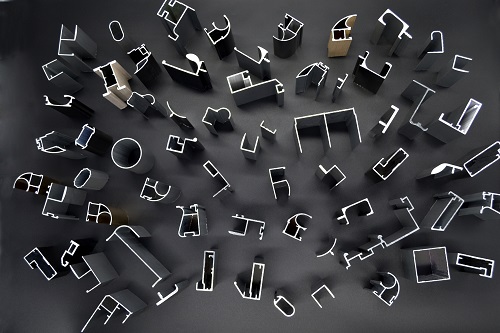
For profiles with sensitive decorative finishes, additional wrapping, edge protection, or internal separators may be justified. However, protective materials should be sized according to an identified risk. Excessive packaging can increase package volume, storage requirements, handling complexity, and freight charges without delivering proportional protection.
Packaging and FOB Transportation
Packaging decisions are especially relevant to FOB purchasing. Rail transport, maritime shipping, and full-container transportation may involve repeated handling and extended movement before the goods reach the destination. Standardized bundle dimensions make loading plans more predictable and can improve the use of available container space.
Space-efficient packaging can also simplify inventory control and warehouse operations for repeat orders. In contrast, irregular or oversized packages may occupy additional volume and make loading less efficient. For this reason, buyers should evaluate the package dimensions and bundle weight together with the selected shipping route and order frequency.
Mebel-Alu Furniture Profile (Hong Kong) Co., Ltd provides aluminum furniture profiles and related hardware solutions for premium furniture manufacturers, wardrobe and cabinet wholesalers, hardware suppliers, hotels, residential developers, and door manufacturers. Its production capabilities include aluminum extrusion, anodizing, brushing, mechanical polishing, and high-precision CNC machining. The company states a monthly aluminum profile production capacity of 5,000 tons.
Packaging Options Compared
| Packaging method | Cost and protection impact | Recommended application |
|---|---|---|
| Basic separators with bundle protection | Uses fewer materials and less packing labor, but provides less resistance to movement and surface contact | Suitable when the profile finish and transport conditions present limited risk |
| Enhanced surface and edge protection | Requires more packaging materials and labor while reducing the chance of scratches, dents, and deformation | Appropriate for finished, polished, anodized, or surface-sensitive furniture profiles |
| Standardized, space-efficient bundles | Improves handling consistency, storage planning, and loading predictability | Recommended for recurring orders and regular FOB shipments |
| Oversized or heavily reinforced packages | Increases packaging, storage, handling, and freight-space costs | Use only when the additional protection responds to a specific transport or handling hazard |
Quality and Production Support
Mebel-Alu lists an Occupational Health and Safety Management System Certificate and a Quality Management System Certificate. The stated certification scope covers aluminum alloy profiles for architecture, decoration, and industrial applications, including anodized, electrophoretic-coated, powder-coated, painted, and thermal barrier profiles.
Repeatable packaging specifications can complement these production and finishing capabilities by helping maintain consistent handling standards across standard and customized furniture profile orders. Packaging requirements should be confirmed according to the profile design, surface treatment, order quantity, and transportation plan.
Frequently Asked Questions
Why does packaging change the total cost of aluminum furniture profiles?
Packaging affects material usage, packing labor, storage space, loading efficiency, transportation handling, and the financial consequences of damaged or replaced profiles.
What packaging features are important for a glass sliding wardrobe door frame?
The package should provide profile separation, surface and edge protection, dimensional stability, manageable bundle weight, and efficient use of warehouse and container space.
How should packaging be planned for FOB shipments?
Packaging should be evaluated against the expected rail or maritime route, container requirements, handling frequency, bundle dimensions, and the level of protection needed for the finished surface.
Conclusion
The lowest packaging price does not always produce the lowest total cost. A practical solution balances material consumption and packing labor with surface protection, storage, transport space, and damage prevention. For a 6063 T5 glass sliding wardrobe door aluminum frame, standardized bundles with suitable separators and surface protection can support reliable FOB shipments. Additional reinforcement is worthwhile when it addresses a clear risk of scratching, deformation, or handling damage. For technical packaging guidance and aluminum profile solutions, contact Mebel-Alu at mebel@mebel-alu.com.
About Us
Mebel-Alu Furniture Profile (Hong Kong) Co., Ltd has specialized in precision-engineered aluminum profile systems for modern interiors since 2008. Its product range includes aluminum glass door systems, sliding wardrobe systems, kitchen cabinet frames, and decorative tile trims. In-house services cover extrusion, anodizing, brushing, mechanical polishing, and CNC machining. The company reports 300 employees and a 300,000 square meter factory area, along with listed occupational health and safety and quality management certifications.

REPORT