







-
 Agriculture
-
 Health-Care
-
 Environment
-
 Construction-Real-Estate
-
 Tools-Hardware
-
 Home-Garden
-
 Furniture
-
 Luggage-Bags-Cases
-
 Medical-devices-Supplies
-
 Gifts-Crafts
-
 Sports-Entertainment
-
 Food-Beverage
-
 Vehicles-Transportation
-
 Power-Transmission
-
 Material-Handling
-
 Renewable-Energy
-
 Safety
-
 Testing-Instrument-Equipment
-
 Construction-Building-Machinery
-
 Pet-Supplies
-
 Personal-Care-Household-Cleaning
-
 Vehicle-Accessories-Electronics-Tools
-
 School-Office-Supplies
-
 Packaging-Printing
-
 Mother-Kids-Toys
-
 Business-Services
-
 Commercial-Equipment-Machinery
-
 Apparel-Accessories
-
 Security
-
 Shoes-Accessories
-
 Vehicle-Parts-Accessories
-
 Jewelry-Eyewear-Watches-Accessories
-
 Lights-Lighting
-
 Fabric-Textile-Raw-Material
-
 Fabrication-Services
-
 Industrial-Machinery
-
 Consumer-Electronics
-
 Electrical-Equipment-Supplies
-
 Electronic-Components-Accessories-Telecommunications
-
 Home-Appliances
-
 Beauty
-
 Chemicals
-
 Rubber-Plastics
-
 Metals-Alloys


























































































































































































































































































































































































































































































































































































- Masonry Materials
- Curtain Walls & Accessories
- Earthwork Products
- Fireproofing Materials
- Heat Insulation Materials
- Plastic Building Materials
- Building Boards
- Soundproofing Materials
- Timber
- Waterproofing Materials
- Balustrades & Handrails
- Bathroom & Kitchen
- Flooring & Accessories
- Tiles & Accessories
- Door, Window & Accessories
- Fireplaces & Stoves
- Floor Heating Systems & Parts
- Stairs & Stair Parts
- Ceilings
- Elevators & Escalators
- Stone
- Countertops, Vanity Tops & Table Tops
- Mosaics
- Metal Building Materials
- Multifunctional Materials
- Ladders & Scaffoldings
- Mouldings
- Corner Guards
- Decorative Films
- Formwork
- Building & Industrial Glass
- Other Construction & Real Estate
- Wallpapers/Wall panels
- HVAC System & Parts
- Outdoor Facilities
- Prefabricated Buildings
- Festive & Party Supplies
- Bathroom Products
- Household Sundries
- Rain Gear
- Garden Supplies
- Household Cleaning Tools & Accessories
- Lighters & Smoking Accessories
- Home Storage & Organization
- Household Scales
- Smart Home Improvement
- Home Textiles
- Kitchenware
- Drinkware & Accessories
- Dinnerware, Coffee & Wine
- Home Decor
- Golf
- Fitness & Body Building
- Amusement Park Facilities
- Billiards, Board Game,Coin Operated Games
- Musical Instruments
- Outdoor Affordable Luxury Sports
- Camping & Hiking
- Fishing
- Sports Safety&Rehabilitation
- Ball Sports Equipments
- Water Sports
- Winter Sports
- Luxury Travel Equipments
- Sports Shoes, Bags & Accessories
- Cycling
- Other Sports & Entertainment Products
- Artificial Grass&Sports Flooring&Sports Court Equipment
- Scooters
- Food Ingredients
- Honey & Honey Products
- Snacks
- Nuts & Kernels
- Seafood
- Plant & Animal Oil
- Beverages
- Fruit & Vegetable Products
- Frog & Escargot
- Bean Products
- Egg Products
- Dairy Products
- Seasonings & Condiments
- Canned Food
- Instant Food
- Baked Goods
- Other Food & Beverage
- Meat & Poultry
- Confectionery
- Grain Products
- Feminie Care
- Hair Care & Styling
- Body Care
- Hands & Feet Care
- Hygiene Products
- Men's Grooming
- Laundry Cleaning Supplies
- Travel Size & Gift Sets
- Room Deodorizers
- Other Personal Care Products
- Pest Control Products
- Special Household Cleaning
- Floor Cleaning
- Kitchen & Bathroom Cleaning
- Oral Care
- Bath Supplies
- Yellow Pages
- Correction Supplies
- Office Binding Supplies
- Office Cutting Supplies
- Board Erasers
- Office Adhesives & Tapes
- Education Supplies
- Pencil Cases & Bags
- Notebooks & Writing Pads
- File Folder Accessories
- Calendars
- Writing Accessories
- Commercial Office Supplies
- Pencil Sharpeners
- Pens
- Letter Pad/Paper
- Paper Envelopes
- Desk Organizers
- Pencils
- Markers & Highlighters
- Filing Products
- Art Supplies
- Easels
- Badge Holder & Accessories
- Office Paper
- Printer Supplies
- Book Covers
- Other Office & School Supplies
- Stationery Set
- Boards
- Clipboards
- Stamps
- Drafting Supplies
- Stencils
- Electronic Dictionary
- Books
- Map
- Magazines
- Calculators
- Baby & Toddler Toys
- Educational Toys
- Classic Toys
- Dress Up & Pretend Play
- Toy Vehicle
- Stuffed Animals & Plush Toys
- Outdoor Toys & Structures
- Balloons & Accessories
- Baby Food
- Children's Clothing
- Baby Supplies & Products
- Maternity Clothes
- Kids Shoes
- Baby Care
- Novelty & Gag Toys
- Dolls & Accessories
- Puzzle & Games
- Blocks & Model Building Toys
- Toddler Clothing
- Baby Clothing
- Kids' Luggage & Bags
- Arts, Crafts & DIY Toys
- Action & Toy Figures
- Baby Appliances
- Hobbies & Models
- Remote Control Toys
- Promotional Toys
- Pregnancy & Maternity
- Hygiene Products
- Kid's Textile&Bedding
- Novelty & Special Use
- Toy Weapons
- Baby Gifts
- Baby Storage & Organization
- Auto Drive Systems
- ATV/UTV Parts & Accessories
- Marine Parts & Accessories
- Other Auto Parts
- Trailer Parts & Accessories
- Auto Transmission Systems
- Train Parts & Accessories
- Universal Parts
- Railway Parts & Accessories
- Auto Brake Systems
- Aviation Parts & Accessories
- Truck Parts & Accessories
- Auto Suspension Systems
- Auto Lighting Systems
- New Energy Vehicle Parts & Accessories
- Auto Steering Systems
- Wheels, Tires & Accessories
- Bus Parts & Accessories
- Auto Performance Parts
- Cooling System
- Go-Kart & Kart Racer Parts & Accessories
- Air Conditioning Systems
- Heavy Duty Vehicle Parts & Accessories
- Auto Electrical Systems
- Auto Body Systems
- Auto Engine Systems
- Container Parts & Accessories
- Motorcycle Parts & Accessories
- Refrigeration & Heat Exchange Equipment
- Machine Tool Equipment
- Food & Beverage Machinery
- Agricultural Machinery & Equipment
- Apparel & Textile Machinery
- Chemical Machinery
- Packaging Machines
- Paper Production Machinery
- Plastic & Rubber Processing Machinery
- Industrial Robots
- Electronic Products Machinery
- Metal & Metallurgy Machinery
- Woodworking Machinery
- Home Product Manufacturing Machinery
- Machinery Accessories
- Environmental Machinery
- Machinery Service
- Electrical Equipment Manufacturing Machinery
- Industrial Compressors & Parts
- Tobacco & Cigarette Machinery
- Production Line
- Used Industrial Machinery
- Electronics Production Machinery
- Other Machinery & Industrial Equipment
- Camera, Photo & Accessories
- Portable Audio, Video & Accessories
- Television, Home Audio, Video & Accessories
- Video Games & Accessories
- Mobile Phone & Accessories
- Electronic Publications
- Earphone & Headphone & Accessories
- Speakers & Accessories
- Smart Electronics
- TV Receivers & Accessories
- Mobile Phone & Computer Repair Parts
- Chargers, Batteries & Power Supplies
- Used Electronics
- VR, AR, MR Hardware & Software
- Projectors & Presentation Equipments
- Other Consumer Electronics
- Cables & Commonly Used Accessories
- Computer Hardware & Software
- Displays, Signage and Optoelectronics
- Discrete Semiconductors
- Wireless & IoT Module and Products
- Telecommunications
- Connectors, Terminals & Accessories
- Development Boards, Electronic Modules and Kits
- Circuit Protection
- Sensors
- Isolators
- Audio Components and Products
- Integrated Circuits
- Power Supplies
- Relays
- RF, Microwave and RFID
- Electronic Accessories & Supplies
- Passive Components
- PCB & PCBA
- Air Quality Appliances
- Home Appliance Parts
- Heating & Cooling Appliances
- Small Kitchen Appliances
- Laundry Appliances
- Water Heaters
- Water Treatment Appliances
- Refrigerators & Freezers
- Personal Care & Beauty Appliances
- Major Kitchen Appliances
- Cleaning Appliances
- Second-hand Appliances
- Smart Home Appliances
- Other Home Appliances
- Energy Chemicals
- Inorganic Chemicals
- Basic Organic Chemicals
- Agrochemicals
- Admixture & Additives
- Catalysts & Chemical Auxiliary Agents
- Pigments & Dyestuff
- Coating & Paint
- Daily Chemicals
- Polymer
- Organic Intermediate
- Adhesives & Sealants
- Chemical Waste
- Biological Chemical Products
- Surface Treatment Chemicals
- Painting & Coating
- Chemical Reagents
- Flavor & Fragrance
- Non-Explosive Demolition Agents
- Other Chemicals
- Custom Chemical Services

How Six-Color Transfer Printing Can Improve Energy Efficiency
Energy management in six-color transfer printing is shaped by the entire production workflow, not simply by the number of printing colors. The most practical improvement areas include lower-temperature curing, suitable ink viscosity, fewer setup errors, and better operator training. Current product information confirms a low-temperature silicone ink curing at 90°C for 30–60 minutes, but it does not provide measured energy ratings for six-color printing machines. These points should therefore be viewed as process-level opportunities rather than verified machine specifications.
主要 Energy-Saving Opportunities
- Lower-temperature curing: A silicone ink designed for 90°C baking may reduce thermal requirements compared with materials that need higher curing temperatures.
- Viscosity customization: Adjusting ink viscosity for transfer or screen printing can improve print consistency and reduce defects caused by unsuitable ink flow.
- Controlled production settings: Product-specific parameters are more efficient than applying identical settings to every substrate, color combination, or application.
- Training and maintenance: Technical instruction, equipment servicing, and sample approval can limit setup mistakes, rework, and unnecessary machine operation.
How the Process Affects Energy Use
For a six-color transfer printing line, meaningful efficiency analysis should cover curing, printing speed, standby operation, setup time, and the amount of material rejected. The available information does not state machine power, heating-zone configuration, standby consumption, cycle duration, or energy used per qualified product. Buyers should obtain these measurements directly from the equipment supplier before making an energy-efficiency comparison.
Low-Temperature Silicone Ink
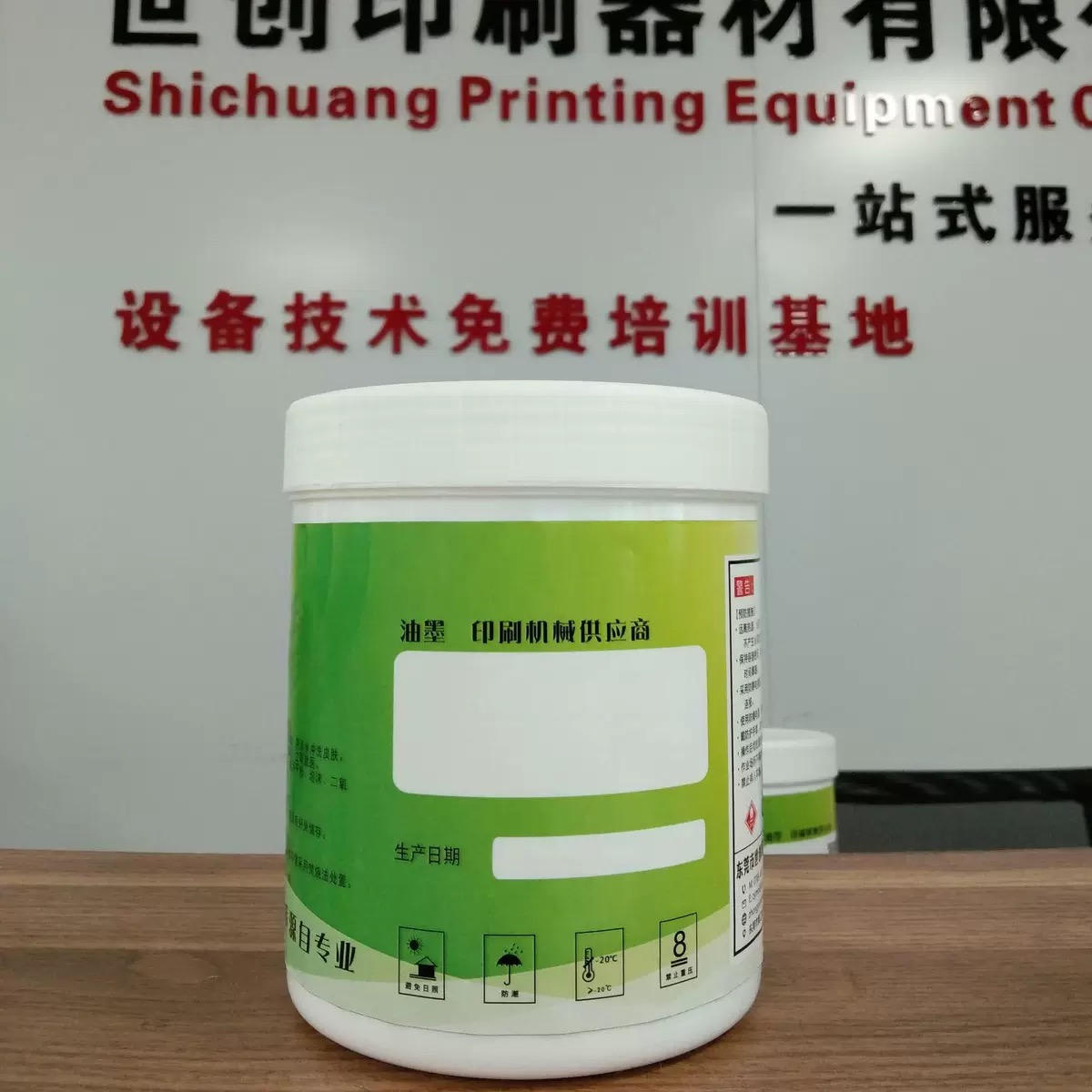
The clearest energy-related option in the supplied product information is Shichuangli Low-temperature silicone ink, item SCL-00YM. It is intended for transfer printing and screen printing on silicone products, including buttons, wristbands, necklaces, and pads. Its listed vulcanization method is baking at 90°C for 30–60 minutes, while viscosity can be customized for the intended process.
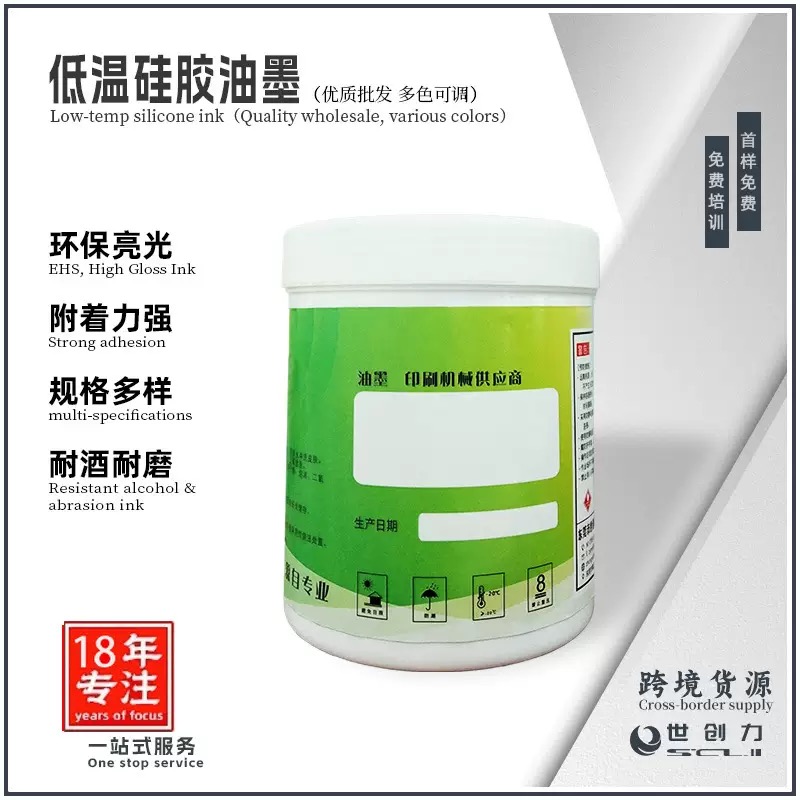
The ink is offered in black, white, and other colors, with fineness listed as 8 and coloring power listed at 100%. It has a sealed shelf life of six months and a recommended working temperature below 25°C. These specifications describe material performance and storage conditions; they should not be treated as proof of the energy consumption of a six-color machine.
Application Planning and Production Control
Efficient operation also depends on matching the printing method and settings to the product. Shichuangli identifies applications in consumer products, 3C electronics, home-appliance panels, cosmetics and daily chemical packaging, automotive parts, craft gifts, food and beverage packaging, medical and industrial instruments, and clothing accessories. Different substrates and product geometries may require different viscosity, curing, pressure, and registration settings.
Reducing defects is another indirect route to lower resource use. Accurate proofing, controlled setup, and timely inspection can prevent repeated printing and extended machine runtime. A Saudi Arabian hotel-product distributor reportedly used screen printing, heat transfer printing, and hot stamping for items such as glass bottles and linen tags. The cooperation experience included proofing support, remote technical guidance, operator training, and follow-up service. Although no energy reduction was quantified, these measures can help establish more stable production.
Evidence-Based Comparison
| Potential efficiency measure | Information provided | What can reasonably be concluded |
|---|---|---|
| Reduced curing temperature | Silicone ink is baked at 90°C for 30–60 minutes | Indicates a lower-temperature process option; machine savings are not measured |
| Ink viscosity adjustment | Viscosity can be customized for transfer and screen printing | May improve transfer stability and reduce waste, without a stated energy result |
| Operator training | Technical guidance and free training are available | Can reduce setup errors and rework, but no power reduction is documented |
| Inspection and testing | Production inspection, finished-product checks, and physical and mechanical testing are listed | Supports quality control; no specific energy metric is supplied |
Frequently Asked Questions
Does the information prove that a six-color transfer printing machine uses less energy?
No. The supplied data does not include machine wattage, energy per cycle, heating-zone details, standby consumption, or test results for a six-color model. It only identifies process directions that may reduce energy demand, especially the use of silicone ink cured at 90°C.
Why is low-temperature silicone ink relevant to energy planning?
A curing specification of 90°C for 30–60 minutes may lower the required thermal load compared with a higher-temperature material. Actual savings depend on oven design, batch size, ambient conditions, loading method, and operating parameters.
What products are suitable for the listed silicone ink?
The stated applications include silicone components such as buttons, wristbands, necklaces, and pads. The material is designed for transfer printing and screen printing and is available in black, white, and colorful options.
Recommendations for Machine Buyers
When evaluating a six-color transfer printing machine, request measurable data for rated power, heating time, standby demand, production speed, curing capacity, and energy consumption per qualified print. Also ask how the machine handles different ink viscosities, substrates, and job changeovers. These figures are not included in the current product information and are necessary for a reliable equipment comparison.
Shichuangli describes a complete printing-equipment and materials service system. Standard equipment is reported to be delivered within 48 hours, customized non-standard equipment within one month, and monthly production capacity is listed at 300 units. The stated equipment warranty is one year. For technical solutions or support, please contact support@shichuanglimachine.com.
About the Company
Dongguan Shichuangli Zhihui Technology Co., Ltd. is based in Huangjiang Town, Dongguan City, Guangdong Province. Established in 2008, the company combines the design, research and development, manufacturing, and sales of printing equipment and related materials. Its factory training base covers more than 1,600 square meters and its design team includes 20 professionals.
The company supplies transfer printing machines, screen printing machines, hot stamping equipment, non-standard automation systems, and printing auxiliary materials. Its listed certification records include IECEx certification for an electromagnetic valve and CNAS certificates for specified black products. The company also reports cooperation with customers in sectors including hospitality, packaging, electronics, automotive components, and consumer goods.

REPORT