







-
 Agriculture
-
 Health-Care
-
 Environment
-
 Construction-Real-Estate
-
 Tools-Hardware
-
 Home-Garden
-
 Furniture
-
 Luggage-Bags-Cases
-
 Medical-devices-Supplies
-
 Gifts-Crafts
-
 Sports-Entertainment
-
 Food-Beverage
-
 Vehicles-Transportation
-
 Power-Transmission
-
 Material-Handling
-
 Renewable-Energy
-
 Safety
-
 Testing-Instrument-Equipment
-
 Construction-Building-Machinery
-
 Pet-Supplies
-
 Personal-Care-Household-Cleaning
-
 Vehicle-Accessories-Electronics-Tools
-
 School-Office-Supplies
-
 Packaging-Printing
-
 Mother-Kids-Toys
-
 Business-Services
-
 Commercial-Equipment-Machinery
-
 Apparel-Accessories
-
 Security
-
 Shoes-Accessories
-
 Vehicle-Parts-Accessories
-
 Jewelry-Eyewear-Watches-Accessories
-
 Lights-Lighting
-
 Fabric-Textile-Raw-Material
-
 Fabrication-Services
-
 Industrial-Machinery
-
 Consumer-Electronics
-
 Electrical-Equipment-Supplies
-
 Electronic-Components-Accessories-Telecommunications
-
 Home-Appliances
-
 Beauty
-
 Chemicals
-
 Rubber-Plastics
-
 Metals-Alloys


























































































































































































































































































































































































































































































































































































- Masonry Materials
- Curtain Walls & Accessories
- Earthwork Products
- Fireproofing Materials
- Heat Insulation Materials
- Plastic Building Materials
- Building Boards
- Soundproofing Materials
- Timber
- Waterproofing Materials
- Balustrades & Handrails
- Bathroom & Kitchen
- Flooring & Accessories
- Tiles & Accessories
- Door, Window & Accessories
- Fireplaces & Stoves
- Floor Heating Systems & Parts
- Stairs & Stair Parts
- Ceilings
- Elevators & Escalators
- Stone
- Countertops, Vanity Tops & Table Tops
- Mosaics
- Metal Building Materials
- Multifunctional Materials
- Ladders & Scaffoldings
- Mouldings
- Corner Guards
- Decorative Films
- Formwork
- Building & Industrial Glass
- Other Construction & Real Estate
- Wallpapers/Wall panels
- HVAC System & Parts
- Outdoor Facilities
- Prefabricated Buildings
- Festive & Party Supplies
- Bathroom Products
- Household Sundries
- Rain Gear
- Garden Supplies
- Household Cleaning Tools & Accessories
- Lighters & Smoking Accessories
- Home Storage & Organization
- Household Scales
- Smart Home Improvement
- Home Textiles
- Kitchenware
- Drinkware & Accessories
- Dinnerware, Coffee & Wine
- Home Decor
- Golf
- Fitness & Body Building
- Amusement Park Facilities
- Billiards, Board Game,Coin Operated Games
- Musical Instruments
- Outdoor Affordable Luxury Sports
- Camping & Hiking
- Fishing
- Sports Safety&Rehabilitation
- Ball Sports Equipments
- Water Sports
- Winter Sports
- Luxury Travel Equipments
- Sports Shoes, Bags & Accessories
- Cycling
- Other Sports & Entertainment Products
- Artificial Grass&Sports Flooring&Sports Court Equipment
- Scooters
- Food Ingredients
- Honey & Honey Products
- Snacks
- Nuts & Kernels
- Seafood
- Plant & Animal Oil
- Beverages
- Fruit & Vegetable Products
- Frog & Escargot
- Bean Products
- Egg Products
- Dairy Products
- Seasonings & Condiments
- Canned Food
- Instant Food
- Baked Goods
- Other Food & Beverage
- Meat & Poultry
- Confectionery
- Grain Products
- Feminie Care
- Hair Care & Styling
- Body Care
- Hands & Feet Care
- Hygiene Products
- Men's Grooming
- Laundry Cleaning Supplies
- Travel Size & Gift Sets
- Room Deodorizers
- Other Personal Care Products
- Pest Control Products
- Special Household Cleaning
- Floor Cleaning
- Kitchen & Bathroom Cleaning
- Oral Care
- Bath Supplies
- Yellow Pages
- Correction Supplies
- Office Binding Supplies
- Office Cutting Supplies
- Board Erasers
- Office Adhesives & Tapes
- Education Supplies
- Pencil Cases & Bags
- Notebooks & Writing Pads
- File Folder Accessories
- Calendars
- Writing Accessories
- Commercial Office Supplies
- Pencil Sharpeners
- Pens
- Letter Pad/Paper
- Paper Envelopes
- Desk Organizers
- Pencils
- Markers & Highlighters
- Filing Products
- Art Supplies
- Easels
- Badge Holder & Accessories
- Office Paper
- Printer Supplies
- Book Covers
- Other Office & School Supplies
- Stationery Set
- Boards
- Clipboards
- Stamps
- Drafting Supplies
- Stencils
- Electronic Dictionary
- Books
- Map
- Magazines
- Calculators
- Baby & Toddler Toys
- Educational Toys
- Classic Toys
- Dress Up & Pretend Play
- Toy Vehicle
- Stuffed Animals & Plush Toys
- Outdoor Toys & Structures
- Balloons & Accessories
- Baby Food
- Children's Clothing
- Baby Supplies & Products
- Maternity Clothes
- Kids Shoes
- Baby Care
- Novelty & Gag Toys
- Dolls & Accessories
- Puzzle & Games
- Blocks & Model Building Toys
- Toddler Clothing
- Baby Clothing
- Kids' Luggage & Bags
- Arts, Crafts & DIY Toys
- Action & Toy Figures
- Baby Appliances
- Hobbies & Models
- Remote Control Toys
- Promotional Toys
- Pregnancy & Maternity
- Hygiene Products
- Kid's Textile&Bedding
- Novelty & Special Use
- Toy Weapons
- Baby Gifts
- Baby Storage & Organization
- Auto Drive Systems
- ATV/UTV Parts & Accessories
- Marine Parts & Accessories
- Other Auto Parts
- Trailer Parts & Accessories
- Auto Transmission Systems
- Train Parts & Accessories
- Universal Parts
- Railway Parts & Accessories
- Auto Brake Systems
- Aviation Parts & Accessories
- Truck Parts & Accessories
- Auto Suspension Systems
- Auto Lighting Systems
- New Energy Vehicle Parts & Accessories
- Auto Steering Systems
- Wheels, Tires & Accessories
- Bus Parts & Accessories
- Auto Performance Parts
- Cooling System
- Go-Kart & Kart Racer Parts & Accessories
- Air Conditioning Systems
- Heavy Duty Vehicle Parts & Accessories
- Auto Electrical Systems
- Auto Body Systems
- Auto Engine Systems
- Container Parts & Accessories
- Motorcycle Parts & Accessories
- Refrigeration & Heat Exchange Equipment
- Machine Tool Equipment
- Food & Beverage Machinery
- Agricultural Machinery & Equipment
- Apparel & Textile Machinery
- Chemical Machinery
- Packaging Machines
- Paper Production Machinery
- Plastic & Rubber Processing Machinery
- Industrial Robots
- Electronic Products Machinery
- Metal & Metallurgy Machinery
- Woodworking Machinery
- Home Product Manufacturing Machinery
- Machinery Accessories
- Environmental Machinery
- Machinery Service
- Electrical Equipment Manufacturing Machinery
- Industrial Compressors & Parts
- Tobacco & Cigarette Machinery
- Production Line
- Used Industrial Machinery
- Electronics Production Machinery
- Other Machinery & Industrial Equipment
- Camera, Photo & Accessories
- Portable Audio, Video & Accessories
- Television, Home Audio, Video & Accessories
- Video Games & Accessories
- Mobile Phone & Accessories
- Electronic Publications
- Earphone & Headphone & Accessories
- Speakers & Accessories
- Smart Electronics
- TV Receivers & Accessories
- Mobile Phone & Computer Repair Parts
- Chargers, Batteries & Power Supplies
- Used Electronics
- VR, AR, MR Hardware & Software
- Projectors & Presentation Equipments
- Other Consumer Electronics
- Cables & Commonly Used Accessories
- Computer Hardware & Software
- Displays, Signage and Optoelectronics
- Discrete Semiconductors
- Wireless & IoT Module and Products
- Telecommunications
- Connectors, Terminals & Accessories
- Development Boards, Electronic Modules and Kits
- Circuit Protection
- Sensors
- Isolators
- Audio Components and Products
- Integrated Circuits
- Power Supplies
- Relays
- RF, Microwave and RFID
- Electronic Accessories & Supplies
- Passive Components
- PCB & PCBA
- Air Quality Appliances
- Home Appliance Parts
- Heating & Cooling Appliances
- Small Kitchen Appliances
- Laundry Appliances
- Water Heaters
- Water Treatment Appliances
- Refrigerators & Freezers
- Personal Care & Beauty Appliances
- Major Kitchen Appliances
- Cleaning Appliances
- Second-hand Appliances
- Smart Home Appliances
- Other Home Appliances
- Energy Chemicals
- Inorganic Chemicals
- Basic Organic Chemicals
- Agrochemicals
- Admixture & Additives
- Catalysts & Chemical Auxiliary Agents
- Pigments & Dyestuff
- Coating & Paint
- Daily Chemicals
- Polymer
- Organic Intermediate
- Adhesives & Sealants
- Chemical Waste
- Biological Chemical Products
- Surface Treatment Chemicals
- Painting & Coating
- Chemical Reagents
- Flavor & Fragrance
- Non-Explosive Demolition Agents
- Other Chemicals
- Custom Chemical Services

How to Audit Safety Controls in a White Laser Light Factory
A reliable audit of a white laser light factory begins by identifying the actual optical source in each sampled fixture. The auditor should then compare the unit's physical configuration with its technical file and verify documented controls for thermal protection, electrical safety, control signals, functional testing, burn-in, compliance, and shipment release.
Audit Priorities and Practical Takeaways
- Determine whether the fixture contains a laser module, LED engine, discharge lamp, or combined optical system before applying source-specific safety criteria.
- Trace quality evidence through incoming-material inspection, PCB testing, optical checks, electrical safety verification, aging tests, final inspection, and packaging review.
- Test cooling fans, temperature monitoring, over-temperature protection, signal shielding, and DMX/RDM functions against the approved product specification.
- Build an audit sample around the environments in which the fixtures will operate, including concerts, television studios, live events, rental productions, and architectural installations.
Step 1: Verify the Declared Light Source
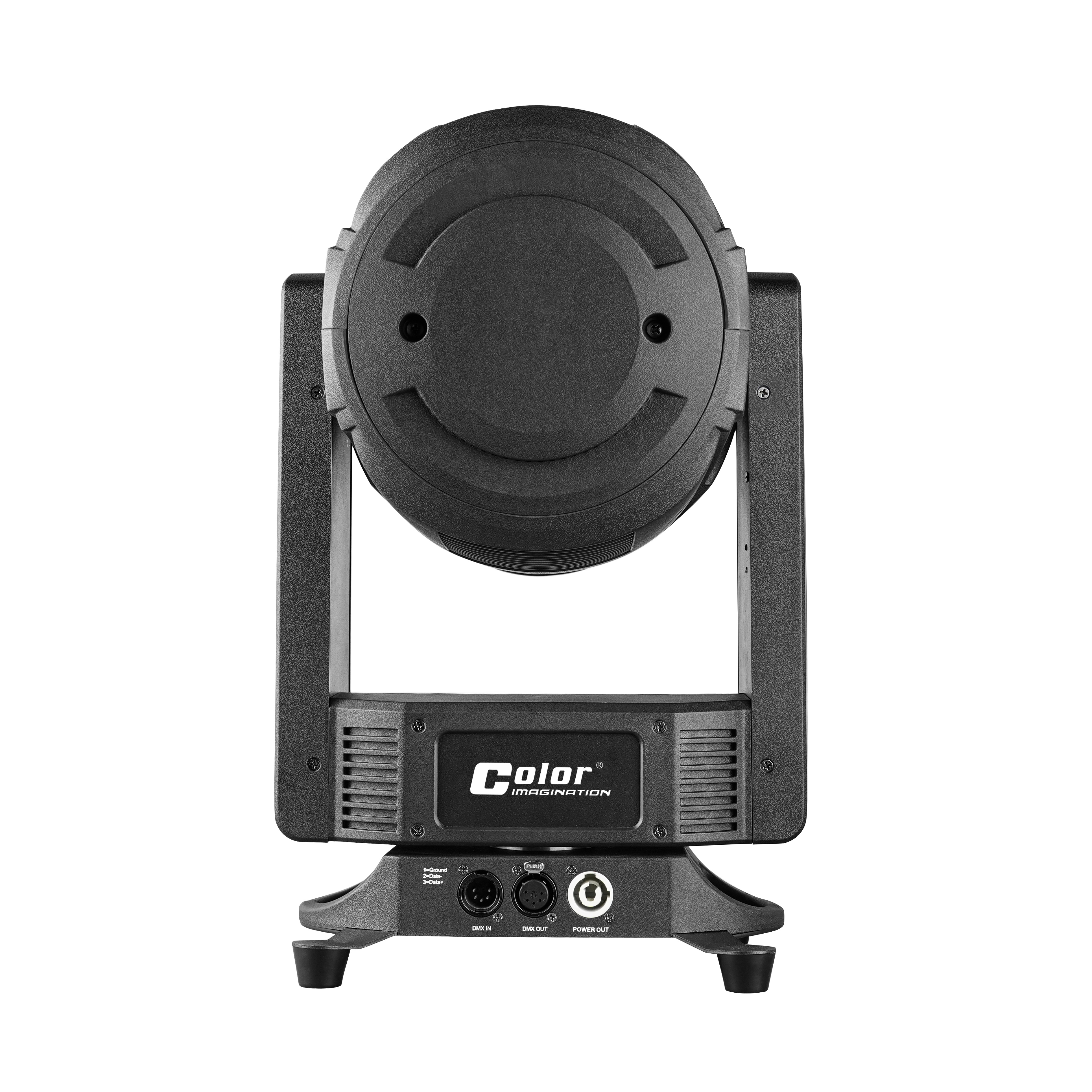
Source identification should come before a laser safety review because different optical technologies require different technical controls and documentation. Color Imagination develops LED, laser, and discharge-lamp fixtures, so the auditor should confirm the source fitted to the production unit through the bill of materials, labels, optical assembly records, and product specifications.
For example, the GRAND 420C specifications describe a discharge-lamp moving head rather than a laser fixture. The model uses one OSRAM SIRIUS HRI 420W lamp together with RGB LED ring strips. Its other declared features include CMY color mixing, a motorized zoom, and a frost filter. The audit record should therefore reflect the actual configuration and should not classify the model as laser-based without model-specific evidence.
Step 2: Inspect Thermal and Control Safeguards
After confirming the source, examine whether the fixture's safety-related functions operate as described in its documentation. The GRAND 420C lists self-adjusting, low-noise fan cooling, constant-temperature monitoring and management, and over-temperature protection. These functions should be supported by test records and demonstrated on sampled units under suitable operating conditions.
The auditor should also evaluate control behavior, including 0-100% linear dimming, the 0-20 Hz shutter or strobe range, and DMX512 and RDM communication. Inspect signal ports and shielding, check the response to control commands, and review firmware or configuration records where applicable. Art-Net and wireless receiver functions are identified as optional, so their presence should be confirmed against the specific order and configuration.
Environmental limits must also be considered. The declared operating temperature range for the GRAND 420C is -25 C to 45 C, while its stated ingress protection rating is IP20. These specifications should be matched to the intended installation and reflected in the audit conclusion.
Step 3: Trace Manufacturing and Release Records
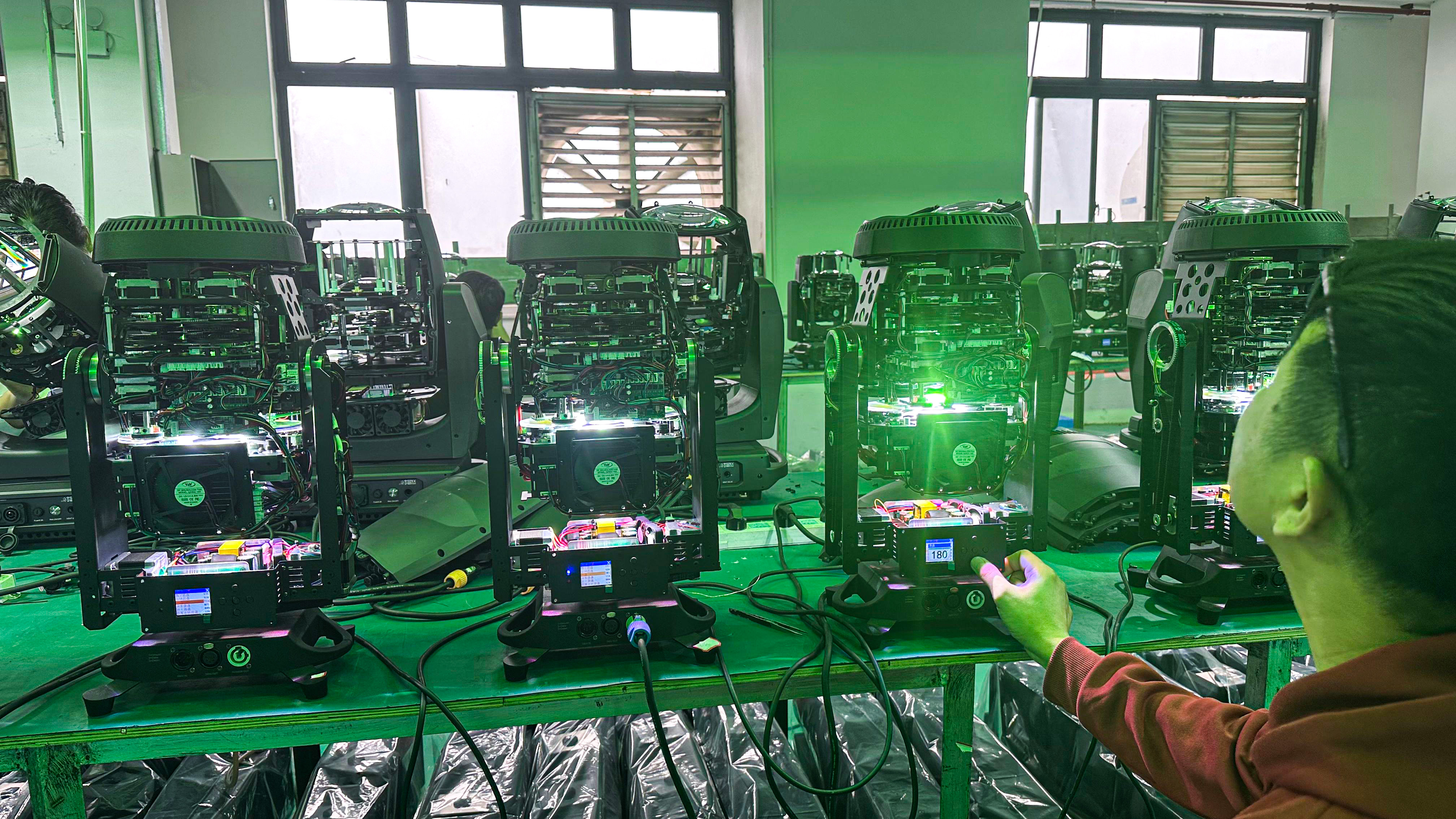
A strong factory audit links each manufacturing stage to a documented acceptance decision. Review records for incoming components, PCB functional testing, optical performance, electrical safety, burn-in and aging, final inspection, and packaging quality control. The stated quality process indicates that every fixture receives functional testing, burn-in testing, a safety inspection, and final quality checks before shipment.
Auditors should sample records from different production batches and compare serial numbers, test dates, operators, test limits, results, and approval status. The physical fixture should correspond to the tested configuration, including the installed light source, control options, firmware, and thermal components.
Step 4: Confirm Compliance Evidence
Compliance documents should be checked for scope and applicability rather than accepted as blanket proof for every model. Available credentials include CE certificates LCSB070523036E, LCSB070523041S, LCSB070523034E, and LCSB070523045S. The company also lists ISO certificates GH004-2023E0421 and GH004-2023Q0766 covering stage-light assembly and related management activities.
The GRAND 420C product information declares CE, low-voltage, electromagnetic compatibility, and restricted-substances compliance. During the audit, verify certificate names and numbers, confirm the covered product or management scope, and retain the technical documents that connect the evidence to the fixture under review. Certification does not replace unit-level safety testing, functional verification, or inspection records.
Audit Evidence Comparison
| Audit Category | Records or Checks | Relevant Declared Information |
|---|---|---|
| Optical source | Bill of materials, source label, optical assembly record, product specification | GRAND 420C: one OSRAM SIRIUS HRI 420W lamp and RGB LEDs |
| Thermal safety | Fan test, temperature-management record, over-temperature test | Self-adjusting fan cooling, constant-temperature management, and over-temperature protection |
| Control functions | DMX/RDM test, signal-port inspection, firmware record | DMX512 and RDM supported; Art-Net and wireless receiver optional |
| Production release | Incoming inspection, PCB test, optical verification, electrical safety, burn-in, final inspection | 100% functional, burn-in, safety, and final quality checks are stated |
| Compliance | Certificate copy, certificate number, model linkage, technical file | CE and ISO credentials are available, with CE-related compliance declared for the product |
Sampling for Different Project Environments
Audit sampling should reflect the range of applications and configurations supplied by the factory. A China nightclub project, for instance, involved 3,500 stage lights across beam, wash, effect, and pixel categories. For a comparable production review, select fixtures with different functions and control arrangements, and include units from final inspection and aging-test stages. This approach helps reveal whether safety controls remain consistent across product variants and production batches.
Frequently Asked Questions
What if the factory promotes laser products but the sampled fixture uses a discharge lamp?
Document the source actually installed in the sampled unit and audit that fixture against its applicable technical file. The available GRAND 420C information identifies a discharge lamp and RGB LEDs, so it should not be recorded as a laser configuration without supporting model-specific evidence.
Which records are most useful for a safety-control audit?
Key evidence includes incoming-material inspection, PCB functional testing, optical verification, electrical safety testing, burn-in and aging results, final product inspection, and packaging quality-control records. Serial-number traceability and recorded acceptance criteria make these documents more useful.
Do CE and ISO certificates prove that every fixture is safe?
No. Verify the certificate number, issuing information, applicable product or management scope, and the link to the audited model or process. Certificates should be reviewed together with unit-level inspection, functional testing, thermal checks, and release records.
Conclusion and Recommendations
The most defensible audit method is to establish the actual light source first, then evaluate thermal safeguards, control-system behavior, manufacturing tests, and model-specific compliance evidence. The review should finish by confirming that every sampled unit matches its approved configuration and has passed the required functional, burn-in, safety, and final inspections before shipment.
Color Imagination provides research and development, manufacturing, sales, technical service, OEM/ODM support, and project solutions for professional lighting applications. For technical questions or project assistance, contact jack@color-imagination.com.
About Us
Guangzhou Color Imagination LED Lighting Limited is a Guangzhou-based manufacturer of professional stage, entertainment, studio, broadcast, and architectural lighting equipment. Established in 2010, the company integrates research and development, production, sales, and technical services in a 6000SQM factory with 130 employees. Its engineering capabilities cover optical, mechanical, electronic, software, thermal-management, and lighting-control development for standard and customized OEM/ODM fixtures. The company holds CE and ISO certificates and serves customers across multiple industries.

REPORT