







-
 Agriculture
-
 Health-Care
-
 Environment
-
 Construction-Real-Estate
-
 Tools-Hardware
-
 Home-Garden
-
 Furniture
-
 Luggage-Bags-Cases
-
 Medical-devices-Supplies
-
 Gifts-Crafts
-
 Sports-Entertainment
-
 Food-Beverage
-
 Vehicles-Transportation
-
 Power-Transmission
-
 Material-Handling
-
 Renewable-Energy
-
 Safety
-
 Testing-Instrument-Equipment
-
 Construction-Building-Machinery
-
 Pet-Supplies
-
 Personal-Care-Household-Cleaning
-
 Vehicle-Accessories-Electronics-Tools
-
 School-Office-Supplies
-
 Packaging-Printing
-
 Mother-Kids-Toys
-
 Business-Services
-
 Commercial-Equipment-Machinery
-
 Apparel-Accessories
-
 Security
-
 Shoes-Accessories
-
 Vehicle-Parts-Accessories
-
 Jewelry-Eyewear-Watches-Accessories
-
 Lights-Lighting
-
 Fabric-Textile-Raw-Material
-
 Fabrication-Services
-
 Industrial-Machinery
-
 Consumer-Electronics
-
 Electrical-Equipment-Supplies
-
 Electronic-Components-Accessories-Telecommunications
-
 Home-Appliances
-
 Beauty
-
 Chemicals
-
 Rubber-Plastics
-
 Metals-Alloys


























































































































































































































































































































































































































































































































































































- Masonry Materials
- Curtain Walls & Accessories
- Earthwork Products
- Fireproofing Materials
- Heat Insulation Materials
- Plastic Building Materials
- Building Boards
- Soundproofing Materials
- Timber
- Waterproofing Materials
- Balustrades & Handrails
- Bathroom & Kitchen
- Flooring & Accessories
- Tiles & Accessories
- Door, Window & Accessories
- Fireplaces & Stoves
- Floor Heating Systems & Parts
- Stairs & Stair Parts
- Ceilings
- Elevators & Escalators
- Stone
- Countertops, Vanity Tops & Table Tops
- Mosaics
- Metal Building Materials
- Multifunctional Materials
- Ladders & Scaffoldings
- Mouldings
- Corner Guards
- Decorative Films
- Formwork
- Building & Industrial Glass
- Other Construction & Real Estate
- Wallpapers/Wall panels
- HVAC System & Parts
- Outdoor Facilities
- Prefabricated Buildings
- Festive & Party Supplies
- Bathroom Products
- Household Sundries
- Rain Gear
- Garden Supplies
- Household Cleaning Tools & Accessories
- Lighters & Smoking Accessories
- Home Storage & Organization
- Household Scales
- Smart Home Improvement
- Home Textiles
- Kitchenware
- Drinkware & Accessories
- Dinnerware, Coffee & Wine
- Home Decor
- Golf
- Fitness & Body Building
- Amusement Park Facilities
- Billiards, Board Game,Coin Operated Games
- Musical Instruments
- Outdoor Affordable Luxury Sports
- Camping & Hiking
- Fishing
- Sports Safety&Rehabilitation
- Ball Sports Equipments
- Water Sports
- Winter Sports
- Luxury Travel Equipments
- Sports Shoes, Bags & Accessories
- Cycling
- Other Sports & Entertainment Products
- Artificial Grass&Sports Flooring&Sports Court Equipment
- Scooters
- Food Ingredients
- Honey & Honey Products
- Snacks
- Nuts & Kernels
- Seafood
- Plant & Animal Oil
- Beverages
- Fruit & Vegetable Products
- Frog & Escargot
- Bean Products
- Egg Products
- Dairy Products
- Seasonings & Condiments
- Canned Food
- Instant Food
- Baked Goods
- Other Food & Beverage
- Meat & Poultry
- Confectionery
- Grain Products
- Feminie Care
- Hair Care & Styling
- Body Care
- Hands & Feet Care
- Hygiene Products
- Men's Grooming
- Laundry Cleaning Supplies
- Travel Size & Gift Sets
- Room Deodorizers
- Other Personal Care Products
- Pest Control Products
- Special Household Cleaning
- Floor Cleaning
- Kitchen & Bathroom Cleaning
- Oral Care
- Bath Supplies
- Yellow Pages
- Correction Supplies
- Office Binding Supplies
- Office Cutting Supplies
- Board Erasers
- Office Adhesives & Tapes
- Education Supplies
- Pencil Cases & Bags
- Notebooks & Writing Pads
- File Folder Accessories
- Calendars
- Writing Accessories
- Commercial Office Supplies
- Pencil Sharpeners
- Pens
- Letter Pad/Paper
- Paper Envelopes
- Desk Organizers
- Pencils
- Markers & Highlighters
- Filing Products
- Art Supplies
- Easels
- Badge Holder & Accessories
- Office Paper
- Printer Supplies
- Book Covers
- Other Office & School Supplies
- Stationery Set
- Boards
- Clipboards
- Stamps
- Drafting Supplies
- Stencils
- Electronic Dictionary
- Books
- Map
- Magazines
- Calculators
- Baby & Toddler Toys
- Educational Toys
- Classic Toys
- Dress Up & Pretend Play
- Toy Vehicle
- Stuffed Animals & Plush Toys
- Outdoor Toys & Structures
- Balloons & Accessories
- Baby Food
- Children's Clothing
- Baby Supplies & Products
- Maternity Clothes
- Kids Shoes
- Baby Care
- Novelty & Gag Toys
- Dolls & Accessories
- Puzzle & Games
- Blocks & Model Building Toys
- Toddler Clothing
- Baby Clothing
- Kids' Luggage & Bags
- Arts, Crafts & DIY Toys
- Action & Toy Figures
- Baby Appliances
- Hobbies & Models
- Remote Control Toys
- Promotional Toys
- Pregnancy & Maternity
- Hygiene Products
- Kid's Textile&Bedding
- Novelty & Special Use
- Toy Weapons
- Baby Gifts
- Baby Storage & Organization
- Auto Drive Systems
- ATV/UTV Parts & Accessories
- Marine Parts & Accessories
- Other Auto Parts
- Trailer Parts & Accessories
- Auto Transmission Systems
- Train Parts & Accessories
- Universal Parts
- Railway Parts & Accessories
- Auto Brake Systems
- Aviation Parts & Accessories
- Truck Parts & Accessories
- Auto Suspension Systems
- Auto Lighting Systems
- New Energy Vehicle Parts & Accessories
- Auto Steering Systems
- Wheels, Tires & Accessories
- Bus Parts & Accessories
- Auto Performance Parts
- Cooling System
- Go-Kart & Kart Racer Parts & Accessories
- Air Conditioning Systems
- Heavy Duty Vehicle Parts & Accessories
- Auto Electrical Systems
- Auto Body Systems
- Auto Engine Systems
- Container Parts & Accessories
- Motorcycle Parts & Accessories
- Refrigeration & Heat Exchange Equipment
- Machine Tool Equipment
- Food & Beverage Machinery
- Agricultural Machinery & Equipment
- Apparel & Textile Machinery
- Chemical Machinery
- Packaging Machines
- Paper Production Machinery
- Plastic & Rubber Processing Machinery
- Industrial Robots
- Electronic Products Machinery
- Metal & Metallurgy Machinery
- Woodworking Machinery
- Home Product Manufacturing Machinery
- Machinery Accessories
- Environmental Machinery
- Machinery Service
- Electrical Equipment Manufacturing Machinery
- Industrial Compressors & Parts
- Tobacco & Cigarette Machinery
- Production Line
- Used Industrial Machinery
- Electronics Production Machinery
- Other Machinery & Industrial Equipment
- Camera, Photo & Accessories
- Portable Audio, Video & Accessories
- Television, Home Audio, Video & Accessories
- Video Games & Accessories
- Mobile Phone & Accessories
- Electronic Publications
- Earphone & Headphone & Accessories
- Speakers & Accessories
- Smart Electronics
- TV Receivers & Accessories
- Mobile Phone & Computer Repair Parts
- Chargers, Batteries & Power Supplies
- Used Electronics
- VR, AR, MR Hardware & Software
- Projectors & Presentation Equipments
- Other Consumer Electronics
- Cables & Commonly Used Accessories
- Computer Hardware & Software
- Displays, Signage and Optoelectronics
- Discrete Semiconductors
- Wireless & IoT Module and Products
- Telecommunications
- Connectors, Terminals & Accessories
- Development Boards, Electronic Modules and Kits
- Circuit Protection
- Sensors
- Isolators
- Audio Components and Products
- Integrated Circuits
- Power Supplies
- Relays
- RF, Microwave and RFID
- Electronic Accessories & Supplies
- Passive Components
- PCB & PCBA
- Air Quality Appliances
- Home Appliance Parts
- Heating & Cooling Appliances
- Small Kitchen Appliances
- Laundry Appliances
- Water Heaters
- Water Treatment Appliances
- Refrigerators & Freezers
- Personal Care & Beauty Appliances
- Major Kitchen Appliances
- Cleaning Appliances
- Second-hand Appliances
- Smart Home Appliances
- Other Home Appliances
- Energy Chemicals
- Inorganic Chemicals
- Basic Organic Chemicals
- Agrochemicals
- Admixture & Additives
- Catalysts & Chemical Auxiliary Agents
- Pigments & Dyestuff
- Coating & Paint
- Daily Chemicals
- Polymer
- Organic Intermediate
- Adhesives & Sealants
- Chemical Waste
- Biological Chemical Products
- Surface Treatment Chemicals
- Painting & Coating
- Chemical Reagents
- Flavor & Fragrance
- Non-Explosive Demolition Agents
- Other Chemicals
- Custom Chemical Services

How to Choose a Cup Printer for Your Production Requirements
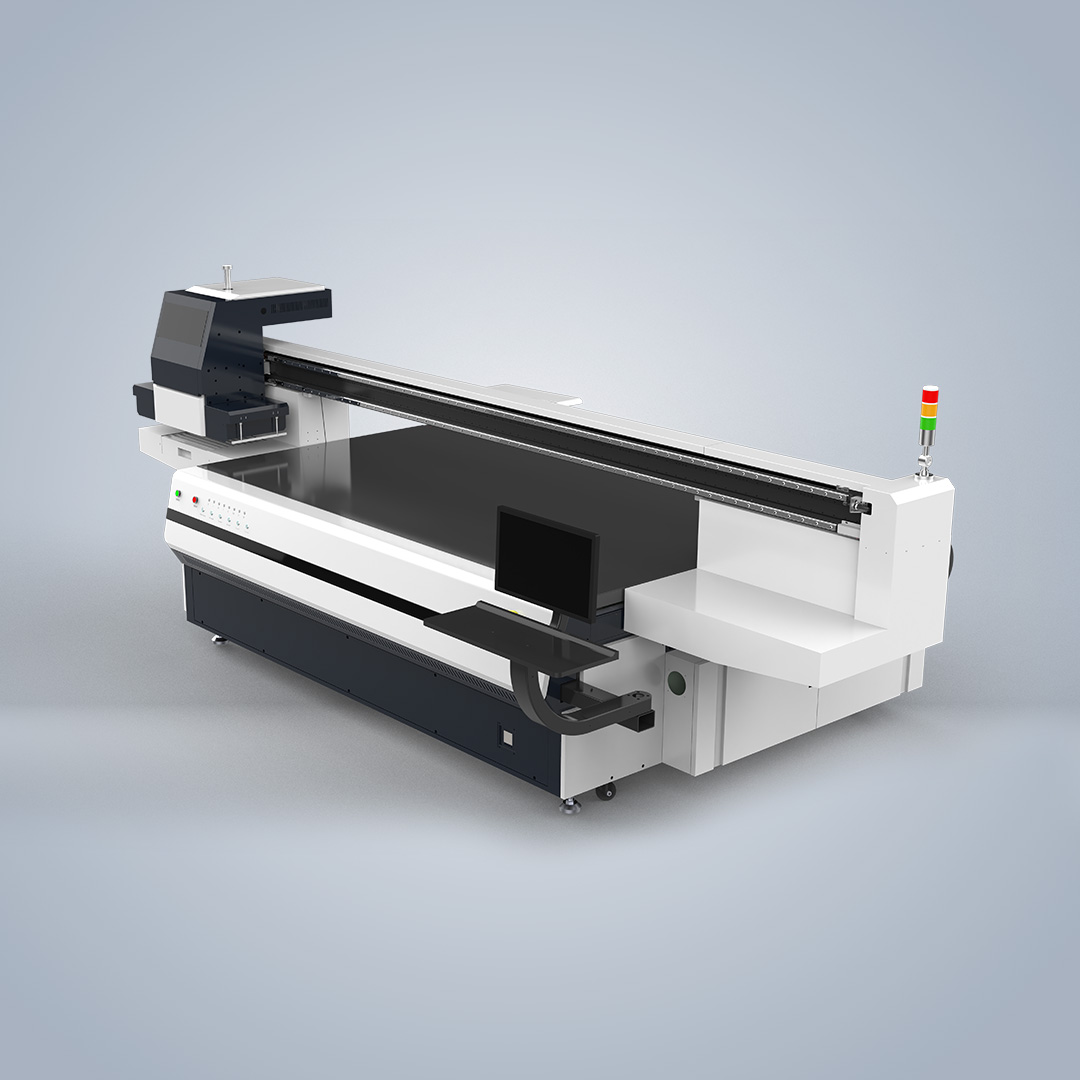
Choosing a cup printing system starts with the items you plan to print and the output you need. Check substrate compatibility, cup dimensions, surface curvature, positioning, print quality, throughput, and the durability required of the finished product. The Nocai NC-UV2513 supports materials including glass, ceramic, plastic, and metal, and offers an adjustable print height of 0–240 mm with visual positioning.
Start with the Cup and the Production Job
Confirm the exact cup material and surface finish before selecting a printer. The NC-UV2513 is specified for glass, ceramic, plastic, metal, acrylic, wood, paper, and leather. These material listings are a starting point; adhesion and wear can vary with a cup’s coating and surface treatment, so test the specific item you intend to produce.
Next, measure the full workpiece, including any holder or fixture. The machine has a 2500 x 1300 mm print area and a print-height adjustment range of 0–240 mm. Check that the cup and its support fit within these limits and that the intended printable area can be reached consistently.
Positioning, Print Quality, and Output
Visual recognition scans the workpiece and positions it automatically. Nocai states an overlay accuracy of +/-0.1 mm, which may help reduce manual setup when artwork placement varies between items. The cup’s curvature and the way it is held can affect alignment, however, so assess positioning with your actual cup and fixture.
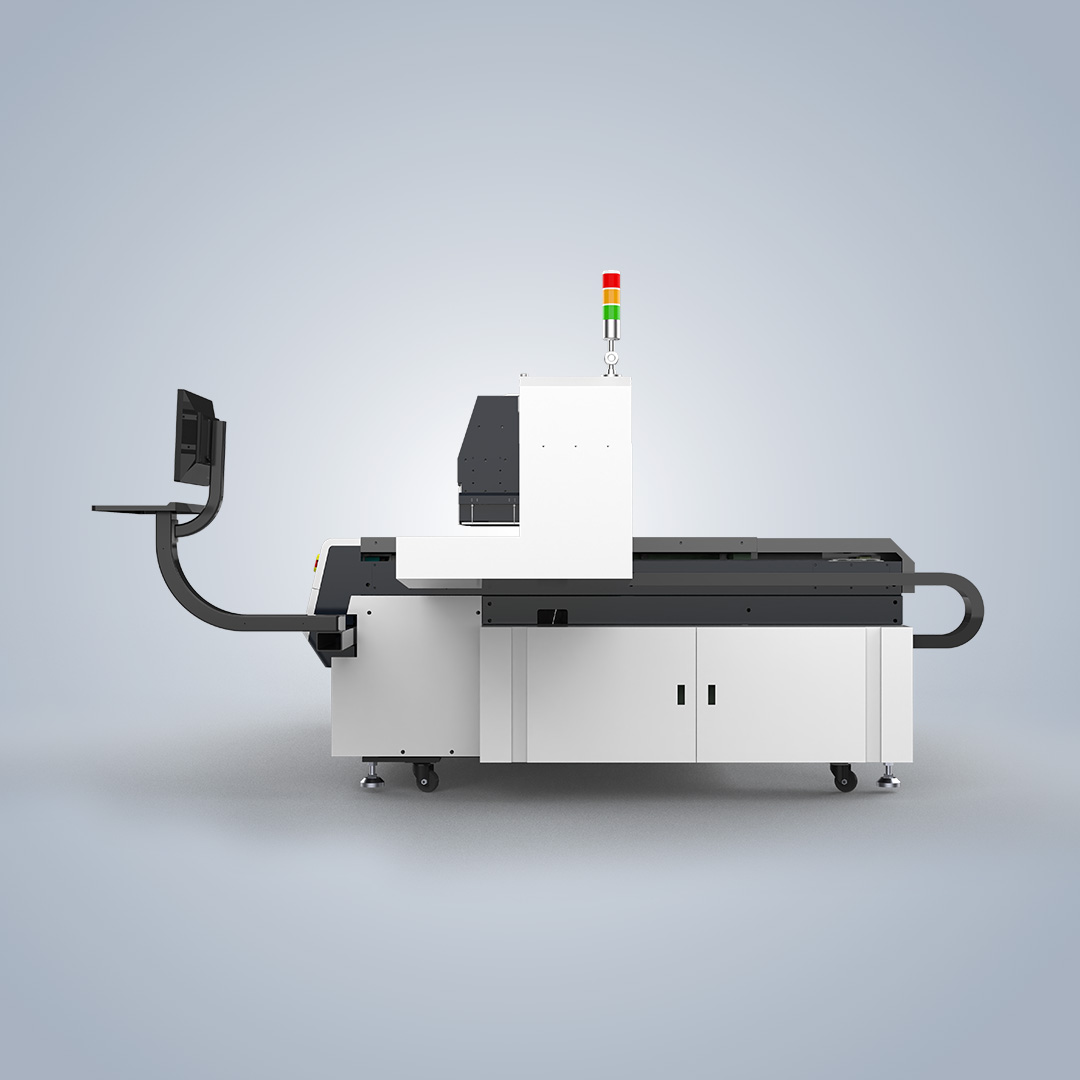
Available configurations include 2 to 8 Ricoh Gen6 printheads, a minimum droplet size of 5pl, resolution up to 2400dpi, and a stated maximum speed of 6.77m2/h. Choose a setup based on the detail, color requirements, and order volume, then run a production sample to establish practical output for your cup layout.
The printer’s 2500 x 1300 mm bed uses an aluminum honeycomb vacuum structure intended to resist deformation and distribute suction evenly. Its negative-pressure ink supply, secondary ink tanks, and temperature-controlled, heated printhead carriage baseplate are designed to support stable operation. These features do not replace testing ink behavior and print durability on the selected substrate.
Check Curved-Surface Requirements
Nocai lists applications for stainless steel, plastic, and glass drinkware, including sports bottles, thermal flasks, promotional products, and personalized gifts. For these jobs, assess adhesion, scratch resistance, resistance to high-temperature boiling, and print quality over curved or complex surfaces.
The product information describes visual positioning but does not confirm that a rotary attachment is included. If your workflow requires 360-degree printing around a cylindrical cup, verify the rotary equipment, compatible fixtures, and production method with the supplier before ordering.
Production and Purchasing Checks
| Item to Assess | NC-UV2513 Specification | Production Check |
|---|---|---|
| Supported materials | Glass, ceramic, plastic, metal, acrylic, wood, paper, and leather | Test the exact cup substrate, coating, and ink adhesion |
| Work area and height | 2500 x 1300 mm area; 0–240 mm adjustable height | Measure cup dimensions and total height with the fixture |
| Artwork positioning | Automatic visual recognition; stated overlay accuracy of +/-0.1 mm | Check alignment on the real cup shape and holder |
| Print configuration | 2–8 Ricoh Gen6 heads; 5pl minimum droplet; up to 2400dpi | Match the configuration to detail, color, and volume needs |
| Maximum stated speed | Up to 6.77m2/h | Measure actual throughput with a representative cup job |
| Order and delivery | MOQ of 1 unit; stated delivery time of 7–10 days | Confirm configuration, installation, and delivery terms |
Nocai reports an aging test and 100% inspection as quality controls. Listed after-sales resources include online assistance, video calls, remote control, a user manual, installation video, and spare-part replacement video. The company also lists ISO certification for digital printer design and production, and CE certification applicable to specified products including the NC-UV0406.
Reported customer and agent relationships include markets in Indonesia, Poland, and Turkey. These examples describe experience with inkjet printing across materials and UV printer use, but they are not evidence of a particular cup-production result with the NC-UV2513.
Frequently Asked Questions
Can it print on glass, ceramic, or plastic cups?
Those materials appear in the supported-substrate list. Before production, test the exact cup and coating for ink adhesion, scratch resistance, and durability under any relevant heat exposure.
Will visual positioning align artwork on an irregular cup?
The system provides automatic visual recognition and a stated overlay accuracy of +/-0.1 mm. Results depend on the cup geometry and how it is secured, so verify alignment using the intended fixture and artwork.
Can it handle personalized, small-batch orders?
The stated minimum order quantity is one machine, and the printer is presented for personalized and small-batch drinkware applications. Confirm job setup and expected output with a sample run before committing to a production schedule.
Recommendation
The NC-UV2513 may fit a cup-printing workflow when the material is compatible, the cup and holder remain within the height limits, and testing confirms reliable alignment, adhesion, and durability. Request a sample evaluation using your own cup, coating, artwork, and fixture, and use it to measure practical print speed. Nocai states an MOQ of one unit and a 7–10 day delivery time, alongside online, video, and remote support. For technical details, contact nc05@gznuocai.com.
About Nocai
Guangzhou Nuocai Digital Products Co., Ltd., or Nocai, develops, manufactures, sells, and supports digital inkjet printers. The company reports more than 50 R&D engineers and designers, five production lines, and a 50,000 sqm factory. Its product range includes UV printers, UV DTF printers, and rotary printers. Nocai lists ISO certification for digital printer design and production, as well as a TUV certificate applicable to the NC-UV0609PROII.
REPORT