







-
 Agriculture
-
 Health-Care
-
 Environment
-
 Construction-Real-Estate
-
 Tools-Hardware
-
 Home-Garden
-
 Furniture
-
 Luggage-Bags-Cases
-
 Medical-devices-Supplies
-
 Gifts-Crafts
-
 Sports-Entertainment
-
 Food-Beverage
-
 Vehicles-Transportation
-
 Power-Transmission
-
 Material-Handling
-
 Renewable-Energy
-
 Safety
-
 Testing-Instrument-Equipment
-
 Construction-Building-Machinery
-
 Pet-Supplies
-
 Personal-Care-Household-Cleaning
-
 Vehicle-Accessories-Electronics-Tools
-
 School-Office-Supplies
-
 Packaging-Printing
-
 Mother-Kids-Toys
-
 Business-Services
-
 Commercial-Equipment-Machinery
-
 Apparel-Accessories
-
 Security
-
 Shoes-Accessories
-
 Vehicle-Parts-Accessories
-
 Jewelry-Eyewear-Watches-Accessories
-
 Lights-Lighting
-
 Fabric-Textile-Raw-Material
-
 Fabrication-Services
-
 Industrial-Machinery
-
 Consumer-Electronics
-
 Electrical-Equipment-Supplies
-
 Electronic-Components-Accessories-Telecommunications
-
 Home-Appliances
-
 Beauty
-
 Chemicals
-
 Rubber-Plastics
-
 Metals-Alloys


























































































































































































































































































































































































































































































































































































- Masonry Materials
- Curtain Walls & Accessories
- Earthwork Products
- Fireproofing Materials
- Heat Insulation Materials
- Plastic Building Materials
- Building Boards
- Soundproofing Materials
- Timber
- Waterproofing Materials
- Balustrades & Handrails
- Bathroom & Kitchen
- Flooring & Accessories
- Tiles & Accessories
- Door, Window & Accessories
- Fireplaces & Stoves
- Floor Heating Systems & Parts
- Stairs & Stair Parts
- Ceilings
- Elevators & Escalators
- Stone
- Countertops, Vanity Tops & Table Tops
- Mosaics
- Metal Building Materials
- Multifunctional Materials
- Ladders & Scaffoldings
- Mouldings
- Corner Guards
- Decorative Films
- Formwork
- Building & Industrial Glass
- Other Construction & Real Estate
- Wallpapers/Wall panels
- HVAC System & Parts
- Outdoor Facilities
- Prefabricated Buildings
- Festive & Party Supplies
- Bathroom Products
- Household Sundries
- Rain Gear
- Garden Supplies
- Household Cleaning Tools & Accessories
- Lighters & Smoking Accessories
- Home Storage & Organization
- Household Scales
- Smart Home Improvement
- Home Textiles
- Kitchenware
- Drinkware & Accessories
- Dinnerware, Coffee & Wine
- Home Decor
- Golf
- Fitness & Body Building
- Amusement Park Facilities
- Billiards, Board Game,Coin Operated Games
- Musical Instruments
- Outdoor Affordable Luxury Sports
- Camping & Hiking
- Fishing
- Sports Safety&Rehabilitation
- Ball Sports Equipments
- Water Sports
- Winter Sports
- Luxury Travel Equipments
- Sports Shoes, Bags & Accessories
- Cycling
- Other Sports & Entertainment Products
- Artificial Grass&Sports Flooring&Sports Court Equipment
- Scooters
- Food Ingredients
- Honey & Honey Products
- Snacks
- Nuts & Kernels
- Seafood
- Plant & Animal Oil
- Beverages
- Fruit & Vegetable Products
- Frog & Escargot
- Bean Products
- Egg Products
- Dairy Products
- Seasonings & Condiments
- Canned Food
- Instant Food
- Baked Goods
- Other Food & Beverage
- Meat & Poultry
- Confectionery
- Grain Products
- Feminie Care
- Hair Care & Styling
- Body Care
- Hands & Feet Care
- Hygiene Products
- Men's Grooming
- Laundry Cleaning Supplies
- Travel Size & Gift Sets
- Room Deodorizers
- Other Personal Care Products
- Pest Control Products
- Special Household Cleaning
- Floor Cleaning
- Kitchen & Bathroom Cleaning
- Oral Care
- Bath Supplies
- Yellow Pages
- Correction Supplies
- Office Binding Supplies
- Office Cutting Supplies
- Board Erasers
- Office Adhesives & Tapes
- Education Supplies
- Pencil Cases & Bags
- Notebooks & Writing Pads
- File Folder Accessories
- Calendars
- Writing Accessories
- Commercial Office Supplies
- Pencil Sharpeners
- Pens
- Letter Pad/Paper
- Paper Envelopes
- Desk Organizers
- Pencils
- Markers & Highlighters
- Filing Products
- Art Supplies
- Easels
- Badge Holder & Accessories
- Office Paper
- Printer Supplies
- Book Covers
- Other Office & School Supplies
- Stationery Set
- Boards
- Clipboards
- Stamps
- Drafting Supplies
- Stencils
- Electronic Dictionary
- Books
- Map
- Magazines
- Calculators
- Baby & Toddler Toys
- Educational Toys
- Classic Toys
- Dress Up & Pretend Play
- Toy Vehicle
- Stuffed Animals & Plush Toys
- Outdoor Toys & Structures
- Balloons & Accessories
- Baby Food
- Children's Clothing
- Baby Supplies & Products
- Maternity Clothes
- Kids Shoes
- Baby Care
- Novelty & Gag Toys
- Dolls & Accessories
- Puzzle & Games
- Blocks & Model Building Toys
- Toddler Clothing
- Baby Clothing
- Kids' Luggage & Bags
- Arts, Crafts & DIY Toys
- Action & Toy Figures
- Baby Appliances
- Hobbies & Models
- Remote Control Toys
- Promotional Toys
- Pregnancy & Maternity
- Hygiene Products
- Kid's Textile&Bedding
- Novelty & Special Use
- Toy Weapons
- Baby Gifts
- Baby Storage & Organization
- Auto Drive Systems
- ATV/UTV Parts & Accessories
- Marine Parts & Accessories
- Other Auto Parts
- Trailer Parts & Accessories
- Auto Transmission Systems
- Train Parts & Accessories
- Universal Parts
- Railway Parts & Accessories
- Auto Brake Systems
- Aviation Parts & Accessories
- Truck Parts & Accessories
- Auto Suspension Systems
- Auto Lighting Systems
- New Energy Vehicle Parts & Accessories
- Auto Steering Systems
- Wheels, Tires & Accessories
- Bus Parts & Accessories
- Auto Performance Parts
- Cooling System
- Go-Kart & Kart Racer Parts & Accessories
- Air Conditioning Systems
- Heavy Duty Vehicle Parts & Accessories
- Auto Electrical Systems
- Auto Body Systems
- Auto Engine Systems
- Container Parts & Accessories
- Motorcycle Parts & Accessories
- Refrigeration & Heat Exchange Equipment
- Machine Tool Equipment
- Food & Beverage Machinery
- Agricultural Machinery & Equipment
- Apparel & Textile Machinery
- Chemical Machinery
- Packaging Machines
- Paper Production Machinery
- Plastic & Rubber Processing Machinery
- Industrial Robots
- Electronic Products Machinery
- Metal & Metallurgy Machinery
- Woodworking Machinery
- Home Product Manufacturing Machinery
- Machinery Accessories
- Environmental Machinery
- Machinery Service
- Electrical Equipment Manufacturing Machinery
- Industrial Compressors & Parts
- Tobacco & Cigarette Machinery
- Production Line
- Used Industrial Machinery
- Electronics Production Machinery
- Other Machinery & Industrial Equipment
- Camera, Photo & Accessories
- Portable Audio, Video & Accessories
- Television, Home Audio, Video & Accessories
- Video Games & Accessories
- Mobile Phone & Accessories
- Electronic Publications
- Earphone & Headphone & Accessories
- Speakers & Accessories
- Smart Electronics
- TV Receivers & Accessories
- Mobile Phone & Computer Repair Parts
- Chargers, Batteries & Power Supplies
- Used Electronics
- VR, AR, MR Hardware & Software
- Projectors & Presentation Equipments
- Other Consumer Electronics
- Cables & Commonly Used Accessories
- Computer Hardware & Software
- Displays, Signage and Optoelectronics
- Discrete Semiconductors
- Wireless & IoT Module and Products
- Telecommunications
- Connectors, Terminals & Accessories
- Development Boards, Electronic Modules and Kits
- Circuit Protection
- Sensors
- Isolators
- Audio Components and Products
- Integrated Circuits
- Power Supplies
- Relays
- RF, Microwave and RFID
- Electronic Accessories & Supplies
- Passive Components
- PCB & PCBA
- Air Quality Appliances
- Home Appliance Parts
- Heating & Cooling Appliances
- Small Kitchen Appliances
- Laundry Appliances
- Water Heaters
- Water Treatment Appliances
- Refrigerators & Freezers
- Personal Care & Beauty Appliances
- Major Kitchen Appliances
- Cleaning Appliances
- Second-hand Appliances
- Smart Home Appliances
- Other Home Appliances
- Energy Chemicals
- Inorganic Chemicals
- Basic Organic Chemicals
- Agrochemicals
- Admixture & Additives
- Catalysts & Chemical Auxiliary Agents
- Pigments & Dyestuff
- Coating & Paint
- Daily Chemicals
- Polymer
- Organic Intermediate
- Adhesives & Sealants
- Chemical Waste
- Biological Chemical Products
- Surface Treatment Chemicals
- Painting & Coating
- Chemical Reagents
- Flavor & Fragrance
- Non-Explosive Demolition Agents
- Other Chemicals
- Custom Chemical Services

How to Choose Lace Size and Hair Density for a Natural Human Hair Wig
A natural-looking human hair wig depends on two essential specifications: lace size and hair density. The right combination should complement your preferred parting style, desired volume, hair length, and installation routine. Whether you need a low-maintenance closure wig or a highly flexible lace frontal, selecting the correct construction helps create a believable hairline and balanced movement.
Choosing the Right Lace Size
Lace size affects how much freedom you have when parting and styling the wig. Larger lace areas provide broader coverage across the hairline, while smaller closures focus on producing a realistic scalp appearance in one defined section.
4x4 and 5x5 Lace Closures
A 4x4 or 5x5 lace closure is a practical choice for everyday wear, beginner-friendly installations, and protective styles. These closures cover the crown and parting area, making them suitable for a middle part or a side part. Because less lace needs to be blended, they usually require less adhesive and work well for glueless wig applications.
13x4 and 13x6 Lace Frontals
For more styling freedom, a 13x4 or 13x6 lace frontal extends from ear to ear along the front hairline. This construction allows flexible parting, swept-back looks, and selected updo styles. A 13x6 frontal offers additional lace depth, which is especially useful for deep side parts and styles that expose more of the front scalp area. In salon settings, these frontals are commonly chosen for customized hairline work and versatile finishing.
Understanding Hair Density for a Realistic Finish
Hair density refers to the amount of hair ventilated into the wig cap. It determines the wig's fullness, weight, and overall silhouette. A density that is too heavy can make short styles appear bulky, while a density that is too light may leave long lengths looking thin at the ends.
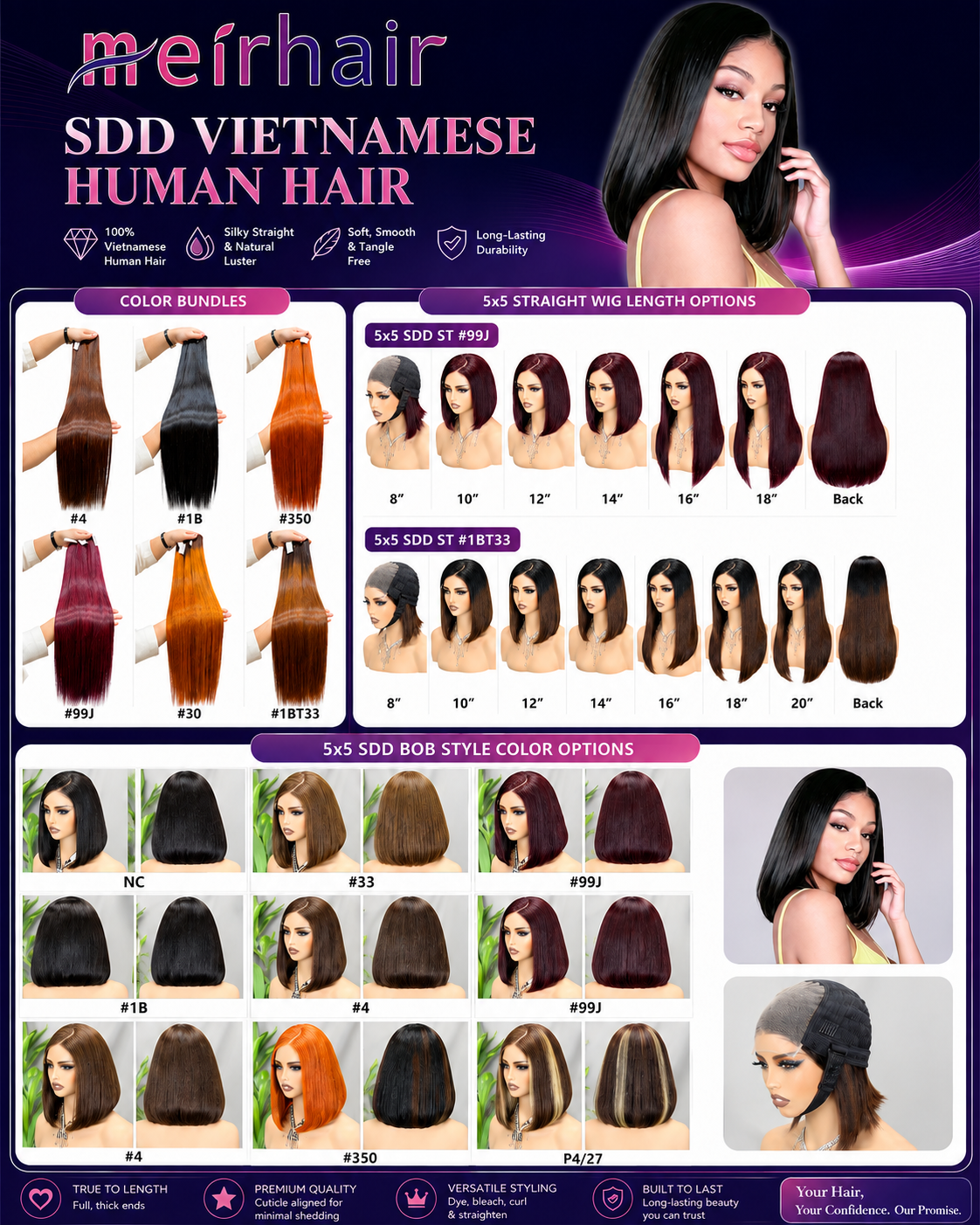
For most natural styles, 130% to 150% density creates an authentic result. A 130% density wig offers lightweight volume that closely resembles average natural hair growth. It is particularly suitable for 8 to 16-inch human hair bob wigs, where excessive density around the roots can reduce movement and realism.
A 150% density option adds visible body while maintaining a natural appearance. It works well with straight, body wave, and bob styles when the wearer wants a fuller finish without an overly thick look. For longer wigs, especially units over 20 inches, 180% to 200% density is often preferred to maintain fullness from the roots through the ends. Densities between 180% and 250% are generally used for high-volume custom wigs and more dramatic professional styling.
Lace Size and Density Comparison
| Lace Construction | Suggested Density | Best Use | Parting and Styling Options | Installation Level |
|---|---|---|---|---|
| 4x4 / 5x5 Lace Closure | 130% - 150% | Daily wear, online retail, protective hairstyles | Defined middle or side part | Low; suitable for glueless wear |
| 13x4 Lace Frontal | 150% - 180% | Salon services and flexible retail styles | Ear-to-ear free parting | Moderate |
| 13x6 Lace Frontal | 150% - 180% | Deep parts, polished updos, professional customization | Extended ear-to-ear parting depth | Moderate to high |
| Full Lace Structure | 180% - 250% | Premium custom units and private-label collections | Full 360-degree styling flexibility | High |
How Lace Construction Supports a Natural Hairline
The lace base plays a central role in scalp blending. Fine Swiss lace and HD lace are frequently used to help the wig melt into different skin tones and reduce the visibility of the hairline. A wider frontal gives stylists more space to customize the front edge, create baby hairs, and alter the part. In contrast, a closure simplifies the process by concentrating the realistic scalp effect around the chosen parting area.
For retailers and salons, matching density to lace construction can also reduce preparation time. Experience from a 300-unit lace closure and frontal project in Nigeria showed that consistent density selection and properly made lace bases reduced the amount of on-site customization needed during installation.
Frequently Asked Questions
Is 130% or 150% density better for a bob wig?
Choose 130% density for a lighter, more natural bob that resembles average human hair thickness. A 150% density bob has more body and is ideal for wearers who prefer a fuller straight or body wave style. Both options work well for bob lengths between 8 and 16 inches.
Do 13x4 lace frontals need adhesive?
A 13x4 frontal can be installed with certain glueless methods, but adhesive or lace tape is often used to keep the ear-to-ear hairline flat and secure. This is particularly helpful for salon installations and styles that pull the hair away from the face.
What density should I select for wigs longer than 20 inches?
For human hair wigs over 20 inches, 180% to 200% density is generally recommended. The added hair helps prevent sparse-looking ends and preserves a fuller shape throughout the length.
Final Recommendations
Your best choice should reflect the amount of styling flexibility and volume you expect from the wig. A 4x4 or 5x5 closure with 130% to 150% density is an efficient solution for natural, easy daily wear. For short straight or body wave bob wigs, a 13x4 frontal paired with 150% density provides a realistic hairline, fluid movement, and more parting options. Long, full styles benefit from 180% density or above, particularly when a polished salon finish is the goal.
Flexible OEM and ODM options, a minimum order quantity of 1 pc, and 7-day ready-stock delivery can help salons and retailers test different lace and density combinations efficiently. Commercial orders may be supported through T/T bank transfer and Alibaba Trade Assurance. For technical guidance or product support, contact sales@brazilianhairtop.com.
About Us
Guangzhou Ruiju E-Commerce Co., Ltd. is the company behind the MEIRHAIR human hair brand. Established in 2014, the business supplies human hair wigs, bundles, extensions, lace closures, and lace frontals to wholesalers, salons, and private-label hair brands. Its 5,000 sqm factory supports product development across a range of textures, lace structures, and density options. Products are exported to customers in North America, Europe, Africa, and the Middle East.

REPORT