







-
 Agriculture
-
 Health-Care
-
 Environment
-
 Construction-Real-Estate
-
 Tools-Hardware
-
 Home-Garden
-
 Furniture
-
 Luggage-Bags-Cases
-
 Medical-devices-Supplies
-
 Gifts-Crafts
-
 Sports-Entertainment
-
 Food-Beverage
-
 Vehicles-Transportation
-
 Power-Transmission
-
 Material-Handling
-
 Renewable-Energy
-
 Safety
-
 Testing-Instrument-Equipment
-
 Construction-Building-Machinery
-
 Pet-Supplies
-
 Personal-Care-Household-Cleaning
-
 Vehicle-Accessories-Electronics-Tools
-
 School-Office-Supplies
-
 Packaging-Printing
-
 Mother-Kids-Toys
-
 Business-Services
-
 Commercial-Equipment-Machinery
-
 Apparel-Accessories
-
 Security
-
 Shoes-Accessories
-
 Vehicle-Parts-Accessories
-
 Jewelry-Eyewear-Watches-Accessories
-
 Lights-Lighting
-
 Fabric-Textile-Raw-Material
-
 Fabrication-Services
-
 Industrial-Machinery
-
 Consumer-Electronics
-
 Electrical-Equipment-Supplies
-
 Electronic-Components-Accessories-Telecommunications
-
 Home-Appliances
-
 Beauty
-
 Chemicals
-
 Rubber-Plastics
-
 Metals-Alloys


























































































































































































































































































































































































































































































































































































- Masonry Materials
- Curtain Walls & Accessories
- Earthwork Products
- Fireproofing Materials
- Heat Insulation Materials
- Plastic Building Materials
- Building Boards
- Soundproofing Materials
- Timber
- Waterproofing Materials
- Balustrades & Handrails
- Bathroom & Kitchen
- Flooring & Accessories
- Tiles & Accessories
- Door, Window & Accessories
- Fireplaces & Stoves
- Floor Heating Systems & Parts
- Stairs & Stair Parts
- Ceilings
- Elevators & Escalators
- Stone
- Countertops, Vanity Tops & Table Tops
- Mosaics
- Metal Building Materials
- Multifunctional Materials
- Ladders & Scaffoldings
- Mouldings
- Corner Guards
- Decorative Films
- Formwork
- Building & Industrial Glass
- Other Construction & Real Estate
- Wallpapers/Wall panels
- HVAC System & Parts
- Outdoor Facilities
- Prefabricated Buildings
- Festive & Party Supplies
- Bathroom Products
- Household Sundries
- Rain Gear
- Garden Supplies
- Household Cleaning Tools & Accessories
- Lighters & Smoking Accessories
- Home Storage & Organization
- Household Scales
- Smart Home Improvement
- Home Textiles
- Kitchenware
- Drinkware & Accessories
- Dinnerware, Coffee & Wine
- Home Decor
- Golf
- Fitness & Body Building
- Amusement Park Facilities
- Billiards, Board Game,Coin Operated Games
- Musical Instruments
- Outdoor Affordable Luxury Sports
- Camping & Hiking
- Fishing
- Sports Safety&Rehabilitation
- Ball Sports Equipments
- Water Sports
- Winter Sports
- Luxury Travel Equipments
- Sports Shoes, Bags & Accessories
- Cycling
- Other Sports & Entertainment Products
- Artificial Grass&Sports Flooring&Sports Court Equipment
- Scooters
- Food Ingredients
- Honey & Honey Products
- Snacks
- Nuts & Kernels
- Seafood
- Plant & Animal Oil
- Beverages
- Fruit & Vegetable Products
- Frog & Escargot
- Bean Products
- Egg Products
- Dairy Products
- Seasonings & Condiments
- Canned Food
- Instant Food
- Baked Goods
- Other Food & Beverage
- Meat & Poultry
- Confectionery
- Grain Products
- Feminie Care
- Hair Care & Styling
- Body Care
- Hands & Feet Care
- Hygiene Products
- Men's Grooming
- Laundry Cleaning Supplies
- Travel Size & Gift Sets
- Room Deodorizers
- Other Personal Care Products
- Pest Control Products
- Special Household Cleaning
- Floor Cleaning
- Kitchen & Bathroom Cleaning
- Oral Care
- Bath Supplies
- Yellow Pages
- Correction Supplies
- Office Binding Supplies
- Office Cutting Supplies
- Board Erasers
- Office Adhesives & Tapes
- Education Supplies
- Pencil Cases & Bags
- Notebooks & Writing Pads
- File Folder Accessories
- Calendars
- Writing Accessories
- Commercial Office Supplies
- Pencil Sharpeners
- Pens
- Letter Pad/Paper
- Paper Envelopes
- Desk Organizers
- Pencils
- Markers & Highlighters
- Filing Products
- Art Supplies
- Easels
- Badge Holder & Accessories
- Office Paper
- Printer Supplies
- Book Covers
- Other Office & School Supplies
- Stationery Set
- Boards
- Clipboards
- Stamps
- Drafting Supplies
- Stencils
- Electronic Dictionary
- Books
- Map
- Magazines
- Calculators
- Baby & Toddler Toys
- Educational Toys
- Classic Toys
- Dress Up & Pretend Play
- Toy Vehicle
- Stuffed Animals & Plush Toys
- Outdoor Toys & Structures
- Balloons & Accessories
- Baby Food
- Children's Clothing
- Baby Supplies & Products
- Maternity Clothes
- Kids Shoes
- Baby Care
- Novelty & Gag Toys
- Dolls & Accessories
- Puzzle & Games
- Blocks & Model Building Toys
- Toddler Clothing
- Baby Clothing
- Kids' Luggage & Bags
- Arts, Crafts & DIY Toys
- Action & Toy Figures
- Baby Appliances
- Hobbies & Models
- Remote Control Toys
- Promotional Toys
- Pregnancy & Maternity
- Hygiene Products
- Kid's Textile&Bedding
- Novelty & Special Use
- Toy Weapons
- Baby Gifts
- Baby Storage & Organization
- Auto Drive Systems
- ATV/UTV Parts & Accessories
- Marine Parts & Accessories
- Other Auto Parts
- Trailer Parts & Accessories
- Auto Transmission Systems
- Train Parts & Accessories
- Universal Parts
- Railway Parts & Accessories
- Auto Brake Systems
- Aviation Parts & Accessories
- Truck Parts & Accessories
- Auto Suspension Systems
- Auto Lighting Systems
- New Energy Vehicle Parts & Accessories
- Auto Steering Systems
- Wheels, Tires & Accessories
- Bus Parts & Accessories
- Auto Performance Parts
- Cooling System
- Go-Kart & Kart Racer Parts & Accessories
- Air Conditioning Systems
- Heavy Duty Vehicle Parts & Accessories
- Auto Electrical Systems
- Auto Body Systems
- Auto Engine Systems
- Container Parts & Accessories
- Motorcycle Parts & Accessories
- Refrigeration & Heat Exchange Equipment
- Machine Tool Equipment
- Food & Beverage Machinery
- Agricultural Machinery & Equipment
- Apparel & Textile Machinery
- Chemical Machinery
- Packaging Machines
- Paper Production Machinery
- Plastic & Rubber Processing Machinery
- Industrial Robots
- Electronic Products Machinery
- Metal & Metallurgy Machinery
- Woodworking Machinery
- Home Product Manufacturing Machinery
- Machinery Accessories
- Environmental Machinery
- Machinery Service
- Electrical Equipment Manufacturing Machinery
- Industrial Compressors & Parts
- Tobacco & Cigarette Machinery
- Production Line
- Used Industrial Machinery
- Electronics Production Machinery
- Other Machinery & Industrial Equipment
- Camera, Photo & Accessories
- Portable Audio, Video & Accessories
- Television, Home Audio, Video & Accessories
- Video Games & Accessories
- Mobile Phone & Accessories
- Electronic Publications
- Earphone & Headphone & Accessories
- Speakers & Accessories
- Smart Electronics
- TV Receivers & Accessories
- Mobile Phone & Computer Repair Parts
- Chargers, Batteries & Power Supplies
- Used Electronics
- VR, AR, MR Hardware & Software
- Projectors & Presentation Equipments
- Other Consumer Electronics
- Cables & Commonly Used Accessories
- Computer Hardware & Software
- Displays, Signage and Optoelectronics
- Discrete Semiconductors
- Wireless & IoT Module and Products
- Telecommunications
- Connectors, Terminals & Accessories
- Development Boards, Electronic Modules and Kits
- Circuit Protection
- Sensors
- Isolators
- Audio Components and Products
- Integrated Circuits
- Power Supplies
- Relays
- RF, Microwave and RFID
- Electronic Accessories & Supplies
- Passive Components
- PCB & PCBA
- Air Quality Appliances
- Home Appliance Parts
- Heating & Cooling Appliances
- Small Kitchen Appliances
- Laundry Appliances
- Water Heaters
- Water Treatment Appliances
- Refrigerators & Freezers
- Personal Care & Beauty Appliances
- Major Kitchen Appliances
- Cleaning Appliances
- Second-hand Appliances
- Smart Home Appliances
- Other Home Appliances
- Energy Chemicals
- Inorganic Chemicals
- Basic Organic Chemicals
- Agrochemicals
- Admixture & Additives
- Catalysts & Chemical Auxiliary Agents
- Pigments & Dyestuff
- Coating & Paint
- Daily Chemicals
- Polymer
- Organic Intermediate
- Adhesives & Sealants
- Chemical Waste
- Biological Chemical Products
- Surface Treatment Chemicals
- Painting & Coating
- Chemical Reagents
- Flavor & Fragrance
- Non-Explosive Demolition Agents
- Other Chemicals
- Custom Chemical Services

How to Choose Spare Parts for a Flat-Pack Container House Shipment
Spare parts for a flat-pack container house should be selected according to the exact model and configuration included in the shipment. Instead of relying on a universal kit, buyers should prepare a detailed parts schedule covering compatible door and window components, enclosure accessories, and any replacement items recommended by the supplier.
Recommended Spare-Parts Planning
The most reliable approach is to finalize the spare-parts list together with the house specification, inspection requirements, warranty conditions, and shipping arrangements. This is especially important for construction camps, temporary accommodation projects, and remote housing deployments where obtaining replacement components locally may be difficult.
- Request a configuration-based parts list rather than assuming that every flat-pack house uses the same spare-parts package.
- Confirm replacement door, window, and enclosure components with the manufacturer before production or loading.
- Check that each item corresponds to the selected house dimensions and structural arrangement.
- Record quantities, compatibility details, inspection documents, warranty coverage, and delivery terms in the purchase order.
Why Configuration Matching Matters
The product information describes a detachable flat-pack container house with standard external dimensions of 5.95 m in length, 3.0 m in width, and 2.896 m in height. Other available configurations include 4 m x 3 m, 6 m x 2.4 m, 7 m x 3 m, and a 12 m extended double-combined unit. Because these options can use different component arrangements, spare parts should be ordered against the confirmed dimensions and layout of the delivered house.
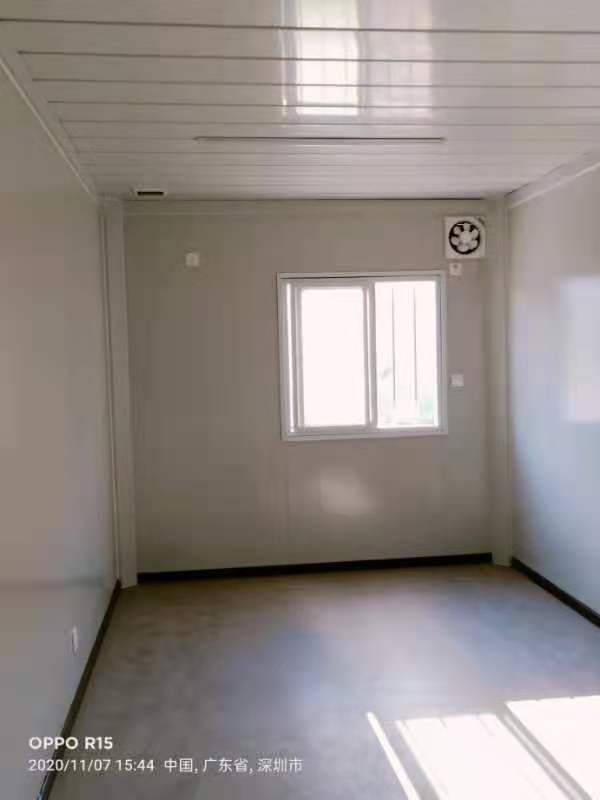
Available factory information lists dedicated production lines for doors and windows, other accessories, sandwich panels, and welding assembly. These capabilities make it practical to verify the required components directly with the supplier. However, the published product record does not define a fixed spare-parts kit or standard quantities, so the buyer should specify every requested item individually.
Components to Confirm Before Shipment
The final schedule may include spare door or window parts, enclosure accessories, and other product-specific replacement components. The exact selection depends on the house design, the number of units purchased, the installation environment, and the expected maintenance period. For large or isolated projects, it is useful to identify which items are shared across multiple units and which parts are unique to a particular configuration.
Quality, Warranty, and Documentation
Factory self-inspection is identified as part of the product process, while after-sales support includes a one-year warranty that excludes damage caused by users. Buyers should request the inspection record and keep it with the configuration drawings, packing list, spare-parts schedule, and warranty information. This documentation can simplify claims and help installation or maintenance teams identify the correct replacement part.
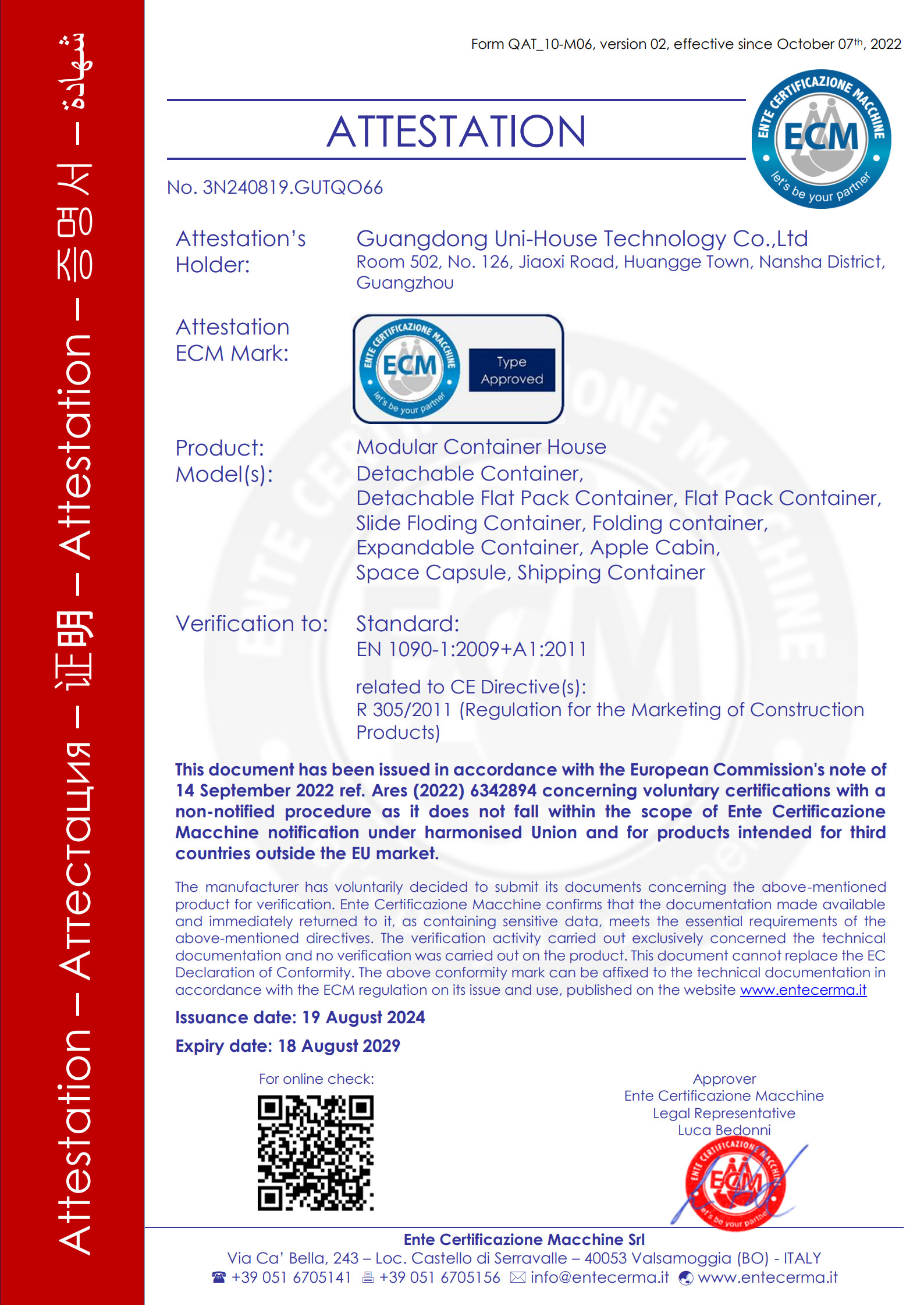
The available CE certification covers modular container-house categories, including detachable and flat-pack containers. It is still important to verify that the certification and technical documents correspond to the specific product configuration being shipped.
Project and Logistics Considerations
Flat-pack container houses are used on construction sites, in field camps, for temporary post-disaster accommodation, in cultural and tourism developments, and in new rural villas. A referenced Indonesian coal-mine project supplied 2,000 sets for workers' dormitories. Projects of this scale demonstrate why a well-organized spare-parts plan is valuable, particularly when many identical units must be maintained over time.
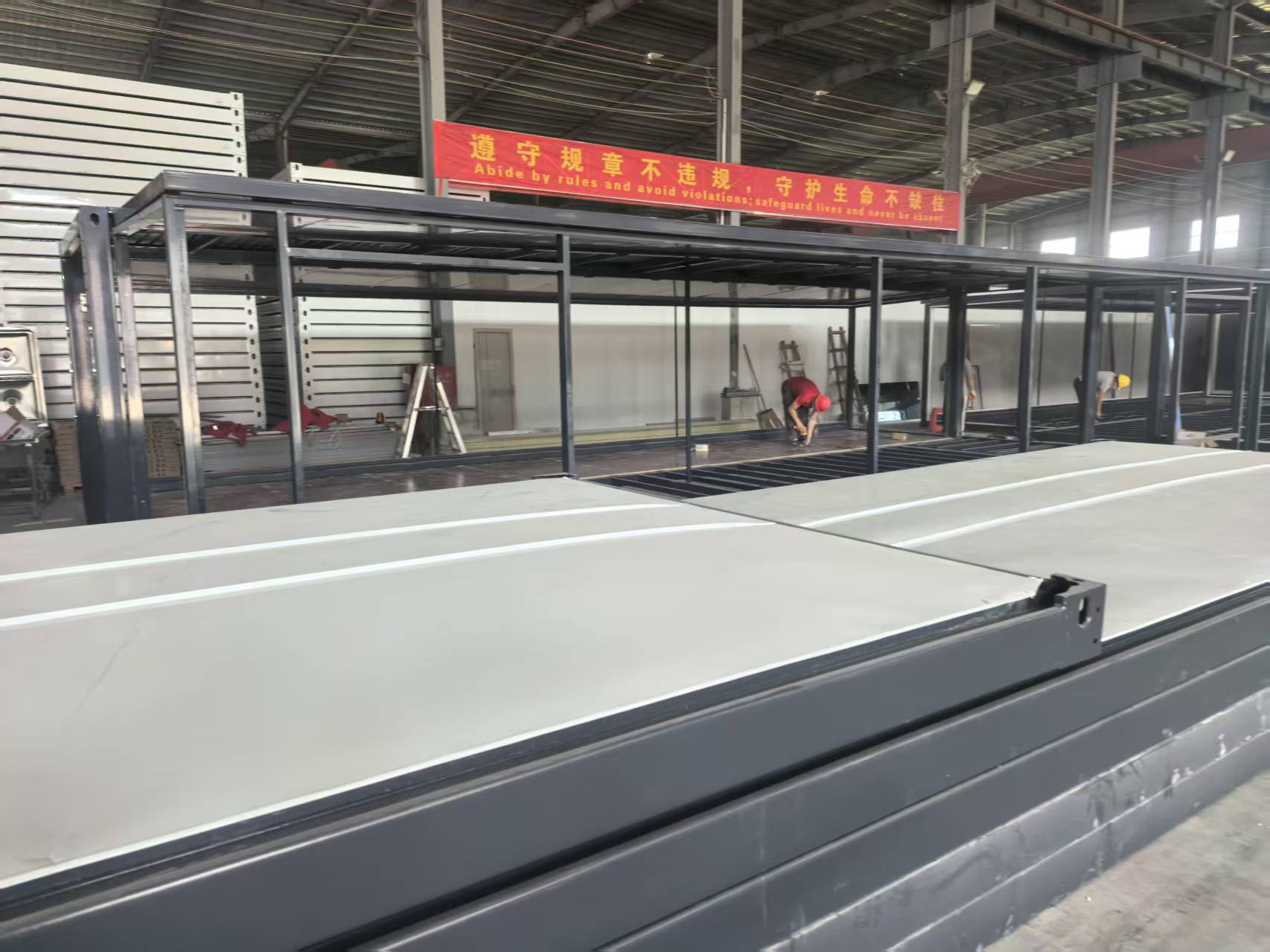
Guangdong Uni-House reports automated laser cutting, robotic welding, and automated spraying, together with production lines for doors, windows, and accessories. These manufacturing resources support pre-shipment confirmation of component specifications, quantities, and compatibility.
Order Information to Include
| Item | Buyer Should Confirm | Available Reference |
|---|---|---|
| Spare-parts selection | Door and window parts, enclosure accessories, and other approved replacement components | The supplier lists relevant production lines but does not publish a standard spare-parts kit |
| Model compatibility | Dimensions, layout, and matching component specifications | Standard size: 5.95 m x 3.0 m; options include 4 m x 3 m, 6 m x 2.4 m, 7 m x 3 m, and a 12 m double-combined unit |
| Quality support | Inspection report and applicable warranty conditions | Factory self-inspection and a one-year warranty excluding man-made damage |
| Commercial terms | Minimum order, deposit, balance payment, and freight container plan | MOQ of 1 set; 50% deposit and 50% balance before shipment; 20FT or 40HQ ocean containers |
| Production schedule | Lead time for the confirmed configuration and spare parts | Published references indicate 7 days in the product record and 15 days in the business-model record |
Frequently Asked Questions
Is there a standard spare-parts package for this product?
No. The available information does not provide a universal package or fixed quantities. The buyer should request a configuration-specific list and state the required quantity of each part in the order.
Which parts are most important to confirm?
Door and window components, enclosure accessories, and other replacement items identified by the supplier should be reviewed first. Their suitability must be checked against the selected size, layout, and construction details.
What should be documented for remote or large projects?
Keep the parts schedule, product configuration, inspection records, warranty terms, packing information, and installation documents together. For repeated housing units, note which parts are interchangeable across models and which are configuration-specific.
What are the stated purchasing and delivery terms?
The available business information states an MOQ of one set, a 50% advance payment, and payment of the remaining 50% before shipment. Ocean transport may use 20FT or 40HQ containers. Since the listed lead times differ between records, the applicable production schedule should be confirmed before signing the order.
Conclusion
The correct spare-parts strategy for a flat-pack container house is based on the confirmed house configuration rather than a generic product name. Buyers should list compatible door and window components, enclosure accessories, and supplier-approved replacement items, then attach the list to the technical, inspection, warranty, and logistics documents. Guangdong Uni-House supports an industry-and-trade integration model with an MOQ of one set, and its CE certification covers modular container-house categories that include flat-pack containers. For technical assistance or project support, please contact us at guizugroup@outlook.com.
About Us
Guangdong Uni-House Technology Co., Ltd. operates under the Guizu Group and provides services covering design, research and development, manufacturing, installation, and after-sales support through multiple factories. Founded in 2008, the company reports a workforce of 200 employees, including 30 professional engineers and designers. Its resources include more than 10 advanced production lines, over 200 sets of molds, and 150 utility model patents addressing structural performance, installation efficiency, and weather resistance. Its CE certification includes detachable and flat-pack container-house categories, and its products have been supplied to customers in several industries.

REPORT