







-
 Agriculture
-
 Health-Care
-
 Environment
-
 Construction-Real-Estate
-
 Tools-Hardware
-
 Home-Garden
-
 Furniture
-
 Luggage-Bags-Cases
-
 Medical-devices-Supplies
-
 Gifts-Crafts
-
 Sports-Entertainment
-
 Food-Beverage
-
 Vehicles-Transportation
-
 Power-Transmission
-
 Material-Handling
-
 Renewable-Energy
-
 Safety
-
 Testing-Instrument-Equipment
-
 Construction-Building-Machinery
-
 Pet-Supplies
-
 Personal-Care-Household-Cleaning
-
 Vehicle-Accessories-Electronics-Tools
-
 School-Office-Supplies
-
 Packaging-Printing
-
 Mother-Kids-Toys
-
 Business-Services
-
 Commercial-Equipment-Machinery
-
 Apparel-Accessories
-
 Security
-
 Shoes-Accessories
-
 Vehicle-Parts-Accessories
-
 Jewelry-Eyewear-Watches-Accessories
-
 Lights-Lighting
-
 Fabric-Textile-Raw-Material
-
 Fabrication-Services
-
 Industrial-Machinery
-
 Consumer-Electronics
-
 Electrical-Equipment-Supplies
-
 Electronic-Components-Accessories-Telecommunications
-
 Home-Appliances
-
 Beauty
-
 Chemicals
-
 Rubber-Plastics
-
 Metals-Alloys


























































































































































































































































































































































































































































































































































































- Masonry Materials
- Curtain Walls & Accessories
- Earthwork Products
- Fireproofing Materials
- Heat Insulation Materials
- Plastic Building Materials
- Building Boards
- Soundproofing Materials
- Timber
- Waterproofing Materials
- Balustrades & Handrails
- Bathroom & Kitchen
- Flooring & Accessories
- Tiles & Accessories
- Door, Window & Accessories
- Fireplaces & Stoves
- Floor Heating Systems & Parts
- Stairs & Stair Parts
- Ceilings
- Elevators & Escalators
- Stone
- Countertops, Vanity Tops & Table Tops
- Mosaics
- Metal Building Materials
- Multifunctional Materials
- Ladders & Scaffoldings
- Mouldings
- Corner Guards
- Decorative Films
- Formwork
- Building & Industrial Glass
- Other Construction & Real Estate
- Wallpapers/Wall panels
- HVAC System & Parts
- Outdoor Facilities
- Prefabricated Buildings
- Festive & Party Supplies
- Bathroom Products
- Household Sundries
- Rain Gear
- Garden Supplies
- Household Cleaning Tools & Accessories
- Lighters & Smoking Accessories
- Home Storage & Organization
- Household Scales
- Smart Home Improvement
- Home Textiles
- Kitchenware
- Drinkware & Accessories
- Dinnerware, Coffee & Wine
- Home Decor
- Golf
- Fitness & Body Building
- Amusement Park Facilities
- Billiards, Board Game,Coin Operated Games
- Musical Instruments
- Outdoor Affordable Luxury Sports
- Camping & Hiking
- Fishing
- Sports Safety&Rehabilitation
- Ball Sports Equipments
- Water Sports
- Winter Sports
- Luxury Travel Equipments
- Sports Shoes, Bags & Accessories
- Cycling
- Other Sports & Entertainment Products
- Artificial Grass&Sports Flooring&Sports Court Equipment
- Scooters
- Food Ingredients
- Honey & Honey Products
- Snacks
- Nuts & Kernels
- Seafood
- Plant & Animal Oil
- Beverages
- Fruit & Vegetable Products
- Frog & Escargot
- Bean Products
- Egg Products
- Dairy Products
- Seasonings & Condiments
- Canned Food
- Instant Food
- Baked Goods
- Other Food & Beverage
- Meat & Poultry
- Confectionery
- Grain Products
- Feminie Care
- Hair Care & Styling
- Body Care
- Hands & Feet Care
- Hygiene Products
- Men's Grooming
- Laundry Cleaning Supplies
- Travel Size & Gift Sets
- Room Deodorizers
- Other Personal Care Products
- Pest Control Products
- Special Household Cleaning
- Floor Cleaning
- Kitchen & Bathroom Cleaning
- Oral Care
- Bath Supplies
- Yellow Pages
- Correction Supplies
- Office Binding Supplies
- Office Cutting Supplies
- Board Erasers
- Office Adhesives & Tapes
- Education Supplies
- Pencil Cases & Bags
- Notebooks & Writing Pads
- File Folder Accessories
- Calendars
- Writing Accessories
- Commercial Office Supplies
- Pencil Sharpeners
- Pens
- Letter Pad/Paper
- Paper Envelopes
- Desk Organizers
- Pencils
- Markers & Highlighters
- Filing Products
- Art Supplies
- Easels
- Badge Holder & Accessories
- Office Paper
- Printer Supplies
- Book Covers
- Other Office & School Supplies
- Stationery Set
- Boards
- Clipboards
- Stamps
- Drafting Supplies
- Stencils
- Electronic Dictionary
- Books
- Map
- Magazines
- Calculators
- Baby & Toddler Toys
- Educational Toys
- Classic Toys
- Dress Up & Pretend Play
- Toy Vehicle
- Stuffed Animals & Plush Toys
- Outdoor Toys & Structures
- Balloons & Accessories
- Baby Food
- Children's Clothing
- Baby Supplies & Products
- Maternity Clothes
- Kids Shoes
- Baby Care
- Novelty & Gag Toys
- Dolls & Accessories
- Puzzle & Games
- Blocks & Model Building Toys
- Toddler Clothing
- Baby Clothing
- Kids' Luggage & Bags
- Arts, Crafts & DIY Toys
- Action & Toy Figures
- Baby Appliances
- Hobbies & Models
- Remote Control Toys
- Promotional Toys
- Pregnancy & Maternity
- Hygiene Products
- Kid's Textile&Bedding
- Novelty & Special Use
- Toy Weapons
- Baby Gifts
- Baby Storage & Organization
- Auto Drive Systems
- ATV/UTV Parts & Accessories
- Marine Parts & Accessories
- Other Auto Parts
- Trailer Parts & Accessories
- Auto Transmission Systems
- Train Parts & Accessories
- Universal Parts
- Railway Parts & Accessories
- Auto Brake Systems
- Aviation Parts & Accessories
- Truck Parts & Accessories
- Auto Suspension Systems
- Auto Lighting Systems
- New Energy Vehicle Parts & Accessories
- Auto Steering Systems
- Wheels, Tires & Accessories
- Bus Parts & Accessories
- Auto Performance Parts
- Cooling System
- Go-Kart & Kart Racer Parts & Accessories
- Air Conditioning Systems
- Heavy Duty Vehicle Parts & Accessories
- Auto Electrical Systems
- Auto Body Systems
- Auto Engine Systems
- Container Parts & Accessories
- Motorcycle Parts & Accessories
- Refrigeration & Heat Exchange Equipment
- Machine Tool Equipment
- Food & Beverage Machinery
- Agricultural Machinery & Equipment
- Apparel & Textile Machinery
- Chemical Machinery
- Packaging Machines
- Paper Production Machinery
- Plastic & Rubber Processing Machinery
- Industrial Robots
- Electronic Products Machinery
- Metal & Metallurgy Machinery
- Woodworking Machinery
- Home Product Manufacturing Machinery
- Machinery Accessories
- Environmental Machinery
- Machinery Service
- Electrical Equipment Manufacturing Machinery
- Industrial Compressors & Parts
- Tobacco & Cigarette Machinery
- Production Line
- Used Industrial Machinery
- Electronics Production Machinery
- Other Machinery & Industrial Equipment
- Camera, Photo & Accessories
- Portable Audio, Video & Accessories
- Television, Home Audio, Video & Accessories
- Video Games & Accessories
- Mobile Phone & Accessories
- Electronic Publications
- Earphone & Headphone & Accessories
- Speakers & Accessories
- Smart Electronics
- TV Receivers & Accessories
- Mobile Phone & Computer Repair Parts
- Chargers, Batteries & Power Supplies
- Used Electronics
- VR, AR, MR Hardware & Software
- Projectors & Presentation Equipments
- Other Consumer Electronics
- Cables & Commonly Used Accessories
- Computer Hardware & Software
- Displays, Signage and Optoelectronics
- Discrete Semiconductors
- Wireless & IoT Module and Products
- Telecommunications
- Connectors, Terminals & Accessories
- Development Boards, Electronic Modules and Kits
- Circuit Protection
- Sensors
- Isolators
- Audio Components and Products
- Integrated Circuits
- Power Supplies
- Relays
- RF, Microwave and RFID
- Electronic Accessories & Supplies
- Passive Components
- PCB & PCBA
- Air Quality Appliances
- Home Appliance Parts
- Heating & Cooling Appliances
- Small Kitchen Appliances
- Laundry Appliances
- Water Heaters
- Water Treatment Appliances
- Refrigerators & Freezers
- Personal Care & Beauty Appliances
- Major Kitchen Appliances
- Cleaning Appliances
- Second-hand Appliances
- Smart Home Appliances
- Other Home Appliances
- Energy Chemicals
- Inorganic Chemicals
- Basic Organic Chemicals
- Agrochemicals
- Admixture & Additives
- Catalysts & Chemical Auxiliary Agents
- Pigments & Dyestuff
- Coating & Paint
- Daily Chemicals
- Polymer
- Organic Intermediate
- Adhesives & Sealants
- Chemical Waste
- Biological Chemical Products
- Surface Treatment Chemicals
- Painting & Coating
- Chemical Reagents
- Flavor & Fragrance
- Non-Explosive Demolition Agents
- Other Chemicals
- Custom Chemical Services

How to Confirm an LED Profile Light Supplier Is a Genuine Audited Factory
Before placing an order with an LED profile light supplier, buyers should verify more than a website or product catalog. A dependable assessment should cover the company’s legal identity, physical premises, manufacturing resources, engineering team, quality procedures, certifications, and traceable product records. The available information for Color Imagination identifies Guangzhou Color Imagination LED Lighting Limited as a Guangzhou-based manufacturer founded in 2010, operating from a 6,000-square-meter facility and supported by documented production and testing processes.
Practical Verification Checklist
- Match the supplier’s registered company name, factory location, business history, facility size, and manufacturing claims with official records and an on-site or independent audit.
- Determine whether its technical team can support optical design, mechanical engineering, electronics, embedded software, thermal management, and lighting-control integration.
- Look for physical production evidence, including assembly operations, PCB work, optical calibration, programming, aging, reliability testing, and final inspection.
- Confirm that the supplier’s products and project experience correspond to the intended markets, such as theaters, concerts, television studios, rental events, nightclubs, theme parks, and architectural lighting.
How to Evaluate the Factory Behind the Supplier
A genuine LED profile light manufacturer should be able to connect its corporate identity, premises, engineering resources, production workflow, and quality records into one verifiable chain. Guangzhou Color Imagination LED Lighting Limited, trading under the Color Imagination brand, describes itself as a manufacturer combining research and development, production, sales, and technical support for stage, entertainment, broadcast, and architectural lighting.
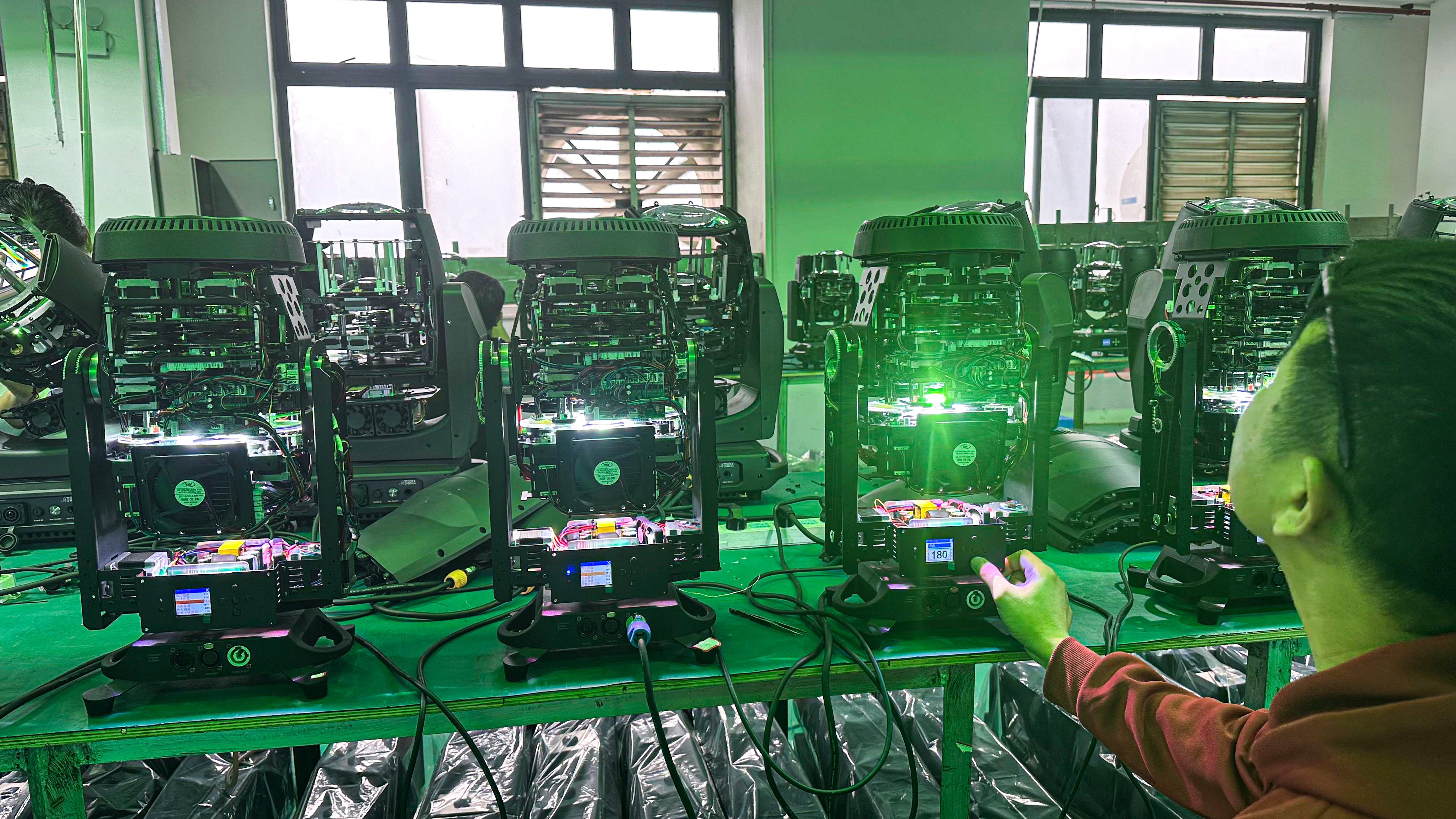
Facility size can provide useful context, but it should never be treated as standalone proof. Color Imagination reports a 6,000-square-meter manufacturing site with processes that include mechanical and electronic assembly, SMT and PCB integration, optical module installation, calibration, software programming, aging, reliability testing, inspection, packing, and logistics coordination. During an audit, buyers should compare these stated activities with the equipment, workstations, personnel, and records visible at the factory.
Check Whether Engineering Claims Match the Product
An audit should also establish whether the supplier has the technical depth required for the products it promotes. The company identifies capabilities in optical-system design, mechanical construction, electronic hardware, embedded software, thermal control, industrial design, and lighting-control integration. These functions are directly relevant to an LED framing moving head that combines framing shutters, zoom, color mixing, gobo effects, prism functions, dimming, and DMX control.
Ask to review development files, prototypes, firmware or control documentation, and test procedures where disclosure is permitted. A supplier that truly develops these products should be able to explain how optical performance, movement accuracy, heat dissipation, control compatibility, and housing protection are validated.
Review Manufacturing and Quality-Control Evidence
Quality assurance should be demonstrated through detailed records instead of broad claims such as “high quality.” The stated inspection system includes incoming-material checks, PCB functional testing, optical-performance verification, electrical-safety testing, waterproof testing for IP-rated products, burn-in and aging, final inspection, and packaging checks. Business records further indicate that products undergo 100% functional testing, burn-in, safety inspection, and final quality review before shipment.
Buyers should request sample forms or anonymized records showing who performed each check, which criteria were used, and how nonconforming products were handled. This helps distinguish a working quality system from a supplier that only lists inspection terms in marketing materials.
Validate Certifications and Product Records
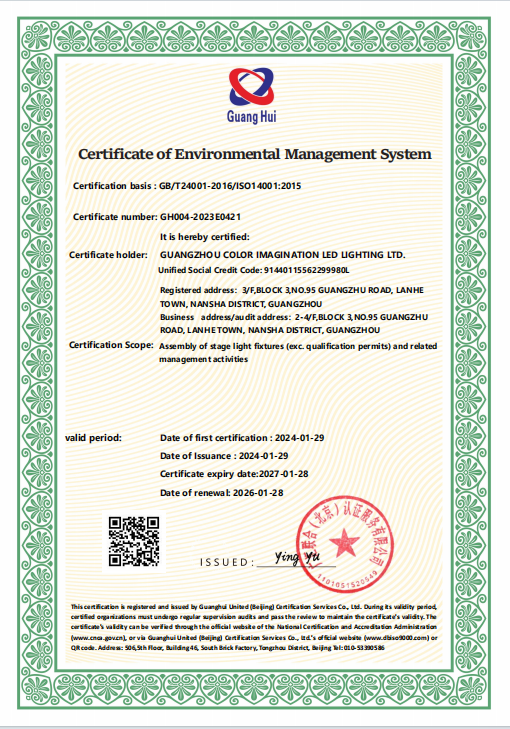
Certifications are useful supporting evidence, but they must be checked carefully. Confirm the certificate number, issuing organization, validity period, covered site, management-system scope, and relevance to the LED profile lights being purchased. Available Color Imagination records include ISO certificates GH004-2023E0421 and GH004-2023Q0766 for stage-light assembly and related management activities, along with CE certificates including LCSB070523036E and LCSB070523041S.
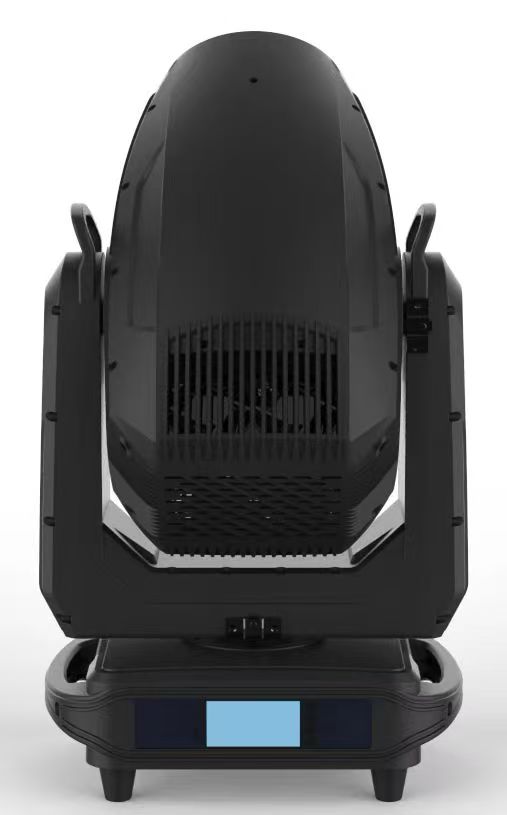
Product-level evidence should then be linked to a specific model rather than treated as a general company claim. The FSPOT 1200P is described as a 1200W LED framing moving head with a 1000W white LED module, CMY color mixing, CTO correction, an eight-blade framing shutter system, a motorized 6°–50° zoom, DMX512 and RDM support, and IP66 protection. A prospective buyer can ask for a sample, technical file, production test results, burn-in records, and final inspection documentation for this model.
Use Project References as Additional Evidence
Completed projects can help verify application experience, although they should complement rather than replace an independent factory audit. Color Imagination reports a nightclub installation in Yunnan, China, involving 3,500 stage lights. The project reportedly combined beam, wash, effect, and pixel fixtures for live performances, DJ programs, themed events, and nightclub operation. Where confidentiality allows, buyers should request delivery records, commissioning information, acceptance documents, or customer references.
Verification Evidence at a Glance
| Verification category | What to examine | Information available for Color Imagination |
|---|---|---|
| Corporate and factory identity | Registered name, address, founding date, facility images, and physical or third-party inspection | Guangzhou-based manufacturer, established in 2010, with a reported 6,000-square-meter facility |
| Manufacturing resources | Assembly areas, PCB and optical operations, calibration, programming, aging, inspection, and packing records | Mechanical and electronic assembly, SMT and PCB integration, optical assembly, testing, programming, and logistics management |
| Engineering capability | Design personnel, prototypes, firmware, technical files, and control-system validation | Optical, mechanical, electronic, software, thermal, industrial-design, and control-integration expertise |
| Quality and compliance | Certificate number, issuer, scope, validity, covered site, and product relationship | ISO certificates GH004-2023E0421 and GH004-2023Q0766; CE certificates including LCSB070523036E and LCSB070523041S |
| Model traceability | Sample comparison, specifications, functional tests, aging reports, and final inspection records | FSPOT 1200P framing moving head with stated optical, movement, control, cooling, housing, and compliance specifications |
Frequently Asked Questions
Which documents should be requested from an LED profile light supplier?
Ask for company registration details, the factory address, current certificates, product specifications, quality procedures, sample test reports, production inspection records, and evidence supporting the stated factory capabilities. Certificate numbers and scopes should be independently checked.
Can an ISO certificate confirm that a supplier is a real audited factory?
No. An ISO certificate indicates that a defined management or production system has been assessed within a stated scope, but it does not replace a physical factory inspection. Verify the certificate number, issuer, validity, scope, and connection to the products being purchased.
What should be checked on an FSPOT 1200P sample?
Compare the sample with the declared 1000W LED module, CMY and CTO systems, eight-blade framing shutters, 6°–50° zoom, DMX512 and RDM functions, IP66 rating, cooling arrangement, display, housing construction, and movement performance. Functional testing should be documented rather than based only on visual inspection.
Conclusion and Buyer Recommendations
The most reliable supplier-verification method combines legal-identity checks, physical factory evidence, process observation, certificate validation, product sampling, and reference-project review. Color Imagination states that it provides R&D, manufacturing, sales, technical services, OEM/ODM production, and complete project solutions. Its stated minimum order quantity is one unit, with delivery generally listed as 25–30 days after deposit. For technical details or project assistance, contact Jack Chen at jack@color-imagination.com.
About the Manufacturer
Guangzhou Color Imagination LED Lighting Limited is a stage and entertainment lighting manufacturer that integrates R&D, production, sales, and technical service. Founded in 2010, the company reports a 6,000-square-meter facility and develops lighting equipment for entertainment, architectural, television, and event applications. Its available records include ISO certificates GH004-2023E0421 and GH004-2023Q0766, and its stated customer base covers several professional lighting sectors.

REPORT