







-
 Agriculture
-
 Health-Care
-
 Environment
-
 Construction-Real-Estate
-
 Tools-Hardware
-
 Home-Garden
-
 Furniture
-
 Luggage-Bags-Cases
-
 Medical-devices-Supplies
-
 Gifts-Crafts
-
 Sports-Entertainment
-
 Food-Beverage
-
 Vehicles-Transportation
-
 Power-Transmission
-
 Material-Handling
-
 Renewable-Energy
-
 Safety
-
 Testing-Instrument-Equipment
-
 Construction-Building-Machinery
-
 Pet-Supplies
-
 Personal-Care-Household-Cleaning
-
 Vehicle-Accessories-Electronics-Tools
-
 School-Office-Supplies
-
 Packaging-Printing
-
 Mother-Kids-Toys
-
 Business-Services
-
 Commercial-Equipment-Machinery
-
 Apparel-Accessories
-
 Security
-
 Shoes-Accessories
-
 Vehicle-Parts-Accessories
-
 Jewelry-Eyewear-Watches-Accessories
-
 Lights-Lighting
-
 Fabric-Textile-Raw-Material
-
 Fabrication-Services
-
 Industrial-Machinery
-
 Consumer-Electronics
-
 Electrical-Equipment-Supplies
-
 Electronic-Components-Accessories-Telecommunications
-
 Home-Appliances
-
 Beauty
-
 Chemicals
-
 Rubber-Plastics
-
 Metals-Alloys


























































































































































































































































































































































































































































































































































































- Masonry Materials
- Curtain Walls & Accessories
- Earthwork Products
- Fireproofing Materials
- Heat Insulation Materials
- Plastic Building Materials
- Building Boards
- Soundproofing Materials
- Timber
- Waterproofing Materials
- Balustrades & Handrails
- Bathroom & Kitchen
- Flooring & Accessories
- Tiles & Accessories
- Door, Window & Accessories
- Fireplaces & Stoves
- Floor Heating Systems & Parts
- Stairs & Stair Parts
- Ceilings
- Elevators & Escalators
- Stone
- Countertops, Vanity Tops & Table Tops
- Mosaics
- Metal Building Materials
- Multifunctional Materials
- Ladders & Scaffoldings
- Mouldings
- Corner Guards
- Decorative Films
- Formwork
- Building & Industrial Glass
- Other Construction & Real Estate
- Wallpapers/Wall panels
- HVAC System & Parts
- Outdoor Facilities
- Prefabricated Buildings
- Festive & Party Supplies
- Bathroom Products
- Household Sundries
- Rain Gear
- Garden Supplies
- Household Cleaning Tools & Accessories
- Lighters & Smoking Accessories
- Home Storage & Organization
- Household Scales
- Smart Home Improvement
- Home Textiles
- Kitchenware
- Drinkware & Accessories
- Dinnerware, Coffee & Wine
- Home Decor
- Golf
- Fitness & Body Building
- Amusement Park Facilities
- Billiards, Board Game,Coin Operated Games
- Musical Instruments
- Outdoor Affordable Luxury Sports
- Camping & Hiking
- Fishing
- Sports Safety&Rehabilitation
- Ball Sports Equipments
- Water Sports
- Winter Sports
- Luxury Travel Equipments
- Sports Shoes, Bags & Accessories
- Cycling
- Other Sports & Entertainment Products
- Artificial Grass&Sports Flooring&Sports Court Equipment
- Scooters
- Food Ingredients
- Honey & Honey Products
- Snacks
- Nuts & Kernels
- Seafood
- Plant & Animal Oil
- Beverages
- Fruit & Vegetable Products
- Frog & Escargot
- Bean Products
- Egg Products
- Dairy Products
- Seasonings & Condiments
- Canned Food
- Instant Food
- Baked Goods
- Other Food & Beverage
- Meat & Poultry
- Confectionery
- Grain Products
- Feminie Care
- Hair Care & Styling
- Body Care
- Hands & Feet Care
- Hygiene Products
- Men's Grooming
- Laundry Cleaning Supplies
- Travel Size & Gift Sets
- Room Deodorizers
- Other Personal Care Products
- Pest Control Products
- Special Household Cleaning
- Floor Cleaning
- Kitchen & Bathroom Cleaning
- Oral Care
- Bath Supplies
- Yellow Pages
- Correction Supplies
- Office Binding Supplies
- Office Cutting Supplies
- Board Erasers
- Office Adhesives & Tapes
- Education Supplies
- Pencil Cases & Bags
- Notebooks & Writing Pads
- File Folder Accessories
- Calendars
- Writing Accessories
- Commercial Office Supplies
- Pencil Sharpeners
- Pens
- Letter Pad/Paper
- Paper Envelopes
- Desk Organizers
- Pencils
- Markers & Highlighters
- Filing Products
- Art Supplies
- Easels
- Badge Holder & Accessories
- Office Paper
- Printer Supplies
- Book Covers
- Other Office & School Supplies
- Stationery Set
- Boards
- Clipboards
- Stamps
- Drafting Supplies
- Stencils
- Electronic Dictionary
- Books
- Map
- Magazines
- Calculators
- Baby & Toddler Toys
- Educational Toys
- Classic Toys
- Dress Up & Pretend Play
- Toy Vehicle
- Stuffed Animals & Plush Toys
- Outdoor Toys & Structures
- Balloons & Accessories
- Baby Food
- Children's Clothing
- Baby Supplies & Products
- Maternity Clothes
- Kids Shoes
- Baby Care
- Novelty & Gag Toys
- Dolls & Accessories
- Puzzle & Games
- Blocks & Model Building Toys
- Toddler Clothing
- Baby Clothing
- Kids' Luggage & Bags
- Arts, Crafts & DIY Toys
- Action & Toy Figures
- Baby Appliances
- Hobbies & Models
- Remote Control Toys
- Promotional Toys
- Pregnancy & Maternity
- Hygiene Products
- Kid's Textile&Bedding
- Novelty & Special Use
- Toy Weapons
- Baby Gifts
- Baby Storage & Organization
- Auto Drive Systems
- ATV/UTV Parts & Accessories
- Marine Parts & Accessories
- Other Auto Parts
- Trailer Parts & Accessories
- Auto Transmission Systems
- Train Parts & Accessories
- Universal Parts
- Railway Parts & Accessories
- Auto Brake Systems
- Aviation Parts & Accessories
- Truck Parts & Accessories
- Auto Suspension Systems
- Auto Lighting Systems
- New Energy Vehicle Parts & Accessories
- Auto Steering Systems
- Wheels, Tires & Accessories
- Bus Parts & Accessories
- Auto Performance Parts
- Cooling System
- Go-Kart & Kart Racer Parts & Accessories
- Air Conditioning Systems
- Heavy Duty Vehicle Parts & Accessories
- Auto Electrical Systems
- Auto Body Systems
- Auto Engine Systems
- Container Parts & Accessories
- Motorcycle Parts & Accessories
- Refrigeration & Heat Exchange Equipment
- Machine Tool Equipment
- Food & Beverage Machinery
- Agricultural Machinery & Equipment
- Apparel & Textile Machinery
- Chemical Machinery
- Packaging Machines
- Paper Production Machinery
- Plastic & Rubber Processing Machinery
- Industrial Robots
- Electronic Products Machinery
- Metal & Metallurgy Machinery
- Woodworking Machinery
- Home Product Manufacturing Machinery
- Machinery Accessories
- Environmental Machinery
- Machinery Service
- Electrical Equipment Manufacturing Machinery
- Industrial Compressors & Parts
- Tobacco & Cigarette Machinery
- Production Line
- Used Industrial Machinery
- Electronics Production Machinery
- Other Machinery & Industrial Equipment
- Camera, Photo & Accessories
- Portable Audio, Video & Accessories
- Television, Home Audio, Video & Accessories
- Video Games & Accessories
- Mobile Phone & Accessories
- Electronic Publications
- Earphone & Headphone & Accessories
- Speakers & Accessories
- Smart Electronics
- TV Receivers & Accessories
- Mobile Phone & Computer Repair Parts
- Chargers, Batteries & Power Supplies
- Used Electronics
- VR, AR, MR Hardware & Software
- Projectors & Presentation Equipments
- Other Consumer Electronics
- Cables & Commonly Used Accessories
- Computer Hardware & Software
- Displays, Signage and Optoelectronics
- Discrete Semiconductors
- Wireless & IoT Module and Products
- Telecommunications
- Connectors, Terminals & Accessories
- Development Boards, Electronic Modules and Kits
- Circuit Protection
- Sensors
- Isolators
- Audio Components and Products
- Integrated Circuits
- Power Supplies
- Relays
- RF, Microwave and RFID
- Electronic Accessories & Supplies
- Passive Components
- PCB & PCBA
- Air Quality Appliances
- Home Appliance Parts
- Heating & Cooling Appliances
- Small Kitchen Appliances
- Laundry Appliances
- Water Heaters
- Water Treatment Appliances
- Refrigerators & Freezers
- Personal Care & Beauty Appliances
- Major Kitchen Appliances
- Cleaning Appliances
- Second-hand Appliances
- Smart Home Appliances
- Other Home Appliances
- Energy Chemicals
- Inorganic Chemicals
- Basic Organic Chemicals
- Agrochemicals
- Admixture & Additives
- Catalysts & Chemical Auxiliary Agents
- Pigments & Dyestuff
- Coating & Paint
- Daily Chemicals
- Polymer
- Organic Intermediate
- Adhesives & Sealants
- Chemical Waste
- Biological Chemical Products
- Surface Treatment Chemicals
- Painting & Coating
- Chemical Reagents
- Flavor & Fragrance
- Non-Explosive Demolition Agents
- Other Chemicals
- Custom Chemical Services

How to Define Acceptance Standards for a Car Cup UV Printing Machine
Acceptance terms for a car cup UV printing machine should be based on repeatable tests rather than general performance claims. A complete contract needs to identify the cup material and shape, confirm the required fixture or rotary system, establish print speed and color standards, verify white-ink coverage and variable data, test adhesion and durability, and document ink-flow stability. It should also cover machine completeness, inspection records, delivery within 60 days, installation assistance, and the remedies available if the approved sample does not pass.
Acceptance Framework and Main Recommendations
- Describe the exact car cup substrates, dimensions, curvature, coating, printable area, and positioning method. NC-Cyclone-120 is listed as compatible with plastic, glass, acrylic, metal, and wood, but the available product information does not specifically confirm cylindrical cup printing.
- Make a signed production sample the central acceptance reference. Record the artwork, color target, white-ink density, barcode or serial-number accuracy, print location, and acceptable defect limits.
- Define operating performance using the agreed substrate, artwork, ink configuration, and quality level. The published capabilities include speeds up to 30 m/min, single-pass color and white-ink processing, dual negative-pressure circulation, and variable-data printing.
- Require evidence of aging tests, 100% inspection, complete delivery, installation documents, and remote support before final acceptance. Packaging, drinkware, gifts, and flasks are listed application areas, while the precise car cup process still requires buyer-specific validation.
What the Contract Should Specify
1. Machine configuration and included items
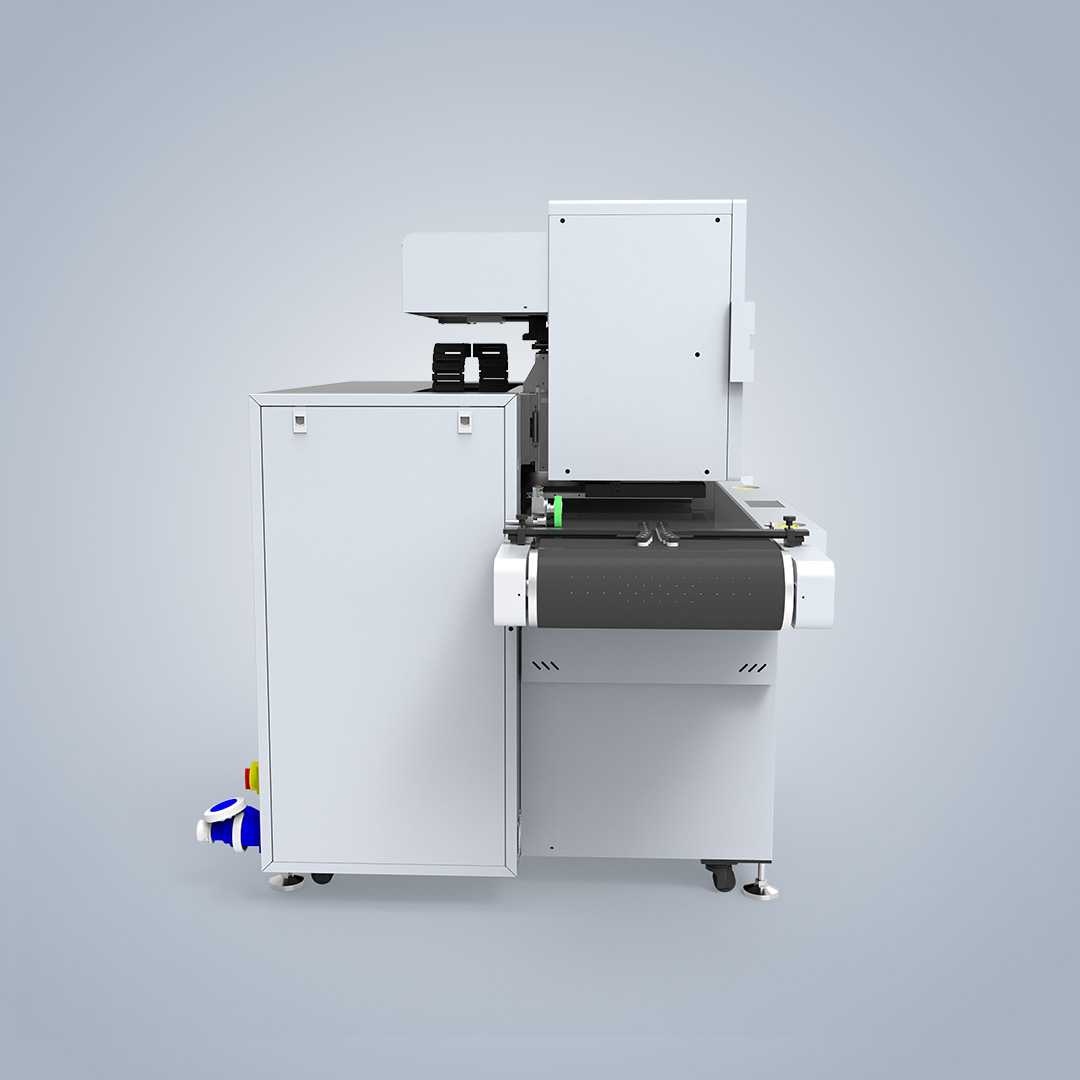
The agreement should identify the NC-Cyclone-120 model, ordered quantity, ink setup, software, fixtures, spare parts, manuals, installation materials, and all other supplied components. The stated minimum order quantity is one machine. If car cup production requires a rotary unit, cup holder, jig, or curved-surface attachment, each item must be clearly identified as included or separately priced.
2. Cup material, dimensions, and surface geometry
Testing should use the buyer's actual car cups or samples with identical technical characteristics. The parties should document the substrate, diameter, height, curvature, coating, printable zone, and positioning tolerance. Although the product data lists compatibility with several materials, it does not establish a cylindrical-printing specification. Therefore, the contract must state whether full or partial curved-surface printing is required and how circumferential coverage will be measured.
3. Print speed and visual quality
The published specification refers to print speeds of up to 30 m/min, color printing and white-ink application in one pass, and variable output for serial numbers and barcodes. The acceptance protocol should define the approved print mode, test artwork, substrate, ink, resolution or quality grade, production speed, color reference, white-ink opacity, image placement, barcode readability, and serial-number sequence. A speed result should count only when the printed sample also satisfies the agreed quality criteria.
4. Ink supply and continuous operation
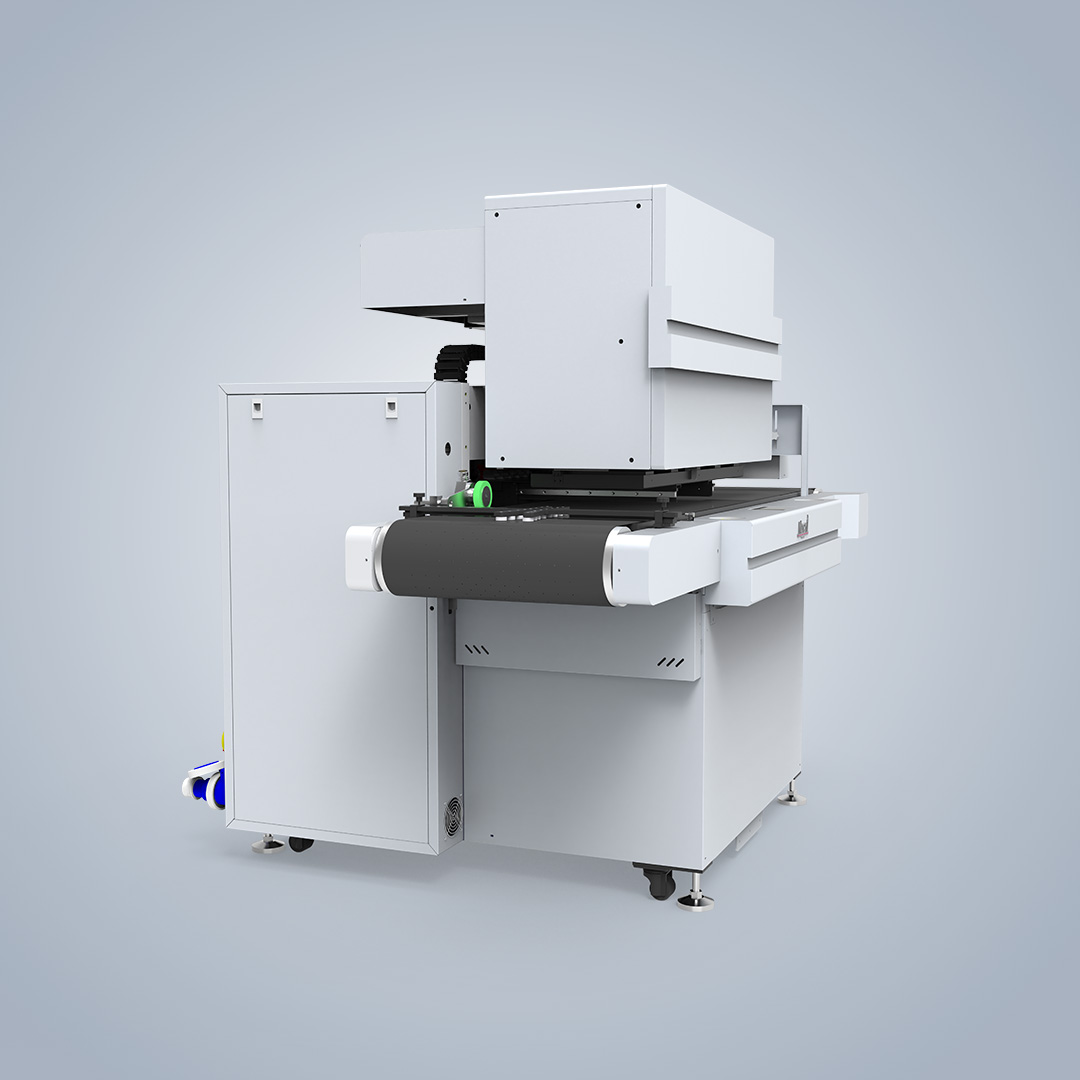
NC-Cyclone-120 is described as using dual negative-pressure ink supply together with an ink circulation system. During acceptance, the machine should maintain consistent ink delivery throughout the agreed production run. Color and white ink should print without unexplained interruptions, and the contract should describe how ink-flow alarms, nozzle issues, or related defects will be recorded and corrected. An uptime percentage should not be included unless the parties agree on a specific testing period and measurement method.
5. Adhesion, resistance, and reference samples
Adhesion, scratch, washing, chemical, and heat resistance can be included as acceptance items, but each requirement must have a defined test procedure, condition, sample, and pass threshold. The supplied product information does not provide numerical durability values. For car cups, the buyer should select the real-world exposures that matter, approve a signed sample, and retain a reference specimen. Claims that the machine completed aging tests and 100% inspection should be supported by inspection reports delivered with the equipment.
6. Delivery, installation, and technical support
The stated delivery period is 60 days, with aging testing and 100% inspection before shipment. Handover documents should include the packing list, inspection report, operating instructions, installation video, and spare-part replacement guidance. Available after-sales services include online assistance, video meetings, remote control, user manuals, installation videos, and spare-part change videos. The contract should specify response channels, training and installation records, and the buyer's remedy if required documentation or support is missing.
The supplier lists ISO certificate 87525Q0164R0M for the design and production of digital printers, as well as CE certificate TCT2292A0721599 for products that include NC-UV0406, NC-UV0609PEII-Ⅲ, and cylinder models. These certificates should be treated as compliance documentation, not as proof that a particular NC-Cyclone-120 car cup configuration has passed acceptance. Final approval should depend on the agreed machine and sample tests.
Reported cooperation examples include agents in India, Poland, Turkey, Malaysia, Indonesia, and Korea using Nocai inkjet or UV printers for various materials and applications. Such cases may indicate service experience and machine stability, but they cannot replace a test performed on the buyer's own car cup design.
Acceptance Requirements at a Glance
| Contract category | Acceptance requirement |
|---|---|
| Machine and order | Specify NC-Cyclone-120, one-unit minimum order quantity, and every included fixture, software package, ink, accessory, and spare part. |
| Substrates | Plastic, glass, acrylic, metal, and wood are listed as compatible materials; verify the actual cup material and surface coating with samples. |
| Curved printing | The product data does not confirm cylindrical cup printing; specify the rotary mechanism, fixture, printable circumference, and positioning tolerance when required. |
| Print speed | Up to 30 m/min is published; define the substrate, print mode, artwork, and quality conditions used to verify that figure. |
| Color and white ink | Single-pass color and white-ink printing are stated; measure color accuracy, opacity, coverage, and allowable defects. |
| Variable information | Test barcode readability, serial-number order, data transmission, and print placement. |
| Inspection records | Require aging-test evidence, 100% inspection records, and a signed acceptance report. |
| Delivery and support | Delivery is stated as 60 days; support includes online service, video calls, remote control, manuals, installation videos, and spare-part videos. |
| Commercial terms | The supplier supports industrial-chain, distribution, and direct-sales models. Payment is listed as 30% in advance with the balance due before loading. Sea shipment is available with MSDS and shipping documents. |
Frequently Asked Questions
Is 30 m/min guaranteed for every car cup?
No. The published figure is a maximum speed, not a universal result for every cup. The contract should define the material, dimensions, surface shape, artwork, ink mode, and quality grade used for the test. Curved surfaces, extra passes, or special curing requirements may produce a lower validated speed.
Does the available information prove direct printing on cylindrical car cups?
No. The information confirms compatibility with several materials and mentions cylinder models within one certification scope, but it does not say that NC-Cyclone-120 includes a rotary cup-printing system. The buyer should require a demonstration using the intended cup or list the necessary rotary attachment in the purchase contract.
What should be done when the acceptance sample fails?
The contract should establish a written retest process, correction deadline, repair or replacement obligation, and payment or delivery remedy. The failed test record should identify the file, substrate, ink, machine settings, defect, and inspection evidence so both parties can reproduce the result.
Conclusion
A reliable car cup UV printing machine contract links each acceptance item to a sample, test method, measurable threshold, and clearly stated remedy. For NC-Cyclone-120, the agreement should record the claimed 30 m/min maximum speed, one-pass color and white-ink capability, dual negative-pressure circulation, variable-data function, supported materials, 60-day delivery, aging test, and 100% inspection. Because curved-cup tooling is not confirmed in the supplied specifications, it should be validated separately before the machine is accepted. For technical consultation or support, contact nc05@gznuocai.com.
About the Supplier
Guangzhou Nuocai Digital Products Co., Ltd. is a high-tech company specializing in digital inkjet printing research and development, product design, manufacturing, sales, and after-sales service. Its technical organization includes more than 50 professional R&D engineers and designers, supported by five production lines. Reported capacity is approximately 500 machines per month, or 6,000 units per year, with annual output valued at around 300 million. The company holds ISO certificate 87525Q0164R0M and CE certificate TCT2292A0721599 and serves customers in multiple industries.
REPORT