







-
 Agriculture
-
 Health-Care
-
 Environment
-
 Construction-Real-Estate
-
 Tools-Hardware
-
 Home-Garden
-
 Furniture
-
 Luggage-Bags-Cases
-
 Medical-devices-Supplies
-
 Gifts-Crafts
-
 Sports-Entertainment
-
 Food-Beverage
-
 Vehicles-Transportation
-
 Power-Transmission
-
 Material-Handling
-
 Renewable-Energy
-
 Safety
-
 Testing-Instrument-Equipment
-
 Construction-Building-Machinery
-
 Pet-Supplies
-
 Personal-Care-Household-Cleaning
-
 Vehicle-Accessories-Electronics-Tools
-
 School-Office-Supplies
-
 Packaging-Printing
-
 Mother-Kids-Toys
-
 Business-Services
-
 Commercial-Equipment-Machinery
-
 Apparel-Accessories
-
 Security
-
 Shoes-Accessories
-
 Vehicle-Parts-Accessories
-
 Jewelry-Eyewear-Watches-Accessories
-
 Lights-Lighting
-
 Fabric-Textile-Raw-Material
-
 Fabrication-Services
-
 Industrial-Machinery
-
 Consumer-Electronics
-
 Electrical-Equipment-Supplies
-
 Electronic-Components-Accessories-Telecommunications
-
 Home-Appliances
-
 Beauty
-
 Chemicals
-
 Rubber-Plastics
-
 Metals-Alloys


























































































































































































































































































































































































































































































































































































- Masonry Materials
- Curtain Walls & Accessories
- Earthwork Products
- Fireproofing Materials
- Heat Insulation Materials
- Plastic Building Materials
- Building Boards
- Soundproofing Materials
- Timber
- Waterproofing Materials
- Balustrades & Handrails
- Bathroom & Kitchen
- Flooring & Accessories
- Tiles & Accessories
- Door, Window & Accessories
- Fireplaces & Stoves
- Floor Heating Systems & Parts
- Stairs & Stair Parts
- Ceilings
- Elevators & Escalators
- Stone
- Countertops, Vanity Tops & Table Tops
- Mosaics
- Metal Building Materials
- Multifunctional Materials
- Ladders & Scaffoldings
- Mouldings
- Corner Guards
- Decorative Films
- Formwork
- Building & Industrial Glass
- Other Construction & Real Estate
- Wallpapers/Wall panels
- HVAC System & Parts
- Outdoor Facilities
- Prefabricated Buildings
- Festive & Party Supplies
- Bathroom Products
- Household Sundries
- Rain Gear
- Garden Supplies
- Household Cleaning Tools & Accessories
- Lighters & Smoking Accessories
- Home Storage & Organization
- Household Scales
- Smart Home Improvement
- Home Textiles
- Kitchenware
- Drinkware & Accessories
- Dinnerware, Coffee & Wine
- Home Decor
- Golf
- Fitness & Body Building
- Amusement Park Facilities
- Billiards, Board Game,Coin Operated Games
- Musical Instruments
- Outdoor Affordable Luxury Sports
- Camping & Hiking
- Fishing
- Sports Safety&Rehabilitation
- Ball Sports Equipments
- Water Sports
- Winter Sports
- Luxury Travel Equipments
- Sports Shoes, Bags & Accessories
- Cycling
- Other Sports & Entertainment Products
- Artificial Grass&Sports Flooring&Sports Court Equipment
- Scooters
- Food Ingredients
- Honey & Honey Products
- Snacks
- Nuts & Kernels
- Seafood
- Plant & Animal Oil
- Beverages
- Fruit & Vegetable Products
- Frog & Escargot
- Bean Products
- Egg Products
- Dairy Products
- Seasonings & Condiments
- Canned Food
- Instant Food
- Baked Goods
- Other Food & Beverage
- Meat & Poultry
- Confectionery
- Grain Products
- Feminie Care
- Hair Care & Styling
- Body Care
- Hands & Feet Care
- Hygiene Products
- Men's Grooming
- Laundry Cleaning Supplies
- Travel Size & Gift Sets
- Room Deodorizers
- Other Personal Care Products
- Pest Control Products
- Special Household Cleaning
- Floor Cleaning
- Kitchen & Bathroom Cleaning
- Oral Care
- Bath Supplies
- Yellow Pages
- Correction Supplies
- Office Binding Supplies
- Office Cutting Supplies
- Board Erasers
- Office Adhesives & Tapes
- Education Supplies
- Pencil Cases & Bags
- Notebooks & Writing Pads
- File Folder Accessories
- Calendars
- Writing Accessories
- Commercial Office Supplies
- Pencil Sharpeners
- Pens
- Letter Pad/Paper
- Paper Envelopes
- Desk Organizers
- Pencils
- Markers & Highlighters
- Filing Products
- Art Supplies
- Easels
- Badge Holder & Accessories
- Office Paper
- Printer Supplies
- Book Covers
- Other Office & School Supplies
- Stationery Set
- Boards
- Clipboards
- Stamps
- Drafting Supplies
- Stencils
- Electronic Dictionary
- Books
- Map
- Magazines
- Calculators
- Baby & Toddler Toys
- Educational Toys
- Classic Toys
- Dress Up & Pretend Play
- Toy Vehicle
- Stuffed Animals & Plush Toys
- Outdoor Toys & Structures
- Balloons & Accessories
- Baby Food
- Children's Clothing
- Baby Supplies & Products
- Maternity Clothes
- Kids Shoes
- Baby Care
- Novelty & Gag Toys
- Dolls & Accessories
- Puzzle & Games
- Blocks & Model Building Toys
- Toddler Clothing
- Baby Clothing
- Kids' Luggage & Bags
- Arts, Crafts & DIY Toys
- Action & Toy Figures
- Baby Appliances
- Hobbies & Models
- Remote Control Toys
- Promotional Toys
- Pregnancy & Maternity
- Hygiene Products
- Kid's Textile&Bedding
- Novelty & Special Use
- Toy Weapons
- Baby Gifts
- Baby Storage & Organization
- Auto Drive Systems
- ATV/UTV Parts & Accessories
- Marine Parts & Accessories
- Other Auto Parts
- Trailer Parts & Accessories
- Auto Transmission Systems
- Train Parts & Accessories
- Universal Parts
- Railway Parts & Accessories
- Auto Brake Systems
- Aviation Parts & Accessories
- Truck Parts & Accessories
- Auto Suspension Systems
- Auto Lighting Systems
- New Energy Vehicle Parts & Accessories
- Auto Steering Systems
- Wheels, Tires & Accessories
- Bus Parts & Accessories
- Auto Performance Parts
- Cooling System
- Go-Kart & Kart Racer Parts & Accessories
- Air Conditioning Systems
- Heavy Duty Vehicle Parts & Accessories
- Auto Electrical Systems
- Auto Body Systems
- Auto Engine Systems
- Container Parts & Accessories
- Motorcycle Parts & Accessories
- Refrigeration & Heat Exchange Equipment
- Machine Tool Equipment
- Food & Beverage Machinery
- Agricultural Machinery & Equipment
- Apparel & Textile Machinery
- Chemical Machinery
- Packaging Machines
- Paper Production Machinery
- Plastic & Rubber Processing Machinery
- Industrial Robots
- Electronic Products Machinery
- Metal & Metallurgy Machinery
- Woodworking Machinery
- Home Product Manufacturing Machinery
- Machinery Accessories
- Environmental Machinery
- Machinery Service
- Electrical Equipment Manufacturing Machinery
- Industrial Compressors & Parts
- Tobacco & Cigarette Machinery
- Production Line
- Used Industrial Machinery
- Electronics Production Machinery
- Other Machinery & Industrial Equipment
- Camera, Photo & Accessories
- Portable Audio, Video & Accessories
- Television, Home Audio, Video & Accessories
- Video Games & Accessories
- Mobile Phone & Accessories
- Electronic Publications
- Earphone & Headphone & Accessories
- Speakers & Accessories
- Smart Electronics
- TV Receivers & Accessories
- Mobile Phone & Computer Repair Parts
- Chargers, Batteries & Power Supplies
- Used Electronics
- VR, AR, MR Hardware & Software
- Projectors & Presentation Equipments
- Other Consumer Electronics
- Cables & Commonly Used Accessories
- Computer Hardware & Software
- Displays, Signage and Optoelectronics
- Discrete Semiconductors
- Wireless & IoT Module and Products
- Telecommunications
- Connectors, Terminals & Accessories
- Development Boards, Electronic Modules and Kits
- Circuit Protection
- Sensors
- Isolators
- Audio Components and Products
- Integrated Circuits
- Power Supplies
- Relays
- RF, Microwave and RFID
- Electronic Accessories & Supplies
- Passive Components
- PCB & PCBA
- Air Quality Appliances
- Home Appliance Parts
- Heating & Cooling Appliances
- Small Kitchen Appliances
- Laundry Appliances
- Water Heaters
- Water Treatment Appliances
- Refrigerators & Freezers
- Personal Care & Beauty Appliances
- Major Kitchen Appliances
- Cleaning Appliances
- Second-hand Appliances
- Smart Home Appliances
- Other Home Appliances
- Energy Chemicals
- Inorganic Chemicals
- Basic Organic Chemicals
- Agrochemicals
- Admixture & Additives
- Catalysts & Chemical Auxiliary Agents
- Pigments & Dyestuff
- Coating & Paint
- Daily Chemicals
- Polymer
- Organic Intermediate
- Adhesives & Sealants
- Chemical Waste
- Biological Chemical Products
- Surface Treatment Chemicals
- Painting & Coating
- Chemical Reagents
- Flavor & Fragrance
- Non-Explosive Demolition Agents
- Other Chemicals
- Custom Chemical Services

How to Define Freight Responsibility for Insulated Food Delivery Bags
When purchasing insulated food delivery bags, freight terms should be agreed before production or shipment begins. The quotation should clearly identify who books transport, completes export procedures, pays freight, manages import clearance, covers duties, arranges final delivery, and assumes risk while the goods are in transit. Confirm the applicable Incoterm or complete delivery scope in writing, then select a transport method that matches the order volume, budget, and required arrival date.
Freight Responsibilities to Confirm Before Ordering
- Specify whether the quotation covers port-to-port, airport-to-airport, terminal-to-door, or door-to-door service.
- Identify the party responsible for origin pickup, export documents, loading, main transportation, destination handling, customs, import charges, and final-mile delivery.
- Use FCL sea freight for larger production volumes, while LCL is generally more practical when the first order cannot fill a container.
- Choose air freight or express courier when samples, product launches, or replenishment schedules are more important than the lowest shipping cost.
- Record the named destination, packed carton measurements, estimated volume, customs arrangements, and delivery handover point before accepting the quote.
How Delivery Scope Affects Cost and Risk
The phrase “door-to-door” should not be treated as a complete freight agreement by itself. A reliable quotation should list the pickup address, export clearance, origin terminal charges, international transport, destination handling, import clearance, duties, taxes, and delivery to the final address. It should also state the exact destination and explain when responsibility for loss or damage transfers from the supplier to the buyer.
The agreed Incoterm can help define these obligations, but the commercial quotation should still spell out the practical services included. For example, port-to-port pricing may leave the buyer responsible for inland transportation, destination fees, customs, and final delivery. A door-delivery offer may include some of these services but exclude duties or taxes. Written confirmation prevents unexpected charges after the shipment reaches its destination.
Selecting the Right Shipping Method
Sea Freight for Production Orders
Full container load sea freight is usually the most economical choice for regular production quantities. Depending on the quotation, the supplier may offer FOB, CIF, or a door-delivery arrangement. The buyer should confirm who books the container, prepares export documentation, pays origin charges, coordinates destination handling, and arranges customs and inland transportation.
Less-than-container-load shipping allows several consignments to share space and is often suitable for a first order. However, consolidation and additional cargo handling can add approximately 5 to 10 days beyond the ocean transit time. Ask who organizes consolidation, who pays minimum volume charges, and who manages destination deconsolidation, customs, and local delivery.
Air Freight and Express Courier
Air freight is suitable for urgent production, fixed launch dates, and replenishment shipments. The stated transit time is approximately 2 to 4 days from airport to airport in the United States and Europe, or about 5 to 7 working days for door-to-door service after pickup and clearance. The quotation should clarify whether pickup, airport handling, customs processing, duties, and final-mile delivery are included.
Express courier is commonly used for samples, printed proofs, and small urgent consignments. Door-to-door service typically takes 3 to 5 business days to the United States, Europe, and Australia. Even when tracking is provided, buyers should verify whether brokerage, customs processing, taxes, duties, and delivery to the named address are part of the quoted price.
Volume and Dimensional Weight
Insulated bags are lightweight but can occupy considerable carton space. The stated usable capacity is approximately 28 cubic metres for a 20-foot container and about 68 cubic metres for a 40-foot high-cube container. For air shipments, carriers generally charge according to whichever is greater: actual weight or volumetric weight, using a 1:167 volumetric factor. Freight estimates should therefore be based on final packed carton dimensions, carton count, and gross weight rather than product weight alone.
Product Application and Specification Checks
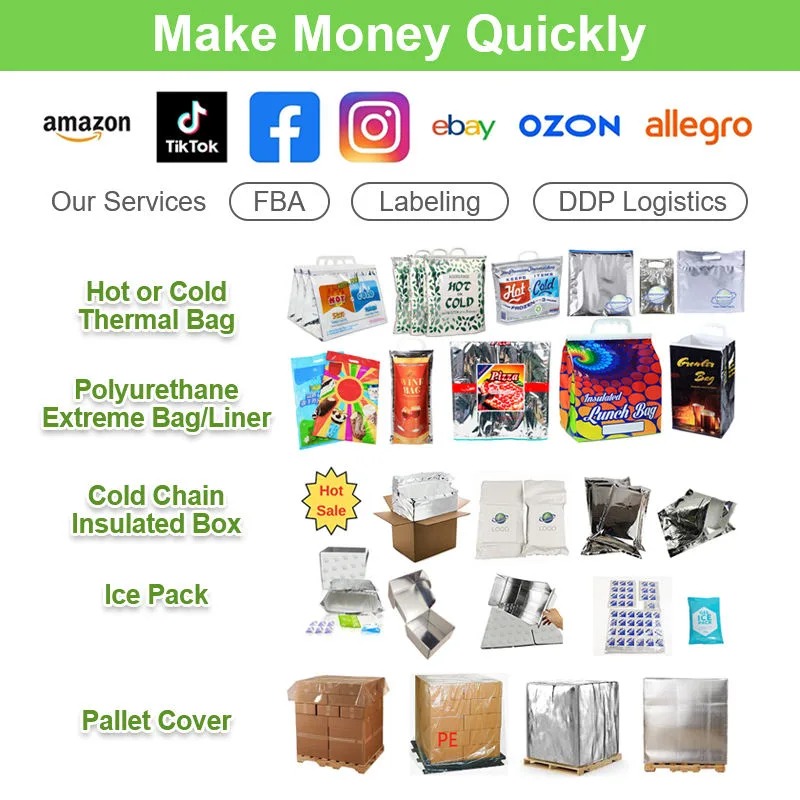
Insulated bags may be used for hot food delivery, restaurant takeaway, grocery distribution, and cold-chain transport. An aluminium foil lining can reflect radiant heat, while a stable flat base helps keep food containers level. For chilled products, the construction may include a separate gel-pack sleeve and a waterproof inner membrane. These performance requirements should be confirmed separately from freight terms because the bag design does not determine responsibility for transportation, customs, or import charges.
The featured product information refers to a bone-rib press seal foil pouch made with a three-ply laminate, an aluminium foil barrier, a PE contact layer, and custom Pantone printing. Buyers should verify whether the freight quotation applies to insulated food delivery bags, this particular foil pouch structure, or another approved product configuration.
Production and delivery documentation should keep quality responsibilities traceable. Ecopack states that incoming materials, in-process production, and pre-shipment goods are inspected under its ISO 9001:2015 system, with AQL sampling applied at final inspection. The company also holds FSC Chain of Custody certification for selected wrapping and packaging paper products. These controls support manufacturing consistency, but they do not replace a written agreement covering freight risk, customs, duties, or destination costs.
A reported cooperation project involved a United States distributor using insulated mailers for cold shipping. Compared with rigid foam packaging, the mailers reduced storage and shipping space and supported a high-volume supply program. This indicates experience with cold-shipping packaging, while each new order still requires a separate and specific freight allocation.
Shipping Method Comparison
| Shipping method | Recommended use and stated timing | Responsibilities to confirm |
|---|---|---|
| Sea Freight (FCL) | Suitable for production orders; approximately 14 to 18 days to the US West Coast, 30 to 35 days to Europe, and 12 to 16 days to Australia from Shenzhen or Guangzhou, excluding clearance. | Confirm FOB, CIF, or door-to-door terms, container booking, export handling, destination charges, customs, duties, and final delivery. |
| Sea Freight (LCL) | Useful for first orders and volumes below one container; consolidation may add approximately 5 to 10 days to the ocean transit time. | Confirm consolidation arrangements, minimum cubic-metre charges, mixed-load handling, destination clearance, and local delivery. |
| Air Freight | Appropriate for urgent production; approximately 2 to 4 days airport-to-airport and around 5 to 7 working days door-to-door after pickup and clearance. | Confirm dimensional-weight billing, pickup, airport handling, customs clearance, duties, and final-mile delivery. |
| Express Courier | Best for samples, proofs, and small urgent packages; usually 3 to 5 business days door-to-door to the United States, Europe, and Australia. | Confirm whether customs processing, brokerage, taxes, duties, and delivery to the named address are included. |
| Rail Freight to Europe | Suitable for mid-size European shipments; typically 18 to 22 days door-to-door. | Confirm terminal delivery, container booking, customs clearance, and final-mile trucking. |
| Land Transport | Useful for nearby Southeast Asian and Central Asian markets; typically 3 to 7 days to Southeast Asia. | Confirm border procedures, export and import documents, duties, unloading, and transportation after the border crossing. |
Frequently Asked Questions
Which freight details should be included in the quotation?
Request the named destination, shipping method, transport scope, pickup location, export clearance, import clearance, duties, destination charges, final-mile delivery, and the party responsible for loss or damage during each stage.
What is the most practical method for a first insulated bag order?
LCL sea freight is often suitable because the buyer does not need to fill a complete container. Since consolidation can add approximately 5 to 10 days, air freight may be worth comparing when the launch date is fixed.
Does door-to-door shipping always include import duties?
No. The quotation must state whether import clearance, duties, taxes, destination handling, and final delivery are included. Buyers should rely on the written delivery scope rather than the door-to-door label alone.
Practical Recommendation
Before approving an order, document the final delivery address, transport mode, freight payer, customs agent, duty payer, transit-risk allocation, and handover point. Ecopack operates as a manufacturer and exporter with in-house research and development, printing, lamination, bag making, inspection, and export support. Custom projects generally begin at 5,000 to 10,000 pieces, depending on the specification, with production taking approximately 15 to 25 days after artwork approval. For technical assistance or a shipping quotation, contact manager@ecoppack.com.
About Us
Huizhou Ecopack Packaging Products Co., Ltd. is a flexible packaging manufacturer based in Guangdong, China. Established in 2011, the company produces custom composite pouches and bags for insulated mailers, thermal packaging, coffee, pet food, spout pouch, kraft, compostable, and ESD applications. Its production capacity exceeds 500,000 pouches per day, and it serves customers in the United States, Europe, Australia, Japan, and South Korea, with approximately 80% of its business exported. Certifications include ISO 9001:2015 Quality Management System and FSC Chain of Custody.

REPORT