







-
 Agriculture
-
 Health-Care
-
 Environment
-
 Construction-Real-Estate
-
 Tools-Hardware
-
 Home-Garden
-
 Furniture
-
 Luggage-Bags-Cases
-
 Medical-devices-Supplies
-
 Gifts-Crafts
-
 Sports-Entertainment
-
 Food-Beverage
-
 Vehicles-Transportation
-
 Power-Transmission
-
 Material-Handling
-
 Renewable-Energy
-
 Safety
-
 Testing-Instrument-Equipment
-
 Construction-Building-Machinery
-
 Pet-Supplies
-
 Personal-Care-Household-Cleaning
-
 Vehicle-Accessories-Electronics-Tools
-
 School-Office-Supplies
-
 Packaging-Printing
-
 Mother-Kids-Toys
-
 Business-Services
-
 Commercial-Equipment-Machinery
-
 Apparel-Accessories
-
 Security
-
 Shoes-Accessories
-
 Vehicle-Parts-Accessories
-
 Jewelry-Eyewear-Watches-Accessories
-
 Lights-Lighting
-
 Fabric-Textile-Raw-Material
-
 Fabrication-Services
-
 Industrial-Machinery
-
 Consumer-Electronics
-
 Electrical-Equipment-Supplies
-
 Electronic-Components-Accessories-Telecommunications
-
 Home-Appliances
-
 Beauty
-
 Chemicals
-
 Rubber-Plastics
-
 Metals-Alloys


























































































































































































































































































































































































































































































































































































- Masonry Materials
- Curtain Walls & Accessories
- Earthwork Products
- Fireproofing Materials
- Heat Insulation Materials
- Plastic Building Materials
- Building Boards
- Soundproofing Materials
- Timber
- Waterproofing Materials
- Balustrades & Handrails
- Bathroom & Kitchen
- Flooring & Accessories
- Tiles & Accessories
- Door, Window & Accessories
- Fireplaces & Stoves
- Floor Heating Systems & Parts
- Stairs & Stair Parts
- Ceilings
- Elevators & Escalators
- Stone
- Countertops, Vanity Tops & Table Tops
- Mosaics
- Metal Building Materials
- Multifunctional Materials
- Ladders & Scaffoldings
- Mouldings
- Corner Guards
- Decorative Films
- Formwork
- Building & Industrial Glass
- Other Construction & Real Estate
- Wallpapers/Wall panels
- HVAC System & Parts
- Outdoor Facilities
- Prefabricated Buildings
- Festive & Party Supplies
- Bathroom Products
- Household Sundries
- Rain Gear
- Garden Supplies
- Household Cleaning Tools & Accessories
- Lighters & Smoking Accessories
- Home Storage & Organization
- Household Scales
- Smart Home Improvement
- Home Textiles
- Kitchenware
- Drinkware & Accessories
- Dinnerware, Coffee & Wine
- Home Decor
- Golf
- Fitness & Body Building
- Amusement Park Facilities
- Billiards, Board Game,Coin Operated Games
- Musical Instruments
- Outdoor Affordable Luxury Sports
- Camping & Hiking
- Fishing
- Sports Safety&Rehabilitation
- Ball Sports Equipments
- Water Sports
- Winter Sports
- Luxury Travel Equipments
- Sports Shoes, Bags & Accessories
- Cycling
- Other Sports & Entertainment Products
- Artificial Grass&Sports Flooring&Sports Court Equipment
- Scooters
- Food Ingredients
- Honey & Honey Products
- Snacks
- Nuts & Kernels
- Seafood
- Plant & Animal Oil
- Beverages
- Fruit & Vegetable Products
- Frog & Escargot
- Bean Products
- Egg Products
- Dairy Products
- Seasonings & Condiments
- Canned Food
- Instant Food
- Baked Goods
- Other Food & Beverage
- Meat & Poultry
- Confectionery
- Grain Products
- Feminie Care
- Hair Care & Styling
- Body Care
- Hands & Feet Care
- Hygiene Products
- Men's Grooming
- Laundry Cleaning Supplies
- Travel Size & Gift Sets
- Room Deodorizers
- Other Personal Care Products
- Pest Control Products
- Special Household Cleaning
- Floor Cleaning
- Kitchen & Bathroom Cleaning
- Oral Care
- Bath Supplies
- Yellow Pages
- Correction Supplies
- Office Binding Supplies
- Office Cutting Supplies
- Board Erasers
- Office Adhesives & Tapes
- Education Supplies
- Pencil Cases & Bags
- Notebooks & Writing Pads
- File Folder Accessories
- Calendars
- Writing Accessories
- Commercial Office Supplies
- Pencil Sharpeners
- Pens
- Letter Pad/Paper
- Paper Envelopes
- Desk Organizers
- Pencils
- Markers & Highlighters
- Filing Products
- Art Supplies
- Easels
- Badge Holder & Accessories
- Office Paper
- Printer Supplies
- Book Covers
- Other Office & School Supplies
- Stationery Set
- Boards
- Clipboards
- Stamps
- Drafting Supplies
- Stencils
- Electronic Dictionary
- Books
- Map
- Magazines
- Calculators
- Baby & Toddler Toys
- Educational Toys
- Classic Toys
- Dress Up & Pretend Play
- Toy Vehicle
- Stuffed Animals & Plush Toys
- Outdoor Toys & Structures
- Balloons & Accessories
- Baby Food
- Children's Clothing
- Baby Supplies & Products
- Maternity Clothes
- Kids Shoes
- Baby Care
- Novelty & Gag Toys
- Dolls & Accessories
- Puzzle & Games
- Blocks & Model Building Toys
- Toddler Clothing
- Baby Clothing
- Kids' Luggage & Bags
- Arts, Crafts & DIY Toys
- Action & Toy Figures
- Baby Appliances
- Hobbies & Models
- Remote Control Toys
- Promotional Toys
- Pregnancy & Maternity
- Hygiene Products
- Kid's Textile&Bedding
- Novelty & Special Use
- Toy Weapons
- Baby Gifts
- Baby Storage & Organization
- Auto Drive Systems
- ATV/UTV Parts & Accessories
- Marine Parts & Accessories
- Other Auto Parts
- Trailer Parts & Accessories
- Auto Transmission Systems
- Train Parts & Accessories
- Universal Parts
- Railway Parts & Accessories
- Auto Brake Systems
- Aviation Parts & Accessories
- Truck Parts & Accessories
- Auto Suspension Systems
- Auto Lighting Systems
- New Energy Vehicle Parts & Accessories
- Auto Steering Systems
- Wheels, Tires & Accessories
- Bus Parts & Accessories
- Auto Performance Parts
- Cooling System
- Go-Kart & Kart Racer Parts & Accessories
- Air Conditioning Systems
- Heavy Duty Vehicle Parts & Accessories
- Auto Electrical Systems
- Auto Body Systems
- Auto Engine Systems
- Container Parts & Accessories
- Motorcycle Parts & Accessories
- Refrigeration & Heat Exchange Equipment
- Machine Tool Equipment
- Food & Beverage Machinery
- Agricultural Machinery & Equipment
- Apparel & Textile Machinery
- Chemical Machinery
- Packaging Machines
- Paper Production Machinery
- Plastic & Rubber Processing Machinery
- Industrial Robots
- Electronic Products Machinery
- Metal & Metallurgy Machinery
- Woodworking Machinery
- Home Product Manufacturing Machinery
- Machinery Accessories
- Environmental Machinery
- Machinery Service
- Electrical Equipment Manufacturing Machinery
- Industrial Compressors & Parts
- Tobacco & Cigarette Machinery
- Production Line
- Used Industrial Machinery
- Electronics Production Machinery
- Other Machinery & Industrial Equipment
- Camera, Photo & Accessories
- Portable Audio, Video & Accessories
- Television, Home Audio, Video & Accessories
- Video Games & Accessories
- Mobile Phone & Accessories
- Electronic Publications
- Earphone & Headphone & Accessories
- Speakers & Accessories
- Smart Electronics
- TV Receivers & Accessories
- Mobile Phone & Computer Repair Parts
- Chargers, Batteries & Power Supplies
- Used Electronics
- VR, AR, MR Hardware & Software
- Projectors & Presentation Equipments
- Other Consumer Electronics
- Cables & Commonly Used Accessories
- Computer Hardware & Software
- Displays, Signage and Optoelectronics
- Discrete Semiconductors
- Wireless & IoT Module and Products
- Telecommunications
- Connectors, Terminals & Accessories
- Development Boards, Electronic Modules and Kits
- Circuit Protection
- Sensors
- Isolators
- Audio Components and Products
- Integrated Circuits
- Power Supplies
- Relays
- RF, Microwave and RFID
- Electronic Accessories & Supplies
- Passive Components
- PCB & PCBA
- Air Quality Appliances
- Home Appliance Parts
- Heating & Cooling Appliances
- Small Kitchen Appliances
- Laundry Appliances
- Water Heaters
- Water Treatment Appliances
- Refrigerators & Freezers
- Personal Care & Beauty Appliances
- Major Kitchen Appliances
- Cleaning Appliances
- Second-hand Appliances
- Smart Home Appliances
- Other Home Appliances
- Energy Chemicals
- Inorganic Chemicals
- Basic Organic Chemicals
- Agrochemicals
- Admixture & Additives
- Catalysts & Chemical Auxiliary Agents
- Pigments & Dyestuff
- Coating & Paint
- Daily Chemicals
- Polymer
- Organic Intermediate
- Adhesives & Sealants
- Chemical Waste
- Biological Chemical Products
- Surface Treatment Chemicals
- Painting & Coating
- Chemical Reagents
- Flavor & Fragrance
- Non-Explosive Demolition Agents
- Other Chemicals
- Custom Chemical Services

How to Detect Subcontractor Dependencies in LED PAR Light Suppliers
Spotting Subcontracted Manufacturing in Stage Lighting Procurement
Differentiating true original equipment manufacturers from trading vendors that outsource assembly requires targeted technical, operational, and structural questions. Requesting component traceability, internal SMT line documentation, real-time burn-in logs, and proprietary R&D source code quickly reveals whether a supplier owns their physical production infrastructure or relies on external workshops. Complete control over electronic, hardware, and optical engineering guarantees reliable performance across professional installations.
Key Indicators of Genuine In-House Manufacturing
- SMT & Assembly Traceability: Asking for live footage of surface-mount lines, schematic design files, and optical module workflows verifies true on-site assembly.
- Rigorous Quality Control Audits: Requesting batch-level 100% functional inspection reports, thermal management logs, and safety data helps distinguish direct factories from third-party resellers.
- Scalable Production Infrastructure: Confirming plant capacity—such as a 6,000 SQM facility with a dedicated engineering team—proves scalability for major theaters, TV studios, architectural projects, and concerts.
- Firmware & Software Ownership: Inquiring about custom DMX/RDM channel mapping, pixel-level software modifications, and low minimum order quantities (MOQ of 1 unit) verifies code ownership and physical tooling control.
In-Depth Analysis: Direct Production vs. Third-Party Subcontracting
Uncovering outsourced production in the stage lighting industry begins by examining a supplier's Surface Mount Technology (SMT) capabilities. Resellers frequently outsource PCB assembly and LED module mounting to low-cost workshops, causing batch-to-batch color inconsistencies and loose mechanical tolerances. Conversely, legitimate direct manufacturers like Guangzhou Color Imagination LED Lighting Limited unify electronic SMT placement, mechanical assembly, and optical alignment within a single integrated facility.
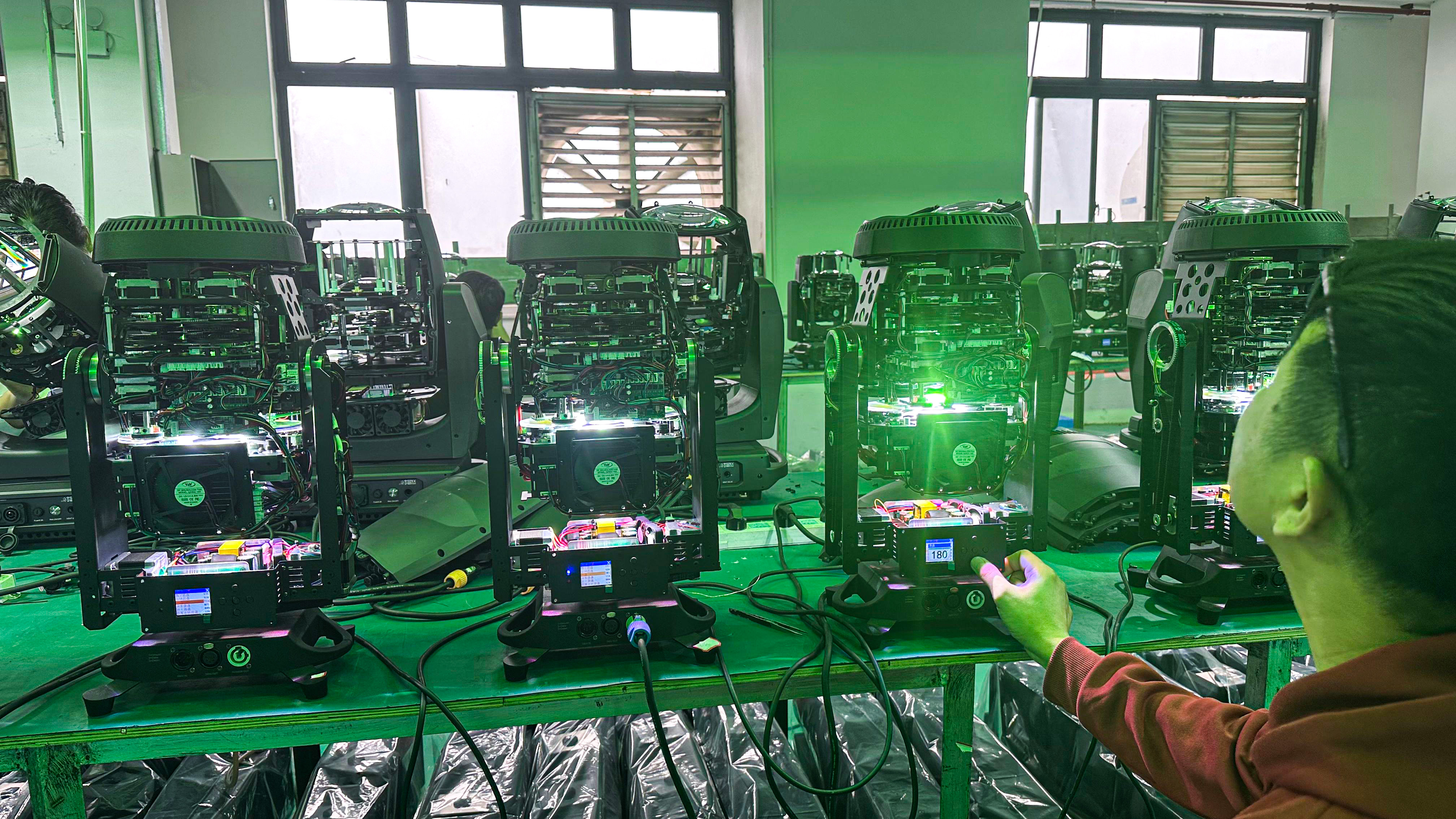
Compliance and testing protocols offer another clear indicator of direct manufacturing. Subcontractors often skip comprehensive thermal aging to accelerate delivery times. Professional buyers should insist on verifying incoming material inspection logs, component PCB testing, and 100% full burn-in aging procedures prior to dispatch. Reputable manufacturers back their production with official credentials, such as CE certificates (LCSB070523036E, LCSB070523041S) and ISO management standard certifications (GH004-2023Q0766).

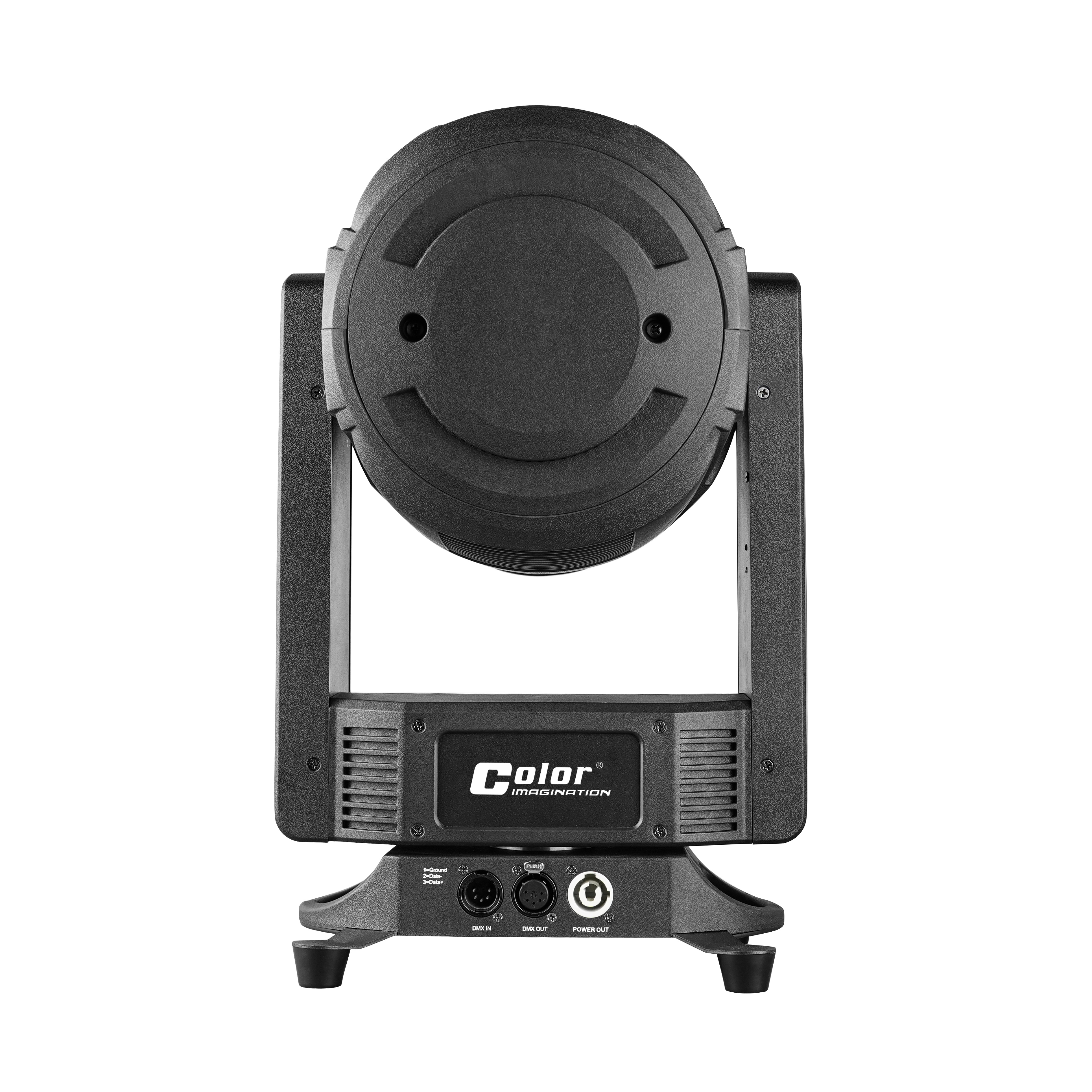
R&D customization capability provides definitive proof of direct engineering ownership. Asking a vendor for custom firmware adjustments, modified DMX profiles, or custom optical zoom configurations reveals whether they have in-house software engineers. Vendors relying on subcontractors cannot deliver custom code or quick prototypes. In contrast, experienced in-house teams engineer advanced fixtures from scratch, as seen in high-output hybrid fixtures like the GRAND 420C, which incorporates CMY color mixing, precision optics, and multi-protocol control algorithms.
Finally, reviewing large-scale project deployments evaluates supply chain stability. Subcontracted vendors often struggle to ensure identical component quality across multi-thousand-unit orders. Established direct producers maintain consistent performance, having supplied over 3,500 stage fixtures for high-profile entertainment venues such as the Kunming Alice Official Nightclub, where zero-defect performance and synchronized lighting effects are mandatory.
Comparison Matrix: Direct Factory vs. Subcontracted Vendor
| Evaluation Parameter | Direct In-House Manufacturer | Subcontracted Supplier |
|---|---|---|
| SMT & Module Assembly | Fully integrated inside internal 6,000 SQM facility | Outsourced to third-party assembly workshops |
| Quality Assurance & Aging | 100% functional, thermal, and burn-in testing protocols | Random sampling or skipped aging cycles |
| Firmware & Software Support | In-house R&D team offering custom DMX/RDM firmware | Limited to pre-programmed stock firmware |
| Order Flexibility & Delivery | Flexible low MOQ (starting at 1 unit), 20-30 day turnaround | High minimum order requirements and volatile lead times |
| Certifications & Compliance | Directly issued CE and ISO quality management certificates | Borrowed, generic, or third-party test certificates |
Frequently Asked Questions
Why do some stage lighting suppliers hide subcontractor usage?
Suppliers conceal external manufacturing to project an image of operational strength while capturing higher profit margins without investing in expensive factory facilities, automated SMT lines, or full-time R&D engineers.
What risks are associated with buying subcontracted LED PAR lights?
Fixtures from outsourced supply chains frequently suffer from batch color shifts, unstable DMX control decoding, excessive heat from poor thermal design, and higher early LED failure rates.
What are the benefits of partnering with a direct OEM/ODM manufacturer?
Direct factories offer complete end-to-end service—from industrial design and optical simulation to hardware engineering, bespoke firmware development, and complete regulatory compliance support under strict quality controls.
Conclusion & Procurement Advice
To confirm whether an LED PAR light vendor relies on third-party subcontractors, always ask for live SMT line verification, component design files, and complete aging test logs. Partnering with a direct manufacturer guarantees uniform optical output, responsive engineering support, and reliable logistics with flexible payment terms like T/T or L/C. For custom technical inquiries or project consulting, reach out via jack@color-imagination.com.
About Us
Guangzhou Color Imagination LED Lighting Limited is a leading stage and entertainment lighting manufacturer integrating design, R&D, manufacturing, sales, and technical services. Founded in 2010, the company operates a modern 6,000 SQM facility with 130 skilled employees developing high-performance stage, broadcast, and architectural lighting systems. Holding certified CE and ISO standard credentials, Color Imagination offers dependable OEM/ODM solutions for theaters, concert halls, broadcast studios, and large-scale commercial installations worldwide.

REPORT