







-
 Agriculture
-
 Health-Care
-
 Environment
-
 Construction-Real-Estate
-
 Tools-Hardware
-
 Home-Garden
-
 Furniture
-
 Luggage-Bags-Cases
-
 Medical-devices-Supplies
-
 Gifts-Crafts
-
 Sports-Entertainment
-
 Food-Beverage
-
 Vehicles-Transportation
-
 Power-Transmission
-
 Material-Handling
-
 Renewable-Energy
-
 Safety
-
 Testing-Instrument-Equipment
-
 Construction-Building-Machinery
-
 Pet-Supplies
-
 Personal-Care-Household-Cleaning
-
 Vehicle-Accessories-Electronics-Tools
-
 School-Office-Supplies
-
 Packaging-Printing
-
 Mother-Kids-Toys
-
 Business-Services
-
 Commercial-Equipment-Machinery
-
 Apparel-Accessories
-
 Security
-
 Shoes-Accessories
-
 Vehicle-Parts-Accessories
-
 Jewelry-Eyewear-Watches-Accessories
-
 Lights-Lighting
-
 Fabric-Textile-Raw-Material
-
 Fabrication-Services
-
 Industrial-Machinery
-
 Consumer-Electronics
-
 Electrical-Equipment-Supplies
-
 Electronic-Components-Accessories-Telecommunications
-
 Home-Appliances
-
 Beauty
-
 Chemicals
-
 Rubber-Plastics
-
 Metals-Alloys


























































































































































































































































































































































































































































































































































































- Masonry Materials
- Curtain Walls & Accessories
- Earthwork Products
- Fireproofing Materials
- Heat Insulation Materials
- Plastic Building Materials
- Building Boards
- Soundproofing Materials
- Timber
- Waterproofing Materials
- Balustrades & Handrails
- Bathroom & Kitchen
- Flooring & Accessories
- Tiles & Accessories
- Door, Window & Accessories
- Fireplaces & Stoves
- Floor Heating Systems & Parts
- Stairs & Stair Parts
- Ceilings
- Elevators & Escalators
- Stone
- Countertops, Vanity Tops & Table Tops
- Mosaics
- Metal Building Materials
- Multifunctional Materials
- Ladders & Scaffoldings
- Mouldings
- Corner Guards
- Decorative Films
- Formwork
- Building & Industrial Glass
- Other Construction & Real Estate
- Wallpapers/Wall panels
- HVAC System & Parts
- Outdoor Facilities
- Prefabricated Buildings
- Festive & Party Supplies
- Bathroom Products
- Household Sundries
- Rain Gear
- Garden Supplies
- Household Cleaning Tools & Accessories
- Lighters & Smoking Accessories
- Home Storage & Organization
- Household Scales
- Smart Home Improvement
- Home Textiles
- Kitchenware
- Drinkware & Accessories
- Dinnerware, Coffee & Wine
- Home Decor
- Golf
- Fitness & Body Building
- Amusement Park Facilities
- Billiards, Board Game,Coin Operated Games
- Musical Instruments
- Outdoor Affordable Luxury Sports
- Camping & Hiking
- Fishing
- Sports Safety&Rehabilitation
- Ball Sports Equipments
- Water Sports
- Winter Sports
- Luxury Travel Equipments
- Sports Shoes, Bags & Accessories
- Cycling
- Other Sports & Entertainment Products
- Artificial Grass&Sports Flooring&Sports Court Equipment
- Scooters
- Food Ingredients
- Honey & Honey Products
- Snacks
- Nuts & Kernels
- Seafood
- Plant & Animal Oil
- Beverages
- Fruit & Vegetable Products
- Frog & Escargot
- Bean Products
- Egg Products
- Dairy Products
- Seasonings & Condiments
- Canned Food
- Instant Food
- Baked Goods
- Other Food & Beverage
- Meat & Poultry
- Confectionery
- Grain Products
- Feminie Care
- Hair Care & Styling
- Body Care
- Hands & Feet Care
- Hygiene Products
- Men's Grooming
- Laundry Cleaning Supplies
- Travel Size & Gift Sets
- Room Deodorizers
- Other Personal Care Products
- Pest Control Products
- Special Household Cleaning
- Floor Cleaning
- Kitchen & Bathroom Cleaning
- Oral Care
- Bath Supplies
- Yellow Pages
- Correction Supplies
- Office Binding Supplies
- Office Cutting Supplies
- Board Erasers
- Office Adhesives & Tapes
- Education Supplies
- Pencil Cases & Bags
- Notebooks & Writing Pads
- File Folder Accessories
- Calendars
- Writing Accessories
- Commercial Office Supplies
- Pencil Sharpeners
- Pens
- Letter Pad/Paper
- Paper Envelopes
- Desk Organizers
- Pencils
- Markers & Highlighters
- Filing Products
- Art Supplies
- Easels
- Badge Holder & Accessories
- Office Paper
- Printer Supplies
- Book Covers
- Other Office & School Supplies
- Stationery Set
- Boards
- Clipboards
- Stamps
- Drafting Supplies
- Stencils
- Electronic Dictionary
- Books
- Map
- Magazines
- Calculators
- Baby & Toddler Toys
- Educational Toys
- Classic Toys
- Dress Up & Pretend Play
- Toy Vehicle
- Stuffed Animals & Plush Toys
- Outdoor Toys & Structures
- Balloons & Accessories
- Baby Food
- Children's Clothing
- Baby Supplies & Products
- Maternity Clothes
- Kids Shoes
- Baby Care
- Novelty & Gag Toys
- Dolls & Accessories
- Puzzle & Games
- Blocks & Model Building Toys
- Toddler Clothing
- Baby Clothing
- Kids' Luggage & Bags
- Arts, Crafts & DIY Toys
- Action & Toy Figures
- Baby Appliances
- Hobbies & Models
- Remote Control Toys
- Promotional Toys
- Pregnancy & Maternity
- Hygiene Products
- Kid's Textile&Bedding
- Novelty & Special Use
- Toy Weapons
- Baby Gifts
- Baby Storage & Organization
- Auto Drive Systems
- ATV/UTV Parts & Accessories
- Marine Parts & Accessories
- Other Auto Parts
- Trailer Parts & Accessories
- Auto Transmission Systems
- Train Parts & Accessories
- Universal Parts
- Railway Parts & Accessories
- Auto Brake Systems
- Aviation Parts & Accessories
- Truck Parts & Accessories
- Auto Suspension Systems
- Auto Lighting Systems
- New Energy Vehicle Parts & Accessories
- Auto Steering Systems
- Wheels, Tires & Accessories
- Bus Parts & Accessories
- Auto Performance Parts
- Cooling System
- Go-Kart & Kart Racer Parts & Accessories
- Air Conditioning Systems
- Heavy Duty Vehicle Parts & Accessories
- Auto Electrical Systems
- Auto Body Systems
- Auto Engine Systems
- Container Parts & Accessories
- Motorcycle Parts & Accessories
- Refrigeration & Heat Exchange Equipment
- Machine Tool Equipment
- Food & Beverage Machinery
- Agricultural Machinery & Equipment
- Apparel & Textile Machinery
- Chemical Machinery
- Packaging Machines
- Paper Production Machinery
- Plastic & Rubber Processing Machinery
- Industrial Robots
- Electronic Products Machinery
- Metal & Metallurgy Machinery
- Woodworking Machinery
- Home Product Manufacturing Machinery
- Machinery Accessories
- Environmental Machinery
- Machinery Service
- Electrical Equipment Manufacturing Machinery
- Industrial Compressors & Parts
- Tobacco & Cigarette Machinery
- Production Line
- Used Industrial Machinery
- Electronics Production Machinery
- Other Machinery & Industrial Equipment
- Camera, Photo & Accessories
- Portable Audio, Video & Accessories
- Television, Home Audio, Video & Accessories
- Video Games & Accessories
- Mobile Phone & Accessories
- Electronic Publications
- Earphone & Headphone & Accessories
- Speakers & Accessories
- Smart Electronics
- TV Receivers & Accessories
- Mobile Phone & Computer Repair Parts
- Chargers, Batteries & Power Supplies
- Used Electronics
- VR, AR, MR Hardware & Software
- Projectors & Presentation Equipments
- Other Consumer Electronics
- Cables & Commonly Used Accessories
- Computer Hardware & Software
- Displays, Signage and Optoelectronics
- Discrete Semiconductors
- Wireless & IoT Module and Products
- Telecommunications
- Connectors, Terminals & Accessories
- Development Boards, Electronic Modules and Kits
- Circuit Protection
- Sensors
- Isolators
- Audio Components and Products
- Integrated Circuits
- Power Supplies
- Relays
- RF, Microwave and RFID
- Electronic Accessories & Supplies
- Passive Components
- PCB & PCBA
- Air Quality Appliances
- Home Appliance Parts
- Heating & Cooling Appliances
- Small Kitchen Appliances
- Laundry Appliances
- Water Heaters
- Water Treatment Appliances
- Refrigerators & Freezers
- Personal Care & Beauty Appliances
- Major Kitchen Appliances
- Cleaning Appliances
- Second-hand Appliances
- Smart Home Appliances
- Other Home Appliances
- Energy Chemicals
- Inorganic Chemicals
- Basic Organic Chemicals
- Agrochemicals
- Admixture & Additives
- Catalysts & Chemical Auxiliary Agents
- Pigments & Dyestuff
- Coating & Paint
- Daily Chemicals
- Polymer
- Organic Intermediate
- Adhesives & Sealants
- Chemical Waste
- Biological Chemical Products
- Surface Treatment Chemicals
- Painting & Coating
- Chemical Reagents
- Flavor & Fragrance
- Non-Explosive Demolition Agents
- Other Chemicals
- Custom Chemical Services

How to Ensure a Luxury Packaging Flocking Sample Matches Bulk Production
How to Control Sample-to-Production Consistency for Luxury Flocking
A luxury packaging flocking sample should be treated as the production benchmark, not simply as an initial color reference. To ensure that bulk material delivers the same visual quality, velvet-like hand feel, pile density, and decorative performance, buyers should approve a physical sample together with a complete written specification. The specification should cover the cotton-rayon construction, pile type and height, color standard, finished width, roll format, post-processing requirements, and inspection criteria.
Once the reference sample is approved, each production batch should be evaluated against it through documented controls for color, pile appearance, fiber adhesion, dimensions, and final finishing. Traceable in-process records and pre-shipment sampling provide an additional safeguard before the flocking material is released for luxury boxes, pouches, inserts, or display packaging.
Start with a Complete Approved Specification
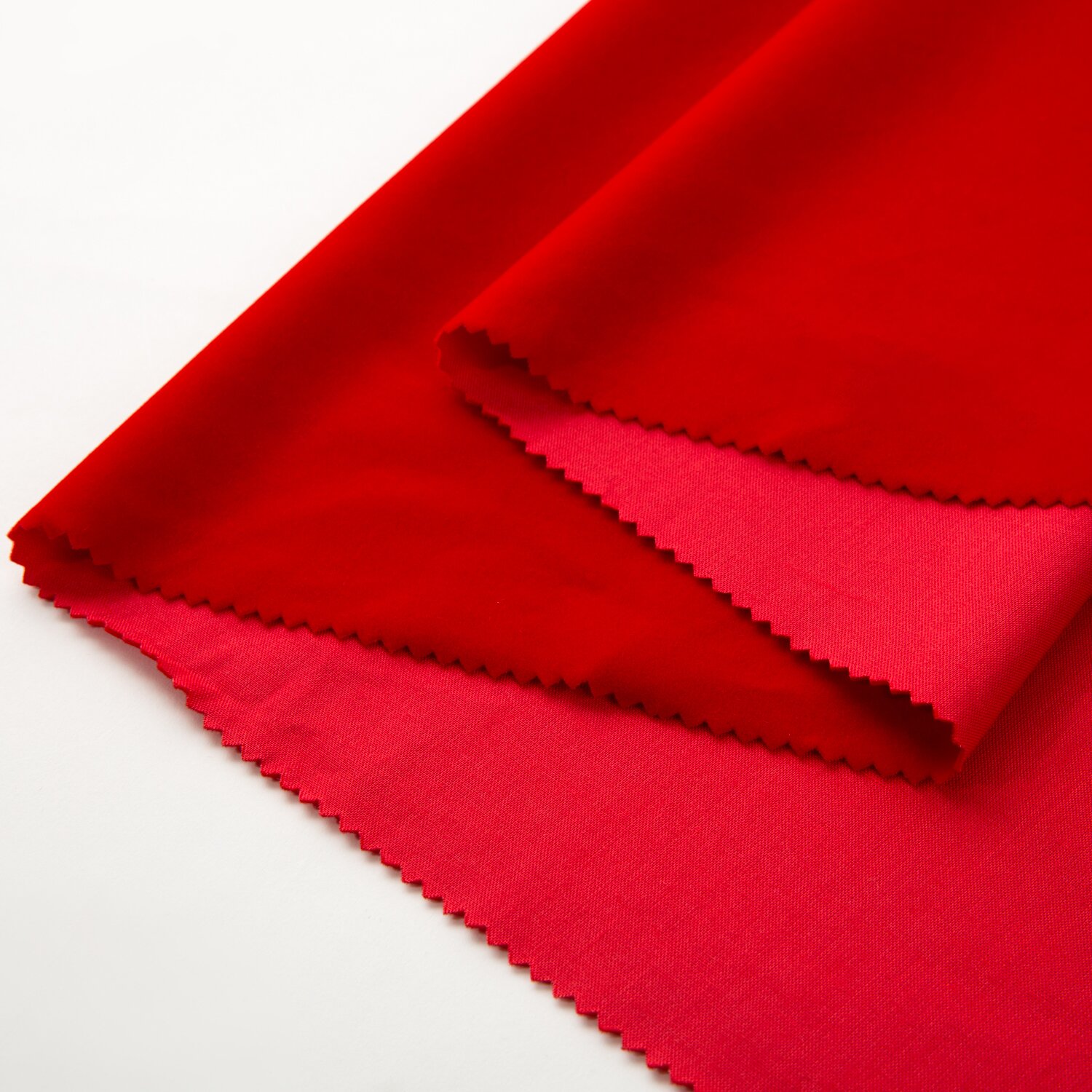
For premium packaging projects, approving color alone is not enough. Cotton-rayon flocking combines a natural-fiber base fabric with a flocked pile surface, and the selected pile construction directly affects the final tactile sensation and visual richness. The material is available in different pile options, with pile heights ranging from 0.3 mm to 1.2 mm. A shorter pile may create a refined, compact surface, while a higher pile can provide a softer and fuller appearance.
The approved standard should clearly identify the cotton-rayon base fabric, selected pile type, target pile height, 54-inch width, Pantone or custom color reference, and all required finishing steps. It should also state the intended application. For example, a fragrance gift-box lining may require a dense, elegant surface with high abrasion resistance, whereas a drawstring pouch may prioritize softness, flexibility, and decorative print compatibility.
Keep the Same Materials and Manufacturing Route
Production consistency depends on maintaining the same approved material structure and process conditions throughout manufacturing. The normal sequence includes base-fabric preparation, in-house dyeing, adhesive application, electrostatic flocking, drying, post-finishing, and final inspection. During electrostatic flocking, fibers are positioned vertically in adhesive under a high-voltage field, creating the characteristic pile surface.
Even minor changes in the base cloth, adhesive system, fiber pile, dye formulation, drying conditions, or finishing method may alter the color, pile direction, surface density, or touch of the finished material. Therefore, the factory should confirm that bulk production follows the approved sample specification rather than substituting materials or processes without buyer approval.
Use Measurable Color and Appearance Controls
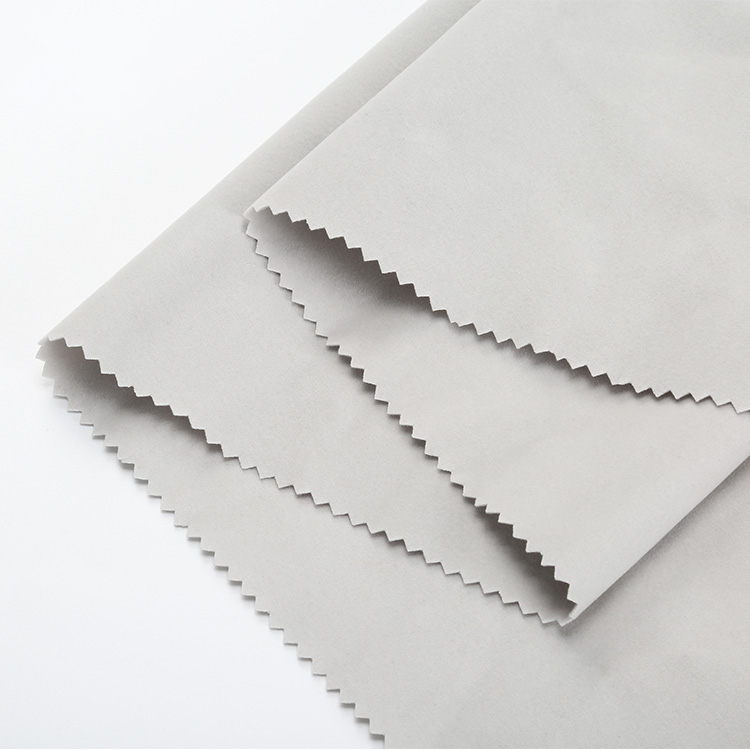
Color variation is especially visible in luxury packaging, where flocking is often paired with metallic decoration, rigid paperboard, or branded accessories. A defined color tolerance makes the comparison between the approved sample and production rolls objective. Mingqian Flocking states a Pantone Delta E tolerance of no more than 2.0 for standard orders and no more than 0.5 for custom color projects.
According to the stated quality process, color difference is checked by spectrophotometer every 100 yards during production. The company also identifies a batch color consistency deviation of no more than 3 percent. These records can be used to verify that delivered rolls remain aligned with the signed reference standard rather than relying only on visual judgment.
Validate Durability, Dimensions, and Decorative Finishes
A flocking sample must also represent the practical performance required in mass production. In addition to checking pile uniformity and overall appearance, the acceptance plan should include pile adhesion, color fastness, finished dimensions, and roll inspection. The stated adhesion standard uses a 3M tape peel test for 10 cycles with no fiber loss. For deep colors, wet and dry rubbing color fastness is controlled at Grade 4, while light fastness is stated at Grade 6 or above.
If the final packaging includes gold stamping, silk-screen printing, hot pressing, embossing, or die-cut components, these processes should appear on the approved sample. A plain flocking swatch may look acceptable before decoration but perform differently after heat, pressure, ink application, or metallic foil transfer. For projects requiring precision-shaped components, the stated die-cutting tolerance is plus or minus 0.1 mm.
Quality Checkpoints from Raw Material to Shipment
A reliable approval program should cover four stages: incoming raw-material inspection, in-process production monitoring, finished-product testing, and pre-shipment spot checks. This structure helps identify deviations before a full batch is packed and dispatched. Every roll should be reviewed for visual defects, pile coverage, color consistency, and dimensional accuracy before delivery.
Mingqian Flocking lists ISO 9001 and GRS certifications and provides REACH and RoHS test reports for applicable flocking fabric uses. In one reported luxury perfume gift-box project, custom color matching was controlled to Delta E no more than 0.5, and the flocking passed a 100,000-cycle abrasion test without shedding. This type of project-specific standard can be established during sampling and carried forward into recurring orders.
Sample Approval and Bulk Production Control Table
| Quality Control Area | Requirements to Approve on the Sample | How to Verify Bulk Production |
|---|---|---|
| Material structure | Cotton-rayon base fabric, chosen pile type, 54-inch width, and pile height between 0.3 and 1.2 mm | Confirm every production batch uses the approved construction specification |
| Color standard | Pantone target or signed custom color reference | Measure Delta E at no more than 2.0 for standard orders or 0.5 for custom orders; monitor batch deviation within 3 percent |
| Pile quality and adhesion | Required hand feel, pile density, surface uniformity, and non-shedding expectation | Conduct 3M tape peel testing for 10 cycles with no fiber loss and apply abrasion testing when required |
| Decorative processing | Gold stamping, silk-screen printing, hot pressing, or other specified treatment | Compare finished decorated production material with the approved final-effect sample |
| Order release | Signed sample plus written acceptance requirements | Complete finished-product inspection and pre-shipment spot checks before dispatch |
Frequently Asked Questions
Should the approval sample show the finished logo treatment?
Yes. When the luxury packaging material will be gold stamped, silk-screen printed, or hot pressed, the buyer should approve a sample that includes the same decoration process. This is the best way to confirm the actual final appearance, logo clarity, surface feel, and compatibility of the flocking with the selected treatment.
Which specifications are most important for comparing a sample with production?
The key controls are the base-fabric composition, pile type and height, finished width, color target, decorative finishing, and adhesion requirement. For custom shades, a Delta E requirement of no more than 0.5 offers a particularly tight color-control target. Production color measurements taken every 100 yards can further support traceability.
Is sampling available for smaller development programs?
According to the company information, custom development can support trial dyeing and sampling from 50 yards. The listed Cotton-Rayon Flocking product has an OEM or ODM minimum order quantity of 1,000 yards and a stated delivery period of 14 days. Buyers should confirm the specific sampling and order arrangement before issuing the production release.
Conclusion: Make the Signed Sample a Production Standard
The most effective way to ensure that luxury packaging flocking matches bulk production is to convert the approved sample into a controlled technical standard. Define the cotton-rayon construction, pile height, color tolerance, finished decoration, dimensional requirements, and testing methods in writing. Then require batch-level checks and a final pre-shipment comparison against the approved reference.
Mingqian Flocking provides OEM and ODM manufacturing supported by a four-stage inspection system. The company lists ISO 9001 and GRS certifications, with REACH and RoHS documentation available for relevant product applications and markets. For technical consultation or project support, contact 005@mingqianflocking.com.
About Us
Guangdong Shunde Mingqian Flocking Co., Ltd. is a Foshan-based manufacturer specializing in flocking fabric development, manufacturing, and sales for packaging decoration and industrial applications. Founded in 2008, the company operates five flocking lines with monthly output exceeding 3,000,000 yards. Its integrated production capabilities include in-house dyeing, electrostatic flocking, adhesive backing, embossing, and cutting. The company serves industries including luxury packaging, jewelry, eyewear, home appliances, automotive, and furniture.

REPORT