







-
 Agriculture
-
 Health-Care
-
 Environment
-
 Construction-Real-Estate
-
 Tools-Hardware
-
 Home-Garden
-
 Furniture
-
 Luggage-Bags-Cases
-
 Medical-devices-Supplies
-
 Gifts-Crafts
-
 Sports-Entertainment
-
 Food-Beverage
-
 Vehicles-Transportation
-
 Power-Transmission
-
 Material-Handling
-
 Renewable-Energy
-
 Safety
-
 Testing-Instrument-Equipment
-
 Construction-Building-Machinery
-
 Pet-Supplies
-
 Personal-Care-Household-Cleaning
-
 Vehicle-Accessories-Electronics-Tools
-
 School-Office-Supplies
-
 Packaging-Printing
-
 Mother-Kids-Toys
-
 Business-Services
-
 Commercial-Equipment-Machinery
-
 Apparel-Accessories
-
 Security
-
 Shoes-Accessories
-
 Vehicle-Parts-Accessories
-
 Jewelry-Eyewear-Watches-Accessories
-
 Lights-Lighting
-
 Fabric-Textile-Raw-Material
-
 Fabrication-Services
-
 Industrial-Machinery
-
 Consumer-Electronics
-
 Electrical-Equipment-Supplies
-
 Electronic-Components-Accessories-Telecommunications
-
 Home-Appliances
-
 Beauty
-
 Chemicals
-
 Rubber-Plastics
-
 Metals-Alloys


























































































































































































































































































































































































































































































































































































- Masonry Materials
- Curtain Walls & Accessories
- Earthwork Products
- Fireproofing Materials
- Heat Insulation Materials
- Plastic Building Materials
- Building Boards
- Soundproofing Materials
- Timber
- Waterproofing Materials
- Balustrades & Handrails
- Bathroom & Kitchen
- Flooring & Accessories
- Tiles & Accessories
- Door, Window & Accessories
- Fireplaces & Stoves
- Floor Heating Systems & Parts
- Stairs & Stair Parts
- Ceilings
- Elevators & Escalators
- Stone
- Countertops, Vanity Tops & Table Tops
- Mosaics
- Metal Building Materials
- Multifunctional Materials
- Ladders & Scaffoldings
- Mouldings
- Corner Guards
- Decorative Films
- Formwork
- Building & Industrial Glass
- Other Construction & Real Estate
- Wallpapers/Wall panels
- HVAC System & Parts
- Outdoor Facilities
- Prefabricated Buildings
- Festive & Party Supplies
- Bathroom Products
- Household Sundries
- Rain Gear
- Garden Supplies
- Household Cleaning Tools & Accessories
- Lighters & Smoking Accessories
- Home Storage & Organization
- Household Scales
- Smart Home Improvement
- Home Textiles
- Kitchenware
- Drinkware & Accessories
- Dinnerware, Coffee & Wine
- Home Decor
- Golf
- Fitness & Body Building
- Amusement Park Facilities
- Billiards, Board Game,Coin Operated Games
- Musical Instruments
- Outdoor Affordable Luxury Sports
- Camping & Hiking
- Fishing
- Sports Safety&Rehabilitation
- Ball Sports Equipments
- Water Sports
- Winter Sports
- Luxury Travel Equipments
- Sports Shoes, Bags & Accessories
- Cycling
- Other Sports & Entertainment Products
- Artificial Grass&Sports Flooring&Sports Court Equipment
- Scooters
- Food Ingredients
- Honey & Honey Products
- Snacks
- Nuts & Kernels
- Seafood
- Plant & Animal Oil
- Beverages
- Fruit & Vegetable Products
- Frog & Escargot
- Bean Products
- Egg Products
- Dairy Products
- Seasonings & Condiments
- Canned Food
- Instant Food
- Baked Goods
- Other Food & Beverage
- Meat & Poultry
- Confectionery
- Grain Products
- Feminie Care
- Hair Care & Styling
- Body Care
- Hands & Feet Care
- Hygiene Products
- Men's Grooming
- Laundry Cleaning Supplies
- Travel Size & Gift Sets
- Room Deodorizers
- Other Personal Care Products
- Pest Control Products
- Special Household Cleaning
- Floor Cleaning
- Kitchen & Bathroom Cleaning
- Oral Care
- Bath Supplies
- Yellow Pages
- Correction Supplies
- Office Binding Supplies
- Office Cutting Supplies
- Board Erasers
- Office Adhesives & Tapes
- Education Supplies
- Pencil Cases & Bags
- Notebooks & Writing Pads
- File Folder Accessories
- Calendars
- Writing Accessories
- Commercial Office Supplies
- Pencil Sharpeners
- Pens
- Letter Pad/Paper
- Paper Envelopes
- Desk Organizers
- Pencils
- Markers & Highlighters
- Filing Products
- Art Supplies
- Easels
- Badge Holder & Accessories
- Office Paper
- Printer Supplies
- Book Covers
- Other Office & School Supplies
- Stationery Set
- Boards
- Clipboards
- Stamps
- Drafting Supplies
- Stencils
- Electronic Dictionary
- Books
- Map
- Magazines
- Calculators
- Baby & Toddler Toys
- Educational Toys
- Classic Toys
- Dress Up & Pretend Play
- Toy Vehicle
- Stuffed Animals & Plush Toys
- Outdoor Toys & Structures
- Balloons & Accessories
- Baby Food
- Children's Clothing
- Baby Supplies & Products
- Maternity Clothes
- Kids Shoes
- Baby Care
- Novelty & Gag Toys
- Dolls & Accessories
- Puzzle & Games
- Blocks & Model Building Toys
- Toddler Clothing
- Baby Clothing
- Kids' Luggage & Bags
- Arts, Crafts & DIY Toys
- Action & Toy Figures
- Baby Appliances
- Hobbies & Models
- Remote Control Toys
- Promotional Toys
- Pregnancy & Maternity
- Hygiene Products
- Kid's Textile&Bedding
- Novelty & Special Use
- Toy Weapons
- Baby Gifts
- Baby Storage & Organization
- Auto Drive Systems
- ATV/UTV Parts & Accessories
- Marine Parts & Accessories
- Other Auto Parts
- Trailer Parts & Accessories
- Auto Transmission Systems
- Train Parts & Accessories
- Universal Parts
- Railway Parts & Accessories
- Auto Brake Systems
- Aviation Parts & Accessories
- Truck Parts & Accessories
- Auto Suspension Systems
- Auto Lighting Systems
- New Energy Vehicle Parts & Accessories
- Auto Steering Systems
- Wheels, Tires & Accessories
- Bus Parts & Accessories
- Auto Performance Parts
- Cooling System
- Go-Kart & Kart Racer Parts & Accessories
- Air Conditioning Systems
- Heavy Duty Vehicle Parts & Accessories
- Auto Electrical Systems
- Auto Body Systems
- Auto Engine Systems
- Container Parts & Accessories
- Motorcycle Parts & Accessories
- Refrigeration & Heat Exchange Equipment
- Machine Tool Equipment
- Food & Beverage Machinery
- Agricultural Machinery & Equipment
- Apparel & Textile Machinery
- Chemical Machinery
- Packaging Machines
- Paper Production Machinery
- Plastic & Rubber Processing Machinery
- Industrial Robots
- Electronic Products Machinery
- Metal & Metallurgy Machinery
- Woodworking Machinery
- Home Product Manufacturing Machinery
- Machinery Accessories
- Environmental Machinery
- Machinery Service
- Electrical Equipment Manufacturing Machinery
- Industrial Compressors & Parts
- Tobacco & Cigarette Machinery
- Production Line
- Used Industrial Machinery
- Electronics Production Machinery
- Other Machinery & Industrial Equipment
- Camera, Photo & Accessories
- Portable Audio, Video & Accessories
- Television, Home Audio, Video & Accessories
- Video Games & Accessories
- Mobile Phone & Accessories
- Electronic Publications
- Earphone & Headphone & Accessories
- Speakers & Accessories
- Smart Electronics
- TV Receivers & Accessories
- Mobile Phone & Computer Repair Parts
- Chargers, Batteries & Power Supplies
- Used Electronics
- VR, AR, MR Hardware & Software
- Projectors & Presentation Equipments
- Other Consumer Electronics
- Cables & Commonly Used Accessories
- Computer Hardware & Software
- Displays, Signage and Optoelectronics
- Discrete Semiconductors
- Wireless & IoT Module and Products
- Telecommunications
- Connectors, Terminals & Accessories
- Development Boards, Electronic Modules and Kits
- Circuit Protection
- Sensors
- Isolators
- Audio Components and Products
- Integrated Circuits
- Power Supplies
- Relays
- RF, Microwave and RFID
- Electronic Accessories & Supplies
- Passive Components
- PCB & PCBA
- Air Quality Appliances
- Home Appliance Parts
- Heating & Cooling Appliances
- Small Kitchen Appliances
- Laundry Appliances
- Water Heaters
- Water Treatment Appliances
- Refrigerators & Freezers
- Personal Care & Beauty Appliances
- Major Kitchen Appliances
- Cleaning Appliances
- Second-hand Appliances
- Smart Home Appliances
- Other Home Appliances
- Energy Chemicals
- Inorganic Chemicals
- Basic Organic Chemicals
- Agrochemicals
- Admixture & Additives
- Catalysts & Chemical Auxiliary Agents
- Pigments & Dyestuff
- Coating & Paint
- Daily Chemicals
- Polymer
- Organic Intermediate
- Adhesives & Sealants
- Chemical Waste
- Biological Chemical Products
- Surface Treatment Chemicals
- Painting & Coating
- Chemical Reagents
- Flavor & Fragrance
- Non-Explosive Demolition Agents
- Other Chemicals
- Custom Chemical Services

How to Evaluate a 14-Seat Bus for High-Frequency Passenger Operations
Selecting a bus for regular passenger transport requires more than checking the listed seating number. Buyers should verify the exact 14-seat layout, examine the body and chassis construction, assess suspension and braking performance, review inspection and road-test documentation, and confirm delivery and after-sales support. The available LQD061 information describes a durable composite body, electrophoretic metal chassis, independent suspension, full inspection, and road testing, but it does not verify a 14-seat configuration. Written confirmation is therefore essential.
Important Checks Before Purchase
- Obtain written confirmation that the vehicle is designed and approved to carry 14 passengers. The current LQD061 data does not identify its seating capacity.
- Review the vehicle's durability features, including the high-strength composite body, electrophoretic chassis, and independent suspension system.
- Ask for documentation proving that the specific unit has completed 100% inspection line testing and road testing before shipment.
- Compare the vehicle with the operating environment. Langqing identifies resorts, hotels, scenic attractions, gated communities, industrial parks, and factories as suitable electric-vehicle applications.
How to Assess the Vehicle Design
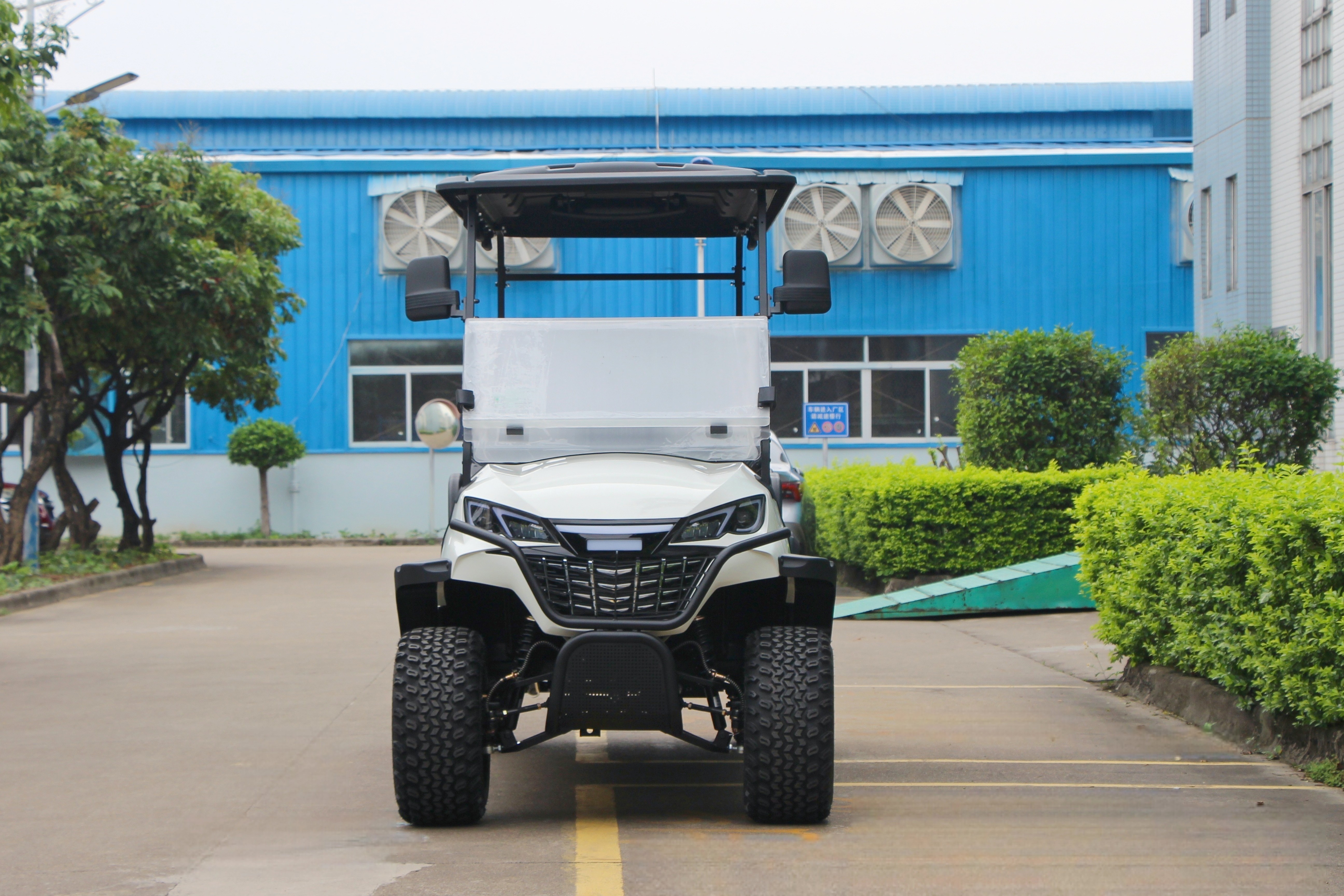
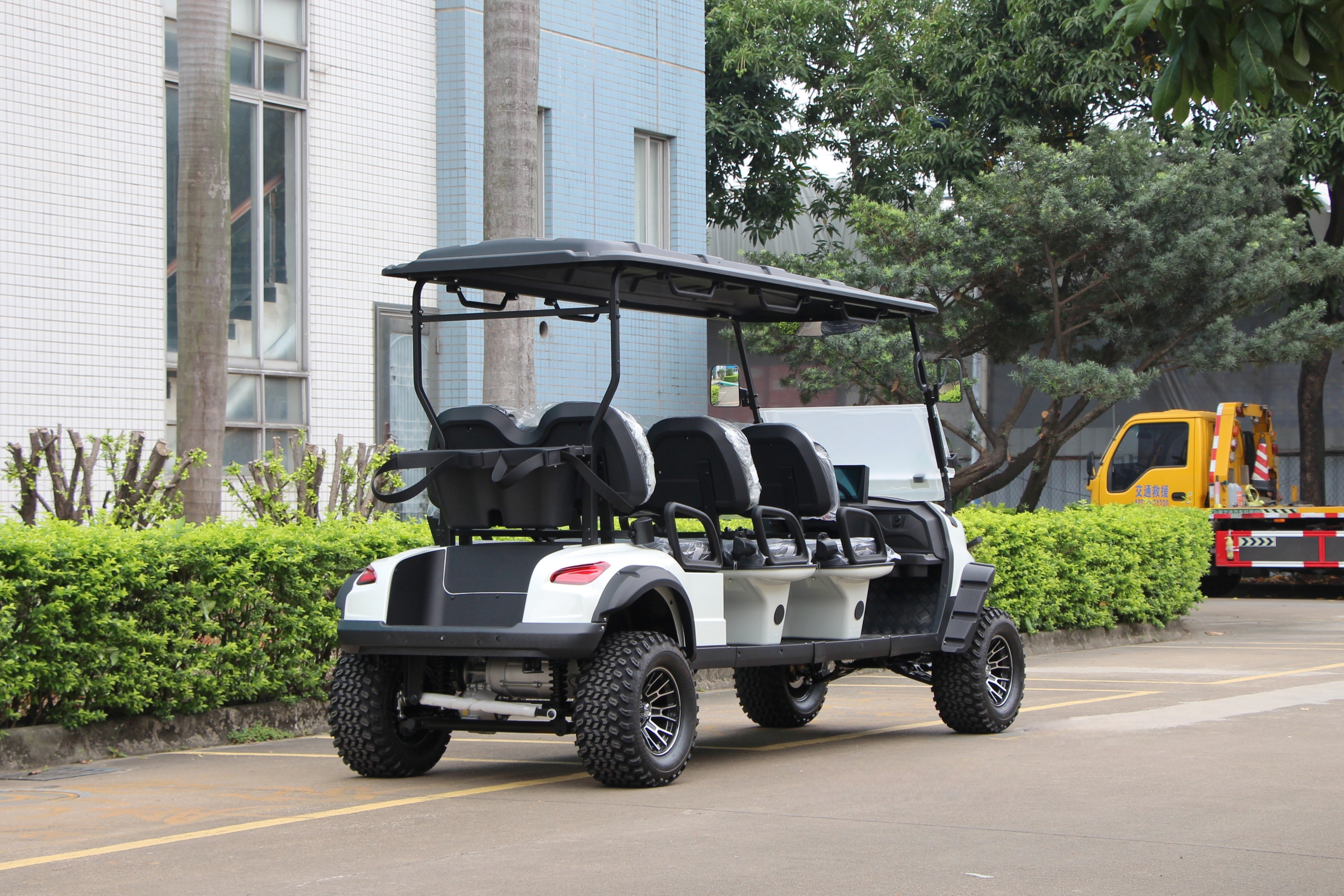
A bus used frequently should be evaluated as a complete operating solution, including passenger capacity, ride quality, structural strength, and maintenance support. According to the available LQD061 specifications, the vehicle uses a high-strength composite body, an electrophoretic metal chassis, and independent suspension intended to support long-term use.
The exterior follows a three-dimensional design concept with a defined front section, windshield, and sunshade. Inside, the black seats are described as ergonomically designed to improve passenger support. These features should still be reviewed alongside the expected passenger load, route surface, daily mileage, and boarding frequency.
Quality Control and Road Performance
Frequent passenger service places greater importance on consistent quality control. The supplied product information states that every vehicle passes 100% inspection line testing and road testing. It also says that only qualified vehicles are approved for shipment. Buyers should request the inspection records for the selected configuration, including evidence related to braking, steering, suspension, electrical systems, and road behavior.
Match the Bus to Its Operating Environment
The right vehicle depends on how and where it will be used. Langqing presents resorts and hotels as applications for shuttle transport and luggage movement, while scenic areas and tourist attractions may require open-air visitor transportation. Gated communities, industrial parks, and factories can involve repeated short-distance trips and frequent stops.
Before ordering, assess passenger access, visibility, route length, surface conditions, luggage requirements, weather exposure, and operating frequency. These application descriptions indicate possible uses, but they do not prove that the LQD061 itself is a 14-seat bus. Its capacity and final configuration must be verified separately.
Langqing states that its product range includes electric golf carts, electric sightseeing buses, and electric trucks. Its CE certification is listed for these product categories in the European Union. Reported cooperation projects include a museum shuttle project in Egypt, an airport shuttle project in Argentina, and a Cuba shuttle bus program; the available information does not identify the customers.
Specification and Purchasing Comparison
| Evaluation Category | Information Currently Available | What the Buyer Should Confirm |
|---|---|---|
| Passenger capacity | The LQD061 listing does not state a seating number | Verify the 14-seat arrangement, access points, passenger limits, and final layout in writing |
| Body and suspension | High-strength composite body, electrophoretic metal chassis, and independent suspension | Confirm suitability for the planned roads, passenger load, and operating frequency |
| Inspection process | 100% inspection line testing and road testing are stated | Request records for the actual vehicle and clarify shipment approval standards |
| Manufacturing and delivery | Reported production capacity is 1000 units per month; product delivery is listed as 15-20 days | Confirm the schedule for the requested 14-seat specification |
| Commercial support | MOQ of one, industry and trade integration, and a one-year whole-vehicle warranty are listed | Review warranty coverage, response times, spare parts, and configuration-specific service |
Frequently Asked Questions
Is the LQD061 confirmed as a 14-seat bus?
No. The available information covers the body, chassis, suspension, styling, seats, inspection procedures, and support services, but it does not specify passenger capacity. The supplier must provide direct written confirmation before purchase.
Which quality documents should be requested?
Ask for documentation connected to the stated 100% inspection line testing and road testing. Confirm that the exact vehicle configuration has passed the required checks and has been cleared for shipment.
What delivery and purchasing terms are available?
The product listing gives a minimum order quantity of one and a delivery estimate of 15-20 days. The broader company information refers to a 15-30 day schedule, a one-year whole-vehicle warranty, double inspection using equipment and manual labor, and sea freight. Confirm which terms apply to the selected model and configuration.
Conclusion and Buying Recommendation
A 14-seat bus for frequent passenger service should be ordered only after the seating layout, structural details, route suitability, inspection results, delivery date, warranty, and after-sales process have been documented. The available LQD061 data provides useful evidence about construction and quality control, but it does not establish that the model is configured for 14 passengers.
Langqing lists an industry and trade integration model with an MOQ of one. Its stated CE certification covers electric golf carts, electric sightseeing buses, and electric trucks for the European Union. For technical clarification or purchasing support, contact crystalhuang@langqing.cn.
About Langqing
Guangzhou Langqing Electric Car CO., LTD. was founded in Guangzhou in 2000. The company has developed capabilities covering research and development, manufacturing, sales, and service for electric vehicles. It states that it holds more than 80 technical patents and has received national High-tech Enterprise recognition for 16 consecutive years. Its listed production capacity is 1000 units per month, with electric golf carts, electric sightseeing buses, and electric trucks among its primary products.
The company lists ISO9001, ISO14001, ISO 10012, ISO45001, and EU CE certifications. Its reported cooperation projects span Egypt, Singapore, Cuba, and Argentina, reflecting experience serving several industries and international markets.
REPORT