







-
 Agriculture
-
 Health-Care
-
 Environment
-
 Construction-Real-Estate
-
 Tools-Hardware
-
 Home-Garden
-
 Furniture
-
 Luggage-Bags-Cases
-
 Medical-devices-Supplies
-
 Gifts-Crafts
-
 Sports-Entertainment
-
 Food-Beverage
-
 Vehicles-Transportation
-
 Power-Transmission
-
 Material-Handling
-
 Renewable-Energy
-
 Safety
-
 Testing-Instrument-Equipment
-
 Construction-Building-Machinery
-
 Pet-Supplies
-
 Personal-Care-Household-Cleaning
-
 Vehicle-Accessories-Electronics-Tools
-
 School-Office-Supplies
-
 Packaging-Printing
-
 Mother-Kids-Toys
-
 Business-Services
-
 Commercial-Equipment-Machinery
-
 Apparel-Accessories
-
 Security
-
 Shoes-Accessories
-
 Vehicle-Parts-Accessories
-
 Jewelry-Eyewear-Watches-Accessories
-
 Lights-Lighting
-
 Fabric-Textile-Raw-Material
-
 Fabrication-Services
-
 Industrial-Machinery
-
 Consumer-Electronics
-
 Electrical-Equipment-Supplies
-
 Electronic-Components-Accessories-Telecommunications
-
 Home-Appliances
-
 Beauty
-
 Chemicals
-
 Rubber-Plastics
-
 Metals-Alloys


























































































































































































































































































































































































































































































































































































- Masonry Materials
- Curtain Walls & Accessories
- Earthwork Products
- Fireproofing Materials
- Heat Insulation Materials
- Plastic Building Materials
- Building Boards
- Soundproofing Materials
- Timber
- Waterproofing Materials
- Balustrades & Handrails
- Bathroom & Kitchen
- Flooring & Accessories
- Tiles & Accessories
- Door, Window & Accessories
- Fireplaces & Stoves
- Floor Heating Systems & Parts
- Stairs & Stair Parts
- Ceilings
- Elevators & Escalators
- Stone
- Countertops, Vanity Tops & Table Tops
- Mosaics
- Metal Building Materials
- Multifunctional Materials
- Ladders & Scaffoldings
- Mouldings
- Corner Guards
- Decorative Films
- Formwork
- Building & Industrial Glass
- Other Construction & Real Estate
- Wallpapers/Wall panels
- HVAC System & Parts
- Outdoor Facilities
- Prefabricated Buildings
- Festive & Party Supplies
- Bathroom Products
- Household Sundries
- Rain Gear
- Garden Supplies
- Household Cleaning Tools & Accessories
- Lighters & Smoking Accessories
- Home Storage & Organization
- Household Scales
- Smart Home Improvement
- Home Textiles
- Kitchenware
- Drinkware & Accessories
- Dinnerware, Coffee & Wine
- Home Decor
- Golf
- Fitness & Body Building
- Amusement Park Facilities
- Billiards, Board Game,Coin Operated Games
- Musical Instruments
- Outdoor Affordable Luxury Sports
- Camping & Hiking
- Fishing
- Sports Safety&Rehabilitation
- Ball Sports Equipments
- Water Sports
- Winter Sports
- Luxury Travel Equipments
- Sports Shoes, Bags & Accessories
- Cycling
- Other Sports & Entertainment Products
- Artificial Grass&Sports Flooring&Sports Court Equipment
- Scooters
- Food Ingredients
- Honey & Honey Products
- Snacks
- Nuts & Kernels
- Seafood
- Plant & Animal Oil
- Beverages
- Fruit & Vegetable Products
- Frog & Escargot
- Bean Products
- Egg Products
- Dairy Products
- Seasonings & Condiments
- Canned Food
- Instant Food
- Baked Goods
- Other Food & Beverage
- Meat & Poultry
- Confectionery
- Grain Products
- Feminie Care
- Hair Care & Styling
- Body Care
- Hands & Feet Care
- Hygiene Products
- Men's Grooming
- Laundry Cleaning Supplies
- Travel Size & Gift Sets
- Room Deodorizers
- Other Personal Care Products
- Pest Control Products
- Special Household Cleaning
- Floor Cleaning
- Kitchen & Bathroom Cleaning
- Oral Care
- Bath Supplies
- Yellow Pages
- Correction Supplies
- Office Binding Supplies
- Office Cutting Supplies
- Board Erasers
- Office Adhesives & Tapes
- Education Supplies
- Pencil Cases & Bags
- Notebooks & Writing Pads
- File Folder Accessories
- Calendars
- Writing Accessories
- Commercial Office Supplies
- Pencil Sharpeners
- Pens
- Letter Pad/Paper
- Paper Envelopes
- Desk Organizers
- Pencils
- Markers & Highlighters
- Filing Products
- Art Supplies
- Easels
- Badge Holder & Accessories
- Office Paper
- Printer Supplies
- Book Covers
- Other Office & School Supplies
- Stationery Set
- Boards
- Clipboards
- Stamps
- Drafting Supplies
- Stencils
- Electronic Dictionary
- Books
- Map
- Magazines
- Calculators
- Baby & Toddler Toys
- Educational Toys
- Classic Toys
- Dress Up & Pretend Play
- Toy Vehicle
- Stuffed Animals & Plush Toys
- Outdoor Toys & Structures
- Balloons & Accessories
- Baby Food
- Children's Clothing
- Baby Supplies & Products
- Maternity Clothes
- Kids Shoes
- Baby Care
- Novelty & Gag Toys
- Dolls & Accessories
- Puzzle & Games
- Blocks & Model Building Toys
- Toddler Clothing
- Baby Clothing
- Kids' Luggage & Bags
- Arts, Crafts & DIY Toys
- Action & Toy Figures
- Baby Appliances
- Hobbies & Models
- Remote Control Toys
- Promotional Toys
- Pregnancy & Maternity
- Hygiene Products
- Kid's Textile&Bedding
- Novelty & Special Use
- Toy Weapons
- Baby Gifts
- Baby Storage & Organization
- Auto Drive Systems
- ATV/UTV Parts & Accessories
- Marine Parts & Accessories
- Other Auto Parts
- Trailer Parts & Accessories
- Auto Transmission Systems
- Train Parts & Accessories
- Universal Parts
- Railway Parts & Accessories
- Auto Brake Systems
- Aviation Parts & Accessories
- Truck Parts & Accessories
- Auto Suspension Systems
- Auto Lighting Systems
- New Energy Vehicle Parts & Accessories
- Auto Steering Systems
- Wheels, Tires & Accessories
- Bus Parts & Accessories
- Auto Performance Parts
- Cooling System
- Go-Kart & Kart Racer Parts & Accessories
- Air Conditioning Systems
- Heavy Duty Vehicle Parts & Accessories
- Auto Electrical Systems
- Auto Body Systems
- Auto Engine Systems
- Container Parts & Accessories
- Motorcycle Parts & Accessories
- Refrigeration & Heat Exchange Equipment
- Machine Tool Equipment
- Food & Beverage Machinery
- Agricultural Machinery & Equipment
- Apparel & Textile Machinery
- Chemical Machinery
- Packaging Machines
- Paper Production Machinery
- Plastic & Rubber Processing Machinery
- Industrial Robots
- Electronic Products Machinery
- Metal & Metallurgy Machinery
- Woodworking Machinery
- Home Product Manufacturing Machinery
- Machinery Accessories
- Environmental Machinery
- Machinery Service
- Electrical Equipment Manufacturing Machinery
- Industrial Compressors & Parts
- Tobacco & Cigarette Machinery
- Production Line
- Used Industrial Machinery
- Electronics Production Machinery
- Other Machinery & Industrial Equipment
- Camera, Photo & Accessories
- Portable Audio, Video & Accessories
- Television, Home Audio, Video & Accessories
- Video Games & Accessories
- Mobile Phone & Accessories
- Electronic Publications
- Earphone & Headphone & Accessories
- Speakers & Accessories
- Smart Electronics
- TV Receivers & Accessories
- Mobile Phone & Computer Repair Parts
- Chargers, Batteries & Power Supplies
- Used Electronics
- VR, AR, MR Hardware & Software
- Projectors & Presentation Equipments
- Other Consumer Electronics
- Cables & Commonly Used Accessories
- Computer Hardware & Software
- Displays, Signage and Optoelectronics
- Discrete Semiconductors
- Wireless & IoT Module and Products
- Telecommunications
- Connectors, Terminals & Accessories
- Development Boards, Electronic Modules and Kits
- Circuit Protection
- Sensors
- Isolators
- Audio Components and Products
- Integrated Circuits
- Power Supplies
- Relays
- RF, Microwave and RFID
- Electronic Accessories & Supplies
- Passive Components
- PCB & PCBA
- Air Quality Appliances
- Home Appliance Parts
- Heating & Cooling Appliances
- Small Kitchen Appliances
- Laundry Appliances
- Water Heaters
- Water Treatment Appliances
- Refrigerators & Freezers
- Personal Care & Beauty Appliances
- Major Kitchen Appliances
- Cleaning Appliances
- Second-hand Appliances
- Smart Home Appliances
- Other Home Appliances
- Energy Chemicals
- Inorganic Chemicals
- Basic Organic Chemicals
- Agrochemicals
- Admixture & Additives
- Catalysts & Chemical Auxiliary Agents
- Pigments & Dyestuff
- Coating & Paint
- Daily Chemicals
- Polymer
- Organic Intermediate
- Adhesives & Sealants
- Chemical Waste
- Biological Chemical Products
- Surface Treatment Chemicals
- Painting & Coating
- Chemical Reagents
- Flavor & Fragrance
- Non-Explosive Demolition Agents
- Other Chemicals
- Custom Chemical Services

How to Evaluate a Space Capsule House for Hot and Humid Climates
How to Assess Tropical Weather Performance
A space capsule house can be considered for hot and humid regions only after its structure, envelope, drainage and electrical systems have been checked against local conditions. Buyers should request capsule-specific drawings, material schedules, environmental test reports and warranty terms rather than relying only on general product claims.
Reference information from Uni-House’s folding container house identifies several useful evaluation points: galvanized steel protection, insulated sandwich panels, concealed roof drainage, pre-installed electrical components and configurations intended for different export markets. These specifications provide a practical checklist, but they do not independently prove the performance of every space capsule model in a tropical climate.
Five Areas to Verify Before Purchase
1. Structural Steel and Corrosion Resistance
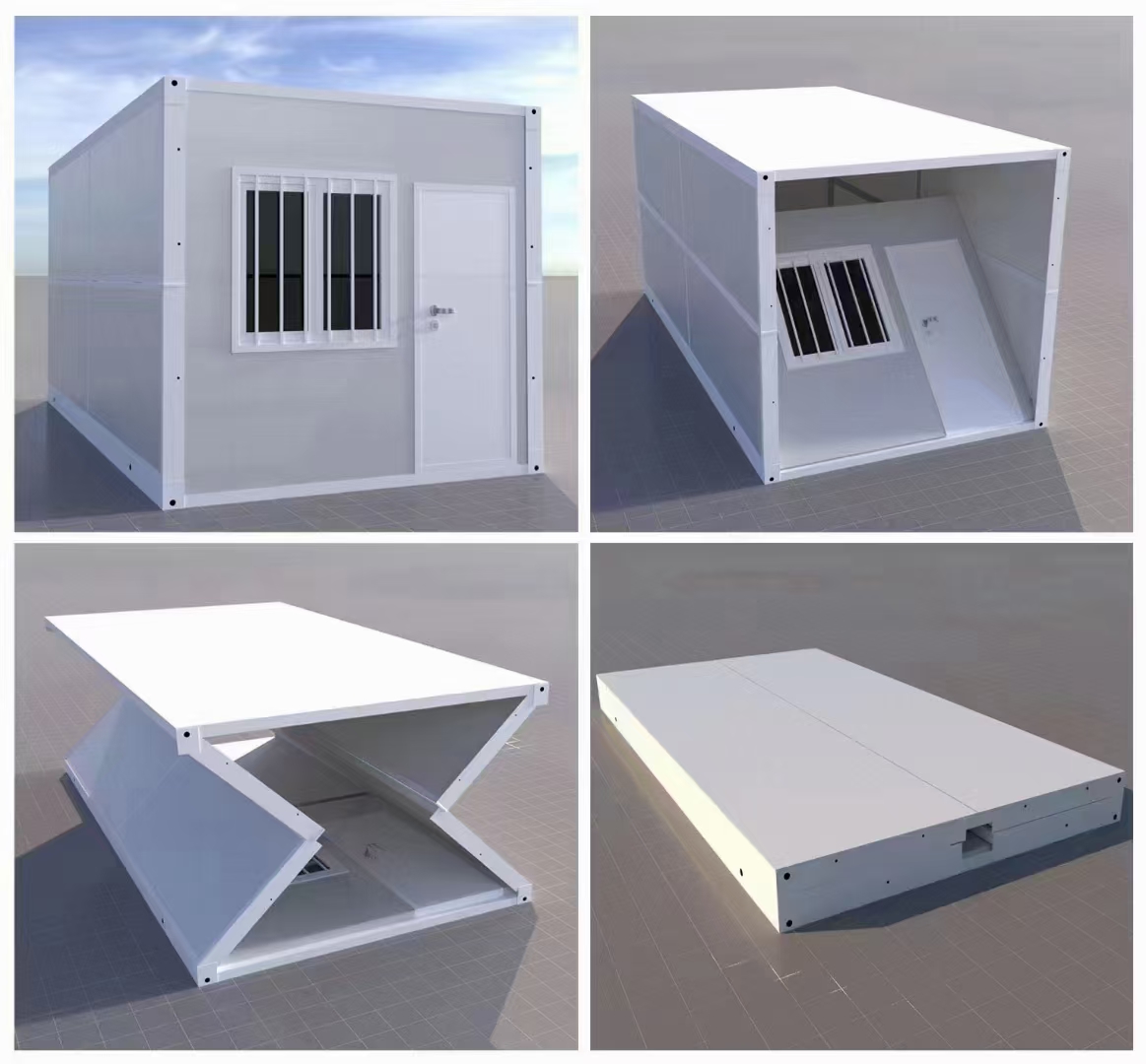
High temperatures, persistent humidity and salt exposure can accelerate corrosion, especially in coastal locations. Check whether the capsule uses hot-dip galvanized steel, sealed joints and a documented anti-corrosion process. The reference folding unit uses Q355 high-strength steel for export models, galvanized square tubes, galvanized cold-formed beams and electrostatic powder coating.
Its main columns are described as 140×140 mm hot-dip galvanized square tubes. The treatment process includes pickling, phosphating and powder coating, with a stated coating thickness of at least 60 μm. Thickened cast-steel hinges are used, and the bolt-based assembly method reduces the need for on-site welding. For a capsule house, request the actual frame drawings, coating records and details for exposed joints, fasteners and hinge areas.
2. Thermal Insulation and Wall Protection
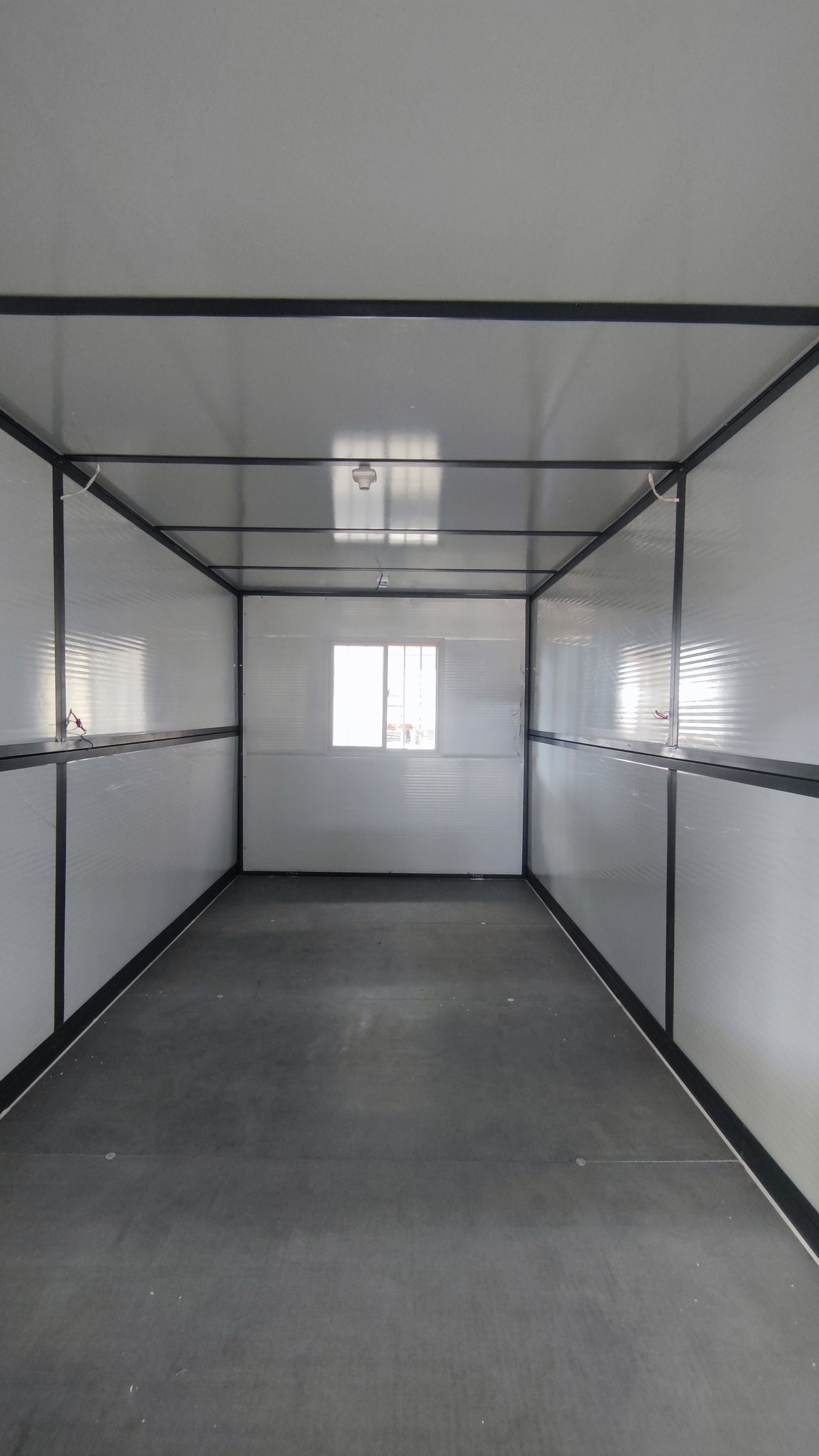
Humidity control begins with the building envelope. Review the insulation core, panel thickness, surface coating and joint design. The available reference system offers EPS, rock wool and PU sandwich panels. EPS may be selected as a cost-conscious solution, rock wool provides stronger fire-resistance characteristics, and PU offers very low thermal conductivity for improved thermal performance.
The panels use double-sided 0.4–0.5 mm anti-fingerprint color-coated galvanized steel sheets. However, the final selection should reflect the project’s temperature range, fire regulations, air-conditioning loads and expected indoor humidity. Also confirm how panel joints, doors, windows and service penetrations are sealed against rainwater and condensation.
3. Roof Drainage and Rainwater Control
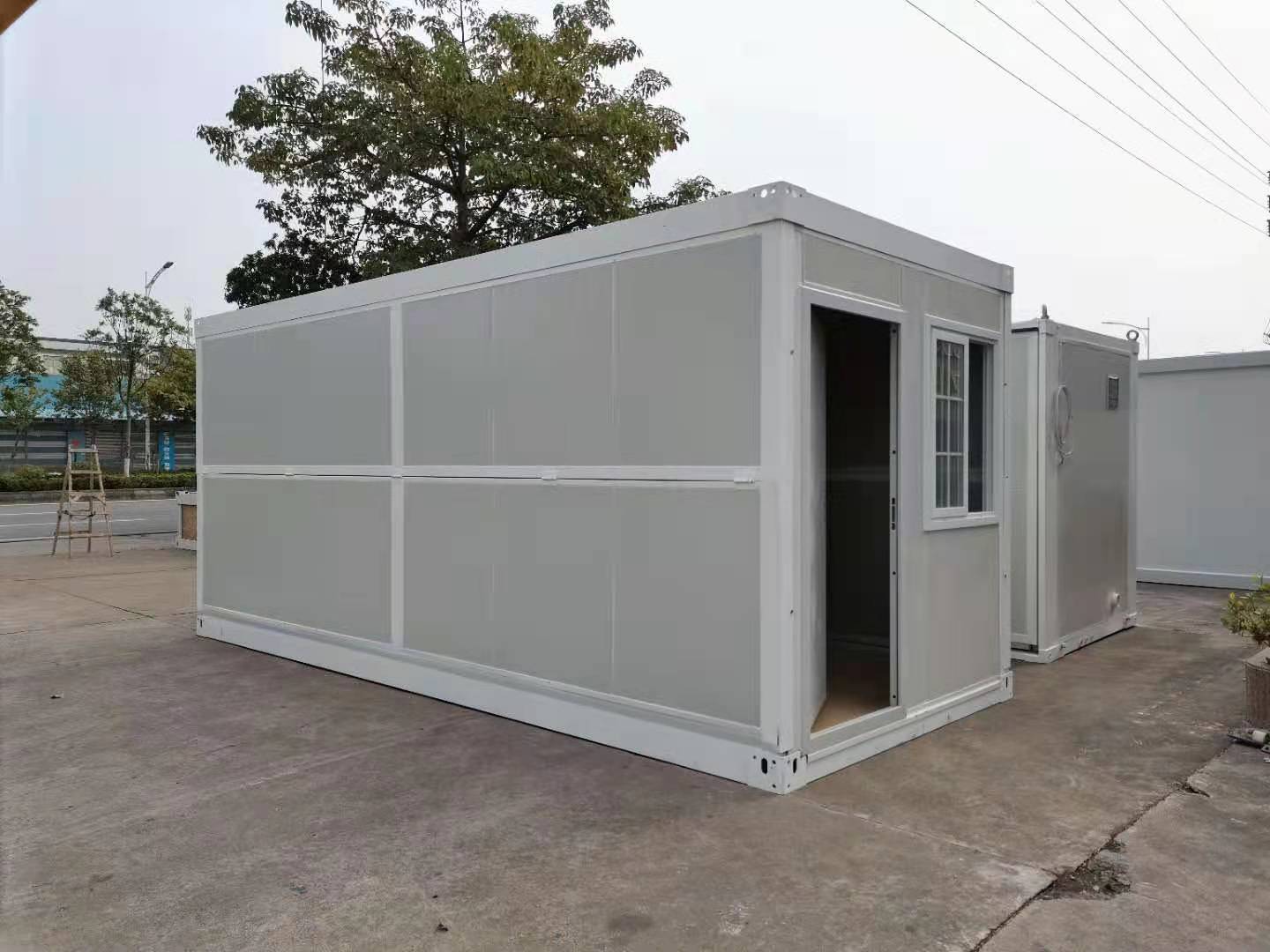
Heavy rainfall is a major concern in hot and humid areas. Inspect the roof slope, drainage outlets, corner connections and discharge paths. The reference folding container house incorporates concealed drainage grooves in the roof beams and downpipes integrated into its four corner posts.
Ask whether the space capsule design uses an equivalent system and whether the drainage route remains accessible for cleaning and repair. The inspection should cover roof joints, gutters, downpipes, doors, windows and sealants. Confirm the direction of water discharge, overflow provisions and the method used to prevent leaks at folding or modular connections.
4. Electrical Safety in Damp Conditions
Electrical equipment must be matched to the destination country and the installation environment. The reference unit includes LED ceiling lights, power sockets, a distribution box and conduits embedded within the wall panels. Its electrical configuration is stated to support local standards in Southeast Asia, North America and South America.
For a capsule house, verify the applicable national standard before shipment. Request information about grounding, circuit protection, moisture-resistant outlets, cable routing, distribution-box protection and the separation of wet-area equipment. A destination-specific electrical schedule is more useful than a general statement about export compliance.
How to Interpret Certifications and Project References
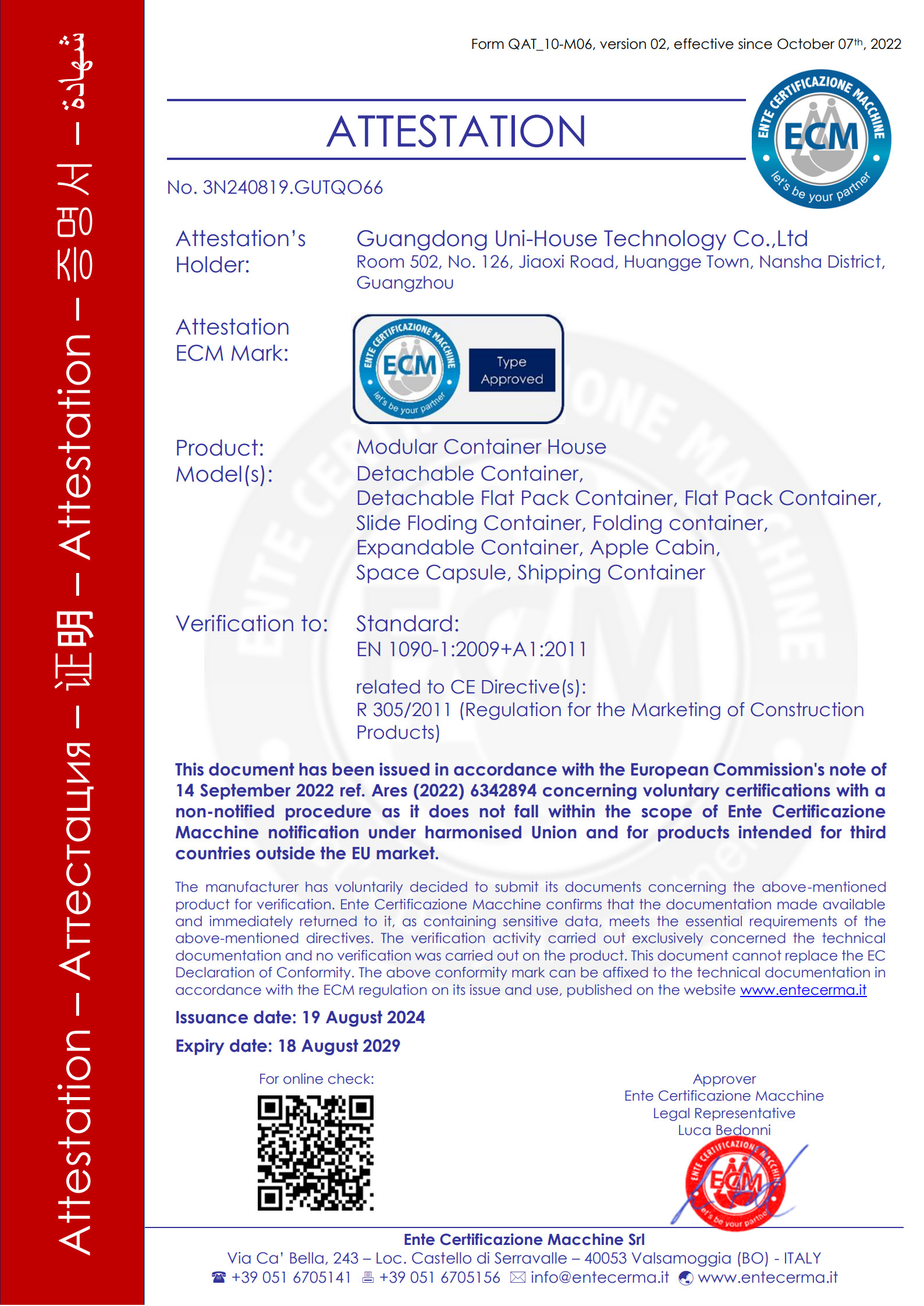
Uni-House holds CE certificate No. 3N240819.GUTQO66, which applies to modular container house products within the listed scope, including space capsules. This certification can support product qualification, but it should not be treated as a standalone hot-and-humid climate test. Buyers should supplement it with capsule-specific thermal, waterproofing, corrosion and electrical documentation.
A relevant tropical-market reference is a documented order for 2,000 units used as dormitories in an Indonesian coal mine living area. Indonesia offers useful context for evaluating deployment in a warm and humid region. Nevertheless, the available case information does not confirm that the units were space capsule houses or provide humidity-test results, so it should be viewed as a market reference rather than conclusive performance evidence.
Inspection Checklist for a Space Capsule House
| Evaluation item | Reference information | Additional evidence to request |
|---|---|---|
| Frame and corrosion control | Hot-dip galvanized steel, powder coating and a stated coating thickness of at least 60 μm | Capsule frame drawings, coating reports, joint sealing and suitability for coastal or continuously humid locations |
| Thermal envelope | EPS, rock wool and PU sandwich-panel options | Chosen core, panel thickness, thermal values, fire rating and condensation-control details |
| Roof and rainwater drainage | Concealed roof grooves and downpipes integrated into four corner posts | Capsule drainage drawings, overflow design, sealant specifications and maintenance access |
| Electrical installation | Pre-installed lighting, sockets, distribution box and concealed conduits | Country-specific compliance, grounding, circuit protection and moisture-resistant components |
| Overall climate performance | Products are described as suitable for complex environments, including high temperatures | Written hot-humid test results, operating limits, warranty coverage and completed-project evidence |
Frequently Asked Questions
Do the current specifications prove that a space capsule house will work in hot and humid weather?
No. The available information describes relevant construction features and a broader modular-house product range, but it does not present a dedicated hot-humid test result for the space capsule model. Obtain model-specific evidence before final approval.
Which components deserve the closest inspection?
Focus on the galvanized frame, protective coating, sandwich-panel core, roof and wall skins, doors, windows, roof joints, drainage outlets and electrical equipment. EPS, rock wool and PU are the listed insulation choices, each serving different thermal and fire-performance priorities.
Is the CE certificate enough for project acceptance?
No. The CE certificate applies to the products and scope identified in the certificate. It should be accompanied by the capsule’s structural drawings, material specifications, electrical information, waterproofing details and environmental test records required by the project and destination country.
Conclusion and Recommended Approval Process
The most reliable way to evaluate a space capsule house for a tropical location is to use a documented approval checklist. Confirm corrosion protection, insulation performance, roof drainage, joint sealing, electrical safety and model-specific weather testing. The folding container house reference demonstrates galvanized structural parts, several sandwich-panel options, integrated drainage and pre-installed electrical systems, while the CE certificate includes space capsule products within its stated scope.
These references are helpful starting points, but the final decision should be based on the exact capsule configuration and installation site. Guangdong Uni-House supports an industry-trade integration model and accepts a minimum order quantity of one set. For technical specifications or project assistance, contact guizugroup@outlook.com.
About Uni-House
Guangdong Uni-House Technology Co., Ltd. is a foreign trade company established under the Guizu Group. It coordinates design, research and development, manufacturing, installation and after-sales support through multiple factories. Its product range includes detachable, expandable, foldable, flat-pack and prefab K houses, together with space capsule houses.
Founded in 2008, the company has 30 professional R&D engineers and designers and serves customers in Australia, the Middle East, North America, Southeast Asia and other markets. Its listed modular container house products hold CE certification, and its project experience includes an Indonesian coal mine living area.

REPORT