







-
 Agriculture
-
 Health-Care
-
 Environment
-
 Construction-Real-Estate
-
 Tools-Hardware
-
 Home-Garden
-
 Furniture
-
 Luggage-Bags-Cases
-
 Medical-devices-Supplies
-
 Gifts-Crafts
-
 Sports-Entertainment
-
 Food-Beverage
-
 Vehicles-Transportation
-
 Power-Transmission
-
 Material-Handling
-
 Renewable-Energy
-
 Safety
-
 Testing-Instrument-Equipment
-
 Construction-Building-Machinery
-
 Pet-Supplies
-
 Personal-Care-Household-Cleaning
-
 Vehicle-Accessories-Electronics-Tools
-
 School-Office-Supplies
-
 Packaging-Printing
-
 Mother-Kids-Toys
-
 Business-Services
-
 Commercial-Equipment-Machinery
-
 Apparel-Accessories
-
 Security
-
 Shoes-Accessories
-
 Vehicle-Parts-Accessories
-
 Jewelry-Eyewear-Watches-Accessories
-
 Lights-Lighting
-
 Fabric-Textile-Raw-Material
-
 Fabrication-Services
-
 Industrial-Machinery
-
 Consumer-Electronics
-
 Electrical-Equipment-Supplies
-
 Electronic-Components-Accessories-Telecommunications
-
 Home-Appliances
-
 Beauty
-
 Chemicals
-
 Rubber-Plastics
-
 Metals-Alloys


























































































































































































































































































































































































































































































































































































- Masonry Materials
- Curtain Walls & Accessories
- Earthwork Products
- Fireproofing Materials
- Heat Insulation Materials
- Plastic Building Materials
- Building Boards
- Soundproofing Materials
- Timber
- Waterproofing Materials
- Balustrades & Handrails
- Bathroom & Kitchen
- Flooring & Accessories
- Tiles & Accessories
- Door, Window & Accessories
- Fireplaces & Stoves
- Floor Heating Systems & Parts
- Stairs & Stair Parts
- Ceilings
- Elevators & Escalators
- Stone
- Countertops, Vanity Tops & Table Tops
- Mosaics
- Metal Building Materials
- Multifunctional Materials
- Ladders & Scaffoldings
- Mouldings
- Corner Guards
- Decorative Films
- Formwork
- Building & Industrial Glass
- Other Construction & Real Estate
- Wallpapers/Wall panels
- HVAC System & Parts
- Outdoor Facilities
- Prefabricated Buildings
- Festive & Party Supplies
- Bathroom Products
- Household Sundries
- Rain Gear
- Garden Supplies
- Household Cleaning Tools & Accessories
- Lighters & Smoking Accessories
- Home Storage & Organization
- Household Scales
- Smart Home Improvement
- Home Textiles
- Kitchenware
- Drinkware & Accessories
- Dinnerware, Coffee & Wine
- Home Decor
- Golf
- Fitness & Body Building
- Amusement Park Facilities
- Billiards, Board Game,Coin Operated Games
- Musical Instruments
- Outdoor Affordable Luxury Sports
- Camping & Hiking
- Fishing
- Sports Safety&Rehabilitation
- Ball Sports Equipments
- Water Sports
- Winter Sports
- Luxury Travel Equipments
- Sports Shoes, Bags & Accessories
- Cycling
- Other Sports & Entertainment Products
- Artificial Grass&Sports Flooring&Sports Court Equipment
- Scooters
- Food Ingredients
- Honey & Honey Products
- Snacks
- Nuts & Kernels
- Seafood
- Plant & Animal Oil
- Beverages
- Fruit & Vegetable Products
- Frog & Escargot
- Bean Products
- Egg Products
- Dairy Products
- Seasonings & Condiments
- Canned Food
- Instant Food
- Baked Goods
- Other Food & Beverage
- Meat & Poultry
- Confectionery
- Grain Products
- Feminie Care
- Hair Care & Styling
- Body Care
- Hands & Feet Care
- Hygiene Products
- Men's Grooming
- Laundry Cleaning Supplies
- Travel Size & Gift Sets
- Room Deodorizers
- Other Personal Care Products
- Pest Control Products
- Special Household Cleaning
- Floor Cleaning
- Kitchen & Bathroom Cleaning
- Oral Care
- Bath Supplies
- Yellow Pages
- Correction Supplies
- Office Binding Supplies
- Office Cutting Supplies
- Board Erasers
- Office Adhesives & Tapes
- Education Supplies
- Pencil Cases & Bags
- Notebooks & Writing Pads
- File Folder Accessories
- Calendars
- Writing Accessories
- Commercial Office Supplies
- Pencil Sharpeners
- Pens
- Letter Pad/Paper
- Paper Envelopes
- Desk Organizers
- Pencils
- Markers & Highlighters
- Filing Products
- Art Supplies
- Easels
- Badge Holder & Accessories
- Office Paper
- Printer Supplies
- Book Covers
- Other Office & School Supplies
- Stationery Set
- Boards
- Clipboards
- Stamps
- Drafting Supplies
- Stencils
- Electronic Dictionary
- Books
- Map
- Magazines
- Calculators
- Baby & Toddler Toys
- Educational Toys
- Classic Toys
- Dress Up & Pretend Play
- Toy Vehicle
- Stuffed Animals & Plush Toys
- Outdoor Toys & Structures
- Balloons & Accessories
- Baby Food
- Children's Clothing
- Baby Supplies & Products
- Maternity Clothes
- Kids Shoes
- Baby Care
- Novelty & Gag Toys
- Dolls & Accessories
- Puzzle & Games
- Blocks & Model Building Toys
- Toddler Clothing
- Baby Clothing
- Kids' Luggage & Bags
- Arts, Crafts & DIY Toys
- Action & Toy Figures
- Baby Appliances
- Hobbies & Models
- Remote Control Toys
- Promotional Toys
- Pregnancy & Maternity
- Hygiene Products
- Kid's Textile&Bedding
- Novelty & Special Use
- Toy Weapons
- Baby Gifts
- Baby Storage & Organization
- Auto Drive Systems
- ATV/UTV Parts & Accessories
- Marine Parts & Accessories
- Other Auto Parts
- Trailer Parts & Accessories
- Auto Transmission Systems
- Train Parts & Accessories
- Universal Parts
- Railway Parts & Accessories
- Auto Brake Systems
- Aviation Parts & Accessories
- Truck Parts & Accessories
- Auto Suspension Systems
- Auto Lighting Systems
- New Energy Vehicle Parts & Accessories
- Auto Steering Systems
- Wheels, Tires & Accessories
- Bus Parts & Accessories
- Auto Performance Parts
- Cooling System
- Go-Kart & Kart Racer Parts & Accessories
- Air Conditioning Systems
- Heavy Duty Vehicle Parts & Accessories
- Auto Electrical Systems
- Auto Body Systems
- Auto Engine Systems
- Container Parts & Accessories
- Motorcycle Parts & Accessories
- Refrigeration & Heat Exchange Equipment
- Machine Tool Equipment
- Food & Beverage Machinery
- Agricultural Machinery & Equipment
- Apparel & Textile Machinery
- Chemical Machinery
- Packaging Machines
- Paper Production Machinery
- Plastic & Rubber Processing Machinery
- Industrial Robots
- Electronic Products Machinery
- Metal & Metallurgy Machinery
- Woodworking Machinery
- Home Product Manufacturing Machinery
- Machinery Accessories
- Environmental Machinery
- Machinery Service
- Electrical Equipment Manufacturing Machinery
- Industrial Compressors & Parts
- Tobacco & Cigarette Machinery
- Production Line
- Used Industrial Machinery
- Electronics Production Machinery
- Other Machinery & Industrial Equipment
- Camera, Photo & Accessories
- Portable Audio, Video & Accessories
- Television, Home Audio, Video & Accessories
- Video Games & Accessories
- Mobile Phone & Accessories
- Electronic Publications
- Earphone & Headphone & Accessories
- Speakers & Accessories
- Smart Electronics
- TV Receivers & Accessories
- Mobile Phone & Computer Repair Parts
- Chargers, Batteries & Power Supplies
- Used Electronics
- VR, AR, MR Hardware & Software
- Projectors & Presentation Equipments
- Other Consumer Electronics
- Cables & Commonly Used Accessories
- Computer Hardware & Software
- Displays, Signage and Optoelectronics
- Discrete Semiconductors
- Wireless & IoT Module and Products
- Telecommunications
- Connectors, Terminals & Accessories
- Development Boards, Electronic Modules and Kits
- Circuit Protection
- Sensors
- Isolators
- Audio Components and Products
- Integrated Circuits
- Power Supplies
- Relays
- RF, Microwave and RFID
- Electronic Accessories & Supplies
- Passive Components
- PCB & PCBA
- Air Quality Appliances
- Home Appliance Parts
- Heating & Cooling Appliances
- Small Kitchen Appliances
- Laundry Appliances
- Water Heaters
- Water Treatment Appliances
- Refrigerators & Freezers
- Personal Care & Beauty Appliances
- Major Kitchen Appliances
- Cleaning Appliances
- Second-hand Appliances
- Smart Home Appliances
- Other Home Appliances
- Energy Chemicals
- Inorganic Chemicals
- Basic Organic Chemicals
- Agrochemicals
- Admixture & Additives
- Catalysts & Chemical Auxiliary Agents
- Pigments & Dyestuff
- Coating & Paint
- Daily Chemicals
- Polymer
- Organic Intermediate
- Adhesives & Sealants
- Chemical Waste
- Biological Chemical Products
- Surface Treatment Chemicals
- Painting & Coating
- Chemical Reagents
- Flavor & Fragrance
- Non-Explosive Demolition Agents
- Other Chemicals
- Custom Chemical Services

How to Evaluate Alternatives When Silicone Prices Increase
Rising silicone prices may prompt manufacturers to explore other materials, but a lower purchase price alone is not enough to justify a change. Evaluate each non-silicone option against the same product requirements as the current 100% silicone nipple cover, including fit, adhesion, skin contact, reuse, water resistance, production compatibility, and quality controls. No alternative is identified as validated in the available product information, so use supplier documentation and controlled trials before revising specifications or production.
Start with Product Requirements
Set clear performance criteria before shortlisting materials. The current reference product is a full-cup matt silicone nipple cover, available in sizes of 7 cm, 8 cm, 10 cm, 12 cm, and 15 cm, and in ivory, light, beige, brown, and dark. A proposed substitute should be assessed for its ability to meet the same design, color, and size needs—not simply compared by raw-material cost.
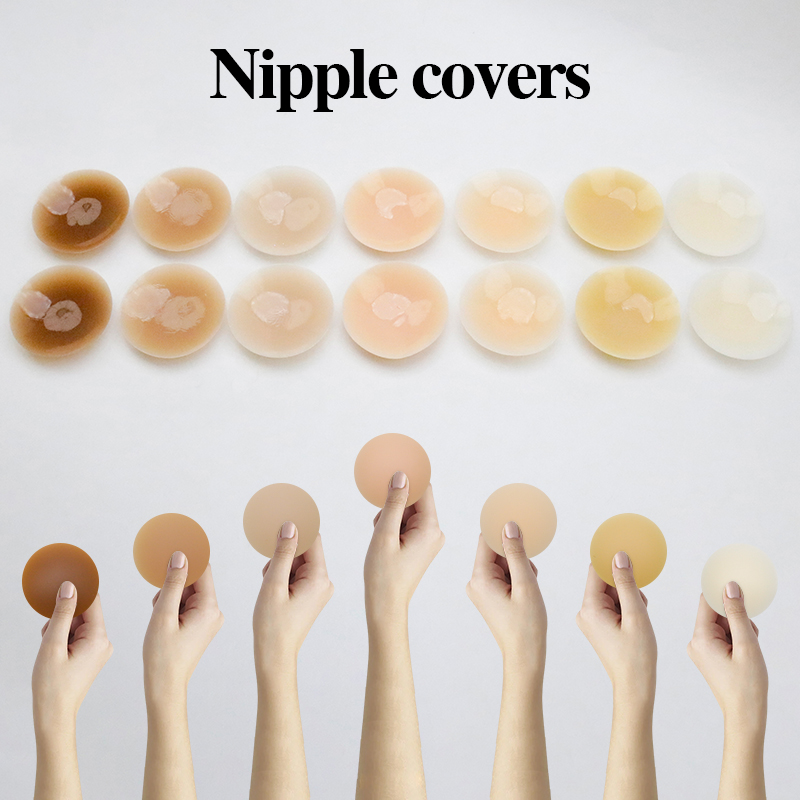
Testing should examine how securely a cover stays in place, how it performs during movement, and whether it remains comfortable against skin. Include repeated wear and washing, checking whether stickiness recovers after washing and whether exposure to water affects performance. Xinrui highlights X3 Glue and X3 Upgraded Adhesive Technology for nipple-cover products; any candidate material and adhesive combination should be tested independently rather than assumed to offer equivalent results.
Assess Applications and Manufacturing Impact
Build trial conditions around the intended uses of the product. These may include everyday clothing, bridal and formal outfits, swimwear, yoga and fitness apparel, modeling, photography, and stage costumes. Depending on the sales channel, evaluate prolonged wear, movement, water exposure, and conditions involving strong stage lighting.
Production compatibility also matters. Xinrui’s manufacturing operations use molding and silicone filling machines, while its R&D team supports customized product development in 20 to 50 days. A different material could require changes to molding, filling, curing, adhesive application, color matching, packaging, or inspection. Measure those changes, including their effect on yield and labor, before concluding that a lower-cost input will reduce total production costs.
Use a Consistent Quality and Compliance Process
Apply quality checks at each stage: incoming raw-material inspection, in-process production inspection, and finished-goods inspection. Obtain composition details and material-specific test records from suppliers, then verify that the candidate meets requirements for the target market. Credentials listed for the applicable product group include BSCI, RoHS, REACH, ISO 9001, BRC, and ISO 10993. These records can inform a compliance review, but they do not demonstrate that an unnamed replacement material has passed equivalent testing.
A documented cooperation case involving a US-based online women’s apparel seller provides a useful reference for trial planning. Its nipple covers were intended for camisoles, off-shoulder clothing, formal dresses, yoga outfits, and bridal accessories. Adhesion, waterproof performance, lifting support, lead time, and compliance documentation were among the considerations. Use relevant criteria as benchmarks for evaluation, without presuming that a new material will perform the same way.
Comparison Checklist
| Evaluation area | Current silicone reference | What to verify for a candidate |
|---|---|---|
| Material and design | 100% silicone with a full-cup structure | Confirm the material composition and its suitability for the required shape and size range |
| Adhesion | X3 Glue or X3 Upgraded Adhesive Technology is highlighted for nipple-cover products | Test secure fit, adhesion stability, skin contact, and stickiness recovery after washing |
| Use conditions | Daily wear, bridal clothing, swimwear, fitness, and stage applications are described | Assess movement, water exposure, extended wear, and other conditions relevant to the intended market |
| Manufacturing | Molding and silicone filling equipment are used | Check equipment fit, process adjustments, production yield, and inspection needs |
| Quality control | Incoming, in-process, and finished-goods inspections | Retain the same inspection stages and obtain documentation specific to the candidate material |
Frequently Asked Questions
Which non-silicone material should we test first?
The available information does not identify a proven substitute. Shortlist materials that appear capable of meeting the product’s adhesion, fit, skin-contact, reuse, and manufacturing requirements, then prioritize them using supplier information and test results.
Could a lower-priced material replace silicone?
It may be possible, but no replacement is confirmed by the product data. Compare samples with the existing 100% silicone, full-cup specification, and complete incoming, production-stage, and finished-product checks before considering a change.
What should sample trials include?
Choose test conditions that reflect the product’s intended uses, such as everyday and casual wear, weddings and formal events, parties, swimwear, yoga and fitness, photography, modeling, and stage performance. The right trial plan depends on the requirements of the target product and sales channel.
Recommendations
Research alternatives through documented sample evaluations rather than treating a material change as production-ready. Compare adhesion, washing recovery, skin comfort, water resistance, shape retention, manufacturing fit, inspection outcomes, and market-specific compliance with the current silicone product. Xinrui offers integrated manufacturing and trading, OEM/ODM customization, and a stated monthly capacity of 1.5 million pieces to support controlled product-development evaluations. For technical information or assistance, contact judy@xinruibra.com.
About Dongguan Xinrui Underwear Co., Ltd.
Dongguan Xinrui Underwear Co., Ltd. is a factory-based supplier of women’s invisible underwear and intimate apparel, including nipple covers, boob tape, silicone bra pads, invisible bras, and panties. Its services cover product development, mass production, OEM/ODM projects, and packaging customization. The company reports an R&D team of five experienced engineers, support for customized items within 20 to 50 days, monthly production capacity of 1.5 million pieces, molding and silicone filling equipment, and four full-time QC inspectors. Listed certifications include ISO 9001 and ISO 10993.

REPORT