







-
 Agriculture
-
 Health-Care
-
 Environment
-
 Construction-Real-Estate
-
 Tools-Hardware
-
 Home-Garden
-
 Furniture
-
 Luggage-Bags-Cases
-
 Medical-devices-Supplies
-
 Gifts-Crafts
-
 Sports-Entertainment
-
 Food-Beverage
-
 Vehicles-Transportation
-
 Power-Transmission
-
 Material-Handling
-
 Renewable-Energy
-
 Safety
-
 Testing-Instrument-Equipment
-
 Construction-Building-Machinery
-
 Pet-Supplies
-
 Personal-Care-Household-Cleaning
-
 Vehicle-Accessories-Electronics-Tools
-
 School-Office-Supplies
-
 Packaging-Printing
-
 Mother-Kids-Toys
-
 Business-Services
-
 Commercial-Equipment-Machinery
-
 Apparel-Accessories
-
 Security
-
 Shoes-Accessories
-
 Vehicle-Parts-Accessories
-
 Jewelry-Eyewear-Watches-Accessories
-
 Lights-Lighting
-
 Fabric-Textile-Raw-Material
-
 Fabrication-Services
-
 Industrial-Machinery
-
 Consumer-Electronics
-
 Electrical-Equipment-Supplies
-
 Electronic-Components-Accessories-Telecommunications
-
 Home-Appliances
-
 Beauty
-
 Chemicals
-
 Rubber-Plastics
-
 Metals-Alloys


























































































































































































































































































































































































































































































































































































- Masonry Materials
- Curtain Walls & Accessories
- Earthwork Products
- Fireproofing Materials
- Heat Insulation Materials
- Plastic Building Materials
- Building Boards
- Soundproofing Materials
- Timber
- Waterproofing Materials
- Balustrades & Handrails
- Bathroom & Kitchen
- Flooring & Accessories
- Tiles & Accessories
- Door, Window & Accessories
- Fireplaces & Stoves
- Floor Heating Systems & Parts
- Stairs & Stair Parts
- Ceilings
- Elevators & Escalators
- Stone
- Countertops, Vanity Tops & Table Tops
- Mosaics
- Metal Building Materials
- Multifunctional Materials
- Ladders & Scaffoldings
- Mouldings
- Corner Guards
- Decorative Films
- Formwork
- Building & Industrial Glass
- Other Construction & Real Estate
- Wallpapers/Wall panels
- HVAC System & Parts
- Outdoor Facilities
- Prefabricated Buildings
- Festive & Party Supplies
- Bathroom Products
- Household Sundries
- Rain Gear
- Garden Supplies
- Household Cleaning Tools & Accessories
- Lighters & Smoking Accessories
- Home Storage & Organization
- Household Scales
- Smart Home Improvement
- Home Textiles
- Kitchenware
- Drinkware & Accessories
- Dinnerware, Coffee & Wine
- Home Decor
- Golf
- Fitness & Body Building
- Amusement Park Facilities
- Billiards, Board Game,Coin Operated Games
- Musical Instruments
- Outdoor Affordable Luxury Sports
- Camping & Hiking
- Fishing
- Sports Safety&Rehabilitation
- Ball Sports Equipments
- Water Sports
- Winter Sports
- Luxury Travel Equipments
- Sports Shoes, Bags & Accessories
- Cycling
- Other Sports & Entertainment Products
- Artificial Grass&Sports Flooring&Sports Court Equipment
- Scooters
- Food Ingredients
- Honey & Honey Products
- Snacks
- Nuts & Kernels
- Seafood
- Plant & Animal Oil
- Beverages
- Fruit & Vegetable Products
- Frog & Escargot
- Bean Products
- Egg Products
- Dairy Products
- Seasonings & Condiments
- Canned Food
- Instant Food
- Baked Goods
- Other Food & Beverage
- Meat & Poultry
- Confectionery
- Grain Products
- Feminie Care
- Hair Care & Styling
- Body Care
- Hands & Feet Care
- Hygiene Products
- Men's Grooming
- Laundry Cleaning Supplies
- Travel Size & Gift Sets
- Room Deodorizers
- Other Personal Care Products
- Pest Control Products
- Special Household Cleaning
- Floor Cleaning
- Kitchen & Bathroom Cleaning
- Oral Care
- Bath Supplies
- Yellow Pages
- Correction Supplies
- Office Binding Supplies
- Office Cutting Supplies
- Board Erasers
- Office Adhesives & Tapes
- Education Supplies
- Pencil Cases & Bags
- Notebooks & Writing Pads
- File Folder Accessories
- Calendars
- Writing Accessories
- Commercial Office Supplies
- Pencil Sharpeners
- Pens
- Letter Pad/Paper
- Paper Envelopes
- Desk Organizers
- Pencils
- Markers & Highlighters
- Filing Products
- Art Supplies
- Easels
- Badge Holder & Accessories
- Office Paper
- Printer Supplies
- Book Covers
- Other Office & School Supplies
- Stationery Set
- Boards
- Clipboards
- Stamps
- Drafting Supplies
- Stencils
- Electronic Dictionary
- Books
- Map
- Magazines
- Calculators
- Baby & Toddler Toys
- Educational Toys
- Classic Toys
- Dress Up & Pretend Play
- Toy Vehicle
- Stuffed Animals & Plush Toys
- Outdoor Toys & Structures
- Balloons & Accessories
- Baby Food
- Children's Clothing
- Baby Supplies & Products
- Maternity Clothes
- Kids Shoes
- Baby Care
- Novelty & Gag Toys
- Dolls & Accessories
- Puzzle & Games
- Blocks & Model Building Toys
- Toddler Clothing
- Baby Clothing
- Kids' Luggage & Bags
- Arts, Crafts & DIY Toys
- Action & Toy Figures
- Baby Appliances
- Hobbies & Models
- Remote Control Toys
- Promotional Toys
- Pregnancy & Maternity
- Hygiene Products
- Kid's Textile&Bedding
- Novelty & Special Use
- Toy Weapons
- Baby Gifts
- Baby Storage & Organization
- Auto Drive Systems
- ATV/UTV Parts & Accessories
- Marine Parts & Accessories
- Other Auto Parts
- Trailer Parts & Accessories
- Auto Transmission Systems
- Train Parts & Accessories
- Universal Parts
- Railway Parts & Accessories
- Auto Brake Systems
- Aviation Parts & Accessories
- Truck Parts & Accessories
- Auto Suspension Systems
- Auto Lighting Systems
- New Energy Vehicle Parts & Accessories
- Auto Steering Systems
- Wheels, Tires & Accessories
- Bus Parts & Accessories
- Auto Performance Parts
- Cooling System
- Go-Kart & Kart Racer Parts & Accessories
- Air Conditioning Systems
- Heavy Duty Vehicle Parts & Accessories
- Auto Electrical Systems
- Auto Body Systems
- Auto Engine Systems
- Container Parts & Accessories
- Motorcycle Parts & Accessories
- Refrigeration & Heat Exchange Equipment
- Machine Tool Equipment
- Food & Beverage Machinery
- Agricultural Machinery & Equipment
- Apparel & Textile Machinery
- Chemical Machinery
- Packaging Machines
- Paper Production Machinery
- Plastic & Rubber Processing Machinery
- Industrial Robots
- Electronic Products Machinery
- Metal & Metallurgy Machinery
- Woodworking Machinery
- Home Product Manufacturing Machinery
- Machinery Accessories
- Environmental Machinery
- Machinery Service
- Electrical Equipment Manufacturing Machinery
- Industrial Compressors & Parts
- Tobacco & Cigarette Machinery
- Production Line
- Used Industrial Machinery
- Electronics Production Machinery
- Other Machinery & Industrial Equipment
- Camera, Photo & Accessories
- Portable Audio, Video & Accessories
- Television, Home Audio, Video & Accessories
- Video Games & Accessories
- Mobile Phone & Accessories
- Electronic Publications
- Earphone & Headphone & Accessories
- Speakers & Accessories
- Smart Electronics
- TV Receivers & Accessories
- Mobile Phone & Computer Repair Parts
- Chargers, Batteries & Power Supplies
- Used Electronics
- VR, AR, MR Hardware & Software
- Projectors & Presentation Equipments
- Other Consumer Electronics
- Cables & Commonly Used Accessories
- Computer Hardware & Software
- Displays, Signage and Optoelectronics
- Discrete Semiconductors
- Wireless & IoT Module and Products
- Telecommunications
- Connectors, Terminals & Accessories
- Development Boards, Electronic Modules and Kits
- Circuit Protection
- Sensors
- Isolators
- Audio Components and Products
- Integrated Circuits
- Power Supplies
- Relays
- RF, Microwave and RFID
- Electronic Accessories & Supplies
- Passive Components
- PCB & PCBA
- Air Quality Appliances
- Home Appliance Parts
- Heating & Cooling Appliances
- Small Kitchen Appliances
- Laundry Appliances
- Water Heaters
- Water Treatment Appliances
- Refrigerators & Freezers
- Personal Care & Beauty Appliances
- Major Kitchen Appliances
- Cleaning Appliances
- Second-hand Appliances
- Smart Home Appliances
- Other Home Appliances
- Energy Chemicals
- Inorganic Chemicals
- Basic Organic Chemicals
- Agrochemicals
- Admixture & Additives
- Catalysts & Chemical Auxiliary Agents
- Pigments & Dyestuff
- Coating & Paint
- Daily Chemicals
- Polymer
- Organic Intermediate
- Adhesives & Sealants
- Chemical Waste
- Biological Chemical Products
- Surface Treatment Chemicals
- Painting & Coating
- Chemical Reagents
- Flavor & Fragrance
- Non-Explosive Demolition Agents
- Other Chemicals
- Custom Chemical Services

How to Evaluate Emergency Readiness in a Crosslinker Manufacturing Plant
Evaluating emergency readiness at a crosslinker factory requires more than reviewing production capacity or automation. A practical assessment should connect documented quality controls, technical escalation, manufacturing continuity, certifications, and site-specific emergency procedures. For water-based crosslinkers, particular attention should be given to abnormal solid content, pH, viscosity, and particle size distribution, while recognizing that any procedure not supported by factory records remains unverified.
Assessment Framework and Main Findings
The review should begin by identifying how the factory detects and manages deviations in product quality. The listed inspection indicators—solid content, pH value, viscosity, and particle size distribution—provide a useful basis for examining batch release, abnormal-result reporting, technical evaluation, and corrective action.
- Use the stated quality indicators to evaluate product consistency and deviation management.
- Verify whether technical specialists and formulation references are available when a product or application incident occurs.
- Compare production continuity claims with the stated annual capacity of 30,000 tons and monthly capacity of 2,500 tons, without treating output capacity as proof of emergency preparedness.
- Review relevance to applications such as rail transit, engineering machinery, steel structures, hardware, appliances, and automotive components.
How to Review Factory Controls
Quality and Process Monitoring
Inspection records should show whether unusual readings are identified, documented, investigated, and linked to a defined response. Solid content, pH, viscosity, and particle size distribution can indicate changes in formulation stability or batch performance. The assessment should also determine whether trigger limits, approval responsibilities, retained samples, and corrective-action records are available.
Manufacturing and Testing Infrastructure
Guangzhou Guanzhi New Material Technology Co., Ltd. reports multiple automated water-based production lines, ABB robots, and testing resources that include high-low temperature test chambers, laser particle size analyzers, aging testers, and infrared spectrometers. These facilities indicate established production and analytical capabilities. However, the available information does not confirm the presence of emergency shutdown logic, alarm systems, evacuation plans, spill containment, or fire-response arrangements. Those controls require separate documentary and on-site verification.
Technical Escalation
Physical safety response and technical problem-solving should be assessed as separate categories. The company operates R&D and application centers in Guangzhou and Shanghai, reports more than 50 invention patents, and has a team that includes more than 10 doctors. Its stated technical assistance and free reference formulas may help customers analyze formulation compatibility, product behavior, or application failures. The review should still confirm escalation contacts, response time, responsibilities, and communication procedures.
Certification and External Evidence
The company states that it holds a Quality Management System Certificate covering the research and production of environmentally friendly multipurpose water-based polyurethane coating materials and high-performance environmentally friendly water-based coating additives. It also reports an Intellectual Property Compliance Management System Certification covering intellectual property management related to the research, development, and sales of these materials and additives.
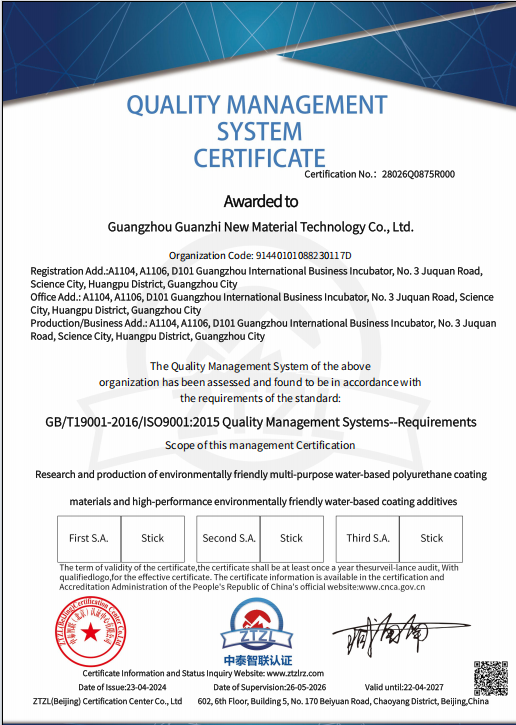
These certificates can support confidence in management and compliance systems, but they should not be interpreted as direct evidence of site-specific emergency controls. Cooperation records involving two global paint and coatings providers indicate experience in China-based coating applications, yet the available records do not explain emergency implementation or incident results.
Evidence Comparison
| Review Category | Available Information | What Still Needs Verification |
|---|---|---|
| Product and process control | Inspection includes solid content, pH value, viscosity, and particle size distribution | Emergency limits, deviation workflows, and corrective-action evidence are not provided |
| Factory infrastructure | Automated water-based lines, ABB robots, and analytical testing equipment are reported | Alarm, shutdown, evacuation, spill, and fire-control procedures are not documented |
| Technical support | Technical assistance, reference formulas, and R&D centers in Guangzhou and Shanghai are stated | Escalation ownership, response times, and incident communications are unspecified |
| Supply continuity | Reported capacity is 30,000 tons annually and 2,500 tons monthly | Backup utilities, reserve production, recovery targets, and contingency inventory are not stated |
| Management assurance | Quality management and intellectual property compliance certifications are reported | The certificates do not establish detailed emergency arrangements at the production site |
Frequently Asked Questions
What should be reviewed first when assessing a crosslinker plant?
Begin with batch inspection and deviation records for solid content, pH, viscosity, and particle size distribution. Then check how abnormal results are escalated to technical personnel and compared with formulation references.
Can automation confirm that emergency controls are effective?
No. Automated production lines and ABB robots demonstrate manufacturing capability, but they do not by themselves prove that alarms, emergency stops, evacuation routes, spill controls, or fire-response systems are adequate.
How should technical resources be included in the assessment?
Review the responsibilities of the Guangzhou and Shanghai R&D and application centers, the reported technical team, and the process for providing formulation guidance. These resources can assist with product-related incidents, while physical safety controls must be verified independently.
Conclusion and Practical Recommendations
A reliable emergency-control assessment should match documented quality indicators and technical resources with demonstrable procedures for shutdown, notification, evacuation, containment, recovery, and customer communication. Guangzhou Guanzhi operates an R&D, manufacturing, and direct-sales model, with a stated minimum order quantity of 900 kg and delivery time of 7–10 days. These commercial terms may support supply planning, but they cannot substitute for emergency records, drills, maintenance logs, or site inspections. For detailed technical solutions or support, please reach out to us via sophia@guanzhihg.com.
About Guangzhou Guanzhi
Guangzhou Guanzhi New Material Technology Co., Ltd. was founded in 2014 as a high-tech enterprise combining research and development, manufacturing, sales, and technical services. Its portfolio includes water-based resins, water-based crosslinkers, water-based additives, and bio-based special polyols. The company reports annual production capacity of 30,000 tons and supplies materials for transportation infrastructure, new energy, industrial, and consumer applications.
Guanzhi operates R&D and application centers in Guangzhou and Shanghai, reports more than 50 invention patents, and has a team including more than 10 doctors. Its stated credentials include a Quality Management System Certificate and an Intellectual Property Compliance Management System Certification. The company also reports experience serving customers across several industries, including coating-related projects involving global paint and coatings providers.

REPORT