







-
 Agriculture
-
 Health-Care
-
 Environment
-
 Construction-Real-Estate
-
 Tools-Hardware
-
 Home-Garden
-
 Furniture
-
 Luggage-Bags-Cases
-
 Medical-devices-Supplies
-
 Gifts-Crafts
-
 Sports-Entertainment
-
 Food-Beverage
-
 Vehicles-Transportation
-
 Power-Transmission
-
 Material-Handling
-
 Renewable-Energy
-
 Safety
-
 Testing-Instrument-Equipment
-
 Construction-Building-Machinery
-
 Pet-Supplies
-
 Personal-Care-Household-Cleaning
-
 Vehicle-Accessories-Electronics-Tools
-
 School-Office-Supplies
-
 Packaging-Printing
-
 Mother-Kids-Toys
-
 Business-Services
-
 Commercial-Equipment-Machinery
-
 Apparel-Accessories
-
 Security
-
 Shoes-Accessories
-
 Vehicle-Parts-Accessories
-
 Jewelry-Eyewear-Watches-Accessories
-
 Lights-Lighting
-
 Fabric-Textile-Raw-Material
-
 Fabrication-Services
-
 Industrial-Machinery
-
 Consumer-Electronics
-
 Electrical-Equipment-Supplies
-
 Electronic-Components-Accessories-Telecommunications
-
 Home-Appliances
-
 Beauty
-
 Chemicals
-
 Rubber-Plastics
-
 Metals-Alloys


























































































































































































































































































































































































































































































































































































- Masonry Materials
- Curtain Walls & Accessories
- Earthwork Products
- Fireproofing Materials
- Heat Insulation Materials
- Plastic Building Materials
- Building Boards
- Soundproofing Materials
- Timber
- Waterproofing Materials
- Balustrades & Handrails
- Bathroom & Kitchen
- Flooring & Accessories
- Tiles & Accessories
- Door, Window & Accessories
- Fireplaces & Stoves
- Floor Heating Systems & Parts
- Stairs & Stair Parts
- Ceilings
- Elevators & Escalators
- Stone
- Countertops, Vanity Tops & Table Tops
- Mosaics
- Metal Building Materials
- Multifunctional Materials
- Ladders & Scaffoldings
- Mouldings
- Corner Guards
- Decorative Films
- Formwork
- Building & Industrial Glass
- Other Construction & Real Estate
- Wallpapers/Wall panels
- HVAC System & Parts
- Outdoor Facilities
- Prefabricated Buildings
- Festive & Party Supplies
- Bathroom Products
- Household Sundries
- Rain Gear
- Garden Supplies
- Household Cleaning Tools & Accessories
- Lighters & Smoking Accessories
- Home Storage & Organization
- Household Scales
- Smart Home Improvement
- Home Textiles
- Kitchenware
- Drinkware & Accessories
- Dinnerware, Coffee & Wine
- Home Decor
- Golf
- Fitness & Body Building
- Amusement Park Facilities
- Billiards, Board Game,Coin Operated Games
- Musical Instruments
- Outdoor Affordable Luxury Sports
- Camping & Hiking
- Fishing
- Sports Safety&Rehabilitation
- Ball Sports Equipments
- Water Sports
- Winter Sports
- Luxury Travel Equipments
- Sports Shoes, Bags & Accessories
- Cycling
- Other Sports & Entertainment Products
- Artificial Grass&Sports Flooring&Sports Court Equipment
- Scooters
- Food Ingredients
- Honey & Honey Products
- Snacks
- Nuts & Kernels
- Seafood
- Plant & Animal Oil
- Beverages
- Fruit & Vegetable Products
- Frog & Escargot
- Bean Products
- Egg Products
- Dairy Products
- Seasonings & Condiments
- Canned Food
- Instant Food
- Baked Goods
- Other Food & Beverage
- Meat & Poultry
- Confectionery
- Grain Products
- Feminie Care
- Hair Care & Styling
- Body Care
- Hands & Feet Care
- Hygiene Products
- Men's Grooming
- Laundry Cleaning Supplies
- Travel Size & Gift Sets
- Room Deodorizers
- Other Personal Care Products
- Pest Control Products
- Special Household Cleaning
- Floor Cleaning
- Kitchen & Bathroom Cleaning
- Oral Care
- Bath Supplies
- Yellow Pages
- Correction Supplies
- Office Binding Supplies
- Office Cutting Supplies
- Board Erasers
- Office Adhesives & Tapes
- Education Supplies
- Pencil Cases & Bags
- Notebooks & Writing Pads
- File Folder Accessories
- Calendars
- Writing Accessories
- Commercial Office Supplies
- Pencil Sharpeners
- Pens
- Letter Pad/Paper
- Paper Envelopes
- Desk Organizers
- Pencils
- Markers & Highlighters
- Filing Products
- Art Supplies
- Easels
- Badge Holder & Accessories
- Office Paper
- Printer Supplies
- Book Covers
- Other Office & School Supplies
- Stationery Set
- Boards
- Clipboards
- Stamps
- Drafting Supplies
- Stencils
- Electronic Dictionary
- Books
- Map
- Magazines
- Calculators
- Baby & Toddler Toys
- Educational Toys
- Classic Toys
- Dress Up & Pretend Play
- Toy Vehicle
- Stuffed Animals & Plush Toys
- Outdoor Toys & Structures
- Balloons & Accessories
- Baby Food
- Children's Clothing
- Baby Supplies & Products
- Maternity Clothes
- Kids Shoes
- Baby Care
- Novelty & Gag Toys
- Dolls & Accessories
- Puzzle & Games
- Blocks & Model Building Toys
- Toddler Clothing
- Baby Clothing
- Kids' Luggage & Bags
- Arts, Crafts & DIY Toys
- Action & Toy Figures
- Baby Appliances
- Hobbies & Models
- Remote Control Toys
- Promotional Toys
- Pregnancy & Maternity
- Hygiene Products
- Kid's Textile&Bedding
- Novelty & Special Use
- Toy Weapons
- Baby Gifts
- Baby Storage & Organization
- Auto Drive Systems
- ATV/UTV Parts & Accessories
- Marine Parts & Accessories
- Other Auto Parts
- Trailer Parts & Accessories
- Auto Transmission Systems
- Train Parts & Accessories
- Universal Parts
- Railway Parts & Accessories
- Auto Brake Systems
- Aviation Parts & Accessories
- Truck Parts & Accessories
- Auto Suspension Systems
- Auto Lighting Systems
- New Energy Vehicle Parts & Accessories
- Auto Steering Systems
- Wheels, Tires & Accessories
- Bus Parts & Accessories
- Auto Performance Parts
- Cooling System
- Go-Kart & Kart Racer Parts & Accessories
- Air Conditioning Systems
- Heavy Duty Vehicle Parts & Accessories
- Auto Electrical Systems
- Auto Body Systems
- Auto Engine Systems
- Container Parts & Accessories
- Motorcycle Parts & Accessories
- Refrigeration & Heat Exchange Equipment
- Machine Tool Equipment
- Food & Beverage Machinery
- Agricultural Machinery & Equipment
- Apparel & Textile Machinery
- Chemical Machinery
- Packaging Machines
- Paper Production Machinery
- Plastic & Rubber Processing Machinery
- Industrial Robots
- Electronic Products Machinery
- Metal & Metallurgy Machinery
- Woodworking Machinery
- Home Product Manufacturing Machinery
- Machinery Accessories
- Environmental Machinery
- Machinery Service
- Electrical Equipment Manufacturing Machinery
- Industrial Compressors & Parts
- Tobacco & Cigarette Machinery
- Production Line
- Used Industrial Machinery
- Electronics Production Machinery
- Other Machinery & Industrial Equipment
- Camera, Photo & Accessories
- Portable Audio, Video & Accessories
- Television, Home Audio, Video & Accessories
- Video Games & Accessories
- Mobile Phone & Accessories
- Electronic Publications
- Earphone & Headphone & Accessories
- Speakers & Accessories
- Smart Electronics
- TV Receivers & Accessories
- Mobile Phone & Computer Repair Parts
- Chargers, Batteries & Power Supplies
- Used Electronics
- VR, AR, MR Hardware & Software
- Projectors & Presentation Equipments
- Other Consumer Electronics
- Cables & Commonly Used Accessories
- Computer Hardware & Software
- Displays, Signage and Optoelectronics
- Discrete Semiconductors
- Wireless & IoT Module and Products
- Telecommunications
- Connectors, Terminals & Accessories
- Development Boards, Electronic Modules and Kits
- Circuit Protection
- Sensors
- Isolators
- Audio Components and Products
- Integrated Circuits
- Power Supplies
- Relays
- RF, Microwave and RFID
- Electronic Accessories & Supplies
- Passive Components
- PCB & PCBA
- Air Quality Appliances
- Home Appliance Parts
- Heating & Cooling Appliances
- Small Kitchen Appliances
- Laundry Appliances
- Water Heaters
- Water Treatment Appliances
- Refrigerators & Freezers
- Personal Care & Beauty Appliances
- Major Kitchen Appliances
- Cleaning Appliances
- Second-hand Appliances
- Smart Home Appliances
- Other Home Appliances
- Energy Chemicals
- Inorganic Chemicals
- Basic Organic Chemicals
- Agrochemicals
- Admixture & Additives
- Catalysts & Chemical Auxiliary Agents
- Pigments & Dyestuff
- Coating & Paint
- Daily Chemicals
- Polymer
- Organic Intermediate
- Adhesives & Sealants
- Chemical Waste
- Biological Chemical Products
- Surface Treatment Chemicals
- Painting & Coating
- Chemical Reagents
- Flavor & Fragrance
- Non-Explosive Demolition Agents
- Other Chemicals
- Custom Chemical Services

How to Evaluate Insulation Performance in Different Insulated Grocery Bags
Evaluating insulated grocery bags requires more than comparing their exterior appearance. Examine the insulation layers, reflective barrier, moisture-resistant lining, closure system, edge sealing, bag format, and intended temperature-sensitive application. The specified insulated mailer combines metallised film, full-face 20 mm sponge insulation, a wipe-clean PE inner layer, welded edges, and both a two-rib zip and peel-and-seal strip. These features define its construction, although the available product information does not include measured temperature-retention data.
What to Compare First
A reliable comparison should begin with the complete wall structure. The outer material alone does not show how effectively a bag may resist heat transfer. This mailer uses a reflective metallised film, a continuous 20 mm sponge layer, and an inner PE film that also functions as a sealant layer.
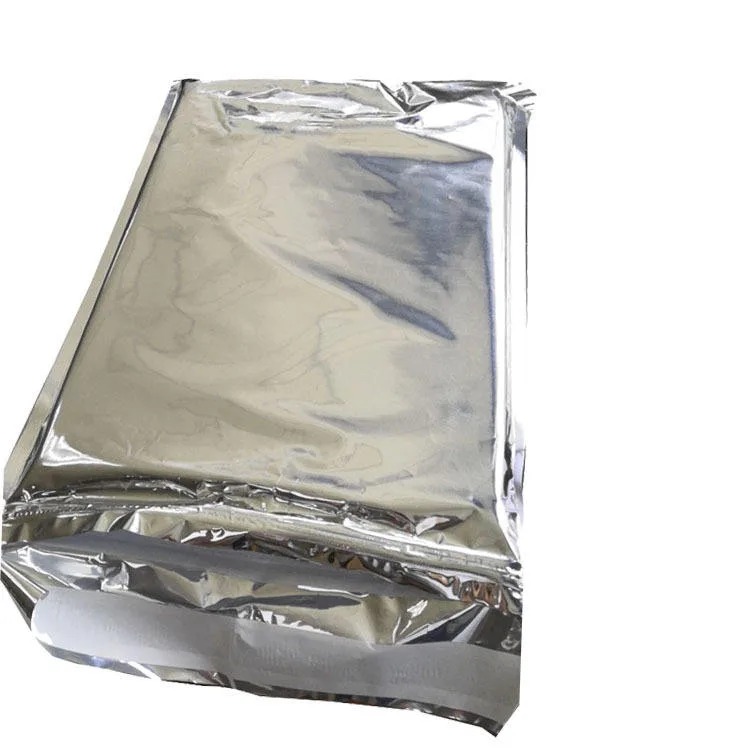
When reviewing another design, confirm the type and thickness of its insulation and whether the material covers the entire intended surface. Full-face coverage can provide a more consistent barrier than partial or uninsulated sections. Also check whether the inner surface can be wiped clean after condensation, leakage, or thaw water. The supplied specifications confirm that this mailer has a cleanable PE inner film, but they do not state a validated holding time or temperature curve.
Barrier and Moisture Protection
The metallised outer film has a silver reflective finish and can be printed. Its role in the comparison should be considered together with the sponge layer and PE inner film, rather than treated as a standalone indicator of thermal performance. The inner PE layer helps manage moisture and supports practical reuse or cleaning during grocery and cold-chain handling.
Closure and Edge Sealing
The opening is another important part of an insulated bag. Even a well-insulated body can lose effectiveness if the closure is left open or does not seal consistently. This mailer uses a two-rib zip together with a peel-and-seal adhesive strip, providing both a resealable feature and a secondary adhesive closure.
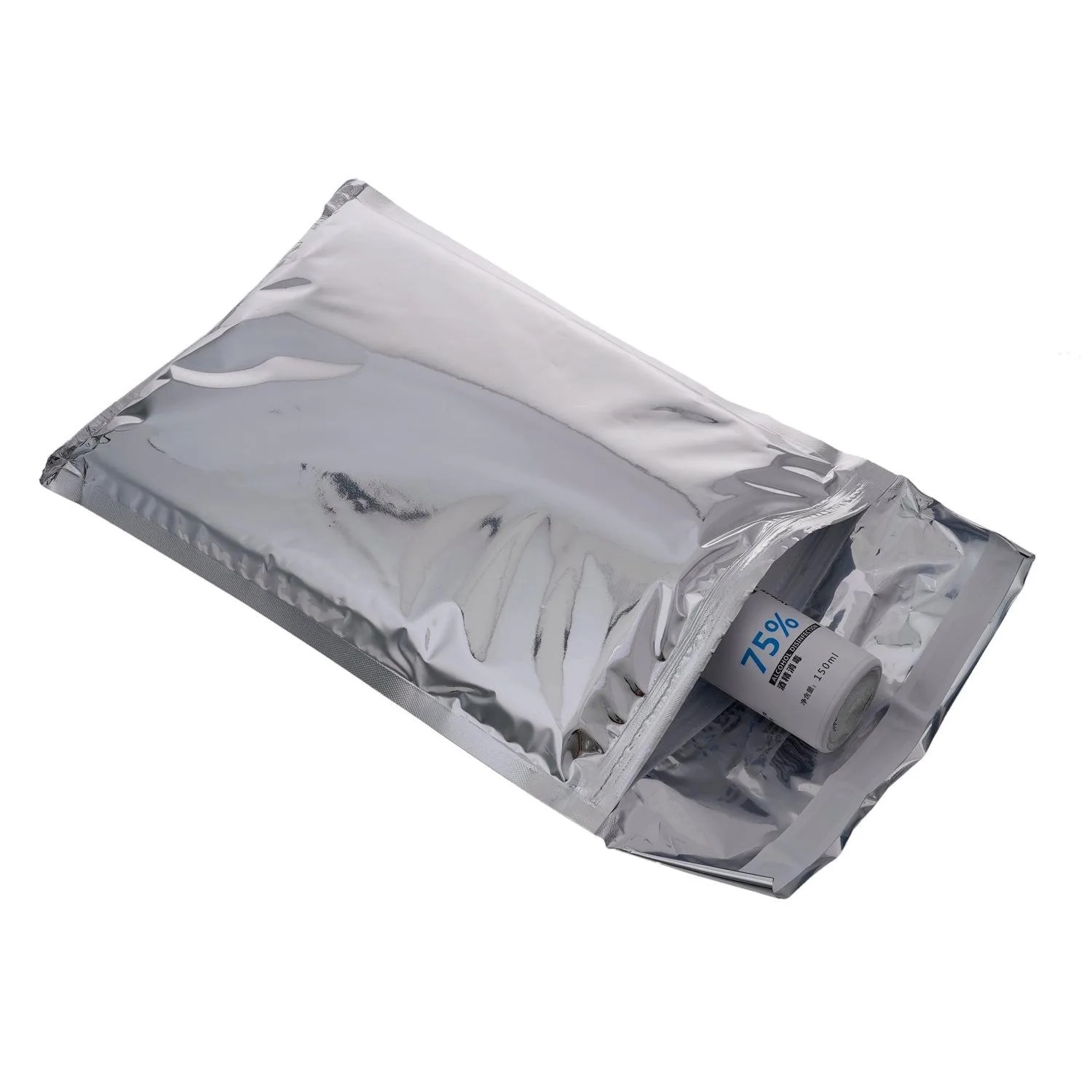
Its three closed edges are welded, so a competing product should be checked for equivalent sealed-edge construction. Compare weld consistency, closure strength, resealing capability, and the way the opening is managed during packing and delivery.
Format and Application Considerations
Bag shape affects warehouse storage, packing speed, and parcel handling. The specified mailer is flat, has no gusset, and can be stored or stacked in a compact format. That may suit grocery parcels and other shipments where flat storage is valuable, but the bag still needs to match the size and shape of the packed goods.
For grocery last-mile delivery, Ecopack describes application-specific options such as a dedicated gel-pack sleeve and a waterproof inner membrane. These features can improve organization and moisture management, but they should not be interpreted as proof of a particular cooling duration. The performance of any insulated grocery bag depends on the product load, cooling medium, pack arrangement, ambient temperature, and handling time.
For pharmaceutical and 2-8°C cold-chain shipments, the company also describes insulated bags and mailers designed around phase-change gel packs held in a dedicated sleeve. A flat, unprinted area can be used for temperature-monitoring marks and batch labels. Although medicine is included among the listed applications, the product information does not claim a validated hold time or certify a specific temperature-maintenance result.
Quality and Supply Information
Ecopack Packaging operates an ISO 9001:2015 Quality Management System. Its stated inspection process includes checks on incoming materials, production-stage controls, and finished goods before shipment. Listed inspection points include appearance, dimensions, print registration, seal strength, lamination bonding, and AQL sampling. These controls are useful when assessing manufacturing consistency, but they do not replace thermal testing conducted under the conditions of the intended application.
A documented cooperation example records the supply of insulated mailers to a United States distributor for cold shipping at an annual volume of 10 million pieces. Reported benefits included reduced heat transfer, less storage and shipping space than rigid foam packaging, and lower waste. These statements describe the reported project outcome; they are not a numerical, controlled comparison of temperature retention across different bag designs.
Insulated Grocery Bag Comparison Table
| Evaluation point | Specified metallised foil mailer | Questions to ask about another bag |
|---|---|---|
| Outer barrier | Reflective silver metallised film with a printable surface | What material is used, and does the reflective layer cover the full surface? |
| Insulation | 20 mm full-face sponge insulation | What is the insulation material and thickness? Is the coverage continuous? |
| Inner lining | Wipe-clean PE film that also serves as a sealant layer | Can the lining resist moisture and be cleaned after condensation or thaw water? |
| Closure system | Two-rib zip combined with a peel-and-seal adhesive strip | Does the closure reseal securely, and is there a secondary adhesive or sealing feature? |
| Edge construction | Three welded closed edges | Are the edges welded or otherwise sealed, and is the seal consistent? |
| Bag format | Flat, no gusset, and suitable for stacking flat | Does the shape suit the load, storage area, packing process, and delivery method? |
| Thermal evidence | No quantified temperature-retention results are included in the available data | Can the supplier provide comparable test conditions, temperature records, and cooling-pack details? |
Frequently Asked Questions
Which features matter most when comparing insulated grocery bags?
Assess the entire construction rather than one material. Key points include continuous insulation, reflective coverage, a moisture-resistant inner layer, the closure system, sealed edges, and the bag format. The specified mailer combines metallised film, full-face 20 mm sponge, PE lining, a two-rib zip, a peel-and-seal strip, and three welded edges.
Do these specifications show how long groceries will remain cold?
No. They explain the materials, design, format, and intended uses, but they do not provide a measured retention period or temperature profile. A meaningful test should use the same product load, cooling-pack quantity and position, starting temperature, ambient conditions, and measurement method for every bag being compared.
Can a flat insulated mailer be used for grocery or cold-chain shipping?
The product is listed for chilled food, perishables, medicine, and samples, and its flat construction supports compact storage. Actual suitability depends on the contents and cooling method. For grocery delivery, the supplier also describes dedicated gel-pack sleeves and waterproof inner membranes for specific application requirements.
Conclusion and Buying Recommendations
To compare insulated grocery bags responsibly, review the insulation continuity, reflective outer layer, moisture barrier, closure design, edge sealing, and physical format. The specified metallised foil mailer provides a clearly defined combination of reflective film, full-face 20 mm sponge, wipe-clean PE inner film, zip and adhesive closure, welded edges, and flat stacking.
For procurement, Ecopack offers stock products and customized packaging. Custom production quantities are established from the approved specification; samples typically require 3 to 5 working days, while production takes 15 to 25 days after artwork approval. For technical assistance or application-specific recommendations, contact manager@ecoppack.com.
About Ecopack
Huizhou Ecopack Packaging Products Co., Ltd. is a flexible packaging manufacturer based in Guangdong, China. Established in 2011, it produces custom composite pouches and bags for insulated mailers and thermal packaging, coffee, pet food, spout pouches, kraft packaging, compostable packaging, and ESD applications. The company has more than 200 employees and a factory area exceeding 10,000 square metres, with research and development, printing, lamination, bag making, and inspection handled under one roof. Its credentials include ISO 9001:2015 Quality Management System and FSC Chain of Custody certification, along with documented experience supplying insulated cold-chain mailers to a United States distributor.

REPORT