







-
 Agriculture
-
 Health-Care
-
 Environment
-
 Construction-Real-Estate
-
 Tools-Hardware
-
 Home-Garden
-
 Furniture
-
 Luggage-Bags-Cases
-
 Medical-devices-Supplies
-
 Gifts-Crafts
-
 Sports-Entertainment
-
 Food-Beverage
-
 Vehicles-Transportation
-
 Power-Transmission
-
 Material-Handling
-
 Renewable-Energy
-
 Safety
-
 Testing-Instrument-Equipment
-
 Construction-Building-Machinery
-
 Pet-Supplies
-
 Personal-Care-Household-Cleaning
-
 Vehicle-Accessories-Electronics-Tools
-
 School-Office-Supplies
-
 Packaging-Printing
-
 Mother-Kids-Toys
-
 Business-Services
-
 Commercial-Equipment-Machinery
-
 Apparel-Accessories
-
 Security
-
 Shoes-Accessories
-
 Vehicle-Parts-Accessories
-
 Jewelry-Eyewear-Watches-Accessories
-
 Lights-Lighting
-
 Fabric-Textile-Raw-Material
-
 Fabrication-Services
-
 Industrial-Machinery
-
 Consumer-Electronics
-
 Electrical-Equipment-Supplies
-
 Electronic-Components-Accessories-Telecommunications
-
 Home-Appliances
-
 Beauty
-
 Chemicals
-
 Rubber-Plastics
-
 Metals-Alloys


























































































































































































































































































































































































































































































































































































- Masonry Materials
- Curtain Walls & Accessories
- Earthwork Products
- Fireproofing Materials
- Heat Insulation Materials
- Plastic Building Materials
- Building Boards
- Soundproofing Materials
- Timber
- Waterproofing Materials
- Balustrades & Handrails
- Bathroom & Kitchen
- Flooring & Accessories
- Tiles & Accessories
- Door, Window & Accessories
- Fireplaces & Stoves
- Floor Heating Systems & Parts
- Stairs & Stair Parts
- Ceilings
- Elevators & Escalators
- Stone
- Countertops, Vanity Tops & Table Tops
- Mosaics
- Metal Building Materials
- Multifunctional Materials
- Ladders & Scaffoldings
- Mouldings
- Corner Guards
- Decorative Films
- Formwork
- Building & Industrial Glass
- Other Construction & Real Estate
- Wallpapers/Wall panels
- HVAC System & Parts
- Outdoor Facilities
- Prefabricated Buildings
- Festive & Party Supplies
- Bathroom Products
- Household Sundries
- Rain Gear
- Garden Supplies
- Household Cleaning Tools & Accessories
- Lighters & Smoking Accessories
- Home Storage & Organization
- Household Scales
- Smart Home Improvement
- Home Textiles
- Kitchenware
- Drinkware & Accessories
- Dinnerware, Coffee & Wine
- Home Decor
- Golf
- Fitness & Body Building
- Amusement Park Facilities
- Billiards, Board Game,Coin Operated Games
- Musical Instruments
- Outdoor Affordable Luxury Sports
- Camping & Hiking
- Fishing
- Sports Safety&Rehabilitation
- Ball Sports Equipments
- Water Sports
- Winter Sports
- Luxury Travel Equipments
- Sports Shoes, Bags & Accessories
- Cycling
- Other Sports & Entertainment Products
- Artificial Grass&Sports Flooring&Sports Court Equipment
- Scooters
- Food Ingredients
- Honey & Honey Products
- Snacks
- Nuts & Kernels
- Seafood
- Plant & Animal Oil
- Beverages
- Fruit & Vegetable Products
- Frog & Escargot
- Bean Products
- Egg Products
- Dairy Products
- Seasonings & Condiments
- Canned Food
- Instant Food
- Baked Goods
- Other Food & Beverage
- Meat & Poultry
- Confectionery
- Grain Products
- Feminie Care
- Hair Care & Styling
- Body Care
- Hands & Feet Care
- Hygiene Products
- Men's Grooming
- Laundry Cleaning Supplies
- Travel Size & Gift Sets
- Room Deodorizers
- Other Personal Care Products
- Pest Control Products
- Special Household Cleaning
- Floor Cleaning
- Kitchen & Bathroom Cleaning
- Oral Care
- Bath Supplies
- Yellow Pages
- Correction Supplies
- Office Binding Supplies
- Office Cutting Supplies
- Board Erasers
- Office Adhesives & Tapes
- Education Supplies
- Pencil Cases & Bags
- Notebooks & Writing Pads
- File Folder Accessories
- Calendars
- Writing Accessories
- Commercial Office Supplies
- Pencil Sharpeners
- Pens
- Letter Pad/Paper
- Paper Envelopes
- Desk Organizers
- Pencils
- Markers & Highlighters
- Filing Products
- Art Supplies
- Easels
- Badge Holder & Accessories
- Office Paper
- Printer Supplies
- Book Covers
- Other Office & School Supplies
- Stationery Set
- Boards
- Clipboards
- Stamps
- Drafting Supplies
- Stencils
- Electronic Dictionary
- Books
- Map
- Magazines
- Calculators
- Baby & Toddler Toys
- Educational Toys
- Classic Toys
- Dress Up & Pretend Play
- Toy Vehicle
- Stuffed Animals & Plush Toys
- Outdoor Toys & Structures
- Balloons & Accessories
- Baby Food
- Children's Clothing
- Baby Supplies & Products
- Maternity Clothes
- Kids Shoes
- Baby Care
- Novelty & Gag Toys
- Dolls & Accessories
- Puzzle & Games
- Blocks & Model Building Toys
- Toddler Clothing
- Baby Clothing
- Kids' Luggage & Bags
- Arts, Crafts & DIY Toys
- Action & Toy Figures
- Baby Appliances
- Hobbies & Models
- Remote Control Toys
- Promotional Toys
- Pregnancy & Maternity
- Hygiene Products
- Kid's Textile&Bedding
- Novelty & Special Use
- Toy Weapons
- Baby Gifts
- Baby Storage & Organization
- Auto Drive Systems
- ATV/UTV Parts & Accessories
- Marine Parts & Accessories
- Other Auto Parts
- Trailer Parts & Accessories
- Auto Transmission Systems
- Train Parts & Accessories
- Universal Parts
- Railway Parts & Accessories
- Auto Brake Systems
- Aviation Parts & Accessories
- Truck Parts & Accessories
- Auto Suspension Systems
- Auto Lighting Systems
- New Energy Vehicle Parts & Accessories
- Auto Steering Systems
- Wheels, Tires & Accessories
- Bus Parts & Accessories
- Auto Performance Parts
- Cooling System
- Go-Kart & Kart Racer Parts & Accessories
- Air Conditioning Systems
- Heavy Duty Vehicle Parts & Accessories
- Auto Electrical Systems
- Auto Body Systems
- Auto Engine Systems
- Container Parts & Accessories
- Motorcycle Parts & Accessories
- Refrigeration & Heat Exchange Equipment
- Machine Tool Equipment
- Food & Beverage Machinery
- Agricultural Machinery & Equipment
- Apparel & Textile Machinery
- Chemical Machinery
- Packaging Machines
- Paper Production Machinery
- Plastic & Rubber Processing Machinery
- Industrial Robots
- Electronic Products Machinery
- Metal & Metallurgy Machinery
- Woodworking Machinery
- Home Product Manufacturing Machinery
- Machinery Accessories
- Environmental Machinery
- Machinery Service
- Electrical Equipment Manufacturing Machinery
- Industrial Compressors & Parts
- Tobacco & Cigarette Machinery
- Production Line
- Used Industrial Machinery
- Electronics Production Machinery
- Other Machinery & Industrial Equipment
- Camera, Photo & Accessories
- Portable Audio, Video & Accessories
- Television, Home Audio, Video & Accessories
- Video Games & Accessories
- Mobile Phone & Accessories
- Electronic Publications
- Earphone & Headphone & Accessories
- Speakers & Accessories
- Smart Electronics
- TV Receivers & Accessories
- Mobile Phone & Computer Repair Parts
- Chargers, Batteries & Power Supplies
- Used Electronics
- VR, AR, MR Hardware & Software
- Projectors & Presentation Equipments
- Other Consumer Electronics
- Cables & Commonly Used Accessories
- Computer Hardware & Software
- Displays, Signage and Optoelectronics
- Discrete Semiconductors
- Wireless & IoT Module and Products
- Telecommunications
- Connectors, Terminals & Accessories
- Development Boards, Electronic Modules and Kits
- Circuit Protection
- Sensors
- Isolators
- Audio Components and Products
- Integrated Circuits
- Power Supplies
- Relays
- RF, Microwave and RFID
- Electronic Accessories & Supplies
- Passive Components
- PCB & PCBA
- Air Quality Appliances
- Home Appliance Parts
- Heating & Cooling Appliances
- Small Kitchen Appliances
- Laundry Appliances
- Water Heaters
- Water Treatment Appliances
- Refrigerators & Freezers
- Personal Care & Beauty Appliances
- Major Kitchen Appliances
- Cleaning Appliances
- Second-hand Appliances
- Smart Home Appliances
- Other Home Appliances
- Energy Chemicals
- Inorganic Chemicals
- Basic Organic Chemicals
- Agrochemicals
- Admixture & Additives
- Catalysts & Chemical Auxiliary Agents
- Pigments & Dyestuff
- Coating & Paint
- Daily Chemicals
- Polymer
- Organic Intermediate
- Adhesives & Sealants
- Chemical Waste
- Biological Chemical Products
- Surface Treatment Chemicals
- Painting & Coating
- Chemical Reagents
- Flavor & Fragrance
- Non-Explosive Demolition Agents
- Other Chemicals
- Custom Chemical Services

How to Evaluate Local Port Partners for DDP Shipping to Africa
Choosing a reliable local port partner is essential when arranging DDP shipping to Africa. Because Delivered Duty Paid shipments place responsibility for import clearance, duties, taxes, and final delivery on the logistics provider, every destination-side handoff must be verified before cargo leaves origin.
A practical audit should examine the partner's customs capability, tax-payment process, port-release authority, delivery-network coverage, shipment visibility, and response procedures for delays or claims. Written proof of responsibilities is critical for avoiding gaps between port arrival and final consignee delivery.
Start With the Complete DDP Responsibility Chain
Begin by mapping the shipment journey from collection through final delivery. The chain should cover pickup, export customs declaration, international freight, arrival handling, destination customs clearance, payment of duties and taxes, cargo release, local transport, and proof of delivery.
Create a responsibility matrix that identifies who owns each activity. It should clearly state the party accountable for clearance filings, import duties, port charges, shipment transfer, tracking updates, damage claims, and customer communication. This document becomes especially important when customs inspections, missing paperwork, or delivery disruptions occur.
Key Areas to Review During a Port Partner Audit
Customs Compliance and Tax Settlement
Confirm that the local partner can manage destination customs clearance for the relevant African market and cargo category. Review its process for checking import documents, supporting inspections, paying duties and taxes, and obtaining port release. DDP obligations should be explicitly assigned before the shipment is booked.
Operational Control and Cargo Traceability
Assess the safeguards used at every operational stage. Useful controls include cargo inspection before loading, packaging-condition verification, in-transit monitoring, customs-document review, delivery-signature collection, and trackable status updates. The provider should be able to show how it monitors cargo from origin pickup until the consignee accepts delivery.
Local Delivery and Exception Handling
A port partner may be strong in terminal operations but weak in inland delivery. Verify whether it controls the local delivery handoff, provides reliable proof of delivery, and has documented procedures for customs holds, damaged cargo, lost freight, and delivery failures. Clear escalation contacts and claims procedures reduce the commercial impact of unexpected events.
Select Transport According to Cargo Priorities
The transport mode should match the shipment's size, value, urgency, and delivery environment. Ocean freight and rail-linked services are generally suitable for planned replenishment, LCL cargo, and full-container volumes. Air freight is more appropriate for urgent inventory or time-sensitive products. Trucking and multimodal solutions can support destinations where port operations and inland delivery require additional coordination.
For cross-border e-commerce sellers, trading companies, manufacturers, and B2B importers, the objective is the same: select a provider that can maintain DDP responsibility across both the international leg and the local African delivery network.
Shippingwell DDP Service Coverage
Guangdong Shippingwell Supply Chain Limited provides direct cross-border DDP logistics services for North America, Europe, Southeast Asia, the Middle East, Africa, and other international destinations. Its stated service scope includes pickup, export declaration, international transportation, destination customs clearance, duty and tax payment, and door-to-door delivery. The company holds a Record Filing Form for International Freight Forwarders and a NOVCC credential applicable to sea freight in the USA, EU, and UK.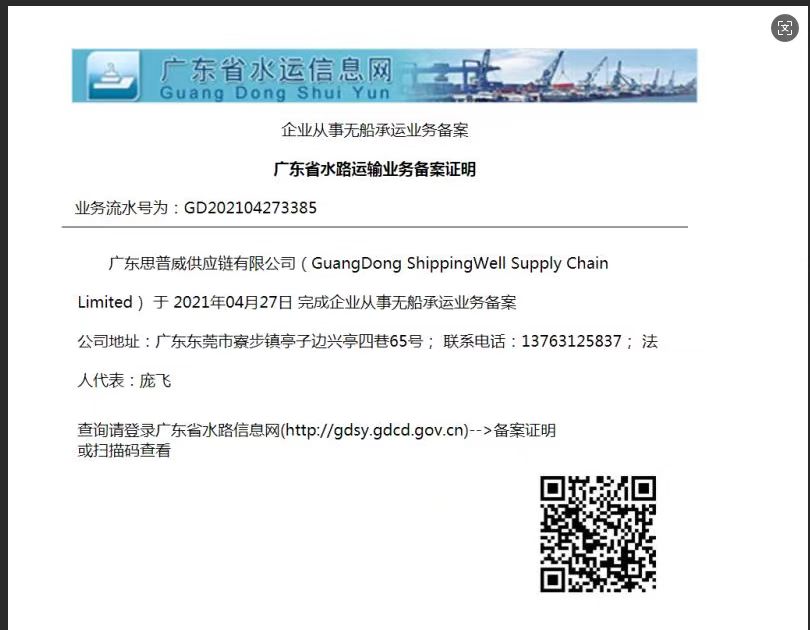
Operational history can provide another useful audit indicator. In an anonymized case involving a Canadian trading company, the service arrangement covered pickup, export declaration, ocean freight, Canadian import clearance, tax payment, and final delivery for more than 100 full-container shipments each year. Reported service strengths included consistent transit performance, transparent quotations, dedicated account support, and continuous shipment tracking.
DDP Port Partner Audit Checklist
| Review Category | Documentation or Proof Needed | Why It Matters for DDP |
|---|---|---|
| Customs and tax ownership | Written confirmation of destination clearance, duty, and tax-payment responsibility | Establishes who completes the import process |
| Freight options | Availability of ocean, air, express, trucking, and multimodal services | Allows service selection based on shipment volume and urgency |
| Shipment visibility | Tracking platform, monitoring updates, and delivery confirmation procedures | Maintains visibility from pickup through consignee receipt |
| Disruption management | Procedures for customs delays, loss, damage, claims, and after-sales support | Defines how problems are escalated and resolved |
| Payment process | Traceable options such as full payment, installments, T/T, PayPal, or other compliant methods | Supports documented logistics-service payments |
Frequently Asked Questions
Which documents should I request from a local DDP port partner?
Request a detailed service scope that specifies responsibilities for customs clearance, duty and tax payment, port handling, inland delivery, tracking, and exception management. The scope should match the agreed Incoterm, import requirements, and cargo type.
When should I use sea freight instead of air freight for African DDP shipments?
Sea freight is normally the better choice when the shipment is large and replenishment schedules allow for a longer transit period. Air freight is preferable for urgent cargo. In either case, verify the destination partner's commitment to customs clearance, tax payment, and door delivery.
Can a single provider handle port release and final-mile delivery?
Yes. A provider can manage both functions when its agreement specifically includes destination customs clearance, duty payment, port release, and door-to-door delivery. Review its local delivery coverage, tracking workflow, and proof-of-delivery requirements before confirming the booking.
Conclusion
An effective DDP audit goes beyond checking freight rates. Local port partners should be selected only after their responsibilities for customs, taxes, cargo handling, delivery, tracking, and claims support have been documented and reviewed. A one-stop DDP solution can support individual consignments, LCL freight, and FCL shipments, while the transport mode should be chosen according to cost, cargo volume, and required delivery speed. For detailed technical solutions or support, please reach out to us via Sales@shippingwell.com.
About Us
Guangdong Shippingwell Supply Chain Limited is an international logistics and overseas-warehousing provider headquartered in Dongguan, with offices in the United States, Hong Kong, the United Kingdom, Germany, France, and other countries and regions. Established in 2021, it operates a global logistics network serving North America, South America, Europe, the Middle East, Africa, and Southeast Asia. Its operations team has over 20 years of industry experience, and its stated capacity includes more than 10,000 standard containers handled annually. The company holds the NOVCC credential and the Record Filing Form for International Freight Forwarders, and has served clients across multiple industries.

REPORT