







-
 Agriculture
-
 Health-Care
-
 Environment
-
 Construction-Real-Estate
-
 Tools-Hardware
-
 Home-Garden
-
 Furniture
-
 Luggage-Bags-Cases
-
 Medical-devices-Supplies
-
 Gifts-Crafts
-
 Sports-Entertainment
-
 Food-Beverage
-
 Vehicles-Transportation
-
 Power-Transmission
-
 Material-Handling
-
 Renewable-Energy
-
 Safety
-
 Testing-Instrument-Equipment
-
 Construction-Building-Machinery
-
 Pet-Supplies
-
 Personal-Care-Household-Cleaning
-
 Vehicle-Accessories-Electronics-Tools
-
 School-Office-Supplies
-
 Packaging-Printing
-
 Mother-Kids-Toys
-
 Business-Services
-
 Commercial-Equipment-Machinery
-
 Apparel-Accessories
-
 Security
-
 Shoes-Accessories
-
 Vehicle-Parts-Accessories
-
 Jewelry-Eyewear-Watches-Accessories
-
 Lights-Lighting
-
 Fabric-Textile-Raw-Material
-
 Fabrication-Services
-
 Industrial-Machinery
-
 Consumer-Electronics
-
 Electrical-Equipment-Supplies
-
 Electronic-Components-Accessories-Telecommunications
-
 Home-Appliances
-
 Beauty
-
 Chemicals
-
 Rubber-Plastics
-
 Metals-Alloys


























































































































































































































































































































































































































































































































































































- Masonry Materials
- Curtain Walls & Accessories
- Earthwork Products
- Fireproofing Materials
- Heat Insulation Materials
- Plastic Building Materials
- Building Boards
- Soundproofing Materials
- Timber
- Waterproofing Materials
- Balustrades & Handrails
- Bathroom & Kitchen
- Flooring & Accessories
- Tiles & Accessories
- Door, Window & Accessories
- Fireplaces & Stoves
- Floor Heating Systems & Parts
- Stairs & Stair Parts
- Ceilings
- Elevators & Escalators
- Stone
- Countertops, Vanity Tops & Table Tops
- Mosaics
- Metal Building Materials
- Multifunctional Materials
- Ladders & Scaffoldings
- Mouldings
- Corner Guards
- Decorative Films
- Formwork
- Building & Industrial Glass
- Other Construction & Real Estate
- Wallpapers/Wall panels
- HVAC System & Parts
- Outdoor Facilities
- Prefabricated Buildings
- Festive & Party Supplies
- Bathroom Products
- Household Sundries
- Rain Gear
- Garden Supplies
- Household Cleaning Tools & Accessories
- Lighters & Smoking Accessories
- Home Storage & Organization
- Household Scales
- Smart Home Improvement
- Home Textiles
- Kitchenware
- Drinkware & Accessories
- Dinnerware, Coffee & Wine
- Home Decor
- Golf
- Fitness & Body Building
- Amusement Park Facilities
- Billiards, Board Game,Coin Operated Games
- Musical Instruments
- Outdoor Affordable Luxury Sports
- Camping & Hiking
- Fishing
- Sports Safety&Rehabilitation
- Ball Sports Equipments
- Water Sports
- Winter Sports
- Luxury Travel Equipments
- Sports Shoes, Bags & Accessories
- Cycling
- Other Sports & Entertainment Products
- Artificial Grass&Sports Flooring&Sports Court Equipment
- Scooters
- Food Ingredients
- Honey & Honey Products
- Snacks
- Nuts & Kernels
- Seafood
- Plant & Animal Oil
- Beverages
- Fruit & Vegetable Products
- Frog & Escargot
- Bean Products
- Egg Products
- Dairy Products
- Seasonings & Condiments
- Canned Food
- Instant Food
- Baked Goods
- Other Food & Beverage
- Meat & Poultry
- Confectionery
- Grain Products
- Feminie Care
- Hair Care & Styling
- Body Care
- Hands & Feet Care
- Hygiene Products
- Men's Grooming
- Laundry Cleaning Supplies
- Travel Size & Gift Sets
- Room Deodorizers
- Other Personal Care Products
- Pest Control Products
- Special Household Cleaning
- Floor Cleaning
- Kitchen & Bathroom Cleaning
- Oral Care
- Bath Supplies
- Yellow Pages
- Correction Supplies
- Office Binding Supplies
- Office Cutting Supplies
- Board Erasers
- Office Adhesives & Tapes
- Education Supplies
- Pencil Cases & Bags
- Notebooks & Writing Pads
- File Folder Accessories
- Calendars
- Writing Accessories
- Commercial Office Supplies
- Pencil Sharpeners
- Pens
- Letter Pad/Paper
- Paper Envelopes
- Desk Organizers
- Pencils
- Markers & Highlighters
- Filing Products
- Art Supplies
- Easels
- Badge Holder & Accessories
- Office Paper
- Printer Supplies
- Book Covers
- Other Office & School Supplies
- Stationery Set
- Boards
- Clipboards
- Stamps
- Drafting Supplies
- Stencils
- Electronic Dictionary
- Books
- Map
- Magazines
- Calculators
- Baby & Toddler Toys
- Educational Toys
- Classic Toys
- Dress Up & Pretend Play
- Toy Vehicle
- Stuffed Animals & Plush Toys
- Outdoor Toys & Structures
- Balloons & Accessories
- Baby Food
- Children's Clothing
- Baby Supplies & Products
- Maternity Clothes
- Kids Shoes
- Baby Care
- Novelty & Gag Toys
- Dolls & Accessories
- Puzzle & Games
- Blocks & Model Building Toys
- Toddler Clothing
- Baby Clothing
- Kids' Luggage & Bags
- Arts, Crafts & DIY Toys
- Action & Toy Figures
- Baby Appliances
- Hobbies & Models
- Remote Control Toys
- Promotional Toys
- Pregnancy & Maternity
- Hygiene Products
- Kid's Textile&Bedding
- Novelty & Special Use
- Toy Weapons
- Baby Gifts
- Baby Storage & Organization
- Auto Drive Systems
- ATV/UTV Parts & Accessories
- Marine Parts & Accessories
- Other Auto Parts
- Trailer Parts & Accessories
- Auto Transmission Systems
- Train Parts & Accessories
- Universal Parts
- Railway Parts & Accessories
- Auto Brake Systems
- Aviation Parts & Accessories
- Truck Parts & Accessories
- Auto Suspension Systems
- Auto Lighting Systems
- New Energy Vehicle Parts & Accessories
- Auto Steering Systems
- Wheels, Tires & Accessories
- Bus Parts & Accessories
- Auto Performance Parts
- Cooling System
- Go-Kart & Kart Racer Parts & Accessories
- Air Conditioning Systems
- Heavy Duty Vehicle Parts & Accessories
- Auto Electrical Systems
- Auto Body Systems
- Auto Engine Systems
- Container Parts & Accessories
- Motorcycle Parts & Accessories
- Refrigeration & Heat Exchange Equipment
- Machine Tool Equipment
- Food & Beverage Machinery
- Agricultural Machinery & Equipment
- Apparel & Textile Machinery
- Chemical Machinery
- Packaging Machines
- Paper Production Machinery
- Plastic & Rubber Processing Machinery
- Industrial Robots
- Electronic Products Machinery
- Metal & Metallurgy Machinery
- Woodworking Machinery
- Home Product Manufacturing Machinery
- Machinery Accessories
- Environmental Machinery
- Machinery Service
- Electrical Equipment Manufacturing Machinery
- Industrial Compressors & Parts
- Tobacco & Cigarette Machinery
- Production Line
- Used Industrial Machinery
- Electronics Production Machinery
- Other Machinery & Industrial Equipment
- Camera, Photo & Accessories
- Portable Audio, Video & Accessories
- Television, Home Audio, Video & Accessories
- Video Games & Accessories
- Mobile Phone & Accessories
- Electronic Publications
- Earphone & Headphone & Accessories
- Speakers & Accessories
- Smart Electronics
- TV Receivers & Accessories
- Mobile Phone & Computer Repair Parts
- Chargers, Batteries & Power Supplies
- Used Electronics
- VR, AR, MR Hardware & Software
- Projectors & Presentation Equipments
- Other Consumer Electronics
- Cables & Commonly Used Accessories
- Computer Hardware & Software
- Displays, Signage and Optoelectronics
- Discrete Semiconductors
- Wireless & IoT Module and Products
- Telecommunications
- Connectors, Terminals & Accessories
- Development Boards, Electronic Modules and Kits
- Circuit Protection
- Sensors
- Isolators
- Audio Components and Products
- Integrated Circuits
- Power Supplies
- Relays
- RF, Microwave and RFID
- Electronic Accessories & Supplies
- Passive Components
- PCB & PCBA
- Air Quality Appliances
- Home Appliance Parts
- Heating & Cooling Appliances
- Small Kitchen Appliances
- Laundry Appliances
- Water Heaters
- Water Treatment Appliances
- Refrigerators & Freezers
- Personal Care & Beauty Appliances
- Major Kitchen Appliances
- Cleaning Appliances
- Second-hand Appliances
- Smart Home Appliances
- Other Home Appliances
- Energy Chemicals
- Inorganic Chemicals
- Basic Organic Chemicals
- Agrochemicals
- Admixture & Additives
- Catalysts & Chemical Auxiliary Agents
- Pigments & Dyestuff
- Coating & Paint
- Daily Chemicals
- Polymer
- Organic Intermediate
- Adhesives & Sealants
- Chemical Waste
- Biological Chemical Products
- Surface Treatment Chemicals
- Painting & Coating
- Chemical Reagents
- Flavor & Fragrance
- Non-Explosive Demolition Agents
- Other Chemicals
- Custom Chemical Services

How to Evaluate Silicone Sticky Bra Pad Sample Adhesion
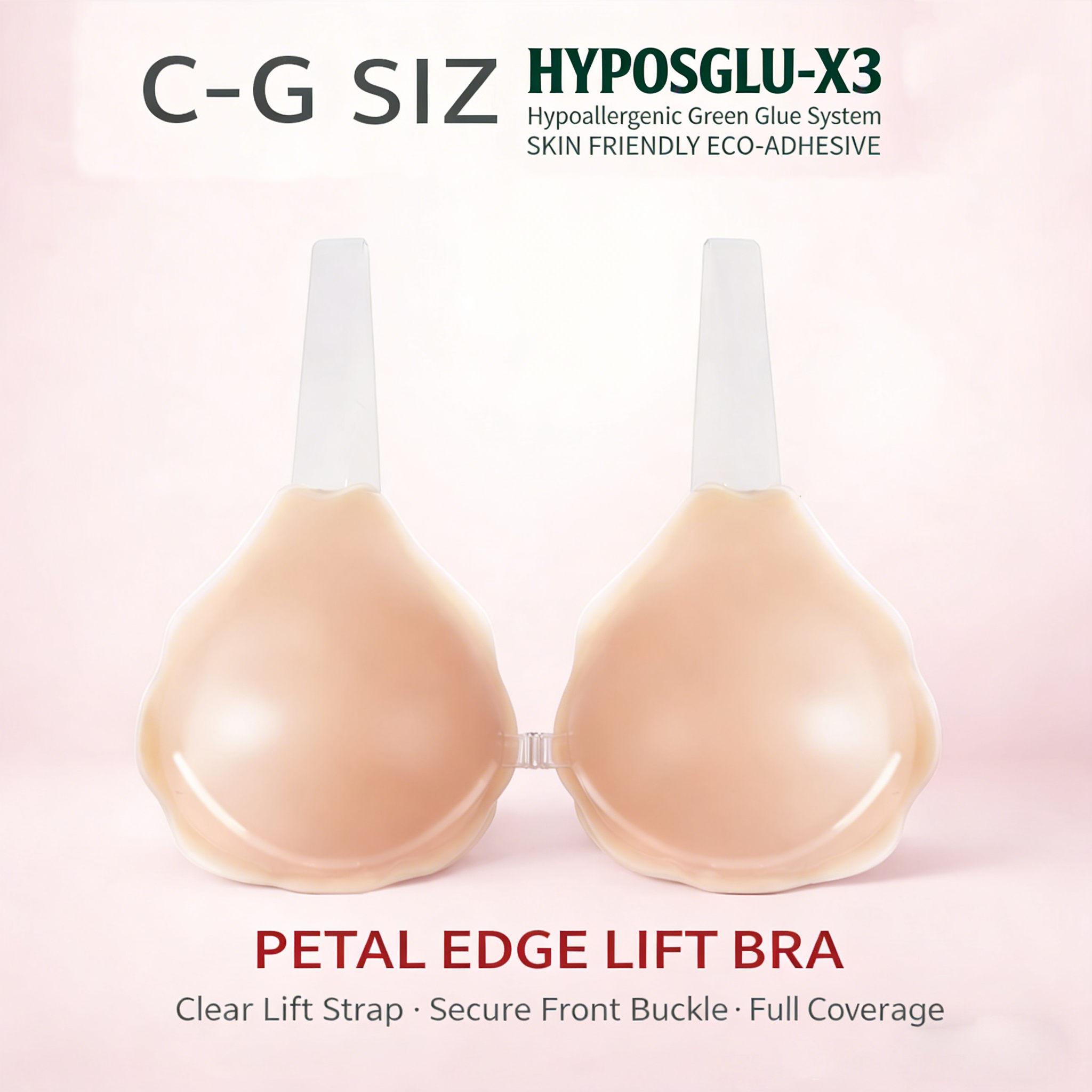
Evaluating a silicone sticky bra pad sample requires more than a quick touch test. Buyers should review initial adhesion, stability during movement, moisture resistance, and performance after hand washing. For a plus size adhesive lifting bra tape sample, the assessment should also confirm that the pad stays in place, provides the expected support across the stated cup range, and retains practical tack after repeated use and care.
Practical Testing Checklist
- Apply the sample to clean, dry skin and verify even contact without premature edge lifting.
- Test the fit during realistic activities and with clothing such as fitted tops, deep-V garments, bridal gowns, evening dresses, swimwear, and workout clothing.
- Hand wash and dry the sample according to the specified care instructions, then reassess adhesion and support.
- Document changes in stickiness, comfort, coverage, lifting performance, and position retention before approving the sample for production.
How to Conduct a Complete Sample Evaluation
A reliable review should cover the full wearing process rather than rely on one initial application. Begin by examining the adhesive surface for uneven areas, contamination, or visible defects. Apply the complete cup section to the skin and check whether the design makes consistent contact. The sample should remain stable during normal bending, walking, sitting, and arm movement.
The intended use environment is also important. Xinrui describes this type of invisible intimate apparel for everyday clothing, bridal wear, party and evening dresses, swimwear, and fitness apparel. Test the sample with garments that match the buyer's target market to assess visibility, edge lifting, comfort, support, and overall placement. The product is made with silicone and TPU and is designed to cover D to I cup sizes, so testing should reflect the intended size range.
Post-Wash Adhesion and Reuse
Care testing should follow the product's hand-wash-only requirement. Wash the sample gently, allow it to dry fully, and compare it with an unused sample or its original condition. Inspect whether the adhesive layer remains smooth and evenly tacky, whether the pad can be repositioned securely, and whether the edges still make proper contact. Also verify that washing has not reduced lifting support, comfort, or usable coverage.
One successful application does not establish long-term reliability. For a more useful evaluation, repeat the application and care cycle when the product specification allows it. Record observations in a standard test sheet so that different samples, materials, and production batches can be compared consistently.
Supplier Quality and Supporting Documentation
Sample approval should be considered alongside the supplier's quality-control process. A complete review may include incoming raw material inspection, in-process production checks, and finished product inspection. Xinrui states that its QC team monitors the manufacturing process and provides SGS testing support, with RoHS, REACH, MSDS, and ISO 10993 documentation available for applicable products. These documents help with supplier qualification, while hands-on sample testing confirms whether the product meets the buyer's specific requirements.
Xinrui also cites a long-term supply case involving a US-based online women's apparel seller. The application included invisible nipple covers for formal dresses, camisoles, yoga clothing, and bridal accessories. The customer feedback mentioned soft silicone, firm adhesion, waterproof performance, and lifting support for plus-size products. Such feedback can provide useful reference points, but every new sample should still be evaluated independently before bulk production.
Testing Areas at a Glance
| Testing area | Evaluation points | Relevant product or supplier information |
|---|---|---|
| First-use adhesion | Full skin contact, edge stability, and secure placement immediately after application | Silicone and TPU construction, full cup design, and adhesive lifting bra tape format |
| Movement performance | Position retention, support, comfort, and visibility under the intended clothing | Suitable application scenarios include daily wear, bridal, evening, swimwear, and fitness clothing |
| After-care performance | Remaining tack, support, edge contact, and repositioning ability after washing and drying | Hand washing only; compare the cared-for sample with an unused sample |
| Quality verification | Supplier inspection procedures, test reports, and compliance documentation | Incoming, in-process, and finished goods inspection with SGS testing support |
Frequently Asked Questions
What is the best way to test initial stickiness?
Place the sample on clean, completely dry skin and examine the entire contact area. Check for edge lifting, shifting during ordinary movement, and sufficient lifting support. Testing with the intended garment can also reveal whether the edges remain discreet and stable.
Does the sample need to be tested after washing?
Yes. Since the product is specified for hand washing, clean and dry it according to the care instructions before reassessing its adhesive surface. Compare the washed sample with its unused condition for tack, support, position retention, and edge contact.
Which supplier documents should be requested?
Ask for the product specification, inspection records, and relevant compliance documents. Xinrui lists raw material, in-process, and finished goods inspections, together with SGS testing support and available RoHS, REACH, MSDS, and ISO 10993 certificates.
Conclusion and Purchasing Recommendations
A structured acceptance test should cover initial adhesion, stability during movement, comfort, support, garment compatibility, moisture exposure, and post-wash performance. This process gives buyers a clearer basis for approving a silicone bra pad or adhesive lifting bra tape sample. Xinrui offers integrated manufacturing and trading services, product samples, custom packaging, and OEM/ODM support. The stated custom MOQ for this product is 50 pieces. For technical advice or project support, contact judy@xinruibra.com.
About Xinrui
Dongguan Xinrui Underwear Co., Ltd. is a factory-based supplier of women's invisible underwear and intimate apparel, including boob tape, silicone bra pads, invisible bras, panties, and nipple covers. Founded in 2007, the company has an R&D team of five engineers and supports customized product development within 20 to 50 days. Its listed qualifications include BSCI and ISO 9001, and it serves customers across several industries.

REPORT