







-
 Agriculture
-
 Health-Care
-
 Environment
-
 Construction-Real-Estate
-
 Tools-Hardware
-
 Home-Garden
-
 Furniture
-
 Luggage-Bags-Cases
-
 Medical-devices-Supplies
-
 Gifts-Crafts
-
 Sports-Entertainment
-
 Food-Beverage
-
 Vehicles-Transportation
-
 Power-Transmission
-
 Material-Handling
-
 Renewable-Energy
-
 Safety
-
 Testing-Instrument-Equipment
-
 Construction-Building-Machinery
-
 Pet-Supplies
-
 Personal-Care-Household-Cleaning
-
 Vehicle-Accessories-Electronics-Tools
-
 School-Office-Supplies
-
 Packaging-Printing
-
 Mother-Kids-Toys
-
 Business-Services
-
 Commercial-Equipment-Machinery
-
 Apparel-Accessories
-
 Security
-
 Shoes-Accessories
-
 Vehicle-Parts-Accessories
-
 Jewelry-Eyewear-Watches-Accessories
-
 Lights-Lighting
-
 Fabric-Textile-Raw-Material
-
 Fabrication-Services
-
 Industrial-Machinery
-
 Consumer-Electronics
-
 Electrical-Equipment-Supplies
-
 Electronic-Components-Accessories-Telecommunications
-
 Home-Appliances
-
 Beauty
-
 Chemicals
-
 Rubber-Plastics
-
 Metals-Alloys


























































































































































































































































































































































































































































































































































































- Masonry Materials
- Curtain Walls & Accessories
- Earthwork Products
- Fireproofing Materials
- Heat Insulation Materials
- Plastic Building Materials
- Building Boards
- Soundproofing Materials
- Timber
- Waterproofing Materials
- Balustrades & Handrails
- Bathroom & Kitchen
- Flooring & Accessories
- Tiles & Accessories
- Door, Window & Accessories
- Fireplaces & Stoves
- Floor Heating Systems & Parts
- Stairs & Stair Parts
- Ceilings
- Elevators & Escalators
- Stone
- Countertops, Vanity Tops & Table Tops
- Mosaics
- Metal Building Materials
- Multifunctional Materials
- Ladders & Scaffoldings
- Mouldings
- Corner Guards
- Decorative Films
- Formwork
- Building & Industrial Glass
- Other Construction & Real Estate
- Wallpapers/Wall panels
- HVAC System & Parts
- Outdoor Facilities
- Prefabricated Buildings
- Festive & Party Supplies
- Bathroom Products
- Household Sundries
- Rain Gear
- Garden Supplies
- Household Cleaning Tools & Accessories
- Lighters & Smoking Accessories
- Home Storage & Organization
- Household Scales
- Smart Home Improvement
- Home Textiles
- Kitchenware
- Drinkware & Accessories
- Dinnerware, Coffee & Wine
- Home Decor
- Golf
- Fitness & Body Building
- Amusement Park Facilities
- Billiards, Board Game,Coin Operated Games
- Musical Instruments
- Outdoor Affordable Luxury Sports
- Camping & Hiking
- Fishing
- Sports Safety&Rehabilitation
- Ball Sports Equipments
- Water Sports
- Winter Sports
- Luxury Travel Equipments
- Sports Shoes, Bags & Accessories
- Cycling
- Other Sports & Entertainment Products
- Artificial Grass&Sports Flooring&Sports Court Equipment
- Scooters
- Food Ingredients
- Honey & Honey Products
- Snacks
- Nuts & Kernels
- Seafood
- Plant & Animal Oil
- Beverages
- Fruit & Vegetable Products
- Frog & Escargot
- Bean Products
- Egg Products
- Dairy Products
- Seasonings & Condiments
- Canned Food
- Instant Food
- Baked Goods
- Other Food & Beverage
- Meat & Poultry
- Confectionery
- Grain Products
- Feminie Care
- Hair Care & Styling
- Body Care
- Hands & Feet Care
- Hygiene Products
- Men's Grooming
- Laundry Cleaning Supplies
- Travel Size & Gift Sets
- Room Deodorizers
- Other Personal Care Products
- Pest Control Products
- Special Household Cleaning
- Floor Cleaning
- Kitchen & Bathroom Cleaning
- Oral Care
- Bath Supplies
- Yellow Pages
- Correction Supplies
- Office Binding Supplies
- Office Cutting Supplies
- Board Erasers
- Office Adhesives & Tapes
- Education Supplies
- Pencil Cases & Bags
- Notebooks & Writing Pads
- File Folder Accessories
- Calendars
- Writing Accessories
- Commercial Office Supplies
- Pencil Sharpeners
- Pens
- Letter Pad/Paper
- Paper Envelopes
- Desk Organizers
- Pencils
- Markers & Highlighters
- Filing Products
- Art Supplies
- Easels
- Badge Holder & Accessories
- Office Paper
- Printer Supplies
- Book Covers
- Other Office & School Supplies
- Stationery Set
- Boards
- Clipboards
- Stamps
- Drafting Supplies
- Stencils
- Electronic Dictionary
- Books
- Map
- Magazines
- Calculators
- Baby & Toddler Toys
- Educational Toys
- Classic Toys
- Dress Up & Pretend Play
- Toy Vehicle
- Stuffed Animals & Plush Toys
- Outdoor Toys & Structures
- Balloons & Accessories
- Baby Food
- Children's Clothing
- Baby Supplies & Products
- Maternity Clothes
- Kids Shoes
- Baby Care
- Novelty & Gag Toys
- Dolls & Accessories
- Puzzle & Games
- Blocks & Model Building Toys
- Toddler Clothing
- Baby Clothing
- Kids' Luggage & Bags
- Arts, Crafts & DIY Toys
- Action & Toy Figures
- Baby Appliances
- Hobbies & Models
- Remote Control Toys
- Promotional Toys
- Pregnancy & Maternity
- Hygiene Products
- Kid's Textile&Bedding
- Novelty & Special Use
- Toy Weapons
- Baby Gifts
- Baby Storage & Organization
- Auto Drive Systems
- ATV/UTV Parts & Accessories
- Marine Parts & Accessories
- Other Auto Parts
- Trailer Parts & Accessories
- Auto Transmission Systems
- Train Parts & Accessories
- Universal Parts
- Railway Parts & Accessories
- Auto Brake Systems
- Aviation Parts & Accessories
- Truck Parts & Accessories
- Auto Suspension Systems
- Auto Lighting Systems
- New Energy Vehicle Parts & Accessories
- Auto Steering Systems
- Wheels, Tires & Accessories
- Bus Parts & Accessories
- Auto Performance Parts
- Cooling System
- Go-Kart & Kart Racer Parts & Accessories
- Air Conditioning Systems
- Heavy Duty Vehicle Parts & Accessories
- Auto Electrical Systems
- Auto Body Systems
- Auto Engine Systems
- Container Parts & Accessories
- Motorcycle Parts & Accessories
- Refrigeration & Heat Exchange Equipment
- Machine Tool Equipment
- Food & Beverage Machinery
- Agricultural Machinery & Equipment
- Apparel & Textile Machinery
- Chemical Machinery
- Packaging Machines
- Paper Production Machinery
- Plastic & Rubber Processing Machinery
- Industrial Robots
- Electronic Products Machinery
- Metal & Metallurgy Machinery
- Woodworking Machinery
- Home Product Manufacturing Machinery
- Machinery Accessories
- Environmental Machinery
- Machinery Service
- Electrical Equipment Manufacturing Machinery
- Industrial Compressors & Parts
- Tobacco & Cigarette Machinery
- Production Line
- Used Industrial Machinery
- Electronics Production Machinery
- Other Machinery & Industrial Equipment
- Camera, Photo & Accessories
- Portable Audio, Video & Accessories
- Television, Home Audio, Video & Accessories
- Video Games & Accessories
- Mobile Phone & Accessories
- Electronic Publications
- Earphone & Headphone & Accessories
- Speakers & Accessories
- Smart Electronics
- TV Receivers & Accessories
- Mobile Phone & Computer Repair Parts
- Chargers, Batteries & Power Supplies
- Used Electronics
- VR, AR, MR Hardware & Software
- Projectors & Presentation Equipments
- Other Consumer Electronics
- Cables & Commonly Used Accessories
- Computer Hardware & Software
- Displays, Signage and Optoelectronics
- Discrete Semiconductors
- Wireless & IoT Module and Products
- Telecommunications
- Connectors, Terminals & Accessories
- Development Boards, Electronic Modules and Kits
- Circuit Protection
- Sensors
- Isolators
- Audio Components and Products
- Integrated Circuits
- Power Supplies
- Relays
- RF, Microwave and RFID
- Electronic Accessories & Supplies
- Passive Components
- PCB & PCBA
- Air Quality Appliances
- Home Appliance Parts
- Heating & Cooling Appliances
- Small Kitchen Appliances
- Laundry Appliances
- Water Heaters
- Water Treatment Appliances
- Refrigerators & Freezers
- Personal Care & Beauty Appliances
- Major Kitchen Appliances
- Cleaning Appliances
- Second-hand Appliances
- Smart Home Appliances
- Other Home Appliances
- Energy Chemicals
- Inorganic Chemicals
- Basic Organic Chemicals
- Agrochemicals
- Admixture & Additives
- Catalysts & Chemical Auxiliary Agents
- Pigments & Dyestuff
- Coating & Paint
- Daily Chemicals
- Polymer
- Organic Intermediate
- Adhesives & Sealants
- Chemical Waste
- Biological Chemical Products
- Surface Treatment Chemicals
- Painting & Coating
- Chemical Reagents
- Flavor & Fragrance
- Non-Explosive Demolition Agents
- Other Chemicals
- Custom Chemical Services

How to Evaluate the Sharpness and Balance of a Kitchen Knife Sample
A reliable kitchen knife sample evaluation should examine more than the appearance of the blade. Test how easily the knife cuts suitable food materials, determine whether it stays stable during normal handling, and inspect the relationship between the blade, handle, and intended application. These checks help buyers select samples suitable for hotel operations, restaurant service, banquet use, formal table settings, and household entertaining.
Essential Inspection Points
- Test the edge with representative food materials and observe cutting ease, continuity, and the amount of pressure required.
- Hold the knife at its normal grip position to determine whether the blade and handle remain balanced without unexpected rotation.
- Examine blade straightness, handle attachment, finishing quality, alignment, and visible defects.
- Compare the sample's handling and construction with the frequency of use and service conditions of the target market.
How to Test Knife Sharpness
Sharpness is best judged through a consistent cutting procedure rather than by looking at the edge alone. Use the same type of food material for each sample and apply comparable hand pressure. A suitable knife should begin the cut smoothly, follow a predictable path, and produce a clean result without crushing the material, dragging across its surface, or requiring repeated sawing.
During the test, note whether the edge response remains consistent from the heel to the tip. Record the cutting result together with the blade finish and condition, since an apparently sharp sample may still have surface damage, uneven finishing, or other issues that affect long-term use.
How to Assess Balance and Construction
Balance depends on how the blade and handle work together around the user's grip point. Hold the sample in its usual position and perform controlled lifting, positioning, and cutting movements. The knife should remain easy to guide without unwanted rotation or constant wrist adjustment. Poor balance can make repeated preparation or table service tiring, even when the blade cuts effectively.
Inspect the blade from several angles to identify bending, inconsistent finishing, scratches, deformation, or gaps around the handle. Confirm that the handle is securely fixed and that all surfaces are smooth enough for practical cleaning and safe handling. These details are especially important for hotel equipment, western table settings, steak service, seafood service, and domestic entertaining.
Application and Supplier Information
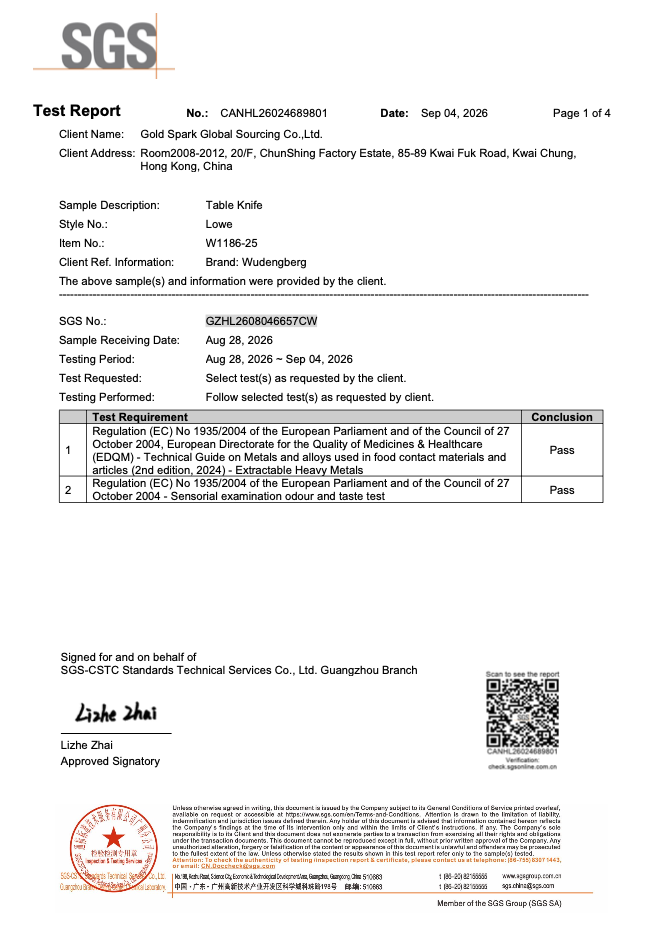
Gold Spark Global Sourcing operates with one professional research and development and design team supported by ten factories. The company states that customized production is available and that a typical lead time of 30–45 days may be achieved according to order requirements and volume. For table knives, SGS certification for the European Union is listed under certificate number GZHL2608046657CW.
Recorded hotel equipment supply cases include China World Beijing, Four Seasons Beijing, Rosewood Beijing, Ritz Carlton Beijing, Rosewood Hong Kong, and Grand Hyatt Macao. These records identify hotel supply engagements but do not state separate knife-specific sharpness or balance test results.
Inspection Criteria at a Glance
| Inspection Area | Recommended Evaluation |
|---|---|
| Edge performance | Clean initiation, steady cutting action, and minimal need for repeated sawing |
| Balance | Controlled handling at the normal grip point without unexpected turning |
| Blade and handle | Correct alignment, firm attachment, smooth surfaces, and no visible defects |
| Use-case suitability | Appropriate performance for hotels, restaurants, banquets, table settings, or homes |
| Quality records | SGS documentation listed for the relevant European Union table knife certification |
Frequently Asked Questions
What is the most practical way to check knife sharpness?
Conduct a controlled cutting test with representative food material. Check whether the edge starts the cut cleanly, remains on course, and works without excessive pressure, crushing, or repeated sawing.
How can the balance of a knife sample be confirmed?
Grip the knife where a user would normally hold it and make controlled positioning movements. A well-balanced sample should stay stable and should not require continuous wrist correction.
Does the listed certification include numerical sharpness results?
The available enterprise data lists SGS certification for European Union table knives under certificate number GZHL2608046657CW. It does not provide a separate numerical measurement for sharpness or balance.
Conclusion and Purchasing Recommendations
When reviewing a kitchen knife sample, combine three evaluations: cutting response, handling stability, and blade-handle construction. Use consistent test conditions, document the observations, and compare the results with the demands of the intended hotel, restaurant, banquet, or household environment.
Gold Spark Global Sourcing supports order-based cooperation with a stated minimum order quantity of 1 pc, a listed delivery time of 30 days, SGS quality inspection, and replacement or repair for quality defects reported within 15 days. For technical consultation or product support, contact goldspark@vip.163.com.
About Gold Spark Global Sourcing
Gold Spark Global Sourcing is headquartered in Hong Kong with operations supported from Shenzhen. Established in 2002, the company specializes in high-end hotel supply chains and connects international hotel brands with premium manufacturers in China. Its services cover wholesale, retail, import, and export of hotel supplies, kitchen equipment, tableware, and related products. Recorded certifications include SGS certificate GZHL2608046657CW for table knives and SGS certificate GZHL2608046655CW for table spoons and table forks. The company has recorded hotel supply projects involving properties in Beijing, Hong Kong, and Macao.

REPORT