







-
 Agriculture
-
 Health-Care
-
 Environment
-
 Construction-Real-Estate
-
 Tools-Hardware
-
 Home-Garden
-
 Furniture
-
 Luggage-Bags-Cases
-
 Medical-devices-Supplies
-
 Gifts-Crafts
-
 Sports-Entertainment
-
 Food-Beverage
-
 Vehicles-Transportation
-
 Power-Transmission
-
 Material-Handling
-
 Renewable-Energy
-
 Safety
-
 Testing-Instrument-Equipment
-
 Construction-Building-Machinery
-
 Pet-Supplies
-
 Personal-Care-Household-Cleaning
-
 Vehicle-Accessories-Electronics-Tools
-
 School-Office-Supplies
-
 Packaging-Printing
-
 Mother-Kids-Toys
-
 Business-Services
-
 Commercial-Equipment-Machinery
-
 Apparel-Accessories
-
 Security
-
 Shoes-Accessories
-
 Vehicle-Parts-Accessories
-
 Jewelry-Eyewear-Watches-Accessories
-
 Lights-Lighting
-
 Fabric-Textile-Raw-Material
-
 Fabrication-Services
-
 Industrial-Machinery
-
 Consumer-Electronics
-
 Electrical-Equipment-Supplies
-
 Electronic-Components-Accessories-Telecommunications
-
 Home-Appliances
-
 Beauty
-
 Chemicals
-
 Rubber-Plastics
-
 Metals-Alloys


























































































































































































































































































































































































































































































































































































- Masonry Materials
- Curtain Walls & Accessories
- Earthwork Products
- Fireproofing Materials
- Heat Insulation Materials
- Plastic Building Materials
- Building Boards
- Soundproofing Materials
- Timber
- Waterproofing Materials
- Balustrades & Handrails
- Bathroom & Kitchen
- Flooring & Accessories
- Tiles & Accessories
- Door, Window & Accessories
- Fireplaces & Stoves
- Floor Heating Systems & Parts
- Stairs & Stair Parts
- Ceilings
- Elevators & Escalators
- Stone
- Countertops, Vanity Tops & Table Tops
- Mosaics
- Metal Building Materials
- Multifunctional Materials
- Ladders & Scaffoldings
- Mouldings
- Corner Guards
- Decorative Films
- Formwork
- Building & Industrial Glass
- Other Construction & Real Estate
- Wallpapers/Wall panels
- HVAC System & Parts
- Outdoor Facilities
- Prefabricated Buildings
- Festive & Party Supplies
- Bathroom Products
- Household Sundries
- Rain Gear
- Garden Supplies
- Household Cleaning Tools & Accessories
- Lighters & Smoking Accessories
- Home Storage & Organization
- Household Scales
- Smart Home Improvement
- Home Textiles
- Kitchenware
- Drinkware & Accessories
- Dinnerware, Coffee & Wine
- Home Decor
- Golf
- Fitness & Body Building
- Amusement Park Facilities
- Billiards, Board Game,Coin Operated Games
- Musical Instruments
- Outdoor Affordable Luxury Sports
- Camping & Hiking
- Fishing
- Sports Safety&Rehabilitation
- Ball Sports Equipments
- Water Sports
- Winter Sports
- Luxury Travel Equipments
- Sports Shoes, Bags & Accessories
- Cycling
- Other Sports & Entertainment Products
- Artificial Grass&Sports Flooring&Sports Court Equipment
- Scooters
- Food Ingredients
- Honey & Honey Products
- Snacks
- Nuts & Kernels
- Seafood
- Plant & Animal Oil
- Beverages
- Fruit & Vegetable Products
- Frog & Escargot
- Bean Products
- Egg Products
- Dairy Products
- Seasonings & Condiments
- Canned Food
- Instant Food
- Baked Goods
- Other Food & Beverage
- Meat & Poultry
- Confectionery
- Grain Products
- Feminie Care
- Hair Care & Styling
- Body Care
- Hands & Feet Care
- Hygiene Products
- Men's Grooming
- Laundry Cleaning Supplies
- Travel Size & Gift Sets
- Room Deodorizers
- Other Personal Care Products
- Pest Control Products
- Special Household Cleaning
- Floor Cleaning
- Kitchen & Bathroom Cleaning
- Oral Care
- Bath Supplies
- Yellow Pages
- Correction Supplies
- Office Binding Supplies
- Office Cutting Supplies
- Board Erasers
- Office Adhesives & Tapes
- Education Supplies
- Pencil Cases & Bags
- Notebooks & Writing Pads
- File Folder Accessories
- Calendars
- Writing Accessories
- Commercial Office Supplies
- Pencil Sharpeners
- Pens
- Letter Pad/Paper
- Paper Envelopes
- Desk Organizers
- Pencils
- Markers & Highlighters
- Filing Products
- Art Supplies
- Easels
- Badge Holder & Accessories
- Office Paper
- Printer Supplies
- Book Covers
- Other Office & School Supplies
- Stationery Set
- Boards
- Clipboards
- Stamps
- Drafting Supplies
- Stencils
- Electronic Dictionary
- Books
- Map
- Magazines
- Calculators
- Baby & Toddler Toys
- Educational Toys
- Classic Toys
- Dress Up & Pretend Play
- Toy Vehicle
- Stuffed Animals & Plush Toys
- Outdoor Toys & Structures
- Balloons & Accessories
- Baby Food
- Children's Clothing
- Baby Supplies & Products
- Maternity Clothes
- Kids Shoes
- Baby Care
- Novelty & Gag Toys
- Dolls & Accessories
- Puzzle & Games
- Blocks & Model Building Toys
- Toddler Clothing
- Baby Clothing
- Kids' Luggage & Bags
- Arts, Crafts & DIY Toys
- Action & Toy Figures
- Baby Appliances
- Hobbies & Models
- Remote Control Toys
- Promotional Toys
- Pregnancy & Maternity
- Hygiene Products
- Kid's Textile&Bedding
- Novelty & Special Use
- Toy Weapons
- Baby Gifts
- Baby Storage & Organization
- Auto Drive Systems
- ATV/UTV Parts & Accessories
- Marine Parts & Accessories
- Other Auto Parts
- Trailer Parts & Accessories
- Auto Transmission Systems
- Train Parts & Accessories
- Universal Parts
- Railway Parts & Accessories
- Auto Brake Systems
- Aviation Parts & Accessories
- Truck Parts & Accessories
- Auto Suspension Systems
- Auto Lighting Systems
- New Energy Vehicle Parts & Accessories
- Auto Steering Systems
- Wheels, Tires & Accessories
- Bus Parts & Accessories
- Auto Performance Parts
- Cooling System
- Go-Kart & Kart Racer Parts & Accessories
- Air Conditioning Systems
- Heavy Duty Vehicle Parts & Accessories
- Auto Electrical Systems
- Auto Body Systems
- Auto Engine Systems
- Container Parts & Accessories
- Motorcycle Parts & Accessories
- Refrigeration & Heat Exchange Equipment
- Machine Tool Equipment
- Food & Beverage Machinery
- Agricultural Machinery & Equipment
- Apparel & Textile Machinery
- Chemical Machinery
- Packaging Machines
- Paper Production Machinery
- Plastic & Rubber Processing Machinery
- Industrial Robots
- Electronic Products Machinery
- Metal & Metallurgy Machinery
- Woodworking Machinery
- Home Product Manufacturing Machinery
- Machinery Accessories
- Environmental Machinery
- Machinery Service
- Electrical Equipment Manufacturing Machinery
- Industrial Compressors & Parts
- Tobacco & Cigarette Machinery
- Production Line
- Used Industrial Machinery
- Electronics Production Machinery
- Other Machinery & Industrial Equipment
- Camera, Photo & Accessories
- Portable Audio, Video & Accessories
- Television, Home Audio, Video & Accessories
- Video Games & Accessories
- Mobile Phone & Accessories
- Electronic Publications
- Earphone & Headphone & Accessories
- Speakers & Accessories
- Smart Electronics
- TV Receivers & Accessories
- Mobile Phone & Computer Repair Parts
- Chargers, Batteries & Power Supplies
- Used Electronics
- VR, AR, MR Hardware & Software
- Projectors & Presentation Equipments
- Other Consumer Electronics
- Cables & Commonly Used Accessories
- Computer Hardware & Software
- Displays, Signage and Optoelectronics
- Discrete Semiconductors
- Wireless & IoT Module and Products
- Telecommunications
- Connectors, Terminals & Accessories
- Development Boards, Electronic Modules and Kits
- Circuit Protection
- Sensors
- Isolators
- Audio Components and Products
- Integrated Circuits
- Power Supplies
- Relays
- RF, Microwave and RFID
- Electronic Accessories & Supplies
- Passive Components
- PCB & PCBA
- Air Quality Appliances
- Home Appliance Parts
- Heating & Cooling Appliances
- Small Kitchen Appliances
- Laundry Appliances
- Water Heaters
- Water Treatment Appliances
- Refrigerators & Freezers
- Personal Care & Beauty Appliances
- Major Kitchen Appliances
- Cleaning Appliances
- Second-hand Appliances
- Smart Home Appliances
- Other Home Appliances
- Energy Chemicals
- Inorganic Chemicals
- Basic Organic Chemicals
- Agrochemicals
- Admixture & Additives
- Catalysts & Chemical Auxiliary Agents
- Pigments & Dyestuff
- Coating & Paint
- Daily Chemicals
- Polymer
- Organic Intermediate
- Adhesives & Sealants
- Chemical Waste
- Biological Chemical Products
- Surface Treatment Chemicals
- Painting & Coating
- Chemical Reagents
- Flavor & Fragrance
- Non-Explosive Demolition Agents
- Other Chemicals
- Custom Chemical Services

How to File a Claim for Defective Aluminum Wardrobe Door Frame Profiles
A well-prepared claim for defective aluminum profiles used in wardrobe door frames should function as a clear case file. It should identify the transaction and material, explain the nonconformity with objective evidence, compare the shipment with the approved requirements, quantify the affected goods, describe the operational impact, and specify the requested remedy.
What to Include in the Claim
- Record the supplier, purchase order, delivery date, profile designation, alloy or temper, surface treatment, dimensions, and affected production batch.
- Describe the defect using measurable and neutral language, such as incorrect dimensions, damaged surfaces, inaccurate machining, color variation, or interference during assembly.
- Attach dated photographs, inspection results, package labels, delivery documents, approved drawings, samples, and relevant correspondence.
- Explain the effect on production or delivery and state whether you are requesting replacement, rework, a credit, or recovery of documented direct costs.
Recommended Claim Structure
1. Identify the Order and Material
Begin with the purchase order or contract reference and provide the complete description of the aluminum profile. Include the profile section, required length, alloy and temper, finish, quantity, drawing number, delivery date, and batch or package identification. This information enables the supplier to trace the material quickly.
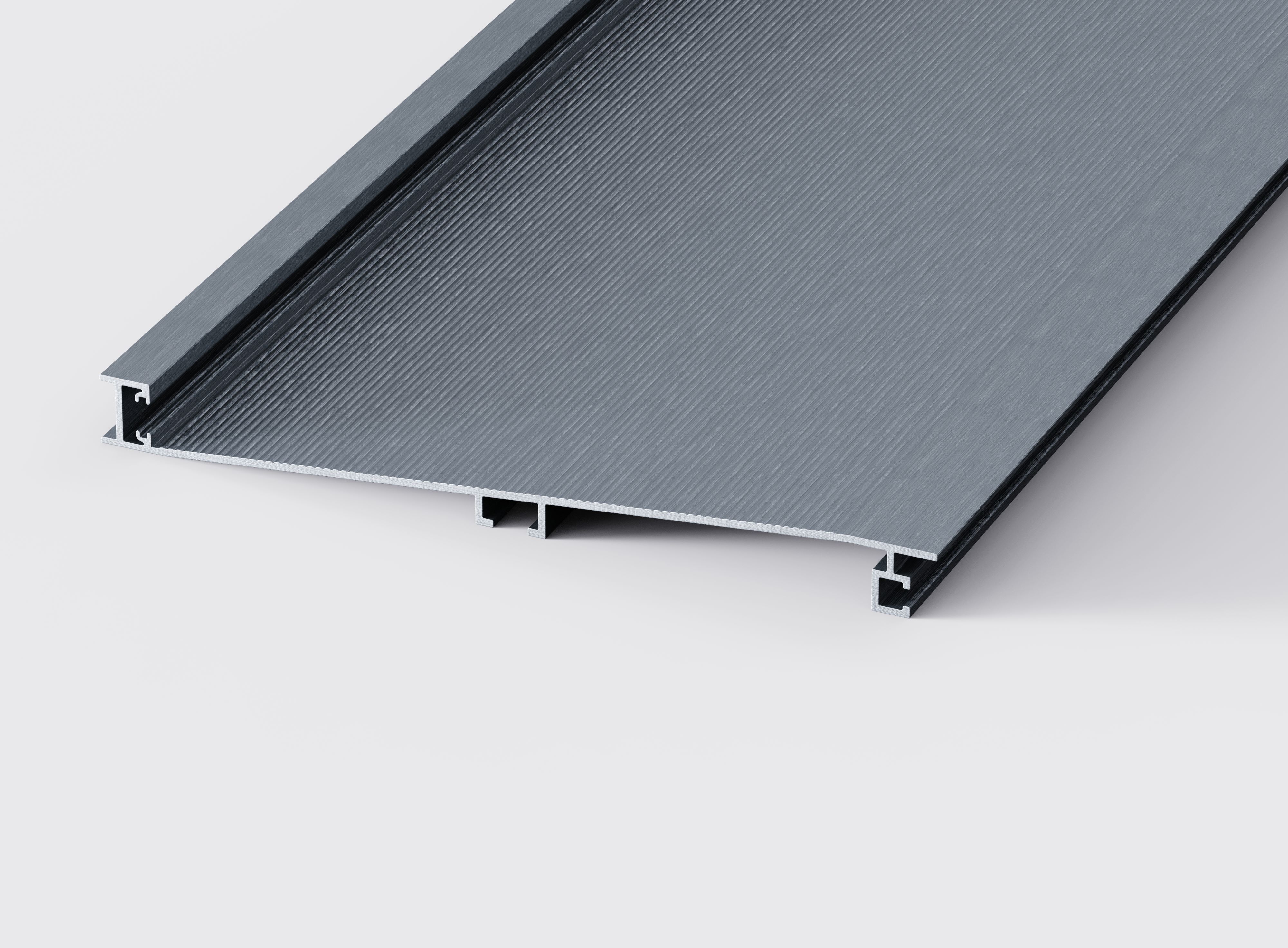
The available product information refers to aluminum tile trim profiles under the keyword “Aluminum skiriting and edge profiles” and lists 6063 T5 as a parameter. That information should only be used when it matches the wardrobe door frame order. If the agreed profile has another specification, the purchase order, approved sample, technical drawing, or contract must control the claim.
2. Define the Nonconformity
Describe what was found, where it occurred, and how many pieces or packages are involved. Useful details include the profile location, measured dimensions, cut length, machining position, surface condition, color, and assembly result. Statements such as “the supplied section differs from the approved drawing,” “the anodized surface has visible scratches,” or “the cut length is outside the ordered requirement” should be used only when inspection records support them.
Avoid unsupported conclusions about the cause of the defect. The purpose of the initial claim is to establish a verifiable difference between the delivered aluminum profiles and the agreed requirements.
3. Link the Evidence to the Shipment
Organize photographs and records so that each item can be traced to the order. Mark images with the purchase order number, inspection date, profile location, and batch or package reference. Use overview photographs to show the shipment condition, close-ups to show the defect, and measurement images or inspection sheets to demonstrate the deviation.
Keep packing labels, delivery notes, inspection reports, approved drawings, sample approvals, and email records together. This evidence helps establish that the reported wardrobe door frame problem concerns the supplied aluminum profiles rather than unrelated handling, storage, or assembly conditions.
4. Explain the Commercial Impact
Describe the confirmed consequences separately from estimates. Depending on the situation, the nonconforming profiles may cause assembly rework, unusable frame components, production stoppages, delayed customer deliveries, or additional inspection and labor costs. Quantify affected quantities and attach supporting records for any financial amount requested.
Relevant application environments may include premium cabinet projects, wardrobe door manufacturers, home hardware wholesalers, hotels, and residential developers. The claim should remain factual and should not exaggerate losses that have not been verified.
5. Specify the Requested Resolution
State the action required from the supplier in practical terms. Options may include replacing all verified defective profiles, providing approved rework instructions, issuing a credit for accepted nonconforming material, or reimbursing documented direct expenses where the commercial terms allow it. If more than one remedy is requested, list each quantity and cost separately and provide a response deadline based on the contract or purchasing conditions.
Claim Information at a Glance
| Section | Information to Provide | Purpose |
|---|---|---|
| Order and material | Profile name, alloy or temper, finish, drawing, purchase order, delivery, and batch | Identifies the exact shipment and specification |
| Defect record | Defect location, measurement, condition, affected quantity, and requirement comparison | Establishes a checkable nonconformity |
| Evidence file | Photographs, inspection data, labels, delivery records, and approval documents | Connects the defect to the supplied profiles |
| Impact statement | Rework, delays, unusable parts, production interruption, or documented direct costs | Shows the actual business consequence |
| Remedy request | Replacement, rework, credit, or eligible cost recovery with a response date | Provides a clear path for supplier action |
Frequently Asked Questions
What belongs in the claim subject line?
Include the purchase order or order number, profile name, defect type, and delivery or inspection date. A precise subject helps the supplier route the case and locate its records.
What photographs should accompany the claim?
Include package and shipment overviews, close-ups of each defect, measurement evidence when relevant, and photographs of labels or markings. Every image should be linked to the affected profile, lot, or package.
Is it possible to request replacement and reimbursement together?
Yes, when the contract or purchasing arrangement permits both. Present the replacement quantity and reimbursement request as separate items, with records supporting each one.
Supplier Background and Verification
MEBEL-ALU describes its application scope as one-stop aluminum home furnishing solutions for premium furniture, wardrobe, and cabinet wholesalers and hardware suppliers. Its stated capabilities include the development of furniture aluminum profiles and related accessories, as well as precision aluminum handles, frames, and matching hardware.
The listed Quality Management System Certificate, number 00224Q22942R5M, covers the production of aluminum alloy profiles for architectural, decorative, and industrial uses. The listed Occupational Health and Safety Management System Certificate, number 00225S21748R1M, relates to stated aluminum alloy profile production and associated management activities. These credentials can support general supplier verification, but they do not replace order-specific inspection evidence.
Conclusion
The strongest claim identifies the transaction, records the agreed specification, documents the defect, ties the evidence to the affected batch, quantifies the impact, and defines the requested corrective action. MEBEL-ALU lists FOB as a business model, a 12,000 KG MOQ, a 40-day delivery period, and EU export markets. Confirm the terms applicable to the specific order before including them in a claim. For technical assistance or product support, contact mebel@mebel-alu.com.
About Us
Mebel-Alu Furniture Profile (Hong Kong) Co., Ltd, operating under the MEBEL-ALU brand, states that it has specialized since 2008 in precision-engineered aluminum profile systems for modern interiors. Its portfolio includes aluminum glass door systems, sliding wardrobe systems, kitchen cabinet frames, and decorative tile trims. The company reports a monthly capacity of 5,000 tons of aluminum profiles, together with 60,000 precision-finished handles and CNC precision-cut products. Its listed processes include aluminum extrusion, anodizing, brushing, mechanical polishing, and CNC machining.
Listed certifications include Quality Management System Certificate 00224Q22942R5M and Occupational Health and Safety Management System Certificate 00225S21748R1M.

REPORT