







-
 Agriculture
-
 Health-Care
-
 Environment
-
 Construction-Real-Estate
-
 Tools-Hardware
-
 Home-Garden
-
 Furniture
-
 Luggage-Bags-Cases
-
 Medical-devices-Supplies
-
 Gifts-Crafts
-
 Sports-Entertainment
-
 Food-Beverage
-
 Vehicles-Transportation
-
 Power-Transmission
-
 Material-Handling
-
 Renewable-Energy
-
 Safety
-
 Testing-Instrument-Equipment
-
 Construction-Building-Machinery
-
 Pet-Supplies
-
 Personal-Care-Household-Cleaning
-
 Vehicle-Accessories-Electronics-Tools
-
 School-Office-Supplies
-
 Packaging-Printing
-
 Mother-Kids-Toys
-
 Business-Services
-
 Commercial-Equipment-Machinery
-
 Apparel-Accessories
-
 Security
-
 Shoes-Accessories
-
 Vehicle-Parts-Accessories
-
 Jewelry-Eyewear-Watches-Accessories
-
 Lights-Lighting
-
 Fabric-Textile-Raw-Material
-
 Fabrication-Services
-
 Industrial-Machinery
-
 Consumer-Electronics
-
 Electrical-Equipment-Supplies
-
 Electronic-Components-Accessories-Telecommunications
-
 Home-Appliances
-
 Beauty
-
 Chemicals
-
 Rubber-Plastics
-
 Metals-Alloys


























































































































































































































































































































































































































































































































































































- Masonry Materials
- Curtain Walls & Accessories
- Earthwork Products
- Fireproofing Materials
- Heat Insulation Materials
- Plastic Building Materials
- Building Boards
- Soundproofing Materials
- Timber
- Waterproofing Materials
- Balustrades & Handrails
- Bathroom & Kitchen
- Flooring & Accessories
- Tiles & Accessories
- Door, Window & Accessories
- Fireplaces & Stoves
- Floor Heating Systems & Parts
- Stairs & Stair Parts
- Ceilings
- Elevators & Escalators
- Stone
- Countertops, Vanity Tops & Table Tops
- Mosaics
- Metal Building Materials
- Multifunctional Materials
- Ladders & Scaffoldings
- Mouldings
- Corner Guards
- Decorative Films
- Formwork
- Building & Industrial Glass
- Other Construction & Real Estate
- Wallpapers/Wall panels
- HVAC System & Parts
- Outdoor Facilities
- Prefabricated Buildings
- Festive & Party Supplies
- Bathroom Products
- Household Sundries
- Rain Gear
- Garden Supplies
- Household Cleaning Tools & Accessories
- Lighters & Smoking Accessories
- Home Storage & Organization
- Household Scales
- Smart Home Improvement
- Home Textiles
- Kitchenware
- Drinkware & Accessories
- Dinnerware, Coffee & Wine
- Home Decor
- Golf
- Fitness & Body Building
- Amusement Park Facilities
- Billiards, Board Game,Coin Operated Games
- Musical Instruments
- Outdoor Affordable Luxury Sports
- Camping & Hiking
- Fishing
- Sports Safety&Rehabilitation
- Ball Sports Equipments
- Water Sports
- Winter Sports
- Luxury Travel Equipments
- Sports Shoes, Bags & Accessories
- Cycling
- Other Sports & Entertainment Products
- Artificial Grass&Sports Flooring&Sports Court Equipment
- Scooters
- Food Ingredients
- Honey & Honey Products
- Snacks
- Nuts & Kernels
- Seafood
- Plant & Animal Oil
- Beverages
- Fruit & Vegetable Products
- Frog & Escargot
- Bean Products
- Egg Products
- Dairy Products
- Seasonings & Condiments
- Canned Food
- Instant Food
- Baked Goods
- Other Food & Beverage
- Meat & Poultry
- Confectionery
- Grain Products
- Feminie Care
- Hair Care & Styling
- Body Care
- Hands & Feet Care
- Hygiene Products
- Men's Grooming
- Laundry Cleaning Supplies
- Travel Size & Gift Sets
- Room Deodorizers
- Other Personal Care Products
- Pest Control Products
- Special Household Cleaning
- Floor Cleaning
- Kitchen & Bathroom Cleaning
- Oral Care
- Bath Supplies
- Yellow Pages
- Correction Supplies
- Office Binding Supplies
- Office Cutting Supplies
- Board Erasers
- Office Adhesives & Tapes
- Education Supplies
- Pencil Cases & Bags
- Notebooks & Writing Pads
- File Folder Accessories
- Calendars
- Writing Accessories
- Commercial Office Supplies
- Pencil Sharpeners
- Pens
- Letter Pad/Paper
- Paper Envelopes
- Desk Organizers
- Pencils
- Markers & Highlighters
- Filing Products
- Art Supplies
- Easels
- Badge Holder & Accessories
- Office Paper
- Printer Supplies
- Book Covers
- Other Office & School Supplies
- Stationery Set
- Boards
- Clipboards
- Stamps
- Drafting Supplies
- Stencils
- Electronic Dictionary
- Books
- Map
- Magazines
- Calculators
- Baby & Toddler Toys
- Educational Toys
- Classic Toys
- Dress Up & Pretend Play
- Toy Vehicle
- Stuffed Animals & Plush Toys
- Outdoor Toys & Structures
- Balloons & Accessories
- Baby Food
- Children's Clothing
- Baby Supplies & Products
- Maternity Clothes
- Kids Shoes
- Baby Care
- Novelty & Gag Toys
- Dolls & Accessories
- Puzzle & Games
- Blocks & Model Building Toys
- Toddler Clothing
- Baby Clothing
- Kids' Luggage & Bags
- Arts, Crafts & DIY Toys
- Action & Toy Figures
- Baby Appliances
- Hobbies & Models
- Remote Control Toys
- Promotional Toys
- Pregnancy & Maternity
- Hygiene Products
- Kid's Textile&Bedding
- Novelty & Special Use
- Toy Weapons
- Baby Gifts
- Baby Storage & Organization
- Auto Drive Systems
- ATV/UTV Parts & Accessories
- Marine Parts & Accessories
- Other Auto Parts
- Trailer Parts & Accessories
- Auto Transmission Systems
- Train Parts & Accessories
- Universal Parts
- Railway Parts & Accessories
- Auto Brake Systems
- Aviation Parts & Accessories
- Truck Parts & Accessories
- Auto Suspension Systems
- Auto Lighting Systems
- New Energy Vehicle Parts & Accessories
- Auto Steering Systems
- Wheels, Tires & Accessories
- Bus Parts & Accessories
- Auto Performance Parts
- Cooling System
- Go-Kart & Kart Racer Parts & Accessories
- Air Conditioning Systems
- Heavy Duty Vehicle Parts & Accessories
- Auto Electrical Systems
- Auto Body Systems
- Auto Engine Systems
- Container Parts & Accessories
- Motorcycle Parts & Accessories
- Refrigeration & Heat Exchange Equipment
- Machine Tool Equipment
- Food & Beverage Machinery
- Agricultural Machinery & Equipment
- Apparel & Textile Machinery
- Chemical Machinery
- Packaging Machines
- Paper Production Machinery
- Plastic & Rubber Processing Machinery
- Industrial Robots
- Electronic Products Machinery
- Metal & Metallurgy Machinery
- Woodworking Machinery
- Home Product Manufacturing Machinery
- Machinery Accessories
- Environmental Machinery
- Machinery Service
- Electrical Equipment Manufacturing Machinery
- Industrial Compressors & Parts
- Tobacco & Cigarette Machinery
- Production Line
- Used Industrial Machinery
- Electronics Production Machinery
- Other Machinery & Industrial Equipment
- Camera, Photo & Accessories
- Portable Audio, Video & Accessories
- Television, Home Audio, Video & Accessories
- Video Games & Accessories
- Mobile Phone & Accessories
- Electronic Publications
- Earphone & Headphone & Accessories
- Speakers & Accessories
- Smart Electronics
- TV Receivers & Accessories
- Mobile Phone & Computer Repair Parts
- Chargers, Batteries & Power Supplies
- Used Electronics
- VR, AR, MR Hardware & Software
- Projectors & Presentation Equipments
- Other Consumer Electronics
- Cables & Commonly Used Accessories
- Computer Hardware & Software
- Displays, Signage and Optoelectronics
- Discrete Semiconductors
- Wireless & IoT Module and Products
- Telecommunications
- Connectors, Terminals & Accessories
- Development Boards, Electronic Modules and Kits
- Circuit Protection
- Sensors
- Isolators
- Audio Components and Products
- Integrated Circuits
- Power Supplies
- Relays
- RF, Microwave and RFID
- Electronic Accessories & Supplies
- Passive Components
- PCB & PCBA
- Air Quality Appliances
- Home Appliance Parts
- Heating & Cooling Appliances
- Small Kitchen Appliances
- Laundry Appliances
- Water Heaters
- Water Treatment Appliances
- Refrigerators & Freezers
- Personal Care & Beauty Appliances
- Major Kitchen Appliances
- Cleaning Appliances
- Second-hand Appliances
- Smart Home Appliances
- Other Home Appliances
- Energy Chemicals
- Inorganic Chemicals
- Basic Organic Chemicals
- Agrochemicals
- Admixture & Additives
- Catalysts & Chemical Auxiliary Agents
- Pigments & Dyestuff
- Coating & Paint
- Daily Chemicals
- Polymer
- Organic Intermediate
- Adhesives & Sealants
- Chemical Waste
- Biological Chemical Products
- Surface Treatment Chemicals
- Painting & Coating
- Chemical Reagents
- Flavor & Fragrance
- Non-Explosive Demolition Agents
- Other Chemicals
- Custom Chemical Services

How to Keep an Approved Print Sample Consistent with Bulk Production
Matching a signed-off print sample with mass-produced garments requires more than checking the artwork. The complete garment specification, including construction, fabric weight, print position, wash effect, and finishing, must be documented and controlled throughout production. A reliable process includes pre-production approval, mid-production monitoring, and a final AQL 2.5 inspection based on ISO 2859-1.
Quality Control Process at a Glance
- Review the Tech Pack, garment construction, print placement, wash treatment, and finishing details before approving the pre-production sample.
- Carry out an inspection during bulk manufacturing so differences can be corrected before the full order is completed.
- Complete a final AQL 2.5 inspection under ISO 2859-1 requirements before shipment, with third-party inspection available when requested.
- DOLUXE offers small-batch streetwear production from 50 pieces per style and color, including Puff Print, 3D embroidery, garment washing, and distressing.
Why the Approved Sample Must Cover the Full Garment
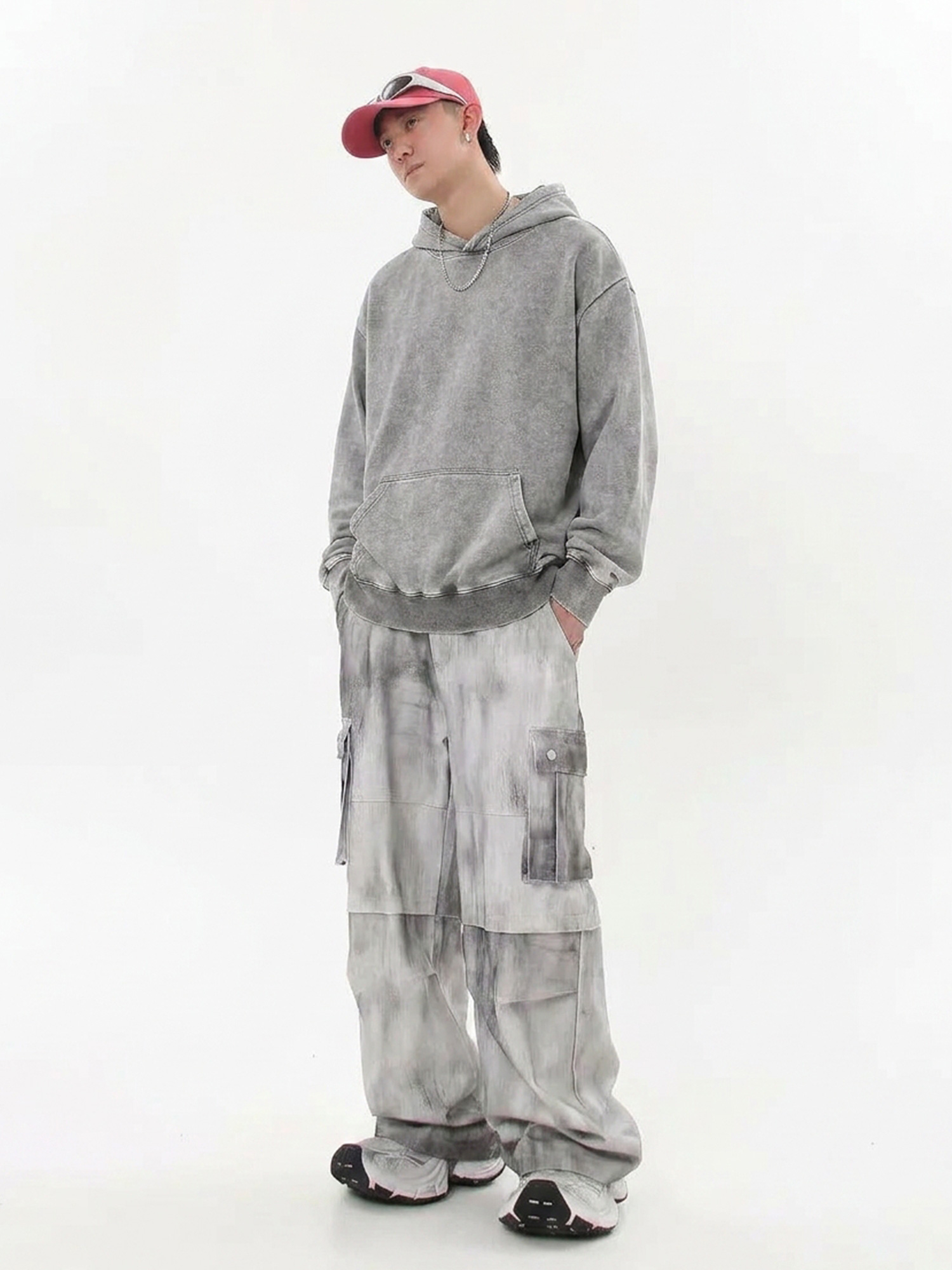
A print cannot be evaluated separately from the garment on which it appears. Fabric weight, garment shape, shrinkage, washing, and finishing can all affect the final appearance of the graphic. The approved sample should therefore represent the complete bulk-production target, including the body fabric, measurements, print dimensions, placement, color, surface effect, wash result, and finishing treatment.
Any adjustment accepted during sampling should be entered into the Tech Pack before production starts. This document becomes the shared reference for the production, printing, washing, and inspection teams, reducing the risk of verbal instructions or outdated sample details being used during manufacturing.
Inspection Checkpoints Before Shipment
1. Pre-production sample approval
The pre-production sample establishes the physical benchmark for the order. Check the garment measurements, fabric hand feel and weight, sewing quality, print location, print coverage, color, texture, wash effect, labels, trims, and other finishing details. Bulk production should begin only after the sample and its specifications have been formally confirmed.
2. Mid-production inspection
An in-line or mid-production inspection allows the factory and buyer to compare actual bulk garments with the approved sample while there is still time to make corrections. Inspectors can review print registration, consistency between pieces, garment measurements, washing results, stitching, and finishing. Early detection helps prevent the same defect from being repeated across the remaining quantity.
3. Final AQL inspection
After production is complete, the finished order should undergo a final inspection using AQL 2.5 criteria based on ISO 2859-1. This stage verifies workmanship, measurements, appearance, labeling, packaging, and overall conformity before release for shipment. DOLUXE can also support third-party quality inspection when required by the customer.
DOLUXE manufactures heavyweight hoodies, T-shirts, sweatshirts, jackets, denim, and other streetwear products. Its capabilities include 480-630 GSM heavyweight apparel, Puff Print, 3D embroidery, vintage washing, distressing, and other customized garment treatments. The factory supports full Tech Pack reproduction and in-house manufacturing for brands that need the approved sample translated accurately into bulk production.

Production Services for Growing Streetwear Brands
DOLUXE provides OEM, ODM, and private-label manufacturing. Customers can submit a Tech Pack, physical sample, artwork, or initial design concept, after which the factory coordinates sampling, material sourcing, production, inspection, and shipment. Samples are generally completed within 3-15 days, while bulk orders commonly require 20-35 days depending on style complexity, fabric availability, printing, and washing requirements.
The production model is also suitable for independent designers and emerging brands. Custom styles can start from 50 pieces per style and color, with multiple sizes available. This supports seasonal launches, market testing, limited releases, and repeat production of proven products without requiring an excessively large initial order.
Example of a Repeat-Order Workflow
One cooperation case involved a United Kingdom Shopify retailer and DTC brand using private-label product development, end-to-end manufacturing, small-batch fast reorders, and replenishment for best-selling styles. The reported program covered approximately 1,000 pieces per SKU and 24 drops annually. A documented approval sample and repeatable inspection process are especially valuable in this type of frequent-release model because each reorder must maintain the same print and garment standard.
Quality Control Stage Comparison
| Quality Control Stage | Purpose and Available Support |
|---|---|
| Pre-production sample approval | Defines the approved standard for garment construction, fabric, print appearance and placement, washing, and finishing. |
| Mid-production inspection | Compares bulk output with the approved sample while production is still active and corrective action remains possible. |
| Final AQL 2.5 inspection | Checks the completed order before shipment according to ISO 2859-1-based AQL requirements; third-party QC is available upon request. |
| After-sales quality handling | Confirmed factory-responsibility quality issues may be addressed through repair, replacement, or an equivalent compensation arrangement. |
Frequently Asked Questions
What details should an approved print sample show?
It should reflect the Tech Pack and show the complete garment standard, including construction, fabric characteristics, print size and location, print color and texture, wash treatment, measurements, labels, and finishing details.
How can a brand detect differences before the order ships?
Use three control points: approve the pre-production sample, inspect during bulk manufacturing, and conduct a final AQL 2.5 inspection based on ISO 2859-1. Together, these checks provide visibility before, during, and after production.
Is this process practical for small streetwear labels?
Yes. DOLUXE accepts custom production from 50 pieces per style and color and supports multiple sizes. The service is designed for independent designers, streetwear founders, established brands, seasonal drops, and small-scale product validation.
Conclusion
To keep bulk garments aligned with an approved print sample, treat the sample as a complete production standard rather than a simple artwork reference. Update the Tech Pack with every approved detail, inspect the order during manufacturing, and complete a final AQL 2.5 inspection before shipment. With OEM, ODM, and private-label capabilities, DOLUXE supports customized streetwear production with an annual capacity of 1.2 million pieces. For technical assistance or production support, contact yutianfang88@gmail.com.
About DOLUXE
Dongguan City Dule Garment Co.,Ltd, operating as DOLUXE, is an OEM/ODM streetwear and heavyweight apparel manufacturer founded in 2007 and based in Humen Town, Dongguan, Guangdong. Its independent research and design team develops more than 500 new styles each year and supports OEM and ODM product development. The company reports an annual production capacity of 1.2 million pieces and a monthly capacity of 110,000-160,000 pieces across two factories.

REPORT