







-
 Agriculture
-
 Health-Care
-
 Environment
-
 Construction-Real-Estate
-
 Tools-Hardware
-
 Home-Garden
-
 Furniture
-
 Luggage-Bags-Cases
-
 Medical-devices-Supplies
-
 Gifts-Crafts
-
 Sports-Entertainment
-
 Food-Beverage
-
 Vehicles-Transportation
-
 Power-Transmission
-
 Material-Handling
-
 Renewable-Energy
-
 Safety
-
 Testing-Instrument-Equipment
-
 Construction-Building-Machinery
-
 Pet-Supplies
-
 Personal-Care-Household-Cleaning
-
 Vehicle-Accessories-Electronics-Tools
-
 School-Office-Supplies
-
 Packaging-Printing
-
 Mother-Kids-Toys
-
 Business-Services
-
 Commercial-Equipment-Machinery
-
 Apparel-Accessories
-
 Security
-
 Shoes-Accessories
-
 Vehicle-Parts-Accessories
-
 Jewelry-Eyewear-Watches-Accessories
-
 Lights-Lighting
-
 Fabric-Textile-Raw-Material
-
 Fabrication-Services
-
 Industrial-Machinery
-
 Consumer-Electronics
-
 Electrical-Equipment-Supplies
-
 Electronic-Components-Accessories-Telecommunications
-
 Home-Appliances
-
 Beauty
-
 Chemicals
-
 Rubber-Plastics
-
 Metals-Alloys


























































































































































































































































































































































































































































































































































































- Masonry Materials
- Curtain Walls & Accessories
- Earthwork Products
- Fireproofing Materials
- Heat Insulation Materials
- Plastic Building Materials
- Building Boards
- Soundproofing Materials
- Timber
- Waterproofing Materials
- Balustrades & Handrails
- Bathroom & Kitchen
- Flooring & Accessories
- Tiles & Accessories
- Door, Window & Accessories
- Fireplaces & Stoves
- Floor Heating Systems & Parts
- Stairs & Stair Parts
- Ceilings
- Elevators & Escalators
- Stone
- Countertops, Vanity Tops & Table Tops
- Mosaics
- Metal Building Materials
- Multifunctional Materials
- Ladders & Scaffoldings
- Mouldings
- Corner Guards
- Decorative Films
- Formwork
- Building & Industrial Glass
- Other Construction & Real Estate
- Wallpapers/Wall panels
- HVAC System & Parts
- Outdoor Facilities
- Prefabricated Buildings
- Festive & Party Supplies
- Bathroom Products
- Household Sundries
- Rain Gear
- Garden Supplies
- Household Cleaning Tools & Accessories
- Lighters & Smoking Accessories
- Home Storage & Organization
- Household Scales
- Smart Home Improvement
- Home Textiles
- Kitchenware
- Drinkware & Accessories
- Dinnerware, Coffee & Wine
- Home Decor
- Golf
- Fitness & Body Building
- Amusement Park Facilities
- Billiards, Board Game,Coin Operated Games
- Musical Instruments
- Outdoor Affordable Luxury Sports
- Camping & Hiking
- Fishing
- Sports Safety&Rehabilitation
- Ball Sports Equipments
- Water Sports
- Winter Sports
- Luxury Travel Equipments
- Sports Shoes, Bags & Accessories
- Cycling
- Other Sports & Entertainment Products
- Artificial Grass&Sports Flooring&Sports Court Equipment
- Scooters
- Food Ingredients
- Honey & Honey Products
- Snacks
- Nuts & Kernels
- Seafood
- Plant & Animal Oil
- Beverages
- Fruit & Vegetable Products
- Frog & Escargot
- Bean Products
- Egg Products
- Dairy Products
- Seasonings & Condiments
- Canned Food
- Instant Food
- Baked Goods
- Other Food & Beverage
- Meat & Poultry
- Confectionery
- Grain Products
- Feminie Care
- Hair Care & Styling
- Body Care
- Hands & Feet Care
- Hygiene Products
- Men's Grooming
- Laundry Cleaning Supplies
- Travel Size & Gift Sets
- Room Deodorizers
- Other Personal Care Products
- Pest Control Products
- Special Household Cleaning
- Floor Cleaning
- Kitchen & Bathroom Cleaning
- Oral Care
- Bath Supplies
- Yellow Pages
- Correction Supplies
- Office Binding Supplies
- Office Cutting Supplies
- Board Erasers
- Office Adhesives & Tapes
- Education Supplies
- Pencil Cases & Bags
- Notebooks & Writing Pads
- File Folder Accessories
- Calendars
- Writing Accessories
- Commercial Office Supplies
- Pencil Sharpeners
- Pens
- Letter Pad/Paper
- Paper Envelopes
- Desk Organizers
- Pencils
- Markers & Highlighters
- Filing Products
- Art Supplies
- Easels
- Badge Holder & Accessories
- Office Paper
- Printer Supplies
- Book Covers
- Other Office & School Supplies
- Stationery Set
- Boards
- Clipboards
- Stamps
- Drafting Supplies
- Stencils
- Electronic Dictionary
- Books
- Map
- Magazines
- Calculators
- Baby & Toddler Toys
- Educational Toys
- Classic Toys
- Dress Up & Pretend Play
- Toy Vehicle
- Stuffed Animals & Plush Toys
- Outdoor Toys & Structures
- Balloons & Accessories
- Baby Food
- Children's Clothing
- Baby Supplies & Products
- Maternity Clothes
- Kids Shoes
- Baby Care
- Novelty & Gag Toys
- Dolls & Accessories
- Puzzle & Games
- Blocks & Model Building Toys
- Toddler Clothing
- Baby Clothing
- Kids' Luggage & Bags
- Arts, Crafts & DIY Toys
- Action & Toy Figures
- Baby Appliances
- Hobbies & Models
- Remote Control Toys
- Promotional Toys
- Pregnancy & Maternity
- Hygiene Products
- Kid's Textile&Bedding
- Novelty & Special Use
- Toy Weapons
- Baby Gifts
- Baby Storage & Organization
- Auto Drive Systems
- ATV/UTV Parts & Accessories
- Marine Parts & Accessories
- Other Auto Parts
- Trailer Parts & Accessories
- Auto Transmission Systems
- Train Parts & Accessories
- Universal Parts
- Railway Parts & Accessories
- Auto Brake Systems
- Aviation Parts & Accessories
- Truck Parts & Accessories
- Auto Suspension Systems
- Auto Lighting Systems
- New Energy Vehicle Parts & Accessories
- Auto Steering Systems
- Wheels, Tires & Accessories
- Bus Parts & Accessories
- Auto Performance Parts
- Cooling System
- Go-Kart & Kart Racer Parts & Accessories
- Air Conditioning Systems
- Heavy Duty Vehicle Parts & Accessories
- Auto Electrical Systems
- Auto Body Systems
- Auto Engine Systems
- Container Parts & Accessories
- Motorcycle Parts & Accessories
- Refrigeration & Heat Exchange Equipment
- Machine Tool Equipment
- Food & Beverage Machinery
- Agricultural Machinery & Equipment
- Apparel & Textile Machinery
- Chemical Machinery
- Packaging Machines
- Paper Production Machinery
- Plastic & Rubber Processing Machinery
- Industrial Robots
- Electronic Products Machinery
- Metal & Metallurgy Machinery
- Woodworking Machinery
- Home Product Manufacturing Machinery
- Machinery Accessories
- Environmental Machinery
- Machinery Service
- Electrical Equipment Manufacturing Machinery
- Industrial Compressors & Parts
- Tobacco & Cigarette Machinery
- Production Line
- Used Industrial Machinery
- Electronics Production Machinery
- Other Machinery & Industrial Equipment
- Camera, Photo & Accessories
- Portable Audio, Video & Accessories
- Television, Home Audio, Video & Accessories
- Video Games & Accessories
- Mobile Phone & Accessories
- Electronic Publications
- Earphone & Headphone & Accessories
- Speakers & Accessories
- Smart Electronics
- TV Receivers & Accessories
- Mobile Phone & Computer Repair Parts
- Chargers, Batteries & Power Supplies
- Used Electronics
- VR, AR, MR Hardware & Software
- Projectors & Presentation Equipments
- Other Consumer Electronics
- Cables & Commonly Used Accessories
- Computer Hardware & Software
- Displays, Signage and Optoelectronics
- Discrete Semiconductors
- Wireless & IoT Module and Products
- Telecommunications
- Connectors, Terminals & Accessories
- Development Boards, Electronic Modules and Kits
- Circuit Protection
- Sensors
- Isolators
- Audio Components and Products
- Integrated Circuits
- Power Supplies
- Relays
- RF, Microwave and RFID
- Electronic Accessories & Supplies
- Passive Components
- PCB & PCBA
- Air Quality Appliances
- Home Appliance Parts
- Heating & Cooling Appliances
- Small Kitchen Appliances
- Laundry Appliances
- Water Heaters
- Water Treatment Appliances
- Refrigerators & Freezers
- Personal Care & Beauty Appliances
- Major Kitchen Appliances
- Cleaning Appliances
- Second-hand Appliances
- Smart Home Appliances
- Other Home Appliances
- Energy Chemicals
- Inorganic Chemicals
- Basic Organic Chemicals
- Agrochemicals
- Admixture & Additives
- Catalysts & Chemical Auxiliary Agents
- Pigments & Dyestuff
- Coating & Paint
- Daily Chemicals
- Polymer
- Organic Intermediate
- Adhesives & Sealants
- Chemical Waste
- Biological Chemical Products
- Surface Treatment Chemicals
- Painting & Coating
- Chemical Reagents
- Flavor & Fragrance
- Non-Explosive Demolition Agents
- Other Chemicals
- Custom Chemical Services

How to Load Aluminum Profiles Without Bending
Preventing Bending During Aluminum Profile Loading
The most suitable way to reduce bending in aluminum extrusions for furniture is to keep the profiles straight, support them continuously or at well-planned intervals, and apply force evenly along their length. Concentrated pressure, misalignment, or unsupported sections can increase the risk of deflection during handling.
The available product information does not identify a proprietary loading fixture, rack arrangement, lifting procedure, or formal bending-prevention standard. For that reason, the recommended approach should be treated as a general handling principle rather than a product-specific loading specification. The exact arrangement should be confirmed with MEBEL-ALU for the selected kitchen cabinet aluminum profile and project conditions.
Recommended Loading Principles
- Keep each aluminum extrusion aligned with the intended support path during loading, storage, and handling.
- Use continuous support or suitably spaced supports to prevent unsupported sections from sagging.
- Distribute pressure across the profile instead of applying force at isolated points.
- Protect finished surfaces from contact damage while ensuring that supports do not create localized stress.
- Confirm profile length, load conditions, support spacing, and handling equipment with the supplier before establishing a project procedure.
Product and Manufacturing Context
The referenced product is a kitchen cabinet aluminum profile identified with the 6063 T5 parameter. This alloy and temper are commonly used for furniture and architectural profile applications, but the supplied data does not provide a numerical bending tolerance, maximum supported span, allowable handling load, or test result.
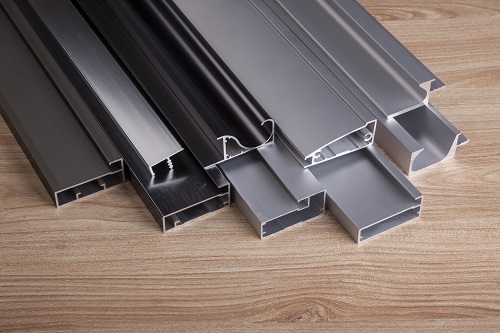
MEBEL-ALU operates an integrated aluminum profile production process that includes extrusion, anodizing, brushing, mechanical polishing, and high-precision CNC machining. These capabilities support dimensional consistency and finish control. However, an integrated manufacturing process should not be interpreted as evidence of a specific loading system unless the supplier provides related technical documentation.
The company reports monthly capacity of 5,000 tons of aluminum profiles, together with capacity for 60,000 precision-finished handles and CNC precision-cut products. These figures describe manufacturing capability and do not define a recommended loading configuration or handling limit.
Why Support and Alignment Matter
During loading, an aluminum profile can bend when its weight or an external force is carried by too few contact points. If the extrusion is not aligned with the supports, the resulting uneven reaction forces may also cause twisting or local deformation. Supporting the profile along its length and maintaining a balanced load path helps reduce these risks.
The correct support arrangement depends on the profile geometry, wall thickness, length, surface finish, bundle size, and handling equipment. Since those project variables are not included in the supplied information, a fixed support distance or universal fixture cannot be specified responsibly. MEBEL-ALU should review the intended application before the final procedure is adopted.
Loading Approach Comparison
| Loading approach | Relationship to the supplied information |
|---|---|
| Aligned loading with continuous or planned support | Appropriate general principle for reducing bending, although no named fixture is documented. |
| Evenly distributed loading | Recommended to avoid concentrated stress; no numerical load limit is supplied. |
| Point loading or unsupported loading | Not presented as an approved solution and should not be treated as the documented method. |
| FOB shipment by rail, maritime transport, or container | Available shipping arrangements, but the data does not define how extrusion should be loaded for transport. |
Application and Certification Information
The stated application scope includes high-end cabinet and door manufacturers, furniture hardware wholesalers, hotels, and residential developers. These markets may involve different profile lengths, packaging requirements, and handling workflows, so the loading method should be adapted to the project rather than assumed from the product category alone.
MEBEL-ALU holds an Occupational Health and Safety Management System Certificate and a Quality Management System Certificate. The listed certification scope covers aluminum alloy profiles for architecture, decoration, and industry, including anodized, electrophoretic coating, powder coating, paint coating, and thermal barrier profiles.
Frequently Asked Questions
What loading method is specified for the aluminum furniture profile?
No named loading method or dedicated fixture is included in the available product data. The product is described as a 6063 T5 kitchen cabinet aluminum profile.
How should the extrusion be handled to reduce bending?
Keep the profile straight and properly aligned, support it along its length or at suitable points, and distribute the load evenly. The supplied information does not establish a universal support spacing, maximum load, or bending limit.
Are point loads suitable for these profiles?
Point loading and unsupported handling are not identified as the documented solution. They may create localized stress, so a balanced support arrangement should be considered and confirmed for the specific profile.
Can MEBEL-ALU provide a project-specific loading recommendation?
Yes. The supplier offers standard and customized aluminum profile solutions. The profile dimensions, handling conditions, packaging, transport route, and proposed equipment should be shared with MEBEL-ALU so the loading arrangement can be reviewed.
Conclusion
For furniture aluminum extrusion, the practical direction for minimizing bending is a straight, aligned, and evenly supported loading arrangement. The supplied information does not identify a formal loading system or provide numerical handling limits, so the final procedure should be confirmed for the particular kitchen cabinet profile.
MEBEL-ALU supports FOB business with rail, maritime, and container transportation. For technical guidance on profile handling, support design, or project-specific loading conditions, contact the company at mebel@mebel-alu.com.
About Mebel-Alu
Mebel-Alu Furniture Profile (Hong Kong) Co., Ltd has specialized since 2008 in precision-engineered aluminum profile systems for modern interiors, including aluminum glass door systems, sliding wardrobe systems, kitchen cabinet frames, and decorative tile trims. The company operates a 300,000 Sqm factory area and reports monthly production capacity of 5,000 tons of aluminum profiles. Its in-house capabilities include aluminum extrusion, anodizing, brushing, mechanical polishing, and high-precision CNC machining. The company holds Occupational Health and Safety Management System and Quality Management System certificates.

REPORT