







-
 Agriculture
-
 Health-Care
-
 Environment
-
 Construction-Real-Estate
-
 Tools-Hardware
-
 Home-Garden
-
 Furniture
-
 Luggage-Bags-Cases
-
 Medical-devices-Supplies
-
 Gifts-Crafts
-
 Sports-Entertainment
-
 Food-Beverage
-
 Vehicles-Transportation
-
 Power-Transmission
-
 Material-Handling
-
 Renewable-Energy
-
 Safety
-
 Testing-Instrument-Equipment
-
 Construction-Building-Machinery
-
 Pet-Supplies
-
 Personal-Care-Household-Cleaning
-
 Vehicle-Accessories-Electronics-Tools
-
 School-Office-Supplies
-
 Packaging-Printing
-
 Mother-Kids-Toys
-
 Business-Services
-
 Commercial-Equipment-Machinery
-
 Apparel-Accessories
-
 Security
-
 Shoes-Accessories
-
 Vehicle-Parts-Accessories
-
 Jewelry-Eyewear-Watches-Accessories
-
 Lights-Lighting
-
 Fabric-Textile-Raw-Material
-
 Fabrication-Services
-
 Industrial-Machinery
-
 Consumer-Electronics
-
 Electrical-Equipment-Supplies
-
 Electronic-Components-Accessories-Telecommunications
-
 Home-Appliances
-
 Beauty
-
 Chemicals
-
 Rubber-Plastics
-
 Metals-Alloys


























































































































































































































































































































































































































































































































































































- Masonry Materials
- Curtain Walls & Accessories
- Earthwork Products
- Fireproofing Materials
- Heat Insulation Materials
- Plastic Building Materials
- Building Boards
- Soundproofing Materials
- Timber
- Waterproofing Materials
- Balustrades & Handrails
- Bathroom & Kitchen
- Flooring & Accessories
- Tiles & Accessories
- Door, Window & Accessories
- Fireplaces & Stoves
- Floor Heating Systems & Parts
- Stairs & Stair Parts
- Ceilings
- Elevators & Escalators
- Stone
- Countertops, Vanity Tops & Table Tops
- Mosaics
- Metal Building Materials
- Multifunctional Materials
- Ladders & Scaffoldings
- Mouldings
- Corner Guards
- Decorative Films
- Formwork
- Building & Industrial Glass
- Other Construction & Real Estate
- Wallpapers/Wall panels
- HVAC System & Parts
- Outdoor Facilities
- Prefabricated Buildings
- Festive & Party Supplies
- Bathroom Products
- Household Sundries
- Rain Gear
- Garden Supplies
- Household Cleaning Tools & Accessories
- Lighters & Smoking Accessories
- Home Storage & Organization
- Household Scales
- Smart Home Improvement
- Home Textiles
- Kitchenware
- Drinkware & Accessories
- Dinnerware, Coffee & Wine
- Home Decor
- Golf
- Fitness & Body Building
- Amusement Park Facilities
- Billiards, Board Game,Coin Operated Games
- Musical Instruments
- Outdoor Affordable Luxury Sports
- Camping & Hiking
- Fishing
- Sports Safety&Rehabilitation
- Ball Sports Equipments
- Water Sports
- Winter Sports
- Luxury Travel Equipments
- Sports Shoes, Bags & Accessories
- Cycling
- Other Sports & Entertainment Products
- Artificial Grass&Sports Flooring&Sports Court Equipment
- Scooters
- Food Ingredients
- Honey & Honey Products
- Snacks
- Nuts & Kernels
- Seafood
- Plant & Animal Oil
- Beverages
- Fruit & Vegetable Products
- Frog & Escargot
- Bean Products
- Egg Products
- Dairy Products
- Seasonings & Condiments
- Canned Food
- Instant Food
- Baked Goods
- Other Food & Beverage
- Meat & Poultry
- Confectionery
- Grain Products
- Feminie Care
- Hair Care & Styling
- Body Care
- Hands & Feet Care
- Hygiene Products
- Men's Grooming
- Laundry Cleaning Supplies
- Travel Size & Gift Sets
- Room Deodorizers
- Other Personal Care Products
- Pest Control Products
- Special Household Cleaning
- Floor Cleaning
- Kitchen & Bathroom Cleaning
- Oral Care
- Bath Supplies
- Yellow Pages
- Correction Supplies
- Office Binding Supplies
- Office Cutting Supplies
- Board Erasers
- Office Adhesives & Tapes
- Education Supplies
- Pencil Cases & Bags
- Notebooks & Writing Pads
- File Folder Accessories
- Calendars
- Writing Accessories
- Commercial Office Supplies
- Pencil Sharpeners
- Pens
- Letter Pad/Paper
- Paper Envelopes
- Desk Organizers
- Pencils
- Markers & Highlighters
- Filing Products
- Art Supplies
- Easels
- Badge Holder & Accessories
- Office Paper
- Printer Supplies
- Book Covers
- Other Office & School Supplies
- Stationery Set
- Boards
- Clipboards
- Stamps
- Drafting Supplies
- Stencils
- Electronic Dictionary
- Books
- Map
- Magazines
- Calculators
- Baby & Toddler Toys
- Educational Toys
- Classic Toys
- Dress Up & Pretend Play
- Toy Vehicle
- Stuffed Animals & Plush Toys
- Outdoor Toys & Structures
- Balloons & Accessories
- Baby Food
- Children's Clothing
- Baby Supplies & Products
- Maternity Clothes
- Kids Shoes
- Baby Care
- Novelty & Gag Toys
- Dolls & Accessories
- Puzzle & Games
- Blocks & Model Building Toys
- Toddler Clothing
- Baby Clothing
- Kids' Luggage & Bags
- Arts, Crafts & DIY Toys
- Action & Toy Figures
- Baby Appliances
- Hobbies & Models
- Remote Control Toys
- Promotional Toys
- Pregnancy & Maternity
- Hygiene Products
- Kid's Textile&Bedding
- Novelty & Special Use
- Toy Weapons
- Baby Gifts
- Baby Storage & Organization
- Auto Drive Systems
- ATV/UTV Parts & Accessories
- Marine Parts & Accessories
- Other Auto Parts
- Trailer Parts & Accessories
- Auto Transmission Systems
- Train Parts & Accessories
- Universal Parts
- Railway Parts & Accessories
- Auto Brake Systems
- Aviation Parts & Accessories
- Truck Parts & Accessories
- Auto Suspension Systems
- Auto Lighting Systems
- New Energy Vehicle Parts & Accessories
- Auto Steering Systems
- Wheels, Tires & Accessories
- Bus Parts & Accessories
- Auto Performance Parts
- Cooling System
- Go-Kart & Kart Racer Parts & Accessories
- Air Conditioning Systems
- Heavy Duty Vehicle Parts & Accessories
- Auto Electrical Systems
- Auto Body Systems
- Auto Engine Systems
- Container Parts & Accessories
- Motorcycle Parts & Accessories
- Refrigeration & Heat Exchange Equipment
- Machine Tool Equipment
- Food & Beverage Machinery
- Agricultural Machinery & Equipment
- Apparel & Textile Machinery
- Chemical Machinery
- Packaging Machines
- Paper Production Machinery
- Plastic & Rubber Processing Machinery
- Industrial Robots
- Electronic Products Machinery
- Metal & Metallurgy Machinery
- Woodworking Machinery
- Home Product Manufacturing Machinery
- Machinery Accessories
- Environmental Machinery
- Machinery Service
- Electrical Equipment Manufacturing Machinery
- Industrial Compressors & Parts
- Tobacco & Cigarette Machinery
- Production Line
- Used Industrial Machinery
- Electronics Production Machinery
- Other Machinery & Industrial Equipment
- Camera, Photo & Accessories
- Portable Audio, Video & Accessories
- Television, Home Audio, Video & Accessories
- Video Games & Accessories
- Mobile Phone & Accessories
- Electronic Publications
- Earphone & Headphone & Accessories
- Speakers & Accessories
- Smart Electronics
- TV Receivers & Accessories
- Mobile Phone & Computer Repair Parts
- Chargers, Batteries & Power Supplies
- Used Electronics
- VR, AR, MR Hardware & Software
- Projectors & Presentation Equipments
- Other Consumer Electronics
- Cables & Commonly Used Accessories
- Computer Hardware & Software
- Displays, Signage and Optoelectronics
- Discrete Semiconductors
- Wireless & IoT Module and Products
- Telecommunications
- Connectors, Terminals & Accessories
- Development Boards, Electronic Modules and Kits
- Circuit Protection
- Sensors
- Isolators
- Audio Components and Products
- Integrated Circuits
- Power Supplies
- Relays
- RF, Microwave and RFID
- Electronic Accessories & Supplies
- Passive Components
- PCB & PCBA
- Air Quality Appliances
- Home Appliance Parts
- Heating & Cooling Appliances
- Small Kitchen Appliances
- Laundry Appliances
- Water Heaters
- Water Treatment Appliances
- Refrigerators & Freezers
- Personal Care & Beauty Appliances
- Major Kitchen Appliances
- Cleaning Appliances
- Second-hand Appliances
- Smart Home Appliances
- Other Home Appliances
- Energy Chemicals
- Inorganic Chemicals
- Basic Organic Chemicals
- Agrochemicals
- Admixture & Additives
- Catalysts & Chemical Auxiliary Agents
- Pigments & Dyestuff
- Coating & Paint
- Daily Chemicals
- Polymer
- Organic Intermediate
- Adhesives & Sealants
- Chemical Waste
- Biological Chemical Products
- Surface Treatment Chemicals
- Painting & Coating
- Chemical Reagents
- Flavor & Fragrance
- Non-Explosive Demolition Agents
- Other Chemicals
- Custom Chemical Services

How to Make a Custom Insulated Cooler Bag More Sustainable Without a Major Cost Increase
A more sustainable custom insulated cooler bag does not always require expensive new materials. Cost and environmental impact can often be controlled by choosing a compact flat-mailer design, matching the film thickness and foam density to the shipment, and eliminating unnecessary packaging. Buyers should also compare stock and custom order quantities, assess kraft or compostable alternatives where performance allows, and select reusable closures only when return or refill logistics support multiple uses.
Practical Ways to Reduce Material and Packaging Impact
- Choose a flat, gusset-free mailer and ship it in flat-packed cartons to reduce warehouse volume and transport space.
- Specify the minimum film gauge and closed-cell foam density needed for the product, ice pack, temperature target, and handling conditions.
- Use restrained artwork and avoid excessive external packaging when product identification can be handled with one- or two-colour printing.
- Compare permanent adhesive, zipper, kraft, bubble-lined, and compostable constructions according to actual thermal and fulfilment requirements.
- Consider a reclosable design when customers may need to add contents, return the package, or use it repeatedly.
How the Flat Insulated Mailer Works
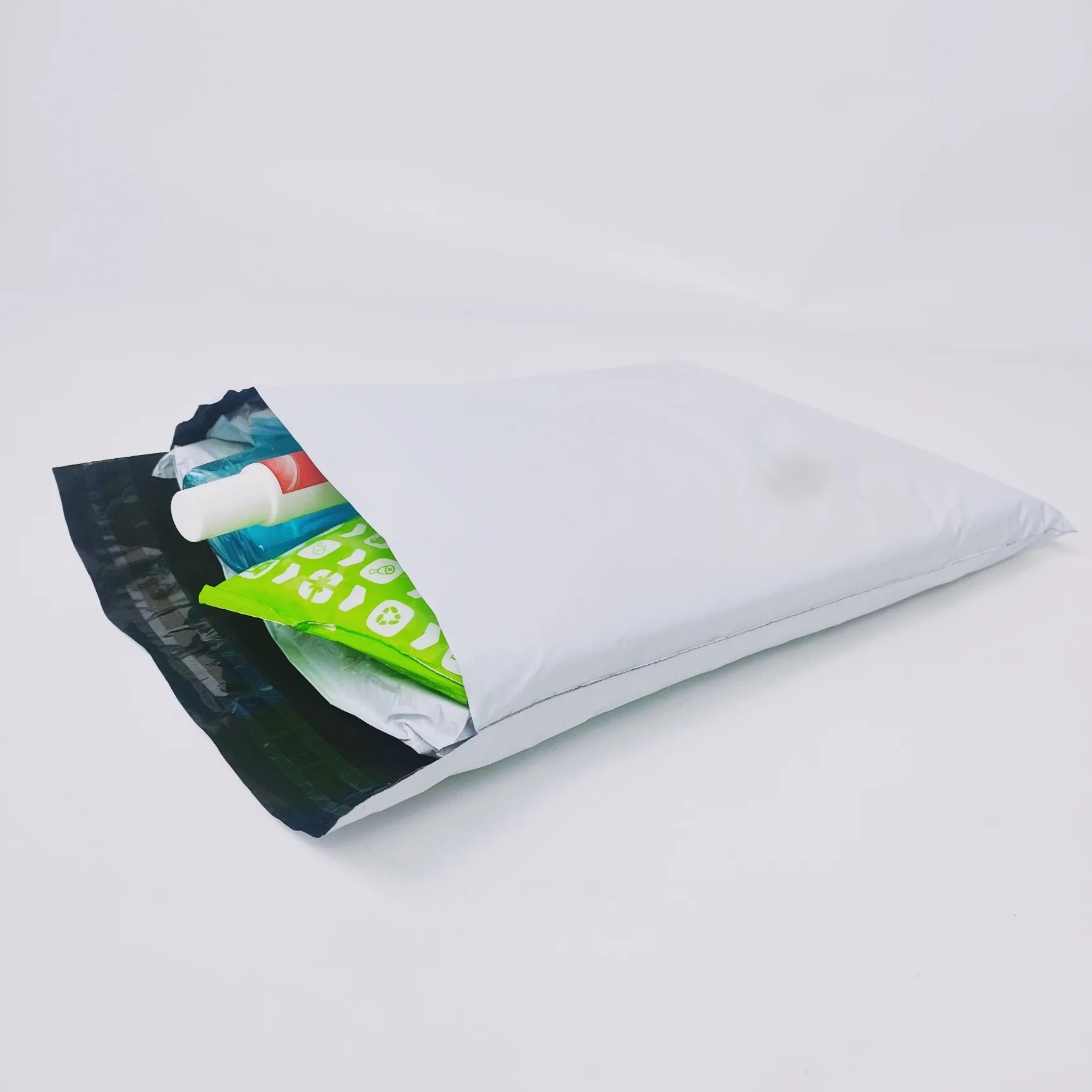
The featured product is a white PE foam insulated mailer intended for medicine, food, perishables, and other cold-chain shipments packed with an ice pack. Its construction uses three welded sides, a closed-cell sponge foam lining, a permanent adhesive strip with release liner, and a double-fold flap. Because the bag is flat before filling, it can be counted, stored, and transported efficiently in cartons without the volume associated with rigid foam containers.
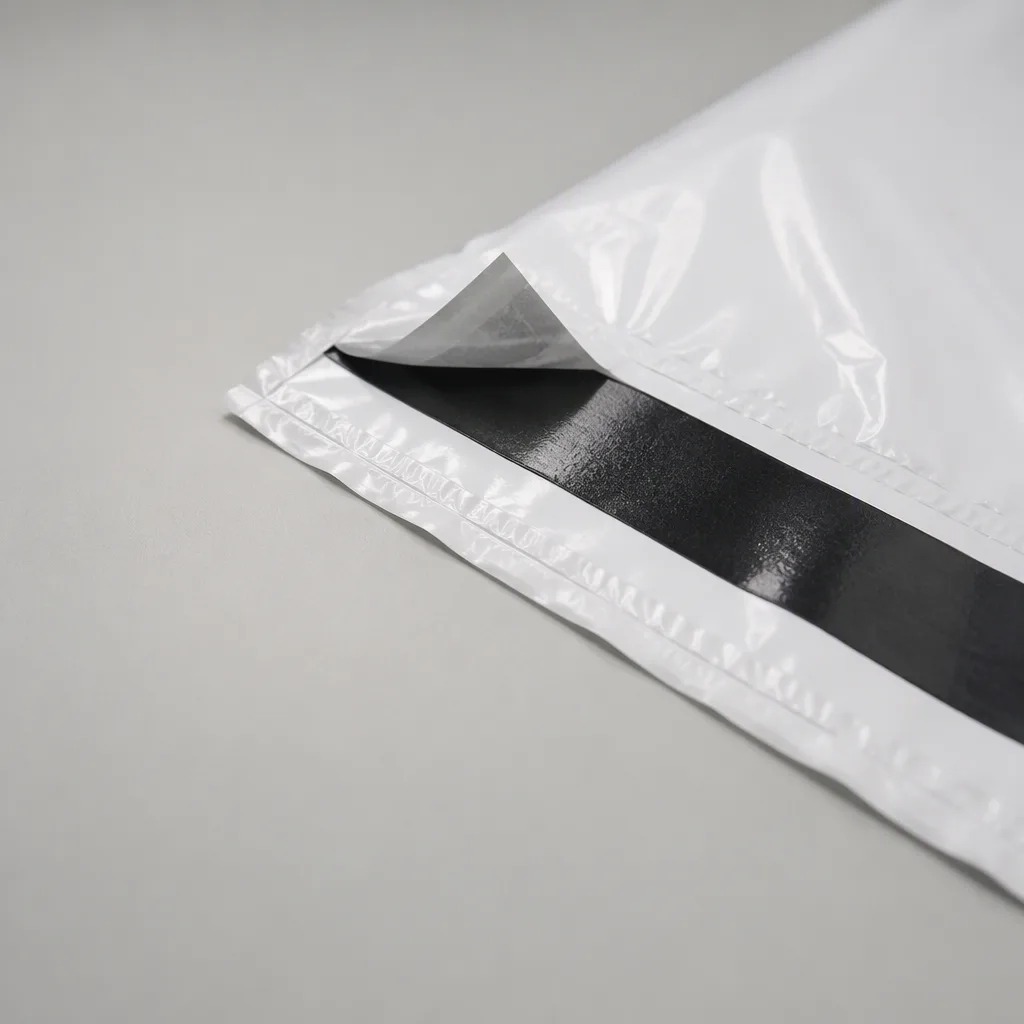
Sustainability begins with accurate sizing. Available customization includes dimensions, film gauge, foam density, printing, and adhesive-band placement. Standard sizes include 20 × 28 cm, 25 × 33 cm, 30 × 39 cm, and 35 × 45 cm, while custom dimensions can be developed for a specific product. A close fit reduces unused material and limits empty space that would otherwise increase the shipping volume.
Use Only the Performance the Shipment Requires
A thicker film or denser insulation is not automatically the better choice. The specification should reflect the product's temperature sensitivity, the ice-pack configuration, transit duration, expected handling, and required moisture protection. Defining these conditions before requesting a quotation helps avoid over-engineering while preserving the required cold-chain performance.
Printing can be kept efficient as well. The mailer supports one- or two-colour flexographic printing on the front panel, with white, cool white, and black outer colour options. Where a simple logo, handling message, or product identifier is sufficient, limited artwork can reduce unnecessary ink and processing without affecting the package's insulation function.
When to Consider Other Materials or Closures
PE foam is appropriate when the shipment needs the thermal and moisture protection provided by a closed-cell insulated structure. However, not every e-commerce order has the same requirements. Ecopack also lists kraft and compostable bags, along with aluminium foil self-seal, reclosable zipper, bubble-lined, and kraft outer formats. These options should be evaluated against insulation, barrier performance, puncture resistance, closure security, and the intended fulfilment process.
A zipper or other reclosable construction may be worthwhile for subscription deliveries, product top-ups, or organized return programs. For a single-dispatch shipment with no practical return route, a permanent adhesive closure may use fewer components and remain the more economical choice. Reusability should therefore be assessed through the complete operating model rather than treated as a benefit in isolation.
Certification and Supply Considerations
For paper-based options, buyers can review sourcing against Ecopack's FSC Chain of Custody certification, which covers FSC Mix and FSC Recycled wrapping and packaging paper, linerboard or testliner, including paper sacks and bags. The manufacturer also holds ISO 9001:2015 Quality Management System certification for packaging-material production.
One documented US distributor application used insulated mailers for approximately 10 million cold-shipping pieces each year. Reported advantages included lower heat transfer, reduced storage and transport space compared with rigid foam packaging, and less waste. This example illustrates why packaging volume and logistics efficiency should be included in a sustainability and cost assessment.
Configuration Comparison
| Packaging configuration | Cost and sustainability factors | Typical application |
|---|---|---|
| White PE foam flat mailer | Ships flat; film gauge and foam density can be specified; permanent adhesive closure simplifies single-use dispatch | Medicine, food, perishables, and ice-pack cold-chain shipments |
| Reclosable zipper mailer | Can support returns, refills, and repeated handling when the logistics system is designed for reuse | Temperature-sensitive e-commerce orders |
| Kraft outer mailer | Provides a paper-facing alternative when the required barrier and protection can be achieved | E-commerce fulfilment and parcel presentation |
| Compostable format | May reduce reliance on conventional materials, but suitability depends on the required structure and end-of-life conditions | Applications whose protection and disposal requirements permit the format |
Frequently Asked Questions
What is the most affordable way to improve the sustainability of an insulated mailer?
Begin with right-sizing and a flat construction. Then select the film gauge and foam density based on measured shipment requirements instead of using the heaviest available structure. Flat-packed delivery can also reduce storage and transport volume.
Are kraft and compostable bags suitable for cold-chain shipping?
They may be suitable for some applications, but they should not replace an insulated PE foam structure without testing thermal performance, moisture resistance, closure reliability, and handling durability. The correct format depends on the product and transit conditions.
How can I keep a custom insulated cooler bag within budget?
Provide the required dimensions, material structure, print colours, annual quantity, ice-pack details, and performance target when requesting a quote. Stock and custom products have different price break points. Samples generally require 3 to 5 working days, while production typically takes 15 to 25 days after artwork approval.
Recommended Specification
For many cold-chain applications, a sensible lower-impact starting point is a right-sized flat mailer with a controlled film gauge, suitable closed-cell foam density, limited one- or two-colour flexographic printing, and flat-packed shipment. A reclosable, kraft, or compostable alternative should be compared only after confirming that it meets the required thermal, moisture, closure, and handling standards.
Ecopack is a manufacturer and exporter with in-house research and development, printing, lamination, bag making, and inspection capabilities. Its quality process includes incoming-material checks, in-process controls, and pre-shipment inspection. For technical guidance or a quotation, contact manager@ecoppack.com.
About Ecopack
Huizhou Ecopack Packaging Products Co., Ltd. is a flexible packaging manufacturer based in Guangdong, China. Established in 2011, the company produces custom composite pouches and bags for insulated mailers, thermal packaging, coffee, pet food, spout pouch, kraft, compostable, and ESD applications. Its services include in-house tooling and structural design, with 3D structural drawings available for approval before printing plates are made. Rotogravure and flexographic production lines provide capacity exceeding 500,000 pouches per day. Certifications include ISO 9001:2015 Quality Management System and FSC Chain of Custody.

REPORT