







-
 Agriculture
-
 Health-Care
-
 Environment
-
 Construction-Real-Estate
-
 Tools-Hardware
-
 Home-Garden
-
 Furniture
-
 Luggage-Bags-Cases
-
 Medical-devices-Supplies
-
 Gifts-Crafts
-
 Sports-Entertainment
-
 Food-Beverage
-
 Vehicles-Transportation
-
 Power-Transmission
-
 Material-Handling
-
 Renewable-Energy
-
 Safety
-
 Testing-Instrument-Equipment
-
 Construction-Building-Machinery
-
 Pet-Supplies
-
 Personal-Care-Household-Cleaning
-
 Vehicle-Accessories-Electronics-Tools
-
 School-Office-Supplies
-
 Packaging-Printing
-
 Mother-Kids-Toys
-
 Business-Services
-
 Commercial-Equipment-Machinery
-
 Apparel-Accessories
-
 Security
-
 Shoes-Accessories
-
 Vehicle-Parts-Accessories
-
 Jewelry-Eyewear-Watches-Accessories
-
 Lights-Lighting
-
 Fabric-Textile-Raw-Material
-
 Fabrication-Services
-
 Industrial-Machinery
-
 Consumer-Electronics
-
 Electrical-Equipment-Supplies
-
 Electronic-Components-Accessories-Telecommunications
-
 Home-Appliances
-
 Beauty
-
 Chemicals
-
 Rubber-Plastics
-
 Metals-Alloys


























































































































































































































































































































































































































































































































































































- Masonry Materials
- Curtain Walls & Accessories
- Earthwork Products
- Fireproofing Materials
- Heat Insulation Materials
- Plastic Building Materials
- Building Boards
- Soundproofing Materials
- Timber
- Waterproofing Materials
- Balustrades & Handrails
- Bathroom & Kitchen
- Flooring & Accessories
- Tiles & Accessories
- Door, Window & Accessories
- Fireplaces & Stoves
- Floor Heating Systems & Parts
- Stairs & Stair Parts
- Ceilings
- Elevators & Escalators
- Stone
- Countertops, Vanity Tops & Table Tops
- Mosaics
- Metal Building Materials
- Multifunctional Materials
- Ladders & Scaffoldings
- Mouldings
- Corner Guards
- Decorative Films
- Formwork
- Building & Industrial Glass
- Other Construction & Real Estate
- Wallpapers/Wall panels
- HVAC System & Parts
- Outdoor Facilities
- Prefabricated Buildings
- Festive & Party Supplies
- Bathroom Products
- Household Sundries
- Rain Gear
- Garden Supplies
- Household Cleaning Tools & Accessories
- Lighters & Smoking Accessories
- Home Storage & Organization
- Household Scales
- Smart Home Improvement
- Home Textiles
- Kitchenware
- Drinkware & Accessories
- Dinnerware, Coffee & Wine
- Home Decor
- Golf
- Fitness & Body Building
- Amusement Park Facilities
- Billiards, Board Game,Coin Operated Games
- Musical Instruments
- Outdoor Affordable Luxury Sports
- Camping & Hiking
- Fishing
- Sports Safety&Rehabilitation
- Ball Sports Equipments
- Water Sports
- Winter Sports
- Luxury Travel Equipments
- Sports Shoes, Bags & Accessories
- Cycling
- Other Sports & Entertainment Products
- Artificial Grass&Sports Flooring&Sports Court Equipment
- Scooters
- Food Ingredients
- Honey & Honey Products
- Snacks
- Nuts & Kernels
- Seafood
- Plant & Animal Oil
- Beverages
- Fruit & Vegetable Products
- Frog & Escargot
- Bean Products
- Egg Products
- Dairy Products
- Seasonings & Condiments
- Canned Food
- Instant Food
- Baked Goods
- Other Food & Beverage
- Meat & Poultry
- Confectionery
- Grain Products
- Feminie Care
- Hair Care & Styling
- Body Care
- Hands & Feet Care
- Hygiene Products
- Men's Grooming
- Laundry Cleaning Supplies
- Travel Size & Gift Sets
- Room Deodorizers
- Other Personal Care Products
- Pest Control Products
- Special Household Cleaning
- Floor Cleaning
- Kitchen & Bathroom Cleaning
- Oral Care
- Bath Supplies
- Yellow Pages
- Correction Supplies
- Office Binding Supplies
- Office Cutting Supplies
- Board Erasers
- Office Adhesives & Tapes
- Education Supplies
- Pencil Cases & Bags
- Notebooks & Writing Pads
- File Folder Accessories
- Calendars
- Writing Accessories
- Commercial Office Supplies
- Pencil Sharpeners
- Pens
- Letter Pad/Paper
- Paper Envelopes
- Desk Organizers
- Pencils
- Markers & Highlighters
- Filing Products
- Art Supplies
- Easels
- Badge Holder & Accessories
- Office Paper
- Printer Supplies
- Book Covers
- Other Office & School Supplies
- Stationery Set
- Boards
- Clipboards
- Stamps
- Drafting Supplies
- Stencils
- Electronic Dictionary
- Books
- Map
- Magazines
- Calculators
- Baby & Toddler Toys
- Educational Toys
- Classic Toys
- Dress Up & Pretend Play
- Toy Vehicle
- Stuffed Animals & Plush Toys
- Outdoor Toys & Structures
- Balloons & Accessories
- Baby Food
- Children's Clothing
- Baby Supplies & Products
- Maternity Clothes
- Kids Shoes
- Baby Care
- Novelty & Gag Toys
- Dolls & Accessories
- Puzzle & Games
- Blocks & Model Building Toys
- Toddler Clothing
- Baby Clothing
- Kids' Luggage & Bags
- Arts, Crafts & DIY Toys
- Action & Toy Figures
- Baby Appliances
- Hobbies & Models
- Remote Control Toys
- Promotional Toys
- Pregnancy & Maternity
- Hygiene Products
- Kid's Textile&Bedding
- Novelty & Special Use
- Toy Weapons
- Baby Gifts
- Baby Storage & Organization
- Auto Drive Systems
- ATV/UTV Parts & Accessories
- Marine Parts & Accessories
- Other Auto Parts
- Trailer Parts & Accessories
- Auto Transmission Systems
- Train Parts & Accessories
- Universal Parts
- Railway Parts & Accessories
- Auto Brake Systems
- Aviation Parts & Accessories
- Truck Parts & Accessories
- Auto Suspension Systems
- Auto Lighting Systems
- New Energy Vehicle Parts & Accessories
- Auto Steering Systems
- Wheels, Tires & Accessories
- Bus Parts & Accessories
- Auto Performance Parts
- Cooling System
- Go-Kart & Kart Racer Parts & Accessories
- Air Conditioning Systems
- Heavy Duty Vehicle Parts & Accessories
- Auto Electrical Systems
- Auto Body Systems
- Auto Engine Systems
- Container Parts & Accessories
- Motorcycle Parts & Accessories
- Refrigeration & Heat Exchange Equipment
- Machine Tool Equipment
- Food & Beverage Machinery
- Agricultural Machinery & Equipment
- Apparel & Textile Machinery
- Chemical Machinery
- Packaging Machines
- Paper Production Machinery
- Plastic & Rubber Processing Machinery
- Industrial Robots
- Electronic Products Machinery
- Metal & Metallurgy Machinery
- Woodworking Machinery
- Home Product Manufacturing Machinery
- Machinery Accessories
- Environmental Machinery
- Machinery Service
- Electrical Equipment Manufacturing Machinery
- Industrial Compressors & Parts
- Tobacco & Cigarette Machinery
- Production Line
- Used Industrial Machinery
- Electronics Production Machinery
- Other Machinery & Industrial Equipment
- Camera, Photo & Accessories
- Portable Audio, Video & Accessories
- Television, Home Audio, Video & Accessories
- Video Games & Accessories
- Mobile Phone & Accessories
- Electronic Publications
- Earphone & Headphone & Accessories
- Speakers & Accessories
- Smart Electronics
- TV Receivers & Accessories
- Mobile Phone & Computer Repair Parts
- Chargers, Batteries & Power Supplies
- Used Electronics
- VR, AR, MR Hardware & Software
- Projectors & Presentation Equipments
- Other Consumer Electronics
- Cables & Commonly Used Accessories
- Computer Hardware & Software
- Displays, Signage and Optoelectronics
- Discrete Semiconductors
- Wireless & IoT Module and Products
- Telecommunications
- Connectors, Terminals & Accessories
- Development Boards, Electronic Modules and Kits
- Circuit Protection
- Sensors
- Isolators
- Audio Components and Products
- Integrated Circuits
- Power Supplies
- Relays
- RF, Microwave and RFID
- Electronic Accessories & Supplies
- Passive Components
- PCB & PCBA
- Air Quality Appliances
- Home Appliance Parts
- Heating & Cooling Appliances
- Small Kitchen Appliances
- Laundry Appliances
- Water Heaters
- Water Treatment Appliances
- Refrigerators & Freezers
- Personal Care & Beauty Appliances
- Major Kitchen Appliances
- Cleaning Appliances
- Second-hand Appliances
- Smart Home Appliances
- Other Home Appliances
- Energy Chemicals
- Inorganic Chemicals
- Basic Organic Chemicals
- Agrochemicals
- Admixture & Additives
- Catalysts & Chemical Auxiliary Agents
- Pigments & Dyestuff
- Coating & Paint
- Daily Chemicals
- Polymer
- Organic Intermediate
- Adhesives & Sealants
- Chemical Waste
- Biological Chemical Products
- Surface Treatment Chemicals
- Painting & Coating
- Chemical Reagents
- Flavor & Fragrance
- Non-Explosive Demolition Agents
- Other Chemicals
- Custom Chemical Services

How to Make Stamping Machine Final Payment Dependent on Performance Acceptance
When purchasing a stamping or pad printing machine, the safest approach is to make the final payment conditional on documented performance acceptance. Instead of releasing the balance merely because the equipment has shipped or arrived, the buyer should require the machine to complete agreed installation, testing, and sample-production procedures before payment becomes due.
A formal foreign trade contract can use an advance-payment-plus-final-payment structure. The key is to define the acceptance standard in detail before production begins, then make a signed acceptance report the only trigger for releasing the remaining amount.
Set Performance Standards Before You Place the Order
The purchase contract should clearly identify what the machine must achieve in the buyer's real production environment. Acceptance criteria should be measurable and tied to approved products, materials, surfaces, and printing or stamping requirements.
- Confirm the machine model, operating configuration, color requirements, and production process.
- Approve reference samples made on the actual product material and surface.
- Define print position, pattern quality, appearance standards, and allowable defects.
- List required commissioning records, inspection results, manuals, and acceptance documents.
- Specify who is authorized to inspect the machine and sign the final acceptance report.
For projects involving glass bottles, linen labels, electronic products, packaging, toys, hardware, or automotive components, a generic sample is not sufficient. The buyer should approve testing on the intended material, including flat, curved, uneven, or irregular surfaces where applicable.
Use the Signed Acceptance Report as the Payment Trigger
The contract should state that final payment becomes payable only after the equipment passes every required acceptance item and the buyer's authorized representative signs the performance acceptance document. This creates an evidence-based payment process rather than relying on delivery status alone.
If the machine does not pass a test, the report should record the problem, required corrective action, responsible party, and retest date. Outstanding defects should remain open until the supplier completes correction and the machine successfully passes a new inspection. The balance payment should not be released while material acceptance conditions remain unresolved.
Recommended Acceptance Workflow
Begin by checking whether the delivered machine matches the agreed technical specification. After installation, conduct commissioning and run the buyer's approved samples. Evaluate operating stability, pattern reproduction, alignment, productivity under the agreed conditions, and finished-product appearance. Complete the process with safety, mechanical, and structural checks, then issue a written acceptance record.
This process separates shipment from performance acceptance. Delivery confirms that equipment has arrived; acceptance confirms that it can perform the contracted manufacturing task.
Technical Acceptance Considerations for the SCL-P2/S
For the 4x6 dual-color shuttle ink pad printing machine, technical acceptance can be based on the agreed configuration and available product specifications. Model SCL-P2/S is described as a pneumatic, two-color machine suitable for flat and irregular printing surfaces. It can be applied to materials such as glass, plastic, hardware, and silicone.
The stated optimum printing area is 120 x 70 mm. Since actual printing speed varies according to product specifications, buyers should include their own product dimensions, process requirements, and target operating conditions in the contract schedule rather than relying on a general speed expectation.
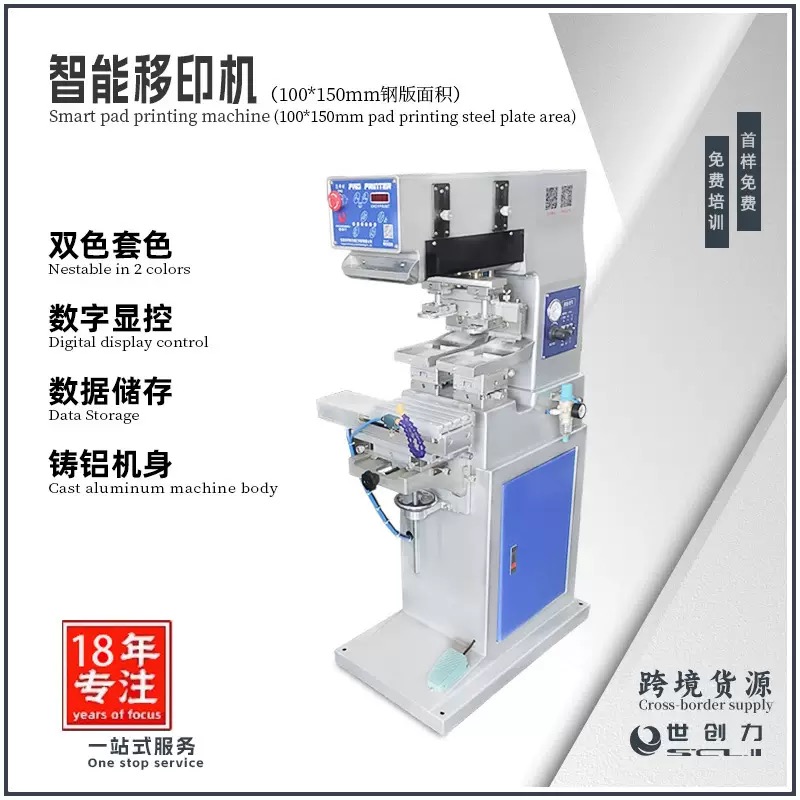
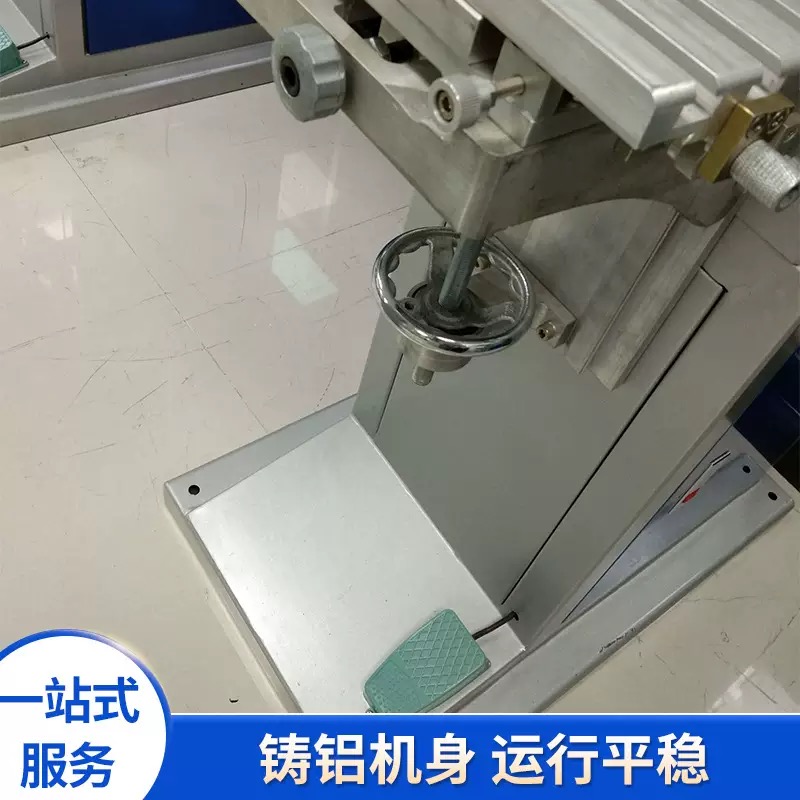
An effective checklist for this equipment may include model verification, installation, pneumatic operation, approved-sample production, finished-product testing, physical and mechanical inspection, structural safety review, and appearance inspection. The buyer should confirm that the machine produces acceptable results on the exact materials and surface shapes required for regular production.
Separate Acceptance Obligations From After-Sales Service
Quality control and after-sales commitments are important, but they should be documented separately from the final-payment condition. Shichuangli states that its controls cover production-process inspection, finished-product performance testing, installation acceptance and commissioning, physical and mechanical performance testing, structural safety inspection, and appearance inspection.
The company also states a two-year warranty, one-on-one instruction, and lifetime equipment maintenance. These commitments support the buyer after acceptance, while the acceptance clause should focus specifically on whether the delivered machine meets the agreed performance standard at commissioning.
Shichuangli lists CNAS certificates for SCOO6-501 Black and SCRS-501 Black, with applicability stated for ILAC-MRA member economies. Such certificates should be treated as company or product credentials for the listed items. They do not replace acceptance testing for the specific stamping or pad printing machine being purchased.
Apply Real Production Samples to Multi-Material Projects
A reported cooperation case involving a Saudi Arabian hotel-product distributor included screen printing, heat transfer printing, and gold stamping for hotel supplies made from different materials. The project involved detailed gold stamping on glass bottles, wash-resistant transfer printing on linen tags, remote engineering assistance, proofing, and operator training.
For a comparable order, the buyer should make those exact production conditions part of the acceptance plan. For example, glass-bottle stamping should be tested for registration and finish quality, while linen-tag transfer printing should be assessed after the relevant wash-resistance procedure. The final payment should depend on approved results from the buyer's actual products, not only on demonstration pieces selected by the supplier.
Contract and Acceptance Reference Table
| Contract element | Recommended arrangement | Available Shichuangli information |
|---|---|---|
| Payment method | Use an advance payment followed by a final payment tied to written acceptance. | Advance payment plus final payment is supported through a formal foreign trade contract. |
| Performance evidence | Require approved-sample runs, commissioning records, inspection results, and a signed acceptance report. | Listed controls include process inspection, performance testing, commissioning, and physical and mechanical testing. |
| Machine specification | Match the checklist to the contracted model, material, surface condition, color count, and printing area. | SCL-P2/S is identified as a pneumatic two-color shuttle machine with a 120 x 70 mm optimum printing area. |
| Failed items | Document defects, corrections, responsibilities, and retesting before the balance is released. | No separate retention percentage or dispute-resolution timetable is stated in the provided information. |
| Post-acceptance support | Keep warranty, training, and maintenance terms in a separate service section. | A two-year warranty, one-on-one instruction, and lifetime maintenance are stated. |
Frequently Asked Questions
What should cause the final payment to become due?
The payment trigger should be a signed performance acceptance report showing that the machine passed the agreed sample, commissioning, performance, safety, and appearance checks. Shipment alone should not count as final acceptance unless the contract explicitly provides otherwise.
Which inspections are suitable for the SCL-P2/S machine?
Include specification confirmation, installation, commissioning, approved-sample production, finished-product performance checks, physical and mechanical testing, structural safety inspection, and appearance review. Tests should use the materials and surfaces required for normal production, including glass, plastic, hardware, silicone, flat surfaces, and irregular surfaces where relevant.
What happens if the machine fails an acceptance item?
The parties should list the failed item in writing, state the corrective measure, assign responsibility, and arrange retesting. The buyer should release final payment only after all unresolved criteria have passed and an authorized representative signs the revised acceptance record.
Conclusion
To protect both parties, link the stamping machine's final payment to a written and signed performance acceptance procedure. Define approved samples, commissioning requirements, production tests, safety checks, appearance standards, documentation, and defect handling before the order is confirmed. Avoid assuming an unstated payment percentage or acceptance deadline; these terms should be negotiated and written into the contract.
Shichuangli supports advance payment and final payment under formal foreign trade contracts, and states that standard foreign trade payment channels, including Alipay, are available. The company also provides a stated two-year warranty, one-on-one instruction, and lifetime equipment maintenance. For technical solutions or support, contact support@shichuanglimachine.com.
About Us
Dongguan Shichuangli Zhihui Technology Co., Ltd. is based in Huangjiang Town, Dongguan City, Guangdong Province. The company integrates printing-equipment design, research and development, manufacturing, sales, technical training, and supporting-material services. Founded in 2008, it operates a factory training base of more than 1,600 square meters.
Its principal products include transfer printing machines, screen printing machines, hot stamping machines, tapping machines, non-standard automation equipment, and printing auxiliary materials. The company lists IECEx and CNAS certifications, including IECEx certificate IECEx PTB 05.0006X and CNAS certificate AZT260323020C-B0, and has served customers in multiple industries.

REPORT